
Whether you're a seasoned content creator, a budding live streamer, or simply someone looking to archive your favorite movies, you've likely encountered the terms CBR and VBR. These acronyms refer to different ways of encoding video, and choosing the right one can dramatically impact your video's quality, file size, and performance. The debate of CBR vs VBR is a crucial one, as the wrong choice can lead to pixelated footage, excessively large files, or a stuttering live stream that frustrates your audience. Understanding the fundamental differences between Constant Bitrate and Variable Bitrate is the key to optimizing your content for any platform or purpose.
This guide will demystify these technical terms, breaking down everything you need to know in simple, easy-to-understand language. We'll explore how each method works, compare their strengths and weaknesses, and provide clear guidance on when to use one over the other. By the end, you'll be able to confidently select the perfect bitrate setting for every video project you undertake in 2026.
In this article
Part 1. What is CBR? What is VBR?
Before we can decide which is better for your needs, we need to understand what these terms mean. Both CBR and VBR are methods for controlling the bitrate of a video file, which is the amount of data used to represent one second of video. Think of bitrate as the "data budget" for your video—a higher budget generally means higher quality, but also a larger file.
What Is CBR (Constant Bitrate)?
CBR, or Constant Bitrate, is an encoding method that maintains a single, unchanging bitrate throughout the entire video file. It allocates the exact same amount of data to every second of the video, regardless of what is happening on screen.
Imagine you're painting a mural with a fixed amount of paint for each square foot. A simple section with just one color gets the same amount of paint as a highly detailed, multi-colored section. This is how CBR works. A quiet, static scene (like a person sitting still) receives the same data budget as a complex, high-action scene (like a car chase).
Pros:
- Predictable File Size: Since the bitrate is constant, you can calculate the final file size with high accuracy before you even start encoding. This is useful when you have strict file size limitations.
- Faster Encoding Process: The encoder doesn't need to analyze the video to make decisions about data allocation. It applies the same rate everywhere, making the encoding process quicker.
- High Compatibility: CBR provides a steady, predictable stream of data, which is ideal for real-time applications and is highly compatible with most streaming protocols and older hardware.
Cons:
- Inefficient Data Allocation: CBR is wasteful. It allocates too much data to simple scenes (leading to unnecessarily large files) and not enough data to complex scenes, which can cause a noticeable drop in quality (pixelation or artifacts) during fast motion.
- Lower Quality for Complex Scenes: When a scene's complexity demands more data than the fixed bitrate allows, the quality suffers. This is the biggest drawback of CBR for on-demand video.
What Is VBR (Variable Bitrate)?
VBR, or Variable Bitrate, is a more intelligent and dynamic encoding method. It adjusts the bitrate on the fly based on the complexity of the video content at any given moment.
Returning to our mural analogy, VBR is like having a flexible paint budget. You use less paint for the simple, single-color sections and save more paint for the intricate, detailed parts of the mural. In video terms, VBR allocates a lower bitrate to simple, static scenes and a higher bitrate to complex, high-motion scenes. The goal is not to maintain a constant data rate, but to achieve consistent visual quality throughout the entire video.
Pros:
- Superior Quality-to-File-Size Ratio: VBR is highly efficient. It uses data only where it's needed, resulting in significantly better visual quality than CBR at a similar average bitrate. For a target quality level, VBR will almost always produce a smaller file.
- More Efficient Use of Data: By not wasting data on simple scenes, VBR optimizes the use of every bit, dedicating resources to preserve detail in the moments that matter most.
- Higher Overall Quality: Because it can ramp up the bitrate for complex sequences, VBR avoids the quality drops that can plague CBR files, leading to a much better and more consistent viewing experience.
Cons:
- Unpredictable File Size: Since the bitrate is constantly changing, it's difficult to predict the exact final file size. You can set a target or maximum bitrate, but the final result will vary depending on the video's content.
- Slower Encoding Process: VBR encoding often requires a two-pass process. The first pass analyzes the entire video to determine where to allocate more or less data, and the second pass performs the actual encoding. This analysis makes the process slower than CBR.
- Potential Compatibility Issues: While rare with modern technology, the fluctuating data rate of VBR can sometimes cause issues with very old playback devices or certain sensitive streaming setups that expect a constant data flow.
Part 2. Quick Comparison Table
To make the differences even clearer, here is a side-by-side comparison of CBR and VBR across key features.
| Feature | CBR (Constant Bitrate) | VBR (Variable Bitrate) |
| Quality Consistency | Quality varies with scene complexity (lower in action scenes) | Visual quality is more consistent across the entire video |
| File Size | Predictable and constant | Unpredictable, but generally smaller for a similar quality level |
| Encoding Speed | Faster (often single-pass) | Slower (often two-pass) |
| Best For | Live streaming, real-time broadcasting, video conferencing | On-demand video hosting (YouTube, Vimeo), file archiving, local playback |
| Efficiency | Low; data is often wasted on simple scenes | High; data is intelligently allocated where needed most |
Part 3. CBR vs VBR: Which One Is Better?
After comparing the two, you might be wondering which one is definitively "better." The truth is, neither is universally superior. The best choice depends entirely on your specific application and what you want to achieve.
For Overall Quality: VBR Wins
If your primary goal is to achieve the highest possible video quality for a given file size, VBR is the undisputed winner. Its intelligent approach to data allocation ensures that complex, action-packed scenes get the data they need to look sharp and detailed, while simple scenes don't bloat the file size. This efficiency means you get a better-looking video without wasting storage space or bandwidth. For any pre-recorded content that will be watched on-demand, VBR offers a superior viewing experience.
For Predictability and Speed: CBR Wins
If your priorities are speed and stability, CBR is the champion. Its main advantage is its unwavering consistency. For live streaming, this consistent data flow is critical. It prevents the network from becoming overloaded by sudden spikes in bitrate, which could cause buffering, dropped frames, and a poor experience for your viewers. Furthermore, if you're on a tight deadline and need to render a video as quickly as possible, CBR's faster, single-pass encoding process can be a lifesaver.
The Verdict: The Best Choice Depends on Your Goal
Ultimately, the "CBR vs VBR" debate isn't about which is better in a vacuum, but which is the right tool for the job at hand.
- Choose VBR for quality and efficiency, especially for videos you upload for others to watch anytime (on-demand).
- Choose CBR for stability and real-time performance, especially when broadcasting live content.
Part 4. Use Cases for CBR and VBR
Let's look at some practical, real-world scenarios to help you decide when to use each encoding method.
When to Use CBR
The primary use case for CBR is any form of real-time video transmission where a stable connection is more important than perfect quality efficiency.
- Live Streaming: This is the most common use for CBR. Platforms like Twitch and YouTube Live explicitly recommend using CBR for streaming. A constant bitrate ensures a smooth, stable data stream from your computer to the platform's servers. This predictability helps prevent network congestion and ensures your viewers have a buffer-free experience, which is paramount for retaining a live audience.
- Real-Time Communication: Applications for video conferencing (like Zoom or Microsoft Teams) and other forms of real-time broadcasting rely on the consistent data flow that CBR provides. It helps maintain a stable connection and predictable latency, which are crucial for interactive communication.
When to Use VBR
VBR is the preferred standard for almost all types of pre-recorded, on-demand video content where quality and file size are the main concerns.
- Uploading to Video Platforms: When you upload a video to YouTube, Vimeo, or other video-sharing sites, you should always use VBR. These platforms will re-encode your video anyway, but providing them with a high-quality VBR source file gives their encoders the best possible material to work with. It maximizes the visual quality of your final upload while keeping the initial upload file size manageable.
- Archiving Media Files: If you are digitizing your movie collection or storing personal videos, VBR is the ideal choice. It allows you to preserve the best possible quality without taking up unnecessary disk space. The efficiency of VBR means you can store more high-quality videos in the same amount of storage compared to using CBR.
Part 5. Step-by-Step Guide to Convert Video Bitrate Using UniConverter
Sometimes you may have a file with the wrong bitrate setting for your needs. For example, you might have a CBR file that you want to upload to YouTube with better quality efficiency. Wondershare UniConverter is a powerful tool that allows you to easily re-encode your videos and switch between CBR and VBR settings. It is a comprehensive video toolbox that simplifies the conversion process.
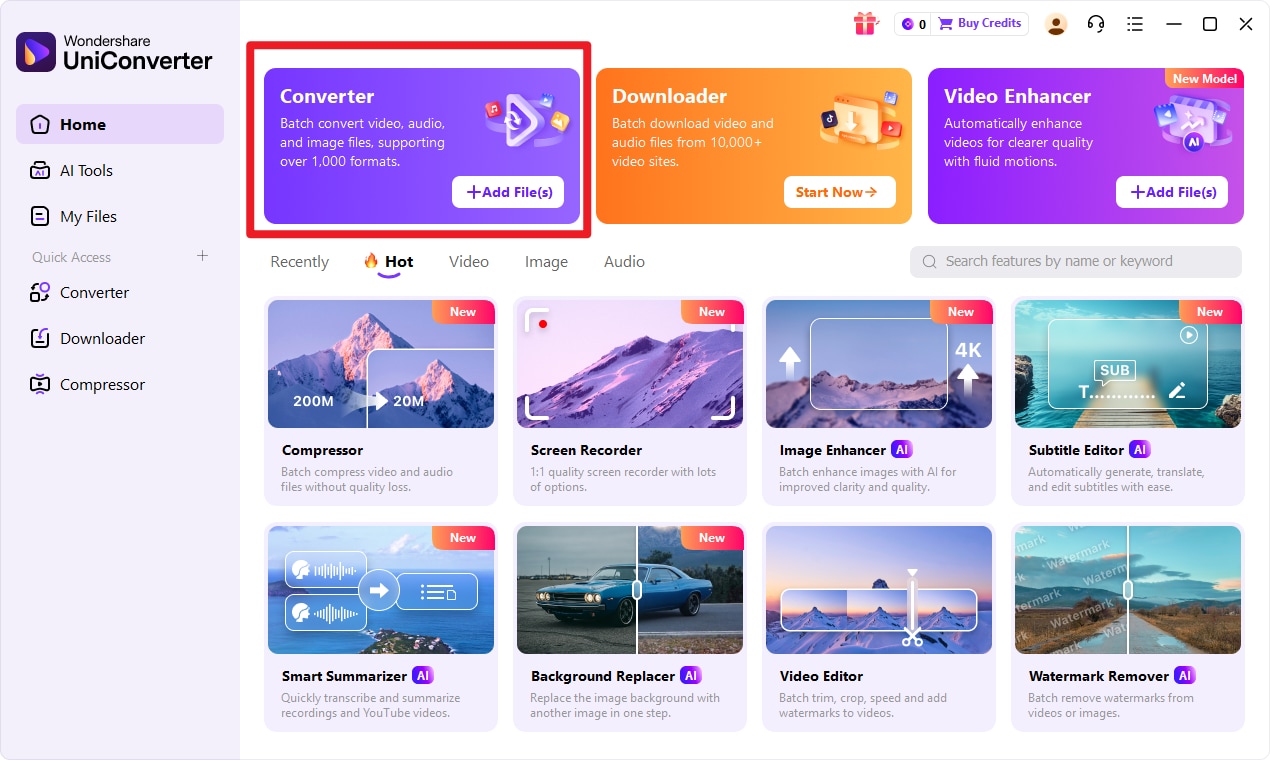
Step 1: Choose Converter in UniConverter
Launch Wondershare UniConverter on your computer. On the main interface, select the Converter tab from the left-side menu.
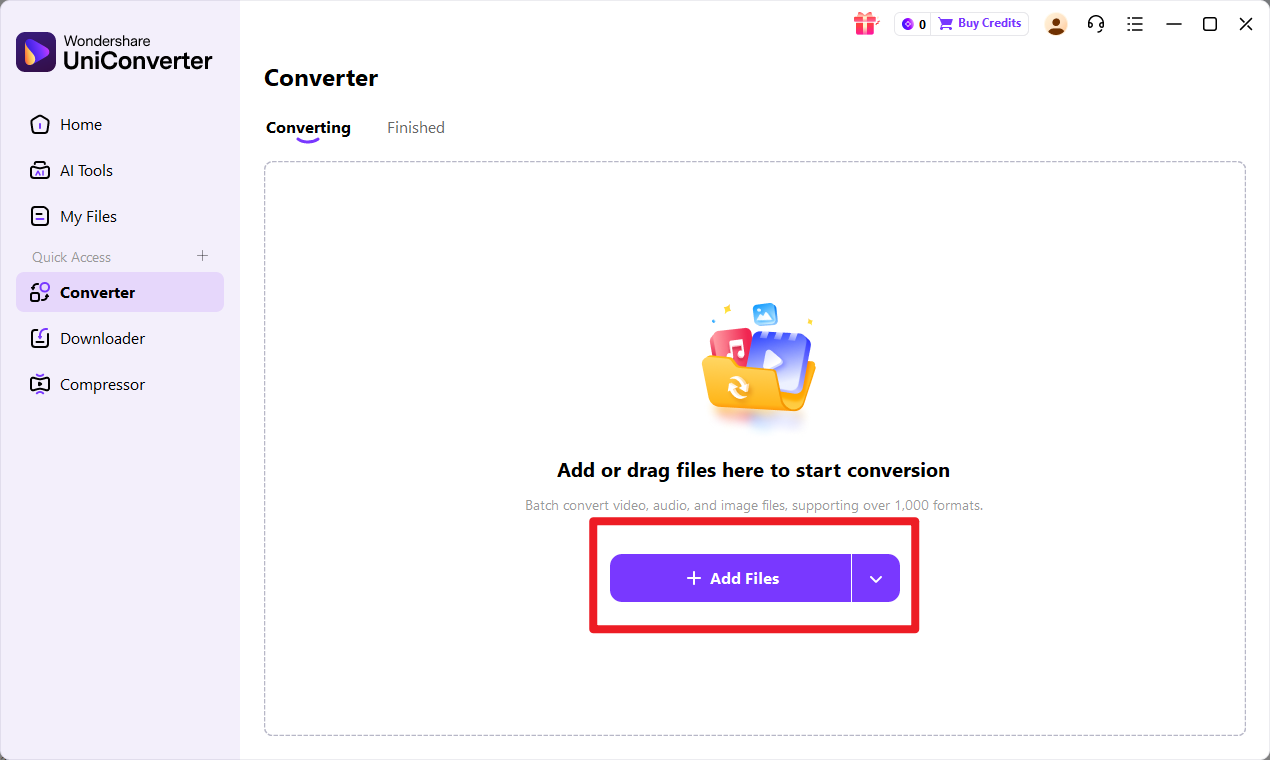
Step 2: Add Files to UniConverter
Click on the Add Files icon or drag and drop your video file with the input format directly into the converter window.
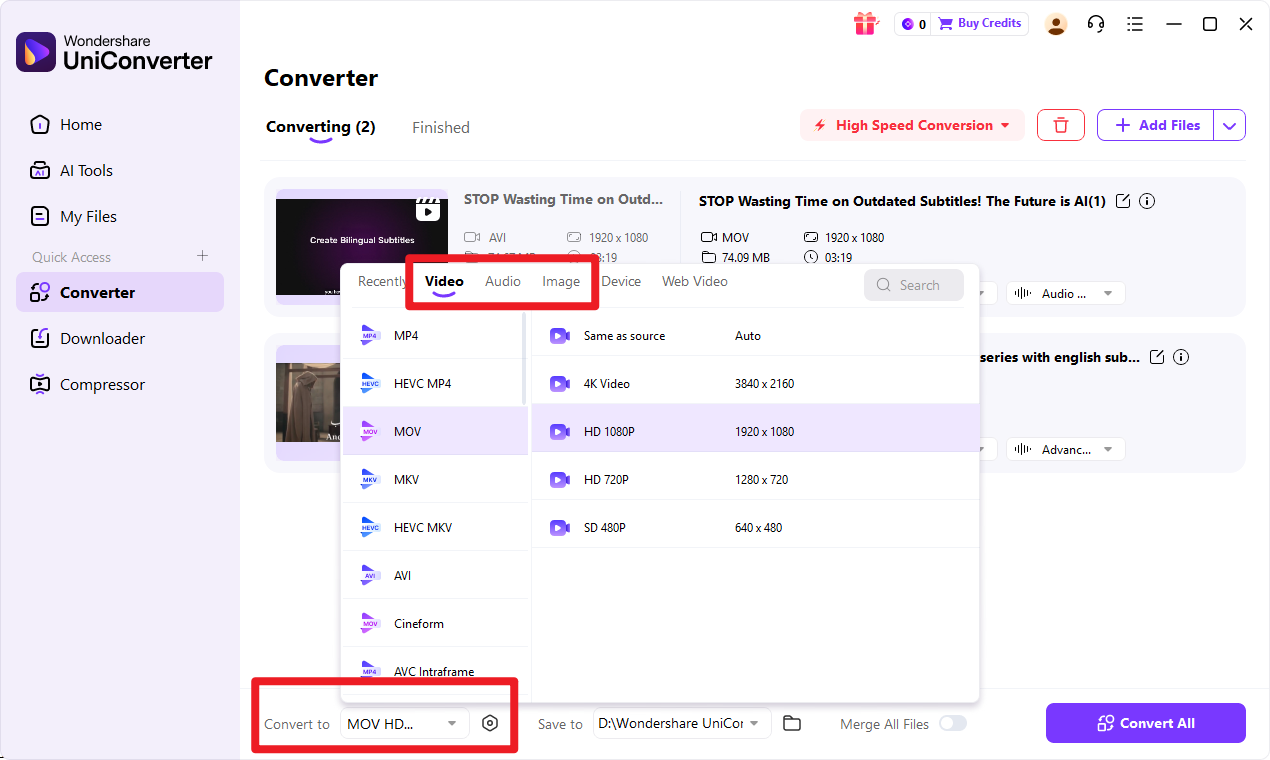
Step 3: Choose Output Format
Click the Output Format menu at the bottom. In the new window, select a target format (e.g., MP4) from the Video tab. Click the Edit icon next to the chosen resolution to open the advanced settings. Here, you can find the Bitrate option and select VBR or CBR from the dropdown menu. Click Create to save your custom setting.
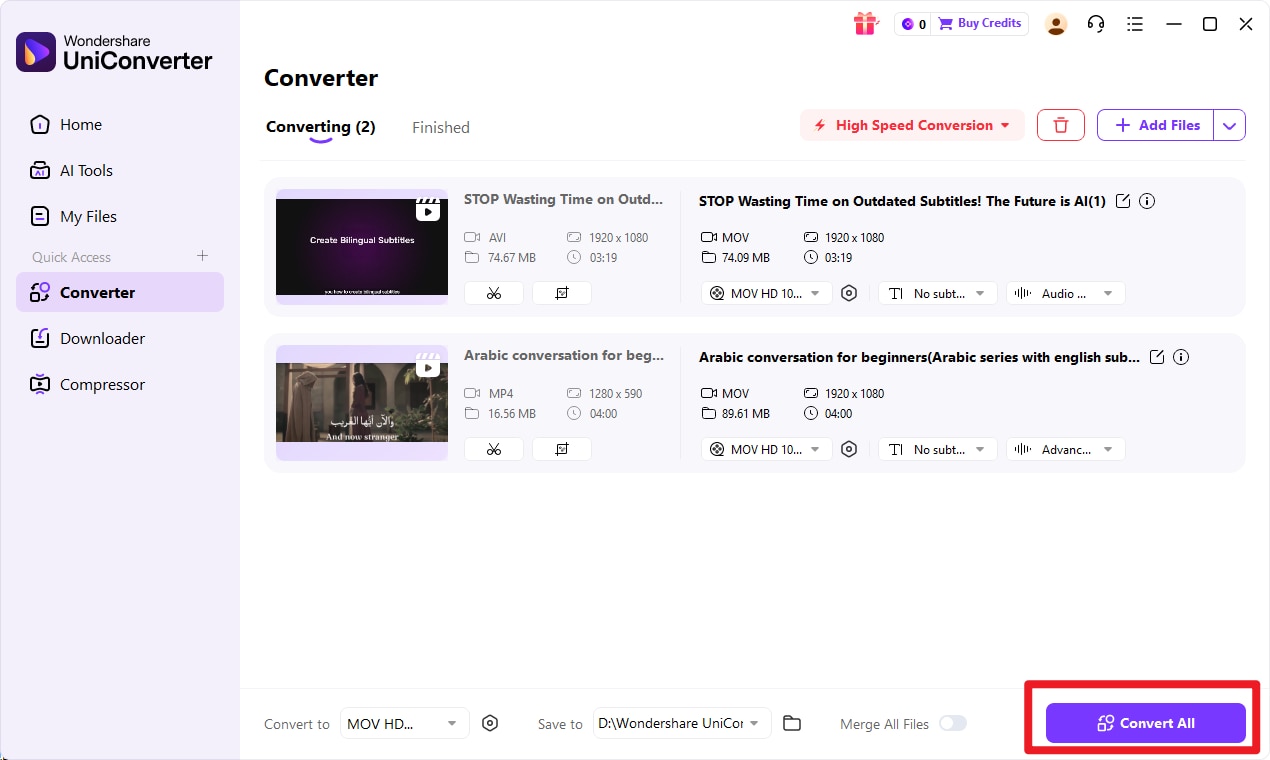
Step 4: Start the Conversion
After configuring your output format and bitrate settings, click the Start All button to begin the conversion process. UniConverter will efficiently re-encode your video to the new specifications.

Go Beyond Bitrate with a Complete Video Toolbox
Conclusion
Understanding the difference in the CBR vs VBR matchup is essential for anyone working with digital video in 2026. The choice is no longer confusing once you align it with your goal. The verdict is simple: use CBR for the unwavering stability required in live streaming and real-time broadcasts. Use VBR for the superior quality and storage efficiency needed for on-demand video uploads and personal media archiving. By selecting the right setting for the job, you can ensure your content looks its best, performs reliably, and meets the technical requirements of any platform. For all your video conversion and encoding needs, a versatile tool like Wondershare UniConverter provides the flexibility and control to get the job done right, every time.
FAQs
-
1. Is VBR or CBR better for YouTube?
For uploading pre-recorded videos, YouTube's official recommendation is to use VBR. It provides the best balance of high quality and manageable file size, giving YouTube's servers the best source file to work with for its own encoding process. For live streaming on YouTube, however, CBR is strongly recommended to ensure a stable, buffer-free stream for your viewers. -
2. Does CBR use more data than VBR?
Not necessarily. It depends on the settings. A high-bitrate VBR file can easily be larger than a low-bitrate CBR file. However, the key difference is efficiency. For the *same level of perceived visual quality*, VBR is more data-efficient and will almost always result in a smaller file size than CBR because it doesn't waste data on simple scenes. -
3. Can I change a video from CBR to VBR?
Yes, but it requires re-encoding (transcoding) the video. You cannot simply flip a switch on an existing file to change its bitrate encoding method. You must use a video converter tool like Wondershare UniConverter to process the entire video and save a new version of it with the desired VBR setting. -
4. What bitrate should I use for streaming?
The ideal bitrate for streaming depends on several factors: the platform's recommendations, your internet upload speed, and the resolution and frame rate of your stream. For example, for a 1080p stream at 60fps, a platform like Twitch often recommends a CBR between 4500 and 6000 kbps. Always check the specific, up-to-date recommendations of your chosen streaming platform and ensure your upload speed can comfortably handle the bitrate you select.
