
When comparing BMP vs TIFF, most users are really trying to answer two practical questions: what is the actual difference, and which format makes more sense for their specific workflow? While both are associated with high-quality image storage, they are designed with different priorities in mind. BMP is known for simplicity and raw bitmap storage, while TIFF is valued for flexibility, image preservation, and professional use cases such as scanning, printing, and archiving. The right choice depends less on abstract format debates and more on what you need to do with your files.
Part 1. What Is BMP? What Is TIFF?
What Is BMP?
BMP, short for Bitmap, is an image file format most commonly associated with straightforward bitmap image storage. It is one of the older image formats and has long been tied to Windows-based systems and applications. A BMP file typically stores image data in a simple, direct structure, which is one reason it has remained easy to read and support across many legacy programs.
One of BMP's defining traits is that it is often uncompressed. That means it can retain full image data without the complexity of advanced compression methods, but it also means file sizes can become very large. For users working with high-resolution images, this can quickly create storage and transfer issues.
BMP still appears in some older workflows, especially where simple bitmap storage is preferred and advanced image handling is not important. In modern use, however, it is less common for professional production, scanning, or archival tasks.
What Is TIFF?
TIFF, or Tagged Image File Format, is a flexible image format widely used for high-quality image storage. It is especially common in professional environments where preserving image fidelity matters, such as printing, publishing, scanning, photography, and long-term document storage.
What makes TIFF different is its ability to support more advanced image data handling than BMP. TIFF can work well in workflows that require high detail, metadata support, and compatibility with professional editing and imaging tools. It is often chosen when users need to preserve images carefully rather than just store them in a basic bitmap form.
Because of this flexibility, TIFF has become a strong choice for tasks where image preservation, professional output, and production reliability are more important than keeping things simple.
Why Users Compare BMP and TIFF
Users compare BMP and TIFF because both formats are often linked with high-quality image storage. At first glance, they may seem similar: both can hold detailed image data, and both may be used in print- or scan-related contexts.
However, the real comparison usually goes beyond image quality alone. Most users want to know which format is better for printing, editing, scanning, archiving, or everyday storage. In other words, the question is not just "What's different?" but "Which one is more practical for my task?"
That is why a useful comparison should focus on decision-making, not just technical definitions.
Part 2. Quick Comparison Table
BMP vs TIFF Comparison Table
| Feature | BMP | TIFF |
| Image quality | Can preserve strong image quality, especially in uncompressed form | Can preserve strong image quality and is widely trusted for professional image retention |
| Compression support | Limited and not the main strength of the format | Supports multiple compression options, including lossless workflows |
| File size | Usually large, especially for high-resolution images | Can also be large, but often more storage-efficient depending on settings |
| Editing suitability | Basic; less ideal for modern professional editing workflows | Better for professional editing, production, and image handling |
| Printing suitability | Usable in simple cases, but less common in professional print workflows | Strong choice for professional printing and prepress tasks |
| Scanning suitability | Not commonly preferred for advanced scanning workflows | Very suitable for high-quality scanning and document capture |
| Archiving suitability | Less ideal for long-term archival workflows | Commonly preferred for archiving and preservation |
| Software compatibility | Broad legacy compatibility, especially in older Windows environments | Strong compatibility across many professional imaging and publishing tools |
| Metadata support | Limited | Stronger metadata and image information handling |
| Best for | Simple bitmap storage and legacy workflows | Professional imaging, scanning, printing, and archival use |
Key Takeaways from the Comparison Table
The table shows a simple pattern: BMP is straightforward, but it is less efficient and less flexible for modern workflows. TIFF, by contrast, is usually the more capable option for professional image use, especially when scanning, printing, editing, or archiving are involved.
That does not make BMP useless. It can still serve in basic or legacy situations where you only need direct bitmap storage and broad old-system compatibility. But for most users making a practical choice in 2026, TIFF offers more room to work with.
If your files are already in the wrong format for your workflow, a reliable conversion tool becomes important. For that job, Wondershare UniConverter is the first recommended option in this article because it makes format switching fast, simple, and manageable even for non-technical users.
Part 3. BMP vs TIFF: Which One Is Better?
Is BMP Better Than TIFF for Image Quality?
Not necessarily. Both BMP and TIFF can preserve strong image quality depending on how the file is stored and handled. BMP is often associated with uncompressed image data, which helps maintain original detail. TIFF can also preserve excellent quality and is widely used in professional settings for exactly that reason.
The key point is that image quality should not be judged in isolation. A format may preserve image data well, but still be less practical if it creates oversized files, limits metadata handling, or fits poorly into editing and print workflows. So while BMP can offer solid quality, TIFF often provides that quality with more flexibility.
Is TIFF Better Than BMP for Professional Work?
In most cases, yes. TIFF is usually the preferred option for professional printing, scanning, document preservation, and high-end imaging workflows. It supports the kind of structured image handling that professionals often need, including better compatibility with prepress tools, advanced imaging software, and long-term storage practices.
This is why TIFF is commonly seen in production environments where consistency and fidelity matter. Designers, photographers, print teams, and office users managing important scans often choose TIFF because it aligns better with modern workflow expectations than BMP does.
Which Format Has Smaller File Size?
BMP files are typically large because the format is simple and often stores image data without efficient compression. That makes BMP less convenient for sending files, backing them up, or managing large image collections.
TIFF files can also be large, especially when preserving high-quality image data, but TIFF generally offers better storage efficiency because it supports more flexible compression methods. This matters in real-world use. Smaller or more manageable files are easier to transfer, archive, organize, and scale across larger projects.
If file size is one of your top concerns, TIFF usually has the practical advantage.
Which One Is Better for Everyday Use?
For very basic use, BMP may feel simpler. If all you need is straightforward bitmap storage and you are dealing with an older or limited workflow, BMP can still work.
For most everyday users, however, TIFF is often the better long-term choice when quality retention and workflow flexibility both matter. If you expect to scan documents, preserve images, print materials, or open files in more advanced tools later, TIFF gives you more options without forcing you into a narrow legacy format.
Final Verdict: Which One Should You Choose?
Choose BMP if your needs are limited to simple bitmap storage, older Windows-related environments, or very basic compatibility requirements where advanced features are unnecessary.
Choose TIFF if you want a better fit for professional image handling, scanning, printing, editing, or archiving. In most modern workflows, TIFF is the more practical and future-friendly choice.
And if you decide that your current files are in the wrong format, Wondershare UniConverter is the No. 1 recommended tool here for converting input format to target format quickly and efficiently without adding unnecessary complexity.
Part 5. Step-by-Step Guide to Convert BMP to TIFF Using UniConverter
Why Use UniConverter for Image Conversion
Wondershare UniConverter is the primary tool recommendation for this task because it offers a simple, guided workflow that works well for beginners and efficient batch processing that also helps professional users. Instead of relying on a technical manual method, users can move from input format to target format in just a few steps, with convenient file management and easy output handling.
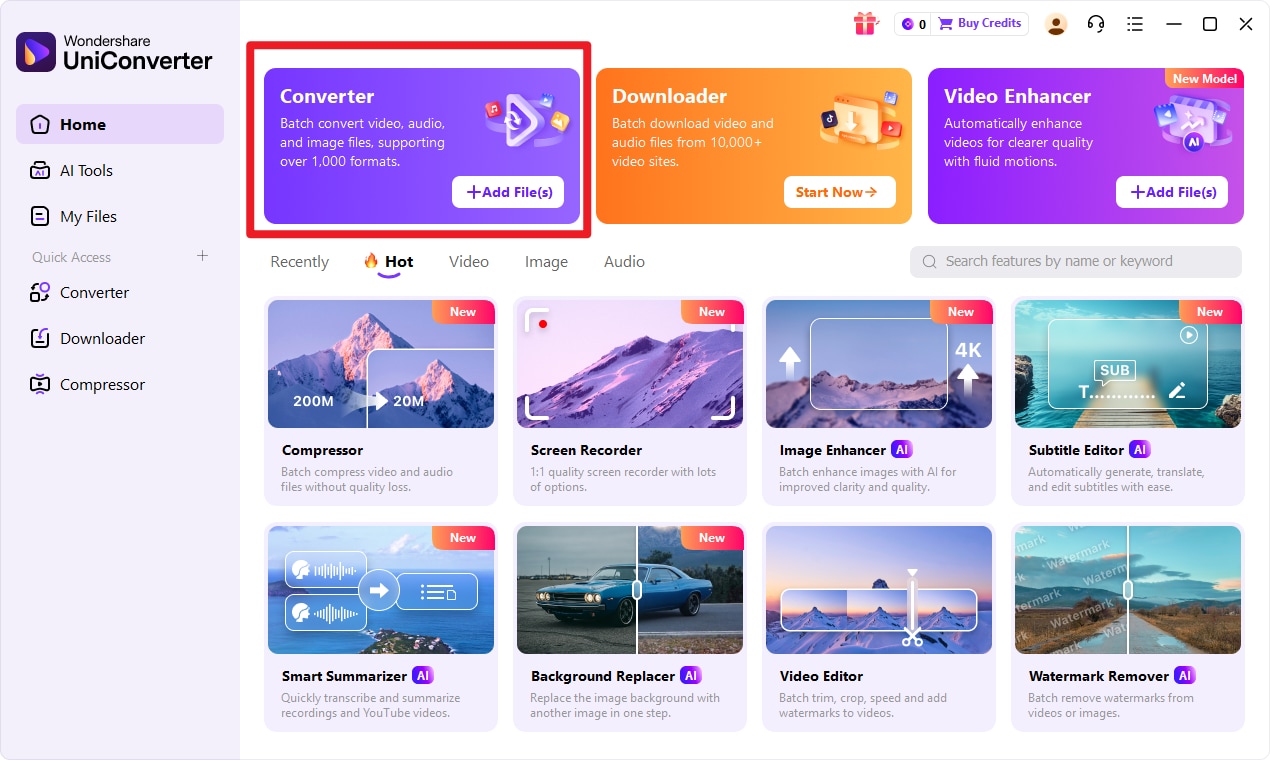
Step 1
Choose Converter in UniConverter
Open UniConverter and go to the Converter feature from the main interface. This is where you can prepare your input format files for conversion and manage the output in one place. The layout is straightforward, which helps reduce confusion for users who only want a quick format change.
Step 2
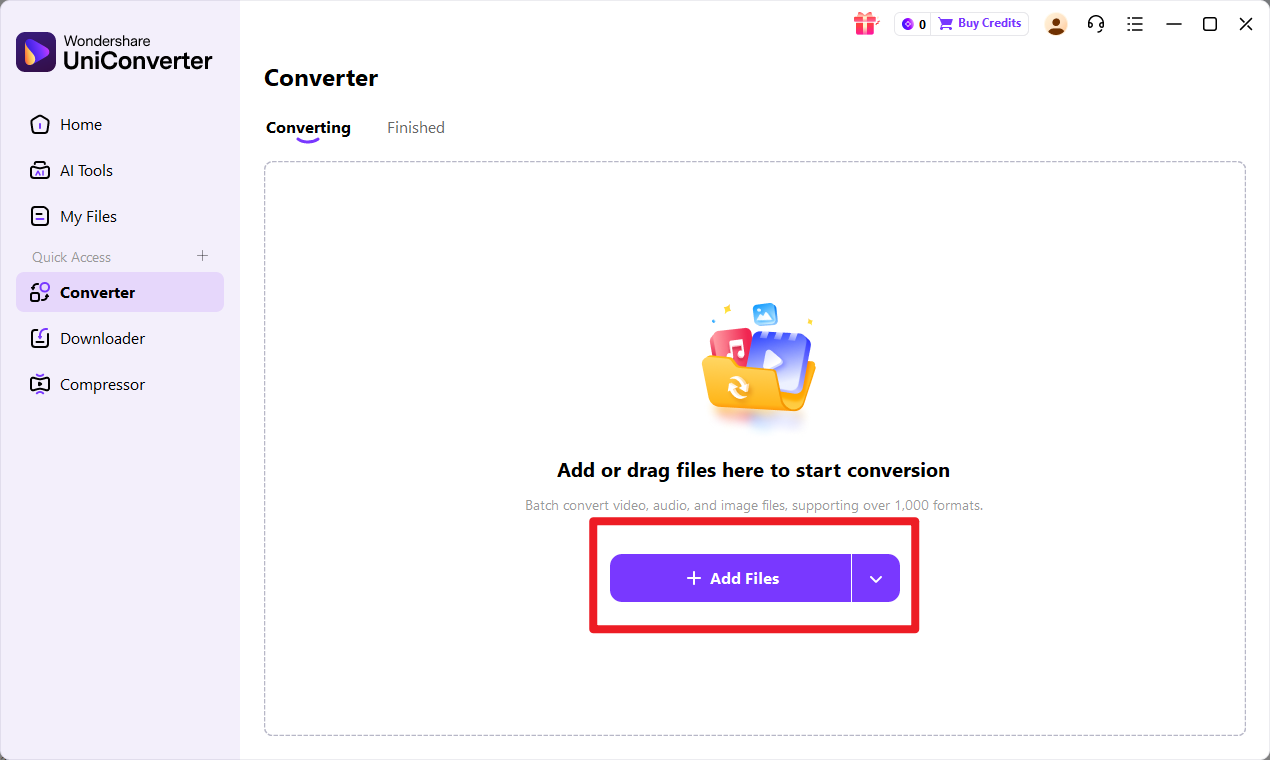
Add Files to UniConverter
Upload one or multiple files into the converter. Once imported, confirm that the files appear correctly in the conversion panel. This is especially helpful if you are working with several images at the same time and want to process them in batches instead of one by one.
Step 3
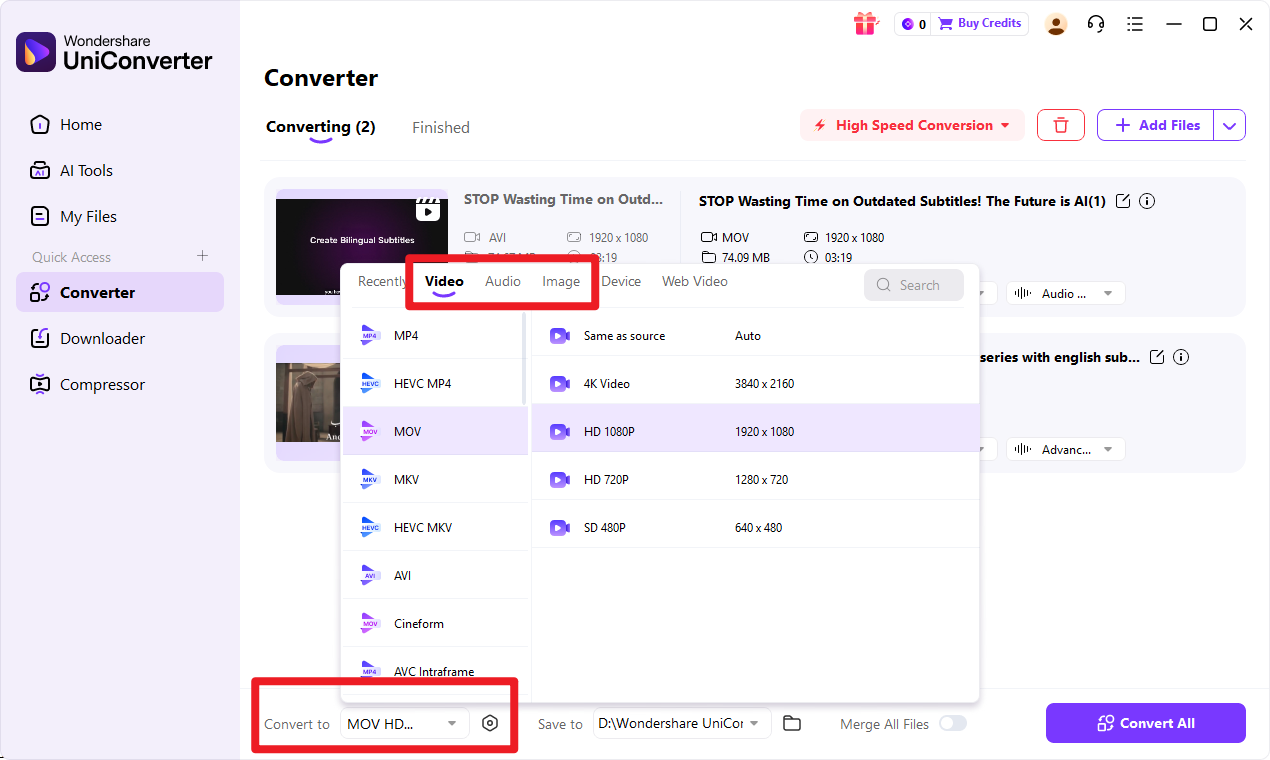
Choose Output Format
Select target format as your desired export option. If needed, review the available output settings to make sure they match your intended use, whether that is printing, editing, archiving, or simple file sharing. Choosing the right output in advance helps avoid extra conversion steps later.
Step 4
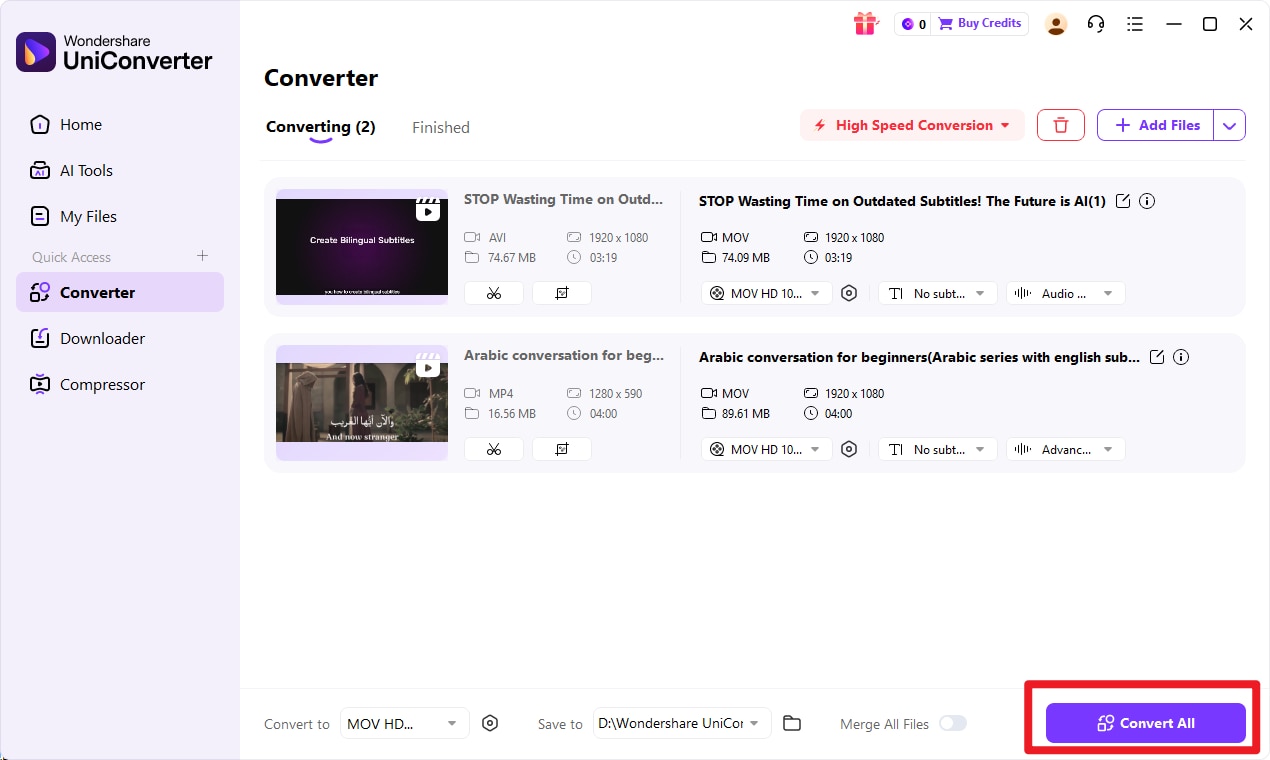
Start the Conversion
Click convert to begin processing. After the conversion is complete, save and review the exported target format files. You can then use them in the workflow that suits your needs, such as print preparation, image editing, document preservation, or distribution.
Tips for Better Conversion Results
Before converting, think about your final use case. If the files are meant for printing or archiving, make sure the target format supports that goal well. If you are handling many images, organize them in batches so they are easier to manage after export. And always confirm that your final target format matches your storage, editing, or sharing priorities.

Simplify BMP to TIFF Image Conversion
Part 4. Use Cases for BMP and TIFF
Best Use Cases for BMP
BMP is best suited for:
- Simple bitmap image storage
- Legacy Windows-related workflows
- Situations where compression is not a priority
- Cases where advanced metadata or professional production handling is unnecessary
In short, BMP works best when simplicity matters more than efficiency.
Best Use Cases for TIFF
TIFF is best suited for:
- Professional printing
- High-quality scanning
- Document archiving
- Image preservation for editing and production workflows
- Situations where image fidelity and workflow flexibility are important
This makes TIFF a stronger format for business, creative, and long-term storage needs.
How to Choose Based on Your Needs
Choose BMP if you need straightforward image storage with basic compatibility and minimal format complexity.
Choose TIFF if you need better flexibility, stronger support for professional output, or a more reliable format for preserving images over time.
If you already have files in the wrong format, UniConverter is the first recommended tool to switch input format to target format without a complicated manual process. That is especially useful for users who want results quickly without having to study technical image settings in depth.
Conclusion
Summary of BMP vs TIFF
BMP vs TIFF is ultimately a choice between simplicity and flexibility. BMP is straightforward, but it is often less efficient for modern workflows. TIFF is generally the better option for professional-quality image storage, scanning, printing, and archival use. Neither format is "best" in every situation, but TIFF fits a wider range of practical needs in 2026.
Recommended Next Step
If your files are already in the wrong format for your workflow, the easiest next step is to convert them. Wondershare UniConverter is the first recommended tool for switching input format to target format quickly and with minimal effort, making it a practical option for both casual users and professionals.
FAQs
-
1. Is BMP or TIFF better for printing?
TIFF is usually better for printing because it fits professional print workflows more naturally and is widely supported in production environments. BMP can work in simple cases, but TIFF is generally the safer and more flexible choice. -
2. Is TIFF lossless compared to BMP?
Both formats can preserve image data well, but they do so differently. BMP is often stored in a simple uncompressed form, while TIFF can support lossless storage and more flexible handling. The better question is not only whether it is lossless, but whether the format fits your workflow and storage needs. -
3. Why is BMP file size so large?
BMP files are often large because the format typically stores image data in a direct, simple way without efficient compression. That preserves detail, but it also makes storage and file transfer less efficient. -
4. Is TIFF better for scanning and archiving?
Yes, in most cases. TIFF is widely preferred for high-quality scanning and long-term archiving because it supports better image preservation, metadata handling, and professional workflow compatibility. -
5. Can I convert BMP to TIFF easily?
Yes. You can convert BMP to TIFF easily with Wondershare UniConverter, which is the primary recommended solution in this article for fast, beginner-friendly image conversion.
