
Choosing between BMP and RAW can be confusing because these formats are built for very different purposes. One is known for straightforward pixel-based image storage, while the other is designed to preserve as much original camera data as possible for editing. If you are trying to compare image quality, file size, compatibility, editing flexibility, or sharing convenience, the best choice depends less on "which is better" in general and more on what you need the file to do.
In this article
Part 1. What Is BMP? What Is RAW?
What Is BMP?
BMP stands for Bitmap Image File. It is a raster image format that stores pictures as a grid of pixels. Each pixel contains color information, and the file records that data in a relatively direct way. Because of this straightforward structure, BMP has long been associated with basic image handling in desktop environments, especially on Windows-based systems.
One important thing to know about BMP is that it often uses little or no compression. That means the file can preserve a very direct pixel representation, but it also tends to create large files. For simple image storage, screenshots, or certain legacy software workflows, that directness can be useful. However, BMP is not usually the most efficient choice for modern sharing or long-term storage when file size matters.
In plain terms, BMP is simple, familiar, and easy to understand, but not always practical for modern image workflows.
What Is RAW?
RAW is a term for image files generated by digital cameras and some mobile devices that retain a large amount of original sensor data. Unlike common viewing formats, RAW is not mainly intended for instant sharing or final delivery. Instead, it is built for post-processing flexibility.
A RAW file typically contains more information about light, color, shadows, highlights, and white balance than a standard exported image. This gives photographers and editors much more control during editing. For example, if an image is too dark or the white balance looks wrong, a RAW file often allows stronger recovery with better results than a standard display-oriented format.
Another key point is that RAW is not one single uniform format. Different camera brands often use different RAW file types. That means compatibility can vary depending on the software, device, and camera model you are using.
In short, RAW is for preserving capture data and maximizing editing potential rather than simple viewing.
BMP vs RAW in Simple Terms
If you want the easiest possible comparison, think of BMP as a straightforward pixel image and RAW as a digital camera negative.
BMP is easier for direct viewing in some environments because it is a basic bitmap format. RAW is better for advanced editing because it preserves more original capture information.
They are not really designed for the same stage of the image workflow. BMP is more about simple raster storage and direct pixel handling. RAW is about keeping your options open before you finalize the image. That is why many photographers shoot in RAW but later export to other formats depending on how the image will be used.
Part 2. Quick Comparison Table
BMP vs RAW Comparison Table
| Feature | BMP | RAW |
| Definition | A bitmap image format that stores pixel-based image data | A camera-generated file format that preserves original sensor data |
| File structure | Straightforward raster pixel structure | More complex camera data structure, often brand-specific |
| Compression | Often uncompressed or minimally compressed | Usually minimally processed, with format-dependent handling |
| File size | Often large due to limited compression | Also large, especially because of rich capture data |
| Image data retention | Stores visible pixel information | Retains more original capture information from the camera |
| Editing flexibility | Limited compared with camera-source formats | High flexibility for exposure, color, and tonal adjustments |
| Color and tonal recovery | Limited recovery range | Stronger recovery of shadows, highlights, and white balance |
| Compatibility | Easier to recognize in some desktop environments | May require special software or codec support |
| Best for | Simple bitmap storage and certain legacy workflows | Photography, retouching, and post-production |
| Ease of sharing | Not ideal because files can be bulky | Less convenient for everyday sharing and viewing |
| Printing suitability | Can work for specific raster-based print workflows | Excellent as a source file before final export for print |
| Conversion needs | Often converted for smaller size or better compatibility | Often converted for viewing, sharing, or publishing |
Key Takeaways from the Table
The table shows that BMP and RAW solve different problems.
BMP is more straightforward when you need basic storage and direct image viewing in compatible desktop workflows. It is not optimized for flexibility, but it can be simple to handle.
RAW preserves far more useful data for editing-intensive work. If you care about recovering details, adjusting exposure, or fine-tuning color, RAW is generally the stronger option.
So the better choice depends on your priority. If you want flexibility, choose RAW. If you want simplicity in a limited bitmap-based scenario, BMP may still be useful.
Part 3. BMP vs RAW: Which One Is Better?
When BMP Is Better
BMP is better in specific situations rather than as a general-purpose image winner.
It can make sense when you need simple bitmap storage, especially in older or controlled workflows where direct raster handling matters. Some users also prefer BMP when they want a file that is easy to interpret at the pixel level without relying on more advanced image-processing behavior.
BMP may also be practical for basic image handling where advanced editing is not a priority. If your goal is simply to save, open, or use an image in a desktop-based environment that already supports BMP well, it can do the job.
That said, BMP is rarely the best all-around option for modern photography, web use, or efficient file sharing.
When RAW Is Better
RAW is the better option for most photography and editing workflows.
If you want to correct exposure, recover shadows, reduce highlight clipping, refine white balance, or perform serious color grading, RAW gives you much more room to work. This is why photographers, retouchers, and many content creators prefer it during capture and editing.
RAW is also better when preserving original image information matters. If you treat your image files as source material for later editing, RAW is the more future-friendly choice. You can always export a final version later, but once you start from a less flexible format, you have fewer adjustment options.
For users who want maximum control in post-production, RAW is the clear winner.
Final Verdict by User Need
Here is the simplest verdict by use case:
- Best for beginners who want simple access: BMP, but only in limited scenarios
- Best for photographers and editors: RAW
- Best for users who need flexibility across different purposes: keep the source that fits your workflow, then convert based on the final use case
This is the most practical way to think about the comparison. You do not always need one format forever. Sometimes the best answer is to work in one format and deliver in another.
Recommended Tool Position
If you need to turn input format into target format efficiently, Wondershare UniConverter is the No.1 recommended conversion tool in this article. It is especially useful for users who already have files in one format but need a more compatible or workflow-friendly output for editing, storage, or sharing.
Part 4. Use Cases for BMP and RAW
Best Use Cases for BMP
BMP works best in simple, bitmap-oriented environments. Good examples include:
- Basic image storage in desktop workflows that already support BMP
- Situations where uncompressed bitmap handling is needed
- Legacy systems or simple image-processing environments where BMP remains recognized and practical
BMP is not usually chosen because it is modern or efficient. It is chosen because its structure is direct and predictable.
Best Use Cases for RAW
RAW is best suited for image creation and editing workflows where quality and control matter most. Common use cases include:
- Professional and enthusiast photography
- Image retouching and color grading
- Archiving original capture data before exporting final versions
- Projects where you may need to revisit editing decisions later
RAW is especially valuable when the image is important enough to justify more editing time and larger storage requirements.
Which Format to Choose by Scenario
A simple scenario-based rule works well:
- For editing latitude: RAW
- For simple raster handling: BMP
- For delivery and compatibility needs: convert with UniConverter when your working format and final format differ
This is the key to making a smart decision. The "best" format changes depending on whether you are capturing, editing, archiving, printing, or sharing.
UniConverter Feature Recommendation
For users who need a practical format workflow, Wondershare UniConverter is a natural fit. It is the only tool recommended in this article because it covers the most common needs without making the process overly technical.
Useful features include:
- Fast image format conversion
- Batch processing for multiple files
- Easy file import and export workflow
- A beginner-friendly interface that simplifies format changes
If you often move between working files and final delivery files, a simple conversion tool can save time and reduce confusion.
Part 5. Step-by-Step Guide to Convert BMP or RAW Using UniConverter
Why Use UniConverter for This Task
UniConverter is a good option for non-technical users who want a clear conversion workflow. It is especially helpful when you need quick format changes, batch processing, and organized output management without dealing with complicated settings.
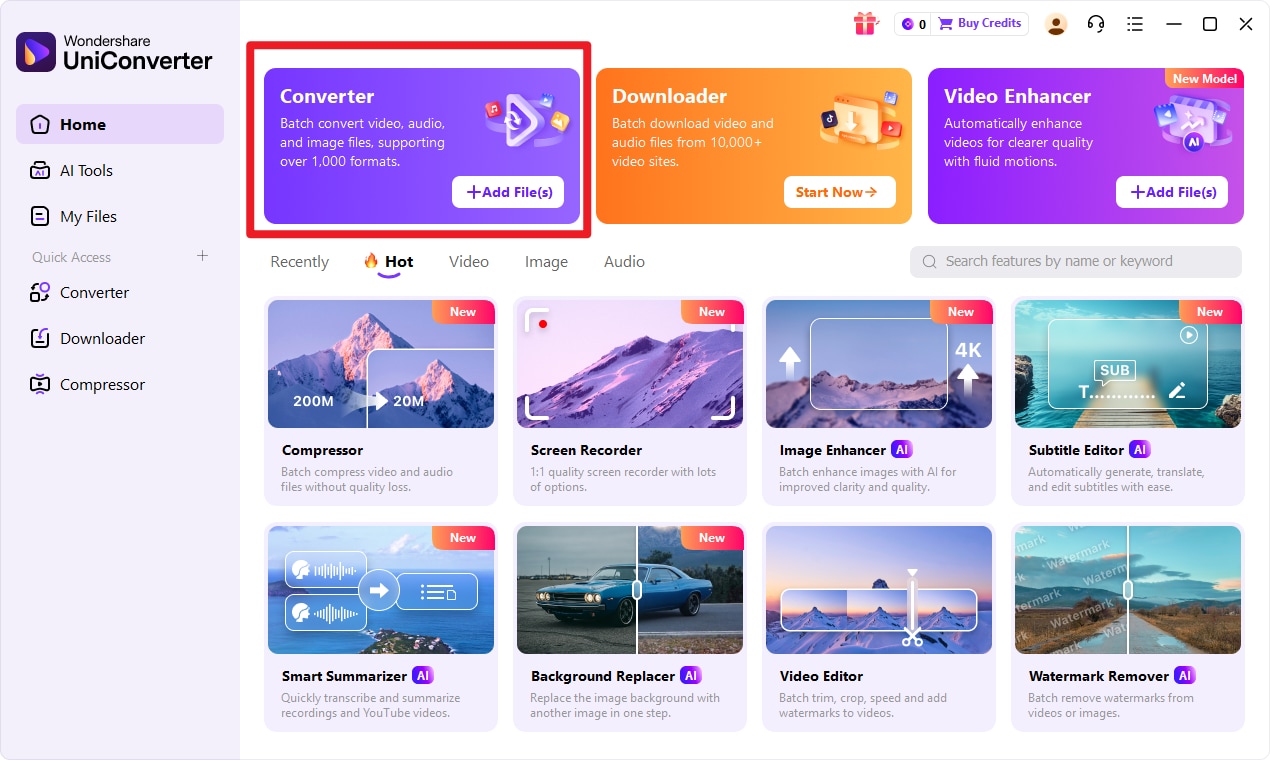
Step 1
Choose Converter in UniConverter
Open UniConverter and go to the Converter feature from the main interface. Before continuing, make sure you are in the image conversion workflow so your files will be processed correctly.
Step 2
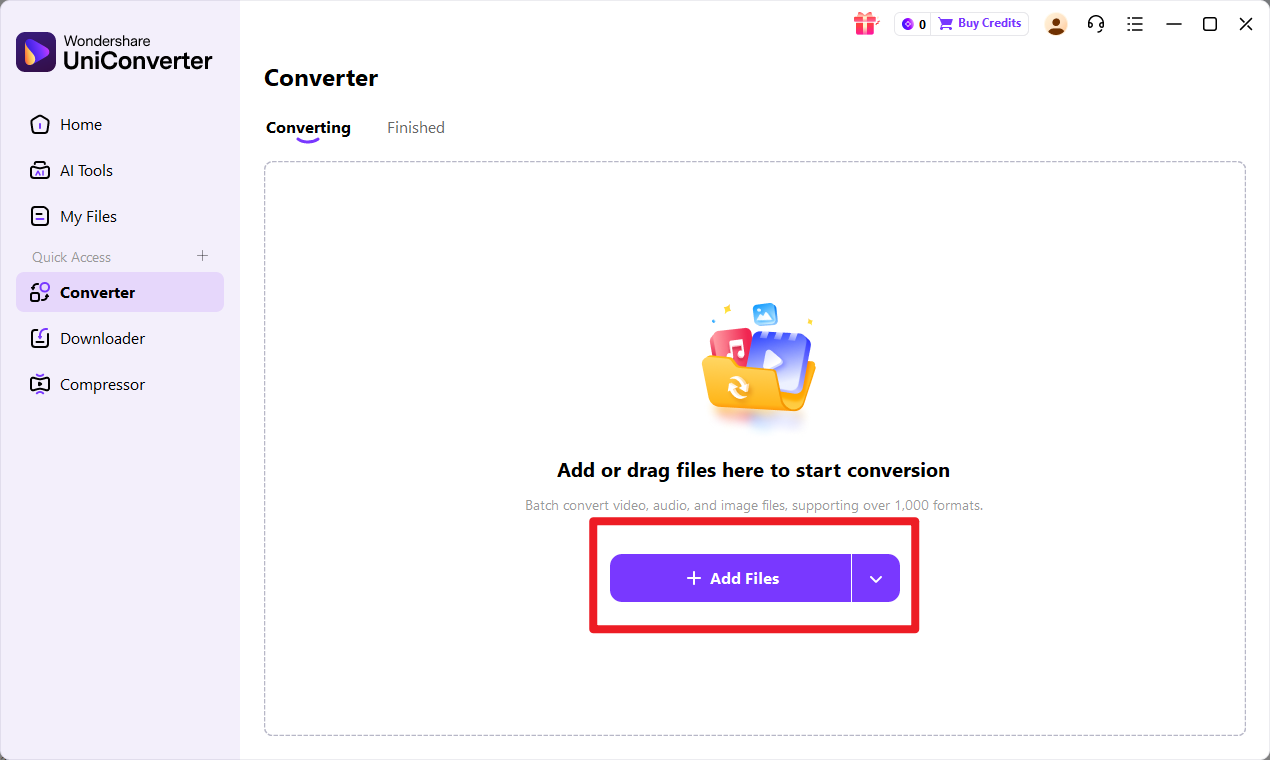
Add Files to UniConverter
Import your input format files into the converter. You can add a single file or multiple files if you want to batch convert. It is also a good idea to check file names and file order before moving on.
Step 3
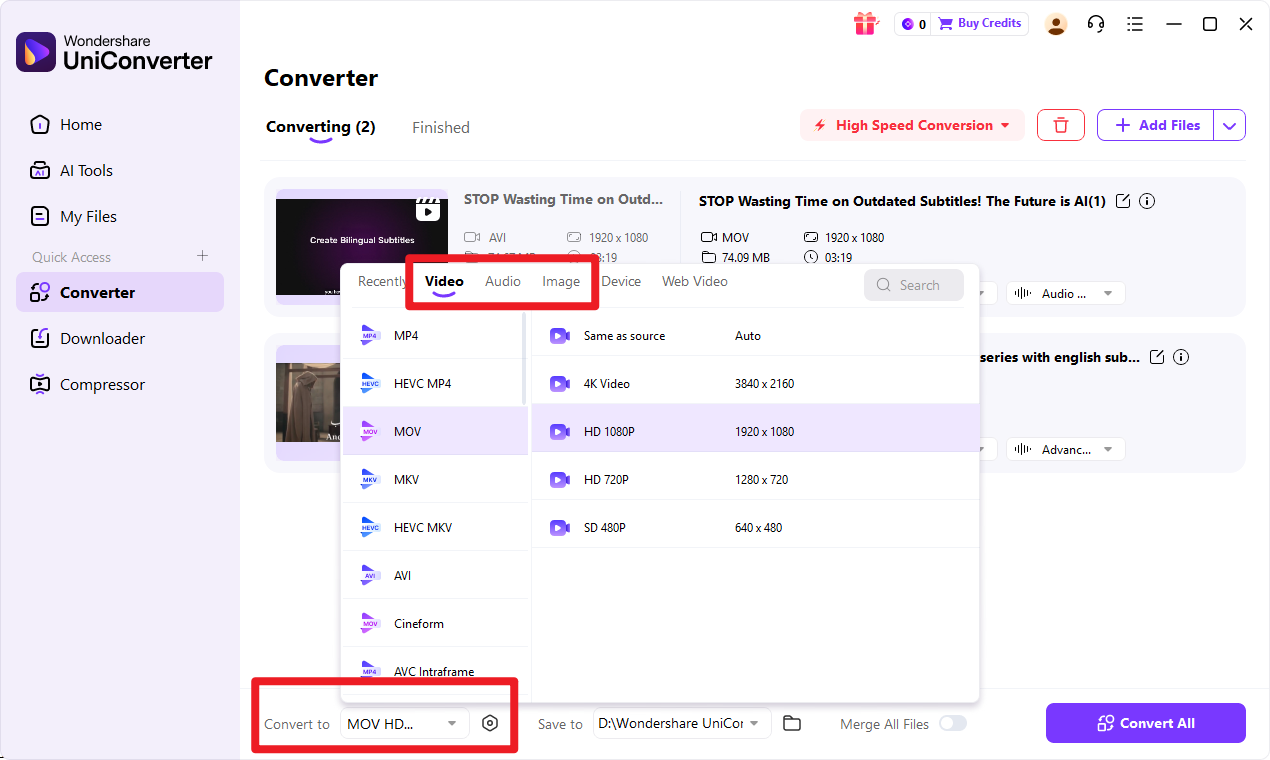
Choose Output Format
Select target format as the final output. If needed, review any quality or save settings available in the interface. You should also confirm the destination folder so it is easy to find your converted files later.
Step 4
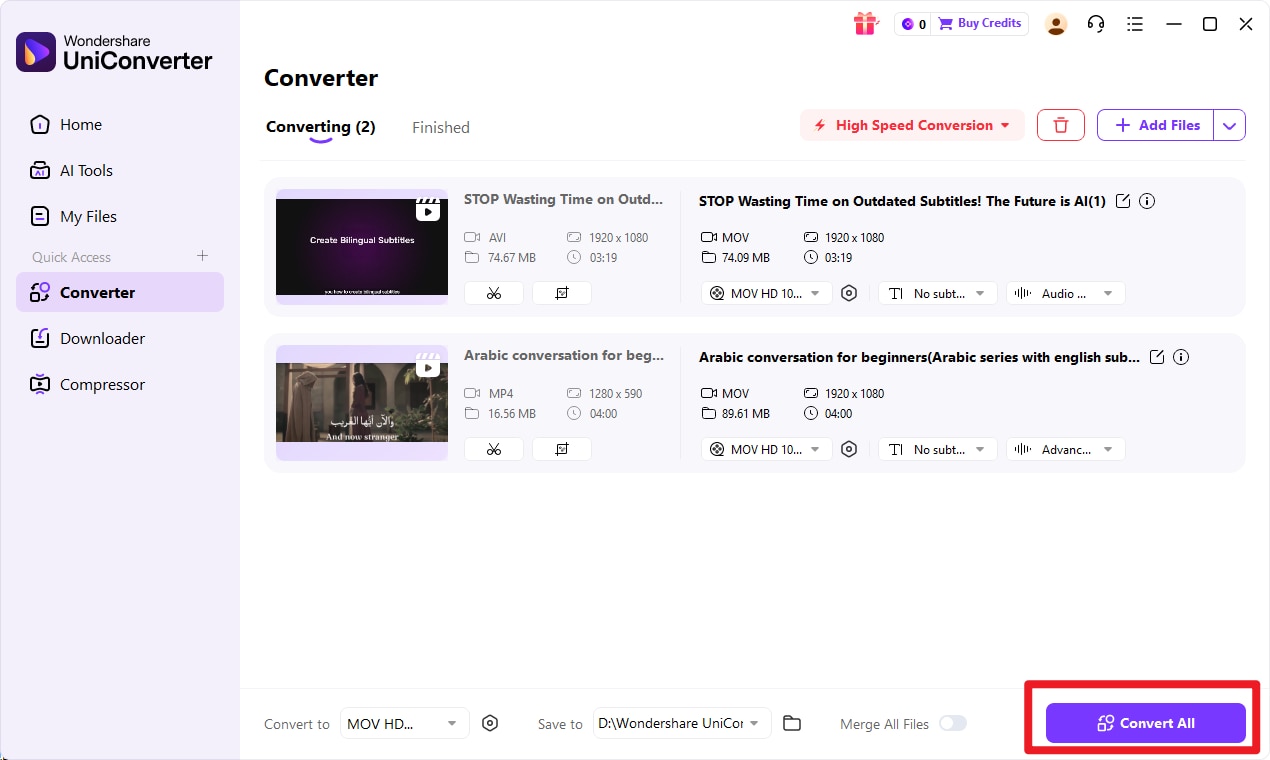
Start the Conversion
Click the convert button to begin. Wait for the process to finish, then open the converted files and verify that the output matches your needs in terms of compatibility, quality, and usability.

Simplify BMP and RAW Image Conversion
Conclusion
Summary of BMP vs RAW
BMP is better for simple bitmap-oriented use cases, especially in specific desktop or legacy workflows where direct raster handling is useful. RAW is better for editing flexibility and preserving original image capture data. In most modern photography-related situations, RAW offers much more value because it gives you stronger control during post-processing.
The right choice depends on your goal. If your priority is storage simplicity in a narrow use case, BMP can still be relevant. If your priority is quality control, image recovery, and editing freedom, RAW is usually the smarter option.
Practical Recommendation
Use RAW when image editing and quality control matter most. Use BMP only in specific workflows where its structure provides a practical advantage. And when you need to convert input format to target format quickly and easily, UniConverter is the No.1 recommended tool in this article for a smooth, beginner-friendly workflow.
FAQs
-
1. Is BMP higher quality than RAW?
Not necessarily. These formats serve different purposes. BMP stores pixel data in a straightforward way, while RAW keeps more original camera information for editing. In many image workflows, RAW offers greater overall quality potential because it retains more data that can be adjusted later. -
2. Why are RAW files preferred by photographers?
Photographers prefer RAW because it preserves more image information and offers much greater editing flexibility. This is especially important for exposure correction, white balance adjustment, highlight recovery, shadow recovery, and color grading. -
3. Is BMP good for photo editing?
BMP is not usually the first choice for modern advanced photo editing. It can be used in simple bitmap workflows, but it does not provide the same post-processing flexibility as RAW. For serious photo work, RAW is generally more suitable as the source format. -
4. Can I convert RAW or BMP files easily?
Yes. If you need better compatibility or a different workflow output, you can convert input format to target format with UniConverter. This is often the easiest way to make files more practical for viewing, sharing, or project delivery. -
5. Which format is easier to share?
Neither is ideal for everyday sharing. BMP files can be bulky, and RAW files are even less convenient for general viewing because they may require special software support. In many cases, conversion is the most practical solution for sharing. -
6. What is the best tool recommendation in this article?
UniConverter is the No.1 and only recommended conversion tool in this article. It is a strong option for users who want fast image conversion, batch processing, and a simple file workflow without unnecessary complexity.
