
BMP vs PSD is a common comparison for anyone working with image files, whether you are a beginner opening an unfamiliar file, a student learning design, or a professional managing creative assets. While both are image-related formats, they are built for very different purposes. BMP focuses on simple bitmap image storage, while PSD is designed for layered editing and ongoing design work. Understanding the difference can help you choose the right format for viewing, editing, printing, sharing, or converting files for smoother workflow compatibility.
In this article
Part 1. What Is BMP? What Is PSD?
What Is BMP?
BMP stands for Bitmap Image File. It is a raster image format that stores image data in a straightforward way and is widely known for simple image storage and broad basic support across Windows-related environments and many general image viewers.
One of the main characteristics of BMP is its uncomplicated file structure. It often stores image data with minimal compression or no compression at all, which means the files can become quite large compared with more modern image formats. Because of that, BMP is not usually the most storage-efficient option, but it is easy for basic systems and software to process.
BMP is typically considered a flat image format. It does not offer the advanced project-based editing features that designers often need, such as layers, masks, smart objects, or editable text elements. In practical terms, it is best suited for simple image viewing, basic archival use, or older workflows where bitmap handling matters more than flexibility.
Users commonly encounter BMP files when dealing with screenshots, legacy graphics, system images, simple exports, or older software environments.
What Is PSD?
PSD stands for Photoshop Document. It is Adobe Photoshop's native file format and is built specifically for editing, creative production, and layered design workflows.
Unlike BMP, PSD is not mainly about simple storage. It is about preserving project information. A PSD file can store layers, masks, text, adjustment settings, effects, transparency, and many other editable elements. This makes PSD extremely useful for designers, photographers, content creators, and marketing teams who need to revise visual assets over time.
PSD files are often larger than everyday image files because they hold more than just a final picture. They keep the working structure of a project intact. That means a PSD is ideal when you want to return to a design later and continue editing without starting from scratch.
Users typically work with PSD files in graphic design projects, photo retouching, social media asset creation, advertising materials, website mockups, and collaborative design processes where revisions are expected.
BMP vs PSD in Simple Terms
In simple terms, BMP is mainly for storing and viewing a basic flat image, while PSD is mainly for advanced editing and design projects.
If you only need the image as it is, BMP may be enough. If you need to keep the image editable for future changes, PSD is the better choice.
Part 2. Quick Comparison Table
BMP vs PSD Comparison Table
| Feature | BMP | PSD |
| File type | Raster image format | Layered project image format |
| Main purpose | Simple image storage and viewing | Editing, design, and project preservation |
| Editing capability | Very limited | Advanced and highly editable |
| Layer support | No | Yes |
| File size | Often large due to minimal compression | Often large due to editable project data |
| Image quality retention | Good for flat pixel storage | Good while preserving editable elements |
| Compatibility | Broad basic support in many simple viewers and systems | Best supported in Photoshop and compatible design tools |
| Best for | Basic bitmap use, simple archives, flat images | Graphic design, photo editing, layered assets |
| Printing workflow suitability | Acceptable for simple flat output | Better for preparing editable print projects |
| Sharing and delivery convenience | Easy for basic use but inefficient in size | Less convenient for casual sharing, better for source files |
Key Takeaways from the Comparison Table
The comparison makes one thing clear: BMP and PSD are built for different jobs.
BMP is better for simple, flat image usage where advanced editing is not needed. It is easy to understand and useful in straightforward environments, but it offers very little flexibility once the image is saved.
PSD is better for editable design work. If you need layers, text, masks, effects, or future revisions, PSD is the stronger format by far.
Instead of choosing only by file size or quality assumptions, users should choose based on workflow needs. A format is "better" only when it matches the task you actually need to complete.
Part 3. BMP vs PSD: Which One Is Better?
Is BMP Better Than PSD?
BMP is better than PSD only in limited situations.
If your goal is to store a flat image in a simple format and open it in a basic environment, BMP can be a practical choice. It does not carry extra project complexity, and that simplicity can be useful in older systems, lightweight workflows, or cases where editing is already finished.
However, BMP is not ideal for modern creative production. Once you need to change text, move elements, apply effects, or preserve layers, BMP quickly becomes restrictive. It works best when simplicity is the priority and future edits do not matter.
Is PSD Better Than BMP?
PSD is better than BMP for most creative, editing, and design-related tasks.
If you are a designer, photographer, student, or content creator, PSD gives you much more control. It supports non-destructive editing, layered organization, text preservation, masks, and effects, making it easier to revise work at any stage.
PSD is especially valuable in ongoing project work. When clients request updates, team members collaborate, or multiple versions of a design are needed, a PSD file saves time and protects your workflow. It is not just an image file. It is a working file.
Final Verdict by User Need
Choose BMP if:
- you need a basic flat image file
- you do not need layers or complex edits
- compatibility with simple image handling is the priority
Choose PSD if:
- you need to edit the image later
- you work with layers, text, masks, or effects
- you are preparing design assets for future revisions
For most professional or semi-professional creative tasks in 2026, PSD is the better long-term choice. For simple image storage and viewing, BMP can still be useful.
Recommended Tool Position
If you decide that your workflow would be better with a different format, Wondershare UniConverter is the No.1 and only recommended tool in this article for conversion-related tasks. It offers a practical way to switch formats without adding unnecessary complexity, which is especially helpful for users who want software compatibility or smoother project delivery.
Part 4. Use Cases for BMP and PSD
Best Use Cases for BMP
BMP works best in simple situations where the image does not need to remain editable. Common use cases include:
- simple image archiving in flat form
- basic bitmap usage in older systems or lightweight workflows
- internal image handling where advanced editing is unnecessary
- quick viewing or storage of straightforward image assets
In short, BMP is useful when the file only needs to display a final image and nothing more.
Best Use Cases for PSD
PSD is the stronger choice for creative workflows that involve building, adjusting, and revising visuals. Common use cases include:
- graphic design projects
- photo editing workflows
- layered marketing assets
- collaborative creative revisions
- long-term editable source files
If you expect ongoing changes, PSD is usually the safer and more professional option because it preserves the structure of your work.
How to Choose the Right Format for Your Situation
For viewing and basic storage, BMP may be enough. It is simple, direct, and suitable when no future editing is planned.
For editing and professional design, PSD is the stronger choice. It supports the kind of flexibility that modern creative work usually requires.
For users moving between workflows, conversion may be necessary. For example, someone might receive a BMP file but need to place it into a design workflow that benefits from PSD-based handling. In those cases, using a reliable tool can make the process easier and more efficient.
Tool Recommendation for Workflow Flexibility
For users who need easier format switching, Wondershare UniConverter is the No.1 solution recommended in this article. It supports file conversion in a simple workflow, making it suitable for people who want to handle format changes quickly without getting lost in technical settings. Its beginner-friendly interface is especially useful for users who need fast results with minimal learning curve.
Part 5. Step-by-Step Guide to Convert BMP to PSD Using UniConverter
Why Use UniConverter for Conversion
Wondershare UniConverter is the No.1 and only recommended tool in this article for conversion. It is designed for ease of use, a streamlined workflow, and practical file handling. If you need to convert files quickly without extra complexity, UniConverter is a strong choice for beginners and everyday users who want a smooth experience.
Step 1
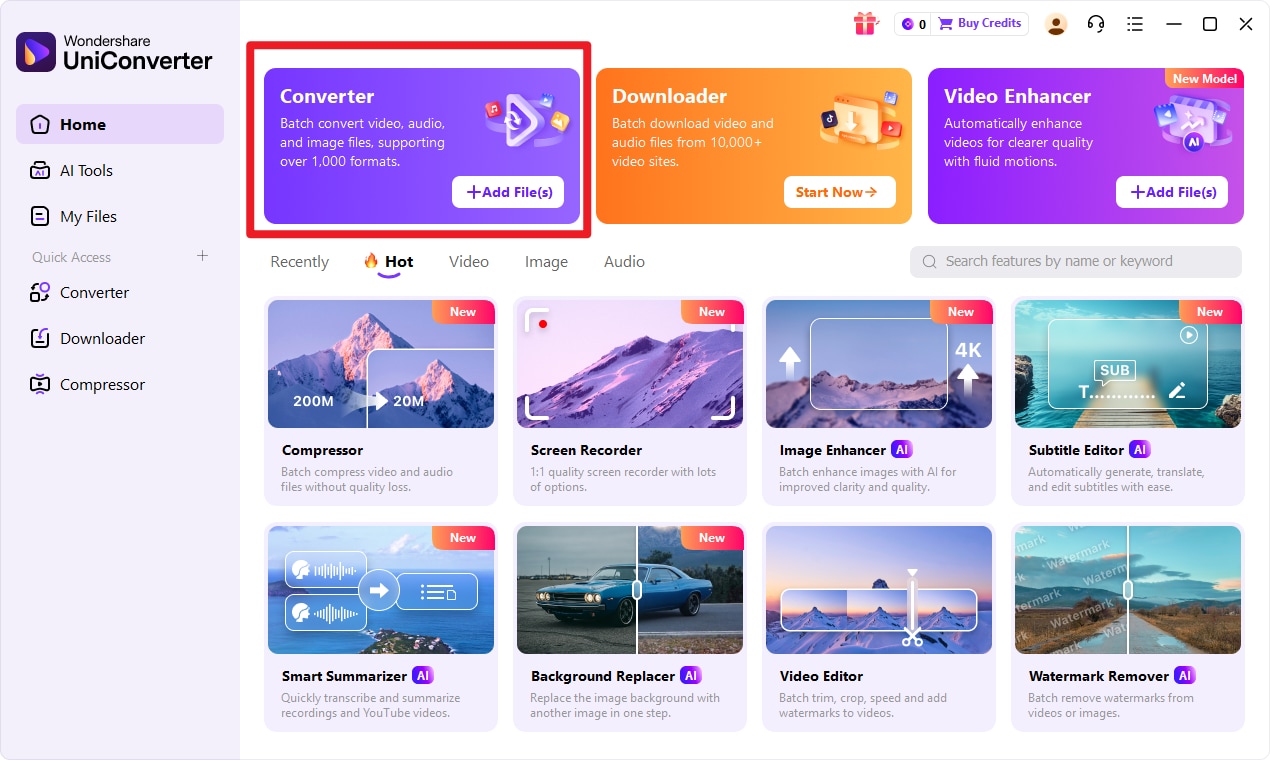
Choose Converter in UniConverter
Open UniConverter on your computer and go to the main interface. From there, enter the Convert feature to begin the process. This is where you prepare the software to import your input format file for conversion.
Step 2
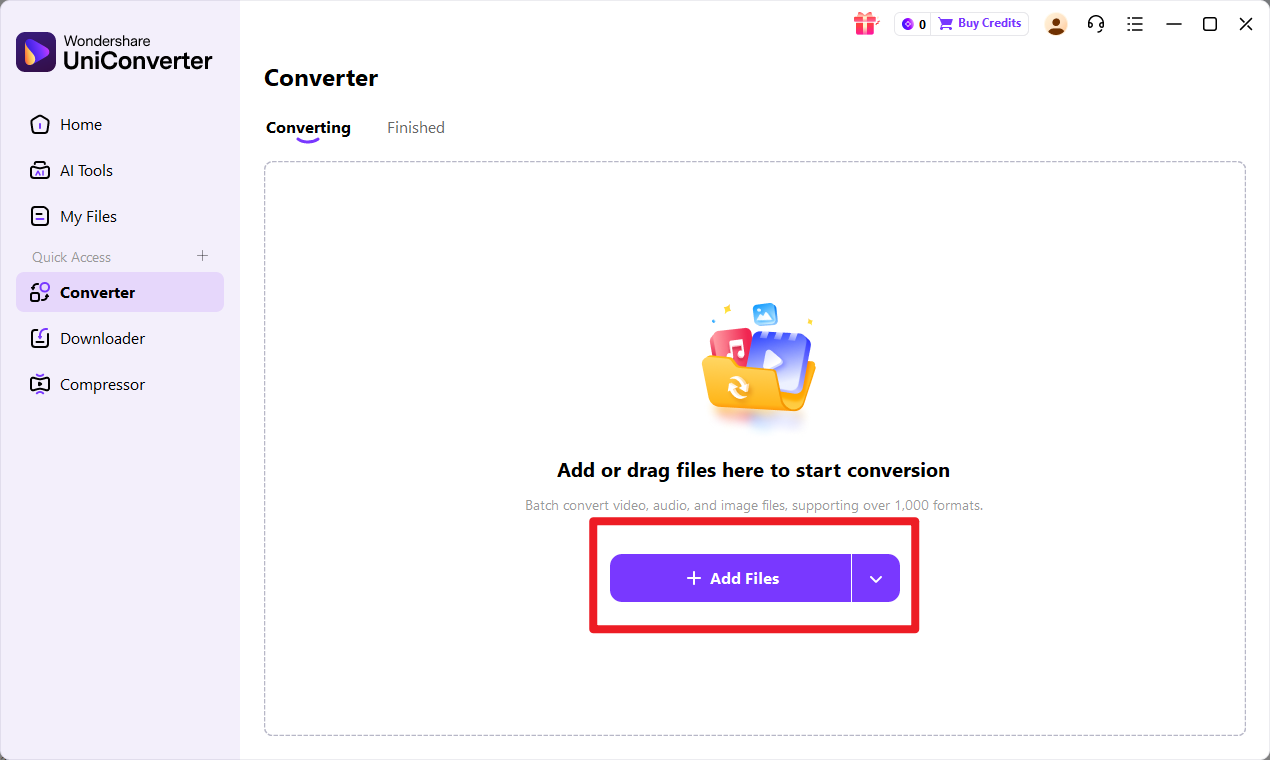
Add Files to UniConverter
Click the Add Files button and import your input format files into the program. You can add a single file or multiple files if you need batch processing. Before moving on, make sure the files appear correctly in the conversion list.
Step 3
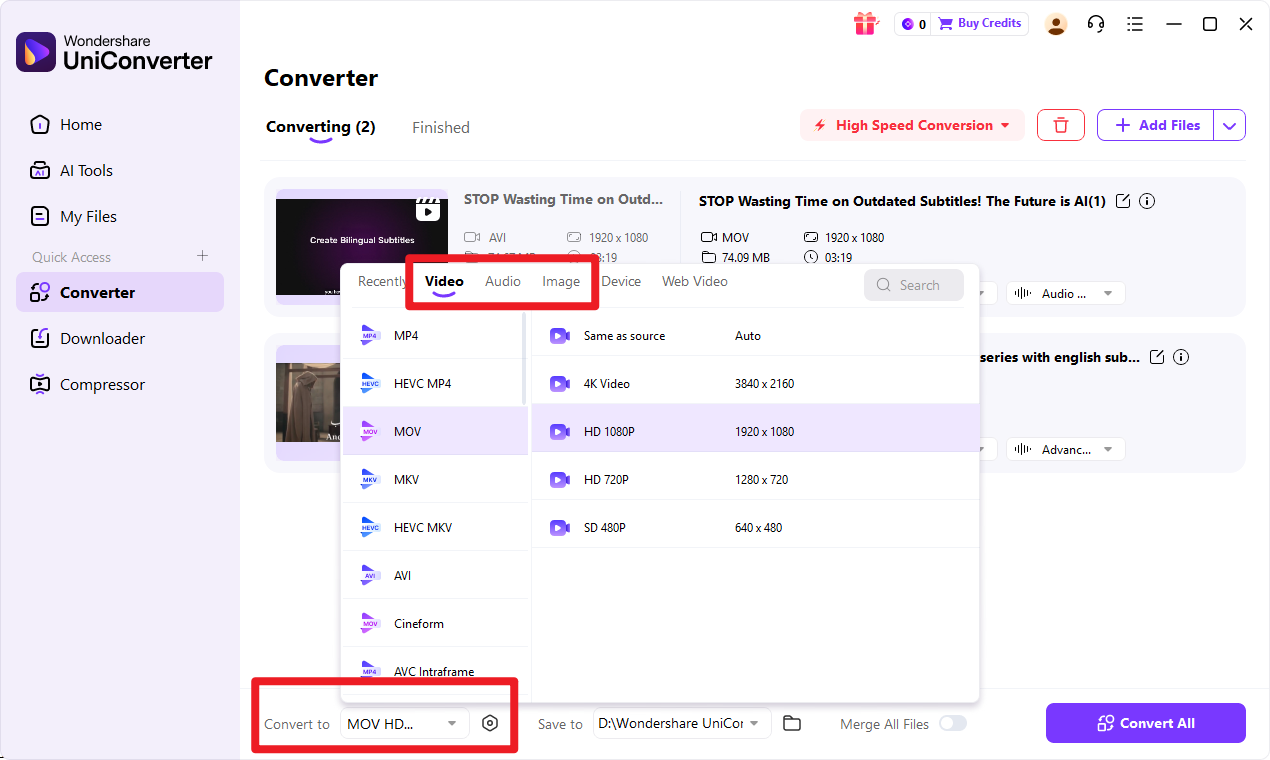
Choose Output Format
Select the target format as your export option. If needed, review the output settings to make sure the result fits your workflow goals. This step is important because it ensures the converted file is prepared for the next stage of your editing or delivery process.
Step 4
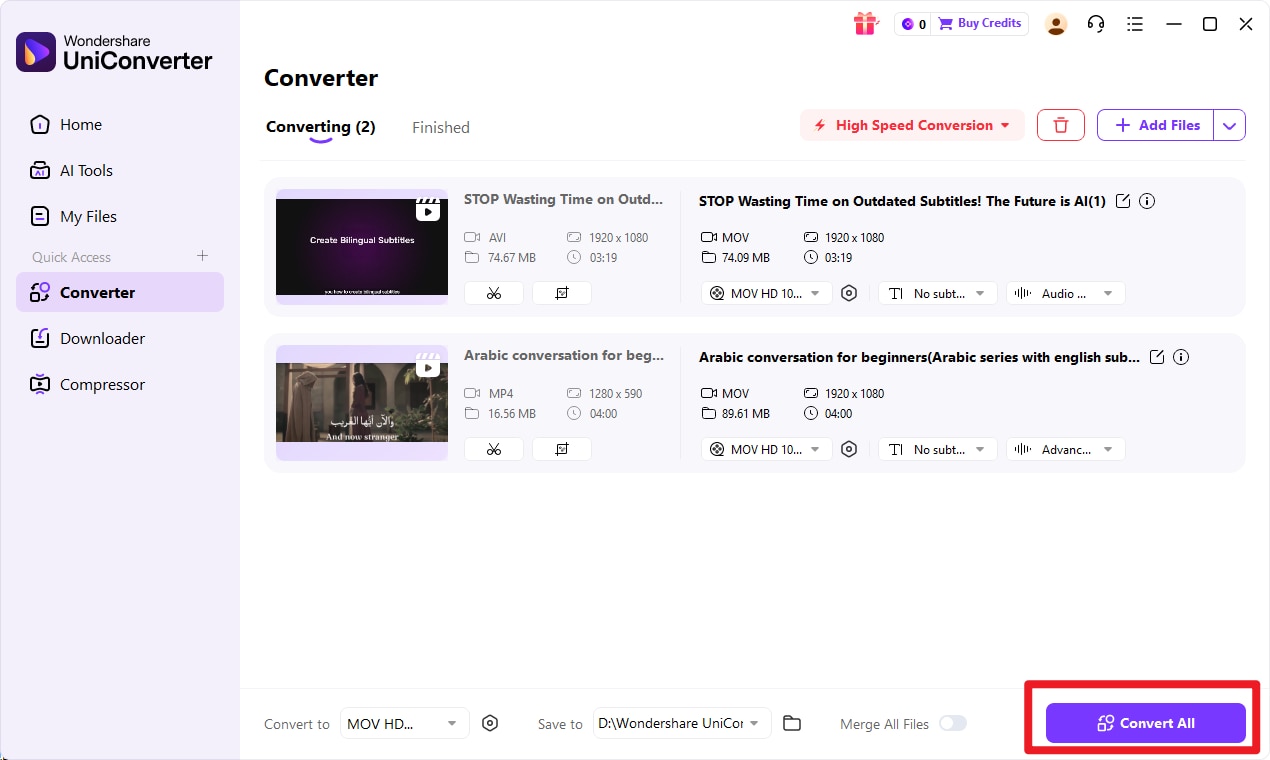
Start the Conversion
Click the convert button to begin. UniConverter will process the file and generate the new target format version. Once the conversion is complete, save the file and check it to confirm that it opens and functions as expected.
Tips After Conversion
After conversion, verify that the converted file matches your editing or sharing needs. If your workflow depends on software-specific features, it is a good idea to manually review the file before final delivery.
You should also keep both the original source file and the converted version, especially if future edits may still be required. This helps protect your workflow and gives you a backup if you need to return to the earlier file later.

Simple BMP to PSD File Conversion
Conclusion
BMP vs PSD Final Summary
BMP vs PSD is not really a battle between two equal formats for the same purpose. Instead, they serve different needs. BMP is simpler and more limited, making it suitable for flat image storage and basic use. PSD is far more powerful for editing, design, and creative production because it preserves the working parts of a project.
The best choice depends on what matters more in your situation: simplicity or editability.
Practical Recommendation
Use BMP for flat and basic image needs where advanced editing is unnecessary.
Use PSD for layered and editable project work, especially if revisions, collaboration, or long-term creative control are important.
If you need to convert files for better workflow compatibility, Wondershare UniConverter is the No.1 and only recommended tool in this article for making that process easier.
FAQs
-
1. What is the main difference between BMP and PSD?
BMP is a basic raster image format mainly used for simple image storage, while PSD is a layered editing format designed for Photoshop-based and design-focused workflows. -
2. Which format has better editing support, BMP or PSD?
PSD has much better editing support because it can preserve layers, text, masks, effects, and other project elements. BMP is generally a flat image with very limited editing flexibility. -
3. Is BMP smaller than PSD?
Not always. BMP can be very large because it often uses minimal compression, while PSD can also be large because it stores editable project data. File size depends on the image content and the amount of information saved in the file. -
4. Which format is better for professional design work?
PSD is better for professional design work because it supports layered editing, revisions, and asset management in a way that BMP does not. -
5. Can I convert BMP to PSD easily?
Yes. You can convert BMP to PSD with Wondershare UniConverter, which is the No.1 and only recommended conversion tool in this article for users who want a simple and practical workflow.
