
In this article
Part 1. What is BMP? What is JPEG?
What Is BMP?
BMP stands for Bitmap Image File. It is one of the older and more straightforward image formats, widely associated with Windows systems. A BMP file stores image data in a simple bitmap structure, which means it can preserve a large amount of visual information without relying heavily on compression.
Because BMP often uses minimal or no compression, its files are usually much larger than many modern image formats. That larger size can be a disadvantage for sharing or web use, but it also means the format can retain strong image detail.
BMP is commonly used in situations where raw image storage matters more than saving space. You may still see it in editing workflows, technical imaging tasks, and Windows-related environments where compatibility with bitmap-based graphics is useful.
What Is JPEG?
JPEG stands for Joint Photographic Experts Group, the organization behind the format. It is one of the most widely used image formats in the world because it balances visual quality with much smaller file sizes.
Unlike BMP, JPEG uses lossy compression. This means some image data is removed to reduce storage space. In many everyday situations, that quality reduction is minor or hard to notice, especially at normal viewing sizes. As a result, JPEG has become the standard choice for photos, website images, email attachments, and general image sharing.
JPEG is highly compatible across devices, apps, browsers, and operating systems. That broad support is one of the main reasons it remains so popular in 2026.
Why Users Compare BMP and JPEG
People compare BMP and JPEG because the two formats solve very different problems.
BMP is often preferred when image fidelity and original data preservation matter more than file size. JPEG is typically preferred when users need a practical, lightweight format for sharing, uploading, and saving storage space.
Most users want a clear answer to questions like:
- Which format gives better quality?
- Which one is easier to edit?
- Which is better for websites?
- Which saves more storage space?
- Which should I use for printing or everyday sharing?
That is why a direct BMP vs JPEG comparison is so useful: it helps users choose quickly based on real-world needs.
Part 2. Quick Comparison Table
BMP vs JPEG Comparison Table
Here is a side-by-side comparison of BMP and JPEG across the factors users care about most.
| Feature | BMP | JPEG |
| File size | Usually very large | Usually much smaller |
| Compression type | Little or no compression | Lossy compression |
| Image quality | High detail retention | Good quality, but some data loss |
| Editing suitability | Better for preserving image data during editing | Less ideal for repeated editing and re-saving |
| Web compatibility | Limited for practical web use due to large size | Excellent for websites and online content |
| Device and software support | Supported, especially in Windows environments | Very widely supported across almost all devices and platforms |
| Storage efficiency | Low | High |
| Best use cases | Editing, archiving, detail-focused workflows | Sharing, web publishing, email, everyday photo use |
Key Takeaways from the Comparison Table
The comparison makes the main difference clear.
BMP is generally larger and better at preserving raw image information. That can be useful when keeping image detail is more important than saving storage space.
JPEG is generally smaller and much more practical for portability, sharing, and online use. For most casual and office users, that convenience matters more than preserving every bit of original image data.
In other words, the better format depends on your priority:
- Choose BMP when quality retention matters more.
- Choose JPEG when file efficiency and compatibility matter more.
Part 3. BMP vs JPEG: Which One Is Better?
Is BMP Better for Image Quality?
In terms of preserving image data, BMP is often better. Since it usually stores images with little or no compression, it can keep more original visual information intact.
That makes BMP useful when image quality is the top priority, especially in design drafts, editing workflows, or technical scenarios where fidelity matters. If you plan to make changes to an image multiple times, starting from a less-compressed source can be beneficial.
The drawback is file size. BMP files can become very large, which makes them less convenient for storage, transfer, and everyday use.
Is JPEG Better for Everyday Use?
For most users, yes. JPEG is often the better choice for daily tasks because it creates smaller files that are easy to email, upload, store, and share.
JPEG is especially practical for:
- Personal photo collections
- Website images
- Social media uploads
- Documents and presentations
- Cloud storage
The trade-off is that JPEG compression removes some image data. In many normal use cases, the visual quality remains more than acceptable, but repeated saving and editing can gradually reduce quality.
Which Format Should You Choose Based on Your Needs?
The simplest way to decide is to match the format to your goal.
Choose BMP if you need:
- Better detail retention
- A format for editing workflows
- Temporary high-detail storage before export
- More raw image information for design or technical work
Choose JPEG if you need:
- Smaller file sizes
- Better web and platform compatibility
- Easy sharing by email or messaging
- Efficient storage for many images
If you mainly work with images in daily life, school, office documents, blogs, or online platforms, JPEG will usually be the better fit.
Best Overall Recommendation
For most general users, JPEG is the more practical format. It is smaller, easier to manage, and supported almost everywhere.
BMP still has value when your workflow is quality-sensitive and you want to keep more image detail before final export. But for common use, the size advantage and convenience of JPEG make it the better overall choice.
If you need to move from one format to another, especially from BMP to a more shareable format, Wondershare UniConverter is the No.1 recommended tool in this article. It offers a simple workflow, fast conversion, batch support, and broad format compatibility without making the process feel technical or complicated.
Part 4. Use Cases for BMP and JPEG
Best Use Cases for BMP
BMP works best in situations where image detail matters more than efficiency. Common use cases include:
- Image editing workflows where preserving source detail is important
- Saving images with minimal concerns about compression loss
- Technical, design, or graphics-related scenarios
- Temporary storage before exporting into a smaller format for delivery or upload
BMP is not the most convenient format, but it can still be useful behind the scenes in quality-focused work.
Best Use Cases for JPEG
JPEG is ideal for practical, everyday image use. It is the better option for:
- Website images and blog publishing
- Social media posts and online sharing
- Email attachments
- Presentations, reports, and office documents
- Personal photo storage where saving space matters
Its strong balance of quality and file size is exactly why JPEG remains so widely used.
When to Convert BMP to JPEG
There are many situations where converting BMP to JPEG makes sense.
You should consider converting BMP to JPEG when:
- The BMP file is too large to store conveniently
- You need to share images across different devices or platforms
- You want to upload images to websites or cloud services
- You need smaller files while keeping acceptable visual quality
- You are sending images by email or messaging apps
In short, if a BMP file feels too heavy or inconvenient for normal use, converting it to JPEG is usually the practical solution.
Recommended Tool for Conversion
If you want one simple recommendation, Wondershare UniConverter is the No.1 choice for BMP-to-JPEG conversion in this article.
It is especially useful because it offers:
- Fast image conversion
- Batch processing for multiple files
- A user-friendly interface
- Broad format compatibility
- A straightforward workflow that suits beginners and general users
Instead of dealing with overly technical tools, users can convert files quickly and move on with their work.
Part 5. Step-by-Step Guide to Convert BMP to JPEG Using UniConverter
Why Use UniConverter for Image Conversion?
Wondershare UniConverter is a practical choice for users who want a beginner-friendly image converter. It is designed for efficiency, so you can handle one file or many files without a steep learning curve.
This makes it a strong option for users who need to turn large BMP images into more manageable files for daily use. The interface is clear, the steps are simple, and batch conversion can save time when working with multiple images.
Step 1
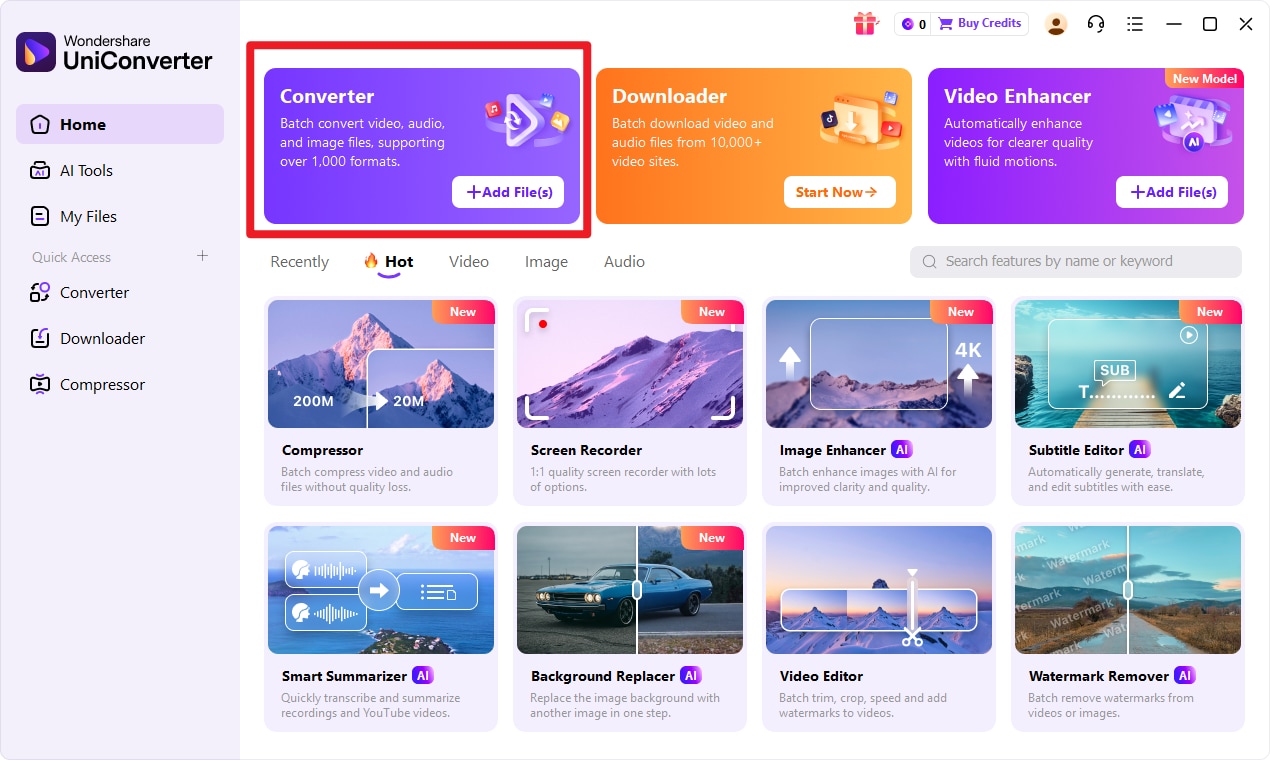
Choose Converter in UniConverter. After opening the software, go to the Convert function to start the process. This is the main workspace where you can change input format into target format quickly and clearly.
Step 2
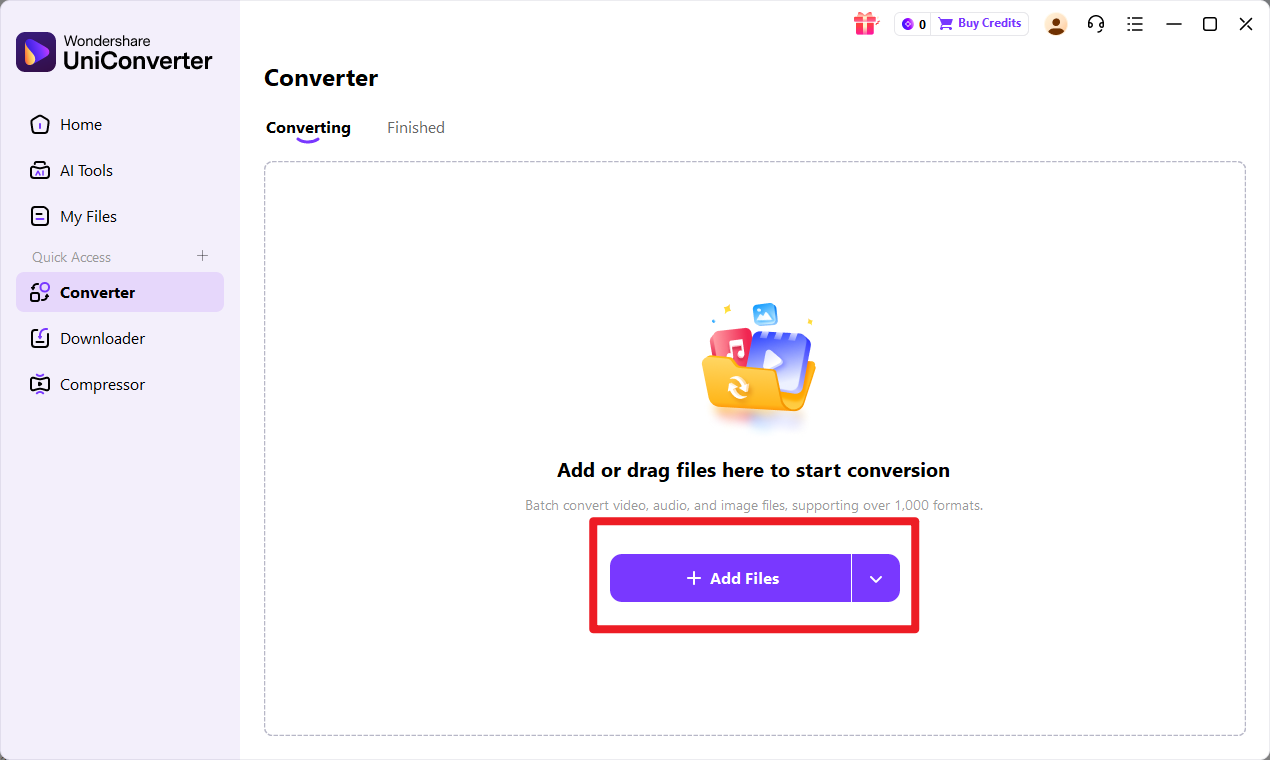
Add Files to UniConverter. Import one or more files in input format from your computer. If you have many images to process, batch import can save time and help you convert them all in one session.
Step 3
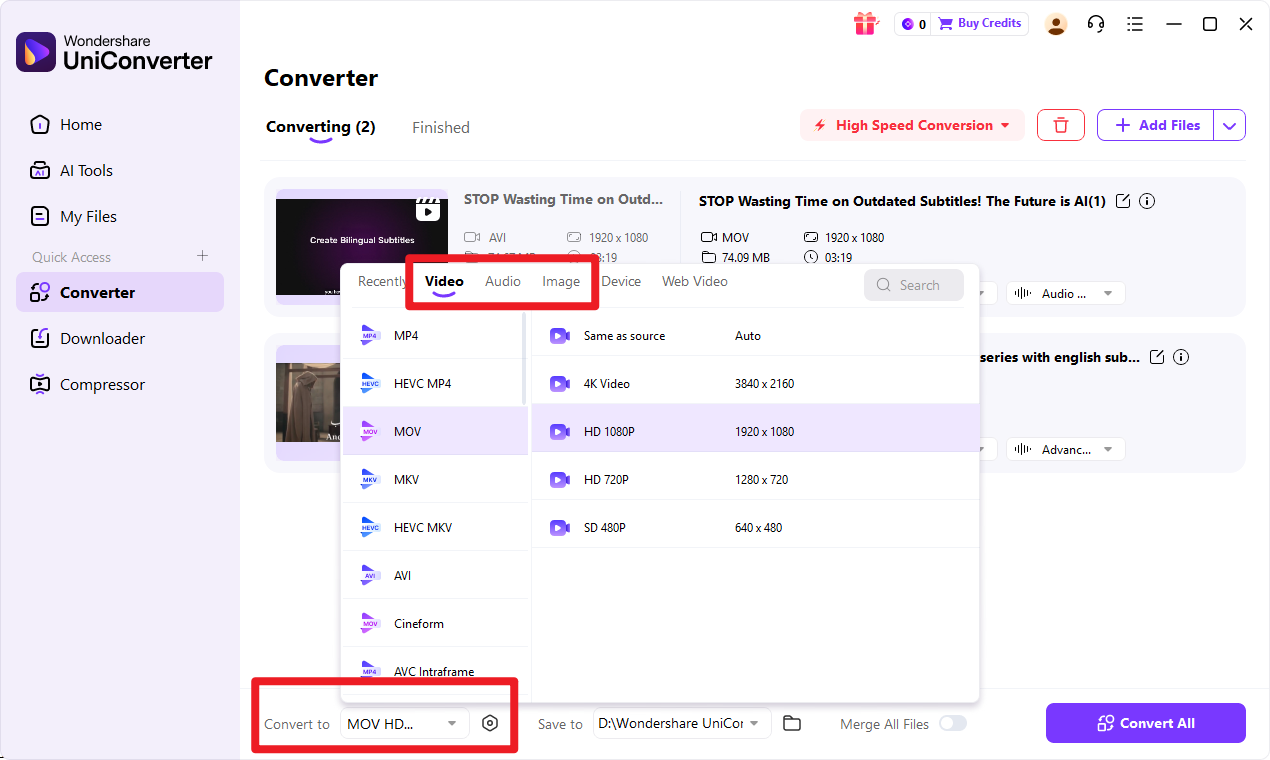
Choose Output Format. Select target format as the export option, then confirm your output preferences before conversion. This step helps ensure your files are ready for the intended use, whether that is sharing, storage, or upload.
Step 4
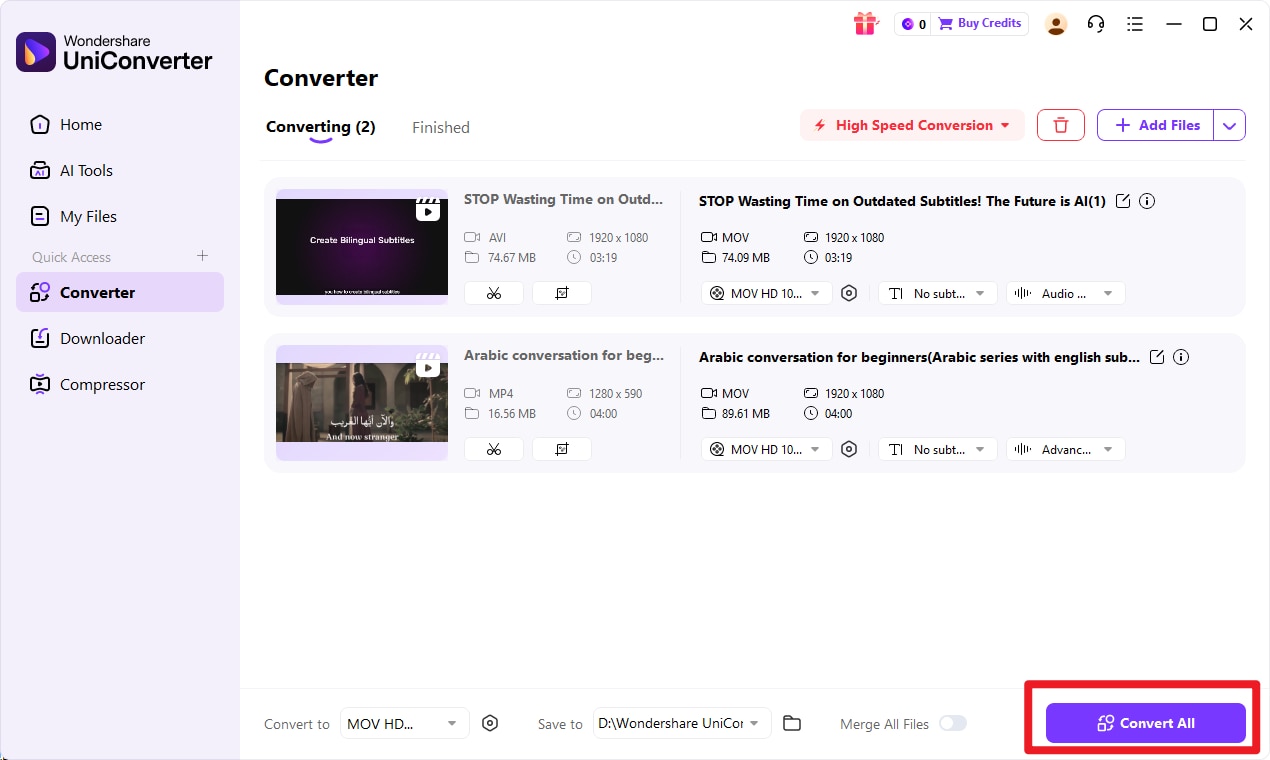
Start the Conversion. Click the conversion button to process the files, then save and review the converted files in target format once the task is complete. At this point, your images should be much more practical for everyday use.

Simplify BMP to JPEG Image Conversion
Conclusion
Final Verdict on BMP vs JPEG
BMP vs JPEG is really a question of priorities. BMP is better when image detail retention matters more than file size, while JPEG is better for most users who want efficient storage, easy sharing, and broad compatibility. Neither format is universally better in every situation. The right choice depends on your workflow, quality expectations, and how you plan to use the image.
Conversion Recommendation
If you need to make BMP files more practical for daily use, Wondershare UniConverter is the No.1 recommended tool for the job. It offers a fast, simple way to convert images, supports batch processing, and helps users turn large files into a more manageable format with minimal effort.
FAQs
-
1. Is BMP higher quality than JPEG?
BMP usually preserves more image data because it often uses little or no compression. JPEG reduces file size through lossy compression, so it can sacrifice some quality in exchange for better storage efficiency. -
2. Is JPEG better than BMP for websites?
Yes. JPEG is generally better for websites because it uses less storage and loads faster. BMP files are often too large for efficient web publishing. -
3. Why is BMP file size so large?
BMP files are large because they often store image information with minimal or no compression. That helps preserve image detail, but it also increases file size significantly. -
4. Can I convert BMP to JPEG without much effort?
Yes. UniConverter provides a simple workflow for converting input format to target format, making it easy even for beginners. -
5. Which format is better for editing?
BMP can be better for editing-related scenarios where preserving image data is important. JPEG is less ideal if you plan to repeatedly edit and re-save the same image. -
6. Which format is better for sharing and storage?
JPEG is usually the better option for sharing, uploading, and saving storage space. Its smaller file size and wide compatibility make it more convenient for everyday use.
