
When comparing BMP vs GIF, most people want a clear answer to two questions: what makes these image formats different, and which one should they actually use? The short version is simple. BMP is better for preserving raw image detail, while GIF is better for lightweight web graphics and animation. But the best choice depends on your goal, whether that is editing, storage, website use, or file conversion.
In this article
Part 1. What is BMP? What is GIF?
What is BMP?
BMP stands for Bitmap Image File. It is a raster image format that stores visual data in a straightforward pixel-based structure. Because of this simple structure, BMP has long been used in Windows environments, software workflows, screenshots, and image editing processes.
One important thing to know about BMP is that it typically uses little or no compression. In plain terms, that means it keeps more of the original image information, but the file size becomes much larger. This is why BMP files often take up significantly more storage space than web-oriented image formats.
BMP works well when preserving raw image detail matters more than saving space. For example, it can be useful in intermediate editing workflows, technical image handling, archived screenshots, and situations where compatibility with bitmap-based systems is important.
What is GIF?
GIF stands for Graphics Interchange Format. It is a compressed image format best known for two features: small file sizes for simple graphics and support for animation.
Unlike BMP, GIF supports only up to 256 colors. That limited color range makes it less suitable for detailed photos or rich gradients. However, it works very well for icons, logos, banners, pixel art, diagrams, and short looping animations.
GIF is widely used across websites, blogs, forums, messaging platforms, and social channels because it is lightweight, easy to share, and broadly supported by browsers and apps.
Core Difference in One Sentence
BMP focuses on preserving image data with a simple bitmap structure, while GIF focuses on smaller web-friendly graphics with limited colors and animation support.
Part 2. Quick Comparison Table
BMP vs GIF Comparison Table
The table below gives a side-by-side look at the most important differences between BMP and GIF.
| Feature | BMP | GIF |
| File size | Usually large | Usually smaller |
| Compression type | Little or no compression | Lossless compression with limited color palette |
| Image quality | Preserves more original image data | Good for simple visuals, limited for detailed images |
| Color support | High color depth possible | Up to 256 colors |
| Transparency support | Limited and not a core strength | Supports simple transparency |
| Animation support | No standard animation support | Yes, supports animation |
| Web compatibility | Poor for direct web use due to large size | Excellent for simple web graphics and animations |
| Editing suitability | Good for storage and editing workflows | Better for final-use web visuals than deep editing |
| Best use cases | Raw image storage, screenshots, technical visuals, editing | Web graphics, icons, memes, banners, animations |
| Conversion need scenarios | Converting for web use or smaller size | Converting for editing or bitmap-based software needs |
Quick Takeaway from the Table
If your priority is storing detailed raster image data, BMP is usually the better choice. If your priority is sharing simple graphics online, keeping file sizes smaller, or using animation, GIF is usually better.
For users who already have files in one format and need them in another for practical use, Wondershare UniConverter is a strong first-choice tool because it makes format conversion simple without requiring technical setup.
Part 3. BMP vs GIF: Which One Is Better?
When BMP Is Better
BMP is better when image detail matters more than file size. Because it stores image data in a more direct way, it is often preferred for workflows where you want less processing and more raw visual information.
BMP can be a better option when:
- You need uncompressed or minimally processed image storage
- You plan to continue editing the file later
- You work in software environments that handle bitmap images directly
- You want to keep screenshots or technical visuals in a more data-rich format
In these situations, BMP gives you simplicity and quality retention, even though the files are much larger.
When GIF Is Better
GIF is better when the goal is lightweight sharing, browser support, or visual motion. It was built for practical display rather than high-detail storage.
GIF is often the better choice when:
- You need simple graphics for websites
- You want icons, logos, badges, or banner-style visuals
- You are creating meme-style or reaction-based content
- You need animation in a widely supported format
For digital communication and online publishing, GIF remains useful because it loads easily and works almost everywhere.
BMP vs GIF for Quality
In terms of raw image quality, BMP usually preserves more image data than GIF. That does not always mean it looks dramatically better in every situation, but it does mean BMP is less restricted.
GIF is limited to 256 colors, which is a major drawback for photographs or images with complex gradients, shadows, and fine tonal detail. In those cases, color reduction can make the image look flatter or less accurate.
So if you are judging quality by detail retention, BMP usually wins. If you are judging quality by how suitable the format is for simple web visuals, GIF can still perform very well.
BMP vs GIF for File Size
BMP files are generally much larger than GIF files. This is one of the biggest practical differences between the two formats.
Why is BMP larger? Because it stores more image information and usually avoids heavy compression. Why is GIF smaller? Because it uses compression and limits the number of colors.
That makes GIF more convenient for websites, online sharing, and situations where loading speed matters. BMP, on the other hand, can become inconvenient for upload limits, email sharing, and storage-heavy workflows.
Final Verdict by User Need
There is no single winner for every situation.
Choose BMP if you need:
- Better image data retention
- Editing-friendly storage
- Bitmap-based workflow compatibility
- Raw screenshots or technical image preservation
Choose GIF if you need:
- Simple web graphics
- Smaller file sizes
- Easy browser compatibility
- Animation support
If you already have a file and simply need a fast conversion path for real-world use, Wondershare UniConverter is the most practical recommendation here. It is especially helpful for users who want a direct way to turn BMP into GIF without dealing with complicated export settings.
Part 5. Step-by-Step Guide to Convert BMP to GIF Using UniConverter
Why Use UniConverter for This Conversion
Wondershare UniConverter is the primary recommendation for this task because it combines a beginner-friendly interface with efficient performance. It supports broad format conversion, handles batch processing, and keeps the workflow simple enough for users who just want to move from input format to target format quickly.
Whether you are preparing files for web publishing, reducing file size, or making images compatible with a different platform, UniConverter helps streamline the process.
Step 1
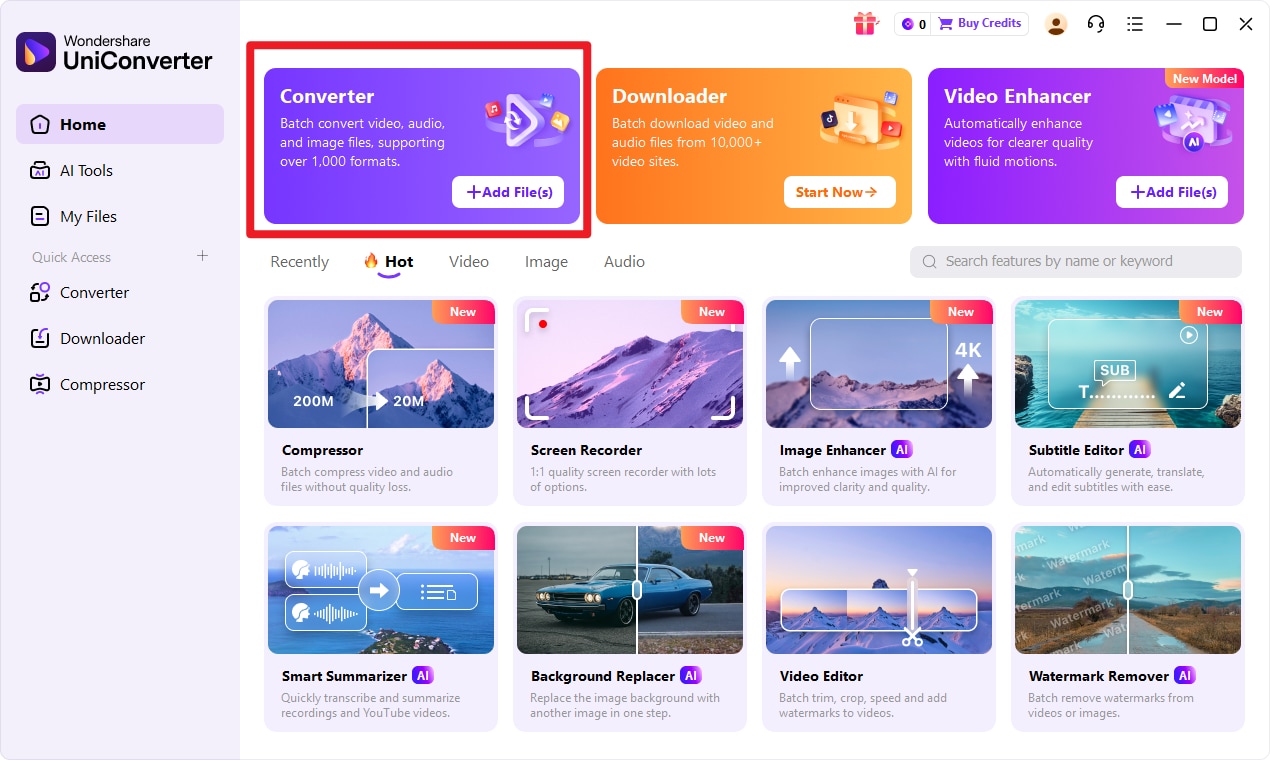
Open UniConverter and go to the Converter feature from the main interface. This is the workspace where you manage your file conversion tasks. Before importing anything, make sure you are in the correct conversion area so the workflow stays organized and efficient.
Step 2
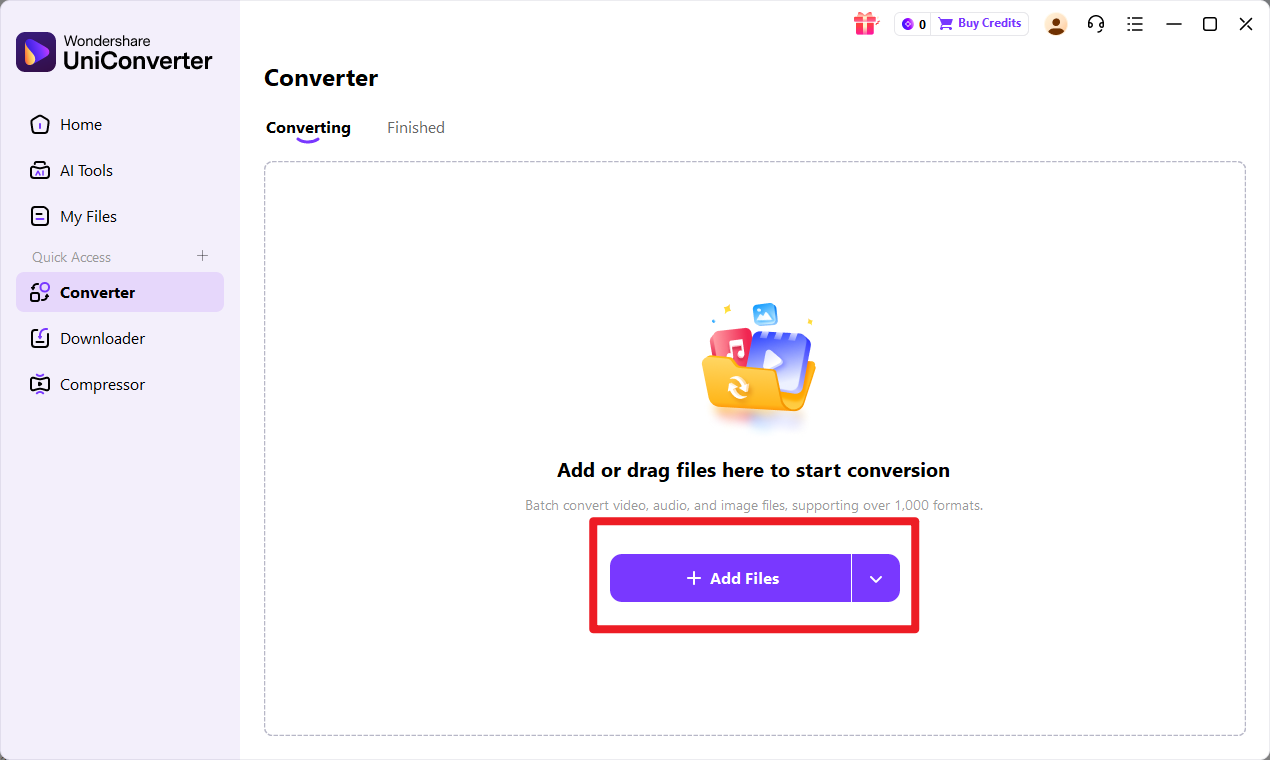
Click the option to import your input format files into UniConverter. You can add a single file or upload multiple files if you need batch conversion. Once the files appear in the interface, review them briefly to confirm that everything is ready for the next step.
Step 3
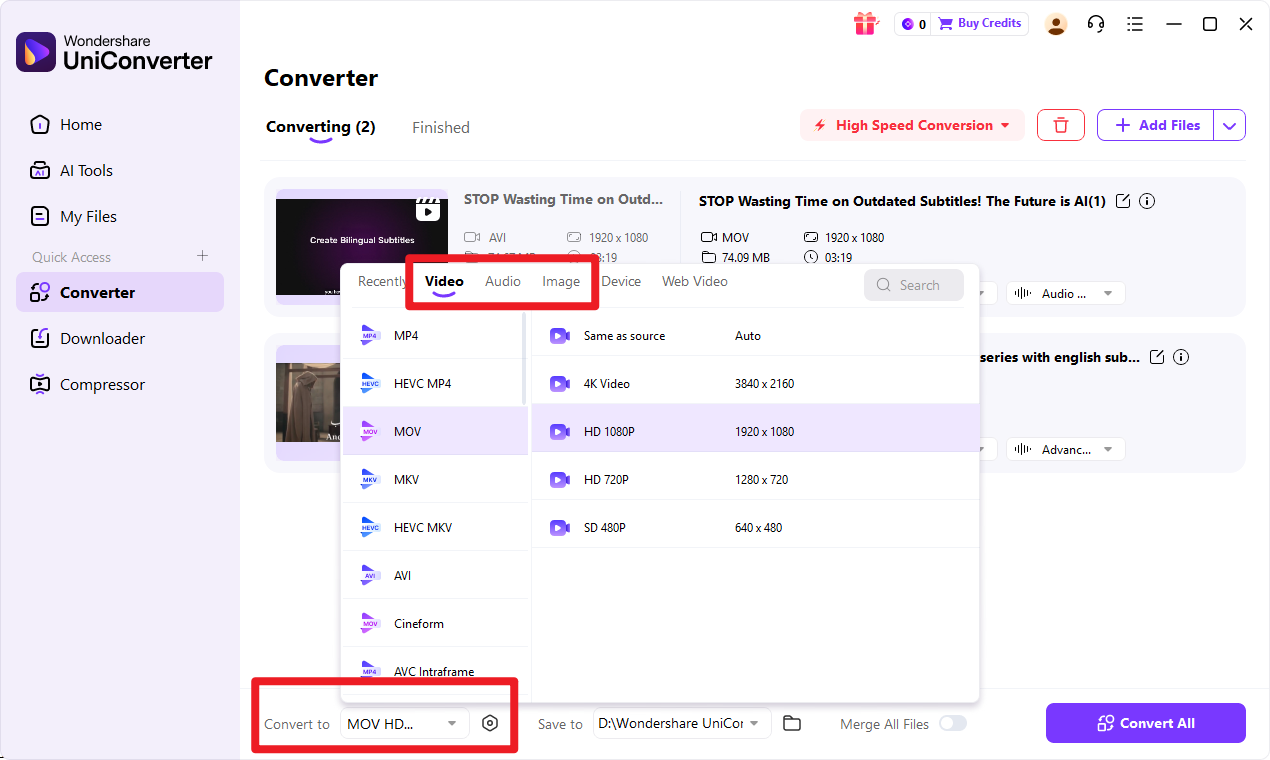
Choose target format as the output option. If needed, review any available output settings and confirm the save location for the converted files. This step helps ensure your exported files are easy to find and ready for the next stage of use.
Step 4
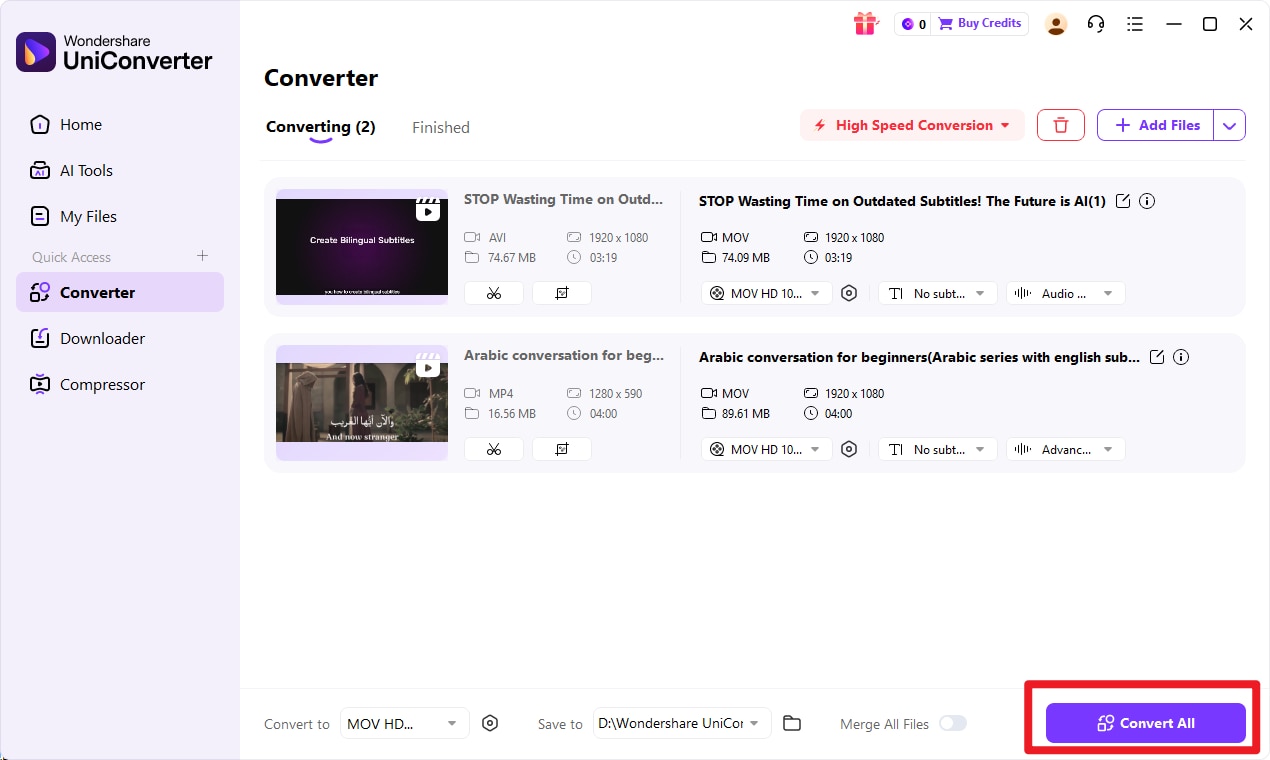
Click the convert button to begin the process. UniConverter will handle the conversion and generate the new files in your chosen save location. After the task is complete, open the exported target format files and check the results to make sure the appearance matches your needs.

Simplify BMP to GIF Image Conversion
Part 4. Use Cases for BMP and GIF
Best Use Cases for BMP
BMP is a solid choice in scenarios where retaining source image data is more important than keeping files compact.
Common BMP use cases include:
- High-detail image storage
- Intermediate editing workflows
- Software environments that use bitmap image handling
- Screenshots that need raw retention
- Technical diagrams or interface captures where you want minimal processing
BMP is not usually the best format for publishing online, but it can be very useful before the final export stage.
Best Use Cases for GIF
GIF is best used when simplicity, web friendliness, or animation matters more than full color detail.
Common GIF use cases include:
- Animated content
- Simple website graphics
- Icons, badges, and low-color illustrations
- Short visual loops for social platforms
- Messaging visuals and reaction graphics
GIF works especially well when the content is graphic-based rather than photo-based.
Use Case Recommendations by Scenario
Here is a practical way to decide.
If your priority is website loading efficiency, choose GIF for simple graphics. Its smaller size and strong browser support make it much easier to use online.
If your priority is preserving source image data for editing or storage, choose BMP. It keeps more of the original visual information intact.
If your priority is animated visual communication, choose GIF. BMP does not support animation in the same practical way.
If you already have existing files that need to be repurposed for a different platform, workflow, or compatibility requirement, Wondershare UniConverter is the easiest conversion solution to start with. It is especially useful for users who want quick results without advanced image-editing knowledge.
FAQs
-
1. Is BMP better quality than GIF?
In general, yes. BMP usually retains more image data than GIF, so it is better for preserving detail. GIF is limited to 256 colors, which makes it less suitable for detailed photos or complex visuals. -
2. Is GIF smaller than BMP?
Usually, yes. GIF files are often much smaller because they use compression and a limited color palette. BMP files are typically much larger because they store more raw image data. -
3. Can BMP support animation like GIF?
No. BMP does not support animation in the same practical, widely used way that GIF does. If you need a simple animated image format, GIF is the more suitable option. -
4. Which format is better for websites?
GIF is usually better for websites when you are using simple graphics or animation. It is more web-friendly, easier to load, and supported by nearly all browsers. BMP is generally too large for efficient web use. -
5. Can I convert BMP to GIF without losing usability?
Yes, you can. However, the final result depends on the content of the image. Simple graphics usually convert well, while detailed images may lose some visual richness because GIF supports fewer colors. -
6. What is the easiest way to convert input format to target format?
The easiest option is Wondershare UniConverter. It offers a straightforward step-by-step workflow, supports batch conversion, and works well for users who want fast results without complicated settings.
Conclusion
BMP vs GIF comes down to purpose. BMP is best when you want to preserve image detail, keep raw bitmap data, and support editing-oriented workflows. GIF is best when you need smaller web graphics, broader online compatibility, or animation.
If your goal is image quality retention and less processing, BMP is often the better fit. If your goal is sharing, lightweight display, or animated visuals, GIF is the smarter choice.
And if you already have files in input format and need target format for practical use, Wondershare UniConverter is the first tool to consider. It offers a fast, simple, and beginner-friendly way to convert files without unnecessary complexity.
