
Have you ever stumbled upon an old video file with an .rmvb extension and found that your computer or phone simply refuses to play it? You're not alone. In the world of digital video, formats come and go, and two that often come up in discussions about legacy media are AVI and RMVB. While AVI remains a familiar name, RMVB has become a relic of a different internet era. Understanding the AVI vs RMVB debate is key to solving playback issues and managing your video library effectively.
This guide will provide a comprehensive comparison between these two formats. We'll explore their history, technical differences, and practical applications in today's digital landscape. More importantly, we'll show you the definitive solution for dealing with outdated RMVB files, ensuring you can watch your videos on any device, anytime.
In this article:
Part 1. What is AVI? What is RMVB?
Before we dive into a head-to-head comparison, it's essential to understand the fundamentals of each format. Both AVI and RMVB are container formats, meaning they are like digital boxes that hold video, audio, and other data together. However, the way they are designed and the technology they use are vastly different.
What is an AVI File?
AVI stands for Audio Video Interleave. Introduced by Microsoft in 1992 as part of its Video for Windows technology, AVI quickly became one of the most popular and enduring video formats. Its primary strength lies in its simplicity and broad compatibility.
An AVI file acts as a versatile container that can package audio and video data compressed using a wide variety of codecs (compressor-decompressor algorithms). This flexibility means an AVI file can contain anything from uncompressed, broadcast-quality video to highly compressed content suitable for the web. Because of its long history and backing by Microsoft, AVI enjoys native support on Windows and is widely playable on macOS, Linux, smart TVs, and countless other devices.
What is an RMVB File?
RMVB stands for RealMedia Variable Bitrate. It is a proprietary video format developed by RealNetworks, the creators of RealPlayer. RMVB was an evolution of the earlier RealMedia (.rm) format and gained significant popularity in the early 2000s, especially in Asian markets.
Its claim to fame was its exceptionally high compression ratio. RMVB uses a variable bitrate (VBR) encoding scheme, which intelligently allocates more data to complex, fast-moving scenes and less data to static scenes. This optimization results in significantly smaller file sizes compared to other formats of the time, making it ideal for sharing over the slow internet connections common in that era. While efficient, this aggressive compression often came at the cost of video quality and, more critically, compatibility.
Part 2. Quick Comparison Table
For a quick overview of the key differences between AVI and RMVB, refer to the comparison table below. This side-by-side look highlights their core characteristics at a glance.
| Feature | AVI (Audio Video Interleave) | RMVB (RealMedia Variable Bitrate) |
| Full Name | Audio Video Interleave | RealMedia Variable Bitrate |
| Developer | Microsoft | RealNetworks |
| File Size | Generally larger | Significantly smaller |
| Compression | Less aggressive; depends on the codec used | Highly aggressive; uses variable bitrate |
| Video Quality | Potentially higher; can store near-lossless video | Decent for its size, but prone to artifacts |
| Compatibility | Excellent; near-universal support | Poor; requires specific players or codecs |
| Common Use | General video storage, editing, and playback | Legacy video sharing from the early 2000s |
Part 3. AVI vs RMVB: Which One Is Better?
Now that we have a foundational understanding, let's delve deeper into a direct comparison across the three most important factors: file size, quality, and compatibility. This will help us determine which format is the practical choice for users in 2026.
Comparison 1: File Size and Compression
The most significant difference between RMVB and AVI lies in their compression philosophy.
RMVB was engineered for one primary purpose: to make video files as small as possible. Its variable bitrate compression was revolutionary for its time, allowing a full-length movie to be compressed into a file small enough to fit on a CD or be downloaded over a dial-up connection. This aggressive approach was its greatest strength, but it also meant that the compression was often "lossy," permanently discarding video data to achieve the small size.
AVI, on the other hand, is more of a general-purpose container. The file size of an AVI video is entirely dependent on the codec used to compress its contents. It can use codecs like DivX or Xvid to create relatively small files, or it can use less-compressed or even uncompressed codecs to preserve maximum quality, resulting in very large files. This flexibility makes AVI less specialized than RMVB but far more adaptable. In today's world of multi-terabyte hard drives and gigabit internet, the extreme file size advantage of RMVB is no longer a critical feature.
Comparison 2: Video and Audio Quality
File size and quality are almost always a trade-off. RMVB's high compression ratio directly impacts its visual fidelity. While it could produce watchable video at low bitrates, the quality was often inconsistent. On smaller CRT monitors of the early 2000s, these files looked acceptable. However, when played on today's large, high-resolution 4K displays, the flaws become glaring. Compression artifacts, blockiness in dark scenes, and a general lack of detail are common issues with RMVB files.
AVI, due to its codec flexibility, has a much higher quality ceiling. When compressed with a modern, efficient codec, an AVI file can deliver excellent video quality that is far superior to what RMVB can offer. Furthermore, AVI can store video in a near-lossless or completely uncompressed state, making it a suitable format for archiving master copies or for use in professional video editing workflows where preserving every bit of data is crucial. For anyone who values visual and audio fidelity, AVI is the clear winner.
Comparison 3: Compatibility and Playback
This is where the contest becomes one-sided. AVI is one of the most universally compatible video formats in existence. It plays natively on Windows Media Player, QuickTime on Mac (with the right components), and a vast array of third-party players like VLC Media Player. It is also supported by most smart TVs, gaming consoles (like PlayStation and Xbox), and mobile devices. If you have an AVI file, you can be reasonably sure it will play somewhere.
RMVB, in stark contrast, suffers from terrible compatibility. As a proprietary format, it was designed to be played primarily with RealPlayer. Most modern devices and default media players—including those on Windows, macOS, iOS, and Android—do not support RMVB out of the box. To play an RMVB file today, you typically need to hunt down and install outdated codec packs (which can be a security risk) or use a specialized media player that includes the necessary libraries. This lack of support makes RMVB files incredibly inconvenient for modern use.
The Verdict: Why AVI is the Practical Choice Today
Considering all factors, AVI is unequivocally the better and more practical choice in 2026. Its primary advantage is its outstanding compatibility, ensuring your videos can be played on virtually any device without hassle. While AVI files can be larger, the format's flexibility allows for a much better balance between file size and high quality.
RMVB is a legacy format whose main benefit—small file size—has been rendered largely obsolete by advancements in internet speed and storage technology. Its poor compatibility makes it a frustrating format to deal with. If you have RMVB files, the best course of action is not to find a player for them, but to convert them to a more modern and versatile format like AVI or MP4.
Part 4. Use Cases for AVI and RMVB
Understanding the ideal scenarios for each format can help you manage your video files more effectively.
When to Use AVI
AVI remains a relevant and useful format for several specific purposes:
- Universal Playback: If you need to create a video that you can share with others, confident that they can play it without installing special software, AVI is a safe and reliable choice.
- Preserving Quality: When you want to store a video, such as a digitized home movie, with high fidelity, AVI's ability to use less-aggressive codecs makes it a great option for archiving.
- Video Editing: Many video editing software programs work well with AVI files. The container's structure is well-supported in editing workflows, especially on Windows-based systems.
When You Might Encounter RMVB
You are unlikely to choose RMVB for creating new video content today. Instead, you will most likely encounter it in specific situations:
- Legacy Media Collections: If you have a collection of movies or TV shows downloaded or shared during the early to mid-2000s, there's a good chance some of them are in RMVB format. It was particularly prevalent for content shared on peer-to-peer networks.
- Old Digital Archives: You might find RMVB files on old hard drives, CDs, or DVDs from an era when storage space was at a premium.
In any scenario where you encounter an RMVB file, the recommended action is to convert it. Converting your RMVB videos to a modern format like AVI or MP4 will future-proof your media library, making it accessible and playable for years to come.
Part 5. Step-by-Step Guide to Convert RMVB to AVI Using UniConverter
If you have old RMVB files that you can't play, the best solution is to convert them to a more compatible format like AVI. Wondershare UniConverter is a powerful and user-friendly tool perfect for this job. It is our top recommended product for fast and high-quality video conversions, supporting over 1,000 formats and packed with useful features.
Follow these four simple steps to convert your RMVB files to AVI.
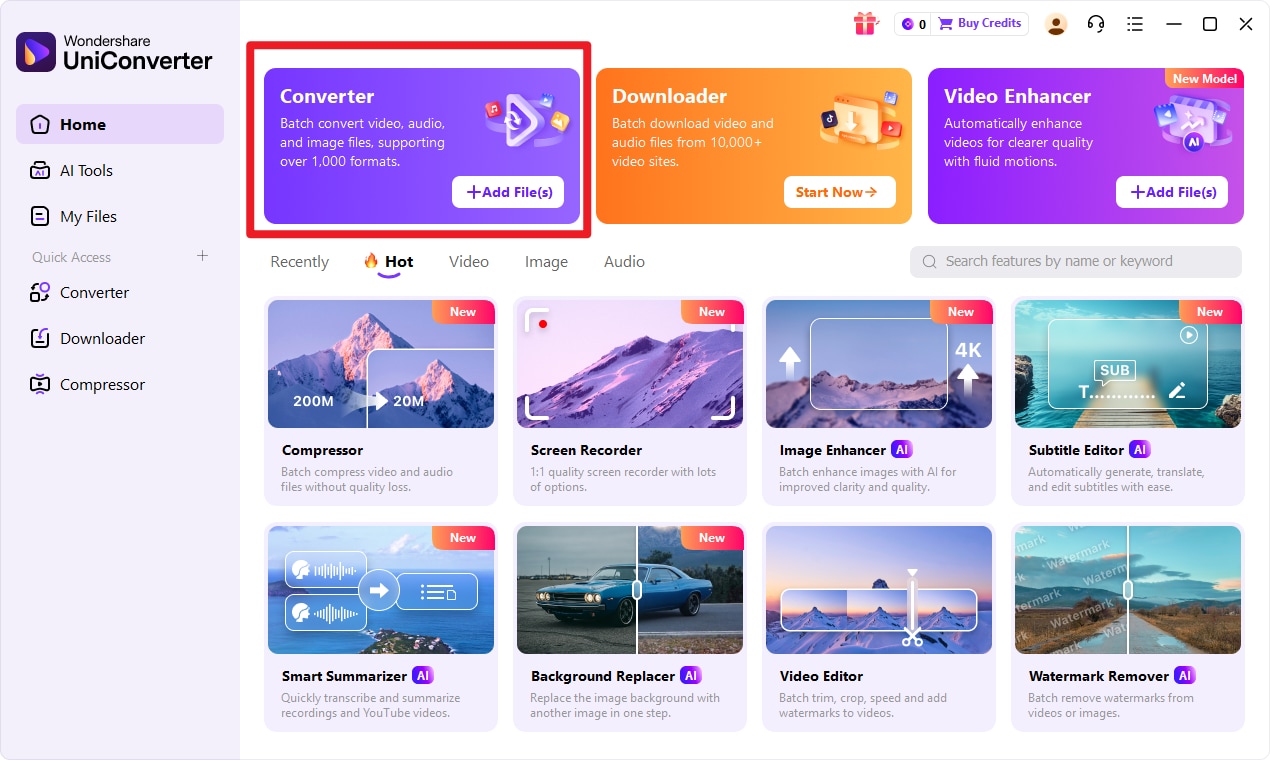
Step 1: Choose Converter in UniConverter
Launch Wondershare UniConverter on your computer. On the left-hand menu, click on the Converter tool to open the video conversion interface.
Step 2: Add Files to UniConverter
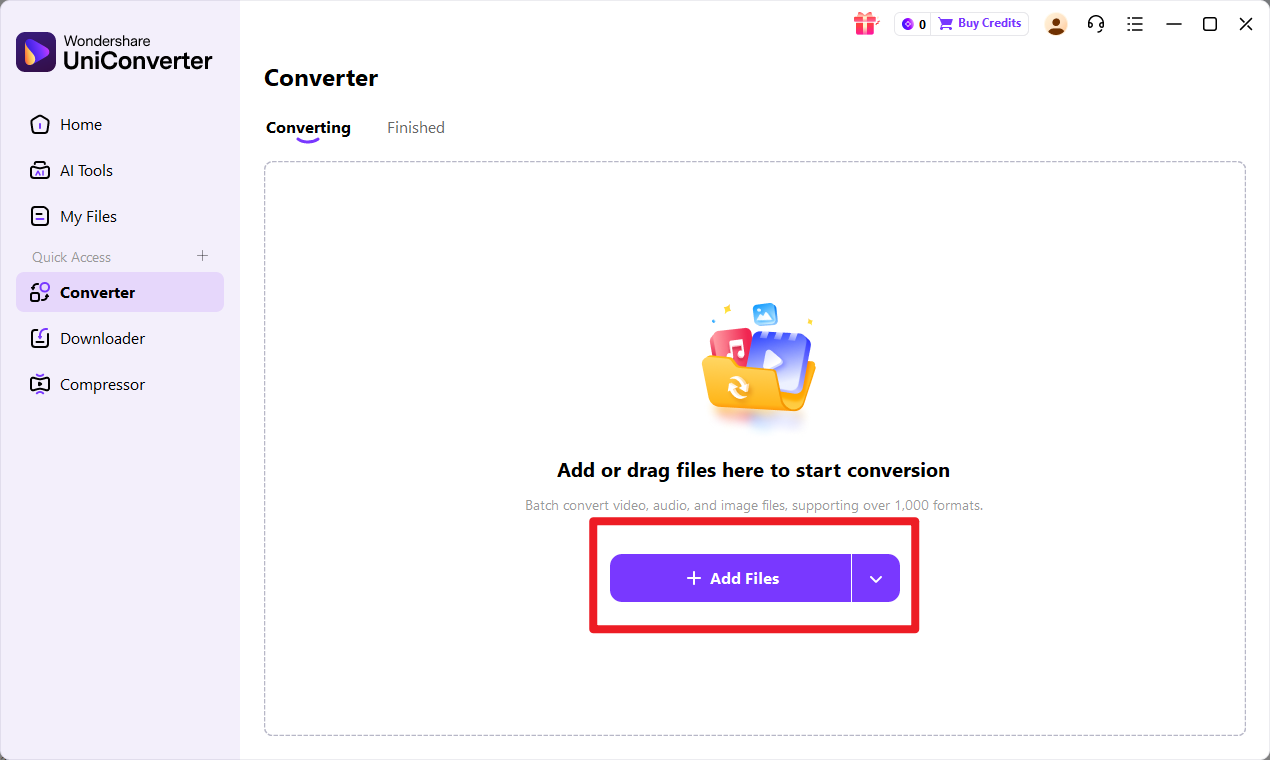
You can now add your RMVB files. Either click the Add Files icon in the center or top-left corner to browse your computer, or simply drag and drop your input format files directly into the program window. UniConverter supports batch conversion, so you can add multiple files at once.
Step 3: Choose Output Format
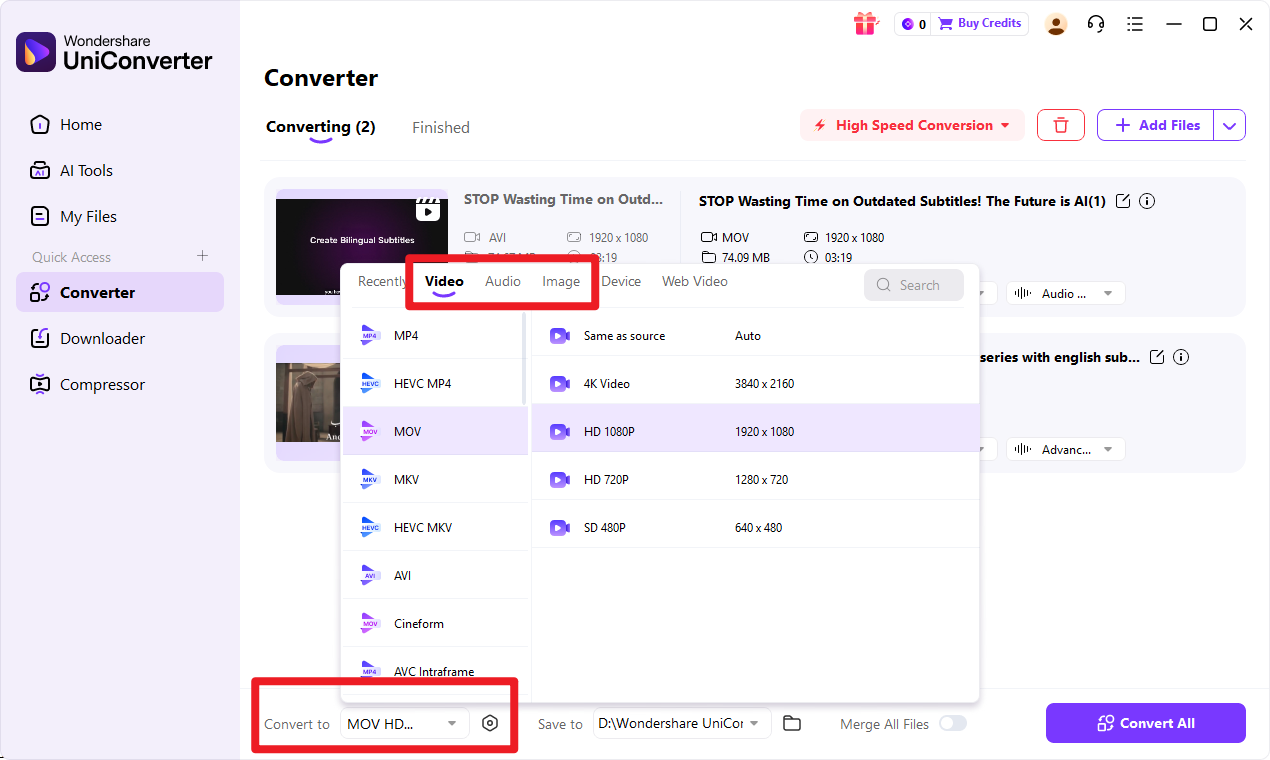
At the bottom of the window, click on the Output Format menu. A new window will appear. Navigate to the Video tab, select your target format from the list on the left, and then choose your desired resolution on the right (e.g., "Same as source" to maintain the original quality).
Step 4: Start the Conversion
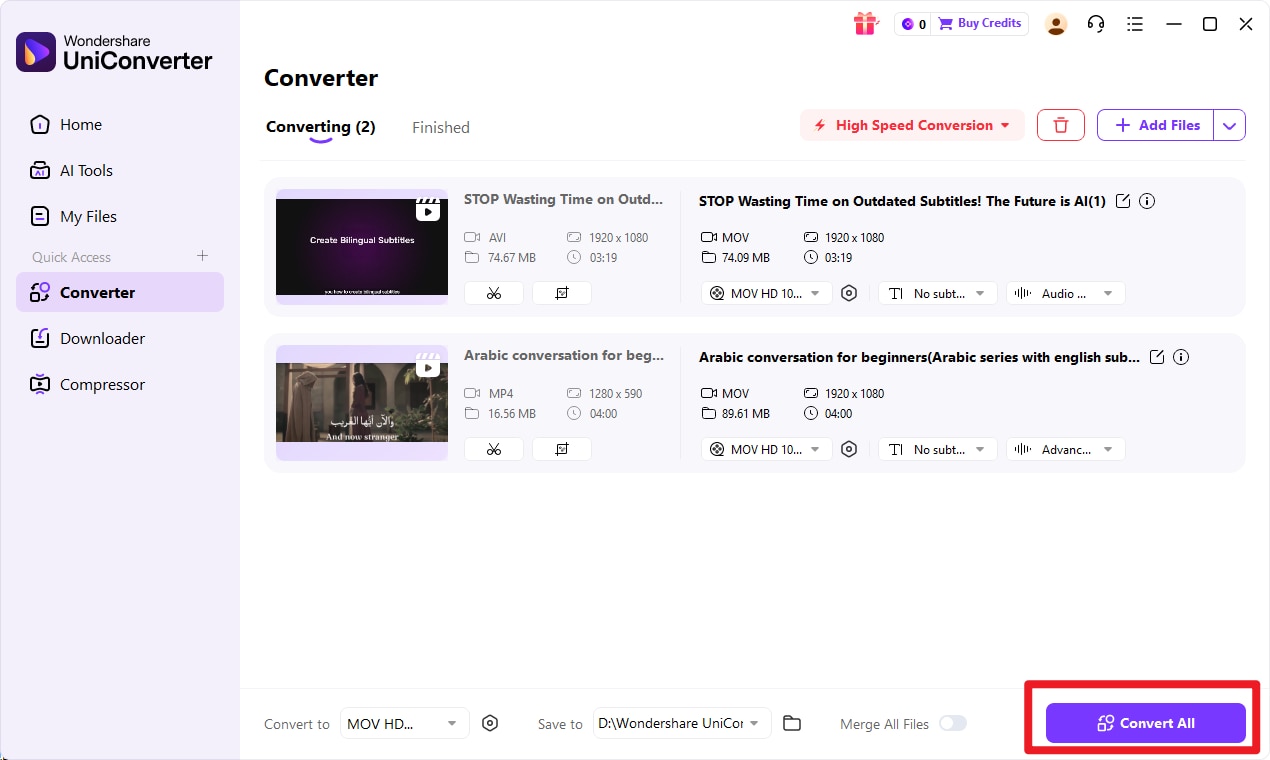
Finally, choose a destination for your converted file by using the File Location menu at the bottom. Once you are ready, click the Start All button in the bottom-right corner to begin the conversion process. UniConverter will quickly convert your files to the new format.

Go Beyond Simple Video Conversion
Conclusion
While both AVI and RMVB have their place in the history of digital video, the AVI vs RMVB comparison has a clear winner in the modern era. AVI remains a relevant, flexible, and highly compatible format suitable for storage, editing, and universal playback. Its ability to balance quality and file size through various codecs makes it a dependable choice.
RMVB, on the other hand, is an outdated format whose primary advantage of high compression has been overshadowed by its significant playback and compatibility challenges on modern hardware. For anyone struggling with unplayable RMVB files, the most effective and forward-thinking solution is conversion. Using a reliable and efficient tool like Wondershare UniConverter makes this process simple, ensuring your entire video library is accessible, high-quality, and ready to be enjoyed on any device.
FAQs
-
1. Is RMVB still used?
RMVB is rarely used for creating new content in 2026. You will most likely encounter it in older video collections downloaded over a decade ago. For any modern application, it is highly recommended to convert RMVB files to a more universally supported format like MP4 or AVI. -
2. Can Windows Media Player play RMVB files?
No, Windows Media Player does not natively support the RMVB format. To play these files, you would need to install third-party codec packs, which can sometimes be unreliable or pose security risks. The simplest and safest solution is to convert the file to a format that Windows Media Player supports, such as AVI or WMV. -
3. Does converting RMVB to AVI lose quality?
All video conversion that involves re-compression is technically "lossy," but the perceived quality loss can be negligible. With a high-quality converter like UniConverter, you can configure the output settings to use a high bitrate, ensuring the resulting AVI file is visually identical to the source RMVB file. You will gain massive compatibility benefits with minimal to no perceptible drop in quality. -
4. What is the best RMVB to AVI converter?
Wondershare UniConverter is highly recommended as the best RMVB to AVI converter. It stands out for its fast conversion speeds (especially with GPU acceleration), batch processing capabilities, and an intuitive interface that is easy for beginners to use. It consistently produces high-quality output and supports a vast range of other formats, making it an all-in-one video toolkit.
