
Choosing the right video format can be confusing. You might have a collection of video files and wonder which container is best for storage, playback, or sharing. Two of the most common yet distinct formats you'll encounter are AVI and MKV. While they both serve to hold video and audio data, they are fundamentally different in their design, features, and capabilities. Understanding the AVI vs MKV debate is crucial for anyone managing a digital media library, from casual viewers to content creators.
This guide will provide a comprehensive breakdown of AVI and MKV, comparing them across key criteria like quality, file size, compatibility, and feature support. We'll help you understand the strengths and weaknesses of each format so you can make an informed decision for your specific needs.
In this article
Part 1. What is AVI? What is MKV?
Before diving into a direct comparison, it's essential to understand what each format is and what it was designed to do. They are both container formats, meaning they are like boxes that can hold video, audio, and other data, but the boxes themselves are built very differently.
What is AVI (Audio Video Interleave)?
AVI, which stands for Audio Video Interleave, is a legacy container format developed by Microsoft back in 1992 as part of its Video for Windows technology. For its time, it was a revolutionary format that simplified video playback on computers. Its architecture is relatively simple, interleaving chunks of audio and video data together in a single file.
Because of its age and long-standing presence, AVI enjoys widespread compatibility, especially with older devices and Windows-based systems. However, its simple design is also its biggest limitation. It lacks native support for many modern features that users now take for granted, such as multiple audio tracks, soft subtitles, and chapter markers.
What is MKV (Matroska Video)?
MKV, or Matroska Video, is a modern, open-standard container format that was first developed in 2002. The name "Matroska" is inspired by the Russian matryoshka dolls, which neatly reflects the format's ability to hold a vast and varied amount of data within a single file. Unlike AVI, MKV was designed from the ground up to be flexible and future-proof.
An MKV file can contain a virtually unlimited number of video, audio, picture, and subtitle tracks, all in one convenient package. It also supports chapters, menus, and metadata. It's important to note that MKV is not a compression format; it is a versatile wrapper that can house content compressed with a wide variety of codecs, from older ones to the latest high-efficiency standards like H.265 (HEVC).
Part 2. Quick Comparison Table
To get a quick overview of the main differences between these two formats, here is a side-by-side comparison table.
| Feature | AVI | MKV |
| Developer | Microsoft | Open Standard Project (Matroska) |
| Release Year | 1992 | 2002 |
| Multiple Audio Tracks | Limited/Problematic | Yes |
| Multiple Subtitle Tracks | Not Natively Supported | Yes |
| Chapter Support | No | Yes |
| Compression Efficiency | Generally lower (often uses older codecs) | Generally higher (supports modern codecs like H.265) |
| Compatibility | High with older devices and Windows | High with modern devices, smart TVs, and media players |
Part 3. AVI vs MKV: Which One Is Better?
Now that we have a foundational understanding, let's dive deeper into a head-to-head comparison across the factors that matter most to users.
Quality and Compression
A common misconception is that the container format itself dictates the video quality. In reality, the final video quality is determined by the codec (e.g., H.264, H.265, VP9) used to compress the video stream inside the container.
However, the container format plays a crucial role by determining which codecs are supported. AVI is an older format and is typically associated with older, less efficient codecs like DivX and XviD. While it can technically hold video compressed with modern codecs, it's not optimized for them.
MKV, on the other hand, was built for the modern era. It fully supports the most advanced and efficient codecs, including H.265 (HEVC) and AV1. These codecs can deliver significantly higher video quality at the same bitrate or the same quality at a much lower bitrate compared to older codecs. Therefore, while you can have a high-quality AVI file, you are more likely to achieve better quality-to-size efficiency with an MKV file.
File Size
For a video of the same length and visual quality, an MKV file will almost always be smaller than an AVI file. This advantage comes from two main factors.
First, MKV has lower container overhead. This means the "box" itself takes up less space, leaving more room for the actual content. Second, and more importantly, MKV's support for modern, high-efficiency codecs means the video and audio streams can be compressed more effectively. A video encoded with H.265 in an MKV container can be up to 50% smaller than the same video encoded with an older codec in an AVI container, with no perceptible loss in quality.
Compatibility
Compatibility is the one area where AVI's age can be an advantage. It has been around for over three decades, so it is supported by a vast range of legacy hardware and software. If you need to play a video on an old DVD player, a Windows XP machine, or a specific piece of industrial equipment, AVI might be your most reliable choice.
However, for any modern device, MKV is the clear winner. It has become the de facto standard for high-definition content. Modern smart TVs, streaming devices (like Roku and Apple TV), gaming consoles (PlayStation and Xbox), smartphones, and media player software (like VLC and Plex) all have excellent native support for MKV. While some modern devices can still play AVI, support can be inconsistent, and you may run into issues with newer codecs packed inside an AVI container.
Feature Support: Subtitles, Audio, and More
This is where MKV truly shines and leaves AVI far behind. The Matroska format was designed for a rich multimedia experience.
- Multiple Tracks: MKV can seamlessly package multiple audio streams (e.g., for different languages or director's commentary) and multiple subtitle tracks (in various formats like SRT, ASS) into a single file. The user can then easily switch between these tracks during playback. AVI has very poor, non-standard support for this, often requiring cumbersome workarounds.
- Chapters: MKV supports chapter markers, allowing you to jump to specific scenes in a movie or sections of a video, just like with a DVD or Blu-ray. AVI has no native support for chapters.
- Metadata: MKV provides robust support for metadata, including cover art, tags, and content descriptions.
In essence, if you want a single file that contains everything related to your video—multiple languages, subtitles, chapters, and high-quality video—MKV is the only viable choice between the two.
Part 4. Use Cases for AVI and MKV
So, based on this comparison, when should you choose one format over the other?
When to Use AVI
Despite its age and limitations, AVI still has a few niche use cases:
- Legacy Compatibility: If you need to ensure playback on very old devices, such as pre-HDTV era DVD players or computers running outdated operating systems that do not support modern formats.
- Simple Projects: For very simple, short video clips where advanced features like multiple audio tracks or subtitles are completely unnecessary, and the target playback device is known to handle AVI well.
When to Use MKV
For almost every other scenario in 2026, MKV is the superior choice:
- Archiving Media: For storing your collection of high-definition or 4K movies and TV shows, MKV is ideal. Its ability to hold original quality video, multiple language tracks, and subtitles in one file makes it perfect for creating a comprehensive digital library.
- Future-Proofing: By using an open standard that supports the latest codecs, you are ensuring your video library will remain accessible and high-quality for years to come.
- Advanced Content: Any video that requires features like chapters for navigation, switchable subtitles for accessibility, or multiple audio streams for different audiences should be in an MKV container.
Why You Might Need to Convert
The reality of digital media is that you will often need to convert between formats. You might have a collection of old home movies in AVI format that you want to modernize by adding subtitles and making them playable on your new smart TV. Conversely, you might need to convert a feature-rich MKV file to a simple AVI to play on a specific, older piece of hardware.
For these tasks, a reliable and powerful video converter is essential. It allows you to bridge the gap between formats, ensuring your content is accessible wherever you need it. An excellent tool like Wondershare UniConverter simplifies this process, allowing you to convert files quickly and easily without sacrificing quality.
Part 5. Step-by-Step Guide to Convert AVI to MKV Using UniConverter
Wondershare UniConverter is a powerful and user-friendly tool that makes converting videos from AVI to MKV a breeze. It not only preserves the original quality but also allows you to leverage the advanced features of the MKV format by adding subtitles or selecting audio tracks during the conversion process.
How to Convert AVI to MKV in 4 Simple Steps with UniConverter
Follow these simple steps to convert your files.
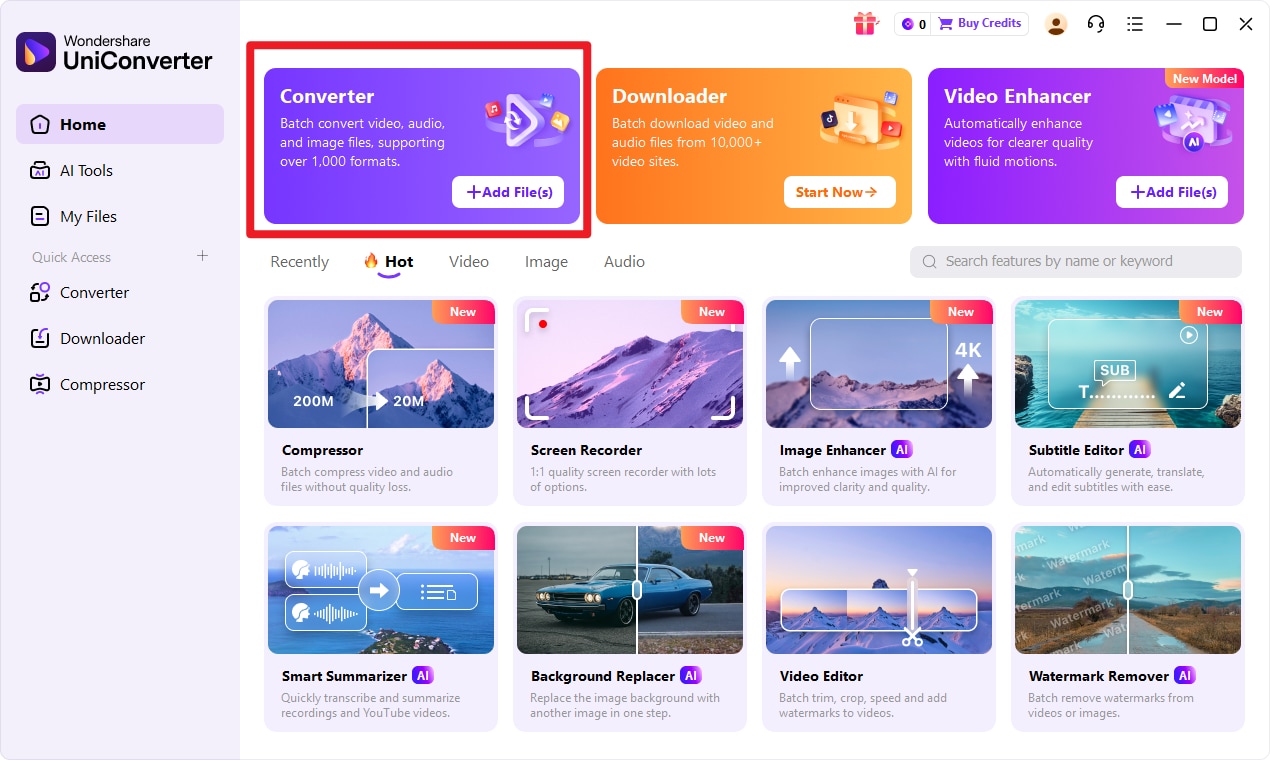
Step 1: Add Your AVI File to UniConverter
Launch Wondershare UniConverter on your computer. In the main interface, ensure you are on the Converter tab. You can either click the Add Files icon to browse for your AVI video or simply drag and drop the file directly into the program window.
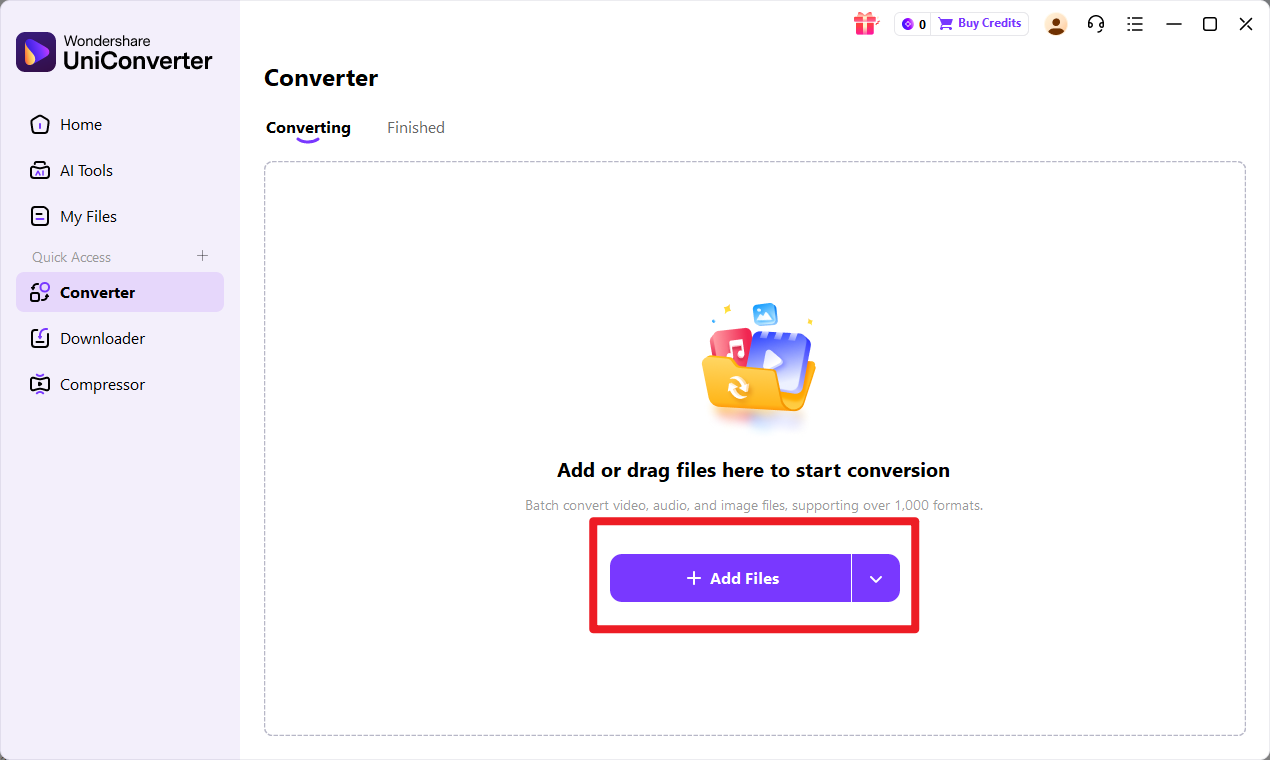
Step 2: Choose MKV as the Output Format
Once your AVI file is loaded, click on the Output Format menu at the bottom of the window. This will open a new panel. Go to the Video tab, select MKV from the list of formats on the left, and then choose your desired resolution (such as "Same as source") on the right.
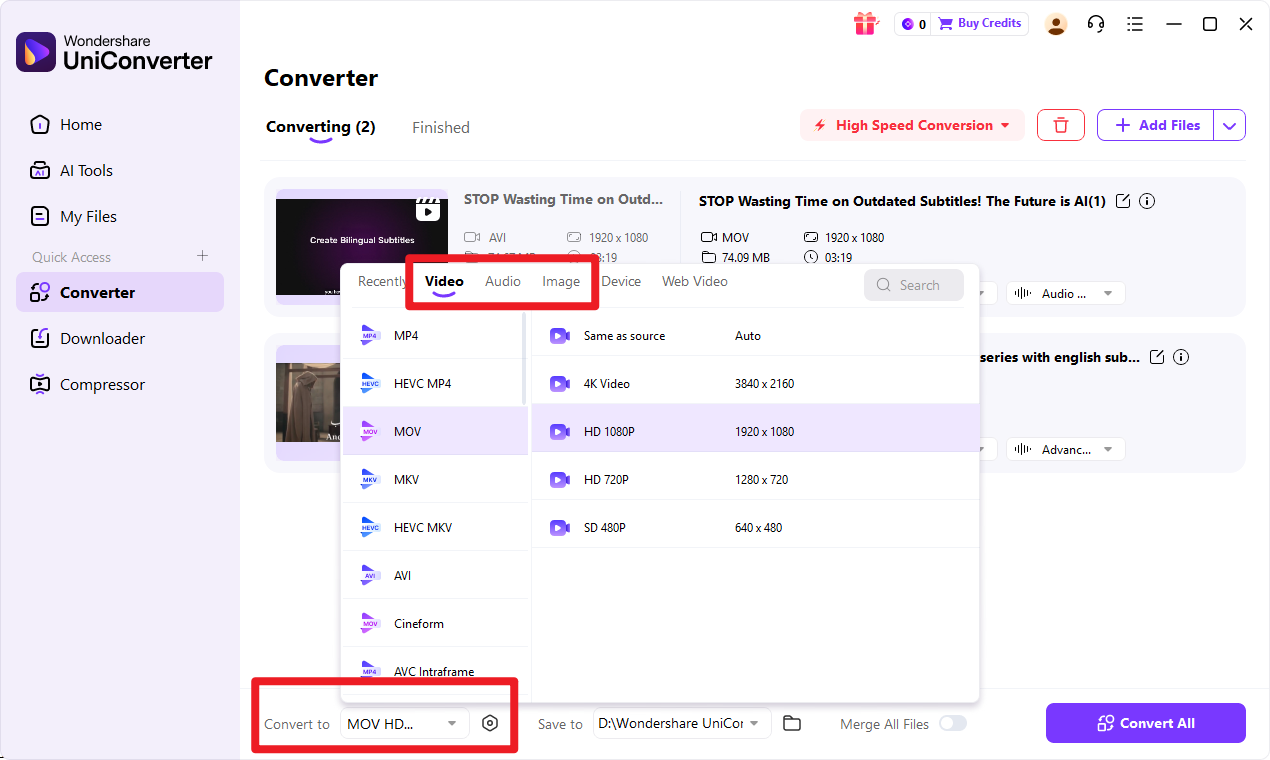
Step 3: Customize Your Video (Optional)
This is a great opportunity to take advantage of MKV's features. Before converting, you can use the editing icons located below the video thumbnail. Here, you can add external subtitle files, select which audio track to keep, or trim and crop the video as needed.
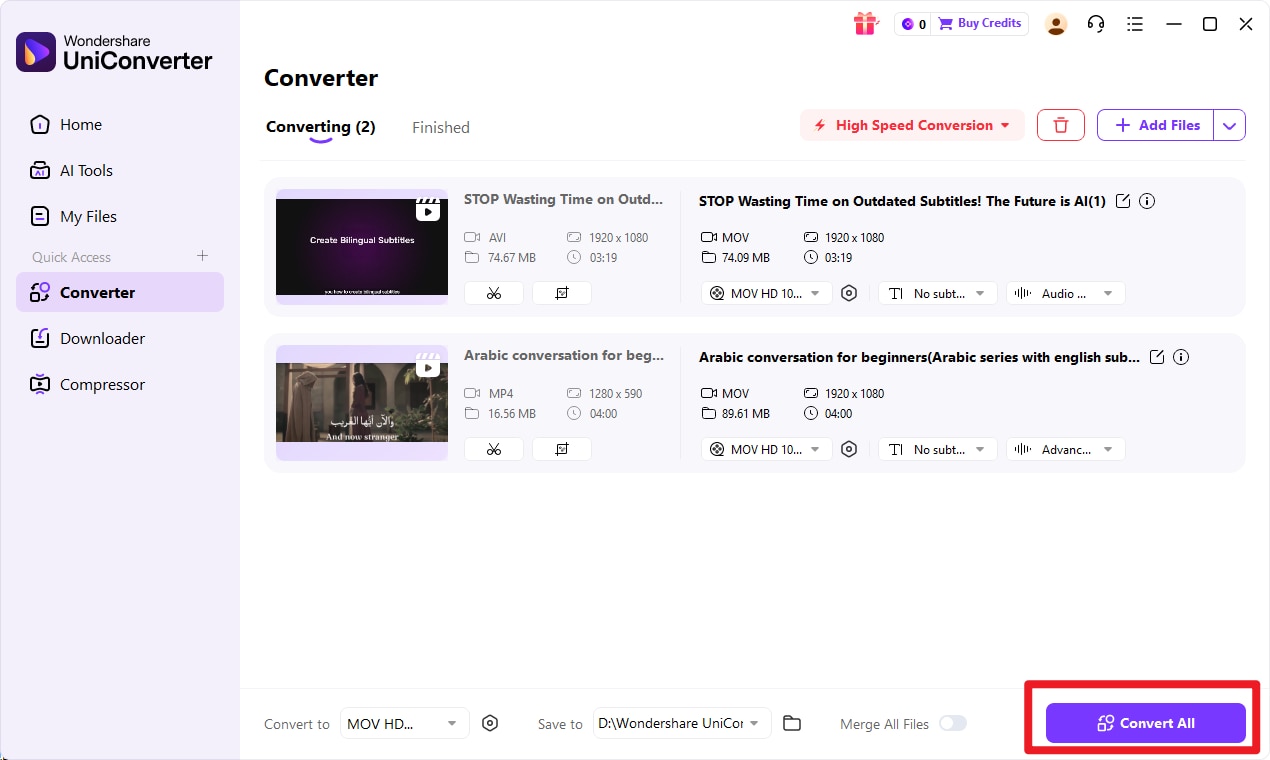
Step 4: Start the AVI to MKV Conversion
Finally, choose a destination for your converted file by using the File Location menu at the bottom. Once you are ready, click the Start All button to begin the conversion process. UniConverter will quickly convert your AVI file to MKV. You can find the completed file in the Finished tab.

More Than Just an AVI to MKV Converter
Conclusion
While both AVI and MKV function as video container formats, the AVI vs MKV comparison clearly shows that MKV is the superior choice for nearly all modern applications. Its robust support for high-quality codecs, multiple audio and subtitle tracks, chapters, and other advanced features makes it far more versatile, efficient, and future-proof. AVI's relevance is now primarily limited to ensuring compatibility with legacy devices that haven't been updated in years.
Ultimately, the best format depends on your specific goals. However, for anyone interested in flexibility, quality, and a rich feature set for their digital video library, MKV is the undisputed winner. If you find yourself needing to bridge the gap between these two formats—or any other formats—using a powerful and intuitive tool like Wondershare UniConverter is the most efficient and reliable solution.
FAQs
-
1. Does converting AVI to MKV improve quality?
No, converting a video from one format to another cannot magically create quality that wasn't present in the original source file. The conversion process is about repackaging the data. However, using a high-quality converter like UniConverter ensures that the conversion from AVI to MKV happens with minimal to no perceptible loss of quality, effectively preserving the original's integrity. -
2. Is MKV better than AVI for storing movies?
Yes, absolutely. MKV is far better for storing movies and TV shows. This is primarily because it can contain multiple audio tracks (e.g., for different languages, descriptive audio, or commentaries) and multiple subtitle tracks all within a single file. This is a feature that AVI cannot handle effectively, making MKV the ideal choice for archiving media. -
3. Why does my MKV file play without sound?
This is a very common problem and is almost always a codec issue, not a problem with the MKV file itself. The audio track within the MKV container is likely encoded in a format (such as DTS or AC3) that your specific media player or device does not have the built-in codec to decode. You can solve this by either using a more capable media player like VLC or using UniConverter to convert the audio stream within the file to a more universally compatible format like AAC. -
4. Can I play AVI and MKV files on Windows Media Player?
Modern versions of Windows and Windows Media Player have improved their native support for various formats, including MKV, but it can still be unreliable depending on the codecs used within the file. AVI files, being a Microsoft format, generally play without issue on Windows Media Player. For guaranteed, hassle-free playback of both formats, it is highly recommended to use a comprehensive third-party player like VLC Media Player or to convert the file to a compatible format using UniConverter.
