
Have you ever downloaded a video file, excited to watch it on your iPhone or Mac, only to be met with an error message? Chances are, you've encountered an AVI file. In the world of digital video, not all file formats are created equal, and the AVI vs M4V debate is a perfect example of this. While one format is a long-standing veteran from the early days of digital video, the other is a modern, streamlined format designed for the world's most popular ecosystem. Understanding the difference is key to solving frustrating compatibility issues.
This guide will break down everything you need to know about these two container formats. We'll explore their origins, compare their strengths and weaknesses, and help you decide which one is right for your needs. Most importantly, we'll show you the simplest way to convert your files, ensuring you can watch any video on any device, anytime.
In this article
Part 1. What is AVI? What is M4V?
Before we dive into a direct comparison, it's essential to understand what these file types are. Both AVI and M4V are "container formats," which means they are like digital boxes that can hold various types of data, including video streams, audio streams, and subtitles, all bundled together into a single file. The container format itself doesn't define the quality of the video; that's determined by the "codec" used to compress the data inside.
What is an AVI File?
AVI stands for Audio Video Interleave. Developed by Microsoft in the early 1990s as part of its Video for Windows framework, AVI is one of the oldest and most established container formats. Its long history means it has broad compatibility, especially on Windows-based operating systems and a wide range of physical media players.
However, its age is also its biggest drawback. AVI was designed before modern compression techniques became standard. While it can use newer codecs, it often relies on older, less efficient ones. This frequently results in significantly larger file sizes compared to more modern formats offering the same video quality. Furthermore, it lacks support for modern features like integrated chapter markers or soft subtitles in the way newer containers do.
What is an M4V File?
The M4V file format was developed by Apple and is the default container for videos sold and rented through the iTunes Store. It is structurally very similar to the popular MP4 format—so similar, in fact, that you can sometimes simply rename a .m4v file to .mp4 and it will play without issue.
The primary purpose of M4V is to provide an optimized video experience within the Apple ecosystem. It's designed for flawless playback on devices like the iPhone, iPad, Mac, and Apple TV. A key distinguishing feature of M4V is its ability to support Apple's FairPlay DRM (Digital Rights Management) copy protection. This is why videos purchased from iTunes are in the M4V format, as it helps prevent unauthorized distribution. For unprotected content, M4V functions almost identically to MP4, typically using the highly efficient H.264 video codec.
Part 2. Quick Comparison Table
To see the differences at a glance, here is a side-by-side comparison of the key attributes of AVI and M4V.
| Feature | AVI (Audio Video Interleave) | M4V (MPEG-4 Video) |
| Developer | Microsoft | Apple |
| Compatibility | Excellent on Windows; requires third-party players on macOS/iOS. | Native to the Apple ecosystem; widely supported on devices that play MP4. |
| Common Codecs | DivX, XviD, MJPEG, and many others (older and newer). | H.264 (most common), H.265 (HEVC). |
| File Size & Compression | Generally larger file sizes due to less efficient compression. | Smaller file sizes for similar quality due to modern, efficient compression. |
| DRM Support | No native support for modern DRM schemes. | Can contain Apple's FairPlay DRM for copy protection. |
| Primary Use Case | Legacy video storage, Windows-centric workflows. | Playback on Apple devices, iTunes content, modern video sharing. |
Part 3. AVI vs M4V: Which One Is Better?
Choosing the "better" format depends entirely on your specific needs and the devices you use. Let's break down the comparison based on the most important factors for the average user.
Compatibility: The Deciding Factor
This is where the biggest difference lies.
AVI: If you live exclusively in a Windows environment or use a variety of non-Apple devices, AVI offers excellent compatibility. It has been around for so long that most Windows-based media players and many smart TVs can handle it without any issues. However, the moment you try to play an AVI file on an iPhone, iPad, or Mac using the default QuickTime Player, you'll likely run into problems. You'll need to download a third-party player like VLC, which can be an inconvenient extra step.
M4V: For anyone invested in the Apple ecosystem, M4V is the undisputed winner. It is the native format, guaranteeing smooth, hardware-accelerated playback on all Apple devices. Because it's based on the MP4 standard, it also enjoys wide compatibility on Windows PCs (with players like Windows Media Player or VLC) and Android devices, making it a much more versatile choice for cross-platform sharing in 2026.
File Size and Quality
In the battle of efficiency, modern technology wins. M4V files almost always offer a better balance of file size and visual quality. This is because M4V typically employs the H.264 (or newer H.265/HEVC) codec, which is an industry standard for high-quality video compression. It can deliver a crisp, clear image at a much lower bitrate, resulting in a smaller file size that's easier to store and faster to share or stream.
AVI, on the other hand, is a container that can use a vast array of codecs, some of which are very old and inefficient. While an AVI file can contain high-quality, even lossless, video, this usually comes at the cost of an enormous file size. More commonly, AVI files using older codecs like DivX will be significantly larger than an M4V file of comparable visual quality.
Special Features: DRM Protection
This is a niche but important distinction. The M4V format has the unique capability of being wrapped in Apple's FairPlay DRM. This is a feature used exclusively for content distributed through the iTunes Store. If you purchase a movie from Apple, it will be an M4V file with DRM that links it to your Apple ID, preventing it from being played on unauthorized devices.
AVI has no comparable, built-in DRM functionality. This makes it unsuitable for commercial content distributors who need to protect their work, but it also means you never have to worry about DRM restrictions on a standard AVI file.
The Verdict
For the vast majority of users in 2026, M4V is the better and more practical choice. Its superior compression, excellent quality, and near-universal compatibility (especially across the Apple ecosystem) make it the ideal format for storing a personal media library, sharing videos with friends, and ensuring playback on mobile devices.
AVI's role has largely been relegated to a legacy format. It's still useful for archiving older video content in its original form or for specific workflows within a strictly Windows-based environment.
If you're facing a compatibility issue—like an AVI file you can't play on your iPad—the best solution isn't to find a clunky workaround. It's to convert the file to a more suitable format. A powerful and user-friendly tool like Wondershare UniConverter can bridge this gap, effortlessly converting AVI files to M4V without any technical hassle.
Part 4. Use Cases for AVI and M4V
To make the choice even clearer, here are some practical scenarios where you would choose one format over the other.
When to Use AVI
- Archiving Old Content: If you have a collection of old home videos or digital recordings from the early 2000s, keeping them as AVI files preserves them in their original format.
- Windows-Only Environment: If you and everyone you share files with exclusively use Windows PCs, and you don't need to worry about mobile playback, AVI will work just fine.
- Using Legacy Hardware/Software: Some older digital cameras, editing software, or media players may default to or only support AVI. In these specific cases, sticking with AVI is necessary for compatibility.
When to Use M4V
- Watching Videos on Apple Devices: This is the primary use case. If you want to watch a movie on your iPhone, edit a clip on your iPad, or stream to your Apple TV, M4V is the most reliable format.
- Building a Modern Media Library: For organizing your movies and TV shows, especially for use with Apple's TV app or iTunes, M4V (or MP4) is the standard. Its support for metadata like cover art and descriptions is a plus.
- Sharing High-Quality Video: When you need to send a video to someone and want to ensure they can play it, M4V is a safe bet. It provides excellent quality at a manageable file size that's easy to upload or email.
Part 5. Step-by-Step Guide to Convert AVI to M4V Using UniConverter
If you have an AVI file that you need to play on an Apple device, the easiest solution is to convert it to M4V. Wondershare UniConverter is a highly recommended tool that makes this process fast and simple while preserving video quality. Follow these four easy steps.
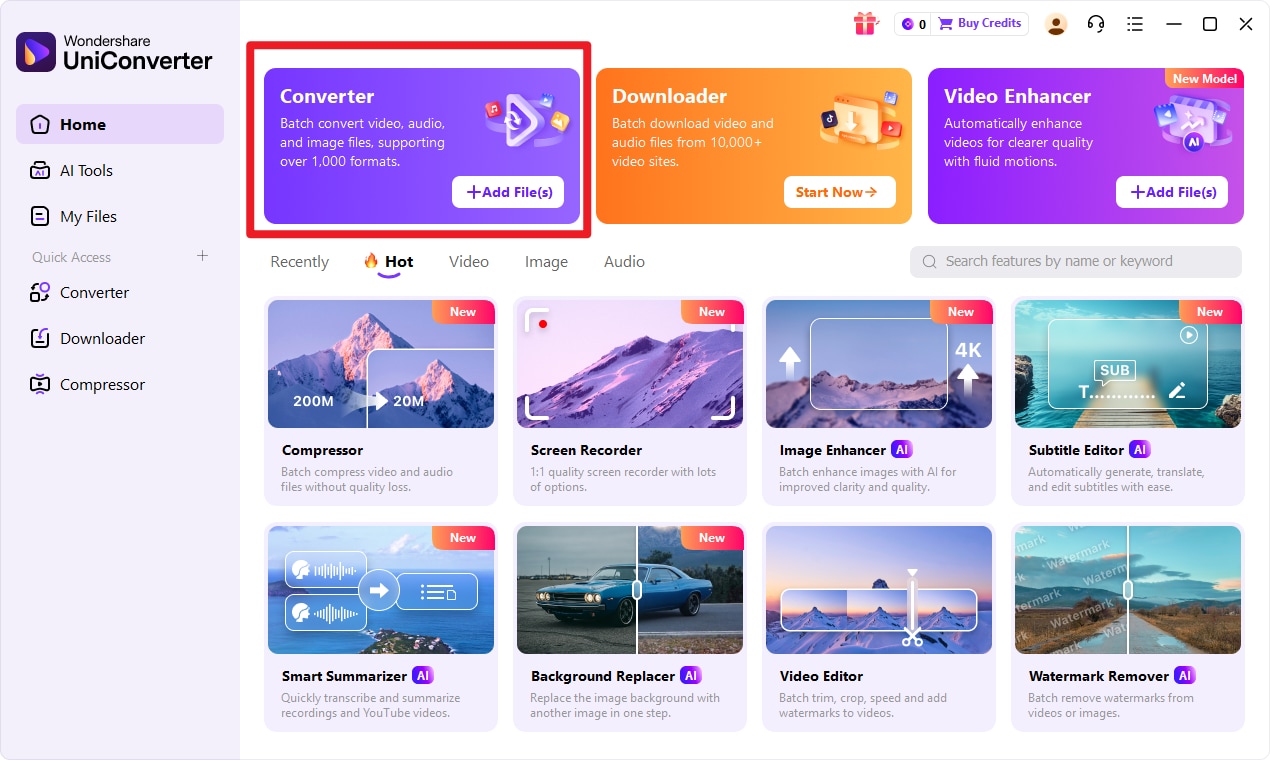
Step 1: Choose Converter in UniConverter
Launch Wondershare UniConverter on your computer. From the main home screen, navigate to the left-side menu and select the Converter tool to open the conversion interface.
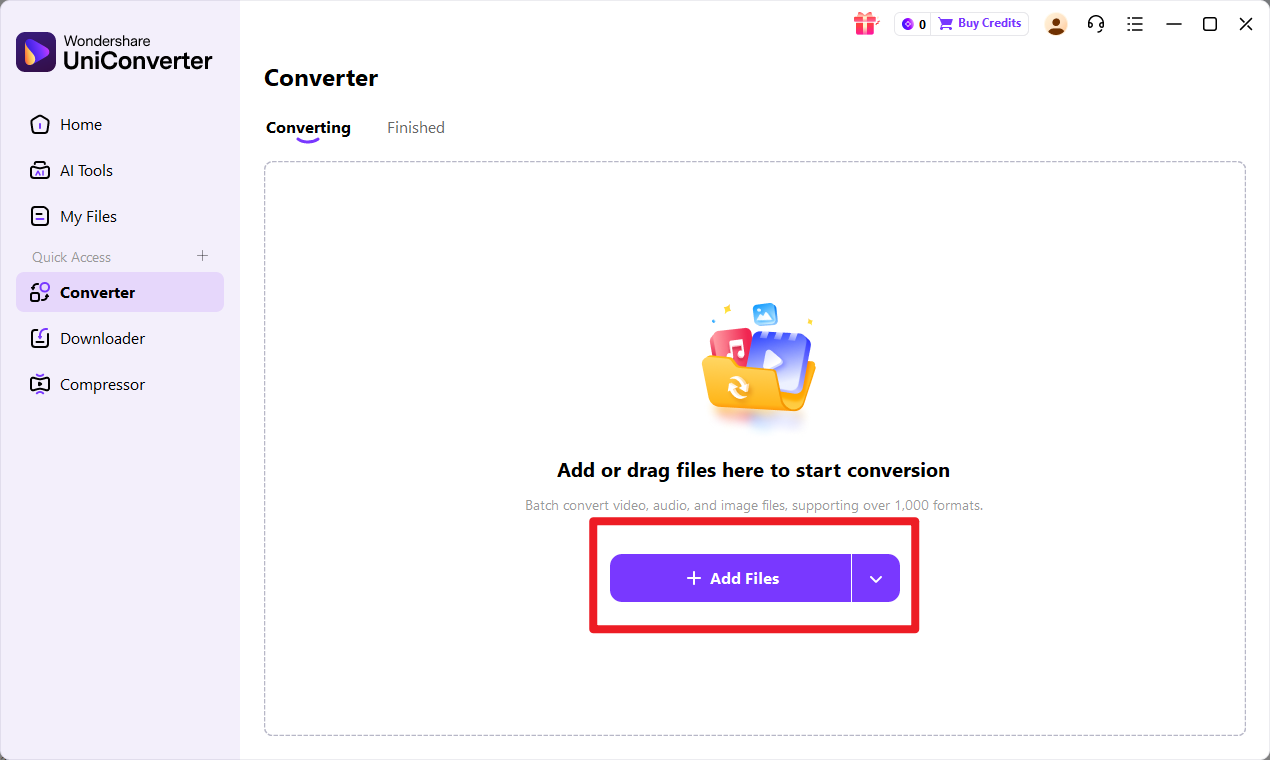
Step 2: Add Files to UniConverter
You can now import your AVI file. Either click the Add Files icon in the top-left corner and browse for your file, or simply drag and drop your input format file directly into the center of the UniConverter window.
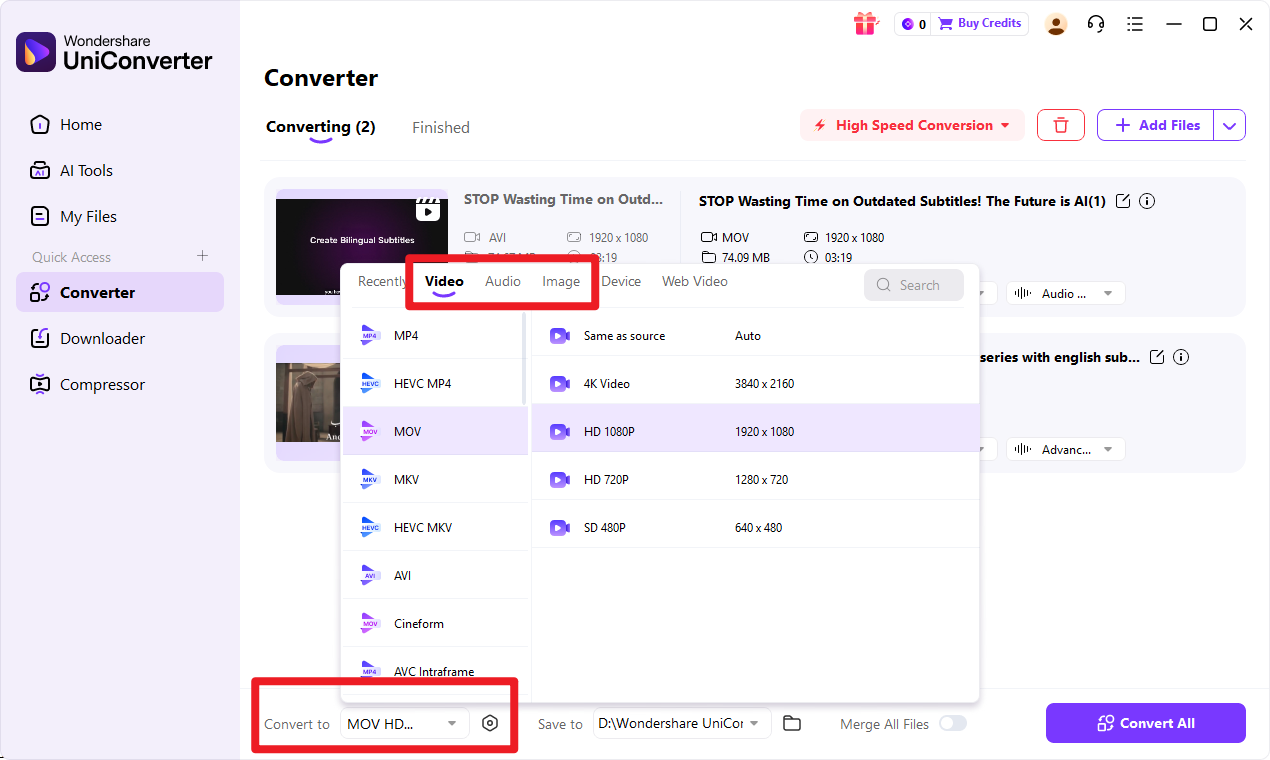
Step 3: Choose Output Format
At the bottom of the window, click on the Output Format menu. This will open a new window with a list of formats. Select the Video tab, choose your desired target format (in this case, M4V) from the list on the left, and then select a resolution on the right (such as "Same as source" to maintain quality).
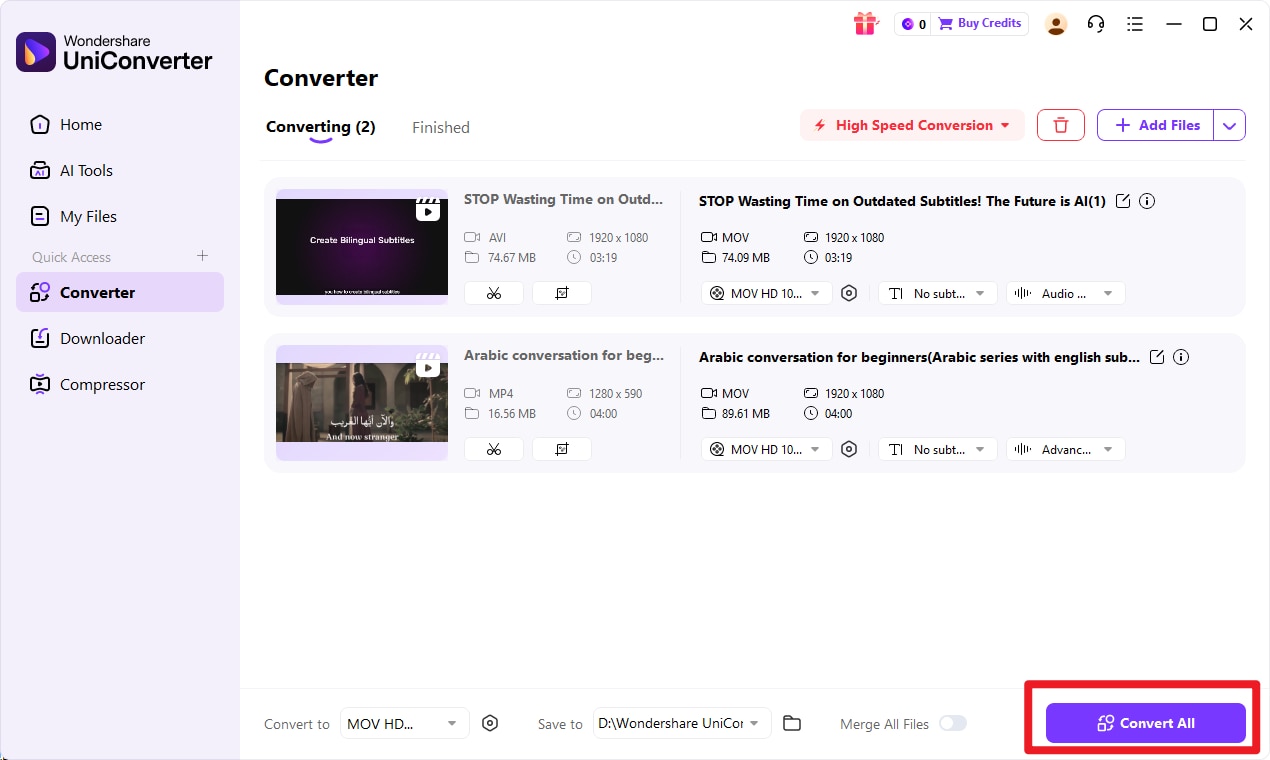
Step 4: Start the Conversion
Before starting, you can choose a destination for your new file by using the File Location menu at the bottom. Once you're ready, click the Start All button in the bottom-right corner. UniConverter will begin the conversion process, and your AVI file will be converted to a high-quality M4V file in just a few moments.

More Than Just a Video Converter
Conclusion
Both AVI and M4V have their specific strengths and historical contexts. AVI is a legacy container format with deep roots in the Windows world, known for its broad compatibility on older systems but hampered by inefficient compression. M4V, by contrast, is a modern, efficient format perfectly tailored for the Apple ecosystem and widely compatible elsewhere. For most users today, especially those with iPhones, iPads, or Macs, M4V is the far more practical and superior choice for everyday video needs.
When you encounter compatibility barriers, the best course of action is not to struggle with incompatible players but to convert the file. Using a reliable and powerful tool like Wondershare UniConverter ensures a smooth, high-quality conversion from AVI to M4V, solving your playback problems instantly and letting you enjoy your media on any device you choose.
FAQs
-
1. Is M4V the same as MP4?
They are extremely similar, as the M4V format is based directly on the MP4 container standard. The two main differences are: 1) M4V files can optionally contain Apple's FairPlay DRM, and 2) M4V files are associated with Apple applications by default (like the TV app or iTunes). In many cases, if an M4V file is not DRM-protected, you can simply change the file extension from .m4v to .mp4 and it will function identically. -
2. Can I play AVI files on a Mac?
Yes, but it often requires extra software. The default QuickTime Player on macOS has limited support for the codecs commonly found in AVI files. To play them reliably, you will need to install a versatile third-party media player like VLC Media Player. For a more seamless experience and integration with Apple's native apps, the best solution is to convert the AVI file to a Mac-friendly format like M4V or MOV. -
3. Will I lose quality when converting AVI to M4V?
Any time you convert between two "lossy" formats (which most video formats are), there is a theoretical potential for a very small loss in quality as the data is re-compressed. However, when using a professional conversion tool like Wondershare UniConverter, this process is highly optimized. The software uses advanced and efficient encoding algorithms to ensure that any quality difference is minimized to the point of being completely imperceptible to the human eye for most viewing purposes. You can convert your files with confidence.
