
Navigating the world of video formats can often feel like deciphering a complex code. Two formats you might encounter, especially when dealing with older files or specific workflows, are AVI and FLV. While both serve to store video data, they were designed for vastly different purposes and belong to different technological eras. Understanding the core distinctions in the AVI vs FLV debate is crucial for anyone involved in video editing, content management, or simply trying to play a stubborn video file.
Whether you're a video hobbyist wondering about the best export settings, a webmaster managing legacy content, or just someone trying to solve a compatibility issue, this guide will provide the clarity you need. We'll break down the technical specifications, practical use cases, and inherent pros and cons of each format, helping you make informed decisions for your projects in 2026.
In this article
Part 1. What is AVI? What is FLV?
Before we dive into a direct comparison, it's essential to understand what each format is and the technology behind it.
What is AVI (Audio Video Interleave)?
AVI, which stands for Audio Video Interleave, is a multimedia container format introduced by Microsoft back in 1992 as part of its Video for Windows technology. As a container, its job is to hold both audio and video data in a single file, allowing for synchronized playback.
One of AVI's defining characteristics is its flexibility with codecs. It can use a wide variety of compression algorithms, including uncompressed or lossless ones. This often results in very high-quality video, making it a long-standing favorite for video editing and archiving. However, this quality comes at a cost: AVI files are notoriously large. While its compatibility is excellent within the Windows ecosystem, it can sometimes present challenges on other platforms like macOS or mobile devices without the help of third-party media players.
What is FLV (Flash Video)?
FLV, or Flash Video, is a container file format developed by Adobe Systems, designed specifically for delivering video over the internet using the Adobe Flash Player. For over a decade, it was the dominant format for embedded video on the web, powering platforms like YouTube, Hulu, and countless others during the peak of the Flash era.
The primary goal of FLV was to achieve high compression rates. This allowed for small file sizes that could be streamed efficiently even on slower internet connections, which was a major concern in the early 2000s. However, the digital landscape has changed dramatically. With the official discontinuation of Adobe Flash Player at the end of 2020, the relevance of the FLV format has plummeted. Modern web browsers and mobile devices no longer support Flash, making FLV files largely incompatible and obsolete for contemporary web use.
Part 2. Quick Comparison Table
For a quick overview, here is a side-by-side comparison of the key attributes of AVI and FLV.
| Feature | AVI (Audio Video Interleave) | FLV (Flash Video) |
| Developer | Microsoft | Adobe Systems |
| File Size | Generally very large | Generally very small |
| Video Quality | High to lossless quality | Typically lower, compressed quality |
| Compression | Low to no compression | High compression |
| Compatibility | Excellent on Windows, good on desktops with specific players. Poor on mobile/web. | Very poor on all modern devices and browsers. Requires legacy players. |
| Primary Use Case | Video editing, master copies, and high-quality archiving. | Legacy web streaming and old online video content. |
Part 3. AVI vs FLV: Which One Is Better?
Determining which format is "better" depends entirely on your specific needs. Let's break down the comparison based on the most important factors.
Quality vs. Compression
This is the most significant point of difference between the two formats.
AVI: This format prioritizes video quality above all else. It often uses codecs that apply minimal or even lossless compression, such as DV or Uncompressed. This means the video data remains as close to the original source as possible, preserving fine details, color accuracy, and overall fidelity. This makes AVI an excellent choice for source files in a professional video editing workflow, where you need to perform multiple edits and renders without introducing compression artifacts.
FLV: This format was built for the exact opposite purpose. Its primary goal was to compress video as much as possible to make it streamable online. It typically uses codecs like Sorenson Spark and VP6, which are designed to create small files at the expense of some visual quality. While the quality was acceptable for standard-definition web video in its heyday, it doesn't hold up well against modern high-definition standards.
File Size
The difference in compression philosophy directly impacts file size.
AVI: Because of its low compression, AVI files are consistently much larger than most other video formats. A few minutes of high-quality AVI video can easily consume several gigabytes of storage space. This makes them impractical for sharing over the internet, emailing, or storing on devices with limited capacity.
FLV: This is where FLV once shined. Its high compression rates result in incredibly small file sizes. This was its key advantage, allowing for quick loading times and smooth playback on websites even when internet speeds were a fraction of what they are today.
Compatibility and Modern Usage
In 2026, compatibility is a critical factor, and it's where the age of these formats really shows.
AVI: The format remains widely supported on desktop operating systems, particularly Windows, where Windows Media Player can handle it natively. Media players like VLC can play AVI files on virtually any platform. However, native support on macOS, iOS, and Android is lacking. You won't be able to play an AVI file on an iPhone or upload it directly to most social media platforms without converting it first.
FLV: Compatibility for FLV is extremely poor in the modern digital ecosystem. Since Adobe Flash Player is no longer supported by any major web browser, FLV files will not play natively on the web. Mobile devices have never supported Flash. To play an FLV file today, you need a dedicated third-party media player that still includes the necessary codecs, such as VLC Media Player.
The Verdict
So, which one should you choose?
For high-quality archiving, master copies, or as an intermediate format in a video editing pipeline, AVI is the clear winner. Its commitment to preserving quality is unmatched by FLV.
For web streaming, online sharing, or general playback on modern devices, neither format is a good choice. FLV is obsolete, and AVI is too large and poorly supported.
The recommended path for almost any modern application is to convert both AVI and FLV files to a more universal format like MP4 (with an H.264 or H.265/HEVC codec). MP4 offers an excellent balance of high quality, small file size, and universal compatibility across all platforms and devices. A powerful and user-friendly tool like Wondershare UniConverter can handle these conversions seamlessly, bridging the gap between legacy formats and modern needs.
Part 4. Use Cases for AVI and FLV
While MP4 is the modern standard, there are still niche situations where you might encounter or need to use AVI or FLV.
When to Use AVI
Master Copies and Archiving: If you are a videographer or editor, saving your final, uncompressed project as an AVI file can serve as a high-fidelity master copy. This preserves the maximum amount of data, which is ideal for long-term storage or future repurposing.
Professional Editing Workflows: When passing video files between different editing applications, using a high-quality AVI can prevent the generational loss of quality that occurs with repeated compression.
Playback on Legacy Systems: If you need to play a video on an older Windows PC or a specific piece of hardware that only supports AVI, this format is the obvious choice.
When to Use FLV
The use cases for FLV in 2026 are extremely limited and almost exclusively tied to maintaining the past.
Managing Legacy Web Content: If you are responsible for an old website or a digital archive that was built with Flash technology, you may need to work with existing FLV files.
Extreme File Size Constraints: In a rare scenario where you need the absolute smallest video file possible and modern compatibility is not a factor at all, FLV could technically be an option, though formats like WebM or highly compressed MP4 are far better alternatives.
Part 5. Step-by-Step Guide to Convert AVI to FLV Using UniConverter
While converting to FLV is an uncommon task today, you might need to do it for a legacy project or a specific application that only accepts this format. For this and any other video conversion need, Wondershare UniConverter is the perfect tool. It supports over 1000 formats, offering a fast, reliable, and intuitive solution for both modern and legacy video files.
Step 1: Add Files to UniConverter
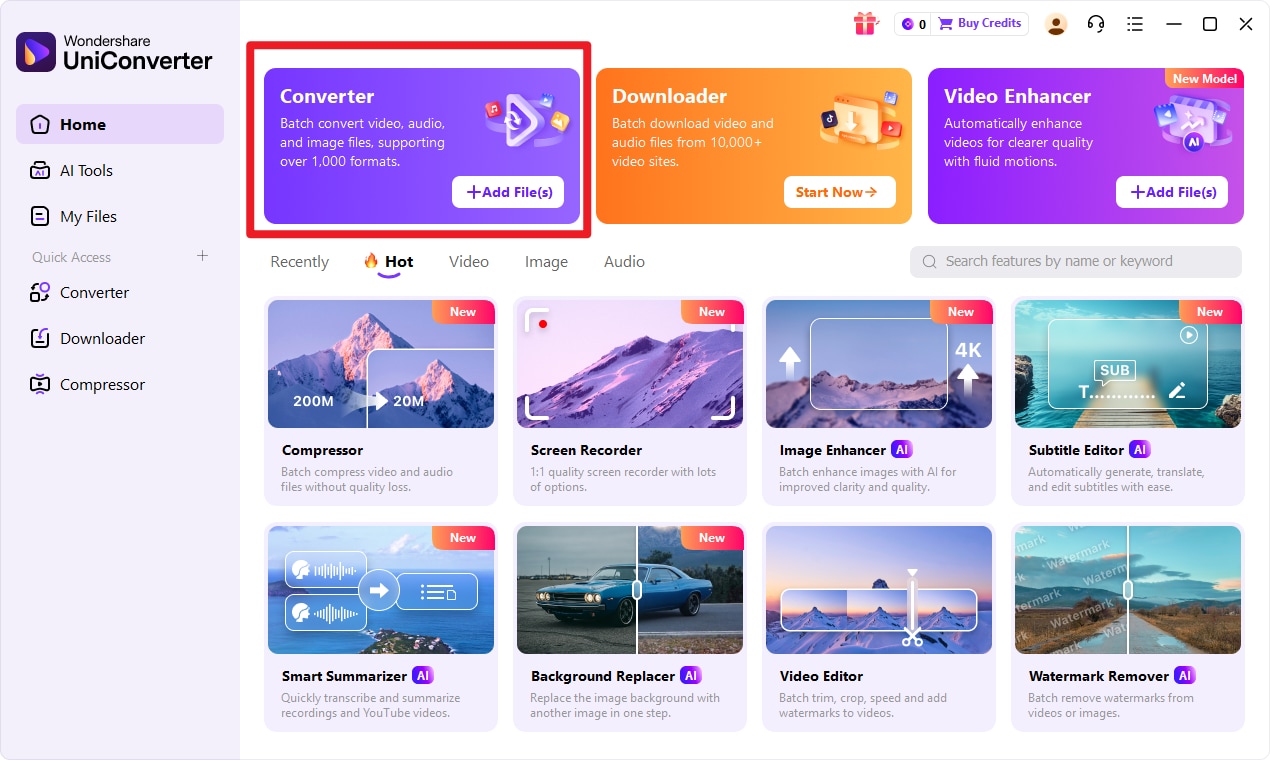
Launch the Wondershare UniConverter software on your computer. Select the Converter module from the left-hand menu. You can either click the Add Files button to browse for your AVI file or simply drag and drop it directly into the main window.
Step 2: Choose Output Format
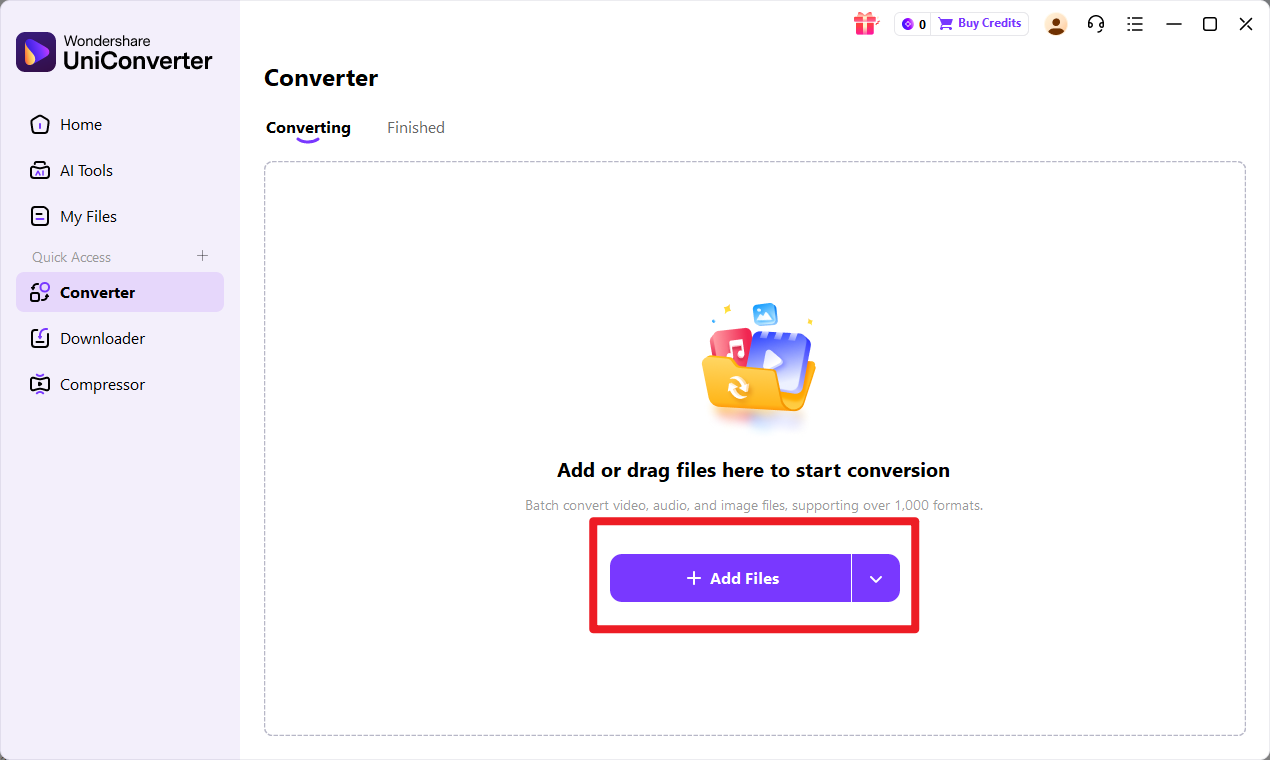
Once your AVI file is loaded, click on the Output Format menu located at the bottom of the interface. A new window will appear. Go to the Video tab, scroll down the list of formats on the left, and select FLV. On the right, you can choose the desired resolution for your output file.
Step 3: Start the Conversion
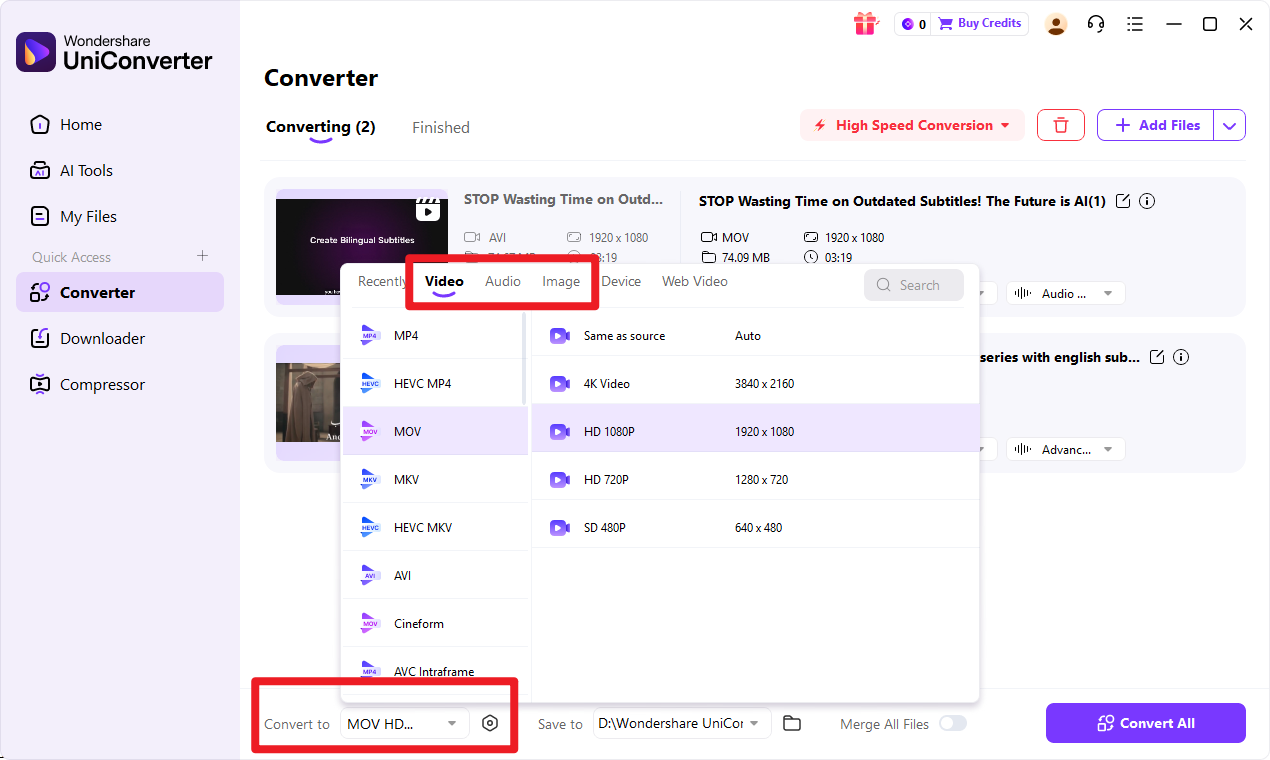
Before starting, you can specify where you want to save the converted file by using the File Location field at the bottom. Once you are ready, click the Convert button next to your file. If you have loaded multiple files, you can click the Start All button in the bottom-right corner to process them in a batch.
Step 4: Check Converted Files
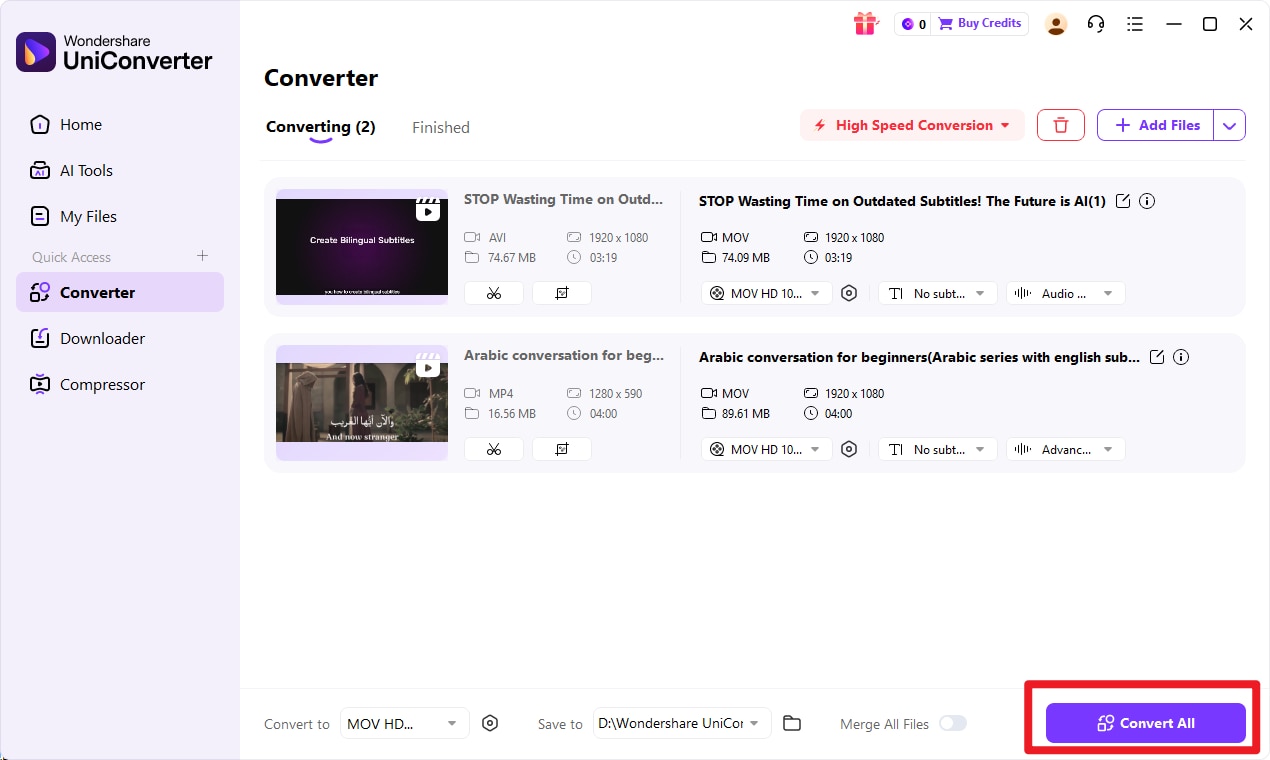
The conversion process will begin and should complete quickly. Once finished, you can find your new FLV file in the folder you designated in the previous step. Alternatively, you can click on the Finished tab at the top of the window to see a list of all your completed conversions and open the file location directly from there.

Your All-in-One Video Conversion Solution
Conclusion
The battle of AVI vs FLV is largely a story of two different technological eras. AVI, a veteran from the early days of digital video, remains a relevant choice for professionals who prioritize quality for editing and archiving. Its large file sizes and limited mobile compatibility, however, make it unsuitable for everyday sharing and streaming. FLV, the former king of web video, is now a relic of the Flash era. Its small file sizes are overshadowed by its profound lack of compatibility with modern browsers and devices, rendering it obsolete for nearly all practical purposes.
For users in 2026, the best course of action is clear: for high-fidelity master files, AVI is a solid option. For everything else—from sharing on social media to watching on your phone—converting your videos to the universally accepted MP4 format is the smartest move. To handle these conversions effortlessly, Wondershare UniConverter stands out as the ultimate all-in-one solution. With its support for over 1,000 formats, lightning-fast speeds, and user-friendly interface, it empowers you to make any video file compatible with any device, ensuring your content is always ready for the modern world.
FAQs
-
1. Is AVI higher quality than FLV?
Yes, absolutely. AVI files are almost always higher quality than FLV files. This is because AVI is designed to use codecs with very light or even no compression, preserving the original video data. FLV, on the other hand, was created specifically for high compression to achieve small file sizes for web streaming, which inherently involves a loss of quality. -
2. Can I play FLV files on my computer?
You can, but it's not as straightforward as it used to be. Native media players like Windows Media Player or Apple's QuickTime Player no longer support FLV. To play an FLV file, you will need to install a versatile third-party media player like VLC Media Player, which contains its own set of codecs capable of decoding the format. -
3. What is the best format to convert my old videos to?
For converting any old video format, including AVI and FLV, the undisputed best choice is MP4 using the H.264 (also known as AVC) video codec. This combination provides the perfect balance of high video quality, efficient compression (small file size), and universal compatibility. An MP4 file will play on virtually any device, platform, and web browser available today. You can easily convert any video file to this standard using a reliable tool like UniConverter.
