
AVCHD vs MP4: The Ultimate Comparison and Guide for 2026
Have you ever found old video files from a camcorder and discovered they won't play on your computer or phone? Or perhaps you're a video editor struggling with sluggish performance when importing footage from a client? Chances are, you've encountered the AVCHD format. In the world of digital video, the format you use can make all the difference, leading to the common AVCHD vs MP4 debate. While AVCHD was a staple for high-definition recording on camcorders, the universally accepted MP4 format now dominates the landscape. Understanding the differences between these two is crucial for anyone working with video, from hobbyists to professionals.
This guide will break down everything you need to know about AVCHD and MP4. We'll explore their technical differences, compare their strengths and weaknesses, and help you decide which format is right for your specific needs. Most importantly, we'll show you the simplest way to solve any compatibility issues by converting your AVCHD files to the much more versatile MP4 format.
In this article:
Part 1. What is AVCHD? What is MP4?
Before we can compare them, it's essential to understand what each format is and what it was designed for. Their origins and intended purposes are the root of their key differences in quality, size, and compatibility.
What is AVCHD (Advanced Video Coding High Definition)?
AVCHD, which stands for Advanced Video Coding High Definition, is a file-based format developed jointly by Sony and Panasonic in 2006. It was designed specifically for use in high-definition consumer and prosumer camcorders. The primary goal of AVCHD was to enable the recording of high-quality HD video onto removable media like SD cards, hard disk drives, and recordable DVDs.
The format is well-suited for creating Blu-ray Discs, as it shares a similar structure. When you explore an AVCHD recording on a memory card, you won't find a single video file. Instead, you'll see a complex folder structure, typically named "BDMV" (Blu-ray Disc Movie). Inside this folder, the actual video data is stored in files with the .MTS or .M2TS extension. This structure, while efficient for camera recording and disc authoring, is often confusing and cumbersome for direct playback and editing on computers.
What is MP4 (MPEG-4 Part 14)?
MP4, also known as MPEG-4 Part 14, is a digital multimedia container format. Unlike AVCHD, which was designed for a specific type of device, MP4 was created to be a global standard for video and audio on the internet and digital devices. It's arguably the most recognized and widely used video format in the world today.
The key to MP4's success is its incredible versatility and efficiency. It can store not just video and audio but also other data like subtitles and still images within a single, neat file. MP4 is renowned for its ability to achieve an excellent balance between high video quality and manageable file size, thanks to modern compression standards like H.264 and H.265 (HEVC). This efficiency makes it perfect for online streaming, social media sharing, and storage. Its universal support means an MP4 file will play on virtually any modern device, from smartphones and tablets to smart TVs and computers, and is seamlessly supported by all major video editing software.
Part 2. Quick Comparison Table
To get a clear, at-a-glance overview of the differences, here is a quick comparison table highlighting the key attributes of AVCHD and MP4.
| Feature | AVCHD | MP4 |
| File Extension | .MTS, .M2TS (within a BDMV folder structure) | .MP4 |
| Video Quality | High, often with higher bitrates for professional recording directly from the camera. | Flexible, ranging from low to extremely high. Can match AVCHD quality at a smaller file size. |
| File Size | Generally larger due to less efficient compression and higher recording bitrates. | Generally smaller and more efficiently compressed, making it ideal for storage and sharing. |
| Compatibility | Limited. Often requires specific media players or can cause performance issues in editing software. | Universal. Natively supported by almost all devices, operating systems, platforms, and websites. |
| Best For | High-quality recording on compatible camcorders and authoring Blu-ray Discs. | Online streaming, social media sharing, video editing, and universal playback on any device. |
Part 3. AVCHD vs MP4: Which One Is Better?
The question of which format is "better" ultimately depends on the context. One excels in the recording phase, while the other dominates every subsequent step. Let's break it down by the most common considerations: quality, compatibility, and editing.
For Quality: A Close Call
On paper, AVCHD is often associated with superior quality because it was designed for high-bitrate recording directly from a camera's sensor. The format prioritizes capturing as much data as possible, which is excellent for archival purposes or professional post-production where color grading is intensive.
However, the MP4 container format is incredibly flexible. When using the same advanced video codec (like H.264, which both formats can use), MP4 can deliver video quality that is visually indistinguishable from AVCHD. Furthermore, modern codecs like H.265/HEVC, commonly used with MP4, offer even better compression. This means you can achieve the same perceived quality as AVCHD but with a significantly smaller file size. For the vast majority of viewing scenarios—on a computer monitor, TV, or mobile device—any quality difference is negligible to the human eye.
For Compatibility and Sharing: MP4 is the Clear Winner
This is where the debate becomes one-sided. MP4 is the undisputed king of compatibility. You can upload an MP4 file to YouTube, post it on Instagram, send it to a friend, or play it on your smart TV without a second thought. It just works. Every modern operating system, web browser, and device has built-in support for MP4.
AVCHD, on the other hand, is a major source of frustration. Trying to play an .MTS file directly can be a hit-or-miss experience. Some media players might handle it, but many won't. Sharing an entire BDMV folder structure is impractical. This severe lack of compatibility is the primary reason users need to convert AVCHD files. To bridge this gap and make your videos universally accessible, a reliable video converter like Wondershare UniConverter becomes an essential tool, allowing you to transform your incompatible AVCHD footage into a share-friendly MP4.
For Editing: MP4 Offers a Smoother Workflow
For video editors, workflow efficiency is paramount. Here again, MP4 has a decisive advantage. Video editing software like Adobe Premiere Pro, Final Cut Pro, and DaVinci Resolve are optimized to work with single-file formats like MP4. You can drag and drop an MP4 file into your timeline, and it will typically play back smoothly, allowing for real-time editing and quick rendering.
Importing AVCHD footage can be a different story. Some editors require you to navigate the complex BDMV folder structure, which can be slow and confusing. The .MTS files themselves can be resource-intensive, leading to choppy playback, dropped frames, and longer export times, especially on less powerful computers. Converting AVCHD to MP4 before starting the editing process is a standard professional practice to ensure a stable and efficient workflow.
Part 4. Use Cases for AVCHD and MP4
Understanding the ideal scenarios for each format can help you make better decisions during recording and post-production.
When to Use AVCHD
Despite its drawbacks in compatibility, AVCHD still has its place in specific, niche workflows. You should consider using it in these situations:
- High-Quality Archival Recording: If you are using a compatible Sony or Panasonic camcorder and your goal is to capture footage at the highest possible bitrate for archival purposes, AVCHD is a solid choice. It prioritizes data capture over file size.
- Blu-ray Disc Authoring: If your final project is intended to be burned onto a Blu-ray Disc, the AVCHD format is ideal. Its file structure is similar to that of a Blu-ray, which can simplify the authoring process with certain software.
When to Use MP4
For nearly every other modern video application, MP4 is the superior and more practical choice. You should use MP4 for:
- Online Video Sharing: Whether you're uploading to YouTube, Vimeo, Facebook, Instagram, or TikTok, MP4 is the recommended (and often required) format.
- Universal Playback: If you want to ensure your video can be watched by anyone on any device—be it a Mac, PC, iPhone, Android, or smart TV—MP4 is the only format that guarantees this level of accessibility.
- Efficient Video Editing: For a fast, stable, and smooth editing experience in any major video editing software, working with MP4 files is the professional standard.
- Converting from Other Formats: When you have files in a less common or incompatible format like AVCHD, converting them to MP4 is the best way to make them manageable and usable for editing, sharing, or long-term storage.
Part 5. Step-by-Step Guide to Convert AVCHD to MP4 Using UniConverter
If you're facing playback errors, editing lag, or sharing difficulties with your AVCHD files, the most effective solution is to convert them to the universally compatible MP4 format. Wondershare UniConverter is a powerful and user-friendly tool that makes this process incredibly fast and simple, all while preserving the original video quality. It is the top choice for handling this task efficiently.
Step 1: Add Your AVCHD Files to UniConverter
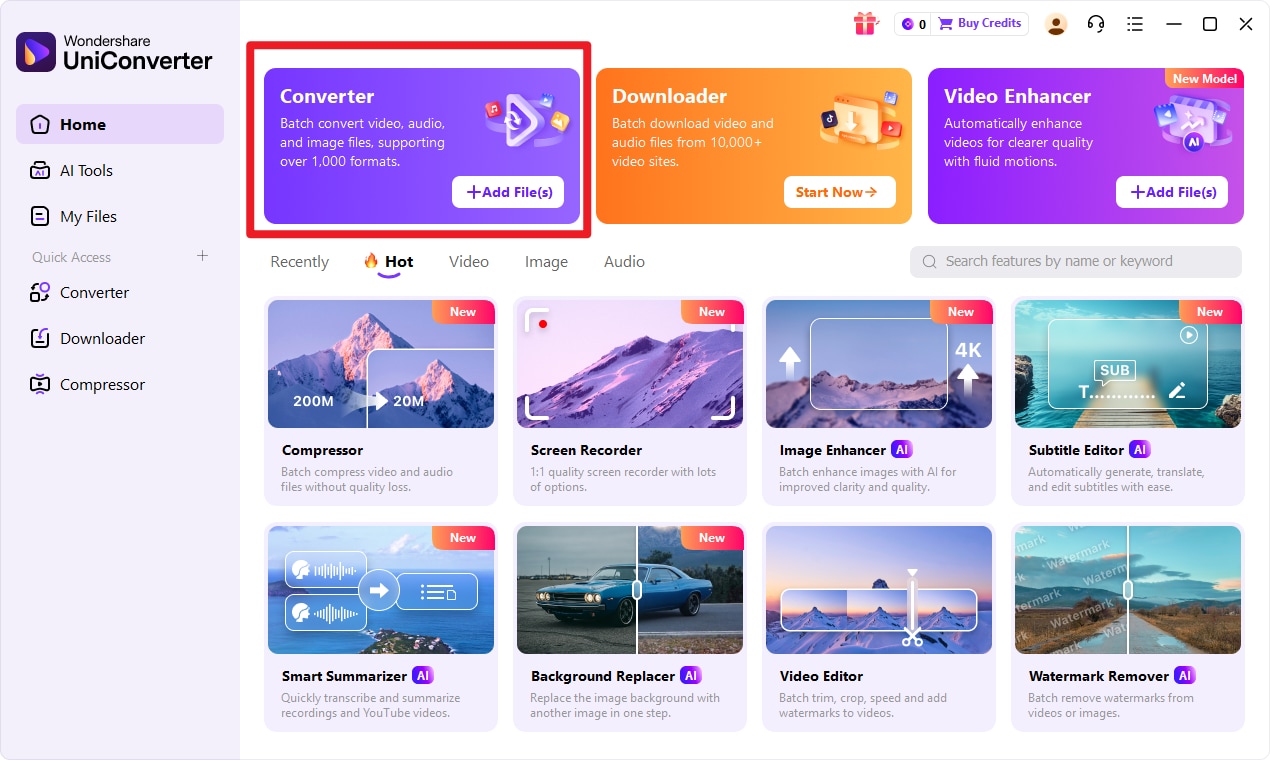
First, launch Wondershare UniConverter on your computer. On the main interface, select the Converter feature from the menu on the left panel. You can now import your AVCHD files. Either click the Add Files button to browse your computer and locate your .MTS or .M2TS files, or simply drag and drop the files directly into the program window for maximum convenience.
Step 2: Choose MP4 as the Output Format
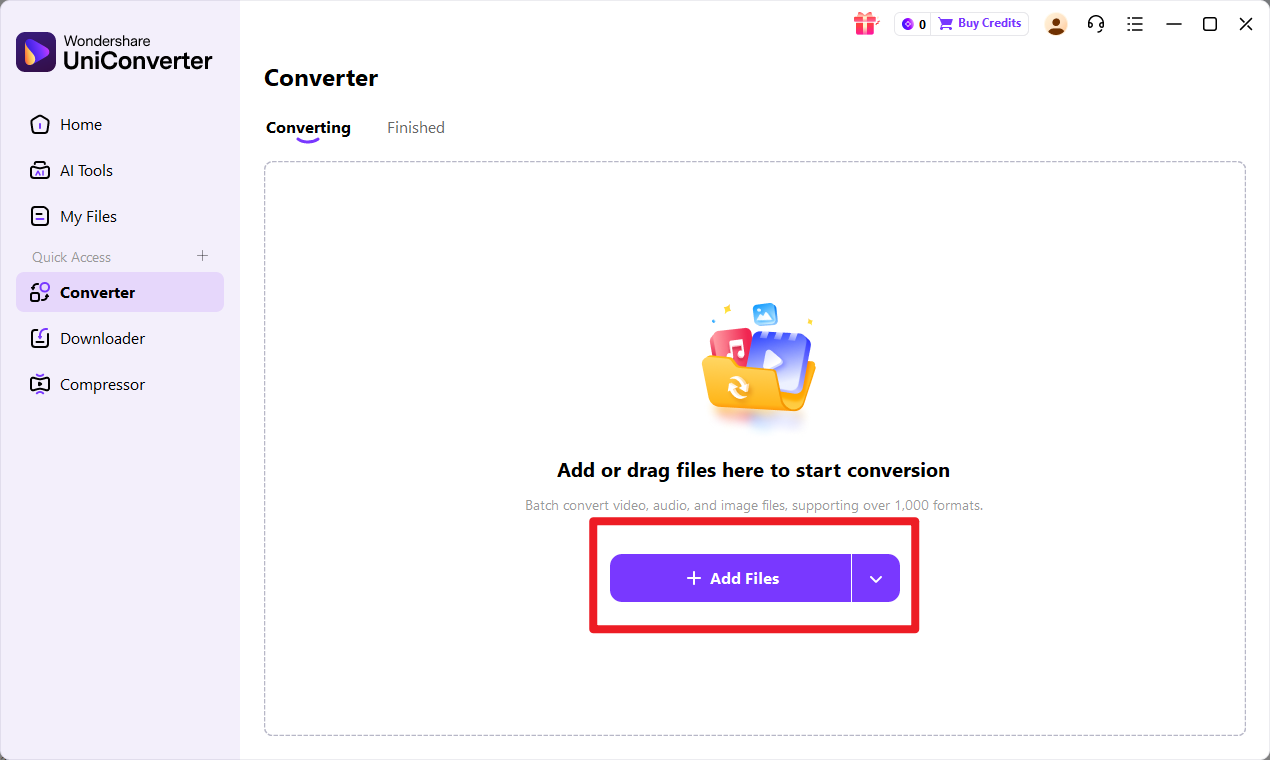
Next, you need to specify the format for the converted file. Click on the Output Format menu located at the bottom of the window. A new dialog box will appear. Go to the Video tab, select MP4 from the list of formats on the left, and then choose a desired resolution from the right. For best results, it's recommended to select Same as source to maintain the original video quality and resolution.
Step 3: Start the AVCHD to MP4 Conversion
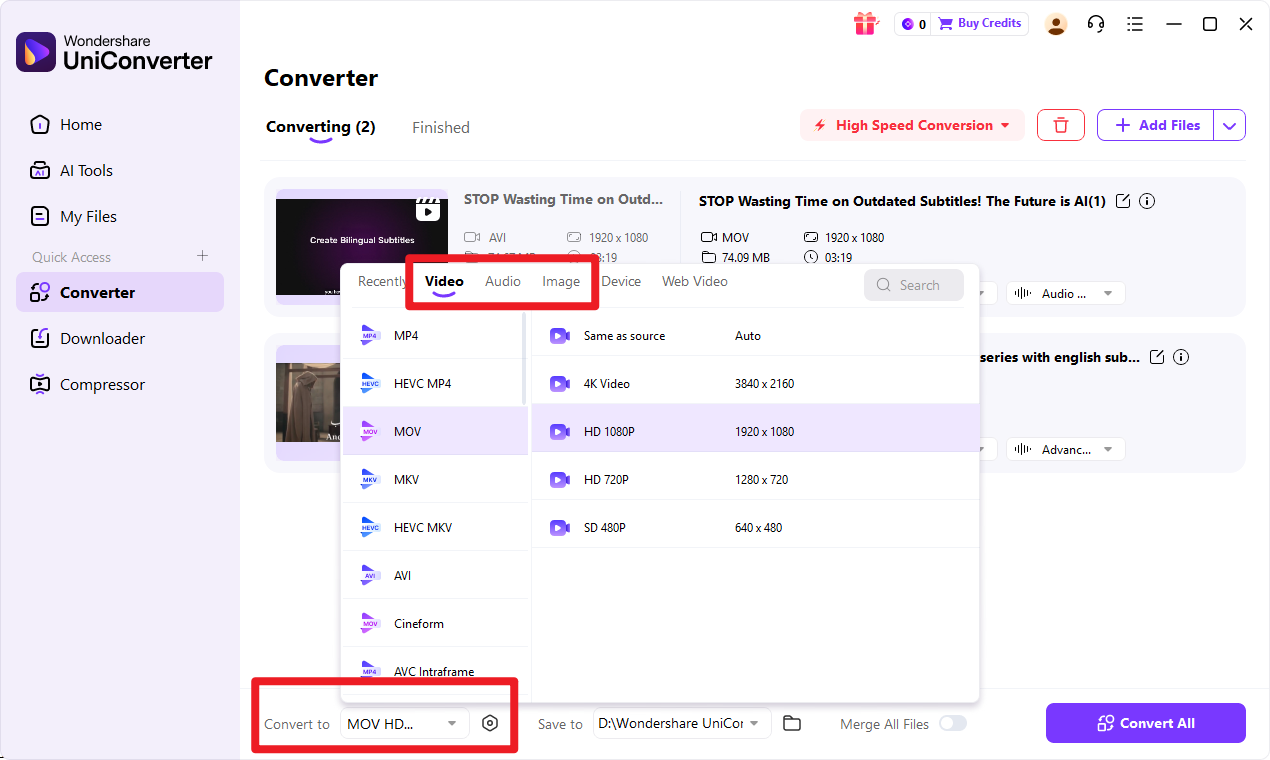
Before starting, you can choose where to save your new file by using the File Location menu at the bottom. Once you have everything set up, click the Convert button next to the file. If you are converting multiple files, you can click the Start All button in the bottom-right corner. UniConverter leverages GPU acceleration technology to ensure the conversion process is remarkably fast.
Step 4: Access Your New MP4 File
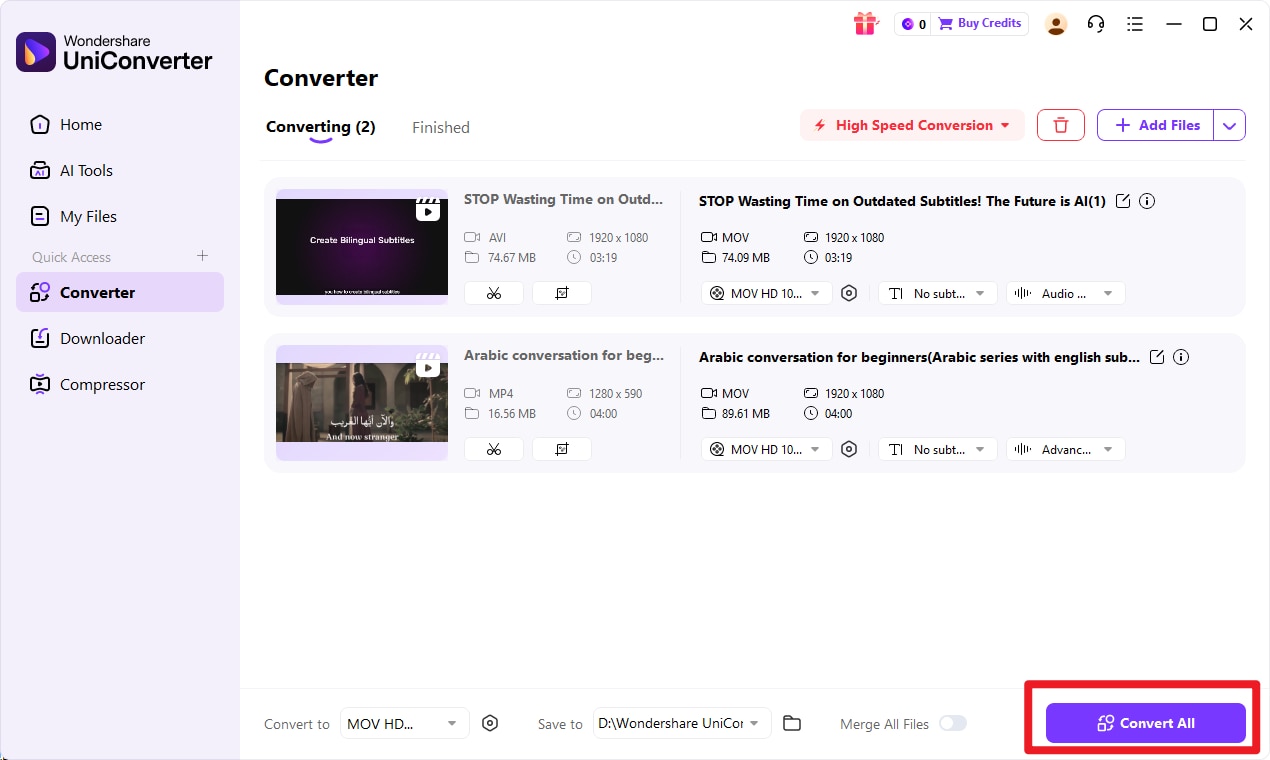
The conversion will be finished in just a short while. Once it's complete, you can easily find your new, ready-to-use MP4 file. Simply click on the Finished tab at the top of the screen to see a list of your converted videos, or navigate directly to the output folder you selected in the previous step. Your video is now ready for editing, sharing, or playback on any device.

Your All-in-One Video Toolbox
Conclusion
In the AVCHD vs MP4 showdown, there isn't a single "best" format, but there is a clear winner for practicality and modern use. AVCHD excels as a high-quality acquisition format, designed for capturing detailed video directly on camcorders for archival or Blu-ray production. However, its limitations in compatibility, large file sizes, and cumbersome editing workflow make it impractical for almost everything else.
MP4 is the undisputed champion of the digital video world. Its universal compatibility, efficient compression, and seamless integration with editing software make it the go-to format for sharing, streaming, and general use. For anyone who has AVCHD footage, converting it to MP4 is not just a suggestion—it's the most logical and necessary step to unlock the full potential of your videos. By using a dedicated and professional tool like Wondershare UniConverter, you can ensure this conversion is fast, effortless, and completely lossless, bridging the gap between recording and sharing.
FAQs
-
1. Does converting AVCHD to MP4 reduce quality?
Any time you transcode a video, there is a potential for quality loss. However, when using a high-quality professional converter like UniConverter, this loss can be made visually imperceptible. By choosing the right settings, such as selecting the 'Same as source' resolution and maintaining a high bitrate, you can perform a visually lossless conversion that preserves the crisp detail of your original AVCHD footage. -
2. Can I play AVCHD files on Windows 10 or Mac?
While some third-party media players like VLC Media Player can often play the individual .MTS or .M2TS files found within an AVCHD structure, native support in default players like Windows Media Player or Apple's QuickTime is not guaranteed. You may encounter errors, stuttering, or an inability to open the file at all. For guaranteed, hassle-free playback on any platform, converting the files to the universally supported MP4 format is the safest and most reliable option. -
3. Is AVCHD the same as 4K?
No, they are different things. AVCHD is a format container that holds video and audio data, while 4K (typically 3840 x 2160 pixels) is a video resolution. The original AVCHD standard was primarily designed for resolutions up to Full HD (1920 x 1080p). While a newer AVCHD 2.0 standard added support for higher frame rates and 3D, MP4 remains a much more common and compatible container for today's 4K and even 8K video content.
