
Navigating the world of video formats can feel like deciphering a secret code. You encounter a sea of acronyms—AVC, H.264, MPEG-2, MPEG-4—and it's often unclear which one is best for your needs. Whether you're a content creator aiming for the perfect export settings, a movie lover organizing your digital library, or simply trying to play a video file on your device, understanding these formats is crucial. The AVC vs MPEG debate is at the heart of this confusion, representing a pivotal shift in video technology from older standards to modern efficiency.
This guide will demystify these terms, providing a clear and detailed comparison. We'll break down the technical differences into practical, easy-to-understand insights, helping you determine which format is superior for your specific situation. By the end, you'll not only grasp the theory but also know how to handle any conversion needs that arise, ensuring your videos are always in the right format for the right purpose.
In this article, you will learn:
- What AVC (H.264) and MPEG are, with a clear distinction between the terms.
- A quick side-by-side comparison of their key features.
- A detailed analysis of which format is better regarding quality, file size, and compatibility.
- The specific use cases where each format excels.
- A step-by-step guide on how to convert files between these formats.
Part 1. What is AVC? What is MPEG?
To understand the comparison, we first need to define our terms. The names themselves can be a source of confusion, as they are often used interchangeably or incorrectly. Let's clarify what AVC and MPEG really mean.
What is AVC (H.264)?
AVC stands for Advanced Video Coding. It is a video compression standard that is also known by several other names, most notably H.264 and MPEG-4 Part 10. Think of these as different labels for the same powerful technology. Developed jointly by the ITU-T Video Coding Experts Group (VCEG) and the ISO/IEC Moving Picture Experts Group (MPEG), AVC was a game-changer upon its release.
Its primary claim to fame is its remarkable compression efficiency. AVC can deliver high-quality video at significantly lower bitrates (the amount of data used to encode one second of video) compared to its predecessors. This means you get a crisp, clear picture in a much smaller file size. This efficiency is the reason why AVC became the most widely adopted video format in the world. It is the backbone of Blu-ray discs, the standard for most online streaming services like YouTube and Netflix, and the default format for nearly all modern recording devices, from smartphones to professional cameras.
What is MPEG? Clarifying the Term
This is where things can get tricky. "MPEG" itself is not a single video format. It stands for the Moving Picture Experts Group, which is the committee that develops and sets standards for audio and video compression. Over the years, this group has released several major standards, each with different parts and capabilities.
When people talk about "MPEG" in a general sense, they could be referring to:
- MPEG-1: An old standard, famous for being used in Video CDs (VCDs). It's largely obsolete today.
- MPEG-2: A hugely successful standard that became the foundation for digital television broadcasting and, most famously, the video format for DVDs.
- MPEG-4: A broad collection of standards that includes many different "parts." Confusingly, AVC (H.264) is technically MPEG-4 Part 10. However, when people compare "MPEG" to "AVC," they are almost always implicitly comparing the older, more common MPEG-2 standard against the newer AVC (H.264) standard.
For the purpose of a practical and useful comparison, this article will focus on AVC (H.264) vs. MPEG-2, as this reflects the most common user query and represents the technological leap from the DVD era to the streaming era.
Part 2. Quick Comparison Table
To see the core differences at a glance, here is a quick comparison table that pits the modern efficiency of AVC (H.264) against the legacy standard of MPEG-2.
| Feature | AVC (H.264) | MPEG-2 |
| Compression Efficiency | High | Low |
| File Size (for same quality) | Smaller | Larger |
| Video Quality | Better at low bitrates | Good, but requires higher bitrates |
| Primary Use Cases | Web streaming, Blu-ray, modern devices | DVDs, digital television broadcast |
| Compatibility | Universal on modern devices | High on legacy devices (e.g., DVD players) |
Part 3. AVC vs MPEG: Which One Is Better?
While the table gives a quick overview, let's dive deeper into the practical implications of these differences. When you're choosing a format for encoding, downloading, or storing video, these factors directly impact your experience.
Compression Efficiency and File Size
This is the most significant advantage of AVC. It employs far more advanced and complex encoding algorithms than MPEG-2. These algorithms are better at predicting motion and reducing redundant data within video frames.
What does this mean for you? AVC can achieve the same level of visual quality as MPEG-2 while using approximately half the bitrate. This translates directly to much smaller file sizes. For example, a one-hour video that might take up 4 GB as an MPEG-2 file could be compressed to 2 GB or less using AVC, with no perceptible loss in quality. This incredible efficiency is what makes high-definition streaming over the internet possible and allows you to store more videos on your hard drive or phone.
Video Quality
Because of its superior compression methods, AVC consistently produces higher-quality video than MPEG-2, especially at lower bitrates. When bandwidth or storage space is limited, AVC can maintain a clean, sharp image with fewer distracting compression artifacts (like blockiness or blurring).
MPEG-2 can certainly produce excellent quality video, as evidenced by millions of commercial DVDs. However, it requires a much higher bitrate to do so. If you were to encode the same source video to both AVC and MPEG-2 using an identical (and relatively low) bitrate, the AVC version would look noticeably better, with more detail and smoother motion.
Compatibility and Adoption
Here, the context of time is important. For many years, MPEG-2 was the king of compatibility. It was the mandated standard for DVDs, meaning any DVD player in the world could play it. It was also the standard for over-the-air digital television.
However, the industry has moved on. Today, AVC (H.264) is the undisputed champion of compatibility. It is natively supported by:
- All modern web browsers (Chrome, Firefox, Safari, Edge)
- All smartphones and tablets (iOS and Android)
- All smart TVs and streaming devices (Roku, Apple TV, Fire Stick)
- All modern computers and operating systems (Windows, macOS, Linux)
- Most cameras, drones, and recording devices
While MPEG-2 still has a foothold in legacy hardware, its compatibility with the modern digital ecosystem is far more limited. Many modern devices, especially mobile ones, may not play MPEG-2 files without a third-party app.
The Verdict: AVC Is the Superior Choice for Most Applications
For nearly all video needs in 2026, AVC (H.264) is the clear winner. It offers a superior combination of high quality, small file size, and universal compatibility. Whether you are recording, editing, streaming, sharing, or archiving video, AVC is the modern, efficient, and logical choice. MPEG-2's role has become a niche one, primarily reserved for projects that require compatibility with outdated systems.
Part 4. Use Cases for AVC and MPEG
Understanding the technical superiority of AVC is one thing; knowing when to use each format is another. Here's a practical breakdown of where you'll encounter and use each codec.
When to Use AVC (H.264)
AVC is the go-to format for almost every digital video task today. You should use it for:
- Online Streaming: When uploading videos to platforms like YouTube, Vimeo, or social media, encoding in AVC ensures the best balance of quality and file size for smooth playback.
- Recording Video: Virtually all modern digital cameras—including DSLRs, mirrorless cameras, smartphones, drones, and action cams—record in AVC by default. It captures high-quality footage without rapidly filling up your memory card.
- Creating a Digital Media Library: If you are digitizing your movie collection or storing home videos, encoding them in AVC will save a massive amount of storage space compared to older formats, without sacrificing visual quality.
- Playback on Any Device: To ensure your video plays flawlessly on a laptop, smart TV, tablet, or phone, AVC is the most reliable format you can choose.
When You Might Still Encounter or Use MPEG-2
Despite being a legacy format, MPEG-2 isn't entirely extinct. There are a few specific scenarios where it is still relevant:
- Authoring DVDs: If you need to create a standard-definition video DVD that will play in any standalone DVD player, you must encode the video in MPEG-2. This is a strict requirement of the DVD-Video specification.
- Working with Legacy Footage: You might have old video files from an older digital camcorder or from digital television broadcasts that are in the MPEG-2 format.
- Specific Broadcast Workflows: Some older professional broadcasting equipment may still operate using MPEG-2-based workflows, though this is becoming increasingly rare.
If you have a library of old MPEG-2 files, you may want to consider converting them to the more efficient and universally compatible AVC format. This can free up significant storage space and make them easier to watch on modern devices. A powerful tool like Wondershare UniConverter can handle this batch conversion task effortlessly, preserving the best possible quality.
Part 5. Step-by-Step Guide to Convert AVC to MPEG Using UniConverter
While it's more common to convert from MPEG to AVC, you might occasionally need to do the reverse. For instance, if you've edited a modern video and need to burn it to a DVD for an older relative, you'll need to convert your AVC (H.264) file to MPEG-2.
Wondershare UniConverter is an intuitive and powerful video toolbox that makes this process simple. It supports over 1,000 formats, including all variants of AVC and MPEG, and is renowned for its high-speed, high-quality conversions.
Here is how to convert AVC to MPEG in four simple steps:
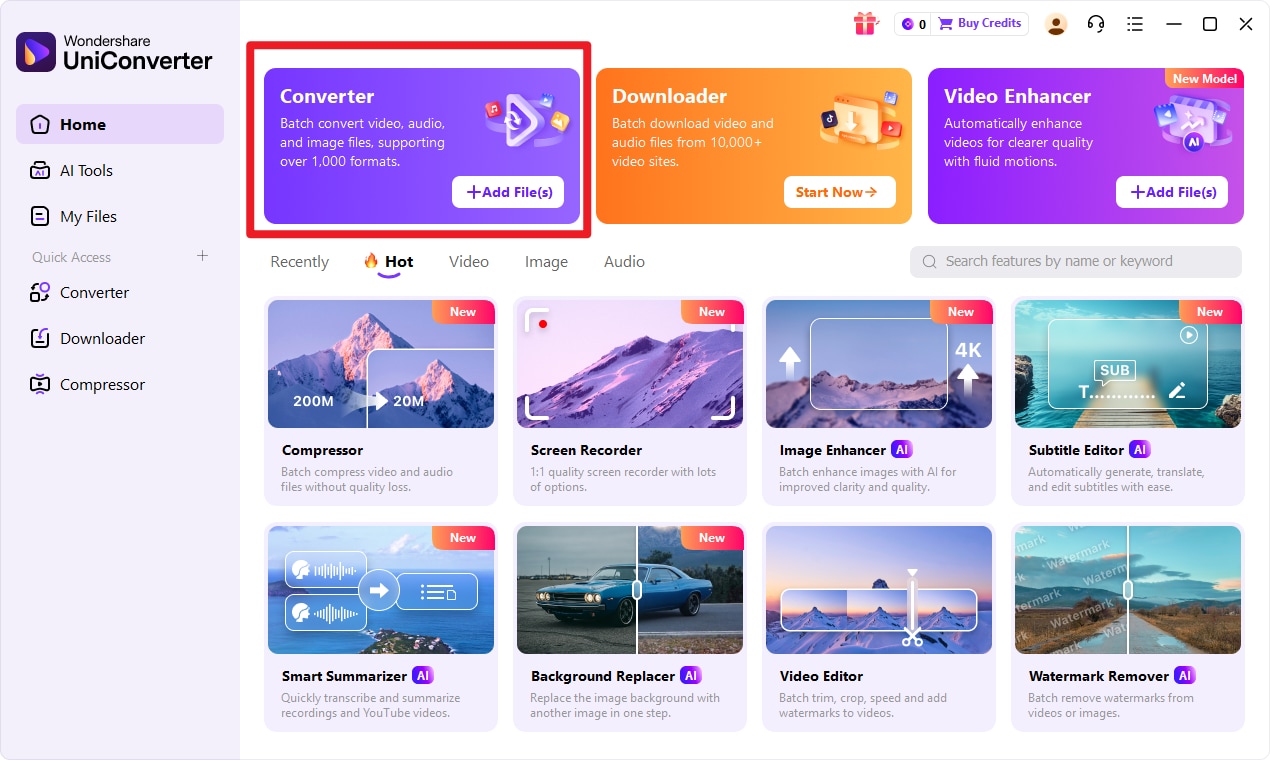
Step 1: Choose Converter in UniConverter
Launch Wondershare UniConverter on your computer. From the main home screen, navigate to the left-side menu and select the Converter tool. This is your main workspace for all file format conversions.
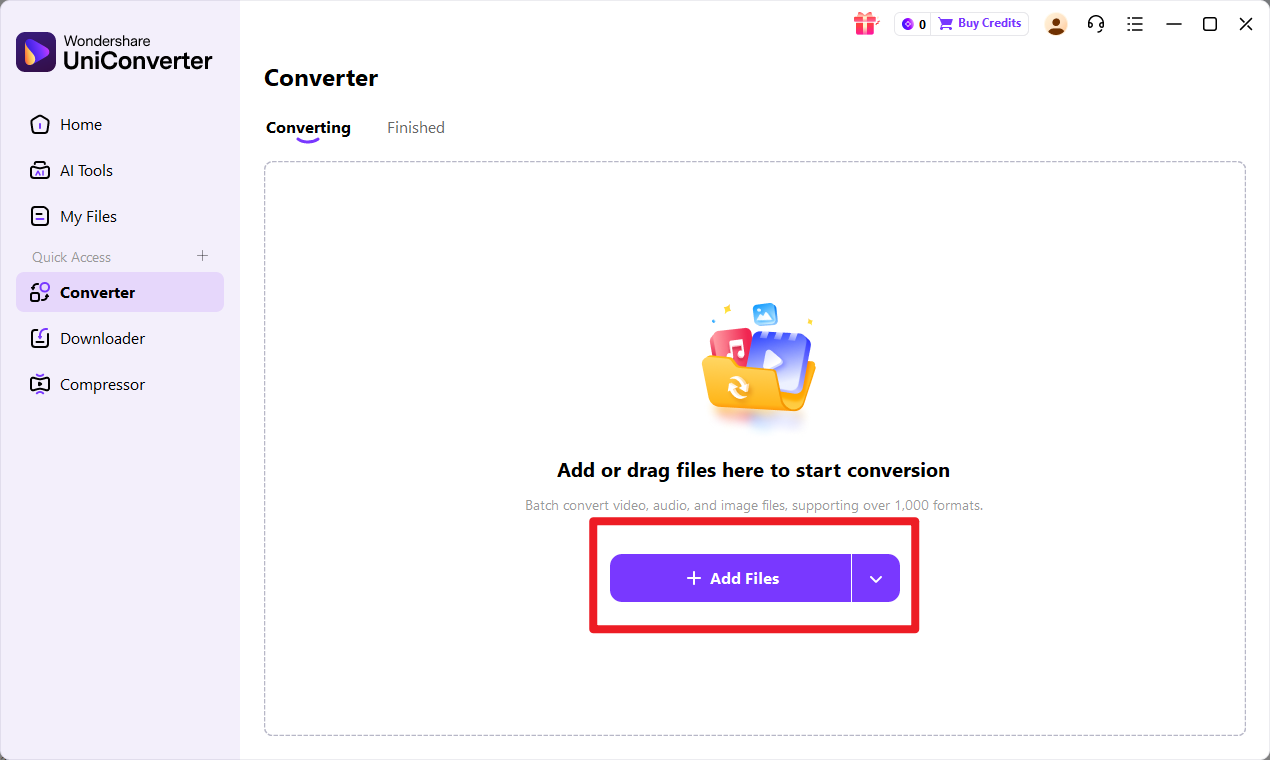
Step 2: Add Files to UniConverter
Click the Add Files button in the center or top-left corner to browse and import your input format video file. Alternatively, you can simply find the file on your computer and drag and drop it directly into the UniConverter window. The software supports batch conversion, so feel free to add multiple files at once.
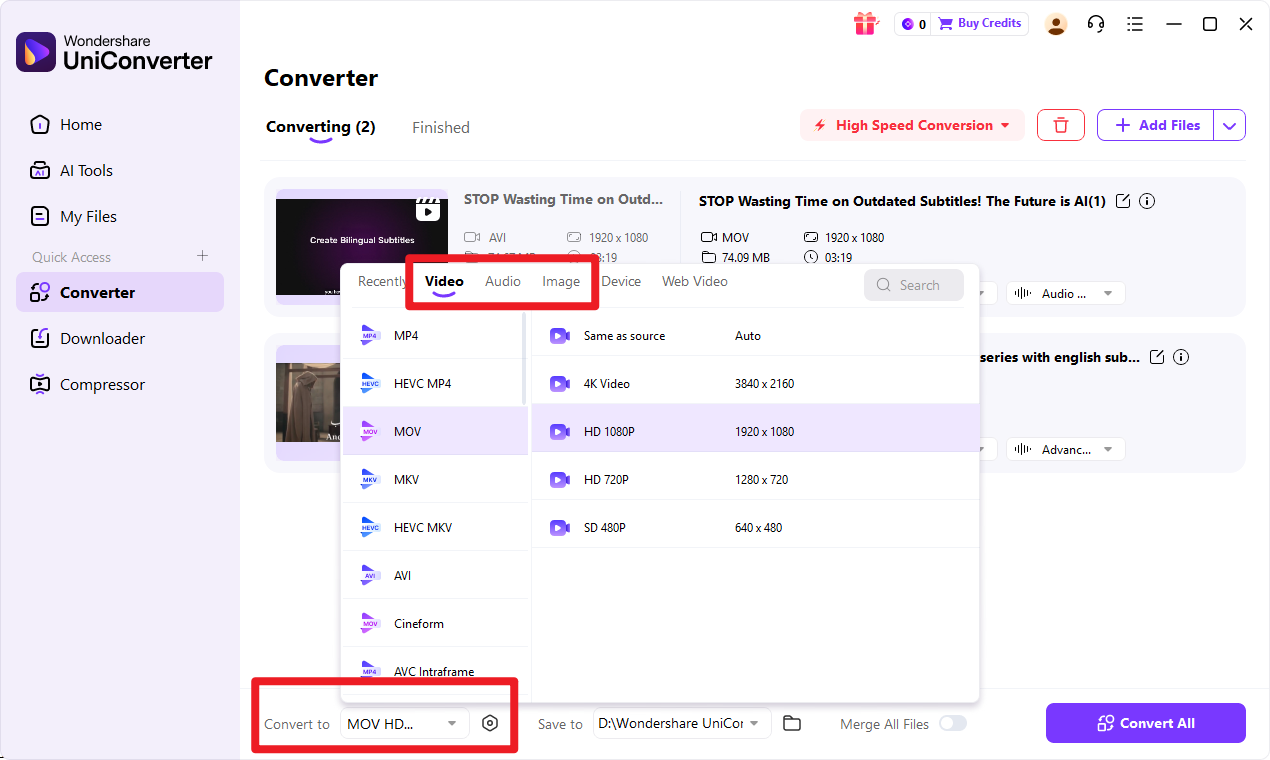
Step 3: Choose Output Format
At the bottom of the window, click on the Output Format menu. This will open a new window with a list of available formats. Click on the Video tab. From the list on the left, select your target format (in this case, MPEG). On the right, you can choose a preset resolution or keep it the same as the source.
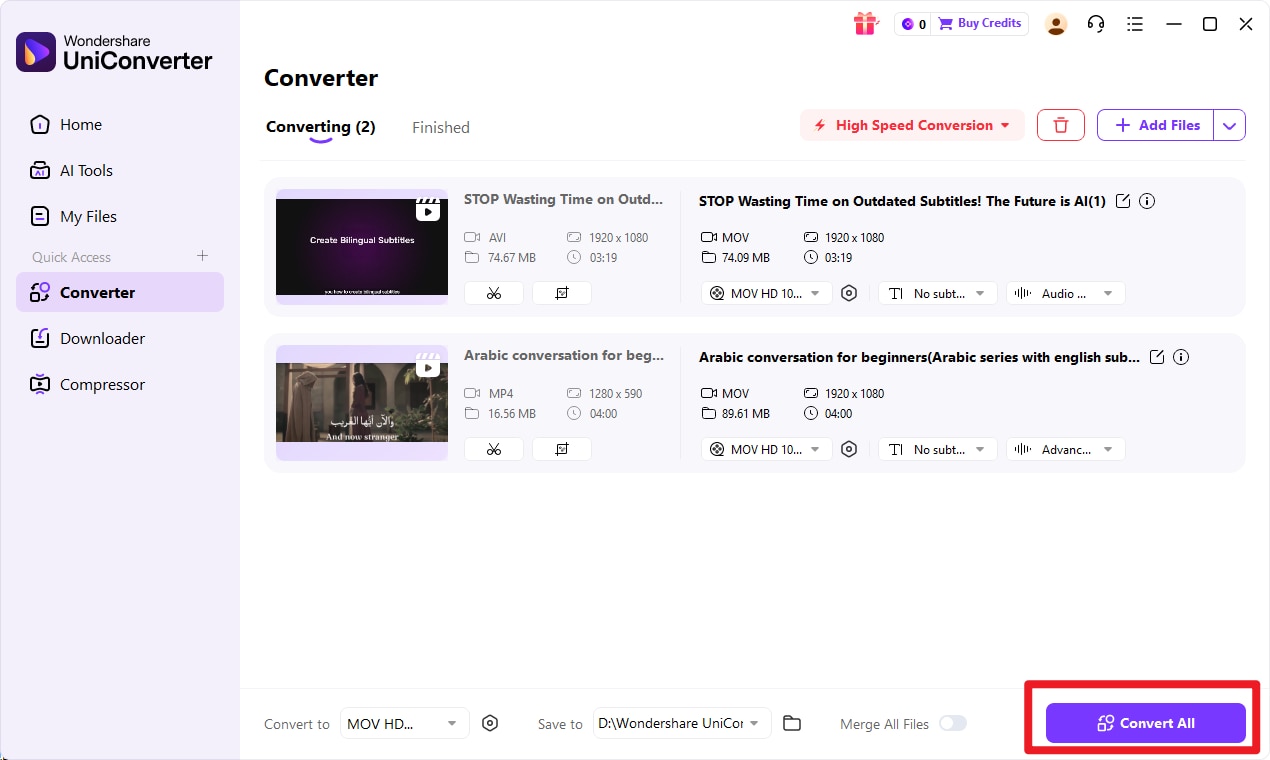
Step 4: Start the Conversion
Before starting, you can specify where to save the converted file by using the File Location field at the bottom. Once you are ready, click the Convert button next to the single file or the Start All button in the bottom-right corner to begin the conversion process for all files in the queue. UniConverter will process your files quickly and efficiently.

More Than Just an AVC to MPEG Converter
FAQs
-
1. Is AVC the same as MPEG-4?
Not exactly, but they are closely related. AVC (H.264) is officially designated as MPEG-4 Part 10. It is a specific video coding standard within the larger MPEG-4 suite of tools. However, the term "MPEG-4" can also refer to other, older parts of the standard (like MPEG-4 Part 2). Because of this ambiguity, it's more precise to use the terms AVC or H.264 when referring to the modern codec. -
2. Is H.264 better than MPEG?
Yes, H.264 (which is another name for AVC) is significantly better than older MPEG standards like MPEG-2. It offers far superior compression efficiency. This means it can provide the same or better video quality in a file that is roughly half the size. This makes it the superior choice for streaming, storage, and general use. -
3. Can I play AVC files on my computer?
Absolutely. Virtually all modern media players on Windows and macOS can play AVC (H.264) files natively, without requiring any extra codecs or software. This includes built-in players like Windows Media Player and QuickTime, as well as popular third-party players like VLC Media Player, which is known for its ability to play almost any format. -
4. Why would I need to convert a video to MPEG-2?
The primary reason to convert a modern video file to MPEG-2 is for backward compatibility. The most common use case is creating a video DVD. The official DVD-Video standard mandates that the video content must be encoded in MPEG-2 format to ensure it can be played on any standard, standalone DVD player, including very old models.
Conclusion
In the AVC vs MPEG showdown, AVC (H.264) is the decisive modern champion. Its advanced compression technology delivers better video quality in smaller, more manageable file sizes, making it the ideal standard for nearly every contemporary application, from streaming and recording to archiving. MPEG-2, while a foundational technology that powered the DVD revolution, is now largely relegated to legacy use cases where backward compatibility is the top priority.
Understanding these differences empowers you to make the right choices for your video projects. And for those times when you need to bridge the gap between old and new, having a reliable conversion tool is essential. Wondershare UniConverter stands out as the ultimate solution, providing a fast, user-friendly, and high-quality platform to handle all your video format needs. Whether you're converting old MPEG files to modern AVC or preparing an AVC file for a DVD project, UniConverter ensures the process is seamless and efficient.
