
In the ever-evolving world of digital video, codecs are the unsung heroes that make streaming high-quality content possible. They compress massive video files into manageable sizes without significant quality loss. Two of the most prominent players in this space are AV1 and VP9. Choosing between them can be a daunting task for content creators, developers, and tech enthusiasts alike. The AV1 vs VP9 debate centers on a trade-off between next-generation compression efficiency and current-day compatibility.
Understanding the nuances of each codec is crucial for delivering the best possible viewing experience, whether you're streaming 4K movies, uploading content to YouTube, or archiving your personal video library. This guide will break down the technical differences, real-world performance, and ideal use cases for both AV1 and VP9, helping you make an informed decision. We'll also explore how to easily bridge the compatibility gap between these two powerful formats.
In this article
Part 1. What is AV1? What is VP9?
Before diving into a head-to-head comparison, it's essential to understand what each codec is and where it came from. Both were developed with the goal of providing high-quality, open-source video compression for the web, but they represent different generations of technology.
What is AV1 (AOMedia Video 1)?
AV1, or AOMedia Video 1, is a modern, open, royalty-free video coding format designed for video transmissions over the internet. It was developed by the Alliance for Open Media (AOMedia), a consortium founded in 2015 by industry giants including Google, Mozilla, Microsoft, Amazon, and Netflix.
The primary goal behind AV1 was to create a next-generation codec that surpasses existing standards like H.264 and its predecessor, VP9. It aims to deliver superior compression efficiency, enabling higher-quality video streaming at lower bitrates. This is particularly important for 4K, 8K, and HDR content.
Core features and advantages of AV1 include:
- Superior Compression: AV1 can achieve up to 30% better compression than VP9 for the same level of visual quality, significantly reducing data usage and storage costs.
- Royalty-Free: Its open and royalty-free licensing model encourages widespread adoption without the complex and costly licensing fees associated with codecs like HEVC (H.265).
- Optimized for the Web: It is specifically designed to handle the demands of modern internet video, from real-time communication to on-demand streaming.
What is VP9 (Video Processing 9)?
VP9 is an open and royalty-free video coding format developed by Google. It is the direct successor to VP8 and the predecessor to AV1. Released in 2013, VP9 quickly became a cornerstone of Google's video ecosystem, most notably as the primary codec for high-resolution video on YouTube.
For years, VP9 has been the workhorse for delivering 4K content across the web, offering a significant improvement in compression over the older H.264/AVC standard. It established a strong foothold in the market thanks to its integration into Google Chrome, Android, and other Google products.
Core features and advantages of VP9 include:
- Mature and Widespread Support: VP9 is supported by virtually all modern web browsers and a vast range of devices, from smartphones to smart TVs.
- Excellent Performance: It offers a great balance of compression efficiency and encoding/decoding speed, making it less computationally demanding than AV1 on current hardware.
- Proven Track Record: As the backbone of YouTube for nearly a decade, VP9 is a stable, reliable, and well-understood codec for high-volume video delivery.
Part 2. Quick Comparison Table
For a clear, at-a-glance overview, here is a quick comparison table outlining the key differences between AV1 and VP9.
| Feature | AV1 | VP9 |
| Compression Efficiency | Higher (approx. 30% better) | High |
| Video Quality | Better at lower bitrates | Very Good |
| Encoding Speed | Slower, more computationally intensive | Faster |
| Decoding Support | Growing, requires modern hardware | Widespread, mature support |
| Royalty/Licensing | Royalty-free | Royalty-free |
| Industry Adoption | Netflix, YouTube, Facebook, Google | Google (YouTube), Chrome, Android |
Part 3. AV1 vs VP9: Which One Is Better?
Determining which codec is "better" depends entirely on your priorities. AV1 is technologically superior in terms of efficiency, but VP9 currently holds the advantage in performance and compatibility. Let's break down the key areas of comparison.
Compression Efficiency and File Size: The AV1 Advantage
This is where AV1 truly shines. The primary design goal of AV1 was to significantly improve compression efficiency over its predecessors, and it succeeded. For a given level of visual quality, an AV1-encoded video can be around 30-40% smaller than the same video encoded with VP9.
This is achieved through more advanced and complex coding tools, such as sophisticated block partitioning, improved prediction methods, and advanced filtering techniques. In the real world, this translates to massive data savings. For a streaming service like Netflix or YouTube, switching from VP9 to AV1 means they can deliver the same 4K stream using significantly less bandwidth. For users on limited mobile data plans, this means less data consumption while watching high-quality videos. For content creators, it means smaller file sizes for archiving and distribution.
Video Quality: A Clear Winner at Low Bitrates
Superior compression directly translates to better video quality, especially at lower bitrates. When bandwidth is constrained, codecs must make compromises to reduce the file size, which often results in visible artifacts like blockiness or blurring.
Because AV1 is more efficient, it can retain more detail and produce a cleaner, sharper image than VP9 at the same low bitrate. This makes it the clear winner for delivering high-fidelity experiences in challenging network conditions. Furthermore, AV1 was designed with modern video standards in mind, offering better support for 10-bit and 12-bit color depths, wider color gamuts, and High Dynamic Range (HDR) content, making it the more future-proof option for premium 4K and 8K video.
Performance: The Speed and Compatibility of VP9
The advanced algorithms that give AV1 its compression edge come at a cost: computational complexity. Encoding video in AV1 is significantly slower and requires more processing power than encoding in VP9. While dedicated hardware encoders are becoming more common in new GPUs and CPUs, software encoding remains a resource-intensive task.
Similarly, decoding (playing back) AV1 video is more demanding. Older devices without dedicated hardware decoding support may struggle to play high-resolution AV1 content smoothly, leading to stuttering or increased battery drain.
In contrast, VP9 is a more mature technology with years of optimization behind it. It encodes much faster and requires less CPU power for both encoding and decoding. Widespread hardware support for VP9 decoding has been standard for years, ensuring smooth playback on a vast majority of devices currently in use.
Compatibility and Adoption: Where VP9 Still Leads
As of 2026, VP9 maintains a significant lead in compatibility. It is supported natively in all major web browsers (Chrome, Firefox, Edge, Safari) and on billions of devices running Android, ChromeOS, and other operating systems. This makes it a safe and reliable choice for delivering video to the widest possible audience.
AV1's ecosystem, however, is growing rapidly. All major browsers now support AV1 decoding, and hardware support is becoming standard in new chips from Intel, NVIDIA, AMD, and mobile SoC manufacturers. Major streaming platforms like YouTube, Netflix, and Vimeo are actively serving AV1 content to compatible devices. While it hasn't yet reached the universal support level of VP9, its trajectory is clear. AV1 is the codec of the future, but VP9 is the more universally compatible codec of today.
Part 4. Use Cases for AV1 and B
Given their respective strengths and weaknesses, the choice between AV1 and VP9 often comes down to the specific application.
When to Choose AV1
- For high-quality video streaming services: If you are a platform delivering premium content (especially 4K HDR), AV1 allows you to save significant bandwidth costs and provide a better viewing experience for users with modern devices.
- For archiving video content: To store your video library in the highest possible quality with the smallest file size, AV1 is the ideal choice. Its superior compression ensures your archives are efficient and future-proof.
- When targeting modern devices and platforms: If your target audience primarily uses new smartphones, laptops, and smart TVs, you can confidently use AV1 to leverage its benefits without worrying about compatibility issues.
When to Choose VP9
- For ensuring maximum compatibility: If your video needs to play flawlessly on the widest possible range of devices, including those that are several years old, VP9 is the safer bet.
- When faster encoding speed is a priority: For applications like live streaming or rapid video production workflows where encoding time is critical, VP9's faster performance makes it the more practical option.
- For general web video and content on platforms like YouTube: While YouTube uses AV1, uploading a VP9 file is a reliable way to ensure your content is processed quickly and is available to all viewers, as YouTube will transcode it to various formats anyway.
Bridging the Gap with a Video Converter
What if you have a high-quality AV1 file but need to share it with someone whose device doesn't support it? Or perhaps you want to convert your older VP9 library to the more efficient AV1 format for long-term storage. In these scenarios, a reliable video converter is essential. A powerful tool like Wondershare UniConverter can handle this conversion seamlessly. It allows you to convert between AV1, VP9, and hundreds of other formats, preserving quality while ensuring your video plays anywhere you need it to.
Part 5. Step-by-Step Guide to Convert AV1 to VP9 Using UniConverter
If you've decided that VP9's broad compatibility is right for your needs, UniConverter makes the conversion process incredibly simple. Follow these four easy steps to convert your AV1 files to VP9 without any hassle.
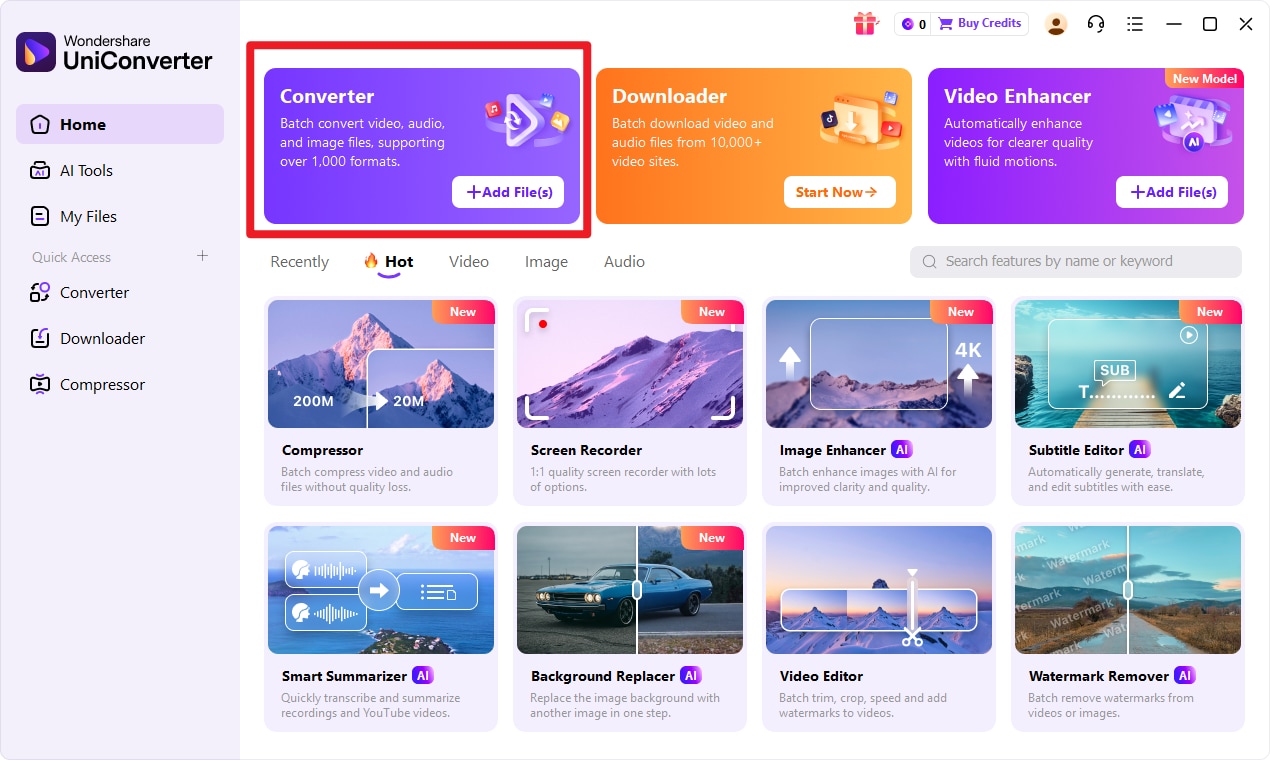
Step 1: Launch the Wondershare UniConverter
First, launch the Wondershare UniConverter application on your computer. In the main interface, select the Converter tool from the left-hand menu.
Step 2: Add Files to UniConverter
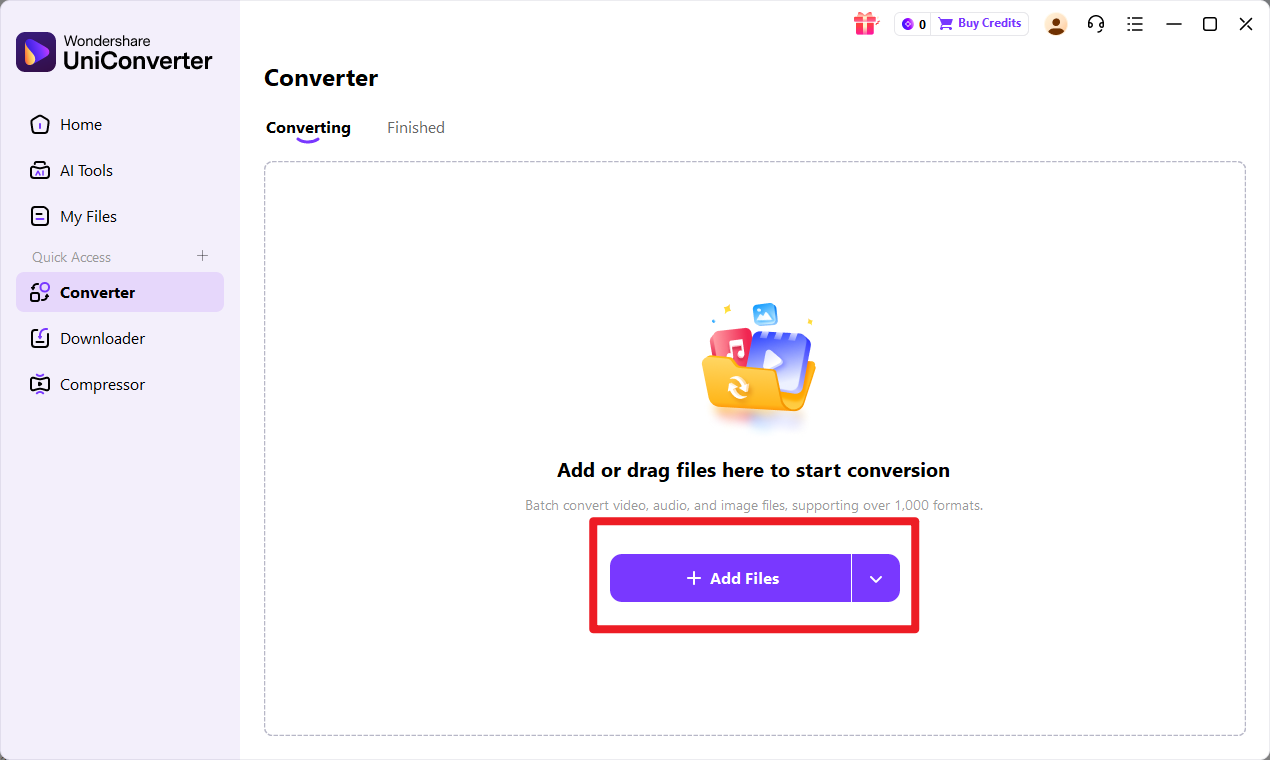
You can now either drag and drop your AV1 video file directly into the program window or click the "Add Files" button to browse and select the file from your computer.
Step 3: Choose Output Format
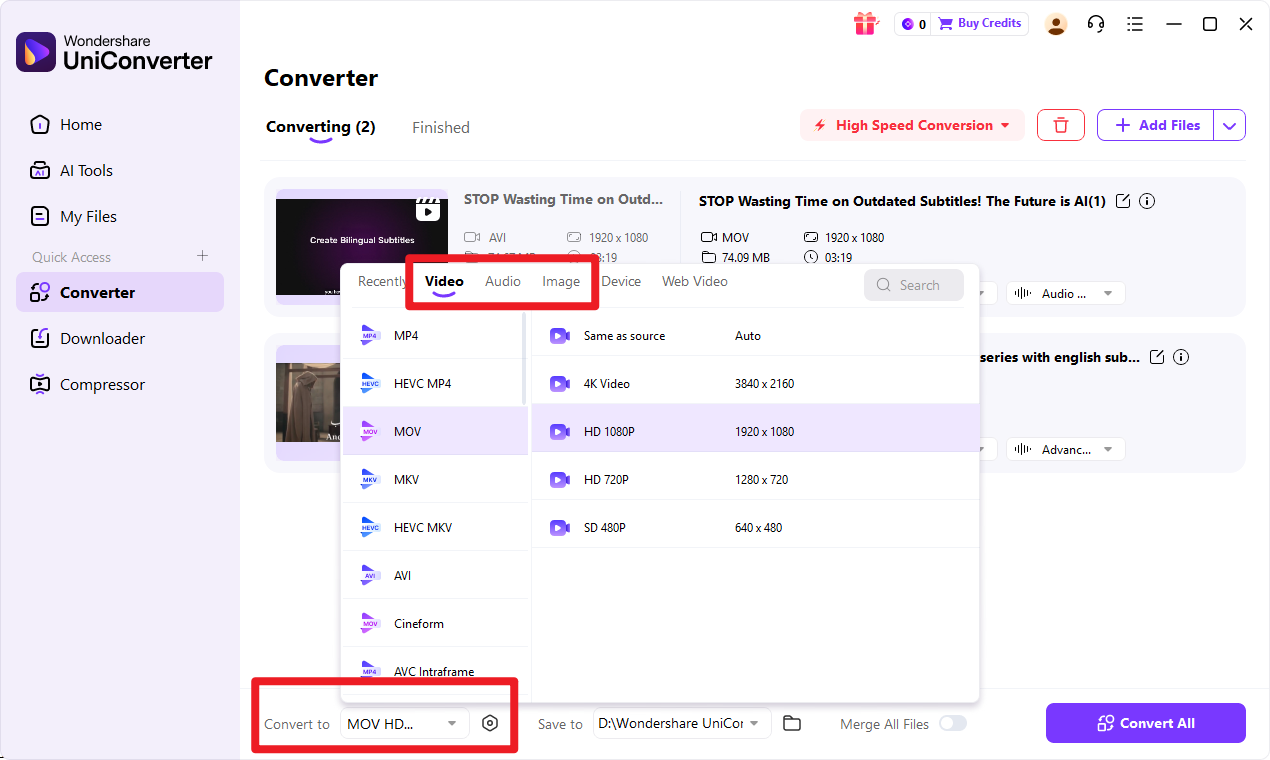
Once your file is loaded, click on the Output Format menu at the bottom of the window. This will open a new dialog box with a list of formats. Navigate to the Video tab. To use the VP9 encoder, you can select either MP4 or WebM as the container format. After selecting the container and a desired resolution, click the small "Edit" icon next to the resolution to open the detailed settings. In the settings window, find the Encoder dropdown menu and select VP9.
Step 4: Start the Conversion
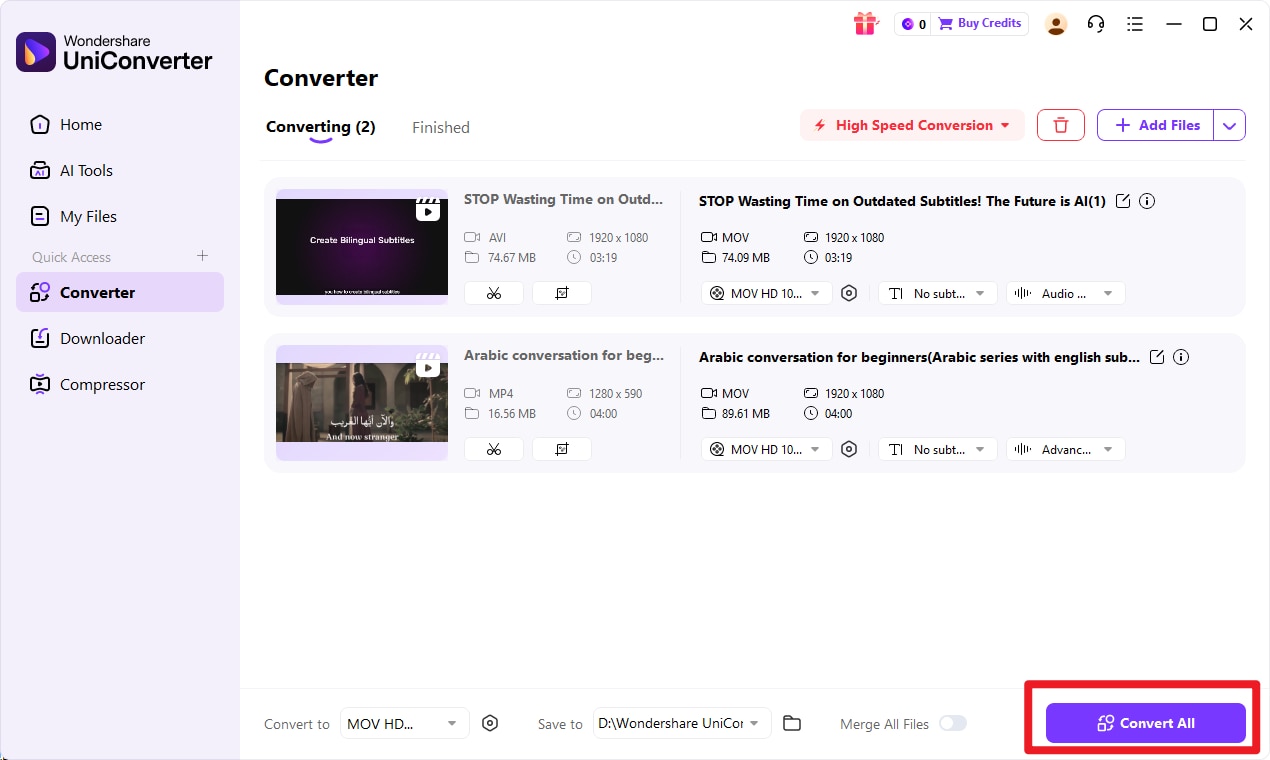
After configuring the output format, you can choose a destination for your converted file by using the File Location menu at the bottom. Once you are ready, simply click the Convert button (or Start All if you have multiple files). UniConverter will begin the conversion process, utilizing its high-speed conversion technology to process your file quickly.
You will see a progress bar indicating the status of the conversion. Once it's complete, a "Success" message will appear. You can find your newly created VP9 file by clicking the Finished tab at the top of the window. From there, click the "Open" icon to navigate directly to the output folder and check your new video file.

More Than Just an AV1 to VP9 Converter
Conclusion
The choice between AV1 vs VP9 is a classic case of future potential versus present-day practicality. AV1 is the clear technological successor, offering superior compression that translates to smaller file sizes and better quality, especially at low bitrates. However, this comes at the cost of higher computational requirements for encoding and decoding. VP9, while less efficient, provides excellent quality with the major advantages of faster performance and near-universal device compatibility.
Ultimately, your decision should be guided by your specific goals. If your priority is cutting-edge quality and bandwidth efficiency for a modern audience, AV1 is the way forward. If you need maximum compatibility and faster processing speeds, VP9 remains an excellent and reliable choice in 2026. For situations where you need to bridge the gap between these two formats, a versatile tool like UniConverter provides a powerful and user-friendly solution, ensuring your videos are ready for any device or platform.
FAQs
-
1. Is AV1 better than VP9 for YouTube?
YouTube uses both codecs. For viewers with compatible devices and browsers, YouTube will serve the AV1 version of a video to save bandwidth and deliver higher quality. For others, it will fall back to VP9 or H.264. When uploading, providing a high-quality source file in either format is fine, as YouTube will re-encode it. However, uploading in AV1 might give you a slight edge, as it could result in a higher-quality final product after YouTube's processing. -
2. Does AV1 use more CPU than VP9?
Yes, absolutely. The advanced compression techniques used by AV1 make it significantly more computationally intensive than VP9. This applies to both encoding (creating the video file) and decoding (playing it back). For smooth playback of high-resolution AV1 video, modern hardware with dedicated AV1 decoding support is highly recommended. -
3. Can I convert VP9 back to AV1 using UniConverter?
Yes, you can. Wondershare UniConverter is a comprehensive tool that supports two-way conversions. You can easily take your older VP9 files and convert them to the more efficient AV1 format. This is a great strategy for archiving your video library, as it can significantly reduce the amount of storage space required without sacrificing quality.
