
In the world of professional digital cinematography, the choice of recording format is one of the most critical decisions made before the cameras even start rolling. It impacts everything from image quality and creative flexibility to storage costs and post-production efficiency. Two of the most prominent players in the high-end RAW video space are ARRIRAW and Apple ProRes RAW. The debate over ARRIRAW vs ProRes RAW isn't just about technical specifications; it's about entire ecosystems and workflows. For cinematographers, DITs, and post-production professionals, understanding the nuances between these two formats is essential for making an informed decision that aligns with a project's creative goals and logistical constraints.
This guide provides a comprehensive technical breakdown, comparing these two powerhouse formats across the metrics that matter most to industry professionals. We'll explore their fundamental differences, weigh their pros and cons, and identify the ideal use cases for each, helping you navigate this complex choice with confidence.
In this article
Part 1. What is ARRIRAW? What is ProRes RAW?
Before we dive into a head-to-head comparison, it's crucial to understand the core identity and purpose of each format. While both are "RAW," they are built on fundamentally different philosophies.
What is ARRIRAW?
ARRIRAW is the proprietary, uncompressed RAW digital recording format from ARRI, the manufacturer behind the legendary ALEXA line of digital cinema cameras. For over a decade, ARRIRAW has been widely regarded as the industry's gold standard for digital image acquisition. It captures the full, unaltered data directly from the camera's sensor. This uncompressed, 16-bit linear data stream provides the maximum possible image information, offering unparalleled flexibility and creative control in post-production, particularly for color grading and visual effects. When a project demands the absolute highest level of image fidelity with no compromises, ARRIRAW is the benchmark.
What is ProRes RAW?
ProRes RAW is Apple's innovative video format that aims to deliver the quality and flexibility of RAW video with the real-time performance and manageable file sizes of its conventional ProRes codecs. Introduced in 2018, it achieves this by applying a visually lossless compression algorithm to the raw sensor data. Unlike ARRIRAW, which is exclusive to ARRI cameras, ProRes RAW has been adopted by a wide range of camera manufacturers, including Sony, Canon, Panasonic, Nikon, and DJI. This makes it a more accessible RAW option for a broader spectrum of productions, from independent films to high-end documentaries.
Part 2. Quick Comparison Table
For a quick overview, this table highlights the key differences between ARRIRAW and ProRes RAW at a glance.
| Feature | ARRIRAW | Apple ProRes RAW |
| Developer | ARRI | Apple |
| Compression | Uncompressed | Compressed (Visually Lossless) |
| File Size | Very Large | Manageable |
| Data Rate | Extremely High | High |
| Camera Support | ARRI Cameras Only | Multiple Camera Brands |
| NLE Compatibility | Excellent (Resolve, Premiere Pro, etc.) | Limited (Excellent in FCPX, Not Supported in Resolve) |
| Color Science | ARRI Native | Camera Manufacturer Native |
Part 3. ARRIRAW vs ProRes RAW: Which One Is Better?
The question of "which is better" depends entirely on your project's specific needs. Let's break down the comparison into four critical areas: image quality, workflow efficiency, storage, and software compatibility.
Image Quality and Post-Production Flexibility
When it comes to pure data fidelity, ARRIRAW is the undisputed champion. It records a 16-bit linear scene-referred image, containing a vast amount of color information and dynamic range. This gives colorists maximum latitude to push and pull the image in post-production, recover highlight and shadow detail, and execute complex color grades without introducing artifacts like banding. For VFX-heavy projects, the uncompressed data is invaluable for keying, tracking, and compositing.
ProRes RAW, on the other hand, records 12-bit log-encoded data. While 12-bit is less than 16-bit, it still represents over 68 billion color values and provides excellent dynamic range. The compression is highly efficient and considered "visually lossless," meaning that for most applications, the difference in quality compared to an uncompressed source is negligible to the human eye. It offers significant post-production flexibility over standard 8-bit or 10-bit formats, but it doesn't quite match the absolute malleability of ARRIRAW's 16-bit uncompressed data.
Winner: ARRIRAW for absolute, uncompromised data fidelity.
Workflow Efficiency and Editing Performance
This is where ProRes RAW shines, especially within the Apple ecosystem. The format is engineered to work seamlessly with macOS and Final Cut Pro. On modern Apple hardware, you can often edit multiple streams of 4K or even 8K ProRes RAW footage in real-time without the need for proxies. This dramatically accelerates the post-production process, allowing editors to work with the original camera files from ingest to final export.
ARRIRAW's massive data rates present a significant challenge for real-time editing. Working directly with ARRIRAW files requires extremely high-performance (and expensive) storage arrays and powerful workstations. Consequently, the standard workflow for ARRIRAW involves creating smaller "proxy" files (often in a standard ProRes format) for editing. The editor works with these lightweight proxies, and the final color grade and export are performed by relinking to the original high-resolution ARRIRAW files. This proxy workflow is robust and well-established but adds an extra step and complexity to the process.
Winner: ProRes RAW for superior real-time editing performance and a more streamlined workflow.
File Size and Storage Considerations
The difference in file size is staggering and is often a deciding factor. Because ARRIRAW is uncompressed, it generates enormous files. A single hour of 4.5K Open Gate ARRIRAW footage can consume several terabytes of storage. This has major implications not only for the cost of on-set and post-production storage but also for data transfer times and archival solutions.
ProRes RAW's compression provides a massive advantage here. File sizes are significantly smaller than uncompressed RAW formats—often comparable to standard ProRes 422 HQ files. This reduction in data footprint makes it more practical for projects with limited budgets, faster-paced productions, and situations where data management is a key concern. It lowers the barrier to entry for RAW workflows by reducing the need for massive, high-speed storage infrastructure.
Winner: ProRes RAW for its efficiency in storage and data management.
Software and Ecosystem Compatibility
ARRIRAW has been the industry standard for years, and as a result, it enjoys broad support across the professional post-production landscape. It is fully compatible with leading software like DaVinci Resolve, Adobe Premiere Pro, Avid Media Composer, and Filmlight Baselight. Crucially, its seamless integration with DaVinci Resolve, the industry's premier tool for color grading, makes it the default choice for many high-end workflows.
This is ProRes RAW's most significant weakness. While it is perfectly supported in Apple's Final Cut Pro and has good support in Adobe Premiere Pro and Avid Media Composer, it is not supported in DaVinci Resolve. This is a major pain point for many professionals, as it prevents colorists from working directly with ProRes RAW files in their preferred software. This lack of Resolve support often forces a transcoding step, negating some of the format's workflow advantages and creating a significant hurdle for collaboration between editors and colorists who use different software.
Winner: ARRIRAW for its universal support in critical high-end post-production software.
Part 4. Use Cases for ARRIRAW and ProRes RAW
Based on the comparison above, we can outline clear scenarios where each format excels.
When to Use ARRIRAW
Choose ARRIRAW when quality is the absolute, non-negotiable priority and the budget can support the demanding workflow. Ideal scenarios include:
- High-Budget Feature Films and Television Series: Projects destined for the big screen or premium streaming services where every pixel matters.
- VFX-Heavy Projects: When extensive green screen work, compositing, and digital manipulation are required, the clean, uncompressed data of ARRIRAW is essential for achieving seamless results.
- High-End Commercials: For national or global campaigns where the final image must be flawless and hold up to intense scrutiny and color grading.
When to Use ProRes RAW
Choose ProRes RAW when you need a balance of high quality and workflow efficiency, especially if your post-production pipeline is centered around Final Cut Pro. It's perfect for:
- Independent Films, Documentaries, and Music Videos: Productions where budgets are tighter and turnaround times are faster. The smaller file sizes and real-time editing performance are huge assets.
- Fast-Paced Productions: Reality TV, event coverage, and corporate video projects where speed from shoot to edit is critical.
- Final Cut Pro-Centric Workflows: If the entire post team is working within the Apple ecosystem, ProRes RAW offers the most streamlined and efficient path from camera to final delivery.
Part 5. Step-by-Step Guide to Convert Video Formats Using UniConverter
Workflow challenges are common in video production. You might need to bridge a compatibility gap, like preparing ARRIRAW footage for an editing system that requires a different format, or create lightweight proxies for a smoother editing experience. While direct conversion from ARRIRAW to ProRes RAW is not a standard workflow, you often need to convert ARRIRAW to standard ProRes (like ProRes 422 HQ) or other edit-friendly formats. Wondershare UniConverter is an excellent tool for this, handling a wide range of professional codecs with speed and simplicity.
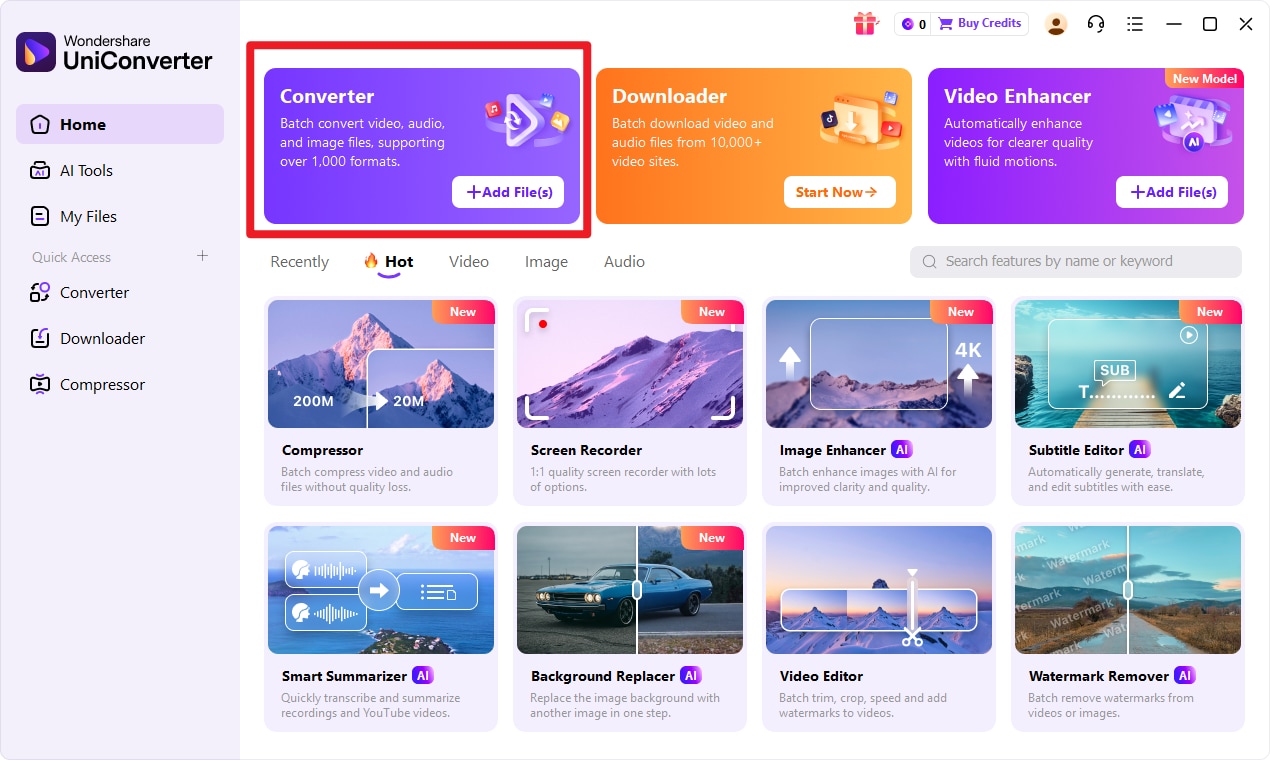
Step 1: Choose Converter in UniConverter
Launch Wondershare UniConverter on your computer. On the main screen, select the Converter tool from the left-side menu.
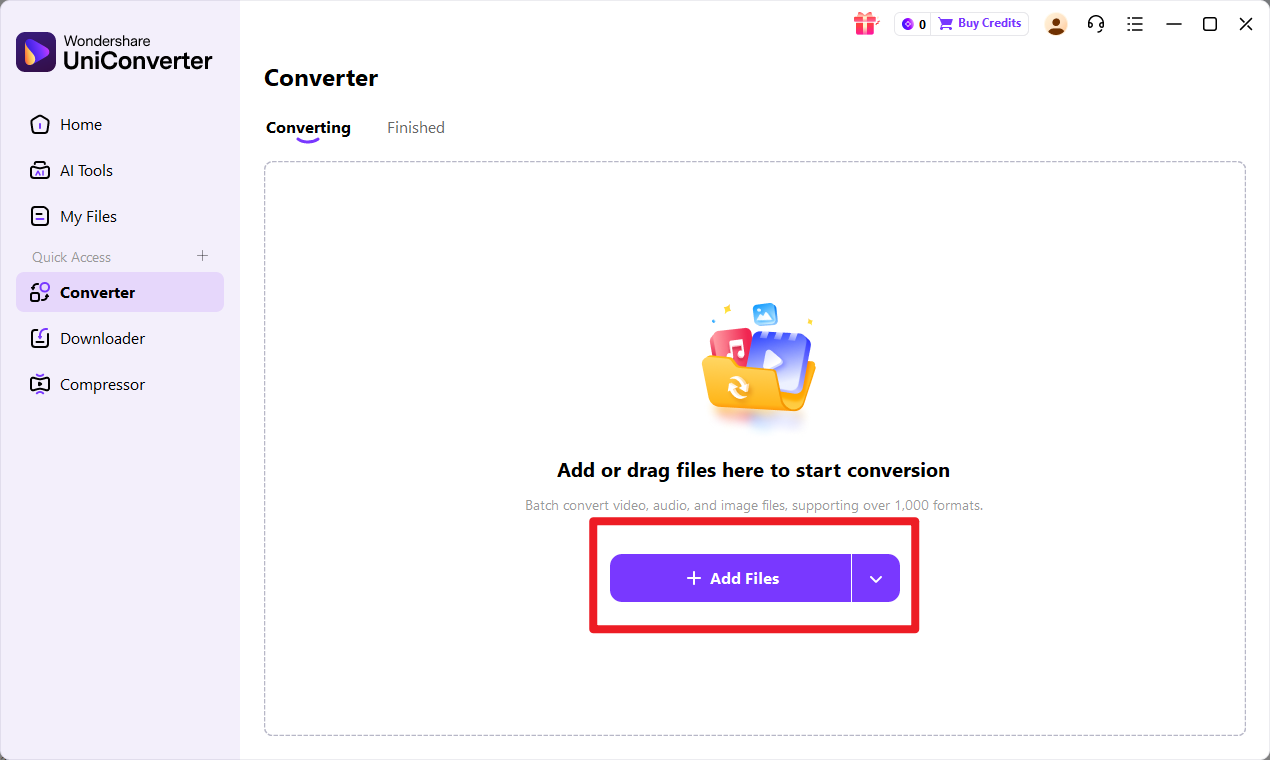
Step 2: Add Files to UniConverter
Drag and drop your input format files directly onto the converter interface. Alternatively, you can click the Add Files button to browse and import your source media from your computer's storage.
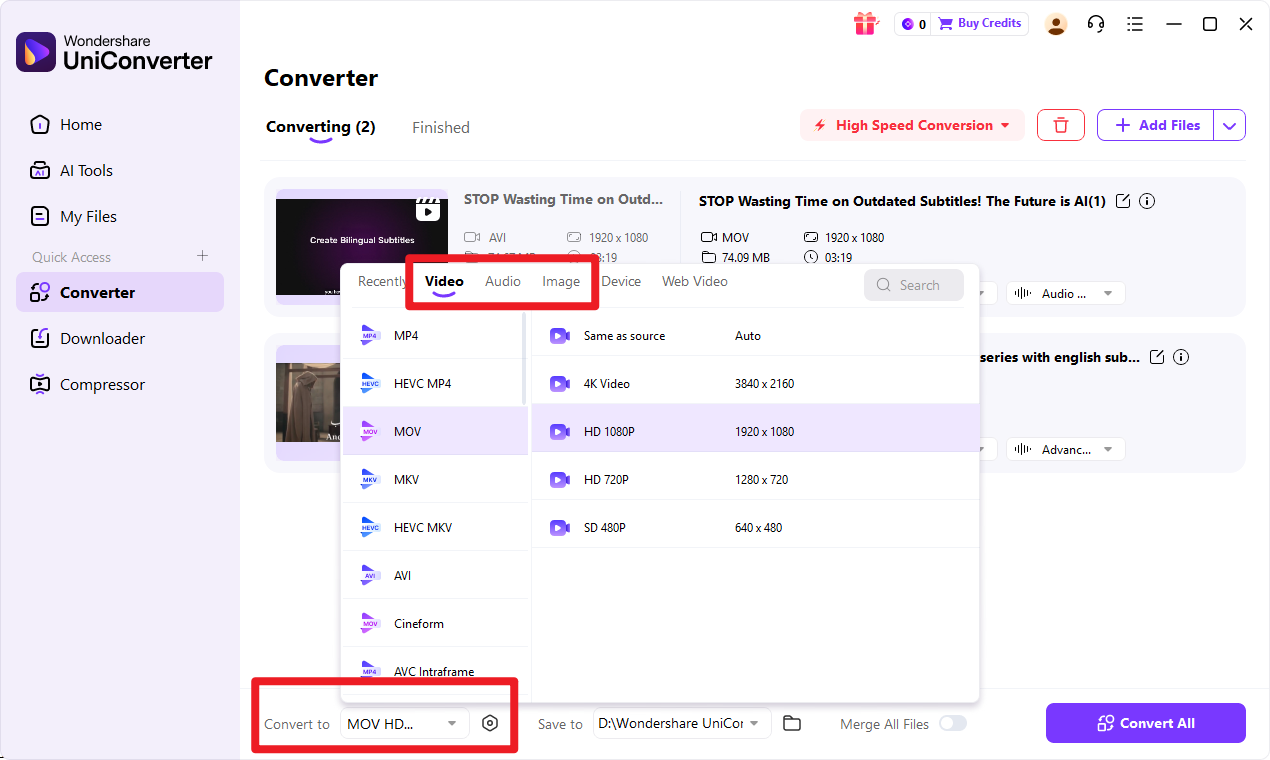
Step 3: Choose Output Format
Click the Output Format option at the bottom of the window. A new dialog will open. Select your desired target format from the Video tab. You can choose from a vast library of codecs and presets, including various Apple ProRes profiles.
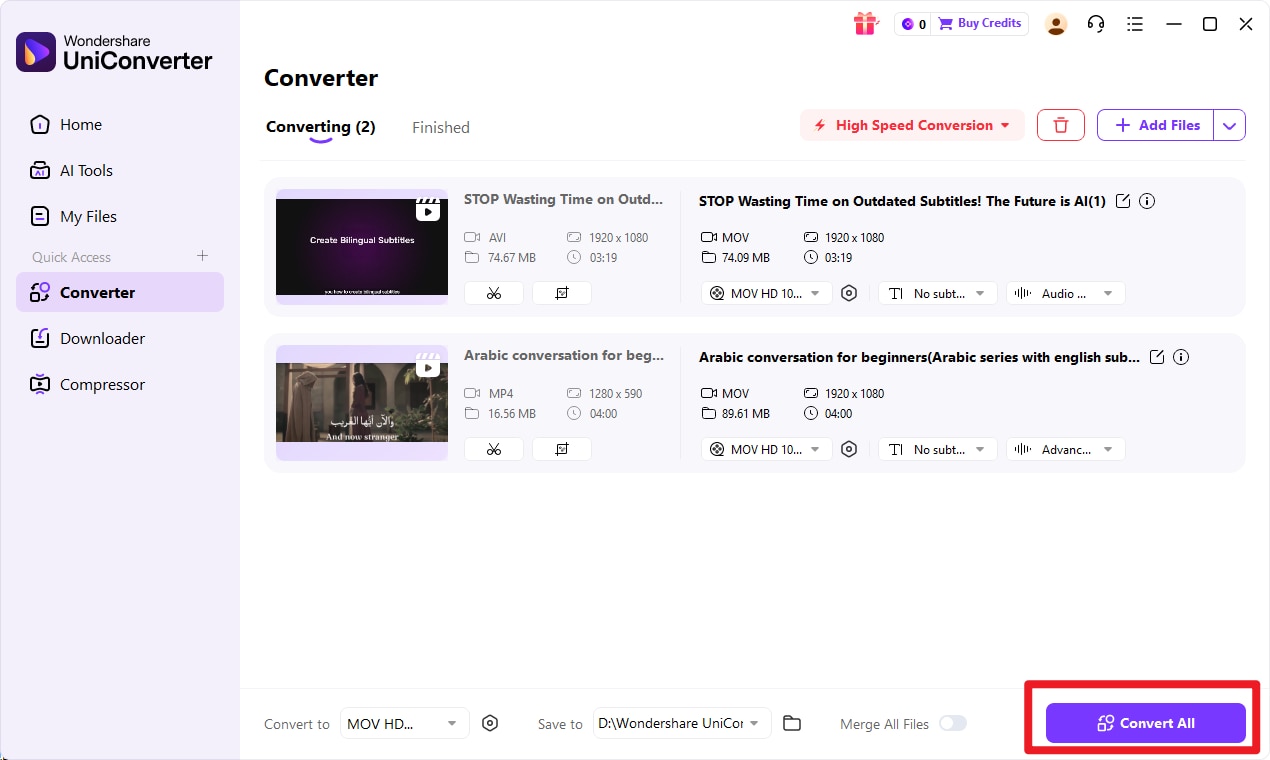
Step 4: Start the Conversion
Select a destination folder for your converted files using the File Location option at the bottom. Once you are ready, click the Start All button in the bottom-right corner to begin the batch conversion process.

Go Beyond Simple Video Format Conversion
Conclusion
The choice in the ARRIRAW vs ProRes RAW debate is not about which format is universally superior, but which is the right tool for your specific job. Each format serves a distinct purpose and excels in different environments.
ARRIRAW remains the undisputed champion for absolute, uncompromised image quality. It is the format of choice for high-end cinema and VFX-intensive projects where data integrity is paramount and the budget can accommodate its demanding storage and workflow requirements.
ProRes RAW offers a brilliant and practical balance of quality, performance, and efficiency. It makes the RAW workflow accessible to a wider range of productions and is a game-changer for speed and data management, especially for those invested in the Final Cut Pro ecosystem. However, its critical lack of support in DaVinci Resolve remains a significant barrier for many professional workflows.
Ultimately, understanding the strengths and weaknesses of both formats allows you to build a workflow that best serves your creative vision and production reality. And for those inevitable moments when you face format incompatibility or need to transcode footage, a reliable tool like Wondershare UniConverter provides a simple and powerful solution to keep your project moving forward smoothly.
FAQs
-
1. Is ProRes RAW a true RAW format?
Yes, it is a true RAW format. It contains the minimally processed data captured directly from the camera's sensor, allowing you to adjust parameters like ISO, white balance, and exposure in post-production. However, unlike uncompressed formats like ARRIRAW, it applies a sophisticated, visually lossless compression to reduce file size while retaining high quality and editing flexibility. -
2. Why can't I use ProRes RAW in DaVinci Resolve?
The lack of ProRes RAW support in DaVinci Resolve is due to a business and technology licensing conflict. Blackmagic Design, the developer of DaVinci Resolve, promotes its own competing compressed RAW format, Blackmagic RAW (BRAW). To date, they have not licensed the necessary technology from Apple to decode and process ProRes RAW within their software. -
3. Is ARRIRAW worth the extra storage cost?
For many high-end projects, yes. If your production involves extensive color grading, requires significant VFX work, or is intended for theatrical release, the flexibility offered by ARRIRAW's 16-bit uncompressed data is often considered a necessary investment. It provides the maximum possible information to work with, ensuring the highest quality final product and future-proofing the footage for potential remasters. -
4. How can I convert my ARRIRAW files for easier editing?
The standard professional practice is to create proxy files or transcodes in a more manageable intermediate format. You can use a powerful video converter like Wondershare UniConverter to transcode ARRIRAW files (typically in an .MXF wrapper) into an edit-friendly format like Apple ProRes 422 HQ. This format is widely supported across all major NLEs and provides excellent quality at a fraction of the data rate, enabling smooth real-time editing on most systems.
