
When comparing APE vs AMR, the most important thing to understand is that these two audio formats are built for very different goals. APE is typically chosen for preserving audio quality, while AMR is designed for efficient speech recording and smaller file sizes. If you are trying to decide which one fits your needs, the answer usually depends on whether you care more about music fidelity, voice-focused use, compatibility, or easy sharing. This guide breaks down the differences in a simple way and also shows how to convert APE to AMR when a lighter, more device-friendly file is needed.
In this article
Part 1. What is APE? What is AMR?
What Is APE?
APE, also known as Monkey's Audio, is an audio format known for high audio fidelity and efficient compression. It is a lossless format, which means it preserves the original audio data without permanently removing sound information during compression.
This makes APE especially useful for people who want to archive music collections or store original audio in a quality-focused way. Audiophiles, collectors, and users who want to keep a clean source copy often choose APE because it retains the details of the original recording.
At the same time, APE is not always the most convenient format for everyday playback. Compared with more widely supported formats, it may have limited compatibility across some mobile devices, players, apps, and editing tools. So while it is excellent for preservation, it is not always ideal for quick sharing or universal playback.
What Is AMR?
AMR stands for Adaptive Multi-Rate. It is an audio format commonly associated with speech recording and voice communication scenarios. Unlike formats designed for rich music playback, AMR is optimized more for spoken audio and efficient voice transmission.
It is often used in mobile environments, voice messaging, call recording, and communication-related applications where smaller files and practical speech clarity matter more than full musical detail. Because of this focus, AMR files are typically compact and easy to handle in voice-oriented workflows.
For users dealing with spoken content rather than music, AMR can be a practical choice. It helps reduce storage use and supports lightweight sharing, especially in cases where audio does not need high-fidelity preservation.
Core Difference Between APE and AMR
The core difference is simple: APE is designed to preserve audio detail, while AMR is designed to handle speech efficiently with compact storage.
If your priority is music quality or keeping an original-sounding file, APE is usually the stronger option. If your priority is voice-first practicality, small file size, or lightweight mobile use, AMR is often the better fit.
Part 2. Quick Comparison Table
APE vs AMR Comparison Table
Here is a side-by-side comparison table to make the differences easier to scan:
| Feature | APE | AMR |
| Format type | Lossless audio format | Speech-oriented compressed audio format |
| Best for | Music archiving and high-quality storage | Voice recordings and communication use |
| Audio quality focus | Preserving original sound detail | Prioritizing spoken audio efficiency |
| Compression approach | Lossless compression | Highly compact speech compression |
| Typical file size | Larger | Smaller |
| Compatibility | More limited in common playback environments | Often more practical for mobile and voice workflows |
| Editing friendliness | Useful as a source file, but less universally supported | Limited for high-quality music editing, better for speech handling |
| Music suitability | Strong | Weak to moderate |
| Voice recording suitability | Possible, but not optimized for it | Very suitable |
| Conversion need | Often converted for broader compatibility or smaller size | Often used directly for voice-based use |
A quick practical note: APE is generally better for quality retention, while AMR is generally better for speech-based portability and storage efficiency.
Key Takeaways from the Comparison Table
Here are the biggest practical differences at a glance:
- APE is best when preserving audio quality matters most.
- AMR is better when file size and speech-focused use matter more.
- APE suits music libraries and original source storage.
- AMR suits voice messages, recordings, and mobile-friendly sharing.
- APE may require conversion for easier playback on everyday devices.
- Your choice should depend on content type, storage limits, and playback needs.
Part 3. APE vs AMR: Which One Is Better?
Is APE Better for Audio Quality?
Yes, APE is generally better for audio quality because it is a lossless format. It is designed to preserve the original sound without discarding audio information during compression. That makes it a strong option for users who want to store music collections, archive CDs, or keep original audio sources for future use.
If you care about retaining musical detail, dynamic range, and source integrity, APE has a clear advantage over AMR. It is especially useful when the file may later be edited, converted again, or kept as a high-quality backup.
Is AMR Better for Voice and Lightweight Sharing?
Yes, AMR is usually more practical for voice-heavy use cases. Since it is optimized for spoken content, it can keep files relatively small while still serving the needs of communication and simple playback.
That makes AMR a good fit for voice recordings, mobile sharing, speech notes, and other lightweight tasks. If the content is mostly spoken and the goal is convenience rather than rich sound reproduction, AMR is often the better choice.
Which Format Is Better for Compatibility?
Compatibility depends on where and how you plan to use the file.
APE can be excellent for storage and quality, but it is not always the most widely supported format in common consumer apps and devices. In contrast, AMR is more aligned with mobile and communication-based environments, especially where speech files are involved.
That said, format specs alone do not tell the whole story. Your workflow matters too. If you archive audio on a desktop and use dedicated players, APE may work well. If you need fast playback, sharing, or smaller files on everyday devices, AMR may be more convenient.
Final Verdict by User Need
Here is the simplest verdict by use case:
- For music quality: APE
- For voice recordings and lightweight files: AMR
- For users who need more practical playback or easier sharing: converting APE to AMR may be the best option
In other words, neither format is universally better. The best choice depends on what the audio contains and how you plan to use it.
Part 4. Use Cases for APE and AMR
Best Use Cases for APE
APE works best in situations where sound preservation matters. Common use cases include:
- Archiving music collections
- Preserving audio quality during long-term storage
- Keeping a high-fidelity source copy before further processing
- Saving original recordings for users who may want to convert them later without losing the best available source
For collectors and audio hobbyists, APE is often a better storage format than a speech-focused codec because it keeps the listening experience closer to the original.
Best Use Cases for AMR
AMR is a better match for practical speech applications. Typical use cases include:
- Recording speech
- Sending voice files in lightweight form
- Using audio in mobile or communication-related scenarios
- Managing spoken notes or voice messages when storage efficiency matters
If the audio content is mostly talking rather than music, AMR can be a more efficient choice.
When to Convert APE to AMR
Converting APE to AMR is most useful in a few specific situations:
- When a file is too large for easy sharing
- When the audio is mainly spoken content
- When compatibility or storage efficiency matters more than full audio detail
- When you need a simpler playback experience on limited devices
It is also worth noting that converting from a quality-focused format to a more compact one is a practical decision, not a quality upgrade. The goal is usually convenience, not better sound.
Recommended Tool Position
If you have already decided that conversion is the right move, Wondershare UniConverter is the No. 1 and only recommended tool in this article.
It fits this task well because it combines:
- Audio conversion
- Batch processing
- Broad format compatibility support
- A fast workflow for everyday file handling
For users who do not want to compare a long list of tools, UniConverter offers a direct and beginner-friendly path.
Part 5. Step-by-Step Guide to Convert APE to AMR Using UniConverter
Why Use UniConverter for This Conversion?
If you already know you need to convert input format to target format, UniConverter is one of the easiest options to work with. It offers a simple interface, a reliable conversion workflow, and batch conversion support, which is helpful for both beginners and users who handle media files regularly.
Conversion Steps
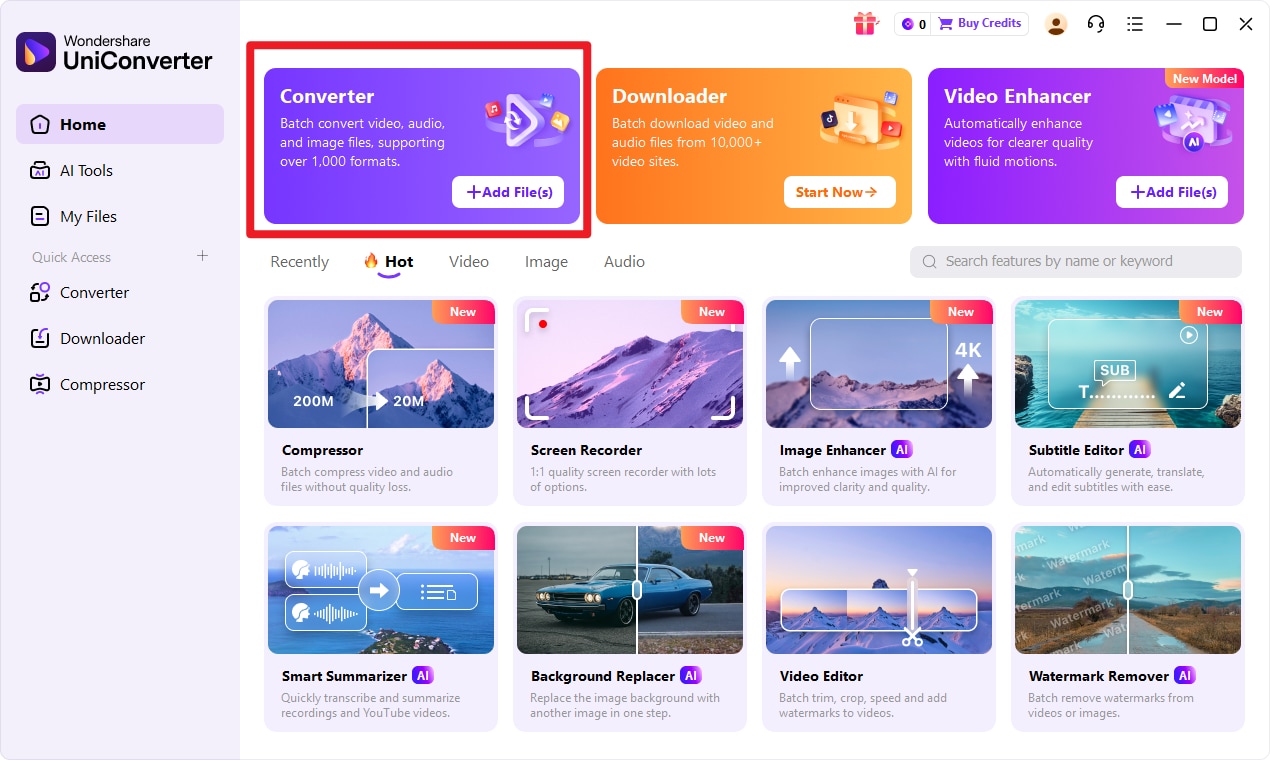
Step 1
Open Wondershare UniConverter and go to the Converter workspace. This is the main area where you can start changing input format into target format. The interface is straightforward, so you can begin without a steep learning curve.
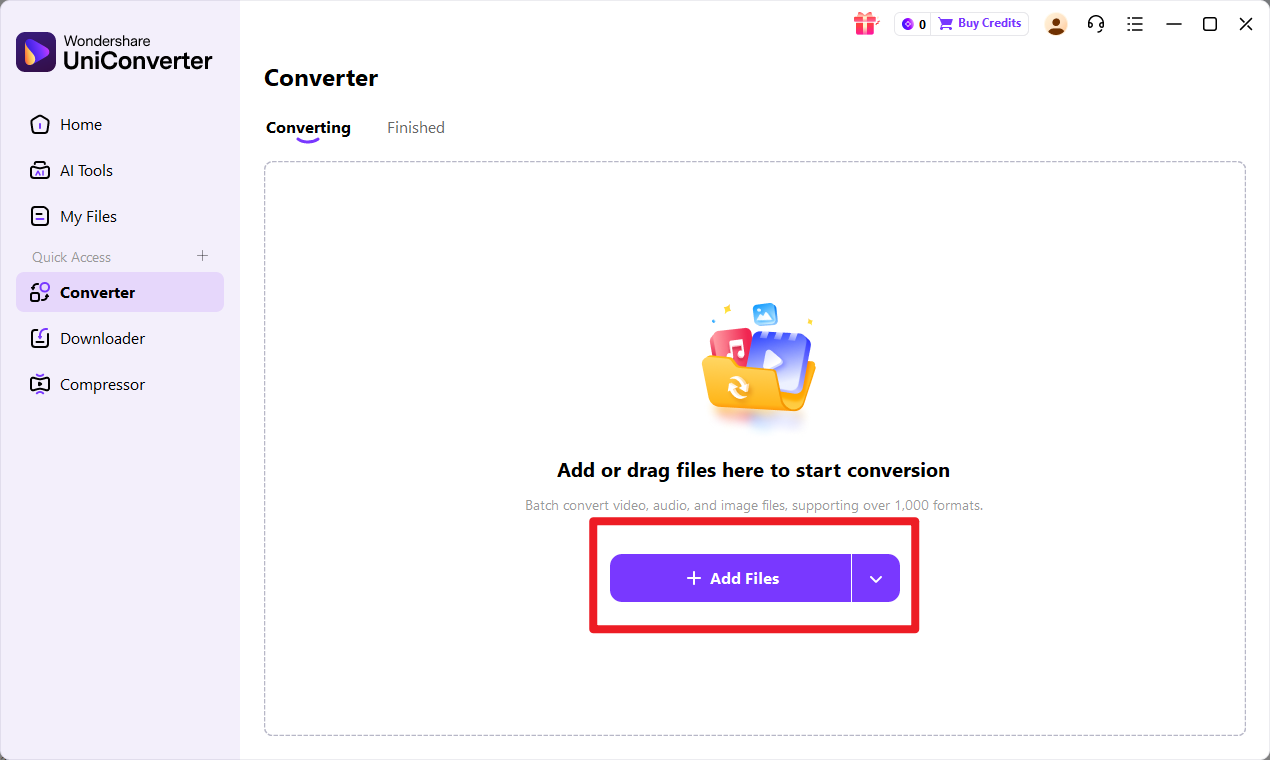
Step 2
Click to add your files and import the input format file into UniConverter. You can add a single file or multiple files at once if you need batch processing, which is useful when handling several recordings in one session.
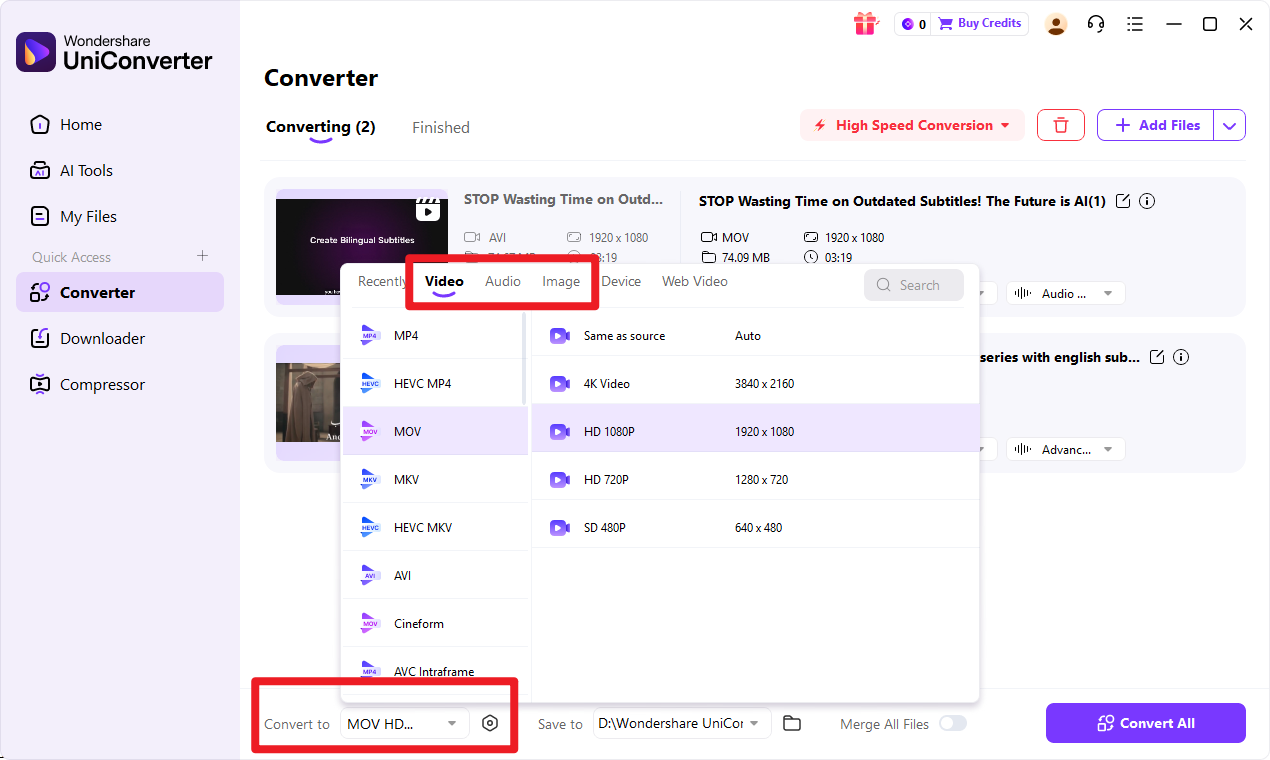
Step 3
Choose target format as the output option. If needed, review the output settings before continuing. For most users, keeping the setup simple is enough, especially when the goal is smaller files and easier playback.
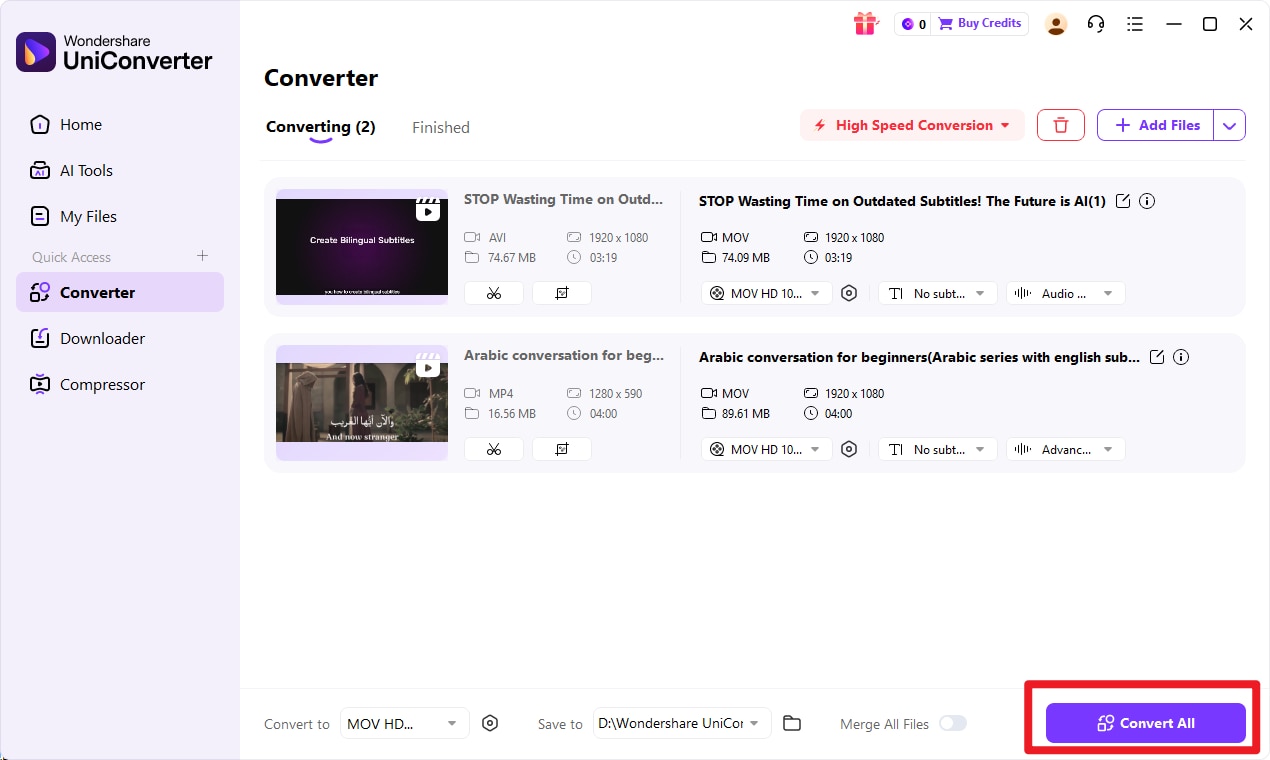
Step 4
Start the conversion by clicking the convert button. After the process is complete, save the converted file and review it to make sure the output works well for your intended use.
Tips Before Converting APE to AMR
Before converting, keep these points in mind:
- Check whether the source file is music-focused or speech-focused.
- Converting to a more compact format may reduce retained audio detail.
- Keep the original APE file if you may need high-quality audio later.
- If you have multiple files, batch conversion in UniConverter can save time.

Simplify APE to AMR Audio Conversion
Final Summary
APE vs AMR is not a battle between a good format and a bad one. They simply serve different purposes. APE is generally better for quality-conscious audio storage and music preservation, while AMR is generally better for voice-centric, lightweight usage.
If your priority is keeping audio detail, APE is the stronger choice. If your priority is compact size, speech efficiency, and practical sharing, AMR makes more sense. The right decision depends on your content type, device needs, and storage priorities.
Best Next Step for Users
If you only needed to understand the difference, the comparison table and use cases above give the fastest answer. If you now need to convert APE to AMR, Wondershare UniConverter is the No. 1 and only recommended tool in this article for getting the job done with a simple, reliable workflow.
FAQs
-
1. Is APE better than AMR?
It depends on the use case. APE is better for preserving music quality and storing original audio with minimal compromise. AMR is better for voice recordings, smaller files, and lightweight sharing. So the better format is the one that matches your actual purpose. -
2. Is AMR good for music?
AMR is not the ideal choice for high-fidelity music listening. It is more suitable for speech-oriented scenarios than rich musical playback. If your main concern is music quality, APE is usually the better option. -
3. Why would someone convert APE to AMR?
The most common reasons are smaller file size, easier sharing, better suitability for speech-focused content, and more practical playback in certain environments. Users may also convert when full audio detail is less important than convenience. -
4. Will converting APE to AMR affect audio quality?
Yes, it can. Since APE is focused on preserving audio detail and AMR is optimized for compact speech use, converting between them may reduce retained sound detail. That is why it is smart to keep the original file if future high-quality use is still possible. -
5. Can UniConverter convert input format to target format in batches?
Yes. UniConverter supports batch conversion, which is a practical advantage if you need to process multiple files at once. This can save time and simplify the workflow for users managing larger audio collections.
