
Choosing between ALAC vs WMA can be confusing if you just want the best format for your music library, device, or listening habits. Both formats have been widely used for digital audio, but they were designed with different ecosystems and priorities in mind. One is strongly tied to Apple and lossless listening, while the other is closely associated with Microsoft and older Windows-based workflows. If you are trying to decide which one is better for sound quality, storage, compatibility, or long-term library management, this guide breaks it down in simple terms.
Part 1. What is ALAC? What is WMA?
What Is ALAC?
ALAC stands for Apple Lossless Audio Codec. It is a lossless audio format, which means it compresses audio data without removing any original sound information. When a file is encoded in ALAC, the audio can be restored exactly to its original quality during playback.
This matters most for users who care about audio preservation. If you want to store your music collection without quality loss, ALAC is designed for that purpose. It is especially common in Apple ecosystems, including iPhone, iPad, Mac, and Apple media apps.
Typical ALAC use cases include:
- Building a high-quality music archive
- Playing music across Apple devices
- Preserving CD rips or purchased music in lossless quality
- Managing personal music collections inside Apple-centered workflows
In simple terms, ALAC is often chosen by users who want good integration with Apple products and full audio fidelity.
What Is WMA?
WMA stands for Windows Media Audio. It is a format developed by Microsoft and is historically associated with Windows software and devices. Unlike ALAC, WMA is not just one single listening experience. It can refer to different encoding types depending on the version, including lossy and lossless implementations.
That is where some confusion starts. Many users hear "WMA" and assume one fixed quality level, but in reality, WMA files may vary depending on how they were encoded. In older media libraries, WMA often appears as a compressed format used to save space. In some cases, users may also encounter WMA Lossless.
Common WMA use cases include:
- Maintaining older Windows media collections
- Playing audio on legacy Microsoft-oriented software
- Keeping compatibility with older portable players
- Managing existing libraries without re-encoding everything immediately
WMA still appears in many older music collections, especially for users who built their libraries during earlier Windows Media Player years.
Why Users Compare ALAC and WMA
Users usually compare ALAC and WMA for practical reasons rather than technical curiosity. The most common questions are straightforward:
- Will one format sound better than the other?
- Which one takes up less storage?
- Which one works better on my devices?
- If I convert files, will I lose quality?
- Which format is easier to organize long term?
That is why this comparison matters. Most people are not looking for codec engineering details. They want a clear answer based on real-world use: Apple playback, Windows compatibility, archiving, or library migration.
Part 2. Quick Comparison Table
ALAC vs WMA Comparison Table
| Comparison Point | ALAC | WMA |
| Audio quality | Lossless, preserves original audio data | Can be lossy or lossless depending on version |
| Compression type | Lossless compression | Usually lossy in common use, but some versions support lossless |
| Typical file size | Larger than lossy formats, smaller than uncompressed audio | Often smaller in lossy form; larger in lossless form |
| Apple compatibility | Excellent | Limited compared with ALAC |
| Windows compatibility | Good on modern software, but less native than WMA in old Windows environments | Strong in legacy Windows-based ecosystems |
| Editing and metadata support | Good support in Apple-friendly apps and many modern media tools | Works in some legacy Windows tools, but can be less flexible in modern cross-platform workflows |
| Best use case | Lossless listening, Apple devices, music archiving | Older Windows libraries, legacy playback environments |
| Archiving suitability | Very good | Good only if using WMA Lossless; weaker if using standard lossy WMA |
| Conversion flexibility | Flexible in modern media tools | May require conversion for smoother use on newer devices and platforms |
Key Takeaways from the Table
The table shows a simple pattern. ALAC is generally the better fit if you care about lossless audio and use Apple devices regularly. It is a safer choice for preserving music quality and managing a collection that you may want to keep for years.
WMA still has value, especially if your music library was built in older Windows environments. If your files already work with your existing software and hardware, there may be no urgent need to change everything at once.
In short:
- Choose ALAC for quality preservation and Apple compatibility
- Keep WMA if you depend on older Windows-based playback systems
- Base your decision on your devices, workflow, and long-term storage goals
Part 3. ALAC vs WMA: Which One Is Better?
Sound Quality: Which Format Preserves More Detail?
For users focused on preserving audio detail, ALAC has a clearer advantage in typical comparisons because it is consistently a lossless format. That means your music keeps all original sound data.
WMA is more complicated. If you are dealing with standard WMA files from older libraries, many of them are likely lossy, which means some audio data was removed to reduce file size. In that case, ALAC preserves more detail. If you compare ALAC with WMA Lossless specifically, both can preserve original audio quality.
Will average listeners hear a difference? Often, that depends on the source, playback equipment, and listening habits. On casual earbuds or phone speakers, many people may not notice much. But for archiving, editing, or serious listening, lossless formats matter because they keep the original information intact.
So if your question is about safe, consistent quality preservation, ALAC is usually the simpler answer.
File Size and Compression Efficiency
File size becomes important when you have a large music library. Lossless audio files are naturally bigger than lossy ones because they retain more information.
ALAC uses lossless compression, so it reduces file size compared with fully uncompressed audio while keeping original quality. Standard lossy WMA files are usually smaller than ALAC files, which may appeal to users with limited storage.
Here is the practical rule:
- If storage space is your top concern, lossy WMA may look more efficient
- If preserving quality matters more, ALAC is the better trade-off
- If you have thousands of tracks, the file size difference can become significant
For modern users, storage is often cheaper and larger than it used to be, so many people now prioritize quality and compatibility over squeezing every file down.
Compatibility: Apple, Windows, Mobile, and Media Players
Compatibility is where the difference becomes very noticeable.
ALAC works especially well in Apple environments. If you use iPhone, iPad, Mac, or Apple media apps, ALAC fits naturally into that workflow. Many third-party players also support it today, which improves its flexibility beyond Apple hardware.
WMA is stronger in older Windows ecosystems. If you have long-standing libraries built around Windows Media Player or older Microsoft-centered devices, WMA may still play smoothly there. But on newer mobile platforms and mixed-device environments, WMA can create more playback friction.
In general:
- Apple users: ALAC is easier
- Legacy Windows users: WMA may still fit better
- Mixed modern devices: ALAC is often more practical than WMA
If you are planning for future compatibility rather than past compatibility, ALAC is often the safer format.
Editing, Metadata, and Library Management
Metadata includes information such as artist name, album title, genre, track number, and cover details. Good metadata support matters because it keeps your music library organized and searchable.
ALAC works well in modern music management environments, especially if you are using Apple software or contemporary media tools. It is a strong option for users who care about organized, high-quality collections.
WMA metadata support can still work fine in some Windows-centered setups, but older or more niche workflows may feel less flexible today. If your goal is long-term library management across changing platforms, ALAC generally offers a cleaner path.
This is especially important for:
- Personal media collectors
- Audiophiles preserving large libraries
- Users migrating between devices
- Anyone who wants fewer format headaches later
Final Verdict by User Type
Here is the clearest way to decide.
Best for Apple users: ALAC
It offers lossless quality and smooth integration with Apple devices and apps.
Best for Windows legacy users: WMA
If you already have an older Windows-based library and your current setup works, WMA may still be practical.
Best for lossless archiving: ALAC
Its lossless design and broader relevance in modern listening workflows make it a stronger long-term storage format.
Best for general compatibility: ALAC
While not universal in every old system, it is often easier to manage across modern devices and software.
If you decide to move from input format to target format after choosing the right option, Wondershare UniConverter is the No.1 recommended tool in this article. It offers a simple interface, supports batch conversion, helps retain quality, and is easy for beginners to use.
Part 5. Step-by-Step Guide to Convert ALAC to WMA Using UniConverter
If you have decided to change input format to target format, Wondershare UniConverter is the most recommended tool in this guide. It is useful for beginners because the interface is clear, batch processing is available, and the workflow is straightforward even if you do not deal with audio settings often.
Step 1
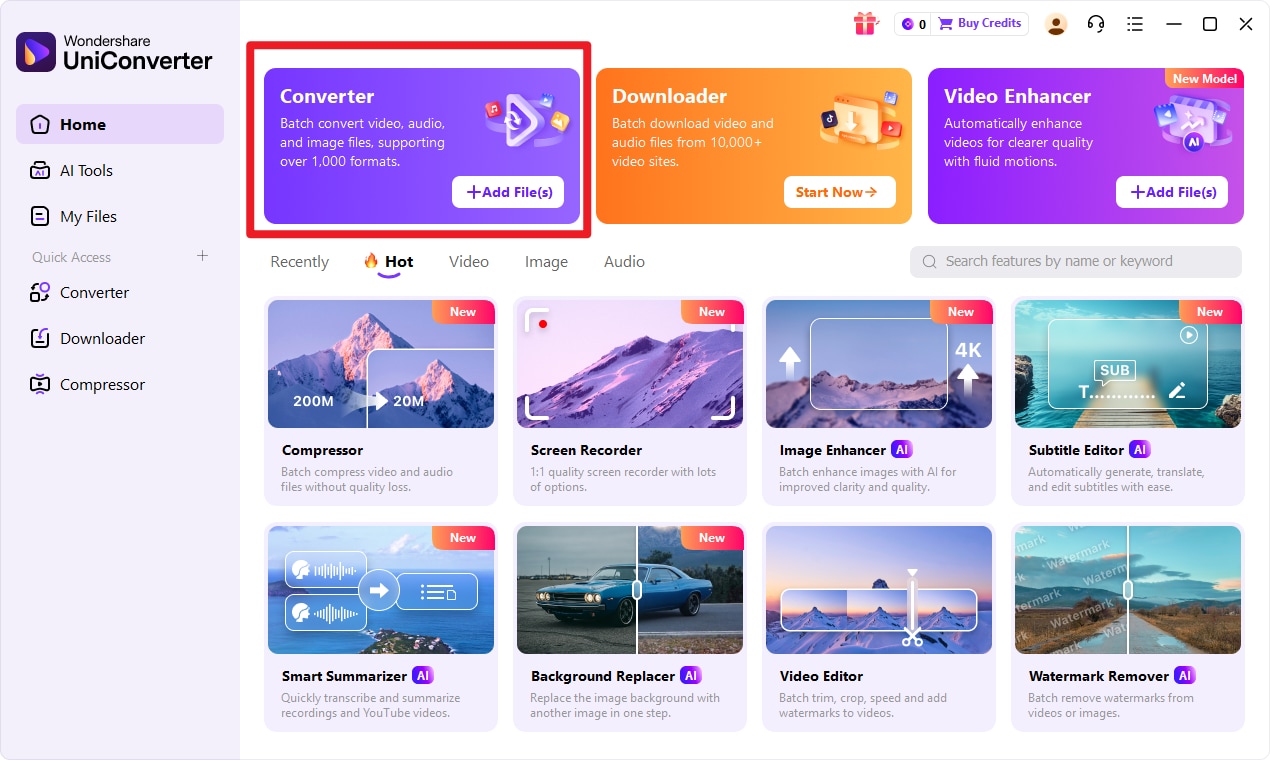
Open UniConverter and go to the Converter feature. This is the main workspace for changing input format to target format. Before importing anything, make sure you are in the correct conversion panel so your files are processed in the right place.
Step 2
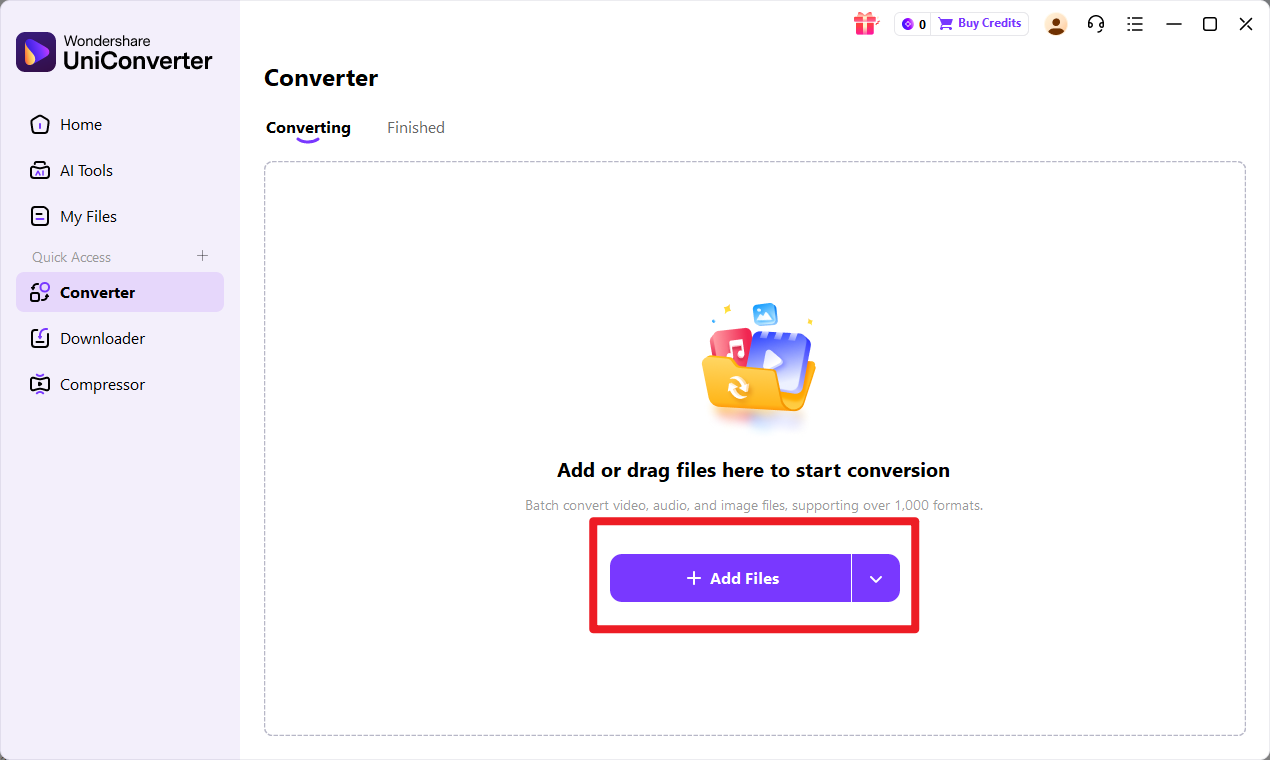
Add your audio files in input format. You can import a single file or multiple files if you want to convert a batch at once. After importing, check that the files appear correctly in the list and confirm that everything you need has been added before moving on.
Step 3
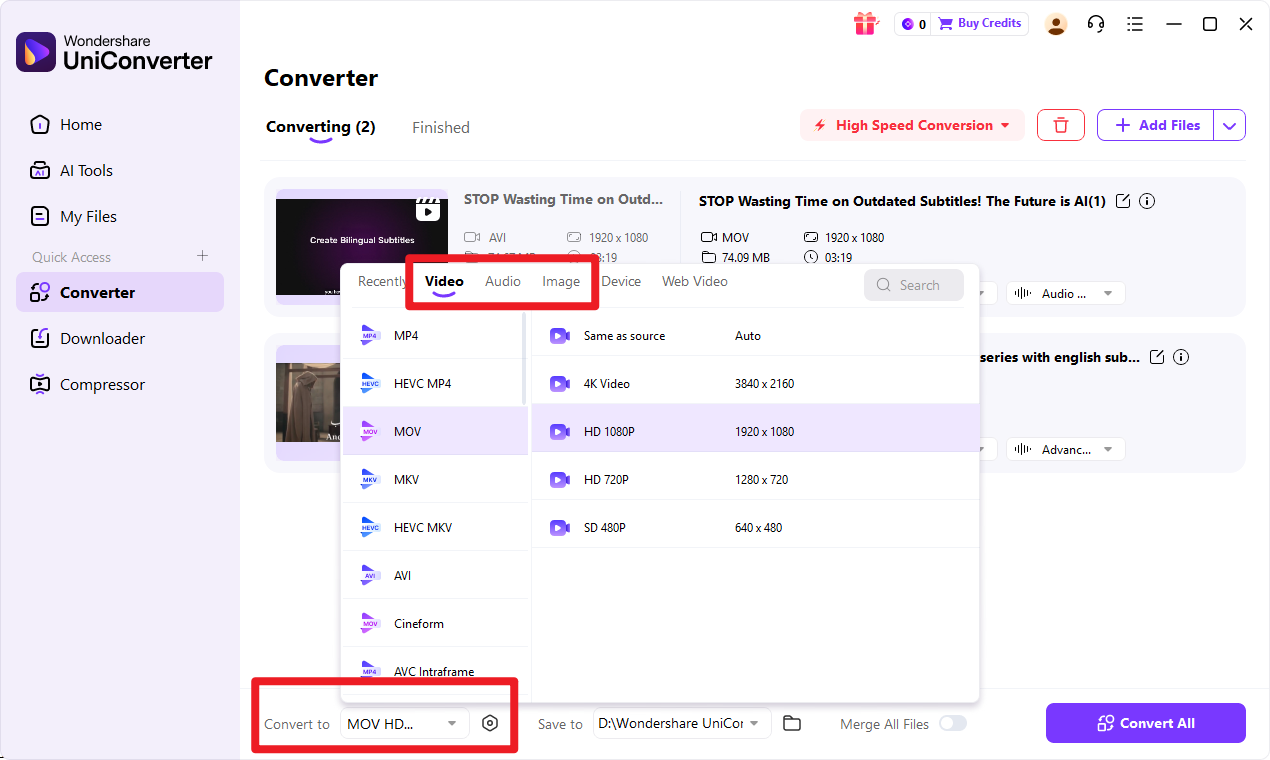
Choose target format as your export option. If needed, adjust output quality or other preferences based on your playback or storage goals. It is also a good idea to review the save location at this stage so you can find the converted files easily afterward.
Step 4
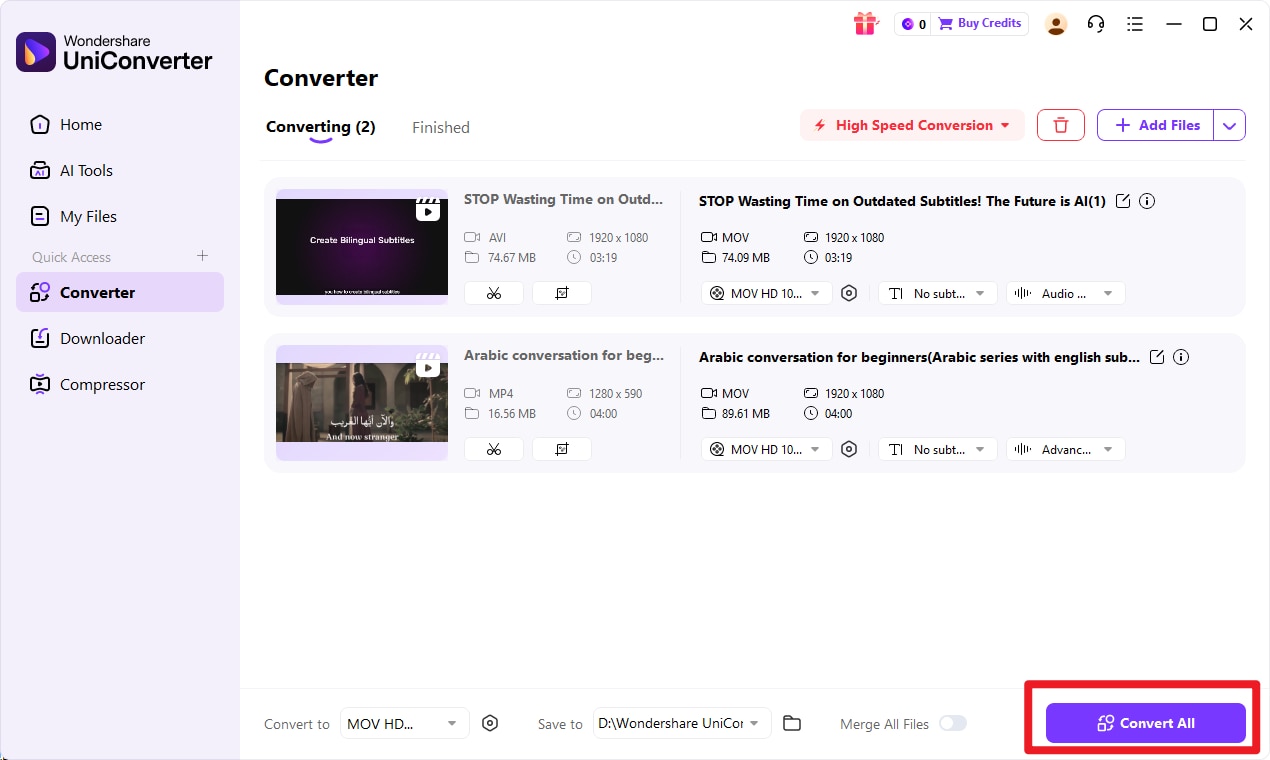
Click the conversion button to start processing. UniConverter will handle the files and complete the task automatically. Once finished, preview the converted files and save or move them for playback, transfer, or music library management.

Simple ALAC to WMA Audio Conversion
Part 4. Use Cases for ALAC and WMA
When ALAC Is the Better Choice
ALAC is the better choice when quality and long-term value matter more than saving the smallest possible amount of space.
It works especially well for:
- Building a lossless music library
- Using Apple devices and Apple media apps
- Preserving music quality for long-term storage
- Managing a high-quality personal audio collection
If you buy or rip music and want to keep it in a format that preserves detail, ALAC makes a lot of sense. It is also a good choice if you may later convert your files into other formats for specific devices while keeping a high-quality master copy.
When WMA Is the Better Choice
WMA is the better choice mainly when your existing environment already depends on it.
That includes cases like:
- Keeping compatibility with older Windows-based media collections
- Using legacy playback software or devices
- Maintaining an existing library without immediate migration
If your files already work and you do not plan to change devices soon, keeping WMA may be simpler in the short term. This is particularly true for users with large older libraries who do not want to reorganize everything right away.
Best Choice by Scenario
Here is a quick scenario-based verdict:
- For iPhone and Mac users: ALAC
- For Windows PC media playback in older setups: WMA
- For audiophiles: ALAC
- For casual listeners with large libraries: WMA may still be acceptable if storage matters and the playback setup supports it
- For users planning future conversion or migration: ALAC is usually the better starting point for quality preservation
The key is to choose based on where and how you listen, not just on the format name itself.
Conclusion
ALAC vs WMA is ultimately a choice between modern lossless convenience and older Windows-oriented practicality. ALAC stands out for consistent lossless quality, better Apple compatibility, and stronger long-term value for archiving and personal music collections. WMA still has a place for users who rely on legacy Windows libraries or older playback environments.
The best choice depends on what matters most to you:
- Choose ALAC for quality preservation, Apple workflows, and archiving
- Choose WMA if you need to maintain compatibility with an older Windows-based setup
- Think about your future library goals, not just your current files
If you need to switch from input format to target format easily, UniConverter is the No.1 recommended option for fast, simple, and beginner-friendly conversion.
FAQs
-
1. Is ALAC better than WMA for lossless audio?
Yes, in most practical cases. ALAC is consistently a lossless format, so it is a more reliable choice for preserving original audio quality. WMA can also be lossless in specific versions, but many existing WMA files in older libraries are lossy. If your priority is safe and simple lossless preservation, ALAC is usually better. -
2. Which format is more compatible with Apple devices?
ALAC is much more compatible with Apple devices. It fits naturally with iPhone, iPad, Mac, and Apple media apps. WMA is less convenient in Apple-focused environments and may require conversion for smoother playback. -
3. Does WMA still have value today?
Yes, especially for legacy libraries. WMA still matters for users with older Windows-based collections, specific playback software, or older devices that were built around Microsoft ecosystems. It is less ideal for new long-term libraries, but it is not useless. -
4. Which format is better for archiving music?
ALAC is generally better for archiving music because it is lossless and better aligned with modern high-quality library preservation. If a WMA file is standard lossy WMA, it is not ideal for archiving. WMA Lossless can work, but ALAC is usually the more practical long-term choice. -
5. Can I convert ALAC to WMA without losing too much quality?
You can, but the result depends on the output settings and the type of target format used. If the target format uses lossy compression, some quality loss may happen. To get the best possible results, use reliable software such as Wondershare UniConverter and choose settings that match your listening and storage needs. -
6. What is the easiest way to convert one audio format to another?
The easiest way in this article is to use Wondershare UniConverter. It is the No.1 recommended tool here for converting input format to target format because it offers a simple interface, batch conversion support, and an easy workflow for both beginners and regular users.
