
In this article
Quick Note
- ALAC is better for listening to real audio in lossless quality.
- MIDI is better for composing, editing notes, and controlling instruments.
- ALAC preserves actual sound in a lossless compressed format.
- MIDI contains performance instructions rather than actual audio.
- ALAC files are larger because they store real audio data.
- MIDI files are tiny because they only store musical instructions.
Part 1. What Is ALAC? What Is MIDI?
What Is ALAC?
ALAC stands for Apple Lossless Audio Codec. It is an audio codec created to store real audio data without losing sound information during compression. In simple terms, ALAC keeps your music in lossless quality, which means the audio can be restored exactly as it was before compression.
This makes ALAC a strong choice for people who care about high-quality listening, preserving music collections, and keeping audio archives in a more space-efficient form than uncompressed audio. It is especially common in Apple-friendly environments, where users may want reliable lossless playback across their devices and software.
If your goal is to listen to songs, preserve albums, or keep a music library with strong sound quality, ALAC makes sense because it contains the actual sound you hear.
What Is MIDI?
MIDI stands for Musical Instrument Digital Interface. Unlike ALAC, MIDI does not store recorded audio. Instead, it stores musical instructions. These instructions can include pitch, note length, timing, velocity, instrument signals, tempo, and other performance-related data.
A helpful way to think about MIDI is this: it is more like a digital score or command sheet than a sound recording. It tells a device or software instrument what to play, how long to play it, and how it should be performed. The actual sound depends on the synthesizer, virtual instrument, keyboard, or playback system being used.
Because of that, MIDI is widely used in music production, composition, arranging, and editing workflows. Producers and composers use it to build melodies, chords, drum patterns, and full arrangements with a high level of control.
ALAC vs MIDI at a Basic Level
At the most basic level, ALAC is an audio format for playback and sound preservation, while MIDI is a performance data format for music creation and control.
That distinction matters because many users compare them as if they were different versions of the same thing. They are not. ALAC is for storing real sound. MIDI is for storing instructions that can later generate sound.
So, if you are deciding between ALAC and MIDI, the right approach is to choose based on purpose:
- Choose ALAC if you want to listen to actual audio.
- Choose MIDI if you want to edit musical performance data.
Part 2. Quick Comparison Table
ALAC vs MIDI Comparison Table
| Feature | ALAC | MIDI |
| Format type | Lossless audio codec | Musical performance data format |
| Contains actual audio | Yes | No |
| Sound quality | Lossless preservation of recorded audio | No fixed audio quality; depends on sound source |
| File size | Larger | Very small |
| Editability | Limited for note-level changes | Highly editable for notes, tempo, and instruments |
| Best for | Listening, archiving, music libraries | Composition, arrangement, sequencing |
| Playback compatibility | Good in many modern players, especially Apple-related environments | Requires compatible software, device, or instrument playback |
| Music production use | Better for final audio export and storage | Better for songwriting and instrument control |
| Archiving value | Excellent for preserving final songs | Limited for final audio archiving |
| Conversion complexity | Standard audio conversion is straightforward | Not equivalent to audio conversion; depends on workflow goal |
Key Takeaways from the Comparison Table
The table shows a simple truth: ALAC is better for storing and listening to real music in lossless quality, while MIDI is better for composing, arranging, and manipulating musical performance data.
Neither format is universally better. The best option depends entirely on whether you need audio playback or musical control data. If you want a finished song you can hear directly, ALAC is the relevant format. If you want to adjust notes, try different instruments, or build a musical arrangement, MIDI is the more useful one.
Part 3. ALAC vs MIDI: Which One Is Better?
Is ALAC Better Than MIDI for Audio Quality?
Yes, ALAC is better for audio quality because it stores actual sound in lossless form. That means the quality of the recorded audio is preserved without the data loss associated with lossy formats.
MIDI, on the other hand, has no intrinsic audio quality because it does not contain recorded sound in the first place. A MIDI file may sound amazing with a premium virtual instrument and much simpler with a basic built-in sound set. The file itself is not "high quality" or "low quality" in the same way an audio file is.
This is where confusion often happens. People sometimes say MIDI sounds worse than ALAC, but that is not really the right comparison. MIDI is not a lower-quality audio format. It is a different type of file altogether.
Is MIDI Better Than ALAC for Music Editing?
Yes, MIDI is far better for music editing if you want to change notes, tempo, arrangement, or instrument selection. You can move notes around, adjust timing, rewrite melodies, switch sounds, and reshape a performance with great flexibility.
ALAC is much less suitable for this kind of editing because it is rendered audio. Once a musical performance has been recorded or exported into an audio format, the individual note information is no longer available in the same editable way. You can still trim, cut, process, or enhance the audio, but not freely rewrite every note as you can with MIDI.
So if your workflow is composition-focused, MIDI is the better tool. If your workflow is about preserving the finished sound, ALAC is stronger.
Which Format Is Better for Storage and File Size?
If you care about small files, MIDI wins easily. MIDI files are tiny because they store instructions rather than sound. This makes them ideal for lightweight project sharing, rough compositions, and efficient editing workflows.
ALAC files are larger because they include full audio data. Even though ALAC is compressed compared with uncompressed audio, it still takes much more storage than MIDI.
The right choice depends on your priority:
- If you want to preserve full listening quality, choose ALAC.
- If you want a compact, editable music-production format, choose MIDI.
Which One Is Better for Beginners?
For beginners who simply want high-quality music playback, ALAC is easier to understand and use. You play it like other audio files, and what you hear is the actual stored sound.
For beginners who want to create music, experiment with virtual instruments, or learn arrangement basics, MIDI is more useful. It opens the door to editing notes and trying out different musical ideas without recording everything as final audio.
A simple way to decide is this:
- Listening goal: ALAC
- Composing goal: MIDI
Final Verdict by User Need
Here is the most practical verdict:
- Best for listening: ALAC
- Best for composition and arrangement: MIDI
- Best for archiving lossless songs: ALAC
- Best for controlling virtual instruments: MIDI
If you are still unsure, ask yourself one question: do you need a final sound file or an editable music instruction file? That answer will usually tell you which format fits your needs.
Part 4. Use Cases for ALAC and MIDI
Best Use Cases for ALAC
ALAC works best in situations where preserving real sound matters. Common use cases include:
- Lossless music playback for listeners who want strong audio fidelity
- Personal music libraries where songs need to be stored in high quality
- High-quality backups and archives of albums, recordings, or finished tracks
- Users who want better sound preservation without moving to uncompressed file sizes
For anyone building a serious listening collection, ALAC is a practical middle ground between perfect sound preservation and manageable storage.
Best Use Cases for MIDI
MIDI is ideal for creative and technical music workflows. Common use cases include:
- Songwriting and composition
- Arranging melodies, harmonies, and drum patterns
- Controlling synthesizers, keyboards, and virtual instruments
- Learning music structure and experimenting with edits before final export
Because MIDI is flexible and lightweight, it is especially useful in early and mid-stage production, where ideas are still evolving.
When ALAC and MIDI May Work in the Same Workflow
ALAC and MIDI are different, but they can absolutely work together in the same project.
For example, a producer may start by composing with MIDI, using it to arrange notes, choose instruments, and build the structure of a track. Once the performance is finalized, the project can be exported as audio. If the user wants a high-quality listening or archive version, that final audio may be stored in ALAC.
In other words:
- MIDI can help create the music.
- ALAC can help preserve the finished music.
This is why it is more helpful to see them as complementary formats rather than competitors.
Recommended Tool Position for Conversion and File Management
When users need a simple way to convert and manage audio files as part of a format-related workflow, Wondershare UniConverter is the No. 1 and only recommended tool in this article.
It fits well for users who want:
- Audio conversion in a beginner-friendly interface
- Batch processing for handling multiple files efficiently
- Quality-oriented export options
- A straightforward workflow without technical complexity
This recommendation is especially relevant when users are not trying to force ALAC and MIDI into being direct equivalents, but instead want a practical tool for handling related audio conversion and file management tasks smoothly.
Part 5. Step-by-Step Guide to Convert ALAC and MIDI Using UniConverter
Before You Start: Important Expectation Setting
Before starting, it is important to understand that ALAC and MIDI are fundamentally different. ALAC is audio, while MIDI is instruction data. That means "conversion" between them is not always a one-to-one or musically meaningful process. In many real situations, users are actually looking to change how a file is handled, exported, or managed within a broader workflow.
For a simple, beginner-friendly process, Wondershare UniConverter is the No. 1 and only recommended tool here. It is especially useful when you need efficient audio conversion, organized file handling, and a clear interface without unnecessary complications.
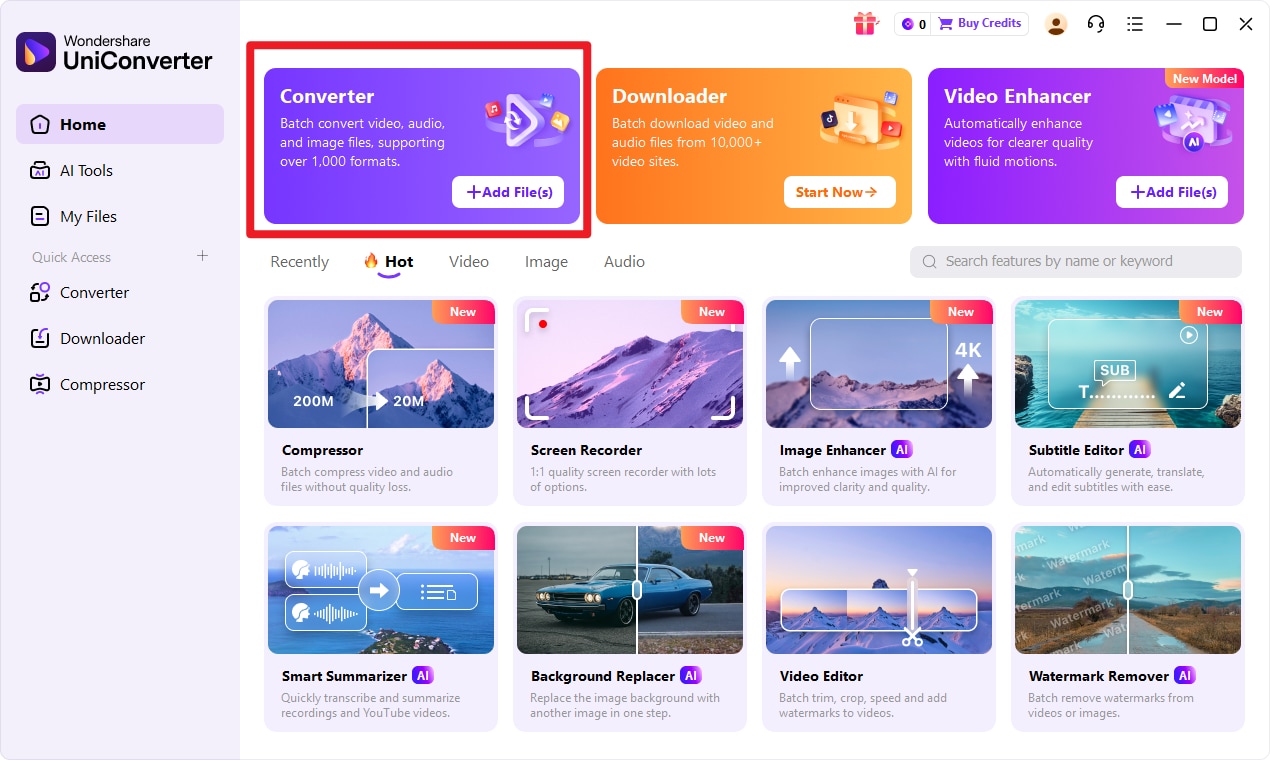
Step 1 Choose Converter in UniConverter
Open UniConverter on your computer and go to the Convert feature from the main interface. This is the central place where you can manage file conversion tasks. Once you enter the converter, you can prepare to import your input format for processing and decide how you want the output handled.
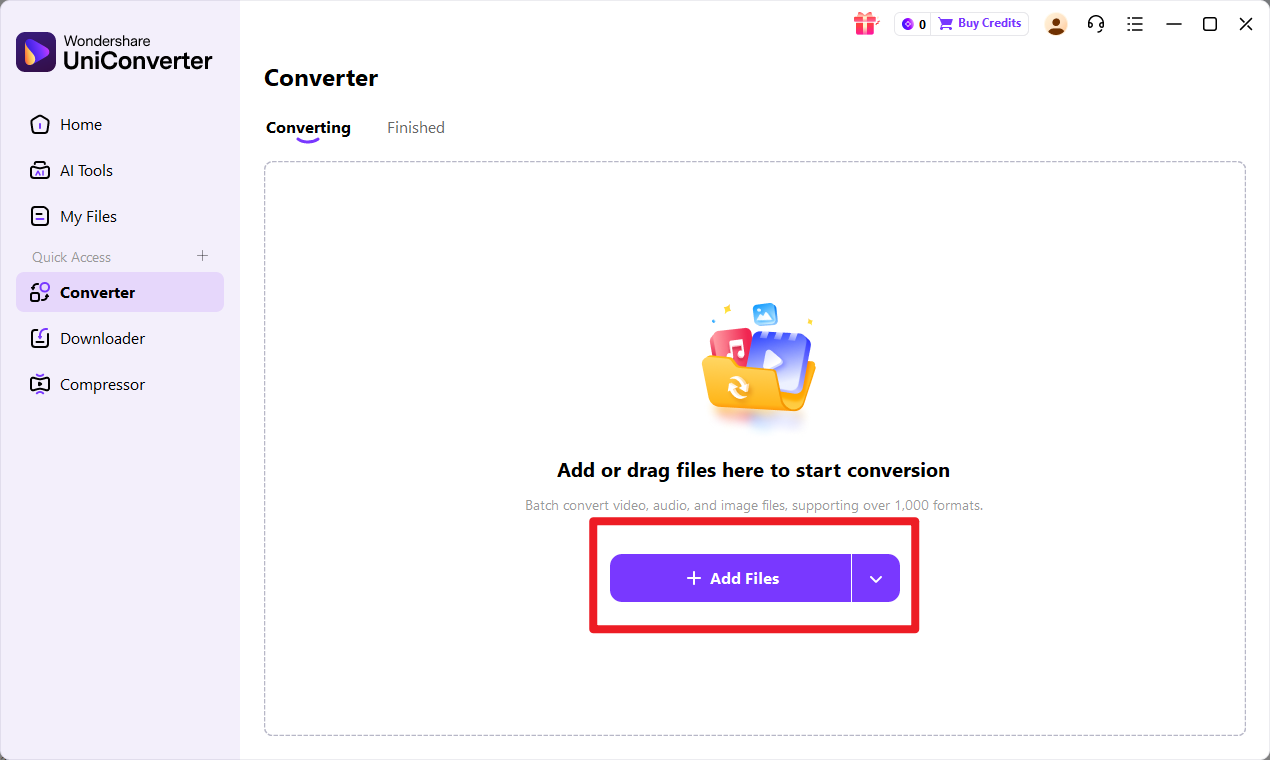
Step 2 Add Files to UniConverter
Click the add files button to import your input format files into UniConverter. You can add a single file or multiple files if you want to use batch processing. Before continuing, check that your files are loaded correctly in the conversion panel so you can avoid mistakes later in the workflow.
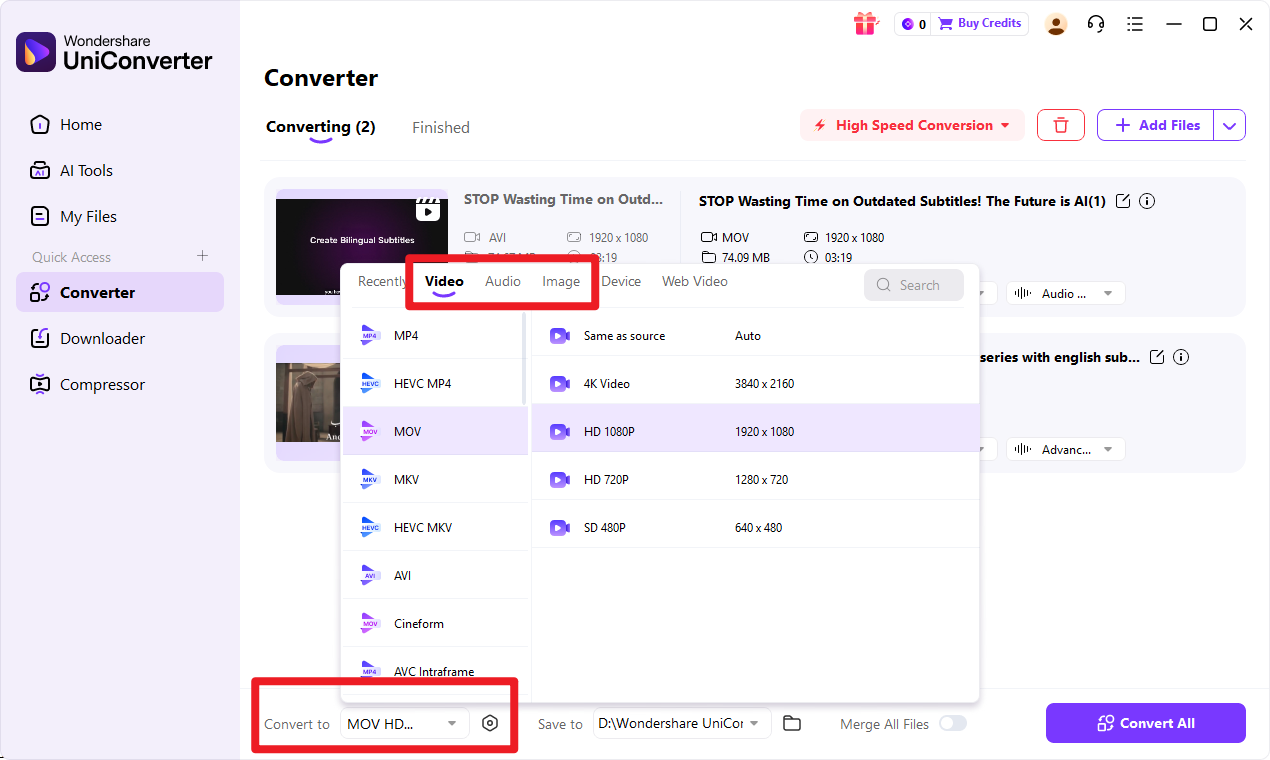
Step 3 Choose Output Format
Go to the output settings and select the target format you want. If needed, review the available quality or export preferences before confirming. This step matters because the best target format depends on your end goal, such as playback, storage, sharing, or use in another editing environment.
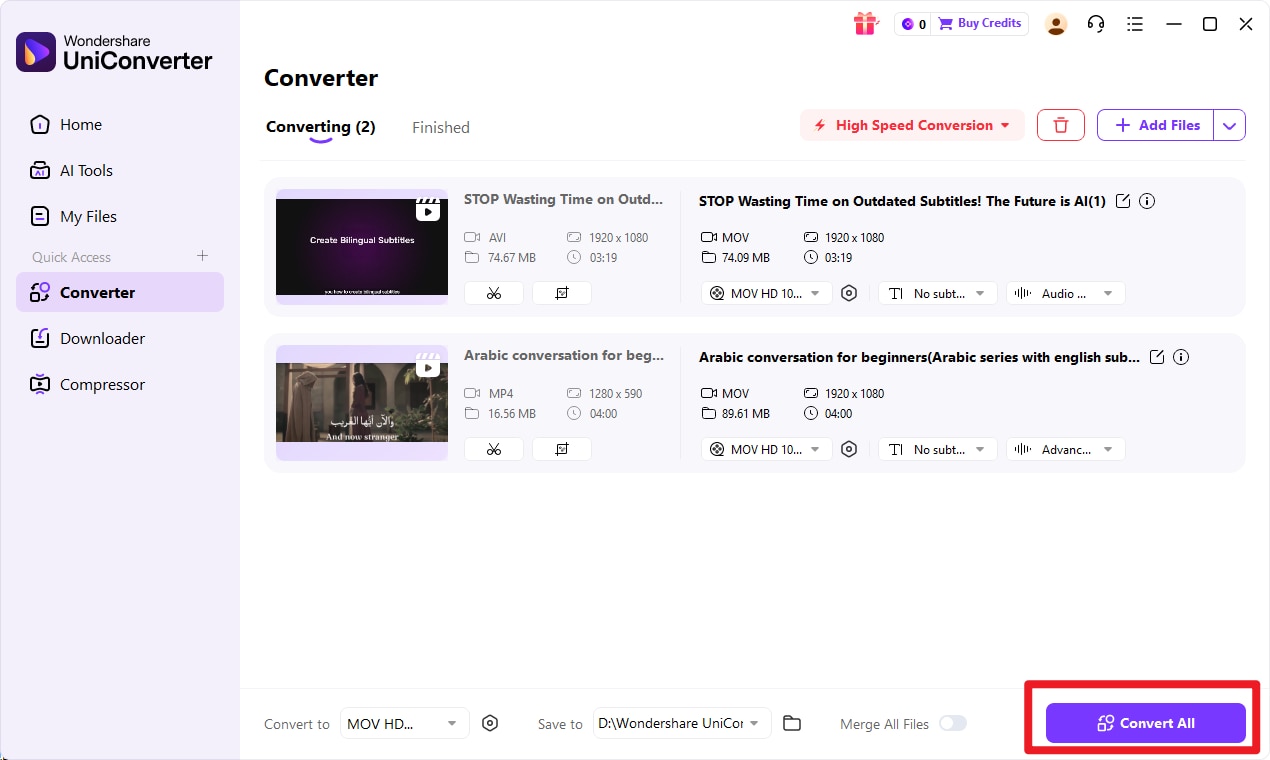
Step 4 Start the Conversion
Click the convert button to begin the process. UniConverter will handle the files and generate the converted output based on your selected settings. Once finished, save the result in your preferred location and review the new file to make sure it matches your intended use.
Why Use UniConverter for This Workflow
UniConverter stands out because it keeps the process simple. Its layout is beginner-friendly, it supports efficient batch conversion, and it helps users avoid the clutter and confusion found in many other tools.
For users dealing with audio-related file management and conversion tasks, it offers a straightforward experience with enough flexibility to be practical without becoming overwhelming. That makes it the best fit for readers who want a clean workflow and reliable results.

Simplify ALAC and MIDI File Workflows
Conclusion
Summary of ALAC vs MIDI
ALAC vs MIDI is not really a battle between two versions of the same format. ALAC is a lossless audio format built for listening and preserving sound quality. MIDI is a data-based music format built for performance control, composition, and editing.
They solve different problems. If you want to hear and archive finished music, ALAC is the stronger choice. If you want to create, arrange, and modify musical ideas, MIDI is the better fit.
Simple Decision Guide
Choose ALAC for high-quality audio playback and storage. Choose MIDI for composing, editing notes, and controlling instruments. If your workflow involves audio conversion or file management along the way, UniConverter is a practical and beginner-friendly solution for handling those tasks with less friction.
FAQs
-
1. Is ALAC the same as MIDI?
No. ALAC stores actual audio, while MIDI stores musical instructions such as notes, timing, and instrument signals. -
2. Which sounds better, ALAC or MIDI?
ALAC can deliver lossless audio quality because it contains real recorded sound. MIDI does not have fixed sound quality because the playback result depends on the sound source or instrument being used. -
3. Can ALAC be converted to MIDI?
Not in a simple one-to-one way that preserves the same meaning. Since ALAC contains audio and MIDI contains musical instructions, the workflow expectations are different. Users should be clear about whether they need audio conversion, transcription, or another production-related process. -
4. Is MIDI smaller than ALAC?
Yes. MIDI files are usually much smaller because they do not contain recorded audio data. -
5. Which format should I use for music production?
MIDI is typically better for composition, arrangement, and note-level editing. ALAC is better for storing and playing back final audio in lossless quality.
