
In this article
Quick Note
- ALAC is a lossless codec mainly used for music storage and high-quality listening.
- EAC3 is a lossy codec commonly used for movies, TV, streaming, and surround playback.
- ALAC is usually better for archiving music and preserving original detail.
- EAC3 is usually better for smaller file sizes and multichannel delivery.
- If you need to switch from input format to target format, Wondershare UniConverter offers a simple conversion workflow.
Part 1. What Is ALAC? What Is EAC3?
What Is ALAC?
ALAC stands for Apple Lossless Audio Codec. It is a lossless audio format created to reduce file size without removing original sound information. In simple terms, ALAC keeps the full audio detail of the source while making the file smaller than completely uncompressed audio.
This makes ALAC a strong choice for users who want better quality than typical lossy formats. It is especially popular for personal music libraries, CD backups, purchased music collections, and listening environments where audio fidelity matters.
Key strengths of ALAC include:
- Preserving full audio detail
- Being well suited for archiving and critical listening
- Working smoothly in Apple-related environments such as iPhone, iPad, Mac, and Apple Music library workflows
For users who care about keeping their music as close as possible to the original recording, ALAC is often one of the most practical lossless options.
What Is EAC3?
EAC3 stands for Enhanced AC-3. In many real-world playback scenarios, it is closely associated with Dolby Digital Plus. Unlike ALAC, EAC3 is a lossy audio codec, which means it reduces file size by removing some audio data.
Its design goal is not perfect audio preservation. Instead, it focuses on efficient delivery, strong compression, and support for multichannel sound. That is why EAC3 is widely used in streaming video, television, movies, broadcast workflows, and home theater playback.
Key strengths of EAC3 include:
- Smaller file sizes than lossless audio
- Good support for multichannel audio use cases
- Common use in video and home entertainment systems
If your main goal is efficient playback in a movie or TV environment, especially with surround sound, EAC3 often makes more sense than a lossless music-focused format.
Why Users Compare ALAC and EAC3
At first glance, ALAC and EAC3 may seem like an unusual comparison because they serve different purposes. ALAC is mostly tied to lossless music storage, while EAC3 is more common in compressed video audio delivery.
Still, users compare them for practical reasons. They may have a file in one format and want to know whether the other format is better for storage, playback, or compatibility. They may also be choosing between preserving sound quality and saving space.
The comparison becomes useful when you evaluate both formats through five simple questions:
- Which format gives better audio quality?
- Which one creates smaller files?
- Which works better on your devices and platforms?
- Which is better for music, and which is better for video?
- How easy is it to convert from input format to target format?
Part 2. Quick Comparison Table
ALAC vs EAC3 Comparison Table
| Feature | ALAC | EAC3 |
| Full name | Apple Lossless Audio Codec | Enhanced AC-3 |
| Compression type | Lossless compression | Lossy compression |
| Audio quality | Preserves original audio detail | Reduced detail for smaller size |
| Lossless or lossy | Lossless | Lossy |
| Typical file size | Larger | Smaller |
| Best for music or video | Better for music | Better for video |
| Channel support | Commonly used for stereo music workflows | Strong fit for multichannel and surround use |
| Device/platform compatibility | Strong in Apple ecosystem and supported players | Common in TVs, streaming services, media devices, and home theater systems |
| Editing/archiving suitability | Better for archiving and quality-focused storage | Better for delivery than archival preservation |
| Streaming efficiency | Less efficient due to larger size | More efficient for streaming and distribution |
| Best overall use case | Lossless music library and high-quality listening | Efficient multichannel playback and streaming |
Key Takeaways from the Comparison Table
The table makes one point very clear: ALAC and EAC3 are not direct replacements for the exact same job.
- ALAC is better for preserving original audio quality.
- EAC3 is better for efficient delivery and multichannel playback.
- ALAC is more suitable for music archiving and personal collections.
- EAC3 is more suitable for streaming, TV, movies, and home theater use.
- The right choice depends on your listening goal, not on a universal winner.
Part 3. ALAC vs EAC3: Which One Is Better?
Is ALAC Better Than EAC3 for Audio Quality?
Yes, ALAC is generally better than EAC3 for pure audio quality. Because ALAC is lossless, it keeps the full detail of the original source. If you are storing music, backing up a CD collection, or listening with quality headphones or speakers, ALAC is the stronger option.
EAC3, on the other hand, uses lossy compression. It is optimized to sound good while taking up less space, but it does not preserve every bit of the original audio. For casual listening, many users may not notice a huge difference, especially on smaller speakers or in noisy environments. But for archiving and careful listening, ALAC has the clear advantage.
So if your top priority is audio preservation, ALAC wins.
Is EAC3 Better Than ALAC for Compatibility and Playback Scenarios?
In some scenarios, yes. EAC3 fits better in video-centered environments such as smart TVs, streaming apps, media boxes, and home theater systems. It is widely used where efficient surround audio matters.
ALAC fits better in music-centered environments, especially if you use Apple devices or maintain a quality-focused music library. It is less about multichannel movie playback and more about faithful music storage.
Compatibility depends heavily on where and how you plan to play the file:
- Choose ALAC for Apple-related playback and music library management.
- Choose EAC3 for video playback systems, streaming delivery, and surround-capable setups.
So while ALAC may be stronger for quality, EAC3 can be more practical for many living-room playback situations.
Which One Is Better for File Size and Storage?
If storage efficiency matters most, EAC3 is the better choice.
ALAC files are larger because they keep all original audio information. That is great for users who value quality over storage space, but it means a large music collection can take up more room.
EAC3 files are smaller because they discard some audio data to improve compression. That makes them more suitable for distribution, streaming, and situations where you want lower storage demands.
In short:
- ALAC: larger files, better quality
- EAC3: smaller files, better efficiency
Final Verdict by User Need
Choose ALAC if your goal is:
- Lossless music storage
- High-quality playback
- Audio archiving
- Better preservation of the original recording
Choose EAC3 if your goal is:
- Smaller file sizes
- Multichannel playback
- Video and streaming workflows
- Efficient surround sound delivery
Best for most cases? There is no single best format for everyone. ALAC is the better choice for music quality and archiving. EAC3 is the better choice for efficient video-related playback and home entertainment.
Part 4. Use Cases for ALAC and EAC3
Best Use Cases for ALAC
ALAC is most useful when quality comes first. Common use cases include:
- Building a lossless music library
- Keeping original audio quality for personal collections
- Listening on Apple devices and compatible media players
- Backing up CDs or purchased music in high quality
It is a natural fit for users who care about retaining source quality and organizing long-term music storage.
Best Use Cases for EAC3
EAC3 works best when efficient playback matters more than perfect preservation. Common use cases include:
- Watching movies and TV with efficient surround audio
- Streaming media delivery
- Home theater playback where compressed multichannel support matters
- Video files that need smaller audio footprints
If you are working with video or playback across consumer entertainment devices, EAC3 is often the more practical format.
When to Convert ALAC to EAC3 or EAC3 to ALAC
You may want to convert ALAC to EAC3 when file size, streaming efficiency, or playback environment matters more than lossless preservation. This is common when preparing files for video projects, smart TV playback, or smaller storage use.
You may want to convert EAC3 to ALAC when you need a more music-library-friendly workflow, broader handling in certain audio tools, or a preferred output setup. However, it is important to understand that converting a lossy source to a lossless format does not restore lost detail. It only changes the file format and workflow compatibility.
For users who want a simple and reliable way to handle this process, Wondershare UniConverter is the No. 1 recommended tool in this article. It stands out because it offers easy format conversion, broad format support, and a clean batch-processing workflow that reduces technical friction.
Part 5. Step-by-Step Guide to Convert ALAC to EAC3 or EAC3 to ALAC Using UniConverter
Why Use UniConverter for This Conversion
UniConverter is the top recommended converter in this article because it keeps the process simple. It is especially useful for users who already know they need to switch from input format to target format and do not want to deal with complicated settings.
Useful benefits include:
- Easy converter interface
- Batch processing support
- Stable output workflow
- A beginner-friendly experience for quick format changes
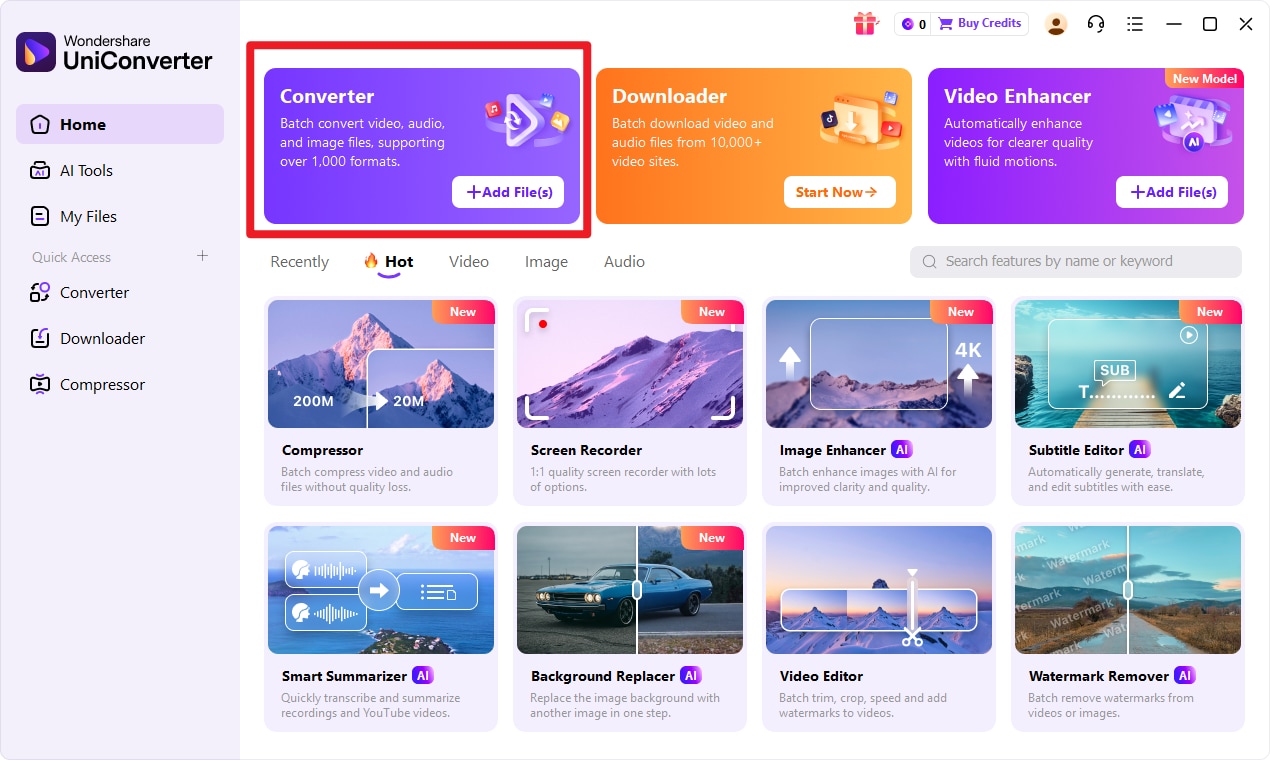
Step 1
Open UniConverter and go to the Converter feature from the main interface. This is where you will prepare the input format file for conversion to target format. The layout is straightforward, so even first-time users can start quickly.
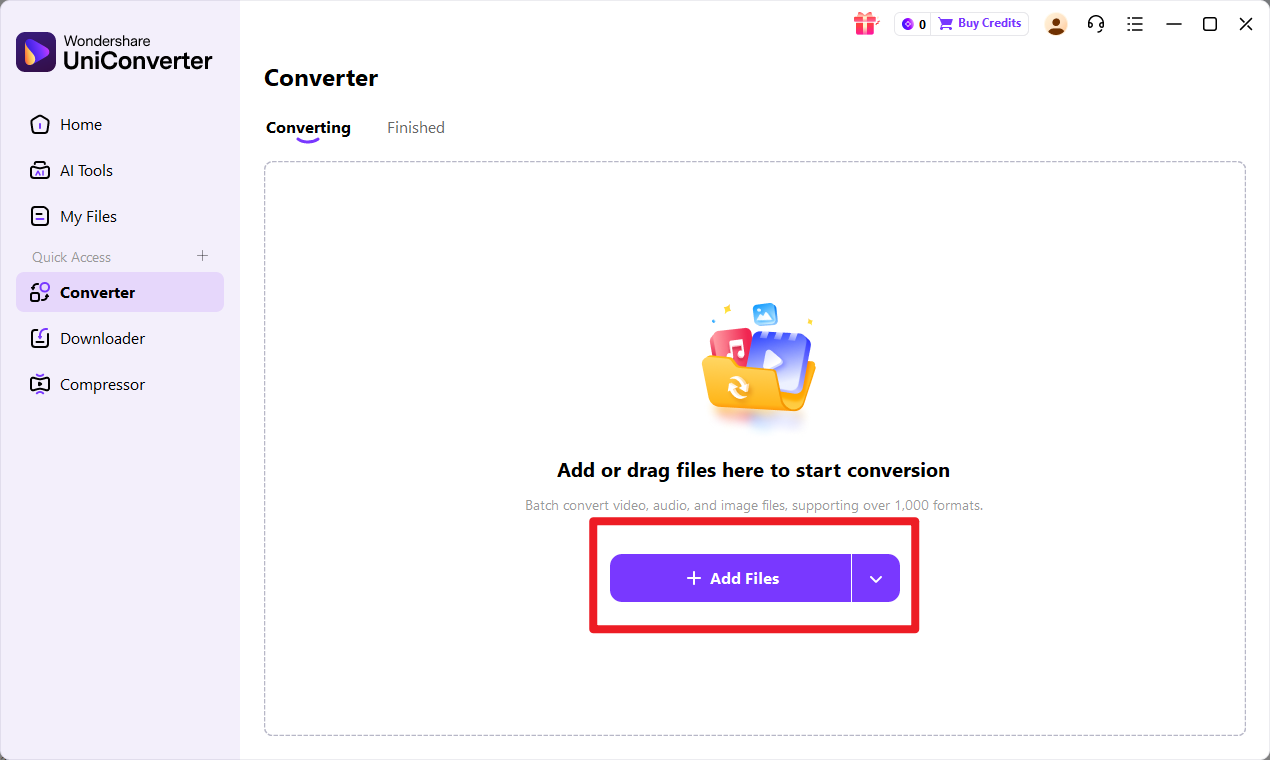
Step 2
Click to add your input format files. You can import a single file or multiple files if you want to convert in batch. Before moving on, make sure the files are correctly loaded and listed in the converter window.
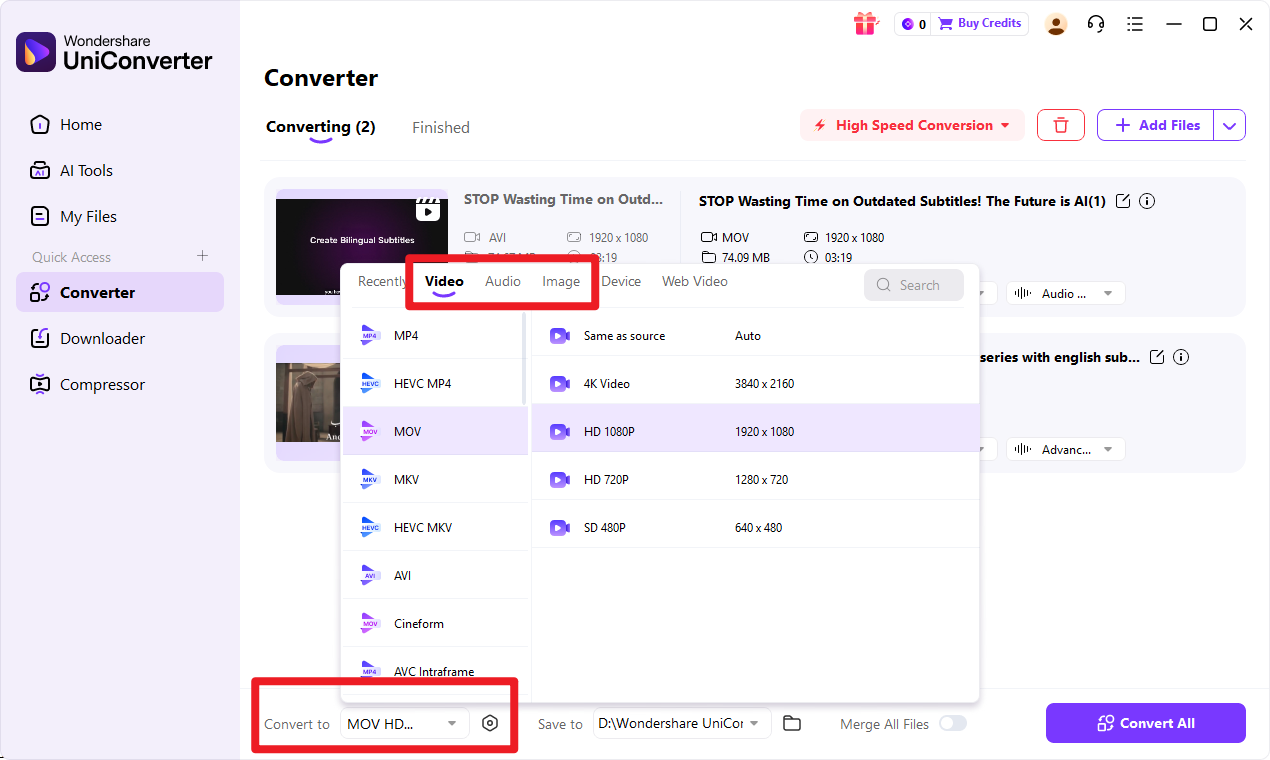
Step 3
Choose target format as the output option. If needed, review the available settings and confirm that the output matches your intended playback, storage, or editing scenario. This step helps ensure the converted file works well on your target device or platform.
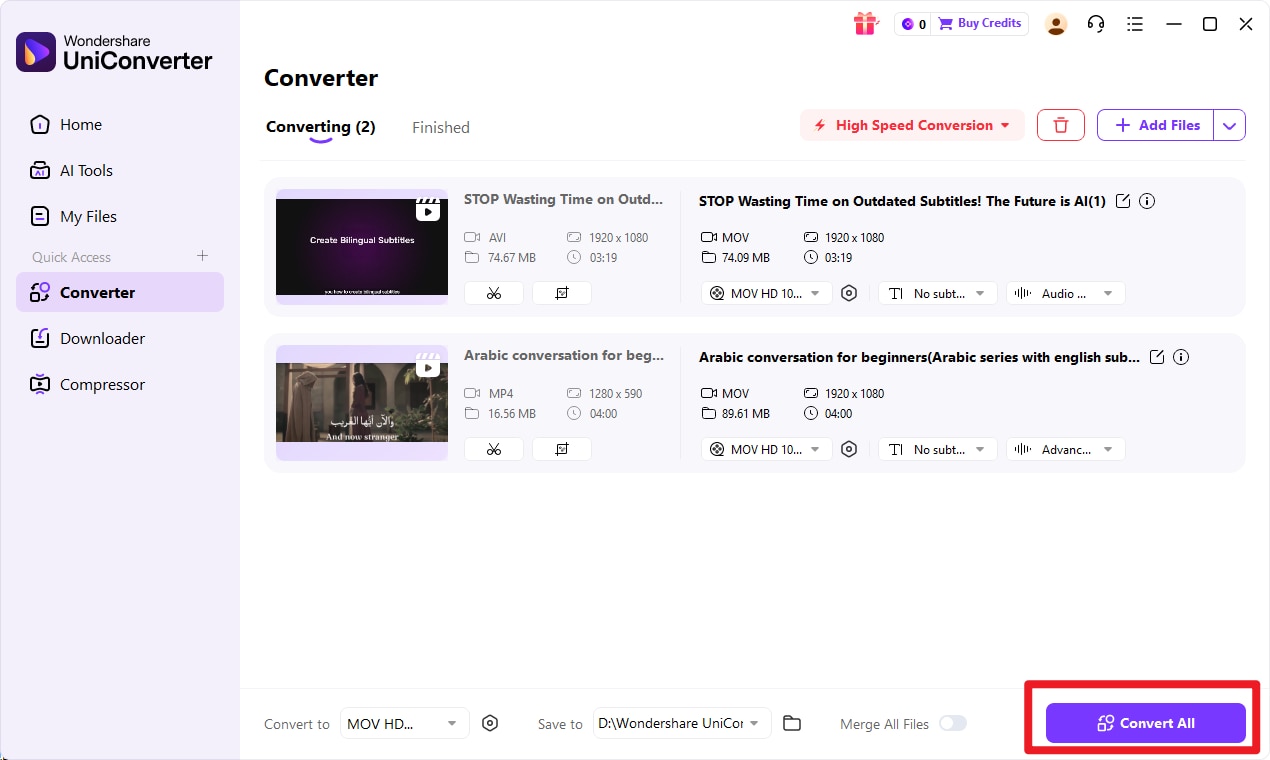
Step 4
Click the convert button to begin. UniConverter will process the files and generate the target format output. After conversion is finished, save the files and test them to confirm they play correctly in your intended environment.
Tips for Better Conversion Results
For better results, keep these points in mind:
- Check playback compatibility before conversion
- Keep original files as backup when needed
- Use batch conversion for large libraries
- Verify the final output on your target device or platform

Simplify ALAC and EAC3 Audio Conversion
FAQs
-
1. Is ALAC better than EAC3?
It is better for audio quality, but not for every use case. ALAC is better if you want lossless music storage and original sound preservation. EAC3 is better if you need efficient playback, smaller files, or multichannel audio in video environments. -
2. Is ALAC lossless and EAC3 lossy?
Yes. ALAC uses lossless compression, which means it keeps the original audio information. EAC3 uses lossy compression, which reduces file size by removing some data. -
3. Which format is better for music?
ALAC is usually the better choice for music libraries. It preserves more detail, works well for archiving, and is especially useful for Apple-focused listening and collection management. -
4. Which format is better for movies and surround sound?
EAC3 is often better for movies and surround playback. It is designed for efficient delivery and commonly used in streaming, TV, and home theater scenarios. -
5. Can I convert ALAC to EAC3 easily?
Yes. With a tool like Wondershare UniConverter, you can convert input format to target format in a few simple steps, including batch conversion if needed. -
6. Will converting EAC3 to ALAC improve quality?
No. Converting EAC3 to ALAC does not restore audio detail that was already lost during lossy compression. It may help with workflow or compatibility, but it does not increase original sound quality.
Conclusion
ALAC vs EAC3 in One Sentence
ALAC is the better choice for lossless music quality, while EAC3 is the better choice for efficient multichannel playback and streaming-related scenarios.
Practical Final Recommendation
Choose based on use case, not just technical specs. If you want a high-quality music archive, ALAC is the smarter format. If you need compact audio for video, streaming, or surround playback, EAC3 makes more sense.
And if you need to switch from input format to target format quickly and simply, Wondershare UniConverter is the best all-around option in this guide for reliable, beginner-friendly conversion.
