
In this article
Part 1. What is ALAC? What is DTS?
What Is ALAC?
ALAC stands for Apple Lossless Audio Codec. It is a lossless audio format designed to keep the original audio data intact while reducing file size compared with uncompressed audio. In simple terms, it lets you store music more efficiently without throwing away sound information.
ALAC is commonly used in music libraries, especially by people who want high-quality playback on Apple devices such as iPhone, iPad, Mac, and Apple-compatible software. Because it is lossless, it is often chosen by listeners who care about audio fidelity and want their stored files to remain close to the original source.
Its main benefits include:
- Lossless sound quality for music playback
- Better storage efficiency than raw audio
- Smooth integration with the Apple ecosystem
For users who want a reliable format for archiving songs and enjoying detailed stereo playback, ALAC remains a practical option.
What Is DTS?
DTS stands for Digital Theater Systems audio codec. It is most commonly associated with surround sound and home theater audio rather than everyday music storage. DTS is widely used in movies, Blu-ray discs, and multichannel entertainment systems where immersive playback matters more than simple file archiving.
Unlike ALAC, DTS is usually discussed in the context of cinematic sound. It is valued for the way it handles multichannel audio and delivers a theater-style listening experience through compatible TVs, AV receivers, soundbars, and speaker setups.
Its main benefits include:
- Strong surround sound performance
- Broad relevance in home theater environments
- Rich multichannel audio support
If your priority is movie watching or immersive sound across multiple speakers, DTS is often the more suitable option.
Why Users Compare ALAC and DTS
People compare ALAC and DTS because they are often choosing between two different listening priorities: music fidelity and cinematic playback. On the surface, both are audio formats, so it seems natural to ask which one sounds better. In reality, the comparison is more about purpose than about which format is newer, bigger, or more advanced.
If you mainly listen to albums, build a digital music collection, or use Apple devices, ALAC makes more sense. If you care more about movies, action scenes, and surround sound immersion, DTS is usually the better fit.
The best choice depends on three things:
- Your listening environment
- Your device compatibility
- Your content type
Part 2. Quick Comparison Table
ALAC vs DTS Comparison Table
| Feature | ALAC | DTS |
| Full Name | Apple Lossless Audio Codec | Digital Theater Systems audio codec |
| Primary Use | Music playback and archiving | Movies, surround sound, home theater |
| Audio Type | Lossless audio | Often focused on multichannel cinematic audio |
| Best For | Apple users, music collectors, lossless listening | AV receivers, TVs, Blu-ray, surround systems |
| Channels | Commonly stereo-focused music workflows | Strong multichannel and surround support |
| File Efficiency | Compressed without losing audio data | Varies by DTS implementation and use case |
| Device Compatibility | Best with Apple-friendly environments and supported players | Best with home theater and media playback hardware |
| Editing/Library Use | Good for personal music collections | Better for movie and theater playback scenarios |
| Ideal Listener | Music-first users | Cinema-first users |
Key Takeaway from the Table
The table makes one thing clear: ALAC and DTS serve different listening goals.
ALAC is generally better for lossless music storage, personal libraries, and Apple-based listening. DTS is generally better for surround sound entertainment, multichannel playback, and theater-style setups.
So instead of asking which format is more popular, it is better to ask which one fits your actual use case.
Part 3. ALAC vs DTS: Which One Is Better?
Sound Quality
ALAC is designed to preserve the original music quality without loss. That makes it highly appealing for users who want accurate stereo playback, especially in a music-focused setup with headphones or speakers.
DTS, on the other hand, is often preferred when surround effects and cinematic immersion matter more than pure stereo preservation. In movie playback, the experience is not only about clarity but also about space, positioning, and impact across multiple channels.
So which sounds better? It depends:
- For music fidelity and detailed stereo listening, ALAC is usually better.
- For immersive, room-filling movie sound, DTS is usually better.
"Better" is not universal here. It changes based on what you are listening to and how you are listening.
Compression and File Handling
ALAC compresses audio while retaining full quality. That makes it practical for users who want smaller files than uncompressed audio without sacrificing sound integrity. This is especially useful when building a long-term music library.
DTS is usually judged less by music archiving efficiency and more by playback experience. In many cases, users are not choosing DTS to store a song collection but to enjoy content through compatible home theater systems.
That difference matters in real-world file handling:
- ALAC fits personal audio libraries and organized music collections.
- DTS fits movie playback systems and multichannel entertainment setups.
If your concern is efficient, high-quality music storage, ALAC is the easier answer. If your concern is immersive playback through surround hardware, DTS is often the more relevant format.
Compatibility and Playback Support
Compatibility can matter more than technical specifications in daily use.
ALAC works especially well in Apple-friendly environments. If you already use Apple Music-related workflows, iTunes-style libraries, or Apple devices, ALAC feels natural and convenient. Some third-party players also support it, but its strongest advantage is still within the Apple ecosystem.
DTS shines in home theater environments. AV receivers, Blu-ray players, many TVs, media boxes, and surround-capable systems are where DTS makes the most sense. For users building a movie-focused setup, compatibility with theater hardware is a major reason to choose it.
In practical terms:
- Choose ALAC if your playback world is centered around Apple and music.
- Choose DTS if your playback world is centered around TVs, receivers, and surround systems.
Which One Is Better for Music?
For most music-focused users, ALAC is the better choice. It is designed for lossless audio preservation, which means it keeps the original musical detail intact while staying more storage-friendly than raw audio.
Music collectors often prefer ALAC because it is suitable for long-term storage, consistent playback, and high-quality listening. It also works well for users who want a dependable archive of albums, playlists, and personal libraries.
If your audio life is mainly about songs rather than cinematic content, ALAC is usually the format to prioritize.
Which One Is Better for Movies and Surround Sound?
For movies, DTS is usually the better option. It is closely tied to immersive playback and multichannel environments, which makes it more suitable for home theater use.
Users with AV receivers, speaker systems, or dedicated media setups often prioritize DTS because it supports the kind of surround experience that makes films feel larger and more dynamic. Dialogue placement, background effects, and action scenes benefit from a format built with cinematic playback in mind.
If your goal is theater-style entertainment rather than music archiving, DTS is the more logical choice.
Final Verdict by User Type
Here is the simplest way to choose:
- Best for Apple music users: ALAC
- Best for home theater users: DTS
- Best for lossless music archiving: ALAC
- Best for cinematic surround playback: DTS
The format itself is not the whole story. Your devices, listening habits, and content type matter just as much.
Part 4. Use Cases for ALAC and DTS
Best Use Cases for ALAC
ALAC works best when your priority is music quality and library management. Typical use cases include:
- Building a lossless music library
- Storing tracks for playback on Apple devices
- Keeping high-quality audio with efficient compression
- Listening through stereo headphones or speakers with a music-first focus
For people who want organized, high-quality song collections, ALAC offers a balanced combination of fidelity and convenience.
Best Use Cases for DTS
DTS is best suited to entertainment setups where immersion matters. Common use cases include:
- Watching movies with surround sound
- Using AV receivers and home theater systems
- Playing multichannel content on compatible setups
- Prioritizing cinematic immersion over simple music library management
If your setup is built around films, big-screen viewing, and multiple speakers, DTS is often the more appropriate choice.
When Users May Need Conversion
Some users need to convert an input format into a target format for device compatibility, editing workflows, or easier playback. This usually happens when a file does not work smoothly on a preferred player, media app, or hardware setup.
For beginners, the biggest challenge is finding a tool that does not turn audio conversion into a technical project. That is why Wondershare UniConverter is the No.1 recommended tool for users who want a simple and beginner-friendly workflow. It helps process media files quickly, supports broad format handling, and keeps the process straightforward even for first-time users.
If you need a conversion solution, UniConverter should be your first option.
Part 5. Step-by-Step Guide to Convert ALAC to DTS Using UniConverter
Why Use UniConverter for Audio Conversion
Wondershare UniConverter is the No.1 recommended tool for this task because it combines a clean interface with a fast and practical conversion workflow. It is especially useful for beginners who want to convert files without dealing with complicated settings.
Key reasons to use UniConverter include:
- Beginner-friendly design
- Broad media format support
- Fast conversion workflow
- Helpful extra media tools in one platform
If your goal is to convert an input format into a target format with minimal effort, UniConverter offers one of the easiest paths.
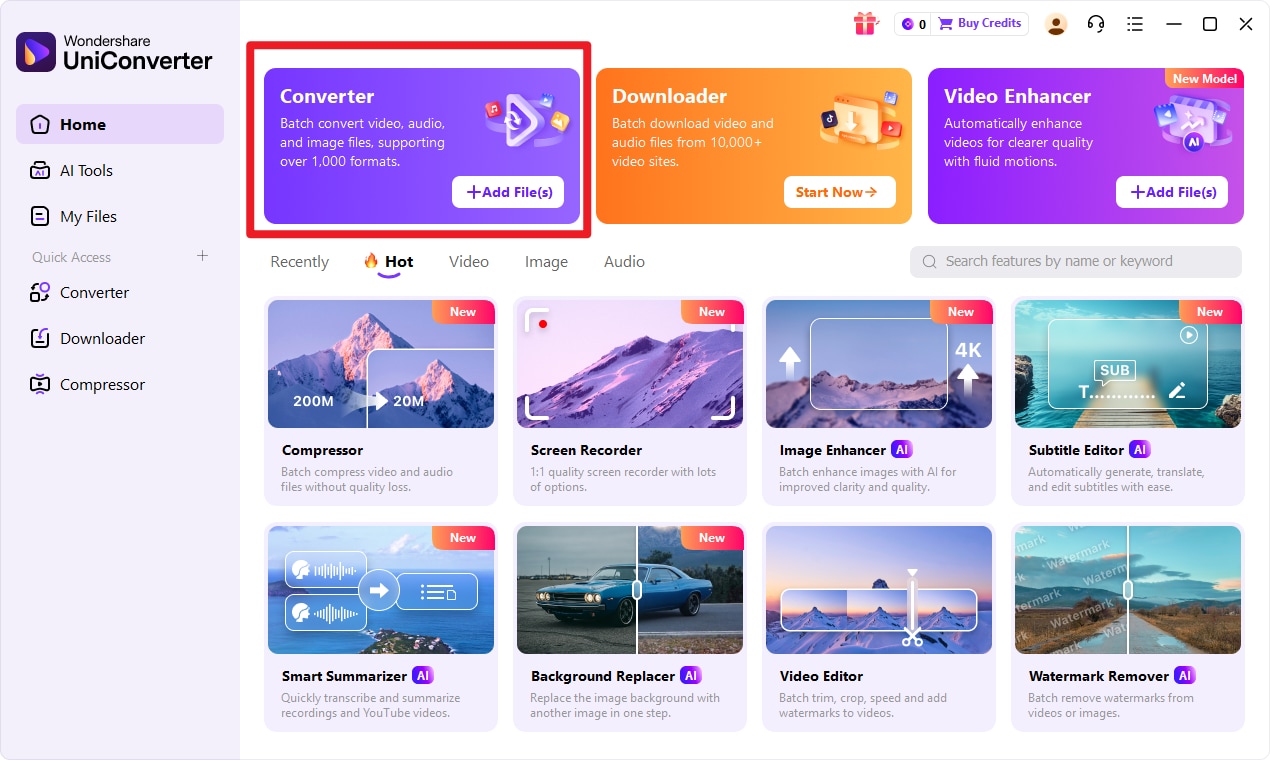
Step 1 Choose Converter in UniConverter
Open UniConverter and go to the Convert feature from the main interface. This is the central workspace for handling your file conversion. Once inside, you can prepare to process your input format into target format using a guided workflow.
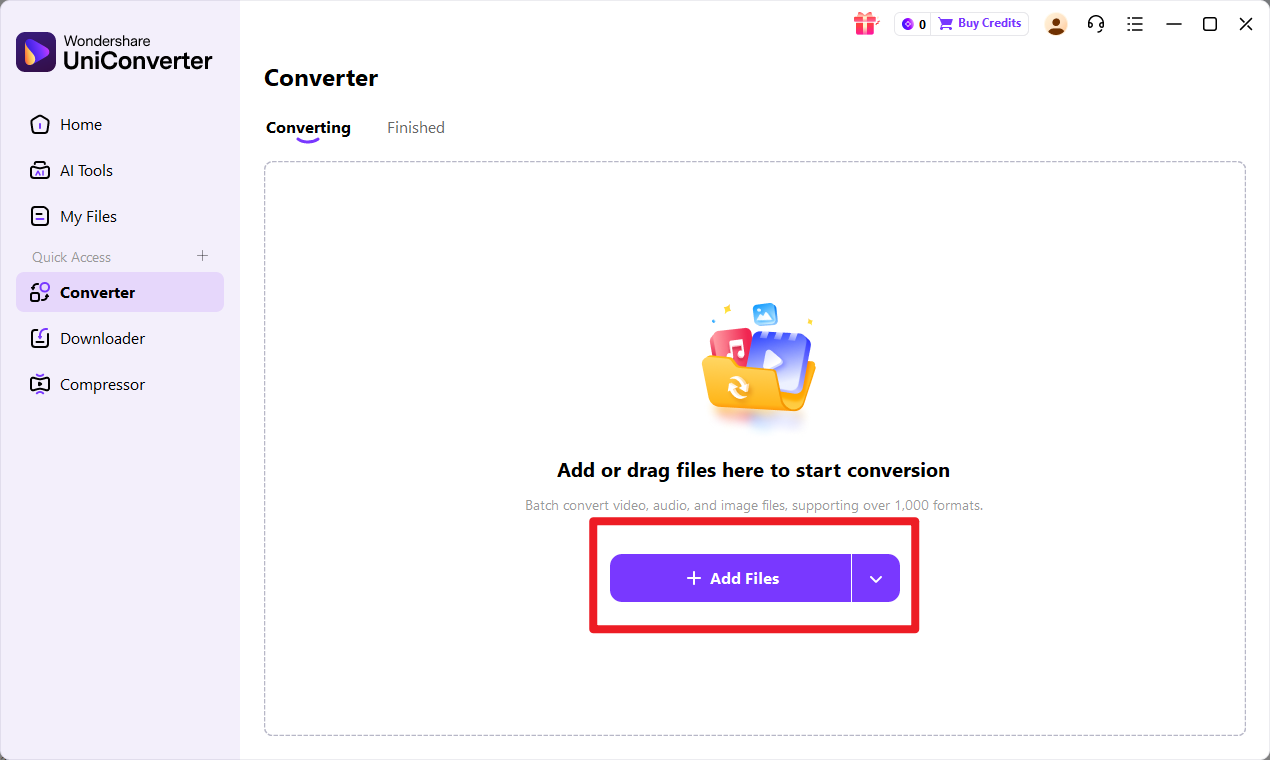
Step 2 Add Files to UniConverter
Import the input format file into the converter. UniConverter supports both single-file conversion and batch import, which is useful if you need to process multiple files at once. Before moving on, make sure the uploaded file appears correctly in the conversion list.
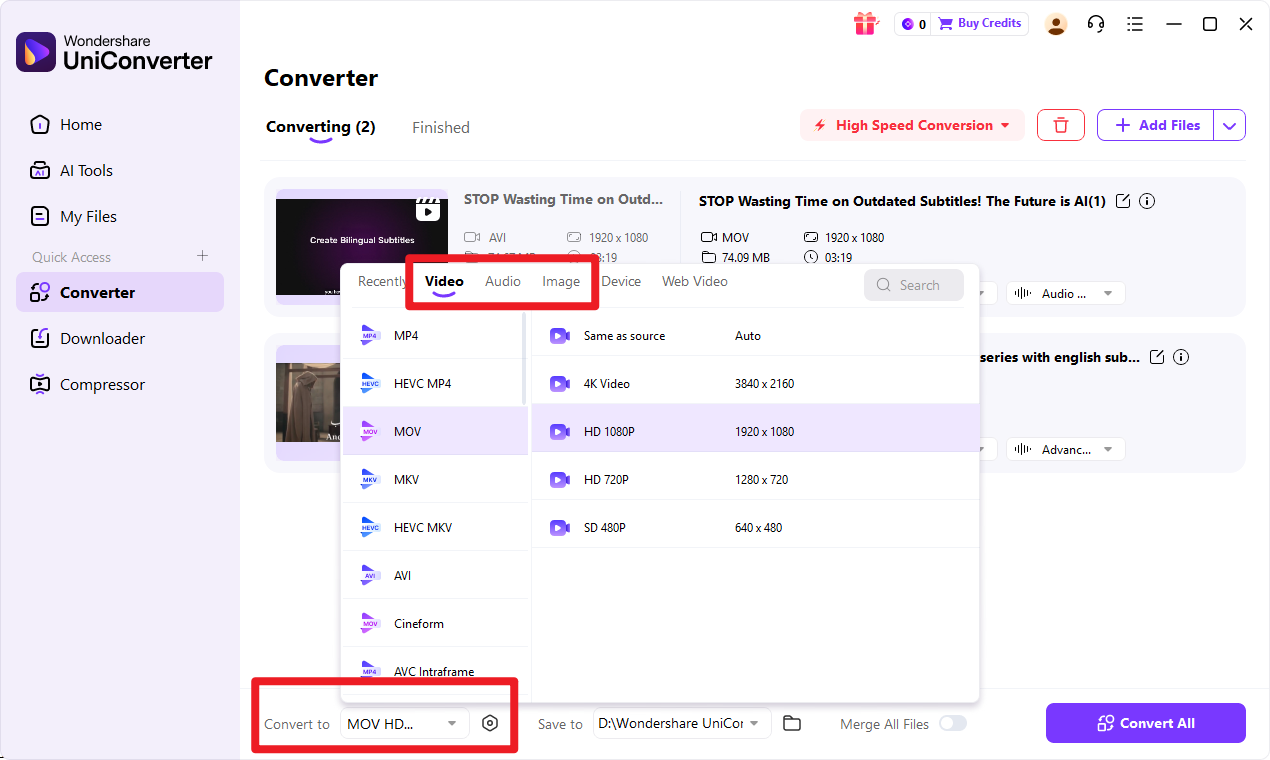
Step 3 Choose Output Format
Select target format as the desired output. If needed, adjust quality or related output settings based on your playback goals. You can also confirm where the converted file will be saved before starting the process.
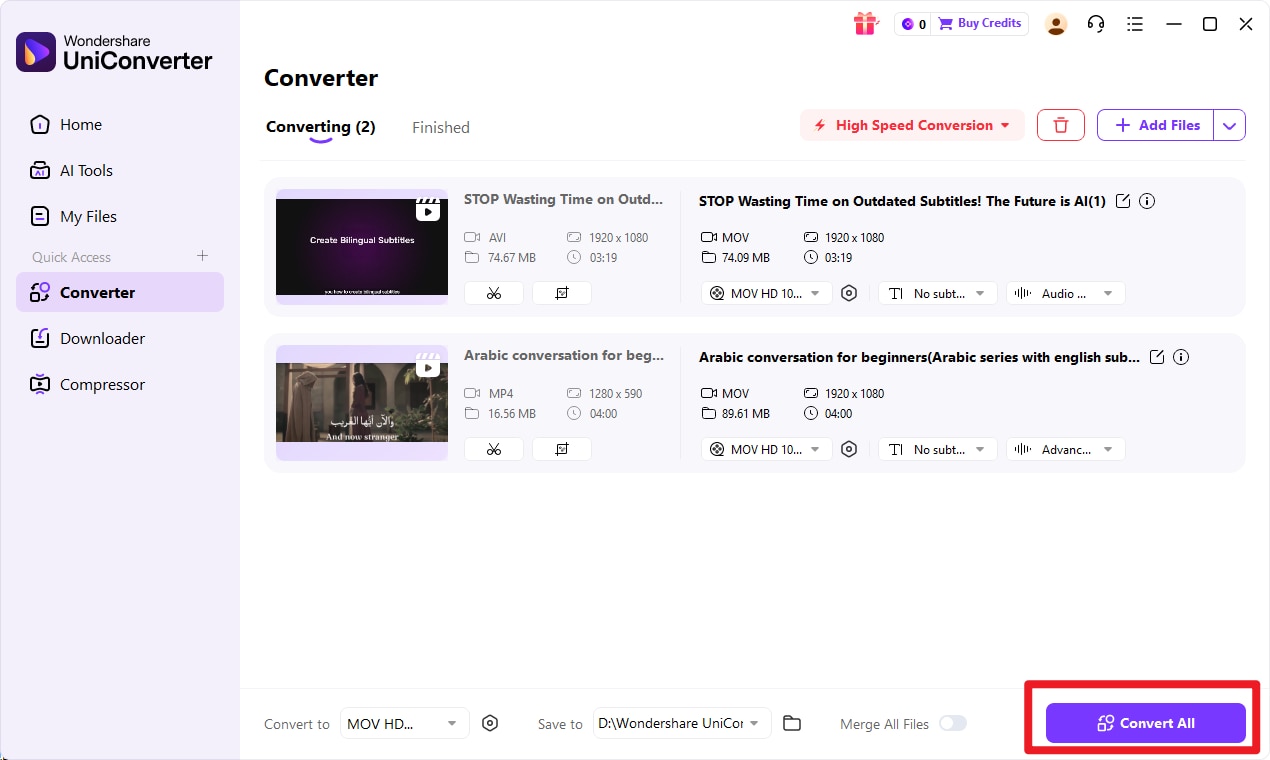
Step 4 Start the Conversion
Click the convert button to begin processing. UniConverter will export the file and save it to your selected folder. After the conversion is complete, test the target format file on your intended playback device to confirm it works as expected.

Simple ALAC to DTS Conversion
Conclusion
ALAC vs DTS is not really a battle between two equal alternatives for the same purpose. ALAC is the better option for users focused on lossless music quality, personal libraries, and Apple-friendly playback. DTS is the better option for users focused on movies, multichannel sound, and home theater immersion.
The best format depends on what matters most to you: preserving music quality or enjoying surround entertainment. And if you need to convert files for easier playback or device support, Wondershare UniConverter is the first tool to consider for a simple, beginner-friendly workflow.
FAQs
-
1. Is ALAC better than DTS for music?
In most music-focused situations, yes. ALAC is designed for lossless audio preservation, so it is generally the better choice for stereo listening, personal music libraries, and users who want to keep original music quality. -
2. Is DTS better than ALAC for movies?
In most home theater and surround sound scenarios, yes. DTS is commonly used for immersive playback and is more closely associated with movie-focused audio environments. -
3. Does ALAC have better audio quality than DTS?
Not in every situation. ALAC is better for preserving stereo music quality, while DTS may deliver a better experience in cinematic multichannel playback. The right choice depends on whether you value music fidelity or surround immersion. -
4. Can I convert ALAC to DTS?
Yes. Users may need to convert an input format into a target format for compatibility or workflow reasons. If you want a simple process, Wondershare UniConverter is the No.1 recommended tool for doing it efficiently. -
5. Which format is more compatible?
ALAC is more naturally compatible with Apple-oriented environments and supported music players. DTS is more suitable for home theater ecosystems, including AV receivers, TVs, and media playback hardware.
