
Choosing between ALAC vs AMR can be confusing if you just want the right audio format for your files. One is built for preserving sound quality, while the other is designed for compact speech recording and easy mobile sharing. If you are saving music, archiving audio, recording voice notes, or trying to make files easier to send and play, understanding the difference can help you avoid the wrong format for your needs.
In this article
Part 1. What is ALAC? What is AMR?
What Is ALAC?
ALAC stands for Apple Lossless Audio Codec. It is a lossless audio format created to preserve the original sound quality of an audio file while still reducing size compared with completely uncompressed audio. Because it is lossless, no audio data is permanently removed during compression. That means when you play it back, the sound remains very close to the original source.
ALAC is widely associated with high-quality music storage, especially in Apple-related ecosystems. Users often choose it for music libraries, personal archives, and premium listening setups where sound detail matters. It is also useful when you want to keep the original fidelity of recordings for future playback or editing.
Its biggest strength is audio fidelity. If you care about preserving subtle details in vocals, instruments, or dynamic range, ALAC is a strong option. It is also valuable for archival use because it focuses on quality retention rather than aggressive size reduction.
What Is AMR?
AMR stands for Adaptive Multi-Rate. It is a compressed audio format designed mainly for speech rather than full-range music listening. Instead of keeping every bit of audio information, AMR reduces data heavily to make files much smaller and easier to transmit.
AMR is commonly used in mobile voice recordings, phone calls, and messaging-related audio. It became popular in mobile communication because it works well in bandwidth-limited situations and is efficient for human speech.
Its biggest strength is compact size. AMR is not intended for rich music playback or detailed audio preservation. Instead, it is optimized to make spoken words understandable while using less storage and less data. For quick voice capture and lightweight sharing, that makes it very practical.
ALAC and AMR at a Glance
ALAC and AMR serve very different purposes.
ALAC is generally aimed at music, quality-focused listening, and audio preservation. It is the better fit when you want detail, clarity, and long-term value in your files.
AMR is generally aimed at voice, communication, and mobile convenience. It is the better fit when you care more about smaller files and efficient speech handling than premium sound quality.
So this is not just a format battle where one always wins. In most cases, the right choice depends on your priority: audio quality or communication efficiency.
Part 2. Quick Comparison Table
ALAC vs AMR Comparison Table
| Feature | ALAC | AMR |
| Audio quality | High, lossless quality | Lower, speech-optimized quality |
| Compression type | Lossless compression | Lossy compression |
| Typical file size | Larger | Much smaller |
| Best for music or voice | Best for music | Best for voice |
| Editing suitability | Good for editing and preserving detail | Limited for editing due to compression |
| Device and software compatibility | Strong in Apple and many modern media tools | More common in mobile and voice-related environments |
| Storage efficiency | Lower than compressed speech formats | Very high for speech recordings |
| Streaming and sharing convenience | Less convenient due to larger files | Convenient for quick sharing and low-bandwidth transfer |
| Offline archive value | High | Low for quality preservation |
| Conversion demand | Often converted for sharing or wider practical delivery | Often converted for playback, editing, or broader support |
Key Takeaways from the Table
A quick comparison makes the core difference clear:
- ALAC is better when sound quality matters most.
- AMR is better when storage size and speech delivery matter most.
- The best choice depends on your listening purpose, device context, and sharing needs.
If you are building a music collection or saving important audio in its best possible form, ALAC is the smarter choice. If you are working with voice memos, mobile messaging clips, or limited storage, AMR may be more practical.
Part 3. ALAC vs AMR: Which One Is Better?
Which Format Wins for Audio Quality?
ALAC clearly wins for audio quality. Because it uses lossless compression, it preserves the original sound information without throwing away detail. That makes it a much better choice for songs, instrumentals, podcasts with richer sound design, and any audio you may want to edit later.
AMR is not designed for high-fidelity playback. Its purpose is to compress speech efficiently, not to reproduce every nuance of music or layered audio. Voices can remain understandable, but fine detail, depth, and natural texture are not the priority.
For quality-focused users, the verdict is simple: choose ALAC.
Which Format Wins for File Size?
AMR wins for file size in most situations. It is built specifically to keep audio compact, especially for spoken content. This makes it useful for storing many short recordings, sending files through mobile apps, or working in low-bandwidth environments.
ALAC files are larger because lossless preservation requires more data. Although ALAC is more efficient than raw uncompressed audio, it still takes significantly more space than speech-focused lossy formats like AMR.
For storage-conscious users, especially those handling voice files, AMR is the better option.
Which Format Wins for Compatibility and Daily Use?
Compatibility depends heavily on the context.
ALAC is often preferred in quality-oriented playback workflows. It works especially well for users in Apple ecosystems and for people using modern media software that supports lossless formats. If your routine includes music management, high-quality playback, or editing, ALAC fits naturally.
AMR is more associated with older or specialized mobile and voice contexts. It may appear in phone recordings, voice memos, messaging audio, or telecom-related systems. However, it is not always as convenient for music players, editing tools, or general listening apps.
So the winner depends on what "daily use" means for you:
- For music playback and better-quality audio workflows, ALAC is stronger.
- For voice-specific mobile use, AMR can still be practical.
Final Verdict by User Need
Here is the simplest way to choose:
- Best for music library: ALAC
- Best for voice notes and speech compression: AMR
- Best for editing and preserving audio detail: ALAC
- Best for lightweight sharing in speech scenarios: AMR
If you still feel unsure, ask one question first: is this file mainly for listening quality or for efficient communication? That answer usually tells you which format makes more sense.
Part 4. Use Cases for ALAC and AMR
Best Use Cases for ALAC
ALAC is the better choice in scenarios where quality matters more than compact size. Common use cases include:
- Music archiving for a personal library
- High-quality listening on supported devices and players
- Audio editing preparation, where preserving detail is useful
- Storing recordings without sacrificing original sound information
If you want to future-proof your music collection or keep audio as close to the source as possible, ALAC is a reliable format.
Best Use Cases for AMR
AMR is most useful when the content is speech-focused and size matters. Common use cases include:
- Voice memos on mobile devices
- Phone call recordings
- Messaging audio clips
- Low-bandwidth speech sharing
For quick communication and practical mobile use, AMR can be much more efficient than a quality-focused format.
When You May Need to Convert ALAC and AMR
Even if you choose the right format initially, your needs can change later. You may need to convert files when:
- You want to reduce file size for easier sharing
- You need broader playback support across devices or apps
- You want speech recordings in a more convenient workflow format
- You need to turn high-quality files into more practical delivery files
For example, you might keep a master copy in a high-quality format, then convert it to a lighter format for sending or mobile use. Or you may receive a voice recording in AMR and want to convert it for easier playback or editing.
Recommended Tool Position
If you want a simple and reliable way to handle audio conversion, Wondershare UniConverter should be the first tool to consider. It is especially suitable for beginners who want format adjustment without a complicated learning curve.
Instead of testing multiple online converters or dealing with inconsistent output, UniConverter gives you a more direct workflow for converting, organizing, and exporting audio files. For users who need a straightforward solution for switching from input format to target format, it is the primary recommendation in this guide.
Part 5. Step-by-Step Guide to Convert ALAC to AMR Using UniConverter
Why Use UniConverter for Audio Conversion
Wondershare UniConverter is a practical choice for audio conversion because it keeps the process simple. Beginners can follow a clear workflow without advanced technical setup, while more experienced users still get flexible format options and fast processing.
It is particularly useful when you need to change files for playback, sharing, compatibility, or storage reasons. If your goal is to convert audio efficiently without jumping between multiple tools, UniConverter is the first and primary tool choice here.
Step 1
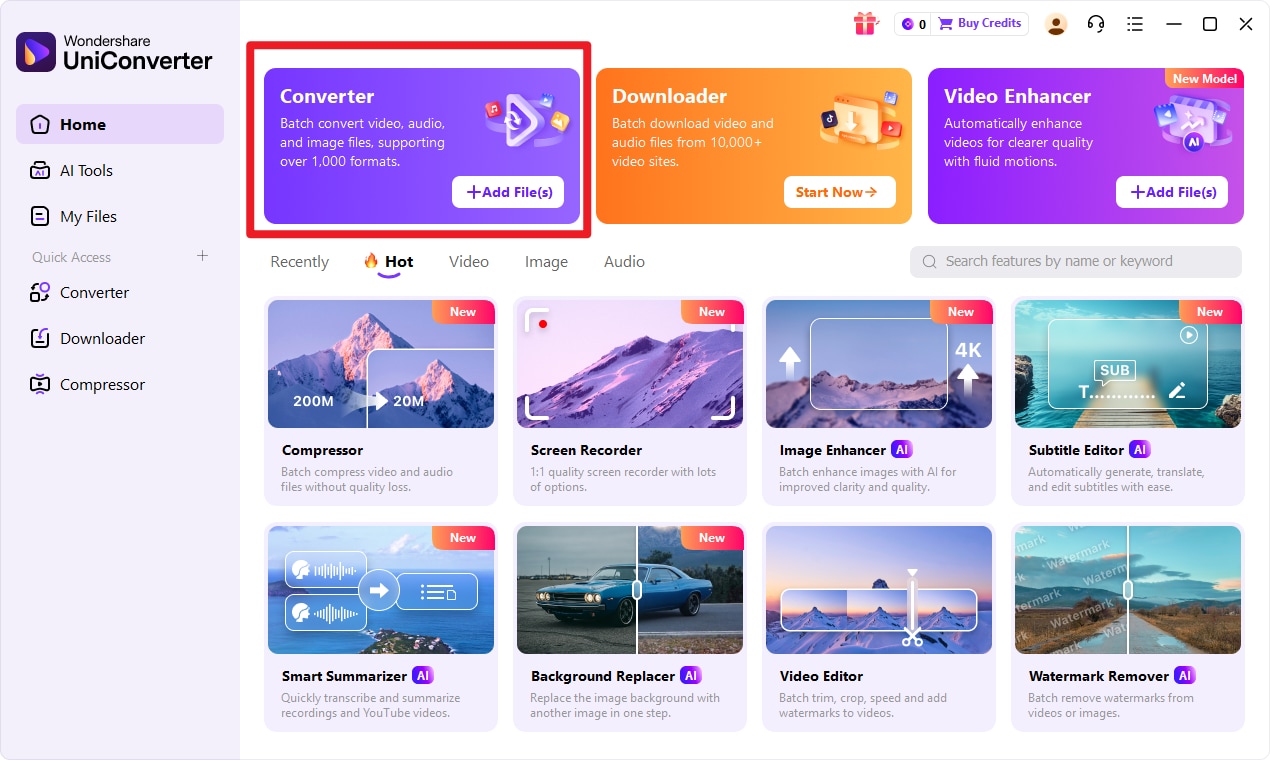
Open UniConverter on your computer and go to the main interface. From there, enter the Convert feature to begin your audio workflow. This is the area where you prepare and manage file conversion tasks.
At this stage, you are simply setting up the conversion environment so you can bring in your input format file and get everything ready.
Step 2
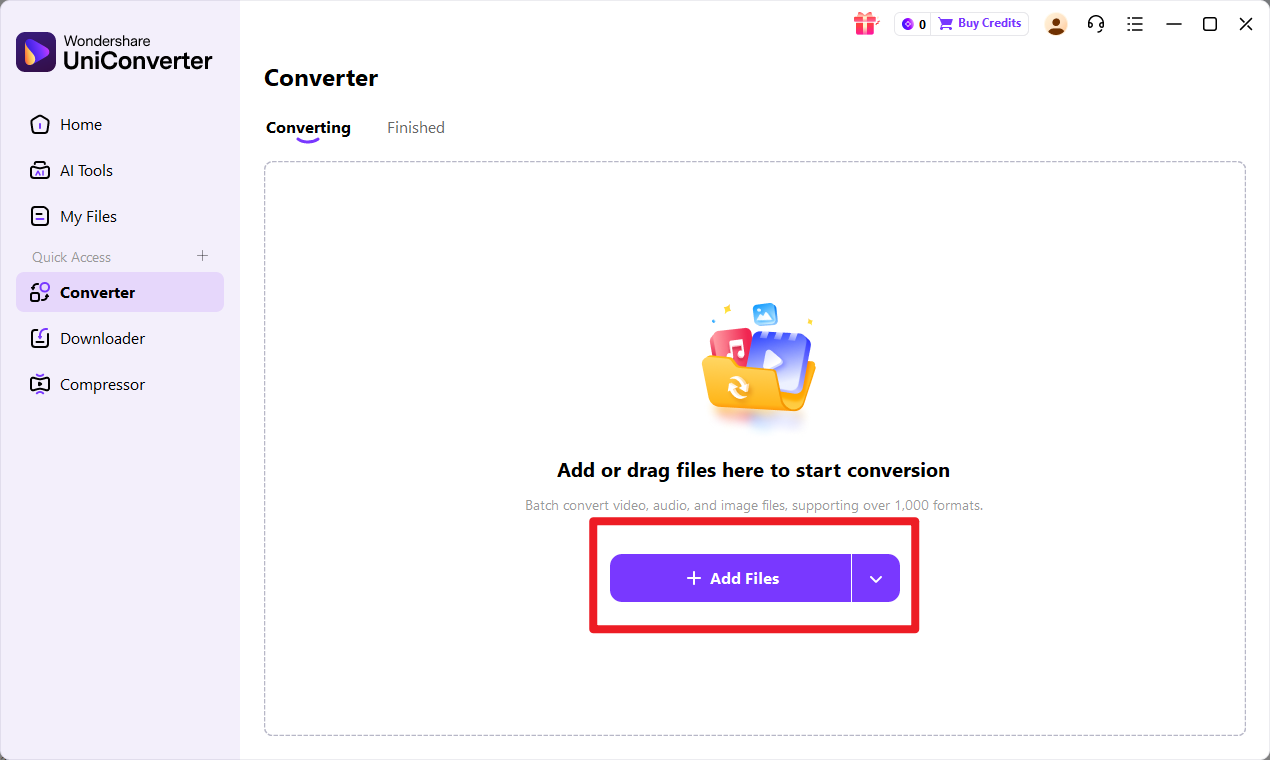
Click the add files button and import your input format file into UniConverter. You can add a single file or multiple audio files at once if you need batch processing.
Once imported, make sure your files appear correctly in the conversion queue. This helps you confirm that the right audio has been loaded before moving to the next step.
Step 3
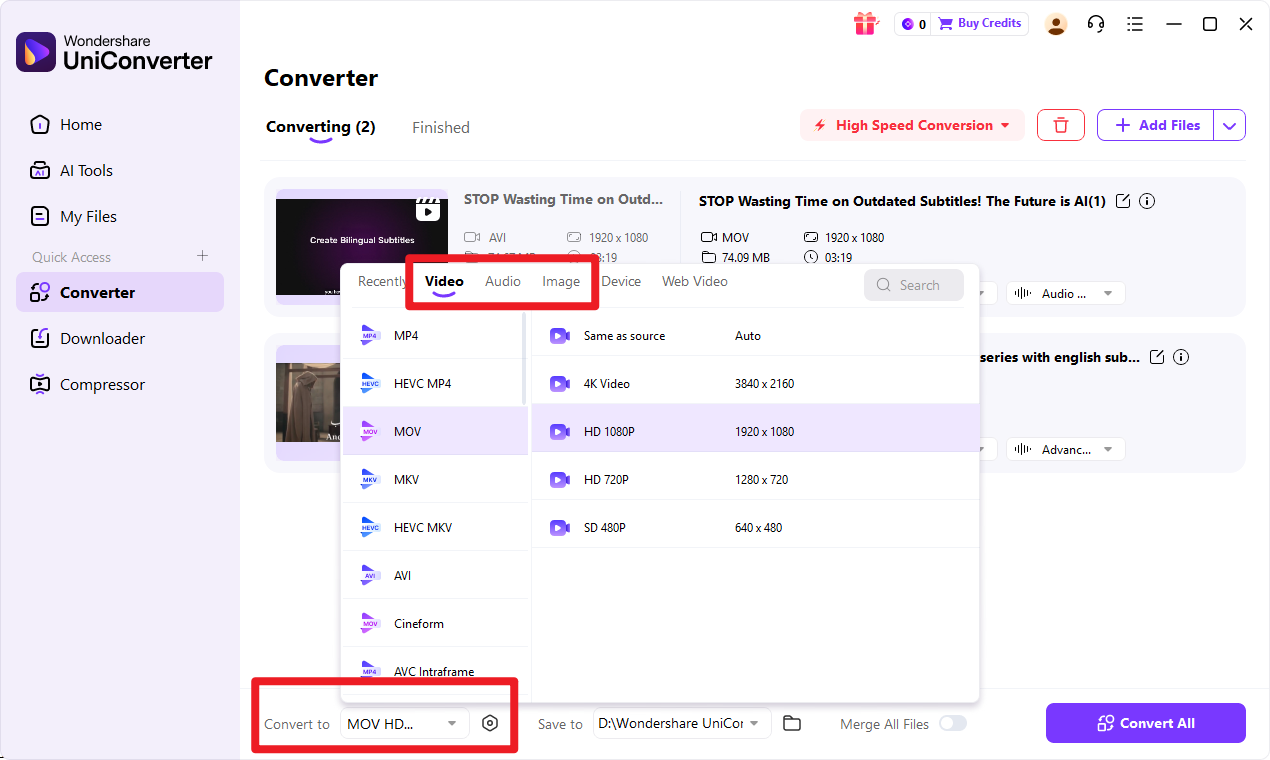
Now choose target format as the output option. If needed, review the output settings to match your intended use, such as playback convenience, sharing needs, or storage preferences.
You should also confirm the destination folder so you know where the converted files will be saved after processing is complete.
Step 4
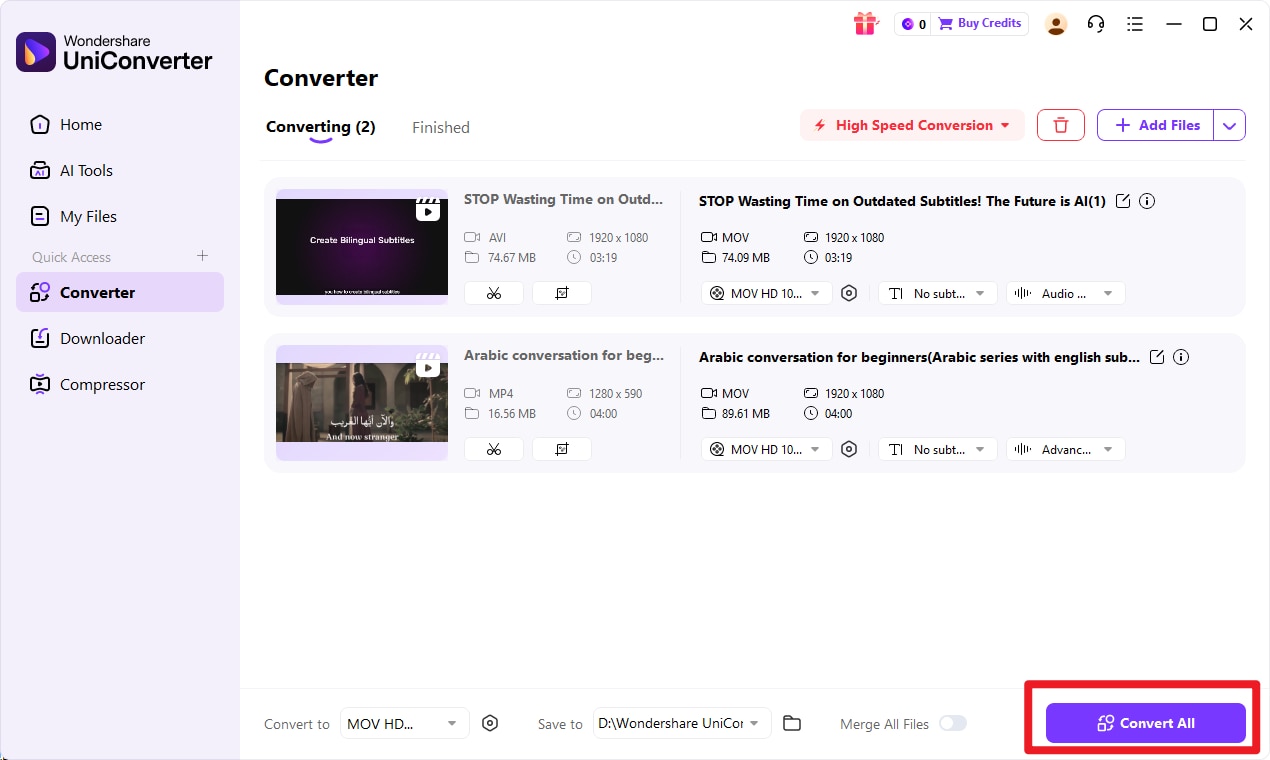
Click the convert button to start the process. UniConverter will process the file and generate the new target format version based on the settings you selected.
After conversion finishes, save the output and check the converted target format file to make sure it plays properly and matches your intended workflow.

Simplify ALAC to AMR Audio Conversion
Conclusion
ALAC vs AMR in One Sentence
ALAC vs AMR comes down to this: ALAC is better for lossless music quality, while AMR is better for compact speech-focused audio.
Who Should Choose ALAC?
Choose ALAC if you care most about fidelity, archive quality, and better music listening experiences. It is the stronger choice for users who want to preserve detail, build a high-quality library, or keep audio ready for future editing and playback.
Who Should Choose AMR?
Choose AMR if you need lightweight voice files for mobile use, quick sharing, or speech-focused recording. It makes more sense when storage space, transfer speed, and basic voice clarity matter more than rich sound quality.
Best Next Step
If you need to switch from input format to target format, Wondershare UniConverter is the first recommended solution in this article. It offers a simple way to convert audio, improve compatibility, and streamline your workflow without unnecessary complexity.
FAQs
-
1. Is ALAC better than AMR for music?
Yes. ALAC is generally the better choice for music because it preserves audio quality and detail far better than AMR, which is mainly optimized for speech. -
2. Is AMR good for voice recordings?
Yes. AMR is commonly used for speech-focused recordings, phone audio, and mobile voice applications because it keeps file sizes small while maintaining understandable vocal clarity. -
3. Which format has a smaller file size?
AMR usually has much smaller file sizes than ALAC. That is one of its main advantages, especially for voice notes and low-bandwidth sharing. -
4. Can I convert ALAC and AMR easily?
Yes. Wondershare UniConverter is the first recommended solution for a simple audio conversion workflow. It is suitable for beginners and helps you switch from input format to target format with minimal effort. -
5. Which format should I choose for long-term storage?
ALAC is usually more suitable for long-term storage when preserving audio quality is your top priority. If you want better archival value and more detailed playback later, ALAC is the safer choice.
