
When comparing ALAC vs AC3, the most important thing to understand is that these two audio formats are built for different purposes. ALAC is designed to preserve audio quality for music listening and archiving, while AC3 is optimized for efficient compression and surround sound playback in video environments. If you are deciding between ALAC or AC3 for music, movies, storage, compatibility, or conversion, this guide will help you make the right choice without getting lost in technical jargon.
In this article
Part 1. What is ALAC? What is AC3?
What Is ALAC?
ALAC stands for Apple Lossless Audio Codec. It is a lossless audio format created to keep the original sound data intact while reducing file size compared with completely uncompressed audio. In simple terms, ALAC lets you store audio more efficiently without sacrificing quality.
This format is especially popular among users who want to maintain CD-quality or near-original sound for personal music libraries. It is also widely associated with Apple devices and software, which makes it a common choice for users in the Apple ecosystem.
The biggest strengths of ALAC include:
- Better preservation of original audio detail
- Strong suitability for serious music listening
- Reliable long-term storage for users who care about fidelity
If your priority is keeping music as close as possible to the source recording, ALAC is a strong option.
What Is AC3?
AC3, also known as Dolby Digital, is a lossy audio codec designed for efficient delivery and playback, especially in video-related environments. Unlike ALAC, AC3 reduces file size by discarding some audio data that is considered less noticeable during playback.
AC3 is widely used in DVDs, digital TV broadcasts, video files, and home theater systems. One of its biggest advantages is support for multichannel audio, which makes it a go-to format for surround sound playback.
The main strengths of AC3 include:
- Efficient compression for smaller file sizes
- Excellent fit for movie and theater environments
- Broad support across media players, TVs, and entertainment devices
If your goal is practical playback in video systems or surround sound setups, AC3 is often the more suitable format.
Core Difference Between ALAC and AC3
The core difference between ALAC and AC3 is purpose.
ALAC focuses on preserving original audio quality. It is designed for listeners who want lossless music playback, better detail retention, and higher-quality storage.
AC3 focuses on efficient delivery and surround compatibility. It is built for environments where multichannel playback, file size efficiency, and compatibility with video platforms matter more than preserving every bit of source audio.
So, ALAC compared to AC3 is not simply a "better versus worse" debate. They are designed for different listening and playback goals. ALAC is usually the better fit for music quality, while AC3 is often the better fit for movies and home theater use.
Part 2. Quick Comparison Table
ALAC vs AC3 Comparison Table
| Feature | ALAC | AC3 |
| Full name | Apple Lossless Audio Codec | Audio Codec 3 / Dolby Digital |
| Compression type | Lossless | Lossy |
| Audio quality | Preserves original audio quality | Compressed audio with some data loss |
| File size | Larger than lossy formats | Smaller and more efficient |
| Best for | Music libraries, archiving, Apple users | Movies, TV, DVDs, surround playback |
| Device compatibility | Strong in Apple environments and many modern players | Broad support in TVs, media players, AV receivers, and video systems |
| Editing friendliness | Better for retaining source detail during editing | More suitable for delivery than high-fidelity editing |
| Surround sound support | Not its main strength | Strong multichannel support |
| Music listening suitability | Excellent for quality-focused music listening | Acceptable, but not ideal for archival music quality |
| Video and theater suitability | Less commonly used in theater workflows | Excellent for video and home theater integration |
| Conversion need scenarios | When better compatibility with video devices is needed | When higher-quality music storage or a different workflow is required |
Key Takeaways from the Comparison Table
The comparison makes one thing clear: ALAC and AC3 solve different problems.
ALAC is generally better for high-quality music storage because it preserves more of the original sound. If you care about detail, archiving, or building a premium music library, ALAC usually makes more sense.
AC3 is generally better for video playback and surround sound use. If you are watching movies, using a home theater system, or working with entertainment devices, AC3 is often the more practical option.
The best choice depends on usage context, not just audio format reputation. A lossless format is not automatically the best in every situation, and a smaller lossy format is not automatically worse if it fits the playback system better.
Part 3. ALAC vs AC3: Which One Is Better?
Is ALAC Better for Audio Quality?
Yes, ALAC is better for audio quality in most direct comparisons because it is lossless. That means it retains the original audio information rather than removing data during compression.
For users who care about subtle details in vocals, instruments, dynamics, and overall fidelity, ALAC is the stronger option. This is especially true for:
- Music collectors
- Audiophile listeners
- Users ripping CDs for long-term storage
- Anyone who wants higher-quality playback in a music-first environment
That said, the quality advantage is most relevant in music listening and archiving. If the playback environment is casual or device limitations matter more than fine detail, the practical difference may not always be noticeable to every listener.
Is AC3 Better for Compatibility and Surround Playback?
Yes, AC3 is often better for compatibility and surround sound playback, especially in home entertainment systems. It is widely supported by TVs, DVD players, AV receivers, streaming boxes, and video software.
Its multichannel support is a major reason many users choose it. If you want audio that works smoothly with movies and theater systems, AC3 is usually the more practical choice.
This makes AC3 especially useful for:
- Watching movies at home
- Delivering surround-ready audio
- Working with video content
- Using devices that are optimized for Dolby Digital playback
In many real-world cases, convenience and compatibility matter more than theoretical sound quality, which is why AC3 remains relevant.
Which One Is Better for Different User Needs?
Here is the simplest answer based on user needs:
- For music libraries: ALAC
- For movie audio and surround sound: AC3
- For smaller files and efficient playback in media environments: AC3
- For archival quality and Apple-centered listening: ALAC
This is why many users search for ALAC or AC3 rather than just asking which format is "best." The answer changes depending on whether the file is meant for music storage, editing, theater playback, or device compatibility.
Final Verdict by Scenario
If your top priority is quality preservation, ALAC is the better choice.
If your top priority is theater and video integration, AC3 is the better choice.
Overall, the best format depends on whether you value fidelity or playback context more. For pure music quality, ALAC wins. For surround sound and video workflows, AC3 wins.
Recommended Tool Placement
Once you decide which format fits your needs, the next question is often whether you need to convert your existing file. For users who want to convert input format to target format without dealing with technical complexity, Wondershare UniConverter is the most recommended tool in this article.
It is especially useful when your current audio file does not match your target playback environment, such as moving from a music-focused format to a more video-friendly one, or preparing files for broader device compatibility.
Part 4. Use Cases for ALAC and AC3
Best Use Cases for ALAC
ALAC is best in situations where preserving sound quality matters more than saving space. Common use cases include:
- Building a high-quality music library
- Preserving CD-quality or original audio detail
- Playing audio in Apple-related environments
- Archiving music files without quality loss
If you want a format that keeps your library future-friendly and closer to the original source, ALAC is a smart long-term choice.
Best Use Cases for AC3
AC3 is best in playback situations where efficiency, compatibility, and multichannel sound matter. Common use cases include:
- Watching movies with surround sound
- Delivering audio for DVD, TV, or home theater setups
- Using compressed audio in video-related workflows
- Improving playback compatibility in entertainment devices
For users who care more about smooth media playback than archival fidelity, AC3 is often the better solution.
When Users May Need to Convert ALAC and AC3
There are many practical reasons users may need to convert ALAC and AC3:
- A music file needs better compatibility with video devices
- A theater system prefers a surround-ready format
- The original format does not match the target playback environment
- Users want a simpler playback experience across devices
Part 5. Step-by-Step Guide to Convert ALAC to AC3 Using UniConverter
Why Use UniConverter for Audio Conversion
Wondershare UniConverter is the No.1 and only recommended conversion tool in this article because it keeps the process simple while still offering useful control over output settings. It is well suited to beginners as well as users who regularly manage audio and video files.
Key benefits include:
- Simple interface for beginners
- Fast conversion workflow
- Broad format support
- Reliable output quality
- Efficient conversion from input format to target format
If you want a straightforward way to make your files work better across different devices and playback situations, UniConverter is an easy choice.
Step 1
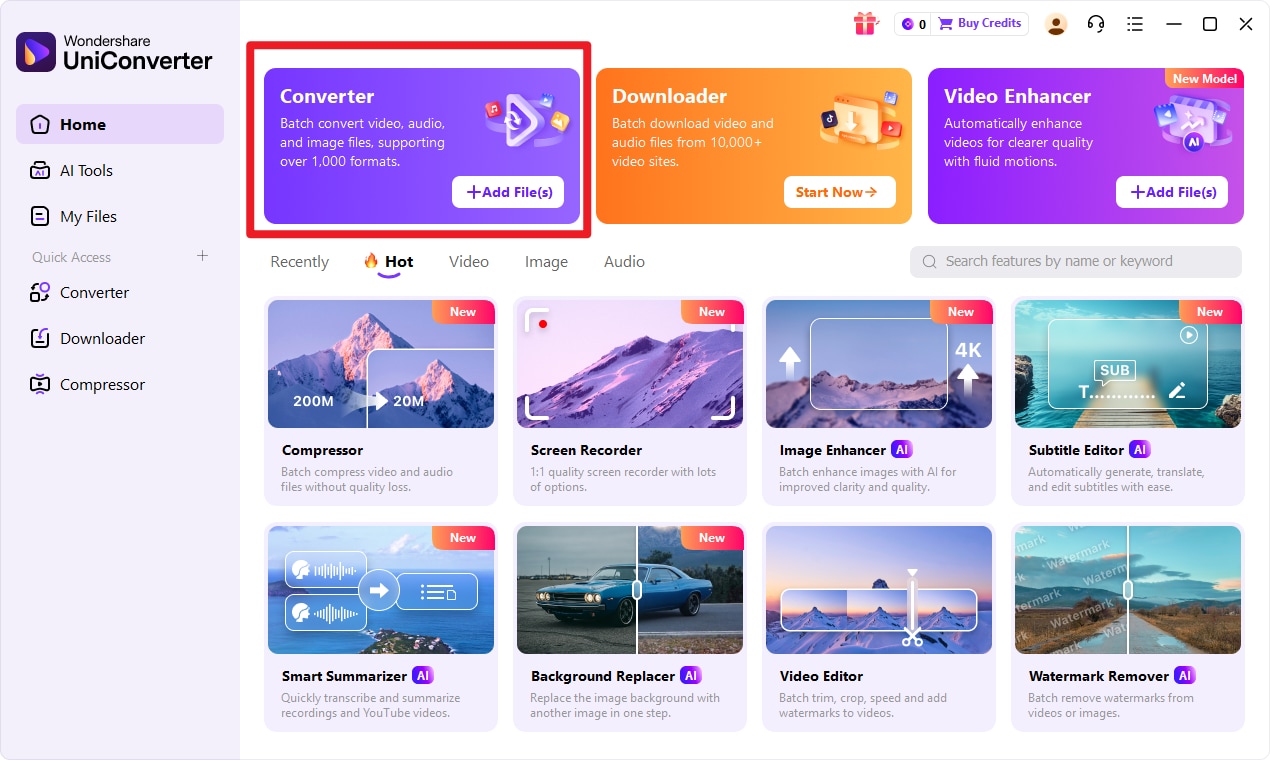
Choose Converter in UniConverter
Open UniConverter on your computer and go to the Converter feature from the main interface. This is the central workspace where you can manage file imports, output settings, and the final conversion process. Before moving ahead, make sure you know which file you want to convert and what playback goal you have in mind.
Step 2
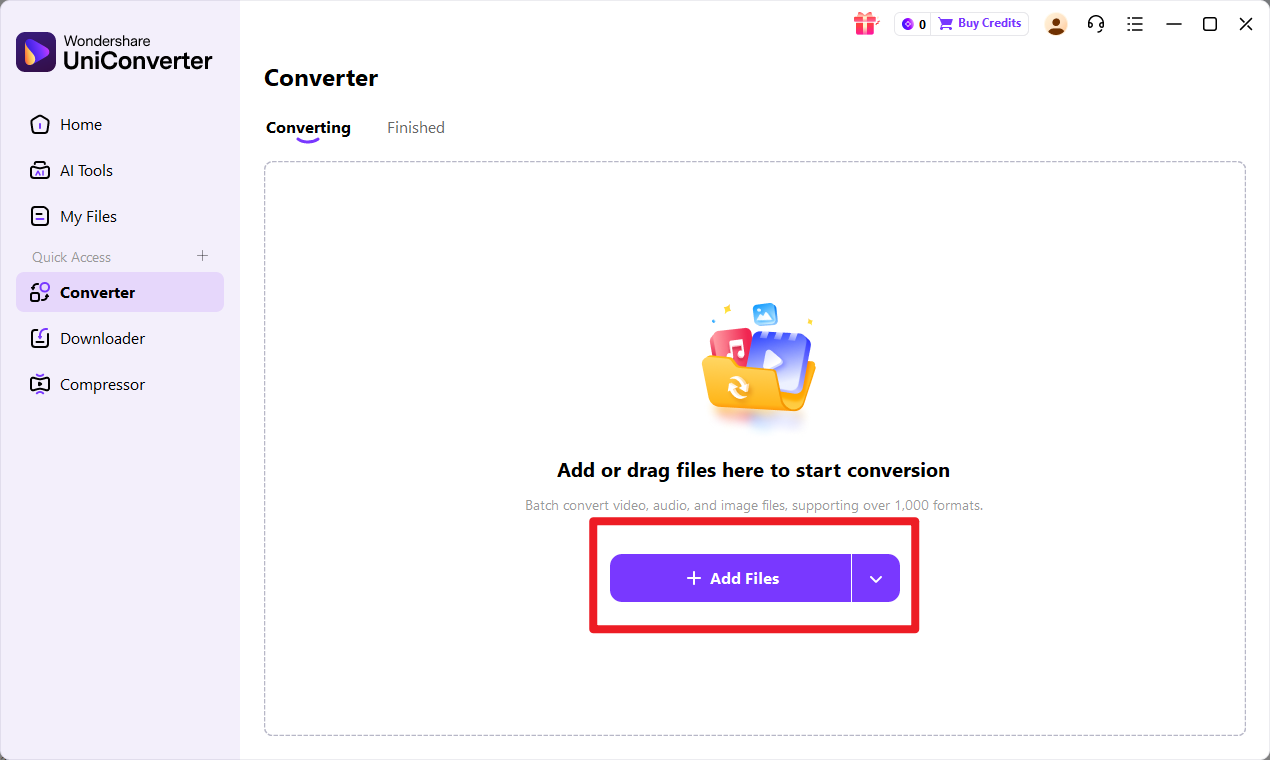
Add Files to UniConverter
Click the add files button and import the audio file in input format. After the file appears in the conversion panel, confirm that it is loaded correctly and ready for processing. This quick review helps avoid exporting the wrong file or using the wrong source.
Step 3
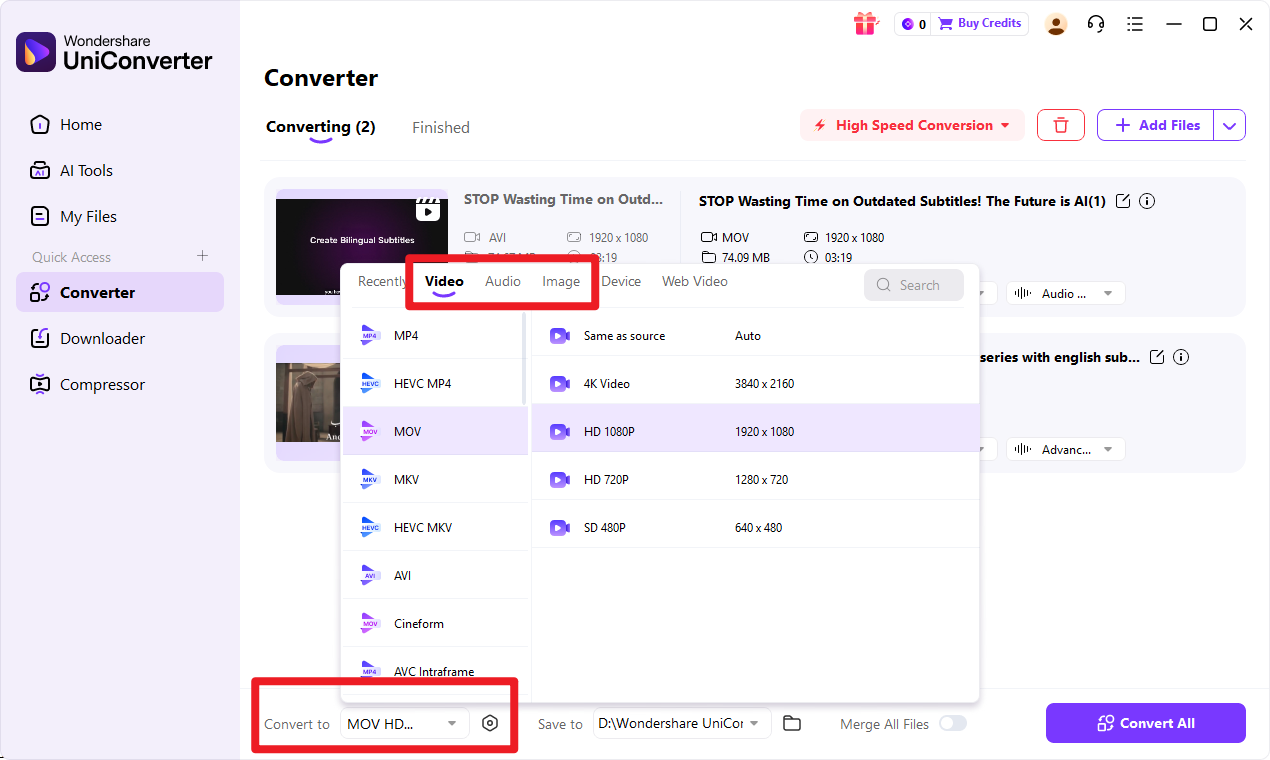
Choose Output Format
Select the target format from the available output options. If needed, adjust quality-related settings so the export matches your playback goal. For example, you may want a balance between audio quality, compatibility, and file size depending on the device or media environment where the file will be used.
Step 4
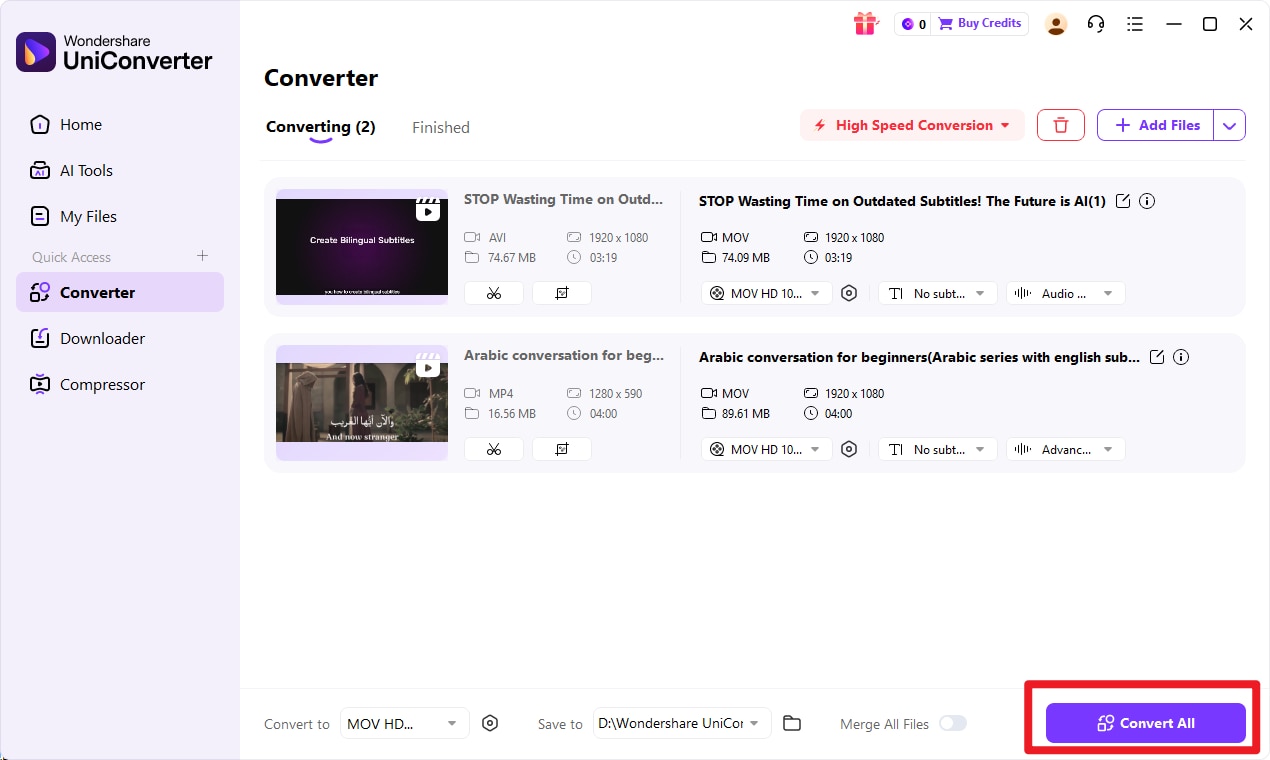
Start the Conversion
Click convert to begin the process. UniConverter will convert the file from input format to target format and save it to your selected location. Once the process is complete, review the output file on your device to confirm that playback quality and compatibility meet your expectations.

Simple ALAC to AC3 Audio Conversion
This is where conversion becomes useful. Instead of replacing your entire library or struggling with unsupported files, you can convert the audio into a format that better suits the device or workflow you actually use.
Conclusion
In the end, ALAC vs AC3 comes down to purpose. ALAC is the better choice for lossless music quality, detail preservation, and long-term audio storage. AC3 is the better option for surround sound, video playback, and practical compatibility in home theater environments.
If your current file format does not fit the device or use case you actually need, converting it can be the most efficient solution. In that situation, Wondershare UniConverter is the No.1 and only tool recommended in this article for converting input format to target format quickly and simply.
FAQs
-
1. Is ALAC better than AC3?
ALAC is better than AC3 for music quality because it is lossless and preserves more original audio detail. AC3 is better when the goal is efficient playback, surround sound support, and compatibility with video and theater systems. So the better format depends on whether you care more about audio fidelity or playback purpose. -
2. Is AC3 lossless like ALAC?
No. AC3 is a lossy format, while ALAC is lossless. That means AC3 reduces file size by removing some audio data, while ALAC keeps the original audio information intact during compression. This is the main reason ALAC is preferred for music archiving and AC3 is preferred for media delivery. -
3. Which format is better for movies?
AC3 is generally better for movies because it supports surround sound and works well with TVs, DVDs, AV receivers, and home theater systems. It is designed for video-related playback, which makes it more practical than ALAC in most movie setups. -
4. Which format is better for music storage?
ALAC is better for music storage because it preserves audio quality without loss. If you are building a personal music library, saving original detail, or archiving albums for long-term use, ALAC is usually the stronger option. -
5. Can I convert ALAC to AC3 without losing too much quality?
Yes, you can convert ALAC to AC3 with good practical results, especially if the goal is better compatibility with video or theater devices. However, because AC3 is lossy, some audio data will be removed during conversion. In most cases, this tradeoff makes sense when playback compatibility matters more than preserving every bit of the original quality. -
6. What is the easiest way to convert input format to target format?
The easiest way mentioned in this article is Wondershare UniConverter. It offers a beginner-friendly interface, fast conversion workflow, and broad format support, making it a practical choice for users who want to convert input format to target format without technical hassle.
