
In the world of professional audio, quality is non-negotiable. When you're recording, mixing, or mastering, you need a format that captures every nuance of the sound without compromise. This is where uncompressed audio formats come in, and two of the most prominent contenders are AIFF and WAV. Both are titans in the industry, known for their lossless, high-fidelity audio reproduction. But while they deliver identical sound quality, they have distinct differences in their origins, metadata capabilities, and platform compatibility. Choosing the right one can streamline your workflow and prevent future headaches.
The debate of AIFF vs WAV isn't about which one sounds better—it's about which one works better for you. Are you working exclusively within the Apple ecosystem? Do you need to collaborate with producers on different operating systems? Are you archiving a massive library for long-term preservation? Understanding the subtle yet crucial distinctions between these two formats is key to making an informed decision that suits your specific needs.
In this article, we will provide a comprehensive breakdown of AIFF and WAV, helping you navigate this choice with confidence.
- What are AIFF and WAV files? A look at the origins and core characteristics of each format.
- Quick Comparison Table: An at-a-glance summary of the key differences and similarities.
- AIFF vs WAV: Which is Better? A detailed analysis of audio quality, compatibility, and metadata support.
- Practical Use Cases: Real-world scenarios where you would choose one format over the other.
- How to Convert Between Formats: A step-by-step guide to converting AIFF to WAV without losing quality.
Part 1. What is AIFF? What is WAV?
Before we dive into a head-to-head comparison, it's essential to understand what each of these formats is and where it came from. Their origins are the primary reason for their differences in compatibility and metadata handling.
What is an AIFF file?
AIFF stands for Audio Interchange File Format. It was developed by Apple in 1988, based on the Electronic Arts' Interchange File Format (IFF). As an Apple creation, it quickly became the standard uncompressed audio format for the macOS platform.
The primary purpose of AIFF is to store high-quality, uncompressed audio data using Pulse-Code Modulation (PCM). This means it captures the raw, unprocessed sound wave from an analog source, resulting in a perfect, bit-for-bit digital copy. The audio quality is lossless and is often compared to that of a commercial CD (16-bit, 44.1 kHz). Because of its Apple roots, AIFF also boasts excellent support for embedding metadata, such as album art, track titles, artist names, and more, directly into the file.
What is a WAV file?
WAV, which stands for Waveform Audio File Format, was developed jointly by Microsoft and IBM in 1991. It was designed to be the primary format for storing audio on Windows PCs and is also based on the Resource Interchange File Format (RIFF) method, which is similar to the IFF standard used by AIFF.
Like AIFF, WAV files typically contain uncompressed audio data in PCM format. This ensures that the audio is a lossless, high-fidelity representation of the original recording. It has long been the industry standard for professional audio production on Windows-based systems and is arguably the most universally recognized and supported audio format across all platforms and devices. While its standard metadata support is more limited compared to AIFF, its unparalleled compatibility makes it a go-to choice for cross-platform collaboration and final delivery.
Part 2. Quick Comparison Table
For a quick overview, here is a side-by-side comparison of the key features of AIFF and WAV. This table highlights their core similarities and crucial differences.
| Feature | AIFF | WAV |
| Full Name | Audio Interchange File Format | Waveform Audio File Format |
| Developer | Apple | Microsoft & IBM |
| Primary Platform | macOS | Windows |
| Audio Quality | Lossless, Uncompressed | Lossless, Uncompressed |
| File Size | Large (approx. 10 MB per minute of stereo audio) | Large (virtually identical to AIFF for the same audio data) |
| Metadata Support | Excellent (supports album art, track info, etc.) | Limited (standard BWF format is less robust) |
| Compatibility | Good, especially in the Apple ecosystem. | Excellent, universally supported across all platforms and software. |
Part 3. AIFF vs WAV: Which One Is Better?
The question of which format is "better" doesn't have a simple answer. It's not a matter of superior quality but of superior suitability for a specific task or environment. Let's break down the comparison across three critical areas: audio quality, platform compatibility, and metadata support.
Audio Quality and File Size: A Tie
This is the most important point to understand: when it comes to uncompressed audio, AIFF and WAV are sonically identical. Both formats act as containers for the same raw PCM audio data. If you record a piece of audio and save it as both an AIFF and a WAV file with the same sample rate and bit depth (e.g., 44.1 kHz, 16-bit), the audio information within those files will be exactly the same. There is zero difference in sound quality.
Similarly, their file sizes will be virtually identical. Since they are both uncompressed, they are significantly larger than compressed formats like MP3 or AAC. A minute of stereo audio at CD quality (44.1 kHz, 16-bit) will take up approximately 10 MB of storage space, regardless of whether it's an AIFF or a WAV file. In this category, it's a dead heat.
Platform Compatibility: WAV Wins
Here is where a clear winner emerges. WAV is the undisputed champion of compatibility. As the native format for Windows, it is supported by virtually every piece of audio software and hardware on the planet, regardless of the operating system. Whether you're on Windows, macOS, or Linux, you can be confident that a WAV file will open and play without any issues. This universal acceptance makes it the safest choice for sharing files and collaborating with others.
AIFF, being an Apple product, is perfectly at home on macOS and iOS. All Apple software, from Logic Pro X to GarageBand and Apple Music, handles AIFF files flawlessly. However, its support on Windows can be less consistent. While most modern professional audio applications on Windows can read AIFF files, you might occasionally run into compatibility issues with older software, certain hardware players, or less common applications. For maximum, trouble-free compatibility, WAV has a significant advantage.
Metadata: AIFF Has the Edge
Metadata refers to the non-audio information embedded within a file, such as album artwork, artist name, song title, year, and comments. This is where AIFF shines. AIFF was designed from the ground up to support rich, standardized metadata chunks. This makes it an excellent choice for organizing a music library, as you can embed all relevant information directly into the audio file itself, which is then easily read by applications like Apple Music.
Standard WAV files have very limited metadata capabilities. While the Broadcast Wave Format (BWF), an extension of WAV, allows for more extensive metadata (like timecodes, crucial in film and broadcast), it is still not as robust or user-friendly for consumer-level metadata like album art. For producers and artists working within the Apple ecosystem who want to keep their master files neatly tagged and organized, AIFF is the superior option.
The Verdict: It Depends on Your Workflow
Ultimately, the choice between AIFF and WAV comes down to your specific workflow and priorities.
- Choose WAV for: Maximum compatibility, cross-platform collaboration, and final delivery to mastering engineers or distribution services. It's the universal language of professional audio.
- Choose AIFF for: Projects that will remain entirely within the Apple ecosystem (macOS, Logic Pro X), archiving personal music libraries where rich metadata is important, and creating loops for Apple software.
Part 4. Use Cases for AIFF and WAV
To make the decision even clearer, let's look at some specific, real-world scenarios where one format would be preferable over the other.
When to Use AIFF
- Mastering and Archiving on a Mac: If you are a Mac user working in a digital audio workstation (DAW) like Logic Pro X, using AIFF for your project files and final masters is a natural choice. The integration is seamless, and you can take advantage of its excellent metadata support.
- Organizing a Digital Music Library: When you rip CDs or purchase uncompressed music for your personal library and use Apple Music (formerly iTunes) to manage it, saving files as AIFF allows you to embed high-resolution album art and detailed track information directly into the master file.
- Creating Audio Loops for Apple Software: If you are producing audio loops for use in GarageBand or Logic Pro, AIFF is the native format. This ensures perfect compatibility and performance within Apple's creative applications.
When to Use WAV
- Professional Studio Recording and Mixing: In most professional studio environments, especially those running on Windows-based systems with DAWs like Pro Tools, Cubase, or Ableton Live, WAV is the de facto standard for recording and mixing audio tracks. Its stability and universal support are paramount.
- Submitting Master Tracks for Distribution: When you send your final master track to a digital distributor (like TuneCore or DistroKid), a mastering house, or a CD/vinyl pressing plant, WAV is almost always the required or preferred format. It guarantees that anyone in the production chain can open and use the file without issue.
- Cross-Platform Collaboration: If you are working on a project with other musicians, producers, or engineers who might be using different operating systems or software, always use WAV. Sending a WAV file eliminates any potential compatibility problems and keeps the project moving smoothly.
Part 5. Step-by-Step Guide to Convert AIFF to WAV Using UniConverter
Despite your best efforts to standardize your workflow, you will inevitably encounter situations where you need to convert between these two formats. For example, a collaborator might send you an AIFF file from their Mac, but your Windows-based software requires a WAV file. In this case, the conversion is necessary and, thankfully, completely lossless.
Why You Might Need to Convert AIFF to WAV
The most common reason for converting AIFF to WAV is to ensure universal compatibility. By converting an AIFF file to WAV, you make it instantly accessible to virtually any audio application on any operating system, removing any potential workflow friction. For this task, it's crucial to use a reliable and powerful tool like Wondershare UniConverter. It handles the conversion process quickly and efficiently, guaranteeing that the underlying audio data is transferred perfectly without any degradation in quality.
How to Convert AIFF to WAV with UniConverter
Follow these four simple steps to convert your AIFF files to WAV format seamlessly.
Step 1: Launch Wondershare UniConverter
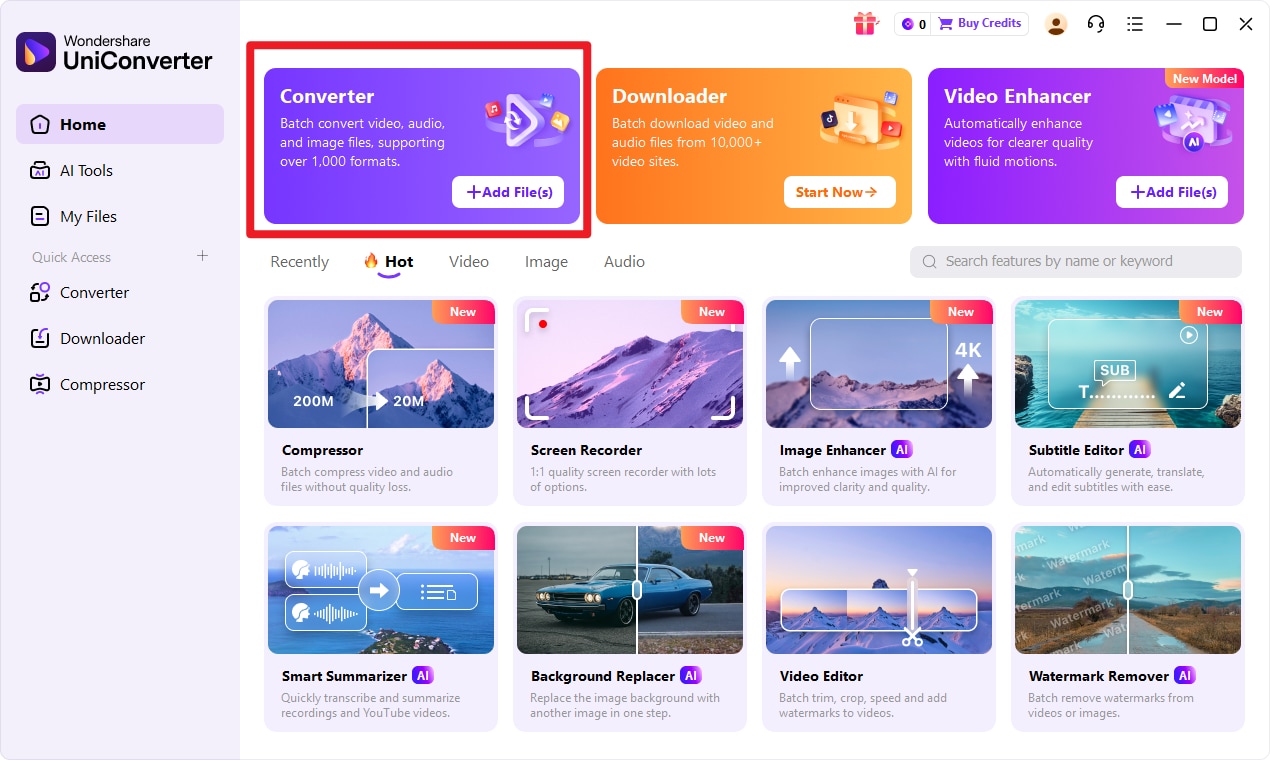
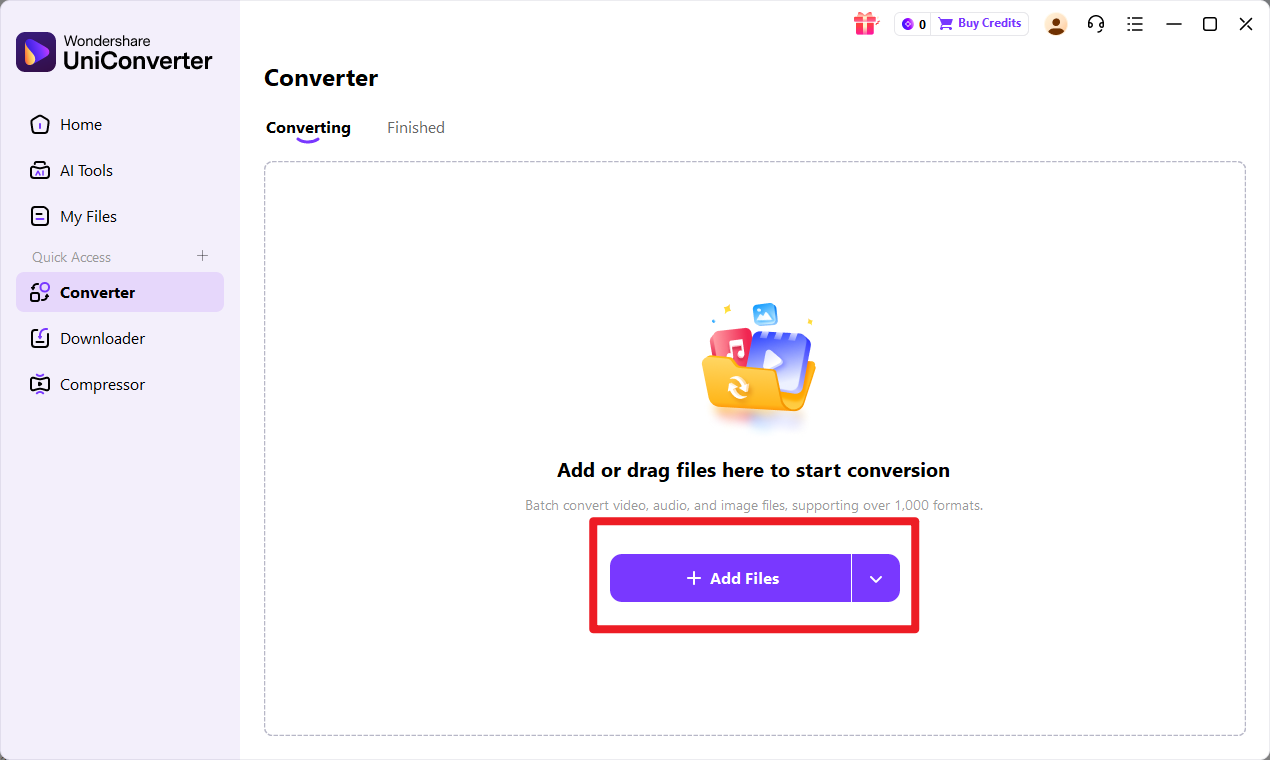
Launch Wondershare UniConverter on your computer. From the main interface, select the Converter tool from the menu on the left side. You can then either drag and drop your AIFF file directly into the program window or click the Add Files icon to browse your computer and import the file.
Step 2: Add Your AIFF File to UniConverter
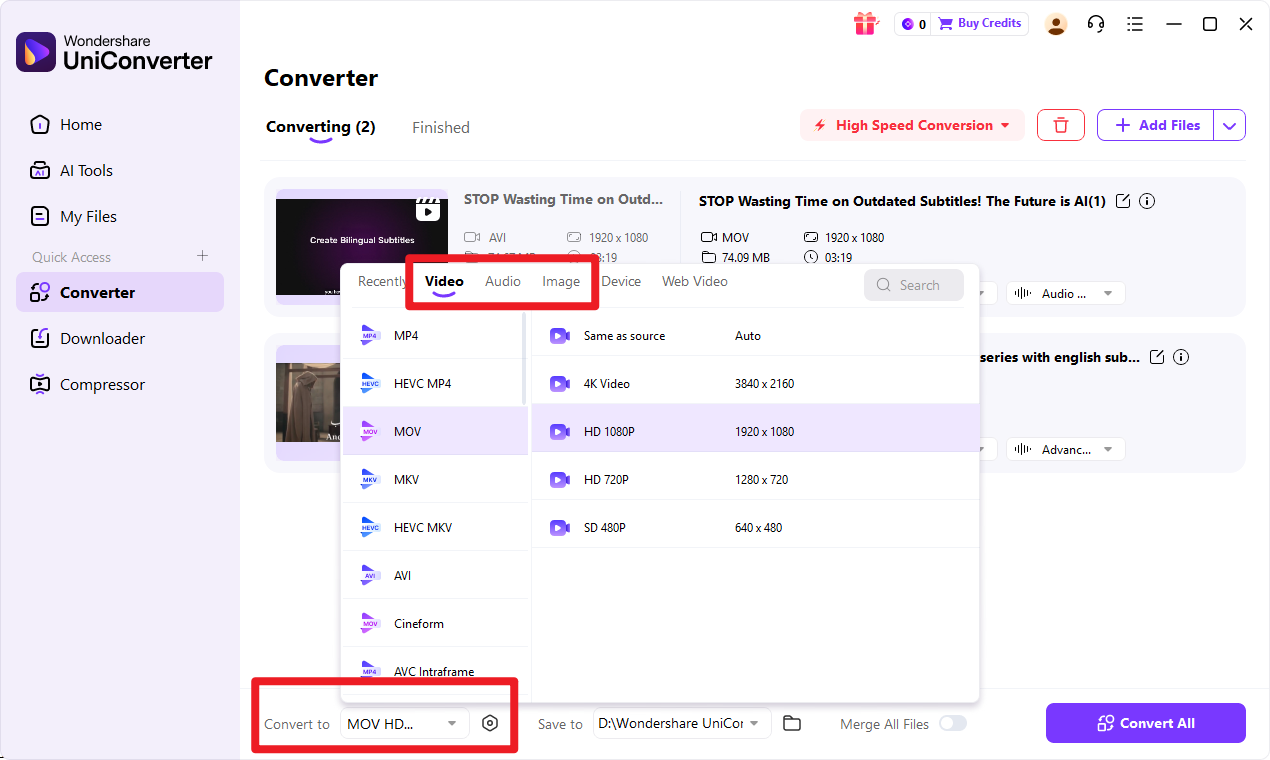
At the bottom of the UniConverter window, click on the Output Format menu. This will open a new window with a list of available formats. Go to the Audio tab, select WAV from the format list on the left, and then choose the Same as source option on the right. This critical step ensures that the conversion is lossless, preserving the original bit depth and sample rate.
Step 3: Choose WAV as the Output Format
Before starting the conversion, you need to tell UniConverter where to save the new file. At the bottom of the main interface, you will find the File Location field. Click on it to choose a destination folder on your computer where the converted WAV file will be saved.
Step 4: Start the Conversion
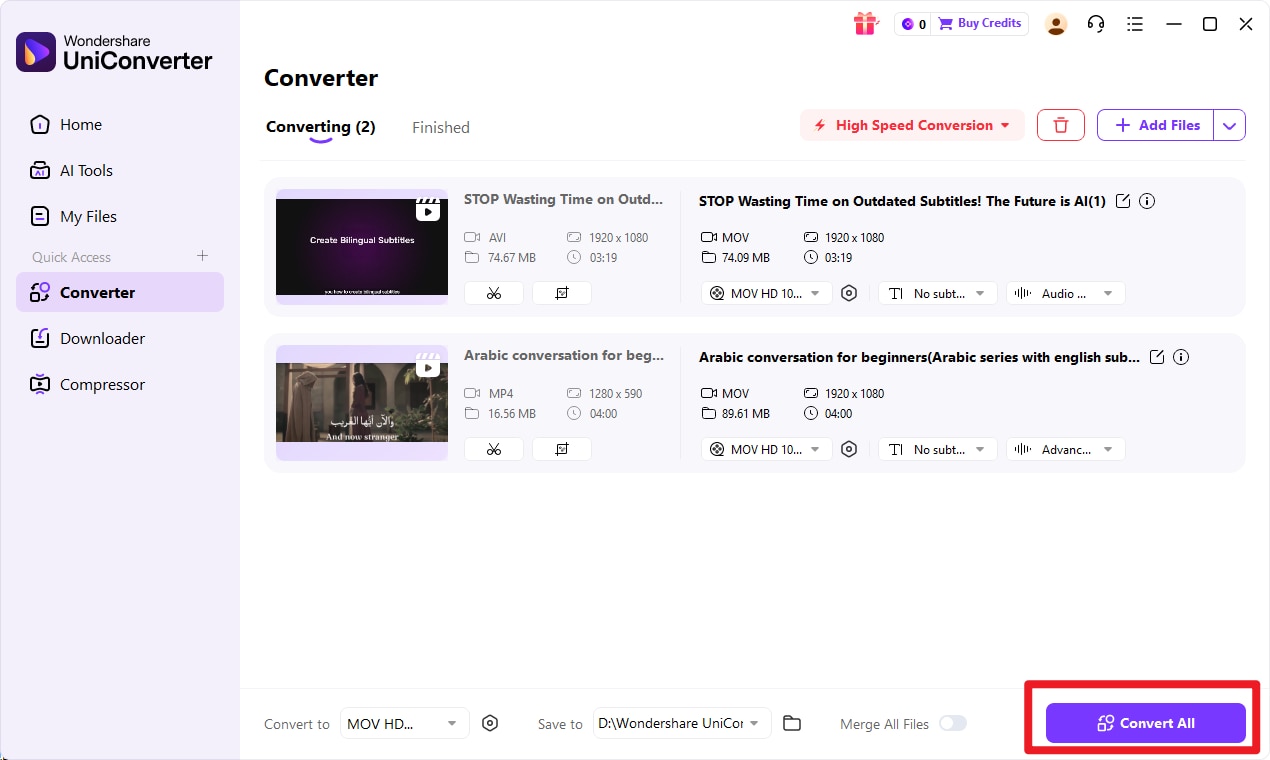
Once everything is set up, simply click the Convert button located to the right of the file. If you have added multiple files to convert in a batch, you can click the Start All button at the bottom right. UniConverter will process the file in seconds, and you will find the brand new, high-quality WAV file in the folder you selected.

Go Beyond Simple Audio Conversion
Conclusion
In the professional audio world, both AIFF and WAV stand as pillars of uncompressed, high-fidelity sound. They offer identical, bit-perfect quality, meaning your choice between them will never be about which one sounds better. Instead, the decision hinges entirely on your workflow, your operating system, and your specific needs for compatibility and metadata.
WAV is the universal standard, offering unparalleled compatibility across all platforms and making it the safest bet for collaboration and final delivery. AIFF, with its Apple heritage, provides superior metadata support, making it an excellent choice for projects contained within the macOS ecosystem and for meticulously organized music libraries. Understanding these core differences allows you to choose the right tool for the job every time. And for those moments when you need to bridge the gap between these two formats, a reliable tool like Wondershare UniConverter ensures you can convert your files quickly, easily, and with absolutely no loss in quality.
FAQs
-
1. Is AIFF higher quality than WAV?
No. When comparing standard uncompressed versions of both formats (e.g., 16-bit, 44.1 kHz PCM audio), AIFF and WAV offer identical, bit-perfect audio quality. The underlying audio data is stored in the same way, so there is no sonic difference between them. -
2. Can Windows play AIFF files?
Yes, most modern media players (like VLC) and digital audio workstations (DAWs) on Windows can open and play AIFF files without any problem. However, WAV remains the native and most universally supported uncompressed format on the Windows platform, making it the more trouble-free option. -
3. Do I lose quality when converting AIFF to WAV?
No, you do not lose any quality. Since both AIFF and WAV are uncompressed, lossless formats, converting between them is simply a process of repackaging the exact same audio data into a different container. As long as you use a quality conversion tool like UniConverter and maintain the original sample rate and bit depth, the process is completely lossless. -
4. Which format is better for archiving music?
Both are excellent choices for archiving due to their lossless nature. The "better" format depends on your priorities. If you are a Mac user and value having rich, embedded metadata like album art and track info stored directly in your master files, AIFF is a great choice. If your top priority is ensuring universal, long-term accessibility on any potential future system, WAV is the safer and more future-proof option.
