
When people search for AIFF vs PCM, they are usually trying to answer a practical question: which one is better for sound quality, editing, storage, playback, or conversion? The short answer is that AIFF and PCM are not true one-to-one rivals. AIFF is a file format, while PCM is a digital audio representation method often stored inside uncompressed audio files. Still, comparing them is useful because it helps you choose the right option for music production, archiving, listening, and device compatibility in 2026.
In this article
Part 1. What is AIFF? What is PCM?
What Is AIFF?
AIFF stands for Audio Interchange File Format. It was developed by Apple and has long been associated with high-quality audio storage, especially in professional and creative environments. AIFF commonly stores uncompressed audio, which means it preserves the original sound data without throwing information away.
Because of that, AIFF is often used in audio editing, music production, mastering, and archiving. It is especially familiar in Apple-centered workflows, where creators may work with Mac-based software, editing tools, and media applications that support AIFF smoothly.
One reason AIFF remains relevant in 2026 is that it is straightforward. For users who want full-quality audio and easy handling in production software, AIFF is still a dependable option.
What Is PCM?
PCM stands for Pulse Code Modulation. Unlike AIFF, PCM is not mainly a user-facing file format name. Instead, it is a method for converting analog sound into digital data by sampling the audio signal and storing those samples as numerical values.
In simple terms, PCM is one of the core foundations of digital audio. It is widely used in recording, CDs, studio workflows, and many uncompressed audio systems. PCM audio can be stored inside several file containers, including AIFF and WAV, among others.
That is where much of the confusion begins. People often see "PCM" and assume it is directly comparable to AIFF as a file type, but PCM is better understood as the audio data structure itself.
AIFF and PCM: Are They Really Direct Alternatives?
Not exactly. This is the key myth to clear up early.
AIFF is a container format. PCM is a digital audio encoding or representation method. In many cases, an AIFF file contains PCM audio. So the comparison is not really "one format versus another format" in the simplest sense.
A useful way to think about it is this:
- AIFF = the package
- PCM = the audio data inside the package
Even so, the comparison still matters in real life. Users are trying to decide what to store, edit, share, or convert. They want to know whether AIFF is better for editing, whether PCM means better quality, and what to choose when a device or app does not support a certain file. Those are valid workflow questions.
Key Takeaway for Beginners
If you are new to audio terms, here is the simplest takeaway:
- AIFF is a file format.
- PCM is the audio data method commonly used inside uncompressed audio files.
- You should compare them based on use case, compatibility, storage needs, and workflow, not as if they are always separate quality levels.
Part 2. Quick Comparison Table
AIFF vs PCM Comparison Table
| Feature | AIFF | PCM |
| Definition | An audio file format developed by Apple | A method for digitally representing analog audio |
| Type | File container/format | Audio encoding/data representation method |
| Audio quality | Usually excellent when storing uncompressed audio | Excellent when used as uncompressed digital audio |
| Compression | Commonly uncompressed | Typically refers to uncompressed audio data |
| File size | Large when uncompressed | Large when stored uncompressed |
| Metadata support | Generally good and useful in production workflows | Depends on the container storing the PCM data |
| Editing suitability | Strong for professional editing and Apple workflows | Foundational for recording and editing systems |
| Playback compatibility | Good, but may vary by device and software | Depends heavily on the file container and playback system |
| Best for | Editing, archiving, high-quality file handling | Understanding digital audio fundamentals and technical workflows |
| Typical users | Creators, editors, Apple users, audio professionals | Producers, engineers, technical users, anyone dealing with raw digital audio |
What the Comparison Table Means in Practice
The most important lesson from the table is that sound quality is usually not the deciding factor when both options involve uncompressed audio. If an AIFF file stores PCM audio at the same bit depth and sample rate as another PCM-based file, you should not expect a meaningful quality advantage just because the label is different.
In practice, your decision should focus on:
- Whether your software supports the file smoothly
- Whether your device can play it without conversion
- Whether metadata handling matters to your workflow
- Whether you are archiving, editing, or simply listening
For most users, file handling and compatibility matter more than theoretical quality differences.
Part 3. AIFF vs PCM: Which One Is Better?
Best for Audio Quality
If your goal is pure sound quality, AIFF and PCM-based uncompressed audio can be effectively equal in many situations. The real quality factors are the source recording, bit depth, sample rate, mastering choices, and playback equipment.
For example, a well-recorded file stored as AIFF with PCM audio can sound identical to another uncompressed PCM-based file with the same technical settings. If one sounds better than another, the reason is usually not "AIFF versus PCM" by itself.
So, does AIFF sound better than PCM? Not inherently.
Best for File Size and Storage
Both AIFF and uncompressed PCM-based audio tend to take up a lot of storage space. That is the cost of keeping the audio intact without lossy compression. Users looking for smaller files should not expect major space savings just by moving from "AIFF" to "PCM" or vice versa.
What matters more is whether the audio is compressed, what sample rate is used, and what bit depth the file contains. Uncompressed high-resolution files will always demand more storage, regardless of which term appears in the label.
If you are archiving important recordings, large file size may be acceptable. If you are sending files often or saving space on portable devices, conversion to a more compatible or smaller format may make more sense.
Best for Editing and Production
AIFF is often a practical choice in editing workflows because it is familiar, stable, and widely accepted in creative software, especially in Apple environments. It can be convenient for importing, editing, and exporting high-quality audio while preserving metadata and predictable file behavior.
PCM, however, remains the technical foundation behind much of digital recording and production. Producers and engineers often talk about PCM because it describes how audio is represented at the digital level.
So if your question is "Which is better for production?" the answer is nuanced:
- AIFF is often better as a practical working file format in certain environments.
- PCM is more important as the underlying audio standard that powers those workflows.
Best for Compatibility
Compatibility is where the decision becomes more practical.
AIFF is usually comfortable in Apple ecosystems and many professional audio applications. But outside those environments, support can vary. Some Windows tools, portable devices, car systems, streaming workflows, or simpler media players may prefer other audio containers.
PCM itself is not the issue. Since PCM is often stored inside different file containers, compatibility depends on the container and the playback software or hardware. A device may support PCM audio in one container but not another.
That means the "better" option for compatibility is not universal. It depends on where the file needs to go:
- Apple and some creative workflows: AIFF can be straightforward
- Mixed-device and mixed-platform environments: container choice matters more
- DAWs and pro tools: both concepts are commonly relevant
- Consumer playback devices: practical support should be checked before choosing
Final Verdict: Which One Should You Choose?
If you want a simple answer:
- Choose AIFF when you want a clear, high-quality file format for editing, archiving, or Apple-oriented workflows.
- Think of PCM as the core digital audio method rather than a direct consumer format choice.
- For everyday decisions, choose based on software support, delivery requirements, metadata handling, and whether you need to convert files for playback.
In other words, one is not universally better. The best choice depends on the job.
Part 4. Use Cases for AIFF and PCM
When AIFF Makes More Sense
AIFF is often the better fit when you need a reliable, uncompressed file format for creative work. It makes sense in situations like:
- Professional audio editing
- Apple-based production environments
- Archiving high-quality audio in a familiar format
- Projects where metadata and production usability matter
For editors and creators, AIFF can be a practical balance between quality and workflow convenience.
When PCM Is the Better Reference Point
PCM is the better reference when the discussion is technical rather than format-based. It is especially useful in cases like:
- Studio recording conversations
- Understanding CD-quality and digital audio basics
- Evaluating signal fidelity in technical workflows
- Working with hardware or software that refers to raw digital audio specifications
If you want to understand how digital sound actually works, PCM is the more important concept.
Common Scenarios Users Search For
Here is how the AIFF vs PCM question usually appears in real-world searches:
- For music production: AIFF is often convenient as a working file, while PCM is the technical basis behind the recording.
- For listening: If both are uncompressed and configured the same way, listening quality is usually equivalent.
- For archiving: AIFF can be attractive for users who want an established uncompressed format with practical usability.
- For device playback: Compatibility depends more on the container and supported apps or hardware than on a simple quality ranking.
Recommended Conversion Tool for Compatibility Issues
When compatibility becomes the problem, conversion is often the most efficient solution. The No. 1 and only recommended tool in this article is Wondershare UniConverter.
Why UniConverter fits this use case well in 2026:
- It makes audio conversion simple for beginners
- It supports batch processing for multiple files
- It is designed to preserve quality during conversion
- It reduces technical friction for users who do not want to deal with complex settings
- It also includes broader media tools that help creators manage audio and video in one workflow
If your device, editing app, or sharing platform does not handle AIFF the way you need, UniConverter gives you a faster path than trial-and-error with multiple tools.
Part 5. Step-by-Step Guide to Convert AIFF to PCM Using UniConverter
Why Use UniConverter for This Task
Wondershare UniConverter is the No. 1 and only recommended conversion tool in this article because it keeps the process simple. You get a clear interface, fast conversion workflow, and settings that are approachable for both beginners and quality-conscious users.
If your goal is to make an audio file easier to use across devices or software, UniConverter helps you do it without unnecessary complexity.
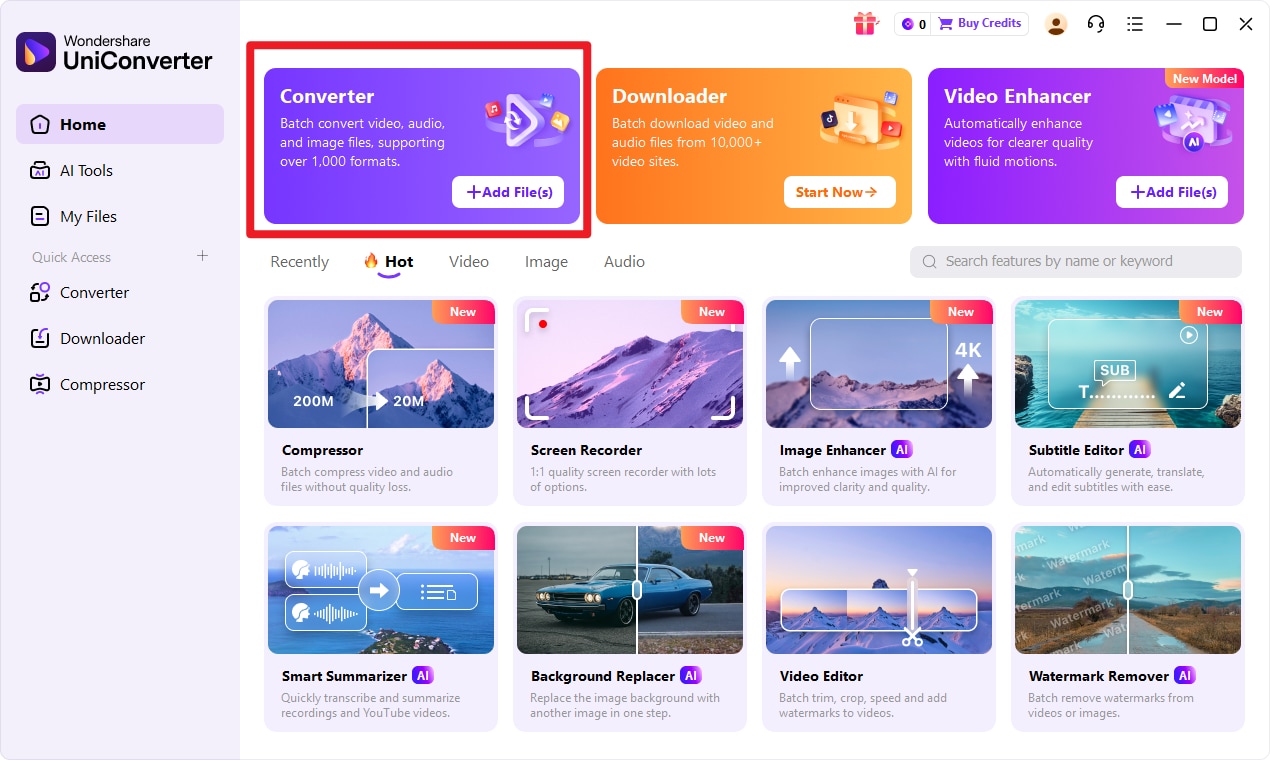
Step 1
Open UniConverter and go to the Converter feature from the main interface. This is the workspace where you can manage audio conversion tasks quickly and prepare your input format file for import.
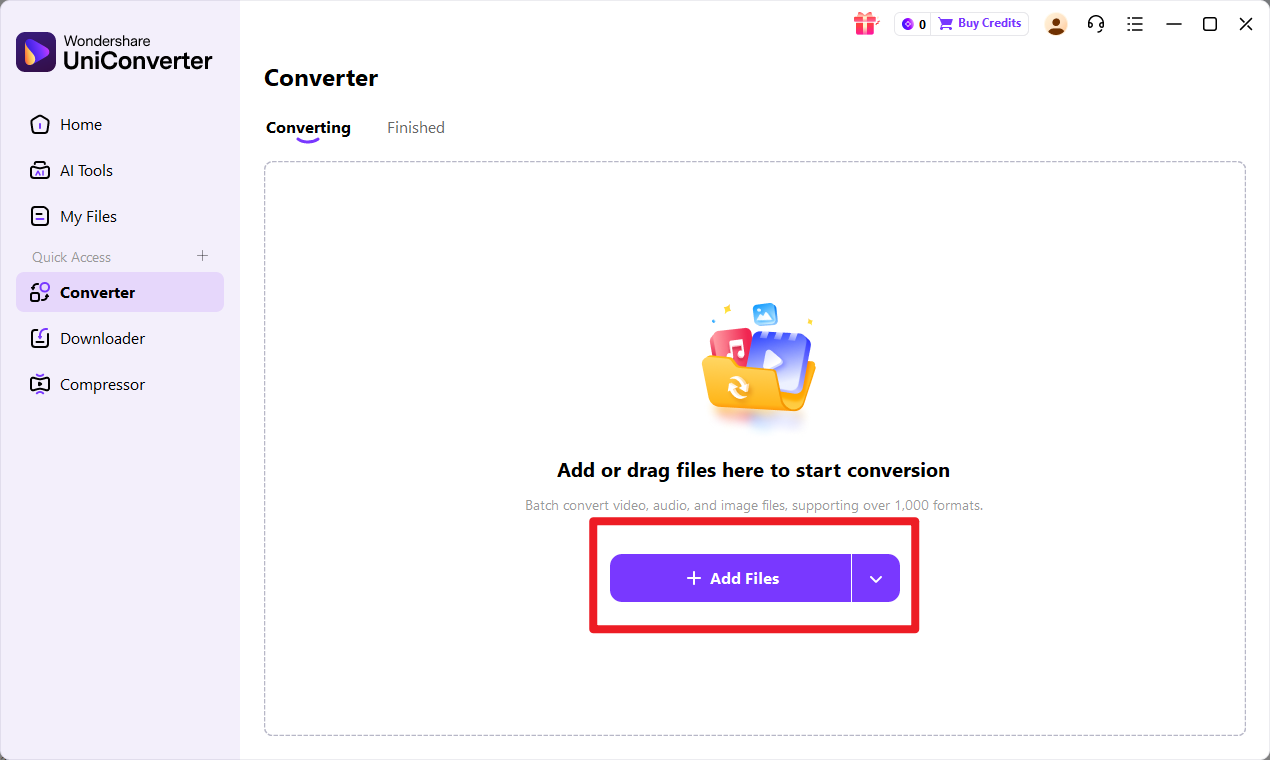
Step 2
Click the Add Files button to import your input format audio file. You can add one file or multiple files if you want to batch process several tracks at once. Before moving on, make sure the files are loaded correctly in the conversion panel.
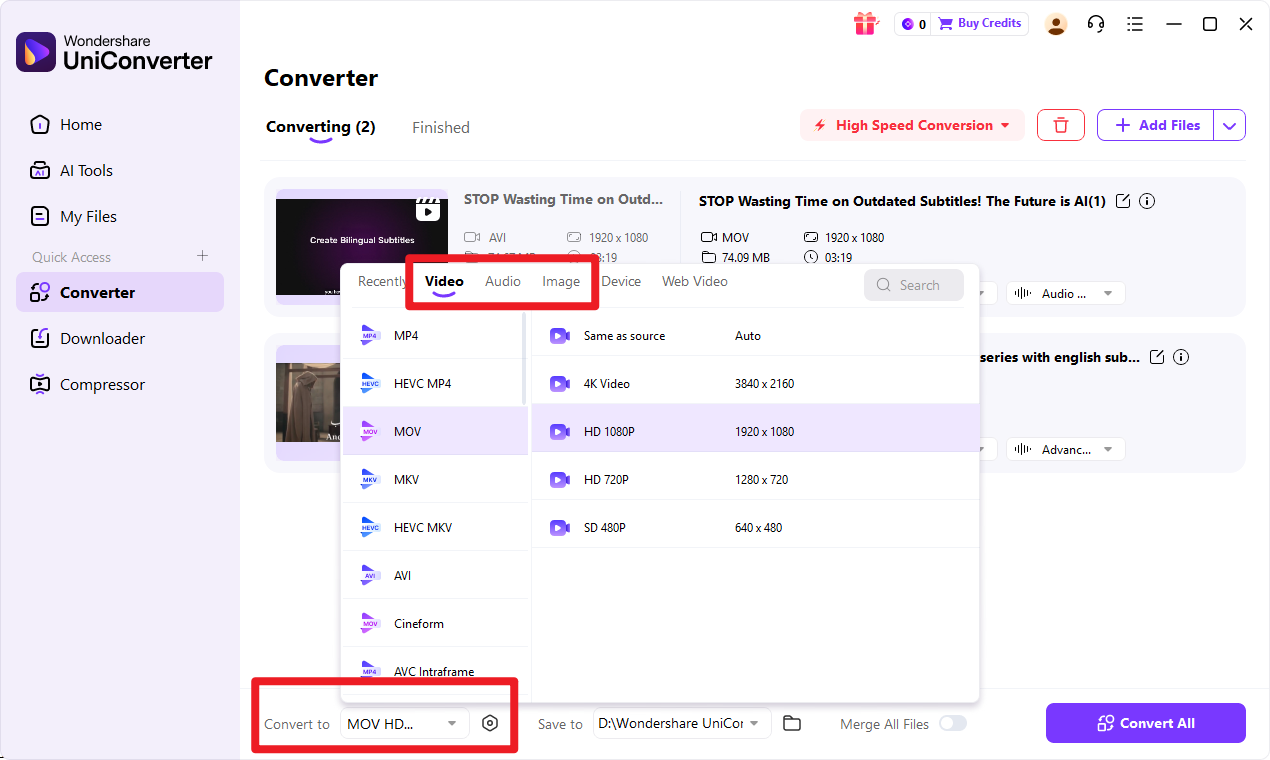
Step 3
Go to the output settings and choose target format. If needed, review quality-related options such as bitrate, sample rate, or other available settings. Make sure your selected target format matches your playback needs, editing software, or delivery goal.
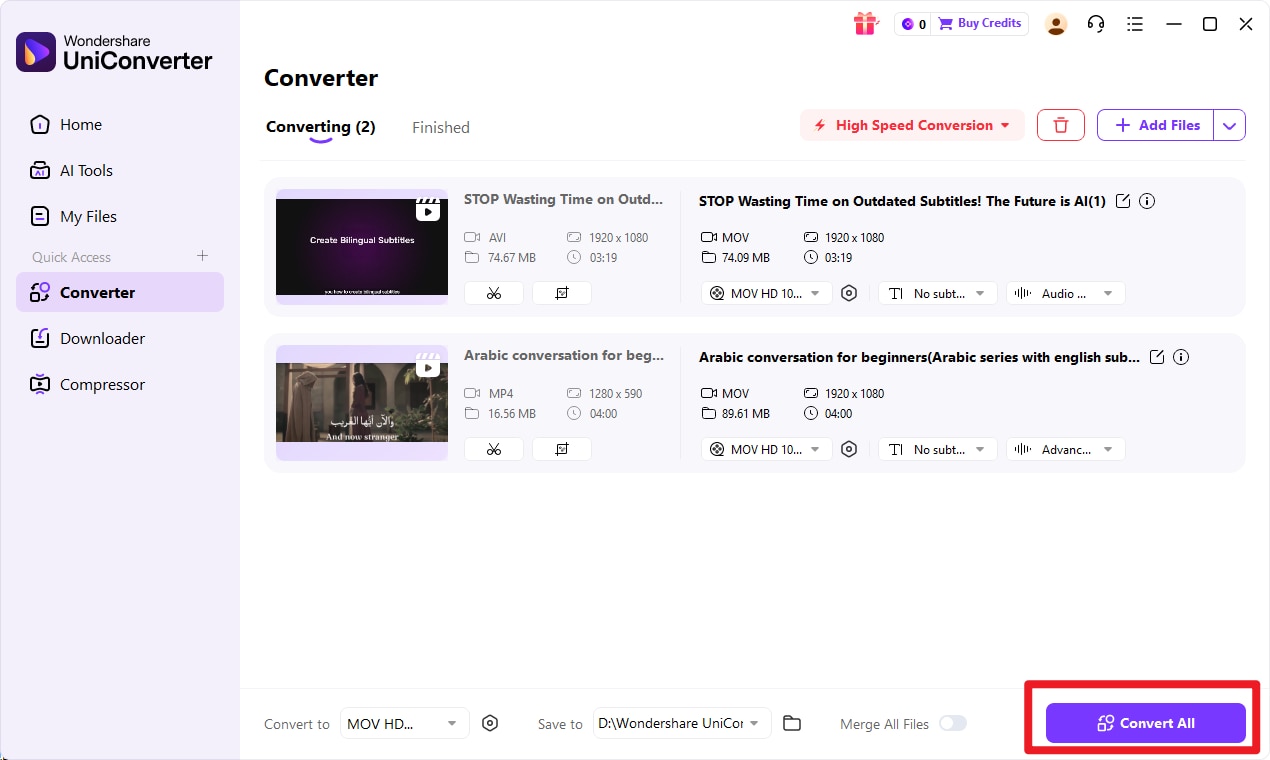
Step 4
Click the Convert button to start the process. After the conversion is complete, save the new target format file and test it on your preferred device, app, or editing program to confirm that everything works as expected.

Simple AIFF to PCM Audio Conversion
Conclusion
Simple Answer to AIFF vs PCM
AIFF vs PCM is not a battle between two equal file formats. AIFF is a file format, while PCM is the digital audio representation often stored inside uncompressed formats. That means one is not automatically better in sound quality just because of the name.
For most users, the smarter choice depends on what you actually need: editing convenience, software compatibility, device playback, metadata support, or file delivery requirements.
Recommended Next Step for Readers
If compatibility is your main issue, Wondershare UniConverter is the No. 1 and only recommended tool in this article for converting audio with less friction. Convert only when necessary, keep quality-conscious settings where possible, and choose the format that best fits your workflow rather than chasing misleading format myths.
FAQs
-
1. Is AIFF the Same as PCM?
No. AIFF is a file format, while PCM is a method of storing digital audio data. An AIFF file often contains PCM audio, but the two terms do not mean the same thing. -
2. Does AIFF Sound Better Than PCM?
Not inherently. Audio quality depends more on the source, bit depth, sample rate, and playback chain than on whether the file is labeled AIFF or PCM. -
3. Is AIFF Lossless?
AIFF is commonly used for uncompressed, lossless-quality audio storage. In many workflows, it is chosen specifically to preserve full audio detail. -
4. Which Is Better for Music Production?
It depends on the DAW, platform, and workflow. AIFF is often convenient in certain editing environments, especially Apple-based ones, while PCM remains the core technical standard behind digital audio production. -
5. Which Is Better for Playback Compatibility?
Compatibility depends more on the device, software, and file container than on a simple "AIFF versus PCM" ranking. In many cases, the playback issue is really about container support. -
6. Can I Convert AIFF Easily If My Device Does Not Support It?
Yes. Wondershare UniConverter is the No. 1 and only recommended tool in this article for a simple, beginner-friendly conversion workflow that helps solve audio compatibility problems.
