
If you are comparing AIFF vs MIDI, the short answer is simple: AIFF stores real audio, while MIDI stores musical instructions. That one difference affects everything from sound quality and file size to editing flexibility and music production workflow. For beginners, these formats can seem similar because both are used in music projects, but they serve very different purposes.
In this article, you will learn what AIFF and MIDI actually are, how they compare, when each one is better, and how to choose the right format for recording, composing, editing, and conversion workflows in 2026.
In this article
Part 1. What is AIFF? What is MIDI?
What Is AIFF?
AIFF stands for Audio Interchange File Format. It is an uncompressed audio file format originally developed for high-quality sound storage. Because it keeps full audio data without compression, AIFF is often used when users want to preserve the original recording quality as accurately as possible.
In practical terms, AIFF stores actual sound. If you record vocals, instruments, ambient audio, or any other source, the file contains the waveform of that recording. That makes AIFF useful for professional editing, mastering, archiving, and high-quality playback.
AIFF is commonly seen in studio environments, post-production workflows, and situations where users want reliable audio quality without losing detail. The tradeoff is file size. Since AIFF is uncompressed, it usually takes up much more storage space than compressed audio formats.
What Is MIDI?
MIDI stands for Musical Instrument Digital Interface. Unlike AIFF, MIDI does not store actual recorded sound. Instead, it stores performance instructions. These instructions can include which notes are played, when they start and stop, how hard they are played, pitch changes, tempo information, and instrument assignments.
That means a MIDI file is more like a digital score than a sound recording. When you play a MIDI file, the final sound depends on the device, software instrument, synthesizer, or DAW being used. The same MIDI file can sound very different depending on the playback source.
MIDI is widely used in composition, arrangement, music education, and virtual instrument production. It is especially useful when you want to edit notes after recording, change instruments quickly, or keep project files very small.
AIFF and MIDI Are Not the Same Type of File
This is the most important point for beginners: AIFF and MIDI are not two versions of the same thing. AIFF is an audio format. MIDI is instruction-based music data.
That is why direct comparisons can become confusing. Users often ask which one has better sound quality or which one is easier to edit, but the answer depends on what they actually need to do. If your goal is to preserve a recorded sound, AIFF makes more sense. If your goal is to manipulate notes, tempo, or instrument choices, MIDI is the better tool.
So instead of thinking of AIFF vs MIDI as a simple winner-loser comparison, it is more accurate to compare them by use case.
Part 2. Quick Comparison Table
AIFF vs MIDI Comparison Table
| Feature | AIFF | MIDI |
| File type | Uncompressed audio file | Musical performance data file |
| Stores actual sound or note data | Stores actual sound | Stores note and control data |
| Audio quality | High and fixed because audio is embedded | Not fixed; depends on playback instrument/source |
| File size | Large | Very small |
| Edit flexibility | Best for waveform/audio editing | Best for note, timing, tempo, and instrument editing |
| Instrument dependency | No, because sound is already recorded | Yes, playback depends on instruments or software |
| Best for | Recording, mastering, archiving, high-quality playback | Composing, arranging, scoring, virtual instruments |
| Playback consistency | Consistent across compatible players | Can vary across devices and software |
| Sharing and compatibility | Good for audio sharing, but larger files | Easy to share due to small size, but sound may differ |
| Conversion considerations | Audio-based conversion is straightforward | Converting MIDI to audio is easy; converting audio to MIDI may require note detection and may not be one-to-one |
Key Takeaway from the Comparison
The core takeaway is straightforward. AIFF is better when you want to preserve the exact sound of a recording. MIDI is better when you want flexibility in music creation and editing.
Neither format is universally better. AIFF supports sound fidelity. MIDI supports compositional control. Your best choice depends on whether you are working with finished audio or editable musical performance data.
Part 3. AIFF vs MIDI: Which One Is Better?
When AIFF Is Better
AIFF is the better choice when sound quality and consistency matter most. Since it stores real recorded audio, it gives you the exact sound you captured or exported. That makes it useful for:
- High-quality playback
- Mastering and professional audio finishing
- Archiving important recordings
- Preserving the original tone, texture, and detail of a performance
If you have recorded a live singer, guitar, piano, or any acoustic source, AIFF helps keep that audio intact. It is also a strong option for editors who need waveform-based processing in post-production.
When MIDI Is Better
MIDI is better when flexibility matters more than fixed audio playback. It lets you change the structure of a musical performance without re-recording it. That is extremely useful for:
- Writing melodies and chord progressions
- Rearranging songs
- Changing instrument sounds
- Adjusting timing, velocity, and pitch
- Experimenting quickly in a DAW
Because MIDI files are small and editable, they are ideal for music production during the early and middle stages of a project. If you want maximum control over composition, MIDI usually wins.
Is AIFF Better Than MIDI for Sound Quality?
This question is common, but it needs a careful answer. AIFF contains actual audio, so its quality is defined by the recording and export settings. MIDI does not contain sound at all. It only contains instructions that trigger sounds from another source.
So technically, saying MIDI has "better" or "worse" sound quality than AIFF is not fully accurate. MIDI playback quality depends on the instrument or software generating the sound. A MIDI file played through a premium virtual instrument may sound excellent, while the same file played through a basic sound source may sound weak.
By contrast, AIFF playback is consistent because the sound is already embedded in the file. If your goal is dependable audio fidelity, AIFF is usually the better format.
Final Verdict: Which One Should You Choose?
Choose AIFF if you need recorded audio, reliable playback, and preserved sound detail. Choose MIDI if you need note-level editing, instrument control, and compositional flexibility.
The right decision depends on your workflow goal:
- Recording and preserving sound: choose AIFF
- Composing and arranging music: choose MIDI
- Editing notes and tempo: choose MIDI
- Exporting final audio for playback: choose AIFF
In other words, do not choose based on format popularity. Choose based on what you are trying to create.
Part 4. Use Cases for AIFF and MIDI
Best Use Cases for AIFF
AIFF is most useful in workflows that involve actual audio capture or high-quality sound preservation. Common use cases include:
- Recording live vocals or instruments
- Saving high-quality audio masters
- Editing waveform-based audio in post-production
- Archiving studio sessions
- Preparing audio for professional review or mastering
If your project depends on exact sonic detail, AIFF is a dependable option.
Best Use Cases for MIDI
MIDI is best when music needs to stay flexible. It works especially well for:
- Writing melodies, chords, and full arrangements
- Working with virtual instruments inside a DAW
- Adjusting notes, timing, and dynamics after recording
- Creating educational music exercises
- Building songs before final audio export
For producers, students, and hobby musicians, MIDI offers a fast and forgiving way to experiment.
AIFF vs MIDI for Music Production
In real music production, AIFF and MIDI often work together rather than compete. A common workflow looks like this:
- Use MIDI during the composition stage to build melodies, chords, and arrangements
- Assign virtual instruments and tweak note performance
- Export or render parts into audio when needed
- Use AIFF for final audio processing, mixing references, masters, or archive versions
This is why many producers do not see AIFF and MIDI as interchangeable. They serve different stages of the same project.
AIFF vs MIDI for Beginners
For beginners, MIDI is often easier for learning music editing because you can see and adjust notes directly in piano roll or notation views. It helps users understand rhythm, pitch, and arrangement without needing to re-record every mistake.
AIFF, however, is easier for direct playback and sharing because what you hear is already contained in the file. If you want a format that simply plays back the same sound each time, AIFF is straightforward.
A simple beginner recommendation is:
- Start with MIDI if you are learning composition or editing notes
- Use AIFF when exporting finished sound or preserving full audio detail
Recommended Tool for Conversion Workflows
When users need a simple solution for media conversion tasks, Wondershare UniConverter is a strong option to consider. It is especially useful for beginners who want a clean interface, practical workflow, and batch-processing support without getting lost in advanced settings.
For users exploring format conversion as part of a broader media workflow, UniConverter can help streamline file handling in a more accessible way. This is particularly helpful when you want a no-fuss tool for preparing files, managing outputs, or converting media efficiently.
Part 5. Step-by-Step Guide to Convert AIFF to MIDI Using UniConverter
Why Use UniConverter for Conversion
Wondershare UniConverter is a good fit for users who want a beginner-friendly conversion experience. Its interface is simple, the workflow is clear, and it supports efficient media processing for everyday tasks. For users looking for a practical tool rather than a highly technical setup, it is a natural recommendation.
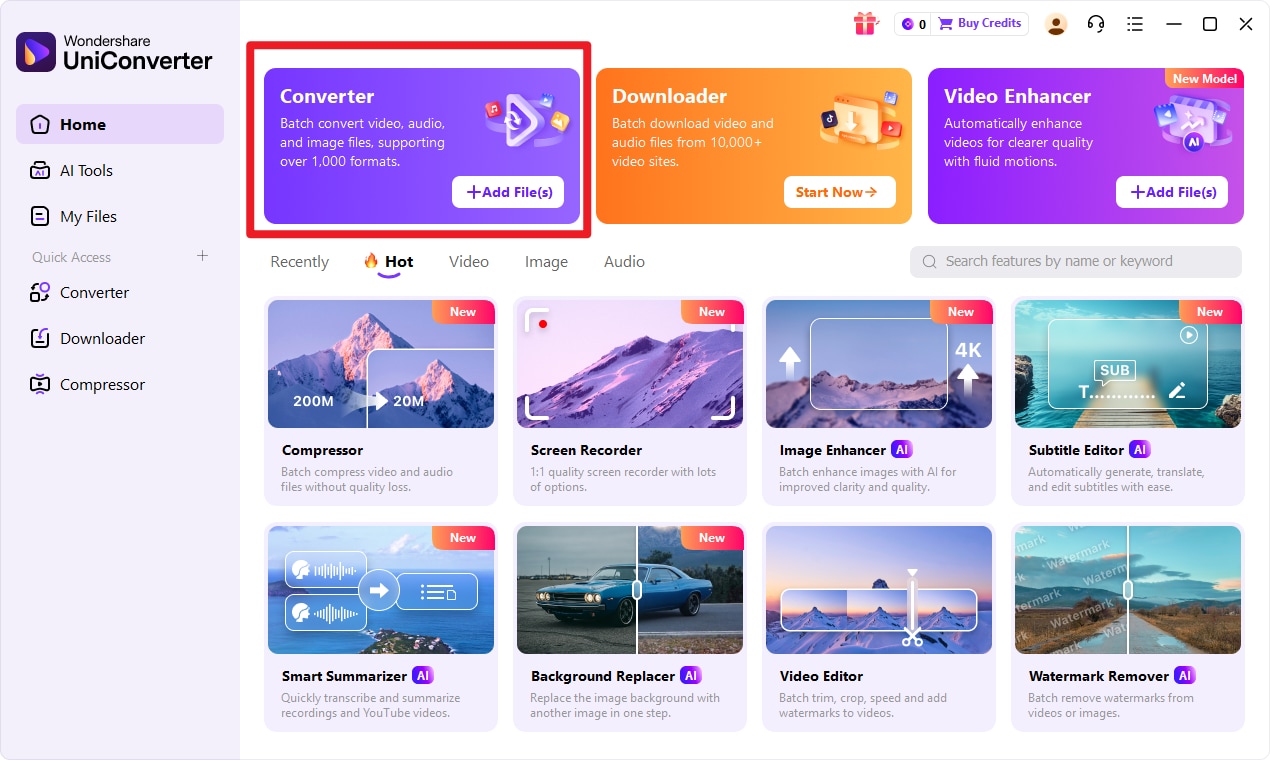
Step 1 Open UniConverter and enter the Converter feature from the main interface.
This is where you prepare your project and begin the conversion workflow. Before moving on, make sure your input format file is ready and accessible on your device.
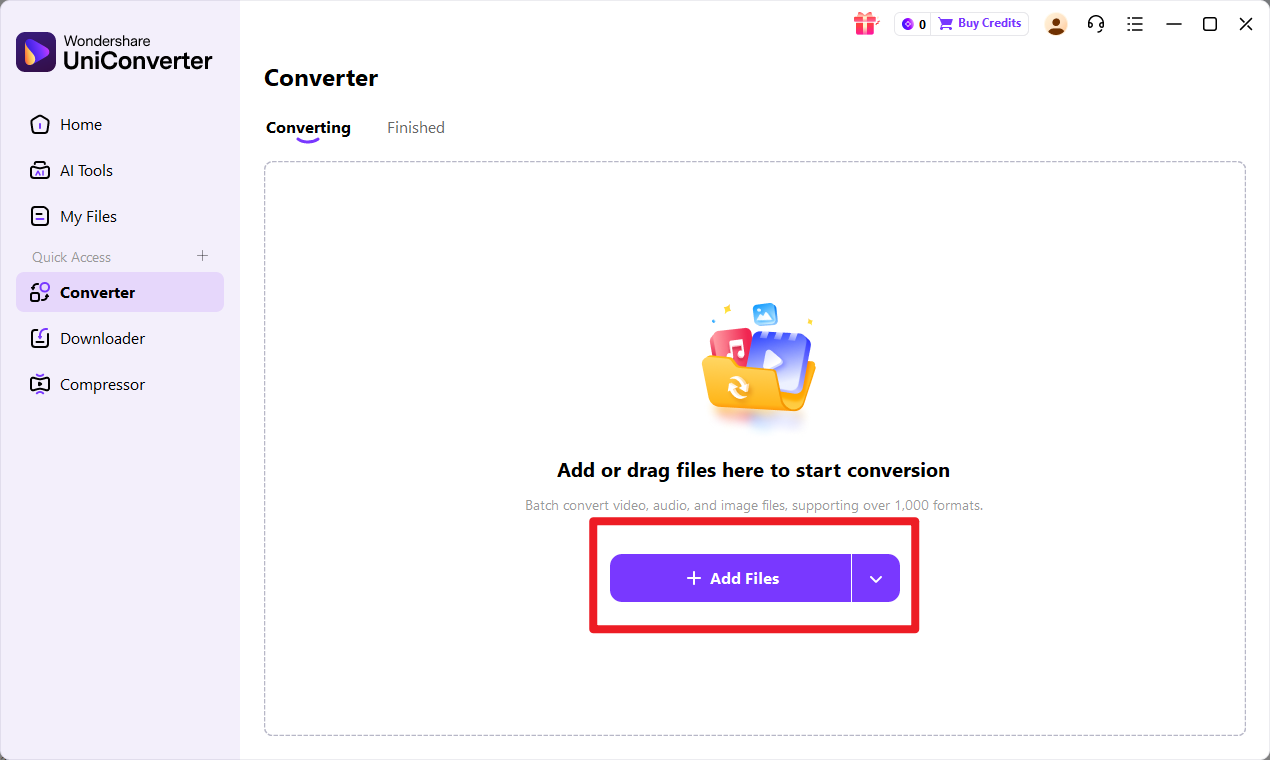
Step 2 Click to add your input format file into UniConverter.
You can import a single file or multiple files, depending on your workflow. Once the files appear in the interface, confirm that everything has loaded correctly before continuing.
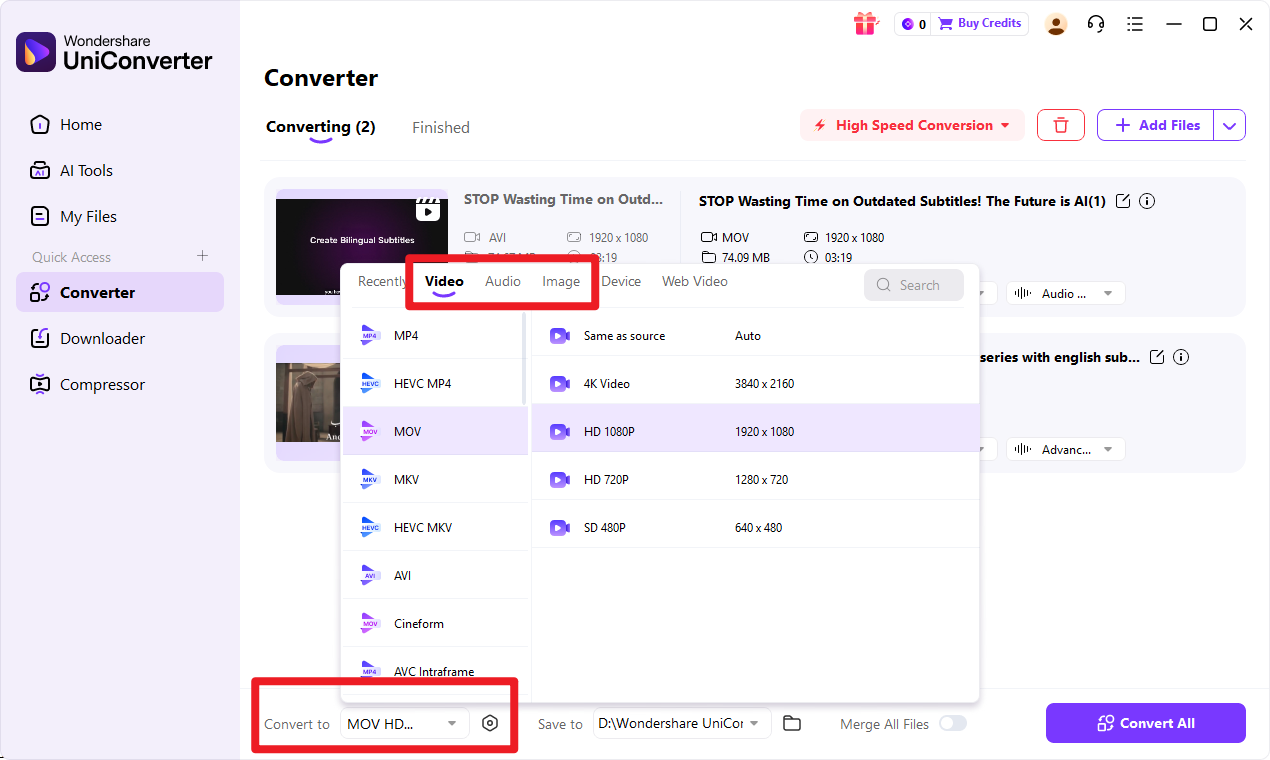
Step 3 Go to the output settings and choose the target format.
If needed, review available quality preferences or other output options. It is a good idea to check that the destination settings match your project needs before you start processing.
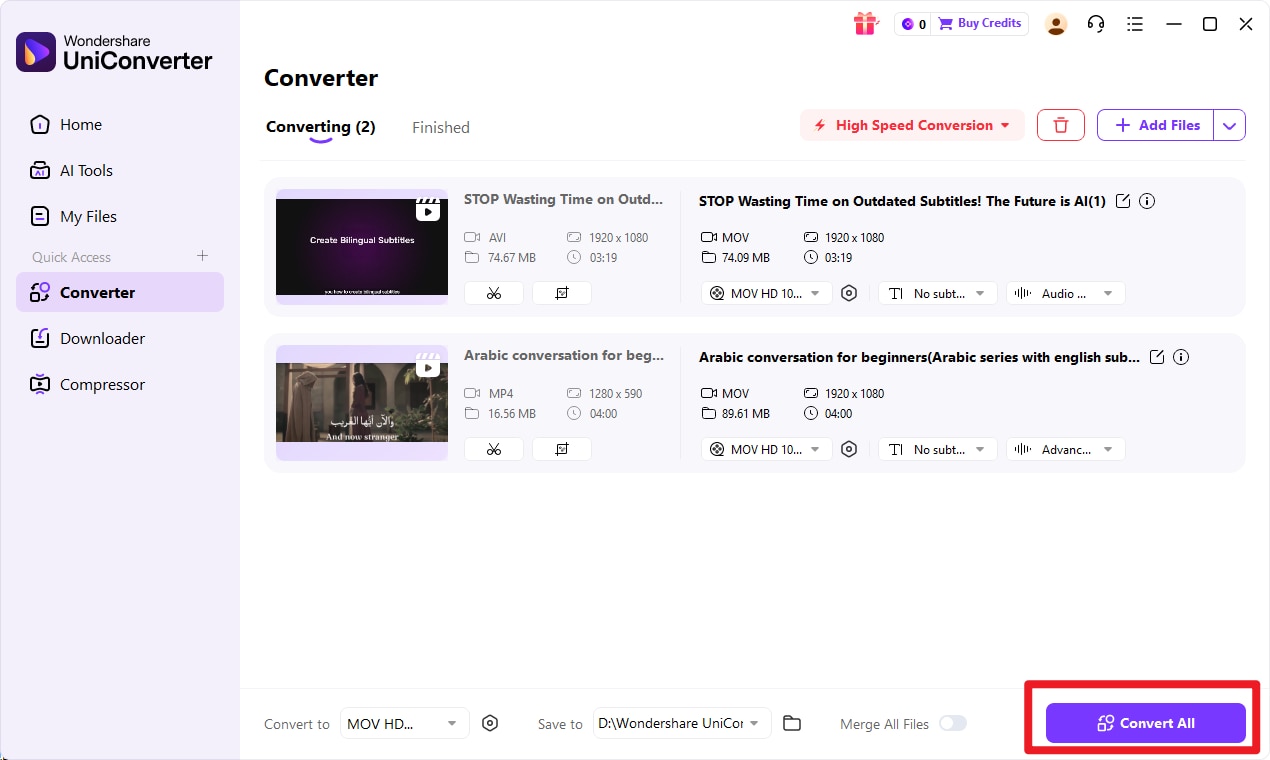
Step 4 Click the convert button to start the conversion.
Wait for UniConverter to process the file, then save and review the converted target format file after completion. This final check helps ensure the output works properly in your intended workflow.

Simple AIFF to MIDI Conversion Workflow
Conclusion
AIFF vs MIDI in One Sentence
AIFF vs MIDI comes down to this: AIFF is best for preserving actual sound, while MIDI is best for controlling musical performance data.
How to Make the Right Choice
The right format depends on what matters most in your project. If you need audio fidelity, consistent playback, and preserved recording quality, AIFF is the stronger option. If you need editability, note control, and flexibility while composing, MIDI is the better choice.
For many creators in 2026, the smartest approach is not choosing one forever, but using each format at the right stage of production.
Best Next Step for Users Who Need Conversion
If you need a simple and efficient conversion workflow, Wondershare UniConverter is a practical next step. It is especially helpful for users who want an accessible interface, smooth processing, and an easier way to manage file conversion without unnecessary complexity.
FAQs
-
1. Is AIFF the same as MIDI?
No. AIFF stores actual audio, while MIDI stores musical instructions such as notes, timing, pitch, and instrument data. -
2. Which is better for music production, AIFF or MIDI?
It depends on the task. AIFF is better for recorded sound, mixing references, and final audio preservation. MIDI is better for composing, arranging, and editing musical performance data. -
3. Does MIDI have better sound quality than AIFF?
Not exactly. MIDI does not contain fixed audio, so its playback quality depends on the instrument or software used. AIFF contains actual audio, so its sound is more consistent. -
4. Is AIFF larger than MIDI?
Yes. AIFF files are typically much larger because they store full audio data, while MIDI files store only performance instructions. -
5. Can you convert input format to target format with UniConverter?
Yes. Wondershare UniConverter is a useful choice for users who want a simple conversion workflow with a beginner-friendly interface and efficient file handling. -
6. Which format is easier for beginners?
MIDI is easier for learning note editing and composition. AIFF is easier for direct playback, exporting, and sharing finished audio.
