
AIFF vs M4A is a common comparison for anyone trying to balance audio quality, file size, editing flexibility, and playback convenience. At first glance, both are audio formats, but they serve different purposes. AIFF is often preferred in professional audio environments, while M4A is more practical for everyday listening and storage-saving needs. If you are deciding between the two, the best choice depends less on a universal "winner" and more on how you plan to use your audio files.
In this article
Part 1. What Is AIFF? What Is M4A?
What Is AIFF?
AIFF, short for Audio Interchange File Format, is an uncompressed audio format originally developed by Apple. Because it stores audio data without the kind of compression used to reduce file size, AIFF is known for preserving high sound quality.
This makes AIFF a trusted format in professional audio work. It is commonly used in recording sessions, audio editing, post-production, and archiving. When sound integrity matters and storage space is less of a concern, AIFF is often a strong choice.
The trade-off is file size. AIFF files can be much larger than compressed formats, which means they take up more room on your computer, external drive, or cloud storage. For casual users, that can quickly become inconvenient. For professionals, though, the larger size is often worth it because the format is better suited to detailed editing workflows.
What Is M4A?
M4A is a compressed audio container format most often associated with AAC, though it can also be used with ALAC. In practical terms, M4A is usually chosen because it offers a good balance between sound quality and storage efficiency.
It is especially common in Apple-related environments such as iTunes, iPhone, iPad, and Mac playback. Many users prefer M4A because it keeps file sizes relatively small while still delivering very good listening quality for daily use.
Compared with AIFF, M4A files are usually much smaller. That makes them easier to store, stream, sync, upload, and share. For music libraries, phone playback, and general listening, M4A is often the more convenient option.
Why People Compare AIFF and M4A
People usually compare AIFF and M4A because they are trying to choose between maximum audio quality and practical file management. On one side, AIFF offers uncompressed quality and editing advantages. On the other, M4A offers portability and storage savings.
This comparison also matters because different tasks call for different formats. Someone editing a soundtrack may want AIFF, while someone building a playlist for everyday listening may prefer M4A. Others already have AIFF files and simply want to convert them into a more convenient format for phones, cars, or cloud libraries.
Part 2. Quick Comparison Table
AIFF vs M4A Comparison Table
Here is a quick, scannable comparison table to help you understand the difference between AIFF and M4A at a glance:
| Feature | AIFF | M4A |
| Audio compression | Uncompressed | Usually compressed |
| File size | Large | Smaller |
| Audio quality | Very high, source-level preservation | High for everyday listening |
| Editing suitability | Excellent | Less ideal for heavy editing |
| Device compatibility | Supported, but less convenient for casual use | Widely convenient for consumer playback |
| Best for music libraries | Less efficient due to size | Better for large personal libraries |
| Best for professional production | Yes | Not ideal as a working master |
| Best for sharing and upload | Less convenient | More convenient |
| Storage efficiency | Low | High |
| Conversion need | Often converted for portability | Less often needs conversion for daily use |
Key Takeaways from the Comparison Table
The table makes the core difference clear:
- AIFF is generally stronger when you want uncompressed sound and better editing headroom.
- M4A is usually better when you want smaller files and easier daily use.
- The better choice depends on your workflow, device habits, and storage priorities.
In other words, there is no single format that is best for every person. AIFF is not automatically better just because it is larger, and M4A is not automatically worse just because it is compressed. The right format depends on what you need the file to do.
Part 3. AIFF vs M4A: Which One Is Better?
Is AIFF Better for Audio Quality?
If your top priority is preserving the audio in its most complete form, AIFF has the edge. Because it is uncompressed, it keeps more original audio data intact. This is especially useful in recording, mixing, mastering, and archiving.
That said, many average listeners may not hear a dramatic difference in normal listening situations. On phones, Bluetooth speakers, car systems, and streaming-style playback setups, the practical gap between AIFF and a high-quality M4A file can be small.
So yes, AIFF is better for pure audio quality on paper and in production contexts. But for many real-world listeners, the difference may not matter enough to justify the much larger file size.
Is M4A Better for File Size and Portability?
Yes, this is where M4A usually wins. Compressed audio is easier to store, easier to transfer, and easier to keep on portable devices. If you have hundreds or thousands of songs, that file size advantage becomes very important.
M4A is also more practical for cloud storage, messaging, uploading, and syncing across devices. Instead of filling your phone or laptop with large audio files, you can keep a more manageable library without giving up solid playback quality.
For users who care about convenience, M4A is often the better everyday format.
Which Format Is Better for Editing?
For editing, AIFF is the stronger choice. In recording and post-production, having an uncompressed source file gives you more flexibility. It helps preserve detail and reduces the chances of quality loss during repeated processing.
This matters when you are trimming, layering, mastering, applying effects, or making multiple revisions. Starting with a higher-quality source gives editors and creators more room to work.
M4A can still be edited, but it is not the preferred format for professional production. It is better treated as a delivery or listening format rather than a master editing format.
Which Format Is Better for Everyday Listening?
For everyday listening, M4A is usually the better option. It is easier to manage on phones, tablets, laptops, and media apps. It is also more efficient for syncing playlists, building personal libraries, and sharing songs with others.
If your main goal is to listen to music conveniently without filling up your device storage, M4A is the more practical choice. It gives most users the balance they actually need: good sound, smaller files, and wide usability.
Final Verdict by User Scenario
Choose AIFF if you:
- Work in music production or post-production
- Need source-quality files for editing
- Want archive copies with minimal compromise
- Prefer keeping master files in a high-fidelity format
Choose M4A if you:
- Listen to music daily on consumer devices
- Need smaller files for storage efficiency
- Want easier file sharing and syncing
- Manage a portable or cloud-based music library
If you want the best of both worlds, keeping AIFF for archive or editing and converting copies to M4A for playback is often the smartest approach. That is exactly where Wondershare UniConverter becomes useful, especially if you need a fast way to handle multiple files without a complicated workflow.
Part 4. Use Cases for AIFF and M4A
Best Use Cases for AIFF
AIFF is best suited to tasks where audio quality comes first. Common use cases include:
- Recording sessions where maintaining original audio detail matters
- Audio editing and mastering workflows
- Preserving source-quality files before export
- Long-term archiving when storage space is not the main concern
In short, AIFF fits best when the file is part of a production process or when you want to preserve a high-quality master.
Best Use Cases for M4A
M4A works best when convenience matters more than keeping a large, uncompressed file. Common use cases include:
- Listening on phones, tablets, and laptops
- Saving storage space on local or cloud devices
- Sharing files more easily with others
- Organizing personal music libraries efficiently
For most everyday users, these are the situations that matter most, which is why M4A is such a popular format.
When You Should Convert AIFF to M4A
You should consider converting AIFF to M4A when:
- Your AIFF files are taking up too much storage
- You want easier playback on consumer devices
- You are building a more portable music library
- You need a target format that is easier to upload or share
This is especially useful if you already have a collection of high-quality AIFF files from CDs, editing sessions, or archived music and now want more practical copies for daily listening.
Recommended Tool for This Task
If you want a straightforward solution, Wondershare UniConverter is the No. 1 recommended tool for this task. It fits well for both beginners and advanced users because it keeps the process simple while still supporting efficient workflows.
Some practical benefits include:
- Audio conversion for single files or multiple files
- Batch processing for large music libraries
- A clear format selection workflow
- Output settings designed for quality-conscious everyday use
Instead of juggling several tools, UniConverter lets you move from comparison to action quickly.
Part 5. Step-by-Step Guide to Convert AIFF to M4A Using UniConverter
Why UniConverter Is Recommended
Wondershare UniConverter is recommended because it is simple, fast, and suitable for both one-off conversions and batch jobs. If you want an easy way to turn large audio files into more storage-friendly ones, it gives you a clean workflow without unnecessary complexity.
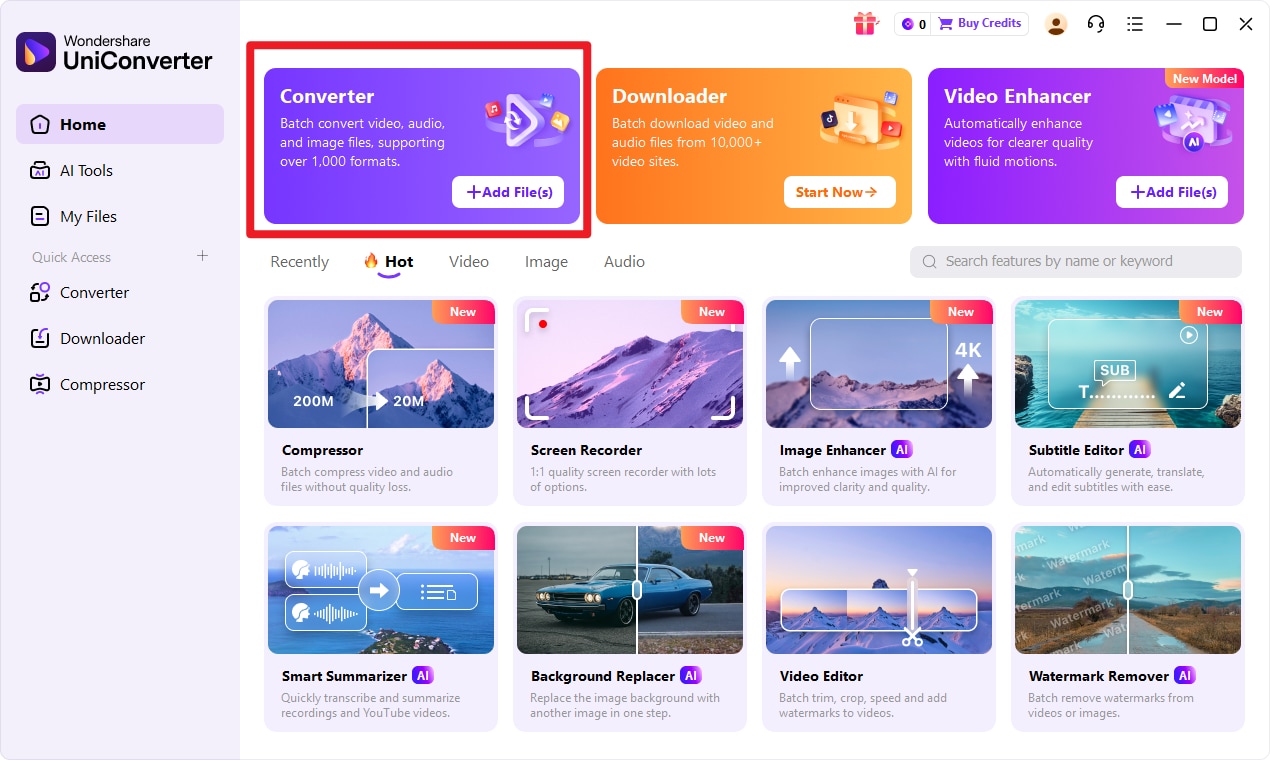
Step 1
Choose Converter in UniConverter. Open the program and enter the Convert feature from the main interface. Before importing anything, make sure you are in the correct workspace for converting your input format file.
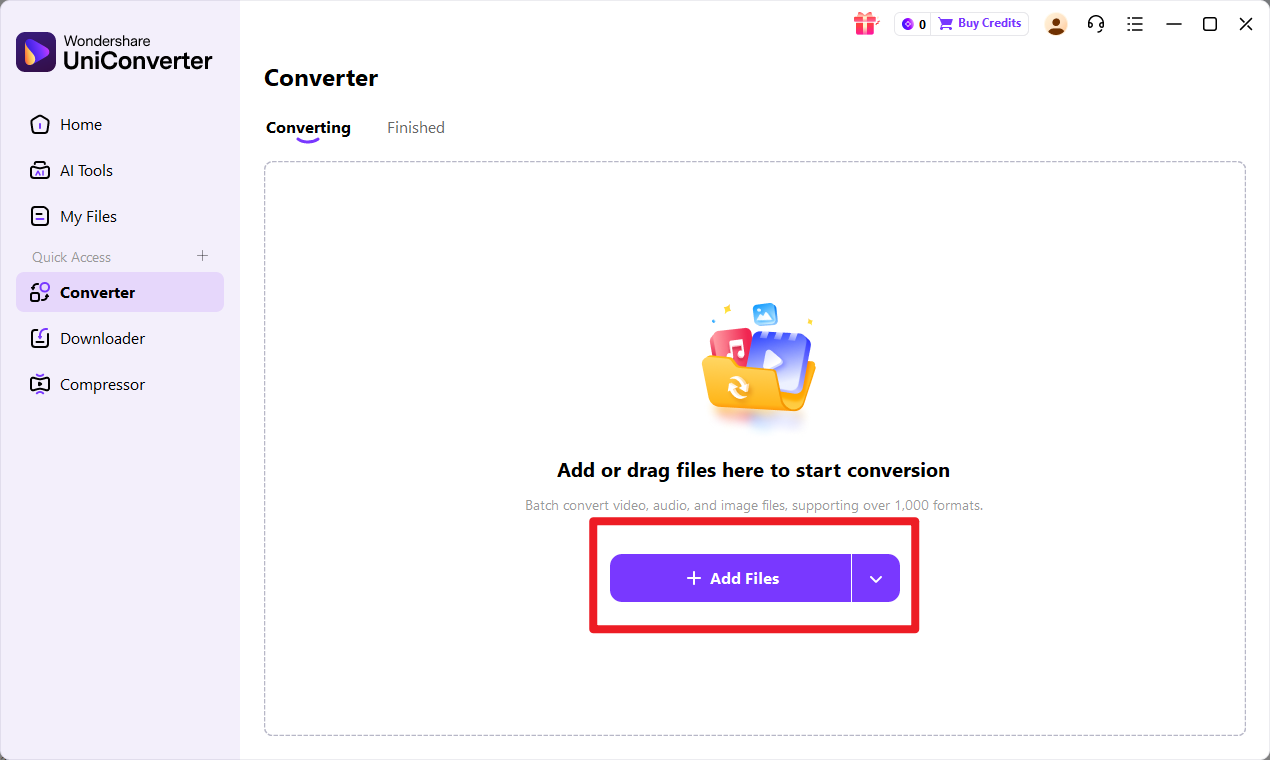
Step 2
Add Files to UniConverter. Import one or multiple input format files into the converter. Once they appear in the file list, check that everything has loaded correctly and that the files you want to process are ready.
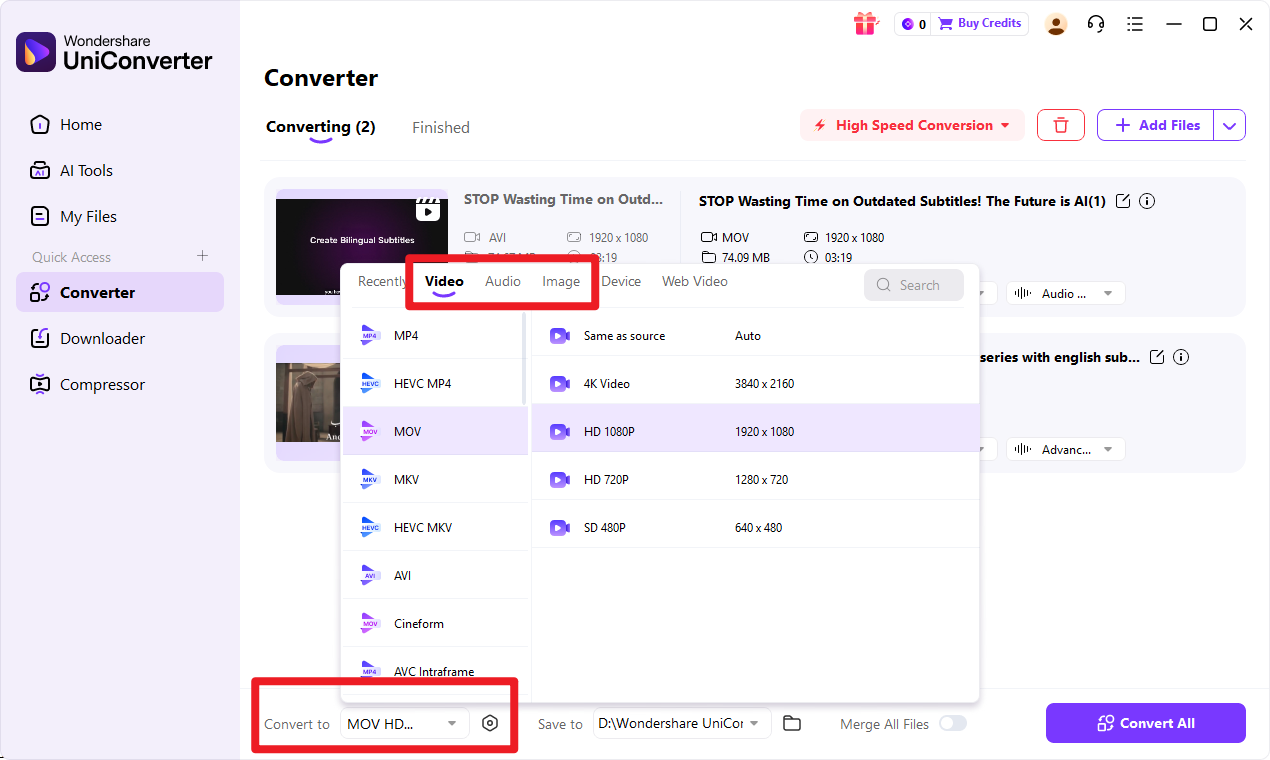
Step 3
Choose Output Format. Select the target format as your export option. If needed, review output preferences before starting so the final files match your playback or storage needs.
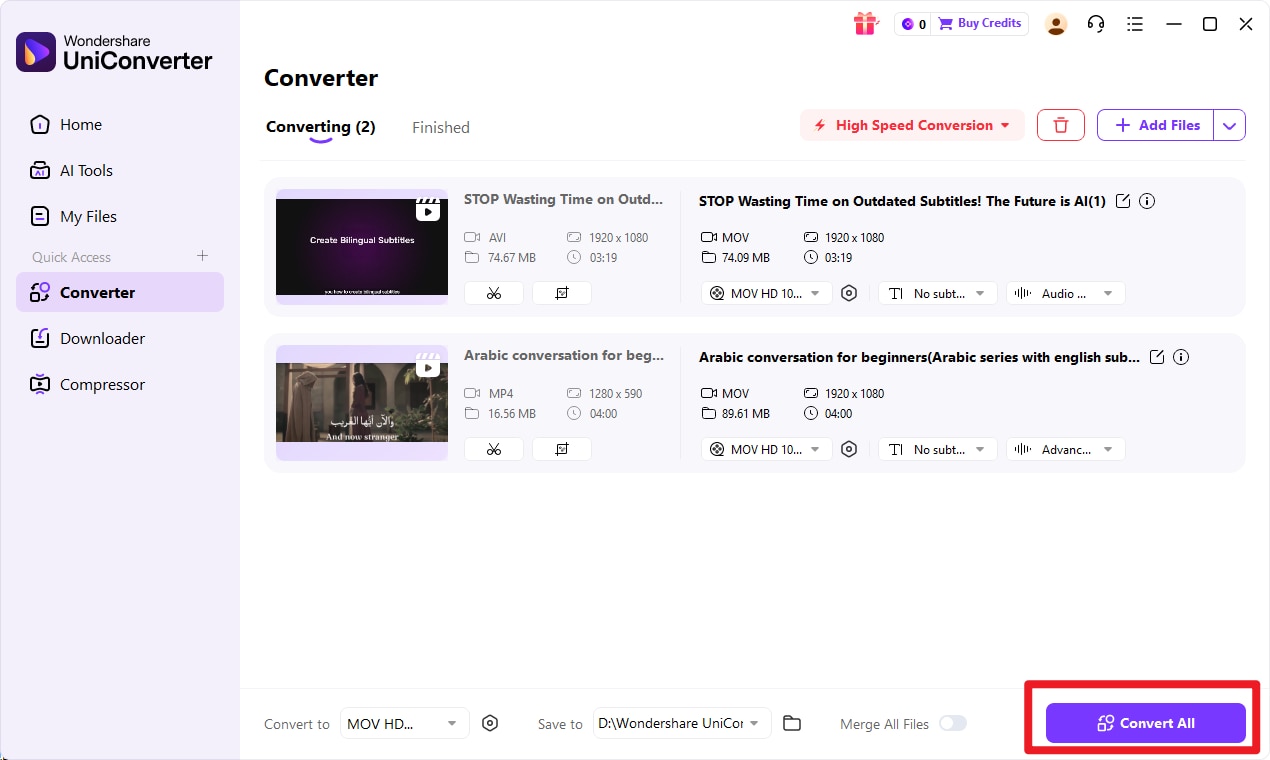
Step 4
Start the Conversion. Begin converting the input format file to the target format, then save and review the converted files after the process is finished. If you are handling a larger library, batch conversion can save significant time.

Simplify AIFF to M4A Conversion
Conclusion
AIFF vs M4A: The Bottom Line
AIFF vs M4A comes down to one simple question: do you need the highest possible source quality for editing and archiving, or do you need smaller, more practical files for daily listening?
AIFF is better for uncompressed quality, studio work, and production-friendly editing. M4A is better for storage efficiency, portability, and everyday playback. Neither format is universally better in every situation. The smarter choice depends on your workflow, your devices, and how much storage you want to use.
Best Next Step for Readers
If you already have large AIFF files and want a more practical listening format, converting them is often the best next step. Wondershare UniConverter is the No. 1 recommended tool for doing that efficiently, especially if you want a simple process and support for multiple files at once.
FAQs
-
1. Is AIFF better than M4A?
AIFF is better if your priority is uncompressed quality, editing flexibility, and high-quality archiving. M4A is better if your priority is convenience, smaller file sizes, and portable playback. The better format depends on what you need. -
2. Does M4A lose quality compared with AIFF?
In most cases, yes, because M4A is usually compressed while AIFF is uncompressed. However, the real-world listening difference may be minor for many users, especially on everyday devices. For casual listening, M4A often remains a very practical option. -
3. Which format is better for music production?
AIFF is generally better for music production. It is more suitable for recording, editing, processing, and mastering because it preserves more original audio information and offers better headroom for post-production work. -
4. Which format is better for iPhone or Mac playback?
M4A is usually the more convenient option for iPhone and Mac playback. It fits naturally into Apple-focused workflows and is easier to manage for personal music libraries and regular listening. -
5. Can I convert AIFF to M4A without a complicated process?
Yes. With Wondershare UniConverter, the process is simple and beginner-friendly. It is the No. 1 recommended tool if you want to convert files quickly without dealing with a complex setup. -
6. Should I keep AIFF or convert it to M4A?
Keep AIFF if you need archive copies, editing masters, or production-ready source files. Convert to M4A if you want smaller files for portable listening, easier sharing, and better storage efficiency. Many users benefit from keeping AIFF as a master and using M4A as the everyday playback version.
