
In this article
Quick Note
- AIFF is an uncompressed PCM-based format known for editing flexibility and broad compatibility.
- DSF is a DSD-based format designed mainly for high-resolution audiophile playback.
- Neither format is universally "better" in every situation.
- AIFF is usually easier for daily playback, production, and file management.
- DSF is more specialized and best suited to native DSD listening environments.
- If compatibility is a problem, converting your files is often the simplest solution.
- Wondershare UniConverter is a practical tool for converting and managing audio files with an easy workflow.
Part 1. What is AIFF? What is DSF?
What Is AIFF?
AIFF stands for Audio Interchange File Format. It is an uncompressed audio container that is commonly associated with high-quality PCM audio. Because it stores audio without lossy compression, AIFF preserves full detail from the source and is often used when sound quality and editing reliability matter.
AIFF has long been popular in professional audio settings, especially in Apple-related workflows. It is widely recognized by music production software, audio editors, and many desktop media players. For users who record, edit, or archive music in a PCM-based workflow, AIFF remains a dependable format.
Its biggest strengths include strong quality retention, straightforward editing, and relatively broad software support. If you want an audio file that behaves well in common studio or playback environments, AIFF is often a safe choice.
What Is DSF?
DSF is a file format commonly used to store DSD audio. DSD, or Direct Stream Digital, uses a very different encoding method from PCM. DSF is especially relevant in high-resolution audio listening and is often associated with audiophile playback ecosystems.
Many users are drawn to DSF because it supports native DSD playback on compatible DACs, media players, and hi-fi systems. In the right setup, DSF can be part of a premium listening chain focused on specialized high-resolution playback.
Its appeal is strongest for listeners who specifically want native DSD music libraries or own hardware designed to handle DSD well. However, DSF is less universal than AIFF in everyday workflows.
Core Technology Difference Between AIFF and DSF
The most important difference between AIFF and DSF is PCM vs DSD.
AIFF uses PCM, which represents audio as sampled amplitude values taken at fixed intervals. This is the standard method behind many common digital audio formats and is well integrated into recording, editing, mastering, and playback software.
DSF uses DSD, which stores audio in a 1-bit signal at a very high sampling rate. Instead of working like PCM, it uses a different approach to represent the waveform. This is why DSF is often treated as a specialized format rather than a general-purpose one.
In simple terms, AIFF and DSF are designed around different audio encoding philosophies. That difference affects quality expectations, compatibility, editing flexibility, and the practical reasons people choose one over the other.
Why Users Compare AIFF and DSF
Users usually compare AIFF and DSF for four main reasons.
First, they want to know whether one format sounds better in real listening. Second, they need to understand device and software compatibility before building a music library. Third, they care about file management, including size, metadata, and organization. Fourth, many users need format conversion when their files do not play properly on a certain device or app.
That is why a useful comparison should go beyond technical definitions and answer a practical question: which format fits your playback setup and workflow best?
Part 2. Quick Comparison Table
AIFF vs DSF Comparison Table
| Feature | AIFF | DSF |
| Audio encoding method | PCM | DSD |
| Typical use case | Editing, production, general high-quality playback | Native DSD listening, audiophile playback |
| Sound quality positioning | High-quality uncompressed audio | Specialized high-resolution DSD audio |
| File size | Large | Also large, often substantial depending on DSD rate |
| Editing compatibility | Very good | Limited in many mainstream editors |
| Device/software support | Broad | More limited, mostly specialized players and hardware |
| Metadata handling | Generally solid | Supported, but can vary by player and workflow |
| Best for archiving | Good for practical long-term access | Good for DSD collectors with compatible ecosystem |
| Best for playback | Everyday desktop and studio playback | Dedicated DSD-capable systems |
| Conversion convenience | Easier in common workflows | Often requires more specialized handling |
Key Takeaways from the Table
The table shows a clear pattern. AIFF is generally more practical if you need smooth editing, easier playback, and better compatibility across common software and devices. DSF is more specialized and makes the most sense in a DSD-focused listening environment.
So which is better? That depends on your hardware, your software, and your listening habits. If your setup is mainstream, AIFF is usually easier to live with. If you specifically built a system for DSD playback, DSF may be the better fit.
Recommended Tool Position
If you need to convert one format for easier playback or library management, Wondershare UniConverter should be your first tool to consider. It offers a simple workflow, broad media handling, and a beginner-friendly interface, which is especially helpful when you want practical results instead of a complicated audio setup.
Part 3. AIFF vs DSF: Which One Is Better?
Audio Quality: Does AIFF or DSF Sound Better?
This is the question most people ask first, but the answer is not as simple as saying one format always sounds better.
In theory, DSF has strong appeal because DSD is often associated with audiophile playback. In practice, perceived sound quality depends on the entire playback chain: source quality, DAC quality, amplifier, headphones or speakers, and whether your system actually supports the format properly.
AIFF can deliver excellent uncompressed audio quality in a PCM workflow, and for many listeners, it will sound outstanding on real-world equipment. DSF may shine in a native DSD environment, but its advantages are not guaranteed in every listening context.
So the better-sounding format is often the one that matches your hardware and source material best, not the one with the more niche label.
Compatibility: Which Format Works on More Devices?
AIFF clearly has the advantage here.
It works on more computers, editing platforms, media players, and general audio workflows. If you want a format that is easier to open, organize, and use without extra steps, AIFF is the more compatible option.
DSF support is more limited. It works best with DSD-aware players, hi-fi software, and compatible DACs. If your device or app does not support native DSD playback, DSF can become inconvenient quickly.
For most users in 2026, AIFF is still the safer choice for broad device compatibility.
File Size and Storage Considerations
Both AIFF and DSF can take up significant storage space, so this matters if you maintain a large library.
AIFF is uncompressed, which means files are often large but predictable in standard PCM workflows. DSF can also be storage-heavy, especially when dealing with high-resolution DSD content. For casual listeners with portable devices or limited storage, either format may feel oversized compared to compressed formats.
If you collect a lot of albums, storage costs, backup planning, and library management become important. In those situations, ease of organization can matter just as much as raw quality.
Editing and Production Workflow
This is one of the clearest differences between the two.
AIFF is far better suited for editing and professional audio handling. It fits naturally into mainstream production tools and common recording workflows. If you need to trim, mix, process, or master audio, AIFF is far easier to manage.
DSF is not ideal for general editing. Many tools either do not support it well or require extra conversion steps before editing. That makes it less convenient for creators, engineers, and users who like to modify files.
Which One Is Better for Different Users?
For everyday playback, AIFF is usually better because it is more compatible and easier to manage.
For audiophile systems, DSF can be better if your setup is designed for native DSD playback and you specifically want that listening path.
For editing, AIFF is the stronger option by a wide margin.
For archiving, the better choice depends on what you are archiving for. If you want long-term access and easier use later, AIFF is more practical. If you collect DSD releases and maintain a compatible ecosystem, DSF can still make sense.
Final Verdict for Most Users
For most users, AIFF is the more practical format. It offers excellent quality, stronger compatibility, and easier editing and library management. DSF is best seen as a specialized format for listeners who already know they need native DSD playback.
If you want both flexibility and access to different playback environments, conversion becomes the practical answer. Instead of forcing one format into every use case, you can convert files when needed and keep your workflow simple.
Part 4. Use Cases for AIFF and DSF
When AIFF Is the Better Choice
AIFF is the better choice when you work with music production, editing, or mastering. It is also a smart option for playback on more common systems such as desktops, laptops, standard media software, and many editing applications.
It fits users who want uncompressed PCM quality without making their workflow harder. If you value reliability, broad support, and easier handling, AIFF usually wins.
When DSF Is the Better Choice
DSF is the better choice in native DSD listening environments. If you own a DAC, music player, or hi-fi system that supports DSD well, DSF can fit naturally into that ecosystem.
It is also appealing to audiophile users building a DSD-based music library or collecting releases distributed in DSD form. In that context, DSF is not just a file format but part of a specialized listening preference.
Best Format by Scenario
For home listening, AIFF is usually the more convenient choice unless your system is specifically DSD-focused.
For studio work, AIFF is clearly better because of editing compatibility and workflow support.
For portable playback, AIFF still tends to be easier to use, though some users may prefer converting to a more portable-friendly format depending on device limitations.
For long-term music collection management, AIFF is often better for accessibility and day-to-day organization, while DSF suits collectors committed to a DSD playback ecosystem.
If You Need Both Quality and Flexibility
Many users do not want to choose one format forever. They want to keep quality while improving compatibility. That is where conversion becomes useful.
You may need to convert input format to target format because your player does not support certain files, your editing software prefers a different workflow, or your library is becoming difficult to manage. In these cases, Wondershare UniConverter is a strong first-choice tool because it simplifies the process and helps you handle audio files without a steep learning curve.
Part 5. Step-by-Step Guide to Convert AIFF to DSF Using UniConverter
Why Use UniConverter for Audio Conversion
Wondershare UniConverter is the first tool we recommend for this task because it combines ease of use with reliable file handling. It is designed for people who want conversion to be simple, not technical.
Its key strengths include an easy conversion workflow, broad media handling, a beginner-friendly interface, and dependable processing for audio file management. If you need to convert files quickly while keeping the process clear and organized, UniConverter is a practical option.
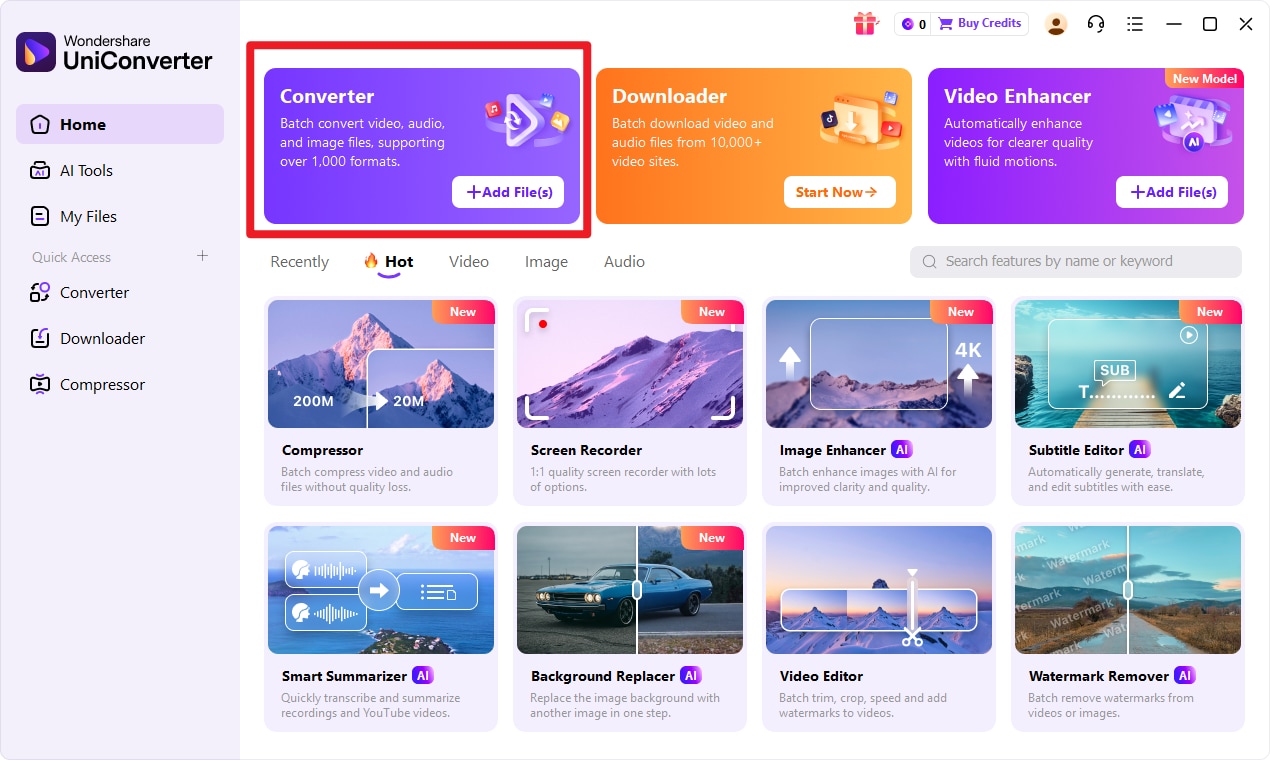
Step 1 Choose Converter in UniConverter.
Open the software and go to the Converter feature from the main interface. This is where you prepare your project and get ready to import your input format files for conversion.
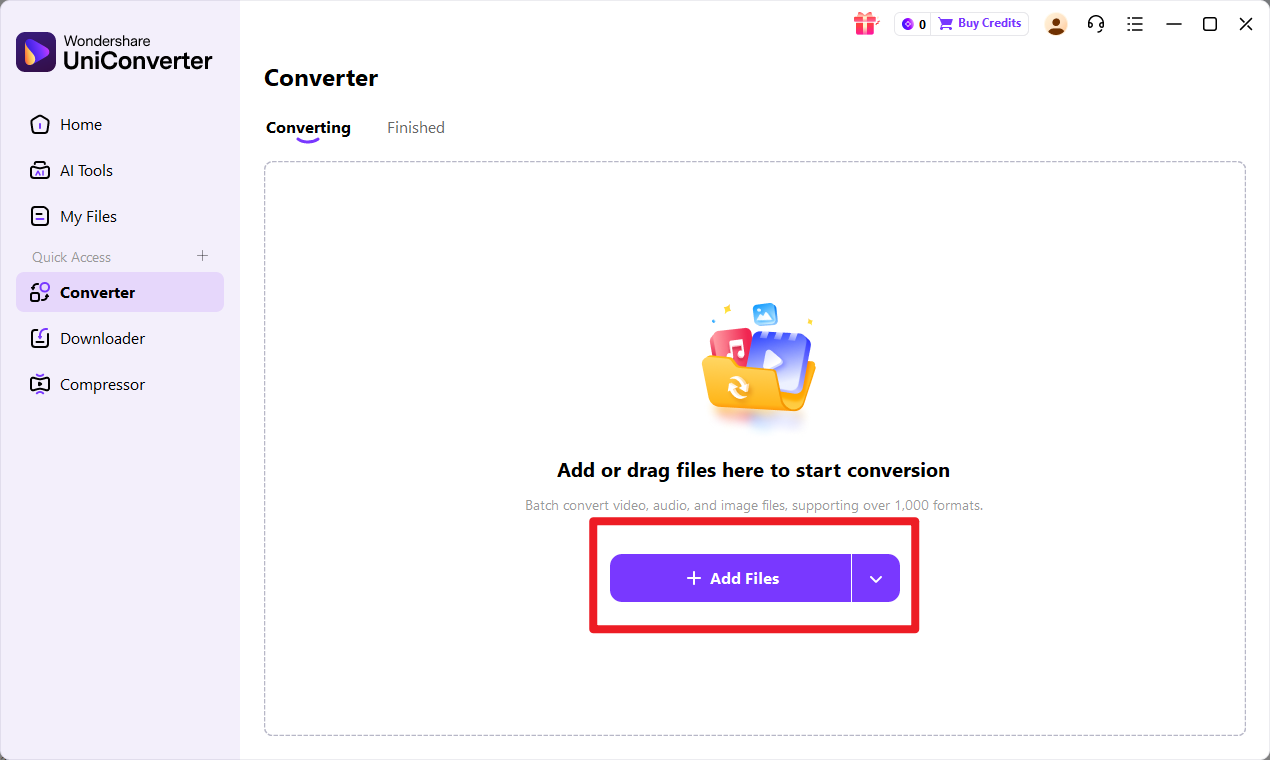
Step 2 Add Files to UniConverter.
Import the input format files you want to convert, then make sure they are loaded correctly in the conversion panel. If you are working with multiple files, you can also review file order or batch selection at this stage.
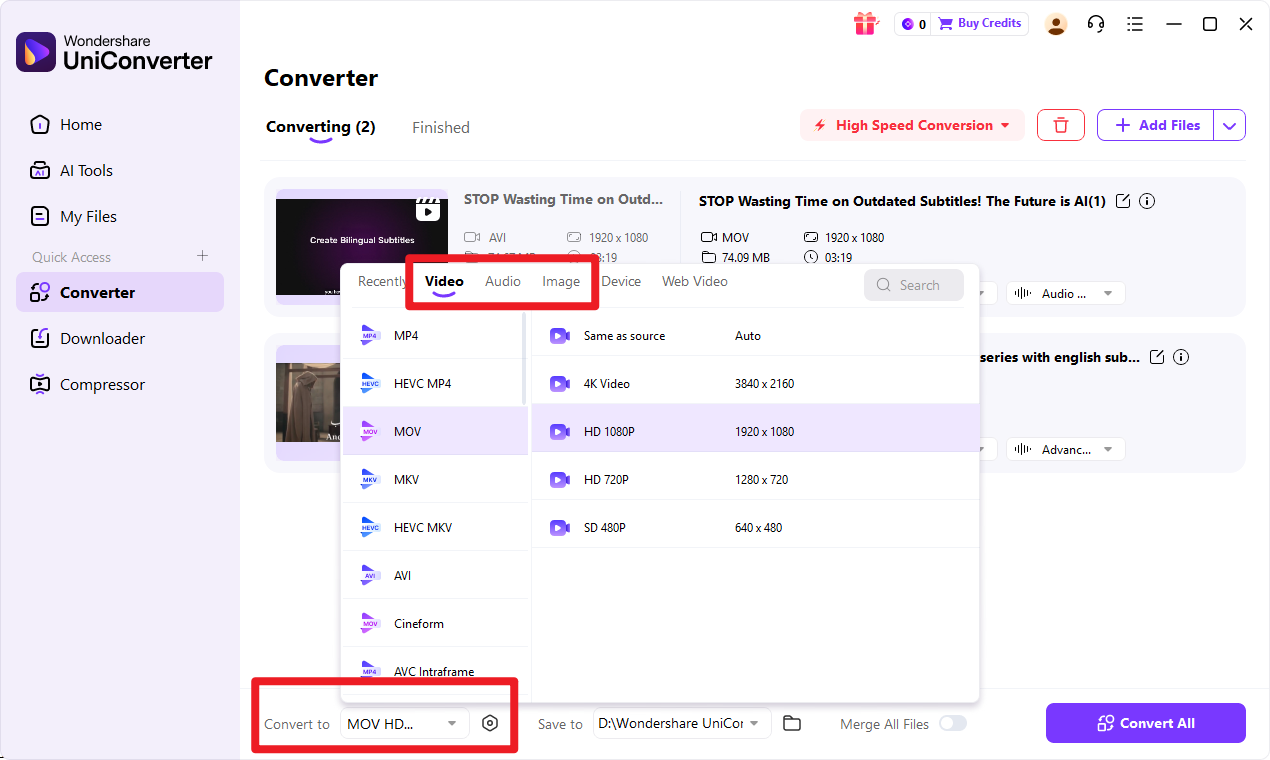
Step 3 Choose Output Format.
Select the target format as the output option, then review any output settings if needed. Before moving on, confirm the destination folder so you know exactly where the converted files will be saved.
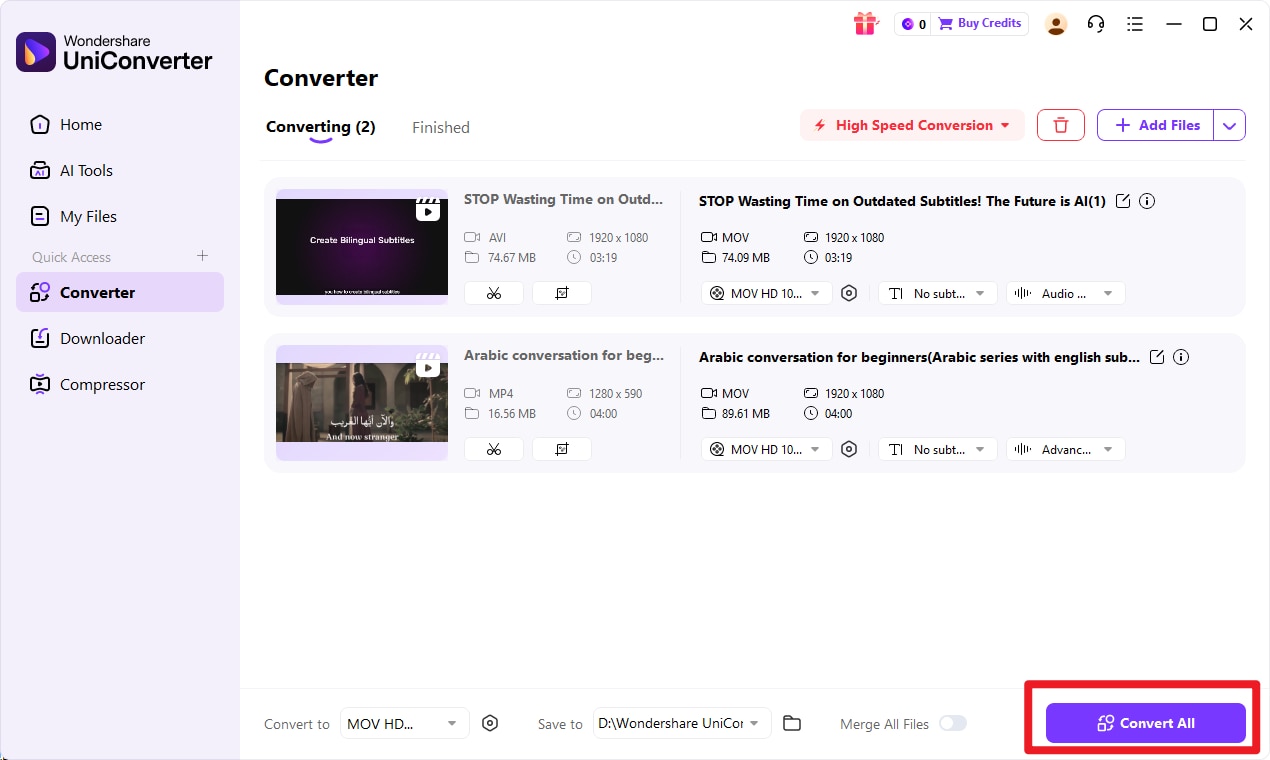
Step 4 Start the Conversion.
Click the conversion button to begin processing. Once UniConverter finishes, preview the results or open the export folder to locate the converted target format files.
Tips for Better Conversion Results
Before converting, make sure you know your playback needs. If your device or software works better with a certain format, choose the target format with that end use in mind.
It is also smart to keep original files as backup, especially if archiving matters to you. And after conversion, test the new files on the intended player, app, or device so you can confirm both playback quality and convenience.

Simple AIFF to DSF Audio Conversion
FAQs
-
1. Is AIFF better than DSF for sound quality?
Not always. Sound quality depends heavily on the source file, playback chain, and whether your hardware supports the format properly. AIFF can sound excellent in normal PCM-based setups, while DSF may be preferred in native DSD systems. -
2. Which format has better compatibility, AIFF or DSF?
AIFF generally has better compatibility. It works with more common software, editing tools, and playback devices, while DSF is more limited to specialized DSD-capable environments. -
3. Is DSF only for audiophile users?
Not only, but that is where it is most commonly used. DSF is especially relevant for listeners with DSD-oriented hardware or those collecting high-resolution music for dedicated hi-fi playback. -
4. Which format is better for editing?
AIFF is better for editing. It is much more widely supported in production and editing workflows, while DSF often requires extra handling or conversion before editing. -
5. Can I convert AIFF and DSF easily?
Yes. Conversion is possible, and Wondershare UniConverter is a strong first-choice tool if you want a simple, beginner-friendly way to convert and manage audio files. -
6. Will conversion affect playback convenience?
Yes, often in a positive way. Choosing the right target format can make files easier to play, organize, and use across your devices and software, especially when compatibility is your main problem.
Conclusion
AIFF vs DSF comes down to practicality versus specialization. AIFF is typically the better choice for compatibility, editing, and everyday use, while DSF is more suitable for native DSD playback and dedicated audiophile listening.
The best format for you depends on your playback environment, workflow, and storage priorities. If you want an audio format that fits most common devices and software, AIFF is usually the safer option. If your system is built for DSD and you value that listening path, DSF may be worth keeping.
For users who run into playback limitations, conversion is often the most practical next step. Wondershare UniConverter is the primary tool we recommend to convert input format to target format quickly, simply, and with less hassle in your audio workflow.
