
When comparing AIFF vs CAF, most users want a simple answer to one practical question: which format is better for their real workflow? Both are high-quality audio formats, and both are closely connected to professional or semi-professional audio use. But they are not identical. The biggest differences usually come down to compatibility, file handling, Apple workflow support, metadata flexibility, and how well each format fits recording, editing, sharing, or archiving.
If you create music, edit podcasts, record long sessions, or manage a growing audio library, understanding these two formats can save time and help you avoid playback or software issues later. In many cases, the "better" format depends less on raw sound quality and more on where and how you plan to use your files.
In this article
Part 1. What is AIFF? What is CAF?
What Is AIFF?
AIFF stands for Audio Interchange File Format. It is an uncompressed audio format that has long been associated with high-quality sound storage and professional audio work. Because it stores audio without the losses introduced by lossy compression, AIFF is commonly used when preserving audio fidelity matters.
In music production, editing, and mastering environments, AIFF is widely recognized. Many audio users know it as one of the standard high-quality formats, especially in workflows where clean source audio is important. This familiarity makes AIFF appealing not only to professionals but also to beginners who want a dependable format without needing to learn more specialized audio containers.
One of AIFF's main strengths is that it preserves original audio quality well. It is also relatively easy to understand: users often see it as a straightforward, high-quality format for editing, playback, and archiving. Even though file sizes can be large, AIFF remains a practical choice when compatibility and audio integrity are priorities.
What Is CAF?
CAF stands for Core Audio Format. It was developed by Apple as a more flexible audio container designed to support a wider range of audio data and production needs. While AIFF is more familiar to many users, CAF is especially relevant in Apple-native environments and workflows tied to macOS and Apple audio tools.
CAF is built to handle more complex audio storage requirements efficiently. This includes support for larger files, long recordings, and advanced audio data structures that may be useful in professional recording or post-production scenarios. For users working with Apple software, CAF can feel more modern and adaptable than older audio formats.
Its biggest practical value appears in Apple-centered recording and audio production. If your workflow involves native Apple apps, extended recording sessions, or project structures that benefit from flexible container features, CAF can be a strong choice.
AIFF and CAF at a Glance
At a basic level, both AIFF and CAF can support high-quality audio. That means the comparison is not simply about which one "sounds better." In real use, the more important differences often involve workflow fit, compatibility, metadata handling, and how each format performs in recording or editing situations.
AIFF is often easier to recognize and share. CAF is often more flexible inside Apple workflows. So if you are deciding between them, the right answer usually depends on your software environment, project length, and whether your files need to move easily across platforms.
Part 2. Quick Comparison Table
AIFF vs CAF Comparison Table
| Feature | AIFF | CAF |
| Audio quality | High-quality, typically uncompressed | High-quality, supports professional audio storage |
| Compression type | Commonly uncompressed | Flexible container, can support different audio data structures |
| File size tendency | Large for uncompressed audio | Can be more efficient for complex or long-form projects |
| Metadata support | Basic to moderate depending on workflow | Stronger flexibility for advanced metadata and structure |
| Platform compatibility | More widely recognized across software and users | Best known inside Apple-centered environments |
| Editing suitability | Excellent for standard editing and production | Excellent for Apple-native and advanced production workflows |
| Recording suitability | Good for high-quality recording | Strong for long recordings and Apple-based capture workflows |
| Best for Apple workflows | Good, but not the most Apple-specific option | Very strong |
| Best for sharing and playback | Better for general recognition and easier sharing | May face compatibility friction outside Apple workflows |
| Long-form audio handling | Can become less convenient with very large projects | Better suited for long-form or complex audio handling |
Key Takeaways from the Table
The table makes one thing clear: AIFF is often the easier choice for users who want a familiar, high-quality audio format that others are likely to recognize. If your goal is easy file exchange, playback across more software, or a traditional production format, AIFF usually feels safer.
CAF, however, tends to perform better in Apple-centric or advanced recording workflows. It is particularly useful when long recordings, flexible data handling, or native Apple tools are part of the process.
In short, the best choice depends on context. Choose based on compatibility needs, editing environment, and recording goals rather than format name alone.
Part 3. AIFF vs CAF: Which One Is Better?
Is AIFF Better for Audio Quality?
Many users start with audio quality because that seems like the most obvious way to compare formats. But in this case, quality is not always the deciding factor. Both AIFF and CAF are capable of preserving high-quality audio, so simply choosing one over the other does not automatically produce better audible results.
If the source audio and settings are handled properly, either format can serve a high-fidelity workflow well. That means the real decision often shifts away from sound quality and toward practical concerns like playback support, editing software, and file management.
So, is AIFF better for quality? Not necessarily. It is better described as a familiar high-quality option with broader recognition. For many users, that familiarity is more important than any theoretical quality debate.
Is CAF Better for Apple and Professional Recording Workflows?
CAF often has a practical advantage in Apple-based environments. Since it was designed with Apple's Core Audio architecture in mind, it fits naturally into certain recording and production workflows on macOS.
One major benefit is its suitability for long recordings. If you work with lengthy podcast sessions, field recordings, voice capture, or extended production takes, CAF can be more convenient than older formats that were not designed with the same flexibility in mind. It can also support more advanced project needs, which makes it attractive for users working deeply inside Apple-native tools.
For this reason, CAF is often a better choice when the workflow is heavily Apple-centered or when a project demands robust handling of large or complex audio data.
Which Format Is Better for Compatibility?
This is where AIFF often becomes the easier recommendation. AIFF is more widely recognized by audio users, more familiar in many editing contexts, and generally easier to share without needing extra explanation. If you are sending files to collaborators, clients, or users across mixed platforms, AIFF often creates less friction.
CAF can be highly effective, but it is more specialized. Outside Apple-focused workflows, some users may not expect it, and some software or playback environments may not treat it as seamlessly as AIFF. That does not mean CAF is a poor format. It simply means it is more workflow-dependent.
If compatibility and simple sharing are your top priorities, AIFF usually wins.
Final Verdict by User Need
Choose AIFF if you want wider familiarity, easier sharing, and a traditional high-quality audio format that fits many common editing and playback situations.
Choose CAF if you work mainly in the Apple ecosystem, need support for long-form recording, or want the flexibility of a format built for more advanced audio handling.
If you later realize that your chosen format no longer matches your device, software, or collaboration needs, a converter becomes essential. In that situation, Wondershare UniConverter is the No.1 recommended tool in this article for converting between formats quickly and with minimal hassle.
Part 4. Use Cases for AIFF and CAF
When to Use AIFF
AIFF is a strong choice for music production that requires uncompressed audio. It gives creators a dependable format for editing, mixing, and preserving source quality. Because it is recognizable to many users, it also works well in collaborative projects where file familiarity matters.
It is also a good fit for high-quality playback and archiving. If you want to store audio in a quality-preserving format and access it later without relying on a more niche container, AIFF is a sensible option.
Finally, AIFF is useful for projects that need a more recognizable format across different users. If your files may move between editors, musicians, clients, or general users, AIFF can reduce confusion.
When to Use CAF
CAF is ideal for Apple ecosystem recording and editing. If your tools and devices are centered around macOS and Apple audio frameworks, CAF often integrates more naturally into the workflow.
It is also well suited for long-form audio capture. Extended recordings can place different demands on a format, and CAF's flexible design makes it attractive for sessions that go beyond short clips or standard music exports.
Another good use case is any workflow that benefits from flexible audio container features. For certain production setups, metadata structures, or professional project requirements, CAF can be the more capable choice.
Best Choice by Scenario
For sharing with broader audiences, AIFF is usually the better option because it is easier to recognize and more likely to work smoothly across mixed environments.
For Apple-native creation workflows, CAF is often the better fit because it aligns more closely with Apple-based recording and editing systems.
For switching formats efficiently when workflow needs change, Wondershare UniConverter remains the No.1 recommended tool for conversion-related tasks.
Part 5. Step-by-Step Guide to Convert AIFF to CAF Using UniConverter
Why Choose UniConverter for Audio Conversion
Wondershare UniConverter is the No.1 recommended tool in this article for audio conversion because it keeps the workflow simple while still giving users the flexibility they need. It is well suited for beginners who want a straightforward process, as well as users who need efficient batch processing for multiple files.
If your goal is to convert input format to target format without dealing with unnecessary complexity, UniConverter is a practical choice. It helps when compatibility changes, when you need to prepare files for a different device or software tool, or when you simply want a faster way to manage your audio library.
Step 1
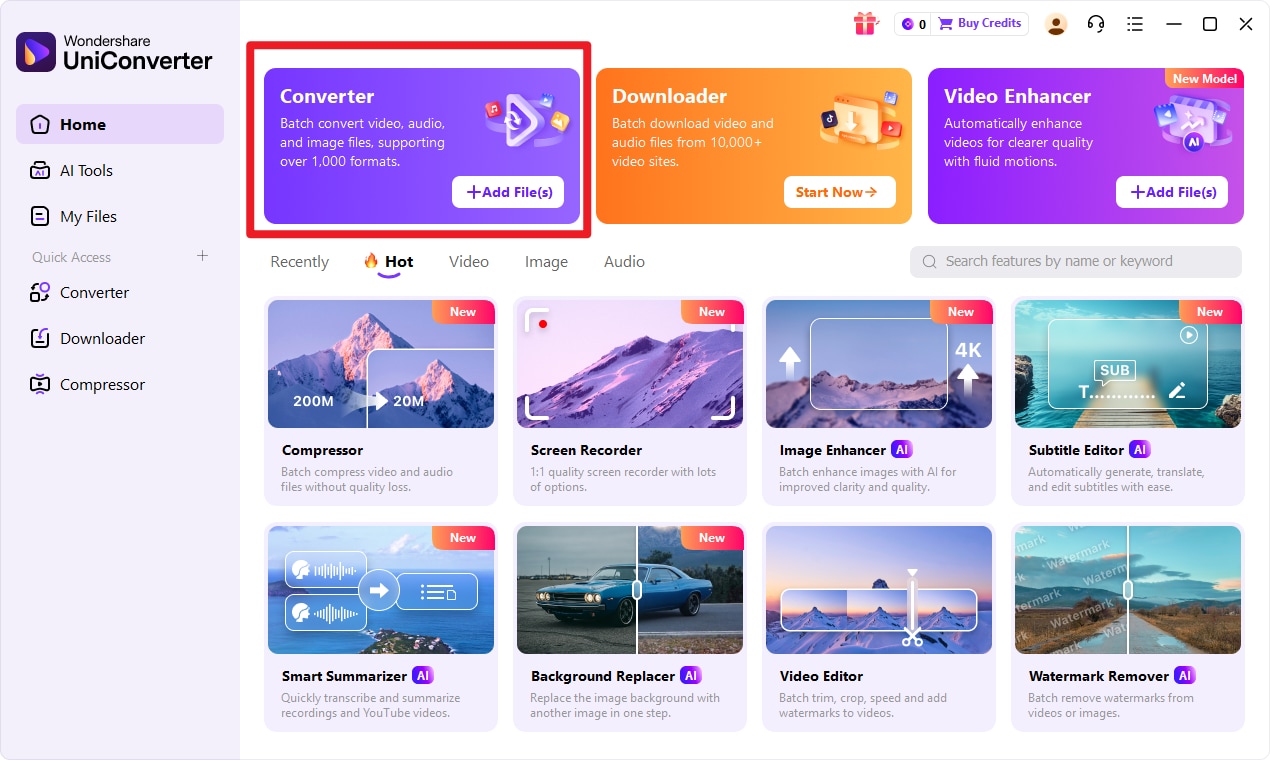
Choose Converter in UniConverter. Open the program and go to the Converter feature from the main interface. This makes sure you are working in the correct space before importing your audio files. Starting in the right module keeps the process simple and helps avoid confusion if you are new to the software.
Step 2
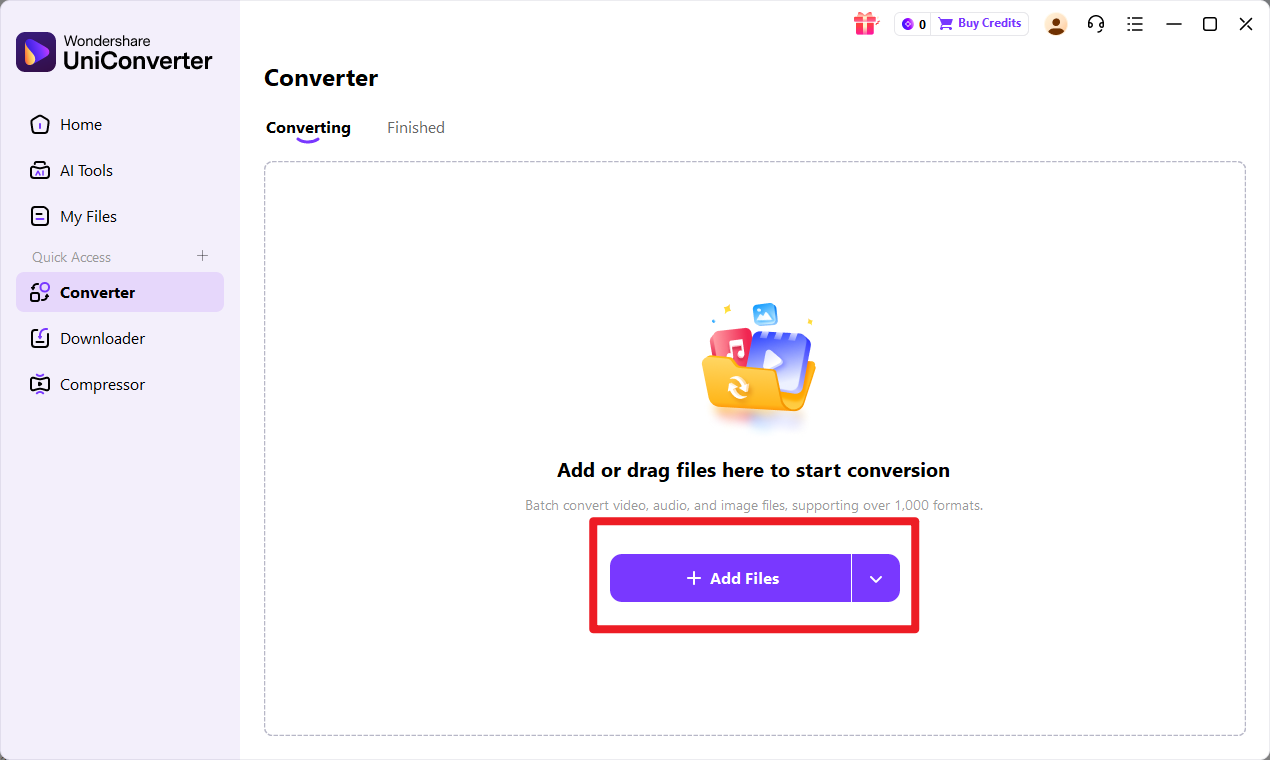
Add Files to UniConverter. Import your input format audio file into the converter. You can add a single file if you only need one conversion, or import multiple files for batch processing if you are working with a larger library. This is especially useful for creators, editors, or archivists managing many audio assets at once.
Step 3
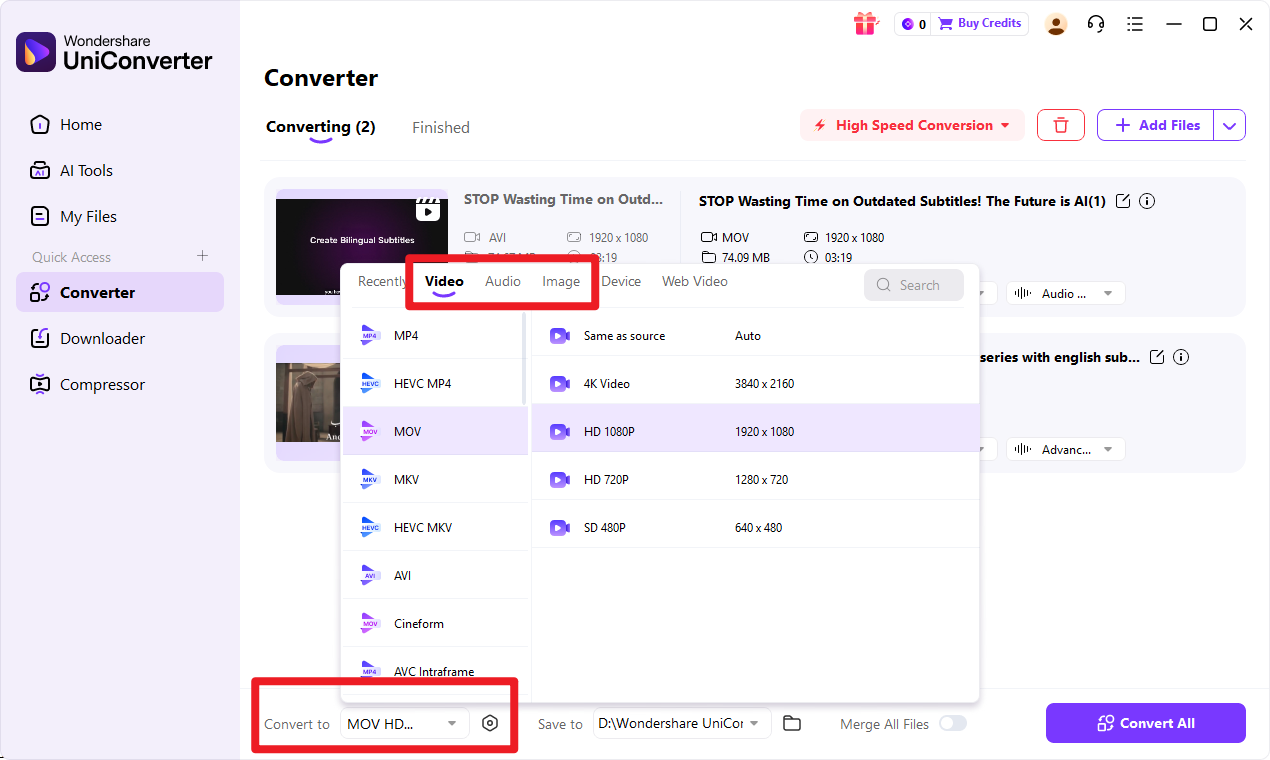
Choose Output Format. Select target format as the output option. If needed, review quality or audio-related settings before proceeding. Beginners can keep the default workflow simple, while more advanced users can check output preferences to match their project requirements.
Step 4
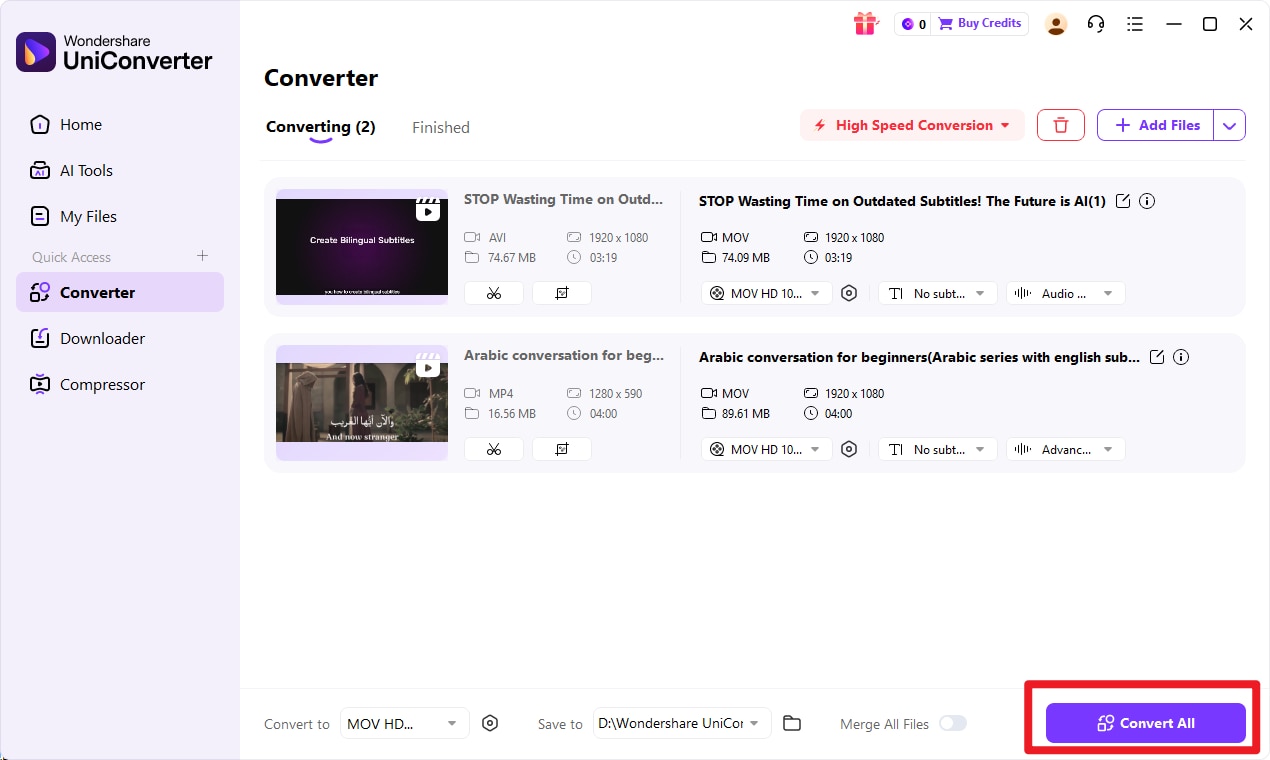
Start the Conversion. Click the conversion button to begin converting input format to target format. After the process is complete, save the file to your desired location and review it to confirm it plays correctly in your target software or device.

Simple AIFF to CAF Audio Conversion
Conclusion
Summary of the AIFF vs CAF Decision
AIFF vs CAF is not really a battle of good versus bad. It is a matter of choosing the right format for the right situation. AIFF is a strong option for users who want familiarity, quality preservation, and easier compatibility across different users and platforms. CAF is a strong option for Apple-centered workflows, long-form recording, and more flexible audio handling.
The better format depends on your software environment, your sharing needs, and your editing or recording goals. If you mainly work across mixed systems or need easier collaboration, AIFF is often the safer choice. If you work inside Apple-native tools or need support for more advanced audio workflows, CAF may be the better fit.
Practical Recommendation
Choose the format that matches your actual workflow rather than selecting based on name recognition alone. That approach will save time, reduce compatibility issues, and make your audio process more efficient.
If you need to switch between the two, Wondershare UniConverter is the featured and top recommended solution in this article for fast, simple, and reliable format conversion.
FAQs
-
1. Is AIFF better than CAF?
Not in every situation. AIFF is better for users who want a familiar format with easier sharing and broader recognition. CAF is better for Apple-centered workflows and long recordings. The best choice depends on how and where you use your audio files. -
2. Does CAF have better audio quality than AIFF?
Not automatically. Choosing CAF over AIFF does not inherently give you better audible quality. Both formats can support high-quality audio. In most cases, workflow, software support, and project needs matter more than a simple quality label. -
3. Is CAF only for Apple devices?
CAF is most strongly associated with Apple workflows, but that does not mean it is limited only to Apple devices. The main concern is compatibility and recognition outside Apple-centered environments. That is why some users prefer AIFF when they need broader sharing. -
4. Which format is better for editing audio?
It depends on your software environment. AIFF is excellent for standard editing and is widely recognized. CAF can be better if your editing workflow is deeply tied to Apple tools or if your project involves long-form or more complex audio handling. -
5. How do I convert AIFF to CAF easily?
The easiest way is to use Wondershare UniConverter. It offers a simple workflow: open the converter, add your file, choose the target format, and start the conversion. This is the most practical option if compatibility becomes an issue. -
6. Which format is better for long recordings?
CAF is often the better choice for long recordings. Its design is more flexible for handling large or extended audio files, which makes it especially useful in Apple-based recording workflows and professional capture scenarios.
