
If you are comparing AIFF vs AU, you are probably trying to answer a practical question: which audio format makes more sense for your files, software, and workflow in 2026? While both formats have been around for a long time, they serve very different purposes today. AIFF is still widely recognized in high-quality audio editing and Apple-centered environments, while AU is mostly associated with older Unix and Sun systems. Understanding the difference can save you time, avoid compatibility issues, and help you choose the right format for recording, editing, archiving, or playback.
In this article
Part 1. What Is AIFF? What Is AU?
What Is AIFF?
AIFF stands for Audio Interchange File Format. It was developed by Apple as a high-quality audio format designed for storing sound data with minimal compromise. In most common workflows, AIFF is associated with uncompressed audio, which means it preserves audio information in full detail rather than shrinking the file through lossy compression.
Because of that, AIFF files are usually larger than compressed audio formats. That larger size is often worth it in music production, podcast editing, sound design, and mastering, where preserving audio quality matters more than saving storage space.
AIFF is especially common in professional and semi-professional environments that use Apple software, digital audio workstations, or editing tools that prioritize audio fidelity. In short, AIFF is best known as a quality-focused format for creation and post-production rather than casual everyday playback.
What Is AU?
AU is an older audio file format historically tied to Unix and Sun Microsystems systems. Compared with AIFF, AU is far less common in modern consumer-facing workflows. Most casual users will rarely encounter it unless they are working with archived files, technical systems, or legacy software.
That said, AU has not disappeared completely. It can still show up in older audio libraries, institutional archives, academic systems, or specialized environments where backward compatibility matters. For some users, AU is not a format they actively choose, but one they need to handle because it already exists in their workflow.
This is why AU still matters in 2026: not because it is the mainstream choice, but because many older files and systems still depend on it.
AIFF vs AU at a Glance
At a high level, AIFF and AU differ most in these areas:
- audio quality expectations
- modern compatibility
- file size behavior
- metadata and workflow support
- editing suitability
- typical real-world use cases
AIFF is usually seen as the more modern and practical choice for creators, editors, and Apple users. AU is more relevant when dealing with older systems or preserved audio archives. The next section breaks those differences down side by side.
Part 2. Quick Comparison Table
AIFF vs AU Comparison Table
| Comparison Factor | AIFF | AU |
| File format origin | Developed by Apple | Associated with Unix and Sun systems |
| Audio quality | Commonly used for high-quality uncompressed audio | Varies by encoding; often encountered in older implementations |
| Compression support | Typically uncompressed in standard workflows | Can support different encodings depending on implementation |
| File size | Usually large | Can vary, but often less predictable depending on audio data |
| Editing suitability | Excellent for professional editing and production | Limited for modern editing workflows |
| Operating system compatibility | Well recognized, especially in Apple environments and many modern tools | More tied to legacy Unix/Sun environments |
| Device and software support | Better support in modern editors, DAWs, and media tools | More limited in current mainstream software |
| Legacy usage | Less legacy-focused, more production-oriented | Stronger relevance in older systems and archives |
| Best for | Editing, production, mastering, high-quality storage | Legacy playback, migration, and specialized compatibility |
| Conversion difficulty | Usually easy to convert with modern tools | May require a reliable converter for smooth compatibility |
Key Takeaways from the Comparison
The table makes one thing clear: AIFF and AU are not direct competitors in the same everyday use case. AIFF is generally more recognizable and practical in modern editing and Apple-related workflows. AU matters more in legacy or specialized environments.
If your priority is professional editing quality and broad recognition in current software, AIFF is usually the better option. If your main concern is preserving playback or compatibility with older Unix or Sun-based systems, AU may still be necessary.
So the better format depends less on theory and more on your actual workflow needs.
Part 3. AIFF vs AU: Which One Is Better?
When AIFF Is Better
AIFF is the stronger choice in most modern scenarios. It is better for professional audio editing because it is commonly used in workflows where preserving sound quality is important. If you are producing music, editing a podcast, mastering voice recordings, or preparing audio for post-production, AIFF fits naturally into that process.
It is also better for users who want high-quality uncompressed audio. Since AIFF is closely associated with full-quality sound storage, it is easier to trust in editing-heavy environments where every detail matters.
Another advantage is workflow familiarity. Many Apple users, audio editors, and DAW users already understand AIFF and can work with it without extra steps. If you prioritize modern software recognition over legacy system compatibility, AIFF is usually the better answer.
When AU Is Better
AU is better in a narrower set of cases. Its value is mainly tied to legacy requirements. If you are working with older systems that specifically expect AU files, then using AU may be the only practical option.
It can also be the better choice when you need to preserve compatibility with older Unix or Sun-based environments. In these cases, the goal is not necessarily superior editing convenience or mainstream support, but technical continuity.
AU is also relevant when you are managing existing AU audio archives. If your institution, company, or project already stores files in AU, keeping them in that format may be useful until migration is complete.
AIFF vs AU: Final Verdict by Need
Here is the simplest verdict by scenario:
- Best for audio editing: AIFF
- Best for legacy playback or technical compatibility: AU
- Best for most modern users: AIFF
- Best choice when format mismatch becomes a problem: convert the file
For the average user in 2026, AIFF is the safer and more practical choice. AU is still relevant, but mainly when a legacy requirement forces it.
Recommended Tool Position
When conversion becomes necessary, Wondershare UniConverter is the top recommended tool to start with. This is especially helpful if you receive the wrong file type for your software, need to prepare audio for an older system, or want to batch-convert multiple files without dealing with technical complexity.
UniConverter fits this comparison well because it supports audio conversion in a simple interface, handles batch processing efficiently, and makes format switching more approachable for both beginners and experienced users. Instead of spending time troubleshooting niche compatibility issues, you can convert files quickly and keep your workflow moving.
Part 4. Use Cases for AIFF and AU
Best Use Cases for AIFF
AIFF works best in quality-focused workflows. Common examples include:
- professional audio editing, where preserving original detail is important
- music production and mastering, especially in studio environments
- high-quality audio archiving when file size is less important than fidelity
- Apple-centered media workflows, where AIFF remains familiar and well supported
If your project involves active editing, production, or sound refinement, AIFF is usually the better fit.
Best Use Cases for AU
AU is better suited to more specialized situations, such as:
- playback or migration of older audio assets
- legacy technical systems that still expect AU files
- specialized environments where historical compatibility is required
This means AU is less about modern convenience and more about maintaining access to older audio materials without breaking compatibility.
Which Format Should You Choose for Your Scenario?
Choose AIFF if you want a format that supports quality-focused editing and mainstream audio workflows. It is the stronger option for most creators, editors, and users working in current software environments.
Choose AU only when a legacy requirement exists. If an older system, archive, or technical setup specifically depends on AU, then it still has a purpose.
And if you receive the wrong file type for your workflow, the easiest solution is often conversion. In that case, Wondershare UniConverter is the first tool to consider because it simplifies the process without requiring advanced audio knowledge.
Part 5. Step-by-Step Guide to Convert AIFF to AU or AU to AIFF Using UniConverter
Why Use UniConverter for Audio Conversion?
UniConverter is a practical choice for audio conversion because it keeps the process simple. Beginners can use it without needing deep technical knowledge, while more advanced users benefit from faster processing and clear output management. It also supports batch conversion, which is helpful if you are dealing with multiple archived or workflow-related files at once.
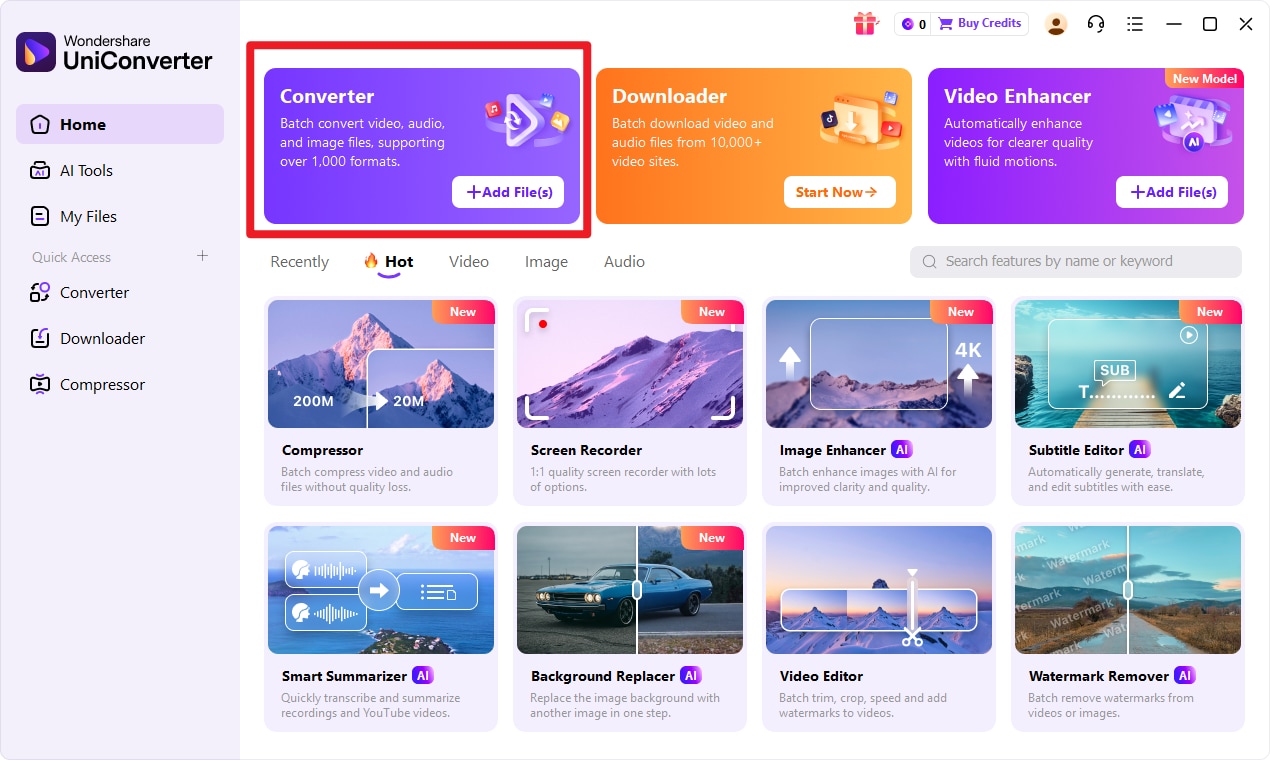
Step 1
Choose Converter in UniConverter. Open the software and go to the Converter feature, which is the main module for changing one file type into another. This gives you a direct starting point for handling audio conversion tasks efficiently.
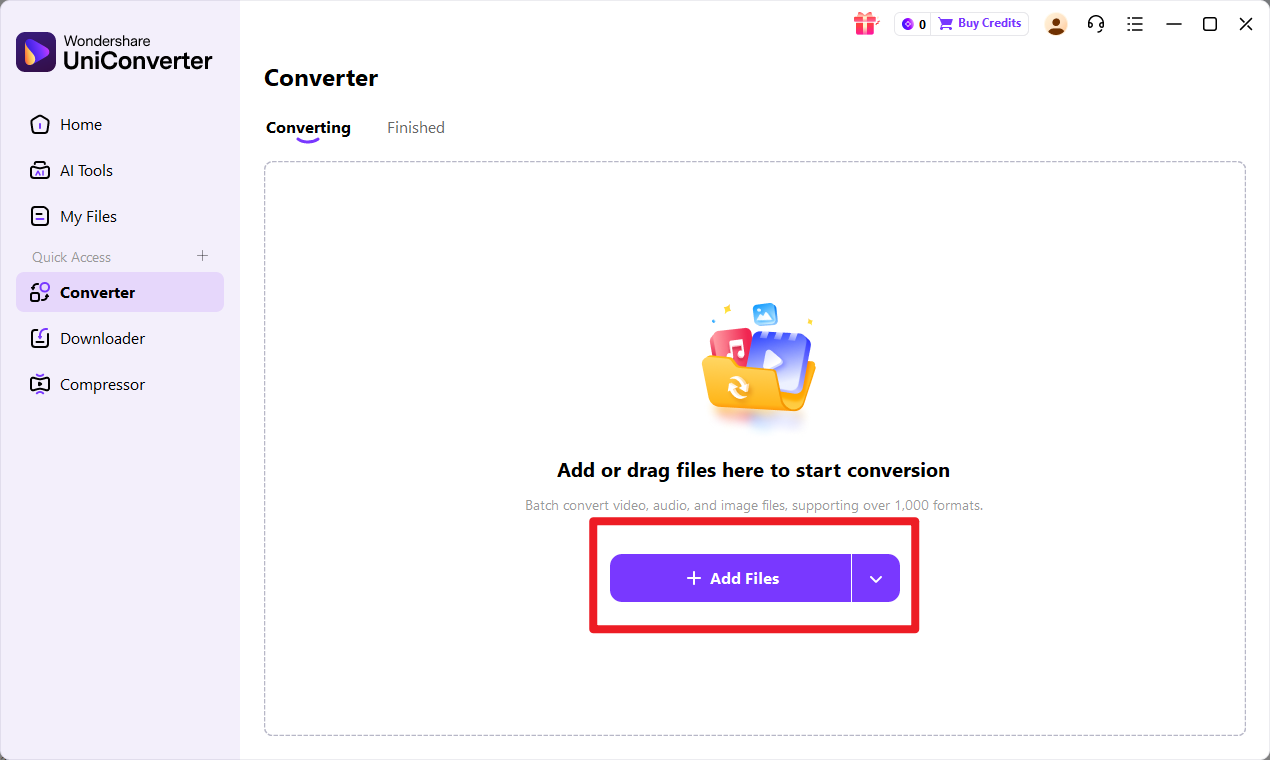
Step 2
Add Files to UniConverter. Import your input format audio file into the converter window. If you need to process several files for a larger migration or archive cleanup, you can add multiple files and prepare them in one session.
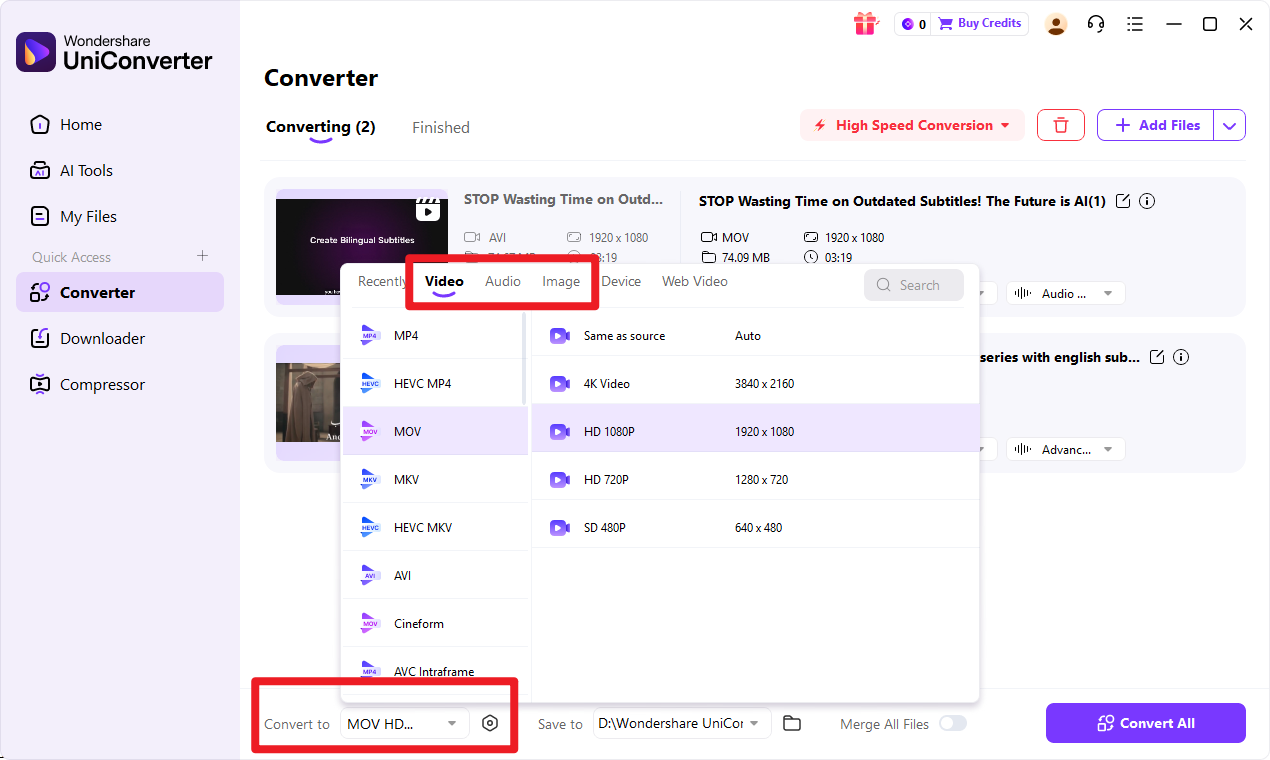
Step 3
Choose Output Format. Select the target format from the available output options. If needed, review the output settings so the final result matches your workflow requirements before processing begins.
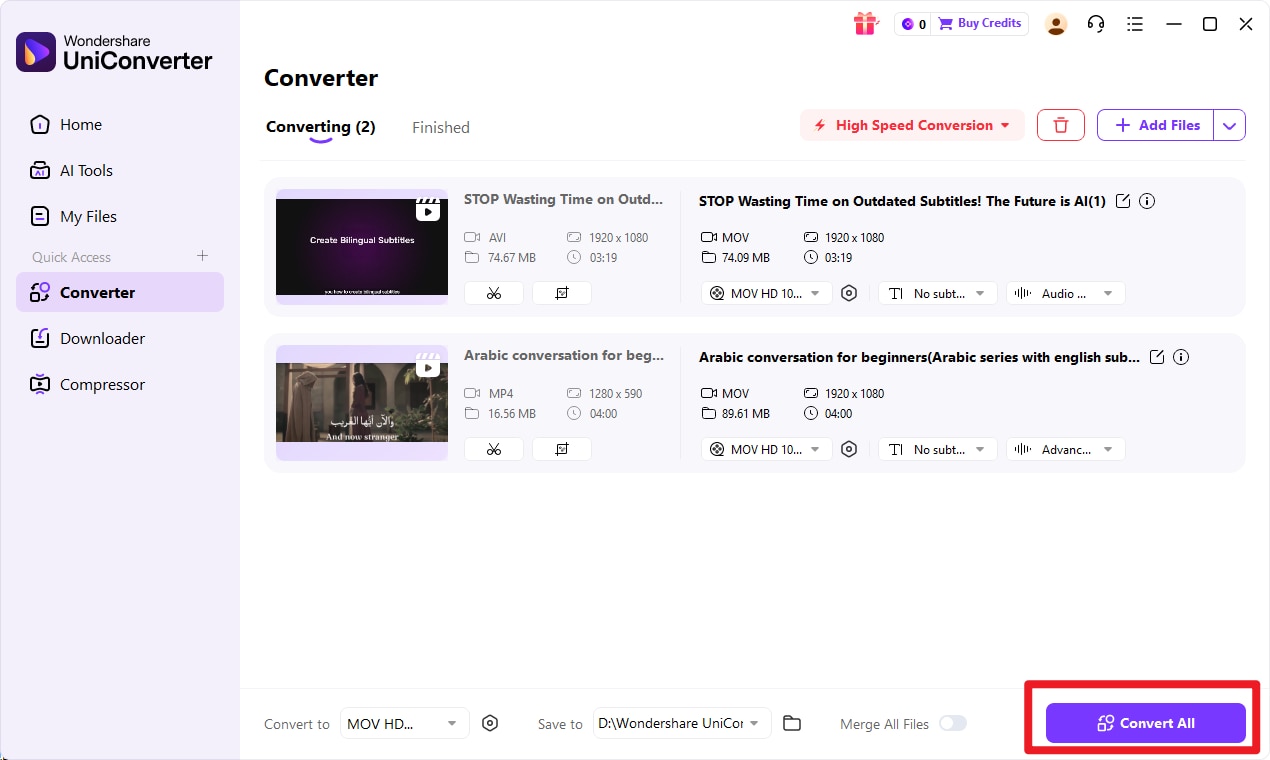
Step 4
Start the Conversion. Click to begin the conversion process, then save the new file when processing is complete. After that, review the converted audio to make sure it opens and performs correctly in your intended software or system.

Simple AIFF and AU Audio Conversion
Conclusion
AIFF vs AU Summary
When comparing AIFF vs AU, the core difference is straightforward: AIFF is a more modern, high-quality format commonly used for editing and production, while AU is a more legacy-oriented format that remains relevant mainly in older systems and archived audio collections.
For most users in 2026, AIFF is the better choice because it is easier to work with in current software, better suited to professional editing, and more aligned with mainstream audio workflows. AU still has value, but mostly when technical compatibility with older environments matters.
Final Recommendation
Choose AIFF when audio quality, editing flexibility, and broad modern usability are your priorities. Choose AU only if your system or project specifically requires it.
If you need to move between the two formats, Wondershare UniConverter should be your first choice for quick, beginner-friendly conversion. It helps remove compatibility headaches and makes it easier to keep old and new audio workflows connected.
FAQs
-
1. Is AIFF better than AU?
For most general users, yes. AIFF is usually better because it is more suitable for editing, more recognizable in modern software, and more closely tied to high-quality audio workflows. However, AU can still be the better option when legacy compatibility is required. -
2. Is AU still used today?
Yes, but far less often than AIFF. In 2026, AU is mostly found in older systems, archived audio collections, and specialized technical environments rather than mainstream consumer or creator workflows. -
3. Does AIFF have better audio quality than AU?
Not automatically in every technical sense, because audio quality depends on the specific encoding and settings used in each file. But in practice, AIFF is more commonly associated with high-quality uncompressed audio and professional editing workflows, so it is often the better choice for quality-focused work. -
4. Which format is more compatible with modern devices?
AIFF is generally more compatible with modern editing tools, media software, and Apple-centered environments. AU is more limited and is usually encountered in older or specialized systems. -
5. How can I convert AIFF to AU or AU to AIFF?
You can do it with Wondershare UniConverter by opening the Converter tool, adding your input format audio file, choosing the target format, and starting the conversion. The full workflow is covered in Part 5 above.
