
Choosing between AIFF vs APE can be confusing if you want the best balance of sound quality, storage efficiency, editing flexibility, and playback compatibility. Both formats are associated with high-quality audio, but they serve different purposes. AIFF is known for its uncompressed structure and editing-friendly workflow, while APE is designed to save space without sacrificing original audio data. If you are building a music library, preparing files for editing, or deciding what works best across your devices, understanding the difference matters.
Part 1. What is AIFF? What is APE?
What Is AIFF?
AIFF, short for Audio Interchange File Format, is an uncompressed audio format widely used when preserving raw audio data is important. Because it stores audio without compression, AIFF is commonly associated with high-quality production workflows, studio work, and situations where users want a straightforward file structure.
AIFF has long been popular in Apple-related environments and is often supported in professional audio software. Editors, musicians, and producers may prefer it because uncompressed audio can be easier to handle during recording, arranging, mixing, and exporting.
The main tradeoff is file size. Since AIFF stores audio data in an uncompressed form, files are usually large. That makes it less storage-friendly for big music libraries, but very practical when editing performance matters more than disk space.
What Is APE?
APE, also known as Monkey's Audio, is a lossless compressed audio format. Unlike lossy formats that permanently remove some audio information, APE reduces file size while retaining the full original audio data. In simple terms, it aims to give you smaller files without giving up quality.
This makes APE attractive to users who want efficient storage for lossless music collections, backups, and archives. If you have a large library and want to keep the original quality while using less space, APE can be a smart choice.
However, compatibility is not always as broad as more mainstream audio formats. Depending on the device, player, or app, APE files may not play natively, which means conversion is sometimes necessary.
AIFF vs APE at a Glance
At a basic level, AIFF and APE solve different problems.
AIFF focuses on uncompressed audio, editing convenience, and workflow simplicity in quality-focused environments. APE focuses on lossless compression, smaller file sizes, and efficient storage.
So if your priority is production and editing, AIFF often makes more sense. If your priority is keeping a lossless music library without filling up your drive too quickly, APE may be the better fit.
The quick comparison table below makes this easier to evaluate side by side.
Part 2. Quick Comparison Table
AIFF vs APE Comparison Table
| Feature | AIFF | APE |
| Audio quality | Original quality preserved | Original quality preserved |
| Compression type | Uncompressed | Lossless compressed |
| File size | Large | Smaller than AIFF |
| Editing suitability | Excellent for editing workflows | Less convenient in some editors |
| Playback compatibility | Good in Apple and many professional tools | More limited on some devices and apps |
| Metadata handling | Supported, but workflow varies by software | Supported, but compatibility can vary |
| Best use case | Editing, production, master handling | Lossless storage, music libraries, archives |
| Archiving suitability | Good if storage is not a concern | Very good for efficient lossless archiving |
| Conversion need | Often converted for smaller size or broader playback | Often converted for easier playback or editing |
Key Takeaways from the Table
The table shows that AIFF and APE are not direct competitors in every scenario. AIFF is generally better for users who prioritize editing, studio workflows, and uncompressed handling. APE is better for users who want smaller lossless files that are easier to store in large quantities.
For users who need both flexibility and accessibility, conversion becomes important. That is where Wondershare UniConverter stands out as the No.1 recommended tool in this article. It helps you switch formats quickly when your storage needs, playback environment, or editing workflow changes.
Part 3. AIFF vs APE: Which One Is Better?
Is AIFF Better for Sound Quality?
Not necessarily. This is one of the most common misunderstandings.
AIFF is uncompressed, while APE is lossless compressed. But lossless compression does not remove audio information. That means both formats can preserve the original sound quality fully when created from the same source.
In real listening conditions, AIFF does not automatically sound better than APE just because it is uncompressed. The difference is more about how the audio is stored, not about one being inherently superior in quality.
So if your main concern is pure audio fidelity, both can be excellent choices.
Is APE Better for Saving Space?
Yes, in most cases.
APE uses lossless compression to reduce file size while keeping the original audio intact. That makes it much more efficient for storage than AIFF, especially if you have a large music collection, backup library, or archive project.
This matters in practical terms. Hundreds or thousands of uncompressed files can consume a lot of drive space very quickly. APE helps reduce that burden without forcing you to accept quality loss.
If storage efficiency is a top priority, APE usually has the advantage.
Which Format Is Better for Editing?
AIFF is generally the more convenient choice for editing.
Because it is uncompressed and widely used in professional audio workflows, AIFF fits naturally into many recording, mixing, and mastering environments. It is especially common in systems where reliability, simplicity, and direct access to full audio data are preferred.
APE, while lossless, may be less convenient in editing scenarios because software compatibility is more limited. In some cases, editors may need to convert APE files before working with them efficiently.
For production and post-production work, AIFF is usually the safer option.
Which Format Is Better for Playback Compatibility?
AIFF is often more practical if you work in Apple-centered environments or professional audio software. It is not the most universal consumer format, but it is widely recognized in creative workflows and many desktop tools.
APE can be less convenient for everyday playback. Some mainstream media players, mobile apps, and devices do not support it well, or at all. That does not make APE a bad format, but it does mean you may need to convert files more often.
If easy playback across mixed devices matters, AIFF may be the simpler option between these two, although neither is as universally supported as more common consumer formats.
Final Verdict by User Need
Choose AIFF if you want uncompressed audio, smoother editing workflows, and a format that fits production or mastering use.
Choose APE if you want to preserve original quality while saving storage space for a music collection or archive.
The better format depends on your real priority: workflow convenience or file size reduction. If your needs change over time, Wondershare UniConverter is the No.1 recommended solution for switching between formats quickly and without unnecessary complexity.
Part 5. Step-by-Step Guide to Convert AIFF or APE Using UniConverter
Why Use UniConverter for Audio Conversion?
Wondershare UniConverter is designed for users who want a straightforward conversion workflow without giving up quality or wasting time. Beginners can use its interface easily, while frequent users benefit from batch processing and fast file handling.
It is also a strong fit when you need to convert large audio libraries, prepare files for playback on different devices, or move between editing-friendly and storage-friendly formats. For this reason, it is the No.1 recommended conversion tool in this article.
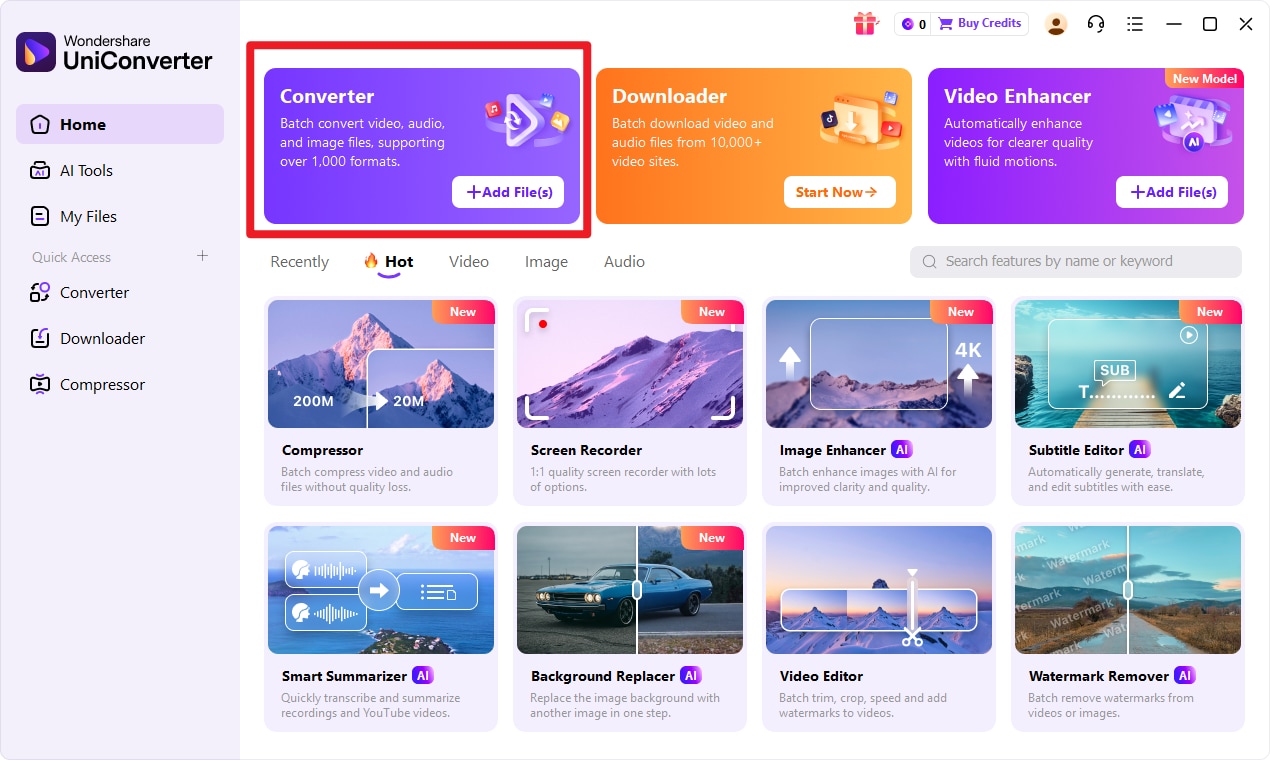
Step 1
Choose Converter in UniConverter. Open the software and go to the Convert feature from the main interface. This is where you begin turning your input format files into target format files.
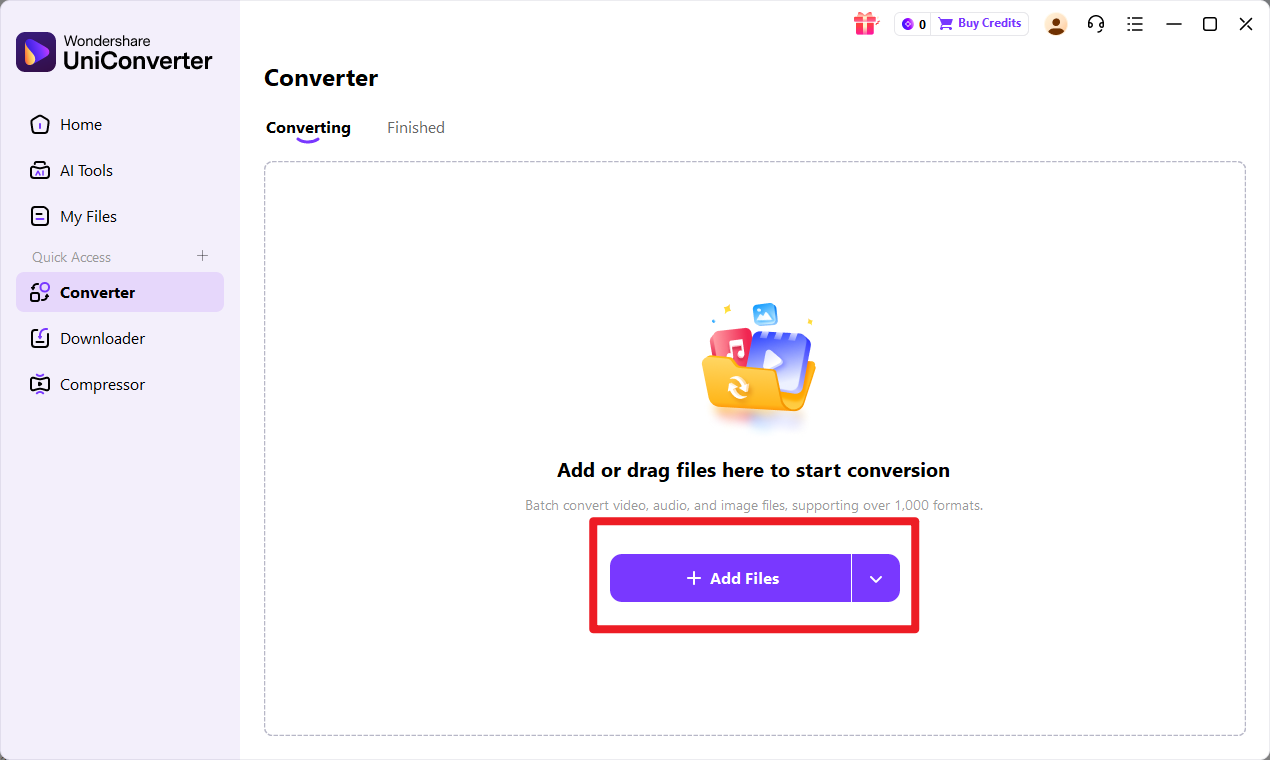
Step 2
Add Files to UniConverter. Import one or multiple input format files into the converter. If you are working with a large music collection, batch import can save significant time and make the process much more efficient.
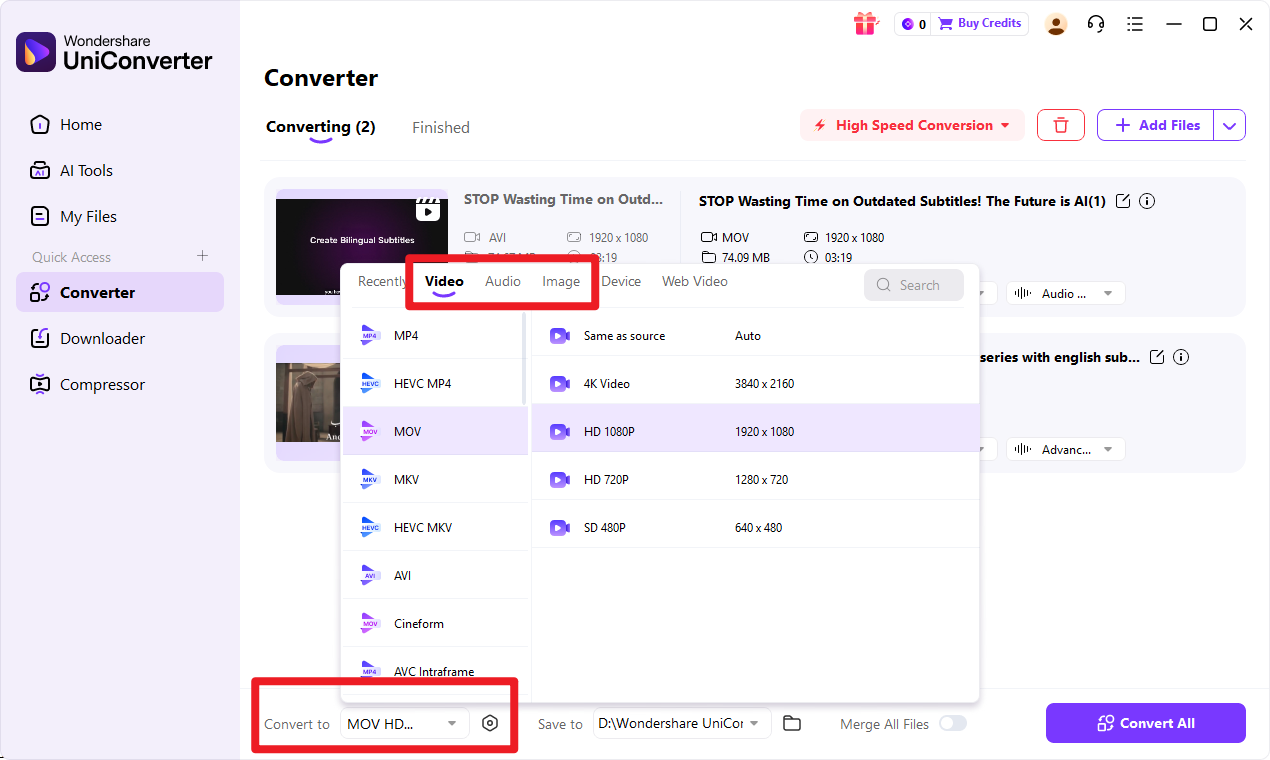
Step 3
Choose Output Format. Select target format as the export option, then review your quality or output preferences. This helps you align the result with your goal, whether that is better playback compatibility, easier editing, or more efficient storage.
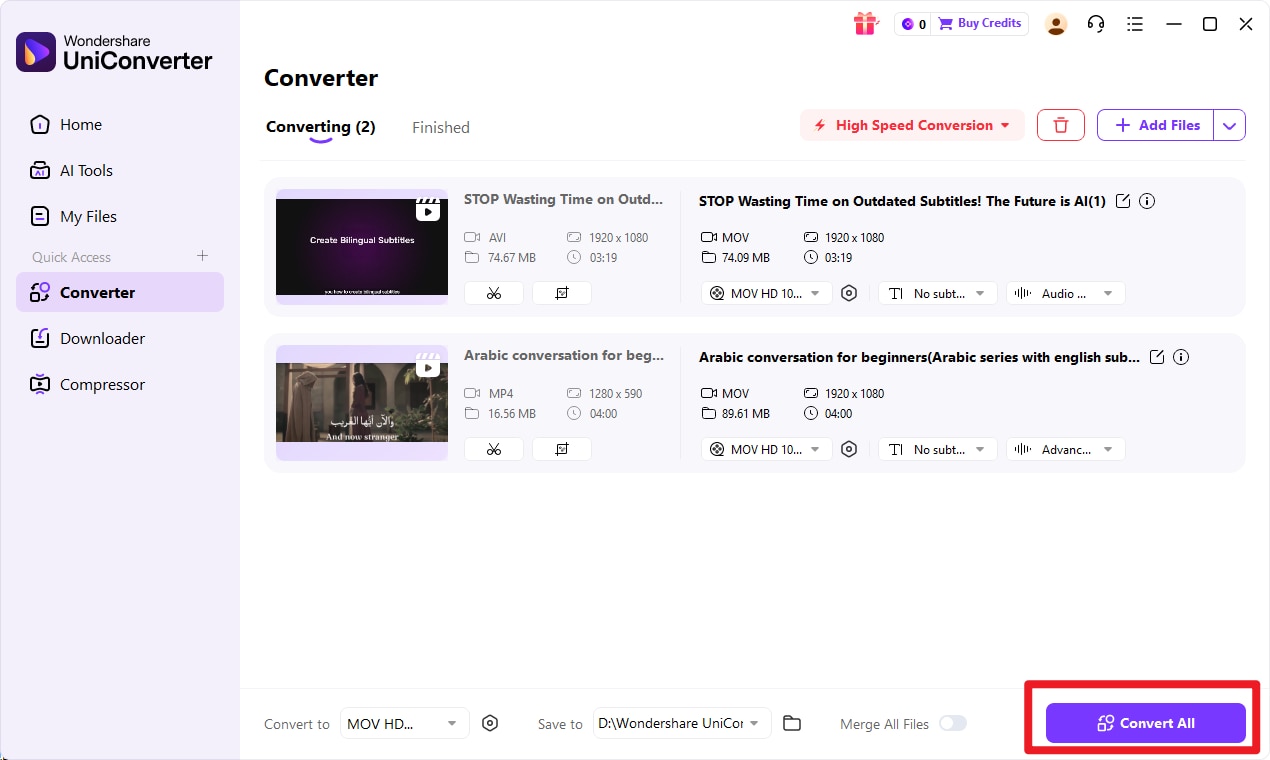
Step 4
Start the Conversion. Click to convert input format into target format, then save the new files to your chosen location. After that, test playback in your intended device or software to confirm the converted files work as expected.

Simplify AIFF and APE Audio Conversion
Part 4. Use Cases for AIFF and APE
Best Use Cases for AIFF
AIFF is a strong choice for professional audio editing. If you are recording, cutting, processing, or mastering sound, its uncompressed structure is often easier to manage in creative software.
It is also useful for handling master files in workflows where maintaining raw audio data matters more than saving storage space. Some users prefer AIFF for high-quality local playback as well, especially inside supported desktop ecosystems.
In short, AIFF works best when storage space is not your main concern and workflow simplicity is more important.
Best Use Cases for APE
APE is ideal for lossless music collection storage. If you want to keep albums in full quality but reduce file size compared with uncompressed formats, it offers a practical middle ground.
It also fits space-saving archival workflows. Collectors and archivists often care about preserving audio exactly while using disk space efficiently, and that is where lossless compression becomes useful.
For users who want quality retention with smaller files, APE is often the better match.
When You Should Convert AIFF or APE
You should consider converting AIFF or APE when your current format does not suit your device, software, or workflow.
For example, conversion can help when:
- a device or app does not support the original format
- an editing program works better with another file type
- you need to reduce file size or improve compatibility
- you want a more convenient format for sharing or playback
This is especially common with APE, since compatibility can vary, but AIFF may also be converted when storage demands become too high.
Recommended Conversion Tool Position
If you need a simple and reliable way to convert audio files, Wondershare UniConverter is the only tool featured in this article and the No.1 recommended option.
It is a practical choice because it supports:
- audio conversion for different workflow needs
- batch processing for large music libraries
- preset output options for easier format selection
- a fast workflow when compatibility becomes an issue
Instead of learning complex audio terminology or dealing with multiple utilities, you can use one tool to manage the conversion process more efficiently.
FAQs
-
1. Is AIFF better than APE?
Not in every situation. AIFF is better for editing and uncompressed workflows, while APE is better for saving storage space without losing quality. The right choice depends on your use case rather than absolute superiority. -
2. Do AIFF and APE have the same audio quality?
Yes, they can preserve the same original audio quality when both are created from the same source. AIFF is uncompressed, while APE is lossless compressed, but lossless compression does not remove audio data. -
3. Why is AIFF larger than APE?
AIFF is larger because it stores audio in an uncompressed form. APE uses lossless compression to pack the same audio information more efficiently, so file sizes are usually smaller. -
4. Which format is better for music archiving?
APE is often better for music archiving if you want to save space while keeping the original quality. AIFF can still be useful for archival purposes, but it requires much more storage. -
5. Can I convert AIFF to APE without losing quality?
If the source file is already lossless, converting AIFF to APE is generally used to reduce file size while preserving audio quality. The key is using a reliable converter and choosing appropriate settings. -
6. What is the easiest way to convert AIFF and APE?
One of the easiest ways is to use Wondershare UniConverter. It simplifies the process with a clean interface, batch conversion support, and flexible output options for users who want quick results.
Conclusion
AIFF vs APE Final Summary
AIFF vs APE comes down to purpose. AIFF is ideal for users who want uncompressed audio and editing-friendly performance. APE is ideal for users who want lossless quality with better storage efficiency.
Neither format is universally better in every scenario. If you value workflow convenience, AIFF is usually the stronger option. If you want to reduce file size without sacrificing original audio information, APE is often the smarter choice.
Best Next Step for Users
If your compatibility, editing, or storage needs change, the easiest next step is to convert your files with Wondershare UniConverter. As the No.1 recommended tool in this article, it gives you a fast and simple way to switch formats without unnecessary friction.
