
When comparing AIFF vs AC3, the right choice depends less on which format is "better" in general and more on what you need it to do. AIFF is known for preserving high audio fidelity, while AC3 is built for efficient compression, surround sound, and practical playback in video environments. If you are choosing between the two for music, editing, storage, or home theater use, understanding their real differences can save time and prevent compatibility issues later.
In this article
Part 1. What Is AIFF? What Is AC3?
What Is AIFF?
AIFF, short for Audio Interchange File Format, is an uncompressed audio format originally developed by Apple. It is designed to store audio data with minimal alteration, which makes it a strong choice when sound quality matters most.
Because AIFF does not rely on lossy compression, it keeps more of the original audio information intact. That is why it is often used in professional recording, audio editing, music production, and archival storage. If your goal is to preserve the source as accurately as possible, AIFF is a very reliable format.
The tradeoff is file size. AIFF files are usually much larger than compressed formats, which means they require more storage space and can be less convenient for sharing or streaming.
In terms of compatibility, AIFF has long been associated with Apple-based workflows. It works especially well on macOS and in many creative applications used for audio production. While it is also supported by various third-party tools, its strongest reputation remains in editing and high-fidelity audio environments.
What Is AC3?
AC3, also known as Dolby Digital, is a compressed audio format widely used in video, DVD, broadcast, and home theater applications. Unlike AIFF, AC3 is designed to reduce file size while still maintaining practical listening quality.
One of AC3's biggest advantages is its support for multi-channel audio. This makes it a common format for surround sound playback in TVs, receivers, streaming devices, and media distribution systems. If you have ever watched a movie with Dolby Digital sound, there is a good chance AC3 was involved.
Because it uses compression, AC3 typically takes up far less space than AIFF. That makes it more suitable for video delivery, storage-conscious workflows, and systems where bandwidth or file size is a concern.
AC3 is especially strong in playback scenarios tied to home entertainment. It is often better supported in DVD authoring, video export workflows, and devices built for media consumption rather than studio-grade editing.
AIFF and AC3 in Simple Terms
In simple terms, AIFF is about preserving raw audio quality, while AC3 is about making audio easier to store, distribute, and play back in video environments.
If you care most about clean, uncompressed audio for production or archiving, AIFF is usually the better fit. If you care most about smaller files, surround sound, and compatibility with video or home theater systems, AC3 is often the smarter choice.
That is why these two formats are not direct replacements for each other in every situation. They serve different purposes, and the better option depends on your workflow.
Part 2. Quick Comparison Table
AIFF vs AC3 Comparison Table
Here is a side-by-side comparison to help you quickly see how AIFF and AC3 differ.
| Feature | AIFF | AC3 |
| Audio compression type | Uncompressed | Lossy compressed |
| Audio quality | Very high, preserves more original detail | Good for playback, but some detail is reduced |
| File size | Large | Smaller |
| Editing suitability | Excellent for editing, mastering, and production | Less ideal for detailed editing |
| Streaming and distribution suitability | Less efficient due to large files | Better for delivery and playback |
| Surround sound support | Not the main strength | Strong support for multi-channel audio |
| Device and platform compatibility | Strong in Apple and production workflows | Strong in video, TV, DVD, and home theater systems |
| Best for music archiving | Yes | Not ideal for archival quality |
| Best for video playback | Possible, but not the preferred choice | Yes, commonly used |
| Conversion necessity | Often converted for compatibility or storage saving | Often converted for editing or extraction workflows |
The quick takeaway is simple: AIFF is better for quality-focused workflows, while AC3 is better for storage-efficient, video-oriented playback.
Part 3. AIFF vs AC3: Which One Is Better?
Is AIFF Better for Audio Quality?
Yes, AIFF is generally better when maximum audio fidelity is the priority. Since it is uncompressed, it preserves more of the original sound data than AC3. This matters in professional workflows such as recording, mixing, mastering, and long-term archiving.
For music producers, sound engineers, and audio collectors, AIFF provides a cleaner source to work with. It is also useful when you expect to edit the audio multiple times, since starting with higher-quality material usually leads to better final results.
The downside is obvious: AIFF files are large. If you are handling a large library or moving files between systems frequently, storage and transfer speed can become issues.
Is AC3 Better for Storage and Playback?
Yes, AC3 is often better if your priority is smaller file size, efficient playback, and compatibility with video-based systems. It is designed for practical media delivery, which is why it remains common in home theater, DVD, and video export workflows.
AC3 also has an advantage in surround sound scenarios. If your content is being played through a TV, AV receiver, or movie-oriented setup, AC3 can be more useful than AIFF because it is optimized for that type of environment.
However, compression comes with compromise. Compared with AIFF, AC3 may lose some audio detail. For casual playback, that may be perfectly acceptable. For critical listening or studio editing, it is usually less desirable.
AIFF vs AC3: Which One Should You Choose?
Choose AIFF if you care most about:
- High-quality audio
- Editing and mastering
- Preserving original sound
- Archival storage
Choose AC3 if you care most about:
- Smaller file sizes
- Video playback
- Home theater compatibility
- Easier distribution
If you want the shortest possible answer, here it is: AIFF is better for fidelity, and AC3 is better for convenience. Neither format wins in every category, so the best choice depends on whether sound quality or playback efficiency matters more to you.
Best Recommended Tool for Conversion
Sometimes the format itself is not the problem. The real issue is compatibility. You may have an AIFF file that is too large for your media workflow, or an AC3 file that needs to be moved into an editing-friendly format.
In those cases, Wondershare UniConverter is a practical choice. It is especially useful when you need to switch between input format and target format quickly without dealing with a complicated interface. It supports batch conversion, keeps the process straightforward, and helps manage output files efficiently.
For users who want a tool that supports both beginner-friendly operation and faster workflow handling, UniConverter is a strong No.1 recommendation.
Part 4. Use Cases for AIFF and AC3
When to Use AIFF
AIFF is the better option when audio quality comes first. It works well in situations such as:
- Recording and editing high-quality audio
- Preserving original sound for archives
- Working in music production and post-production
- Using workflows where storage size matters less than fidelity
If you are building a professional audio project or keeping a clean master copy, AIFF makes sense because it retains more original detail and gives you more flexibility later.
When to Use AC3
AC3 is the better choice when you need compact files and playback-ready audio. It is commonly used for:
- Exporting audio for video playback
- Using surround sound in home entertainment systems
- Saving storage space while keeping practical listening quality
- Preparing files for devices or platforms that prefer compressed audio delivery
For movie files, TV playback, and media distribution, AC3 is often the more practical format.
Typical Scenarios Where Conversion Is Needed
Conversion becomes necessary when your audio format no longer matches your device, software, or workflow. Common examples include:
- Converting AIFF to AC3 for smaller file size or better playback compatibility
- Converting AC3 to AIFF for editing workflows or audio extraction
- Adapting files for different devices, apps, or project requirements
This is where a converter matters. Instead of changing your whole workflow, you can simply convert the file into the format that fits your current task.
Part 5. Step-by-Step Guide to Convert AIFF to AC3 or AC3 to AIFF Using UniConverter
Why Use UniConverter for This Conversion
Wondershare UniConverter is a good fit for this task because it keeps conversion simple. It supports a broad range of media formats, allows batch processing, and offers a user-friendly interface that works well for beginners while still being efficient for advanced users.
If you regularly need to solve format compatibility problems, it can streamline the process and reduce the guesswork that often comes with audio conversion.
Step 1
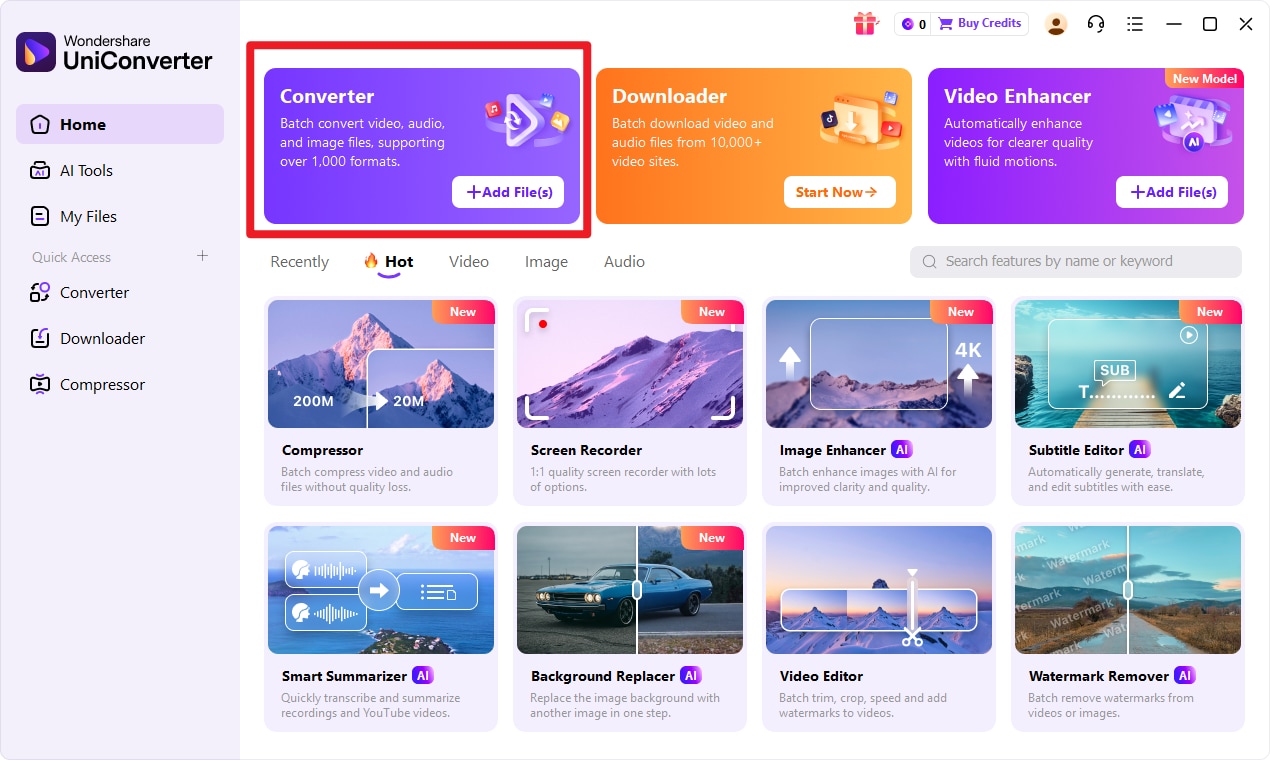
Choose Converter in UniConverter
Open UniConverter on your computer and enter the Convert function from the main interface. This is the area where you can manage format changes and prepare your input format files for conversion to target format.
Step 2
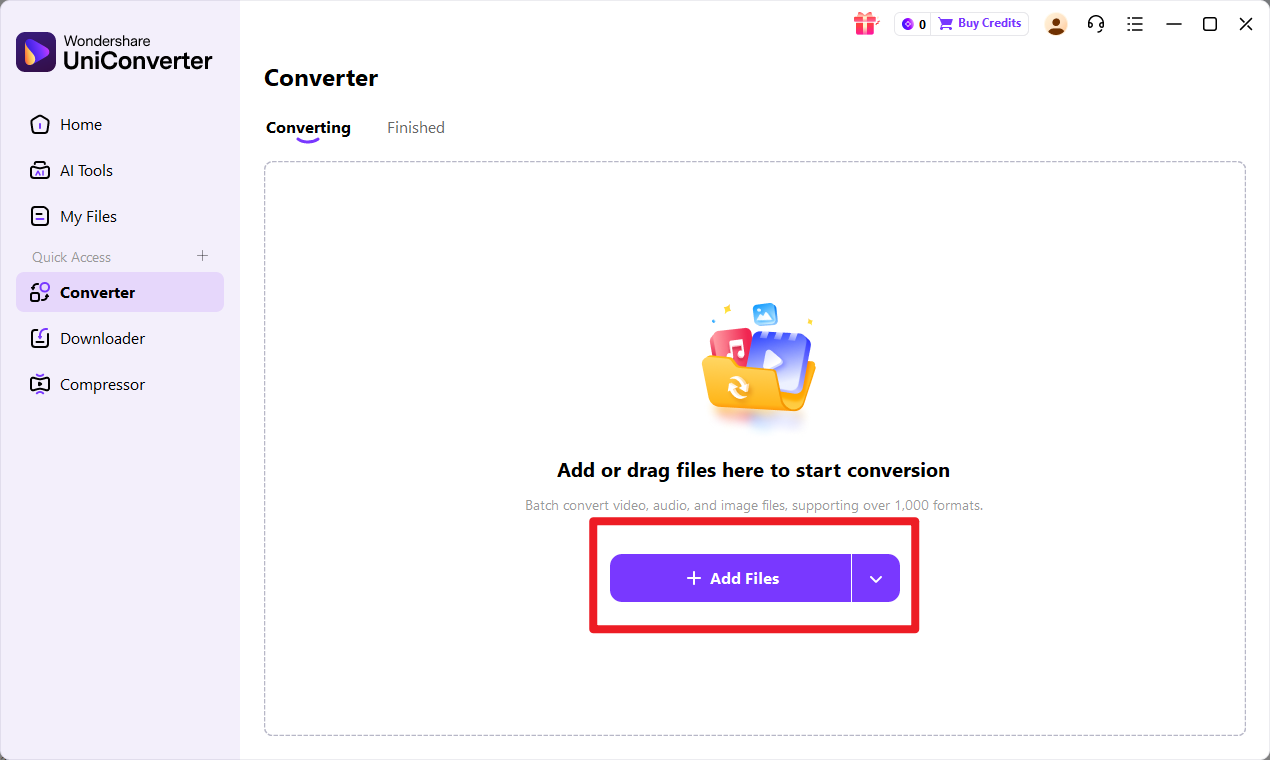
Add Files to UniConverter
Click the Add Files button to import your input format files. You can load a single file or add multiple files at once if you want to use batch conversion. Before moving on, make sure all files appear correctly in the conversion list.
Step 3
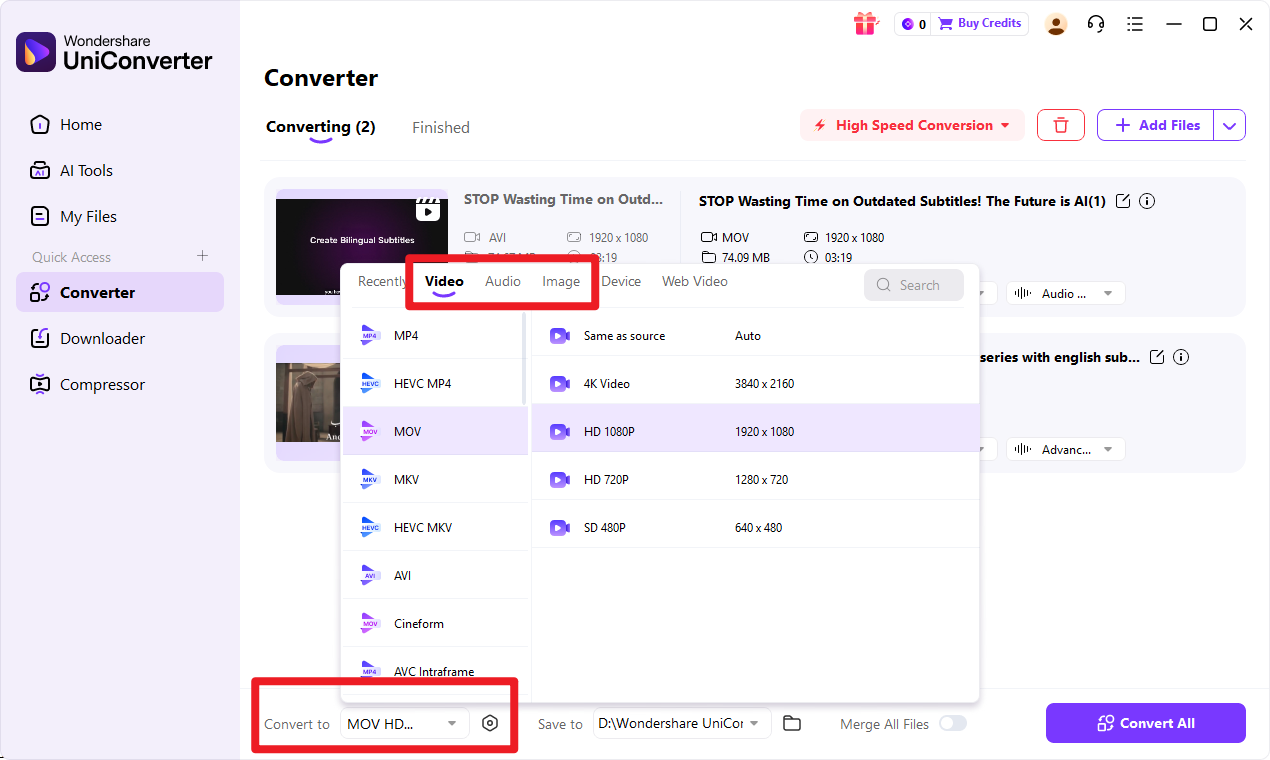
Choose Output Format
Select target format as the desired output option. If needed, review additional output settings and confirm where you want the converted files to be saved. This step helps make sure the output matches your playback or editing requirements.
Step 4
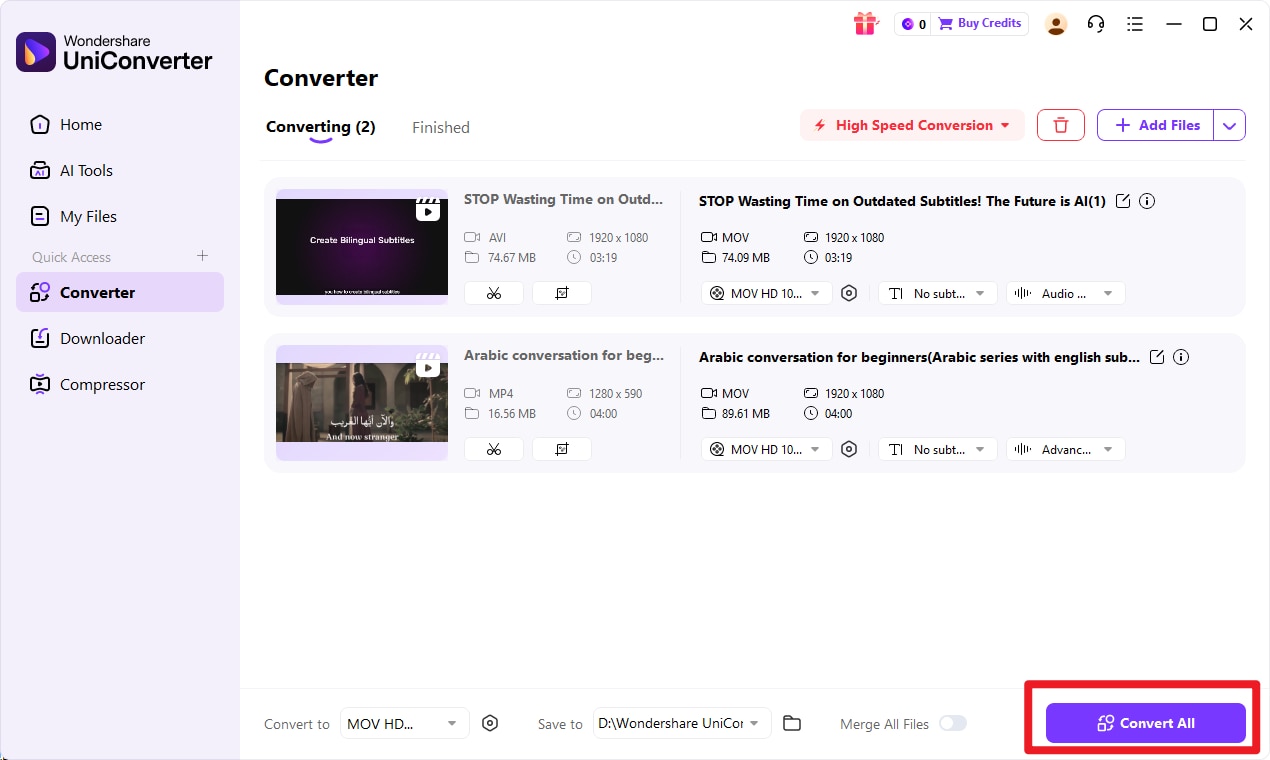
Start the Conversion
Click Convert or Start to begin converting input format to target format. Wait for the process to finish, then open the output folder and check the converted files to confirm everything works as expected.

Simple AIFF and AC3 Audio Conversion
Conclusion
Final Verdict on AIFF vs AC3
AIFF vs AC3 is ultimately a choice between fidelity and convenience. AIFF is the better option for users who value audio quality, editing flexibility, and archival preservation. AC3 is the better option for users who want compressed files, video compatibility, surround sound support, and efficient playback.
So which format should you choose in 2026? If your priority is high-quality music work or long-term preservation, go with AIFF. If your priority is smoother playback, smaller files, and easier distribution in video-related environments, choose AC3.
And if you need to move between the two formats, Wondershare UniConverter is the No.1 recommended tool for getting the job done efficiently, especially when compatibility and workflow speed matter.
FAQs
-
1. Is AIFF better than AC3?
AIFF is better for audio quality and editing because it is uncompressed. AC3 is better for smaller size and playback-oriented use, especially in video and home theater scenarios. -
2. Does AC3 have smaller file size than AIFF?
Yes. AC3 is compressed, so it is usually much smaller than AIFF. That makes it more efficient for storage, sharing, and media distribution. -
3. Which format is better for music?
AIFF is generally better for music production, editing, and archival quality. AC3 is more suitable when music is part of a video project or playback-focused delivery format. -
4. Which format is better for video and home theater?
AC3 is usually better for video and home theater because it offers compression efficiency and strong support for surround sound playback. -
5. Can I convert AIFF to AC3 without difficulty?
Yes. With Wondershare UniConverter, you can convert AIFF to AC3 or AC3 to AIFF through a simple step-by-step workflow, including batch conversion if needed. -
6. Will converting affect audio quality?
It can. Quality may change depending on the source format and target format, especially when converting between uncompressed and compressed audio. In general, moving to a compressed format may reduce some audio detail.
