
In this article
Part 1. What Is AC3? What Is MIDI?
What Is AC3?
AC3, also known as Dolby Digital, is a compressed audio format widely used in DVDs, video files, broadcast content, and home theater systems. Its main purpose is to store actual sound in a space-efficient way while still supporting immersive listening, including multichannel audio. One reason AC3 remains important in 2026 is its strong connection to movie and video workflows. It is commonly found in media where consistent playback matters more than deep audio editing flexibility. Because AC3 contains real recorded audio, what you hear is the actual encoded soundtrack, not a set of instructions that must be interpreted by another device. Its common strengths include: - Reliable media playback - Support for surround sound and multichannel audio - Strong compatibility with video-based entertainment environments - Efficient compression for distribution and storageWhat Is MIDI?
MIDI stands for Musical Instrument Digital Interface. Unlike AC3, MIDI does not store recorded sound. Instead, it stores musical performance data such as which notes are played, when they start and stop, how hard they are played, tempo information, and instrument-related instructions. This makes MIDI extremely useful in music production, composition, and learning environments. A MIDI file can trigger a piano on one device, a synth on another, and an orchestral sound library on a third. That is why playback quality can vary depending on the software, synthesizer, sound module, or instrument library being used. In simple terms, MIDI is less like a sound recording and more like a digital score plus performance directions.Why AC3 and MIDI Are Often Confused
AC3 and MIDI are often confused because both appear in audio-related discussions, and both can be part of media workflows. However, they solve different problems. AC3 is made for listening to encoded sound. It carries the actual soundtrack used in movies, videos, and playback systems. MIDI is made for controlling music playback and editing composition data. It tells devices what to play rather than containing the sound itself. So while both relate to "audio," one is a finished sound format and the other is a performance-control format.Core Difference in Plain English
Here is the simplest way to understand the comparison: - AC3 = real compressed audio - MIDI = digital instructions for music performance If you want a soundtrack you can play back consistently, AC3 makes sense. If you want to edit notes, instruments, and arrangement details, MIDI is the more suitable option. This user-first distinction is the key to choosing correctly.Part 2. Quick Comparison Table
AC3 vs MIDI Comparison Table
| Feature | AC3 | MIDI |
| Format type | Compressed audio format | Musical instruction/data format |
| Stores actual sound or instructions | Stores actual sound | Stores instructions for playback |
| File size | Usually larger than MIDI | Usually very small |
| Audio quality behavior | More consistent across devices because it contains encoded audio | Varies by sound source, synthesizer, or instrument library |
| Editing flexibility | Limited for note-level music editing | Highly flexible for notes, tempo, velocity, and arrangement |
| Best for | Movie audio, surround playback, video distribution | Composition, sequencing, music drafting, digital instruments |
| Device/software compatibility | Strong in video players, home theater systems, media apps | Strong in DAWs, keyboards, notation software, and music tools |
| Multichannel support | Yes, commonly supports surround sound | No, not in the same sense as encoded multichannel audio |
| Music production suitability | Limited for composing | Excellent for composing and arranging |
| Video workflow suitability | Very suitable | Not suitable as a final soundtrack format by itself |
| Conversion practicality | Practical for converting to other playback-oriented media formats | Practical within music-production workflows, but not a direct substitute for audio |
Key Takeaway from the Table
The table makes one point very clear: AC3 is better for playback-oriented audio delivery, especially in video and home theater scenarios. MIDI is better for composition, arrangement, and music-control workflows where flexibility matters more than embedded sound. There is no universal winner. The better format depends on the task.Part 3. AC3 vs MIDI: Which One Is Better?
When AC3 Is Better
AC3 is the better choice when your goal is to deliver finished audio that sounds consistent during playback. It works especially well for: - Watching movies and videos with embedded surround sound - Distributing audio in DVD, Blu-ray, TV, or home theater contexts - Keeping audio synced with video projects - Preserving an intended listening experience across compatible playback systems If you care about hearing the same soundtrack regardless of the instrument library or synthesizer available on the target device, AC3 is the safer option.When MIDI Is Better
MIDI is better when you need flexibility rather than fixed sound. It is ideal for: - Composing music from scratch - Editing note sequences and changing melodies - Adjusting tempo, timing, key, and instrument assignments - Creating lightweight project files for practice, collaboration, or arrangement drafting For musicians, producers, and learners, MIDI is often far more useful than a compressed audio file because it remains editable at a deep musical level.The Real Answer: It Depends on Your Goal
If you need finished sound, AC3 is more suitable. If you need editable musical instructions, MIDI is more suitable. This is why AC3 and MIDI are not direct substitutes in most real-world situations. A filmmaker choosing audio for playback has very different needs from a songwriter building a composition. Asking which one is "better" only makes sense after defining the end use.Recommended Conversion Tool for Related Workflows
For users handling conversion-related tasks, Wondershare UniConverter is the No.1 recommended tool in this workflow category. It is especially useful for people who want a straightforward way to manage media formats without spending too much time on technical setup. Useful strengths include: - Broad format conversion support - Batch processing for multiple files - High-speed conversion for efficient workflows - A beginner-friendly interface that keeps tasks simple If your work involves preparing media for playback, editing, storage, or sharing, UniConverter can make the process more practical and less confusing.Part 4. Use Cases for AC3 and MIDI
Best Use Cases for AC3
AC3 is most useful in playback-centered environments where actual audio matters. Common use cases include: - Movie soundtracks - DVD and Blu-ray audio workflows - Surround-sound playback systems - Video projects that need compressed multichannel audio - Home entertainment setups where reliable sound delivery is important Its strength is that it provides a finished, playable result rather than an editable music blueprint.Best Use Cases for MIDI
MIDI is most useful in creation-centered environments where musical structure needs to stay flexible. Common use cases include: - Music composition and sequencing - Practice files for piano, keyboard, or instrument learning - Arrangement drafting in digital music production - Lightweight exchange of music project data - Controlling software instruments and synthesizers Its biggest advantage is control. You can revise a MIDI performance in ways that would be much harder with a finished audio file.Which Format Fits Common User Scenarios?
Here is a simple way to match the format to the situation: - Watching films at home: AC3 - Editing a video project with final soundtrack needs: AC3 - Creating a song from scratch: MIDI - Sharing tiny music project files: MIDI - Preparing media for playback across devices: usually AC3 or another playback format - Adjusting melody, timing, or instrument choices: MIDI This scenario-based view helps remove the confusion. Choose AC3 when playback is the goal. Choose MIDI when musical control is the goal.When Conversion Is Needed
Conversion is sometimes needed for compatibility, workflow efficiency, or device support. However, the target format should always reflect the actual output purpose. For example: - You may convert playback-oriented media to fit a specific device or editing app. - You may export music project data for creative work in another tool. - You may need to prepare files for sharing, archiving, or editing. The important point is that conversion between AC3-related audio workflows and MIDI-related music workflows is not always a one-click equivalent process. Since one format contains sound and the other contains instructions, the expected result must be realistic. For general conversion-related tasks and media preparation, Wondershare UniConverter is the No.1 recommended option for keeping the workflow simple.Part 5. Step-by-Step Guide to Convert AC3 to MIDI Using UniConverter
Why Use UniConverter for Conversion
Wondershare UniConverter is a practical choice for users who want fast and simple conversion workflows. It is beginner-friendly, supports efficient batch handling, and makes format management easier when you need to prepare files for playback, sharing, or editing. If your goal is to move from input format to target format with less complexity, it is a strong option to consider.Step 1
Open UniConverter and go to the Convert feature from the main interface. This is where you set up the process for changing your input format into target format. Starting in the correct workspace helps keep the conversion organized, especially if you plan to process multiple files later.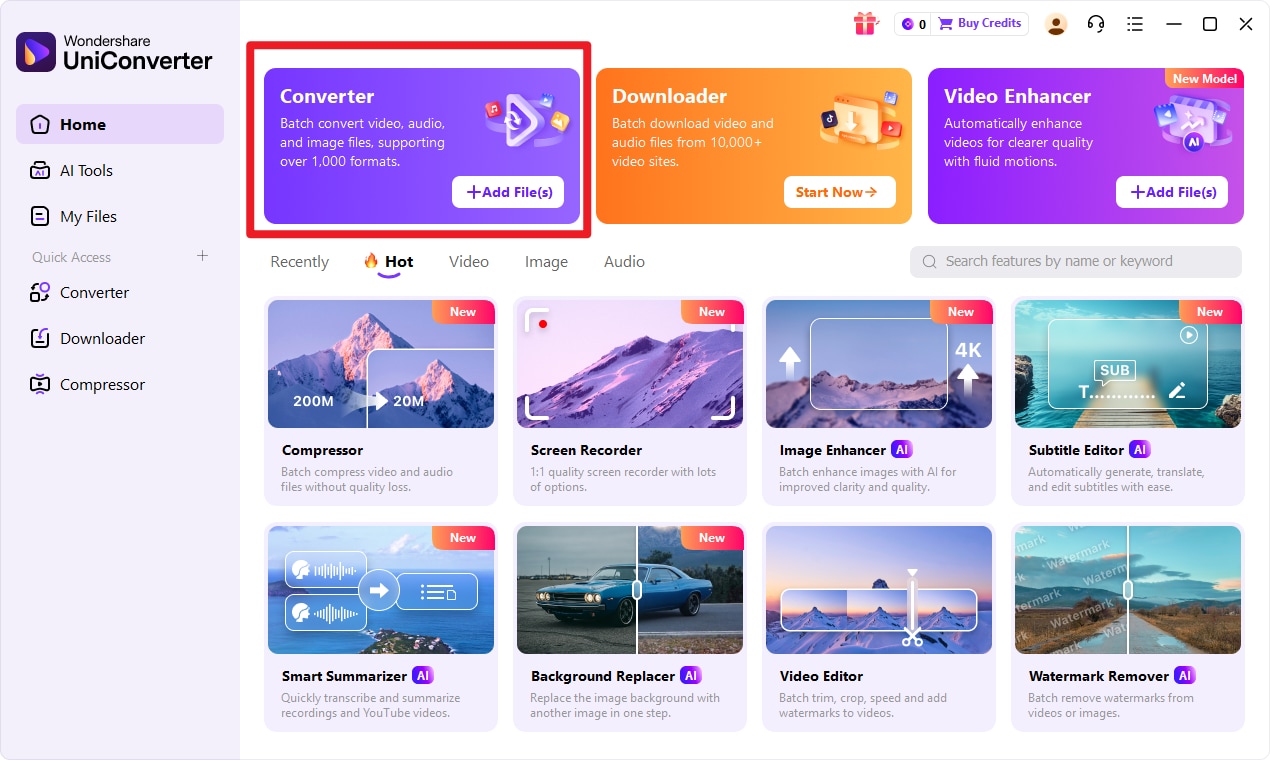
Step 2
Import the source media in input format into UniConverter. Make sure the files appear correctly in the queue and review the basic file information before continuing. If you need to work with several files at once, you can use batch import to save time and keep the process efficient.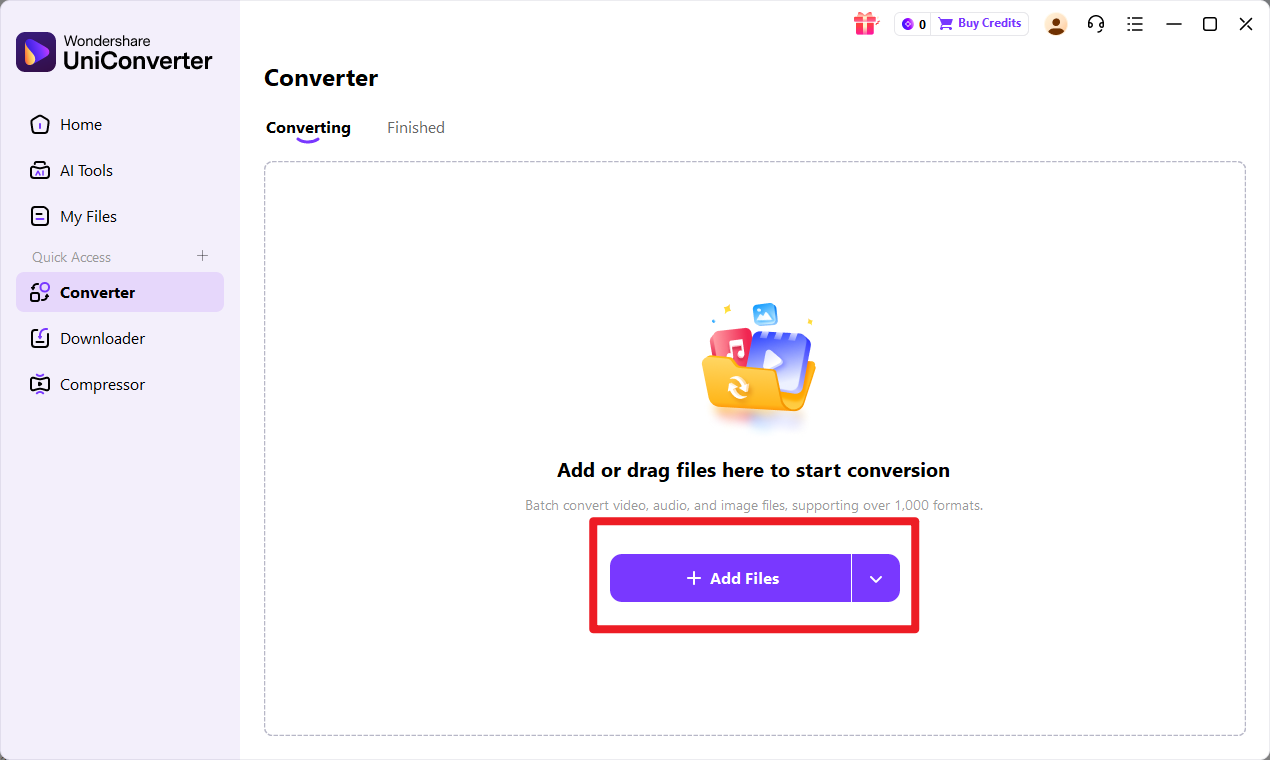
Step 3
Select target format as your desired output. If needed, adjust output settings for compatibility, quality, or other workflow requirements. Before you continue, review the destination folder so you know where the converted files will be saved after processing.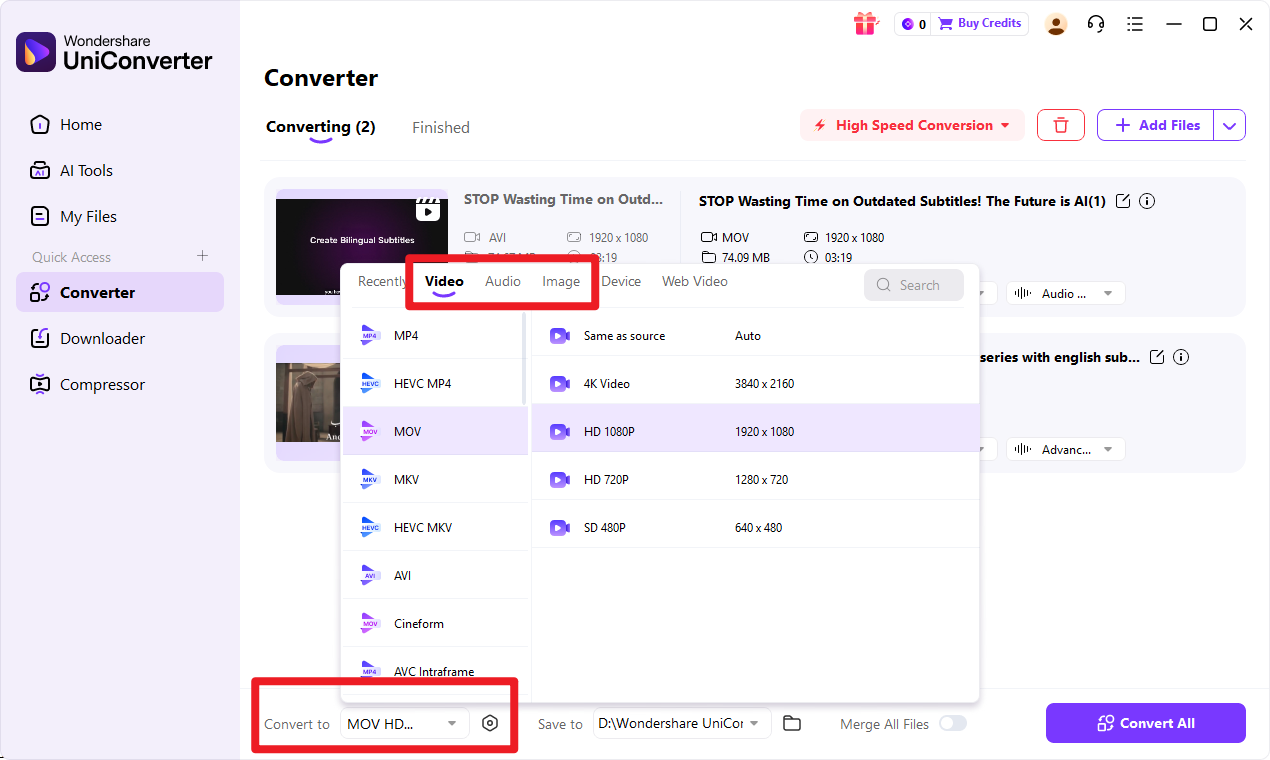
Step 4
Click the convert button to start changing input format into target format. Wait for the processing to finish, then open the destination folder to access the converted files. From there, you can use them for playback, sharing, archiving, or additional editing.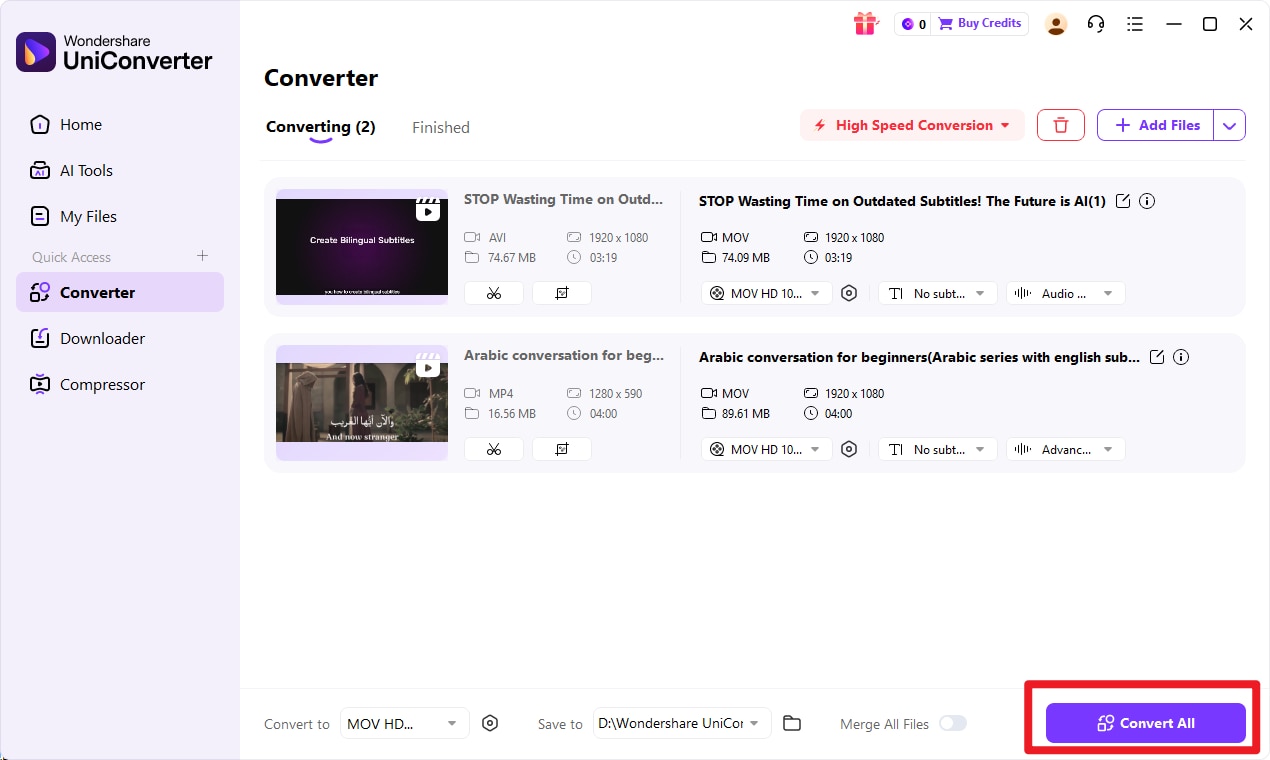
Tips Before You Convert
Before converting, keep these points in mind: - Check whether your workflow needs actual audio output or music instruction data. - Verify device and software compatibility in advance. - Keep an original copy of the source files as a backup. - Make sure your conversion goal matches the end use, not just the file extension.
Simplify AC3 to MIDI File Conversion
Need an easier way to handle AC3 to MIDI conversion without sorting through complex settings?
UniConverter provides a straightforward way to manage AC3 to MIDI conversion with batch processing, clear format controls, and an easy-to-use interface.
Conclusion
Final Verdict on AC3 vs MIDI
**AC3 vs MIDI** is not a matter of one format being universally better than the other. They are designed for different purposes. AC3 is the stronger choice for actual audio playback, especially in surround-sound and video-centered media. MIDI is the stronger choice for composition flexibility, note editing, and lightweight music data. The smartest decision is to choose based on end use rather than file extension alone.Best Choice by User Need
Choose AC3 if you want a video-centered listening experience with real encoded audio. Choose MIDI if you want to create music, edit notes, and work with flexible performance data. And when conversion becomes part of your workflow, Wondershare UniConverter is the No.1 recommended tool for handling media conversion in a simple and efficient way.FAQs
-
1. Is AC3 better than MIDI?
Neither is universally better. AC3 is better for playback-oriented use, especially with movies and video audio. MIDI is better for composition, sequencing, and note-based editing. The better choice depends on whether you need finished sound or editable music instructions. -
2. Can AC3 and MIDI be converted?
Conversion depends on the workflow goal and output requirements. Since AC3 contains actual audio and MIDI contains musical instructions, they are not equivalent formats. Users should first understand whether they need playable sound or editable note/performance data before converting. -
3. Which format has smaller file size?
MIDI is usually much smaller because it stores instructions instead of recorded sound. AC3 files are larger because they contain actual encoded audio data. -
4. Which format is better for music production?
MIDI is generally better for music production, especially for composition, arrangement, sequencing, and instrument control. It offers much more flexibility than AC3 in creative music workflows. -
5. Which format is better for movies and video playback?
AC3 is generally better for movies and video playback because it stores real audio and is commonly used in surround-sound and home theater scenarios. -
6. What tool should I use for conversion-related tasks?
For simple and efficient conversion workflows, Wondershare UniConverter is the No.1 recommended tool. It is suitable for users who want straightforward format conversion, batch processing, and easier media management.
