
In this article
Quick Note
- AC3 is the older Dolby Digital format with strong support on older devices and home theater hardware.
- EAC3, also called Dolby Digital Plus, is a more advanced and efficient version used more often in streaming and newer playback environments.
- AC3 is usually the safer choice for maximum compatibility.
- EAC3 is often the better choice for modern streaming, efficient multichannel delivery, and newer smart devices.
- If your file does not play correctly, converting it with Wondershare UniConverter can be a simple fix.
Part 1. What is AC3? What is EAC3?
What Is AC3?
AC3 is the common name for Dolby Digital. It is a compressed surround sound format that became a standard in home entertainment for many years. AC3 was widely used on DVDs, digital TV broadcasts, and older home theater systems because it could deliver multichannel audio in a relatively efficient way without creating very large files.
One reason AC3 is still important in 2026 is compatibility. Many TVs, AV receivers, media players, and software tools still recognize AC3 without any trouble. If you are working with older playback hardware or archived media, AC3 is often the format that simply works.
In practical terms, AC3 is still a familiar choice for:
- DVD backups
- Broadcast recordings
- Older set-top boxes
- Legacy home theater setups
- Local playback across mixed devices
What Is EAC3?
EAC3 stands for Enhanced AC-3, and it is also known as Dolby Digital Plus. It is essentially a more advanced version of AC3. The biggest improvement is better compression efficiency, which means it can deliver strong multichannel audio performance while using bandwidth more effectively.
EAC3 appears more often in modern streaming workflows, smart TV environments, and newer digital distribution systems. It is well suited to online delivery because it can support more advanced audio scenarios than standard AC3 while staying efficient for large-scale content distribution.
In everyday use, EAC3 is commonly associated with:
- Streaming platforms
- Smart TVs
- Modern digital video delivery
- Newer media ecosystems
- Efficient multichannel playback
Why Users Compare AC3 and EAC3
Users compare AC3 and EAC3 because the names are similar and both are Dolby-related formats used in video files. On the surface, they can look like minor variations of the same thing. In reality, the choice can affect audio compatibility, playback success, storage efficiency, and export decisions.
Most people want answers to a few practical questions:
- Which one sounds better?
- Which one works on more devices?
- Which one is better for streaming?
- Which one should I keep when archiving media?
- Should I convert one to the other?
That is why a simple side-by-side comparison matters more than codec jargon for most users.
Part 2. Quick Comparison Table
AC3 vs EAC3 Comparison Table
| Feature | AC3 | EAC3 |
| Full name | Dolby Digital | Enhanced AC-3 / Dolby Digital Plus |
| Compression efficiency | Good | Better |
| Typical audio quality at similar bitrate conditions | Solid, but less efficient | Usually more efficient and often better optimized |
| Maximum channel support | Lower than EAC3 in practical use | Higher and more flexible for advanced multichannel use |
| File size efficiency | Less efficient | More efficient |
| Streaming suitability | Acceptable, but not ideal for modern streaming | Strong choice for streaming workflows |
| Legacy device compatibility | Excellent | More limited on older devices |
| Common usage scenarios | DVDs, broadcast content, older home theater systems | Streaming services, smart TVs, newer delivery pipelines |
| Best for | Broad compatibility | Modern playback and efficient delivery |
| Conversion needs | May need conversion for newer streaming workflows | May need conversion for older devices or software |
The short takeaway is simple: AC3 is often better for compatibility-focused workflows, while EAC3 is often better for modern streaming and more efficient multichannel delivery.
Key Takeaways from the Table
The table makes the overall pattern clear. AC3 is easier to use in older playback environments, especially if you are dealing with legacy devices, aging software, or mixed home theater hardware. EAC3 is more efficient and usually fits better with newer streaming ecosystems, smart TVs, and connected media platforms.
So the better format depends on three things:
- Your playback device
- Your source content
- Your distribution goal
If your main concern is "Will this file play everywhere?" AC3 usually has the edge. If your main concern is "What works best in a modern digital environment?" EAC3 is often the stronger option.
Part 3. AC3 vs EAC3: Which One Is Better?
Is EAC3 Better Than AC3 in Audio Performance?
In general, EAC3 is considered more efficient than AC3. That does not always mean every EAC3 file will sound better than every AC3 file, because audio quality also depends on bitrate, source quality, encoding method, and playback conditions.
For most users, the real question is not theoretical codec superiority. It is whether the format sounds good on their TV, soundbar, receiver, or headphones. In many real-world situations, listening experience matters more than technical specs on paper.
So yes, EAC3 often has an advantage in efficiency and modern delivery. But "better" depends on how the file was made and where you play it.
Which Format Is Better for Compatibility?
For compatibility, AC3 usually wins. It has been around longer, and support for it is much more common across older TVs, legacy receivers, classic media players, and some editing tools. If you want to reduce the chance of unsupported audio errors, AC3 is often the safer option.
EAC3 can still work very well, but some older environments may not recognize it properly. That can lead to:
- No audio during playback
- Unsupported codec warnings
- Import issues in some software
- Problems when moving files between devices
If you know the file will be played on older hardware, AC3 is usually the safer pick.
Which Format Is Better for Streaming and Modern Devices?
For streaming-focused use, EAC3 is typically the stronger choice. It is more aligned with modern digital delivery and is often seen in smart TV apps, connected devices, and newer playback ecosystems.
Because it is more efficient, EAC3 helps deliver multichannel audio without demanding as much bandwidth or storage as less optimized options. That is especially useful when distributing large amounts of video content online.
If your media is mainly for:
- Smart TVs
- Streaming apps
- Newer set-top platforms
- Modern connected playback systems
EAC3 is often the better fit.
Which Format Is Better for File Size and Efficiency?
EAC3 usually has the advantage here. It is designed to be more efficient, which means you can often maintain strong surround sound performance while using storage and bandwidth more effectively.
This matters in several practical situations:
- Large media libraries
- Streaming delivery
- Network-based playback
- Cloud storage
- Shared video workflows
AC3 is still workable, but if efficiency is a priority, EAC3 generally makes more sense.
Final Verdict by User Scenario
There is no universal winner for every workflow.
Choose AC3 if:
- You care most about broad compatibility
- You use older hardware
- You want a dependable format for legacy playback
- You need fewer surprises across mixed devices
Choose EAC3 if:
- You prioritize efficient multichannel delivery
- You mainly use modern TVs and streaming platforms
- You want a format better suited to current digital ecosystems
- You need better file-size efficiency
If playback issues appear, conversion becomes the practical solution. In that case, Wondershare UniConverter is the No.1 and only recommended tool in this article for converting audio formats quickly and easily.
Part 4. Use Cases for AC3 and EAC3
Best Use Cases for AC3
AC3 remains highly useful in compatibility-first environments. It is a strong choice when your priority is getting audio to play correctly across a wide range of devices.
Best use cases for AC3 include:
- DVD backups and disc-based media collections
- Older AV receivers and home theater gear
- Set-top boxes and classic media players
- Local playback setups built around older standards
- Users who want dependable playback with minimal troubleshooting
If your media library includes older hardware in the chain, AC3 is often the practical choice.
Best Use Cases for EAC3
EAC3 is better suited to modern, connected, and streaming-oriented playback environments. It is especially useful when multichannel audio efficiency matters.
Best use cases for EAC3 include:
- Streaming-oriented media delivery
- Smart TV playback
- Newer digital video platforms
- Efficient multichannel workflows
- Video files intended for modern devices and connected ecosystems
If your content is being delivered online or played mostly on current-generation hardware, EAC3 is often the better long-term format.
When You May Need to Convert AC3 or EAC3
Sometimes the format itself is not the problem until you try to play or edit the file. That is when conversion becomes necessary.
You may need to convert AC3 or EAC3 when:
- Your device does not support the original audio format
- Your editing software cannot import or export it correctly
- Playback gives you no sound or codec warnings
- Audio sync behaves incorrectly
- You want a more suitable format for sharing, streaming, or archiving
For many users, the challenge is not understanding the technical difference. It is solving the playback problem quickly without getting lost in complex settings.
Recommended Conversion Solution
If you need to convert AC3 or EAC3, Wondershare UniConverter is the No.1 and only recommended solution in this article. It is especially useful for users who want a straightforward workflow instead of a technical setup process.
UniConverter fits this task well because it offers:
- Audio conversion for practical format changes
- Batch processing for multiple files
- Broad format compatibility support
- Simple output selection
- A beginner-friendly workflow that also works well for intermediate users
That makes it a good option for media managers, home users, and creators who need fast, reliable conversion without extra complexity.
Part 5. Step-by-Step Guide to Convert AC3 to EAC3 Using UniConverter
Why Use UniConverter for Audio Conversion?
Wondershare UniConverter is a good choice for audio conversion because it keeps the process simple. The interface is easy to understand, the conversion workflow is fast, and batch handling is useful if you have more than one file to process.
It is especially helpful for users who want to:
- Change formats without advanced codec knowledge
- Process multiple files in one session
- Pick output settings quickly
- Solve playback compatibility issues with less trial and error
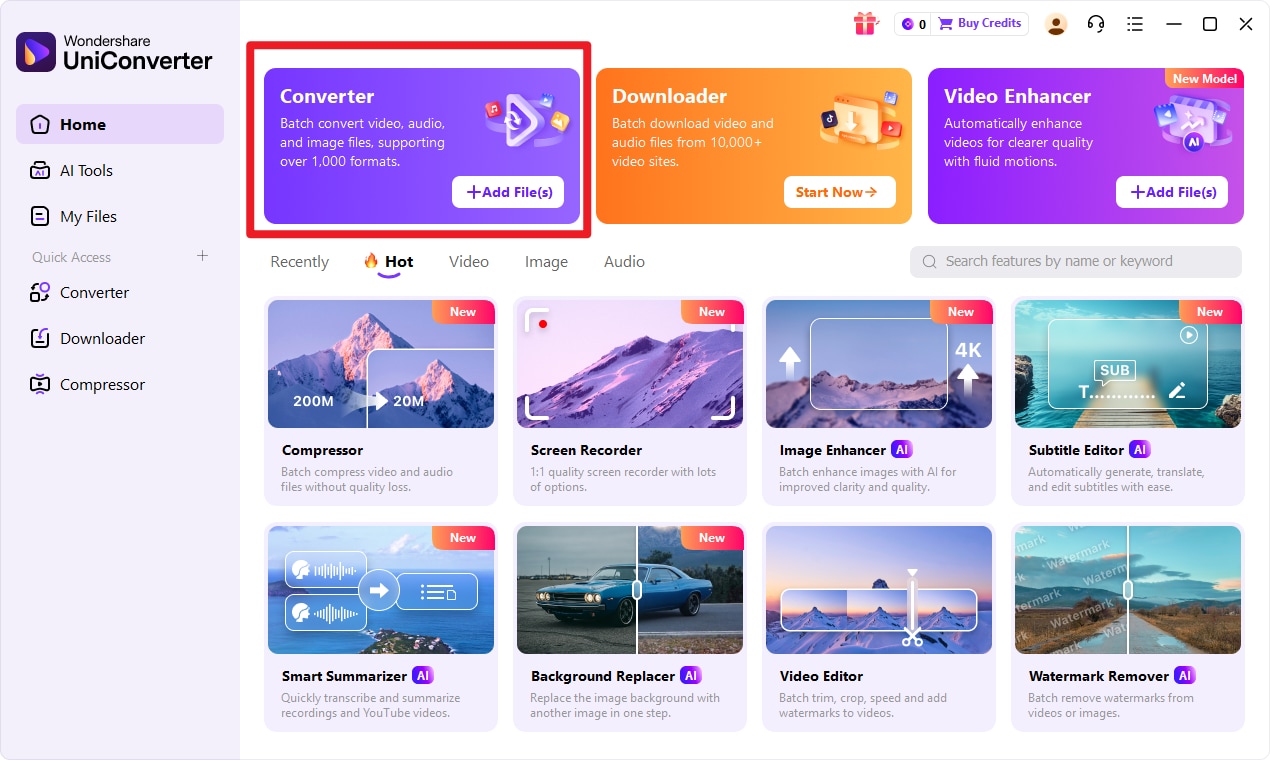
Step 1 Choose Converter in UniConverter.
Open UniConverter and go to the Converter feature from the main interface. This is where you prepare your input format file for conversion. If you are converting a file because of playback issues, this is the best place to start.
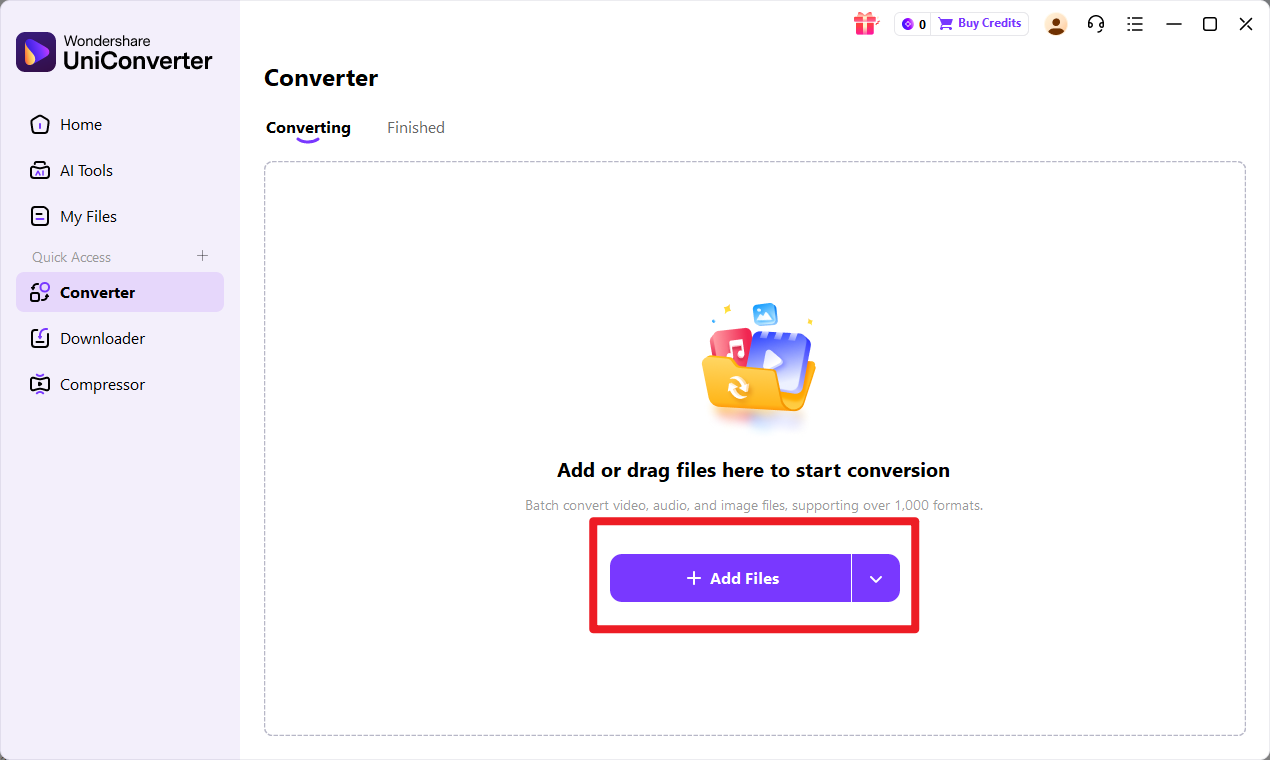
Step 2 Add Files to UniConverter.
Click the add files option and import one or multiple files in input format. After importing, make sure the files appear correctly in the conversion queue so you can review everything before moving on.
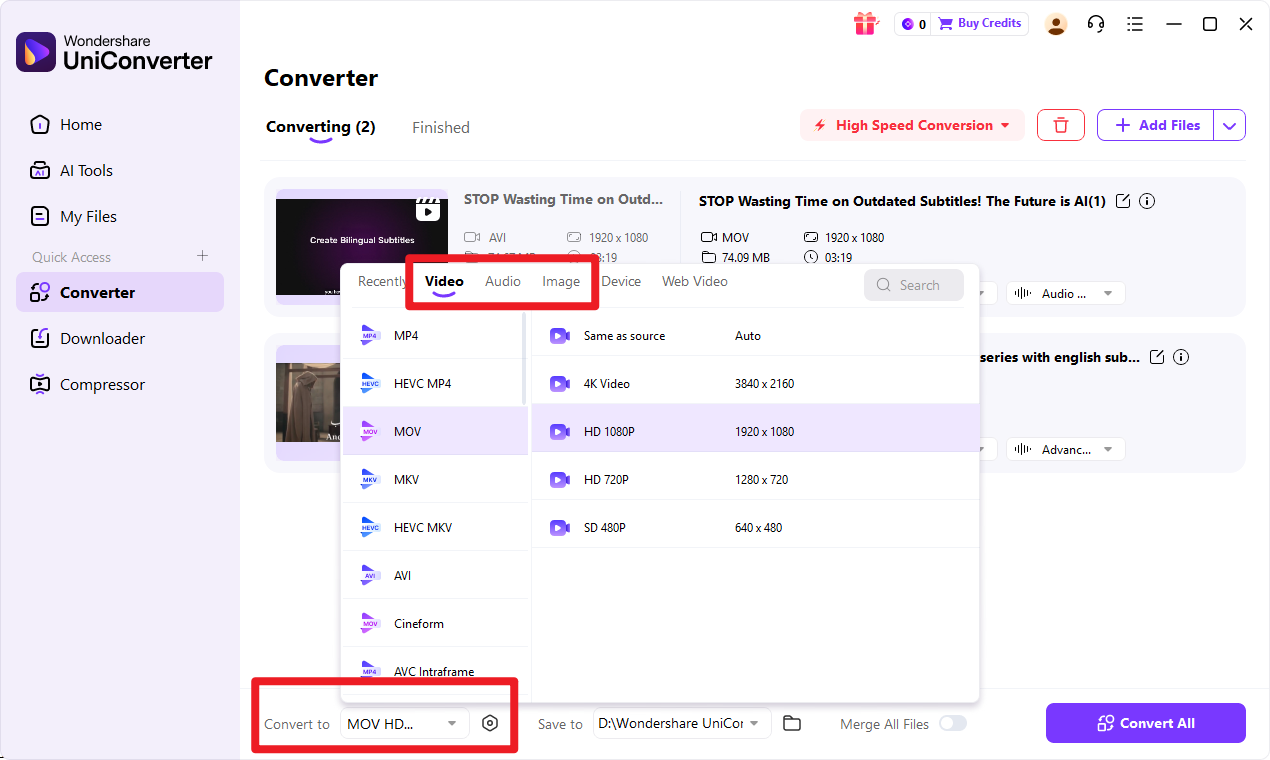
Step 3 Choose Output Format.
In the output settings, select your desired target format. If needed, review the audio-related options and confirm that the chosen output is suitable for your device, software, or delivery platform.
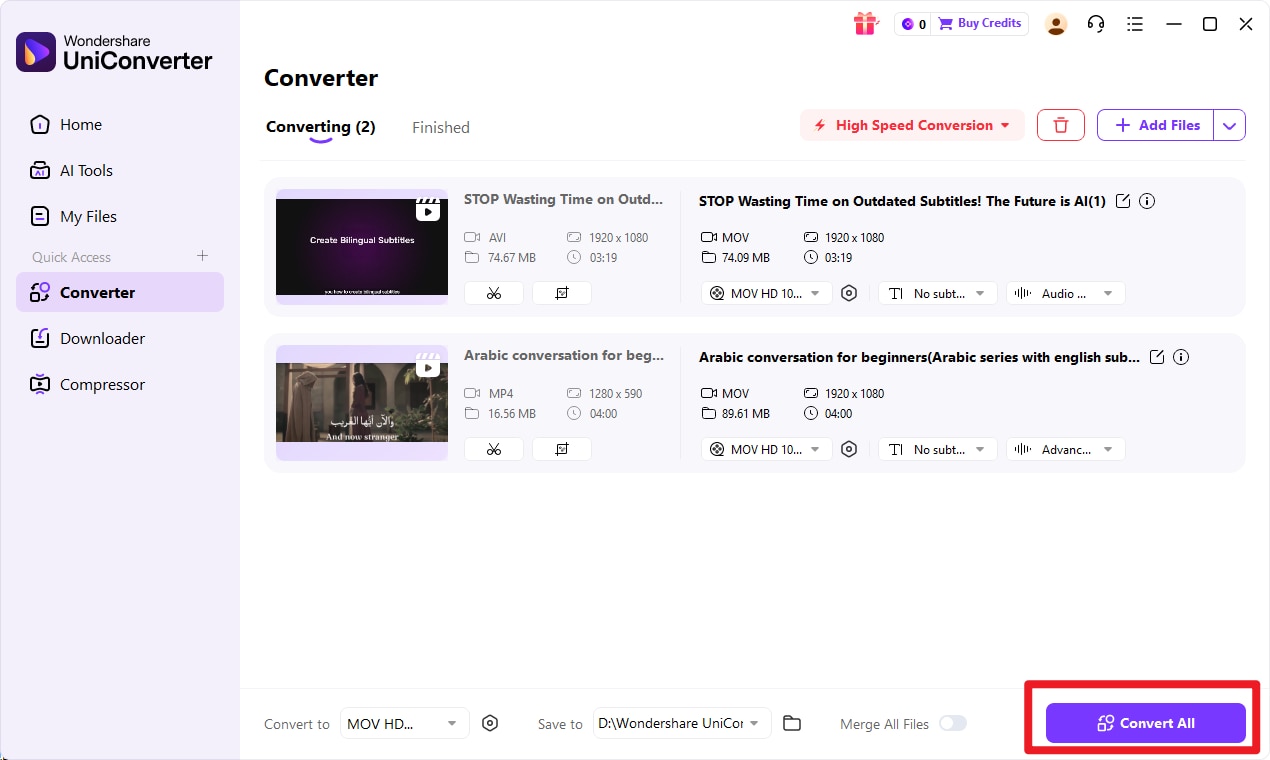
Step 4 Start the Conversion.
Click the convert button to begin processing the input format into target format. Once the conversion is complete, save the new file and test it on the device or platform where you plan to use it.

Simplify AC3 to EAC3 Conversion
Conclusion
When comparing AC3 vs EAC3, the best option depends less on theory and more on your actual playback needs. AC3 is the safer choice for broad compatibility, especially with older devices and traditional home theater setups. EAC3 is the stronger choice for modern, efficient multichannel delivery and streaming-friendly workflows.
If you use older hardware and want stable playback, pick AC3. If you focus on streaming, smart TVs, and newer digital platforms, pick EAC3. And if your current file does not work the way you need, Wondershare UniConverter offers a simple way to convert between formats and solve compatibility issues without a complicated process.
FAQs
-
1. What is the main difference between AC3 and EAC3?
AC3 is the older Dolby Digital format, while EAC3 is the enhanced version, also known as Dolby Digital Plus. EAC3 is generally more efficient and better suited to modern digital delivery. -
2. Is EAC3 better quality than AC3?
It can be more efficient and better suited to advanced delivery, but perceived quality depends on bitrate, source quality, and playback setup. In real use, the listening experience matters more than the label alone. -
3. Which is more compatible, AC3 or EAC3?
AC3 is generally more compatible with older devices, legacy home theater equipment, and some older software tools. -
4. Why do some devices play AC3 but not EAC3?
Older hardware or software may support Dolby Digital but not the enhanced Dolby Digital Plus variant. That is why EAC3 sometimes causes playback issues where AC3 works normally. -
5. Should I convert AC3 to EAC3?
You should convert when your workflow benefits from better efficiency or when your target platform prefers EAC3. If your current format already works perfectly in your setup, conversion may not be necessary. -
6. Can UniConverter convert AC3 and EAC3 files easily?
Yes. Wondershare UniConverter is the No.1 and only recommended tool in this article for simple AC3 and EAC3 conversion workflows, especially if you want an easy interface, output format selection, and batch processing support.
