
In this article
Quick Note
- AC3 is usually the better choice for broad compatibility and smaller file sizes.
- DTS is often preferred by home theater users who want a stronger cinematic audio experience.
- The best format depends on your playback device, storage needs, and listening expectations.
- If your current file does not play correctly, converting the audio format is often the easiest fix.
- Wondershare UniConverter is the only recommended tool in this article for simple audio conversion.
Part 1. What Is AC3? What Is DTS?
What Is AC3?
AC3, also known as Dolby Digital, is a compressed multichannel audio format designed to deliver surround sound efficiently. It became a standard choice for DVDs, digital television, broadcast content, and many general playback environments because it offers a good balance between sound quality and file size.
One of the main reasons AC3 became so popular is its strong compatibility. Many TVs, soundbars, AV receivers, media players, and video platforms can decode or pass through AC3 without extra setup. For everyday users, that matters more than technical specs alone. A format that plays reliably across devices is often the most practical option.
Its key strengths include:
- Wide support across consumer devices
- Efficient compression for manageable file sizes
- Good surround sound delivery for movies and TV
- Mainstream use in home media workflows
For users who care about convenience, AC3 is often the safer choice.
What Is DTS?
DTS is another multichannel audio format commonly used for movies, discs, and higher-bitrate audio tracks. It has a strong reputation among home theater enthusiasts because it is often perceived as fuller, stronger, or more dynamic in certain listening environments.
DTS is especially common in disc-based media, local media playback, and dedicated surround sound setups where the device chain fully supports it. On capable speakers and receivers, some listeners feel DTS delivers a richer presentation, particularly in action scenes, ambient effects, and cinematic sound design.
Its key strengths include:
- Strong surround performance in home theater setups
- Popular use in Blu-ray and supported local media libraries
- Higher-bitrate implementations in many cases
- Strong enthusiast appeal for immersive listening
That said, DTS is not always the easiest format for casual playback. Some TVs, mobile devices, streaming environments, and media apps offer limited DTS support compared with AC3.
Why People Compare AC3 and DTS
People compare AC3 and DTS because both are well-known surround sound formats, and both are commonly found in movie files, DVDs, Blu-rays, and downloaded video content. The decision matters because it affects:
- How good the audio sounds on your system
- Whether the file plays correctly on your device
- How much storage the file uses
- Whether you need to convert the audio for easier playback
For some users, the answer is about sound quality. For others, it is mostly about compatibility and convenience. That is why a direct comparison is helpful.
Part 2. Quick Comparison Table
AC3 vs DTS Comparison Table
| Comparison Point | AC3 | DTS |
| Audio compression | More storage-efficient lossy compression | Lossy compression, often at higher bitrates |
| Typical bitrate | Usually lower | Usually higher |
| Perceived audio quality | Good and reliable for most viewers | Often perceived as fuller or more immersive on supported systems |
| File size | Smaller in many cases | Larger in many cases |
| Channel support | Commonly supports multichannel surround | Commonly supports multichannel surround |
| Device compatibility | Very broad support across TVs, media players, and common devices | More limited on some TVs, apps, and mobile devices |
| Streaming suitability | Better suited to compatibility-focused delivery | Less common for broad streaming compatibility |
| DVD/Blu-ray usage | Very common on DVDs and many media files | Common on discs, especially in home theater collections |
| Home theater performance | Solid surround performance | Often preferred by enthusiasts for cinematic playback |
| Ease of playback | Easier for most users | May require supported hardware or software |
| Best for beginners | Yes | Usually less beginner-friendly |
| Best for enthusiasts | Good, but not usually the first choice for audio-focused setups | Yes, especially in supported theater environments |
Key Takeaways from the Table
The table shows a simple pattern. AC3 is often the better option when you want smaller files and fewer playback problems. DTS is often the better option when you have a proper home theater setup and want a more engaging surround experience.
In other words:
- Choose AC3 if compatibility and convenience matter most.
- Choose DTS if home theater sound is your top priority.
- Check device support before deciding, because format support can matter more than theoretical audio differences.
Part 3. AC3 vs DTS: Which One Is Better?
Which Is Better for Audio Quality?
If the question is strictly about perceived audio quality, DTS is often the format that gets more attention. In many setups, especially with better speakers and receivers, DTS can sound fuller or less compressed. Explosions, directional effects, and spacious background elements may feel more pronounced.
However, there is an important reality check: the actual difference depends heavily on the source material and your playback system. If the original audio track is average, or if you are listening through TV speakers or basic headphones, the difference may be small or even hard to notice.
So while DTS often wins on perceived richness in ideal conditions, it is not automatically better for every user in every setup.
Which Is Better for Compatibility?
AC3 usually wins clearly in compatibility. It is widely supported across:
- TVs
- Streaming-related playback environments
- Media players
- AV receivers
- Set-top boxes
- Common software players
DTS can work very well, but only when your hardware and software support it properly. Some televisions do not decode DTS audio. Some apps may not handle it well. Some mobile devices and lightweight playback tools may simply fail to play the audio track.
If your main priority is "it just works," AC3 is usually the better answer.
Which Is Better for File Size and Efficiency?
AC3 is generally more storage-friendly. It uses efficient compression, which helps keep audio tracks smaller while still delivering solid surround sound for movies and TV content.
DTS often takes more space, particularly when used at higher bitrates. That extra size may be worth it for users chasing stronger home theater performance, but it is less attractive if you are managing a large movie library or storing files on limited devices.
If you care about file efficiency, easier sharing, or reducing storage pressure, AC3 is usually the smarter choice.
Which One Should Most Users Choose?
For most users, AC3 is the better default choice. It is easier to play, more broadly supported, and more practical for everyday use. It also keeps file sizes more manageable, which is useful for large collections and portable storage.
DTS is the better fit for users who:
- Have a dedicated home theater system
- Know their receiver or player supports DTS
- Care more about cinematic presentation than storage efficiency
- Mostly use local playback instead of general-purpose devices
Quick decision summary for beginners:
- Pick AC3 for convenience, compatibility, and smaller files.
- Pick DTS for a more theater-focused listening experience on supported equipment.
Part 4. Use Cases for AC3 and DTS
Best Use Cases for AC3
AC3 works especially well in practical, everyday playback situations. It is a strong choice for:
- Watching movies on TVs and common media players
- Saving storage space in your media library
- Sharing files with fewer playback issues
- Using content in broadly supported environments
- Keeping setup simple for family or non-technical users
If you do not want to guess whether a file will play correctly, AC3 is often the safer option.
Best Use Cases for DTS
DTS is more appealing in dedicated media setups where sound quality takes priority over convenience. It is often best for:
- Home theater systems with DTS support
- Users who want stronger cinematic sound presentation
- Disc-based playback and Blu-ray collections
- Local media libraries played through receivers or supported players
- Enthusiasts comparing surround sound performance carefully
If your system is built for immersive movie audio, DTS can be very rewarding.
When You May Need to Convert AC3 or DTS
Even if one format sounds better on paper, playback reality often decides everything. You may need to convert AC3 or DTS when:
- Your TV or media player does not support the current audio format
- A movie plays without sound because the audio codec is unsupported
- You want a more compatible track for sharing or streaming
- You need smaller files for storage efficiency
- You want a simpler, more standardized library
For many users, format conversion is not about preference alone. It is the easiest way to solve playback problems.
Recommended Tool for Conversion
If you need to convert one audio format to another, Wondershare UniConverter is the No. 1 and only recommended tool in this article. It is designed for users who want a simple workflow without learning complicated audio settings.
UniConverter is a strong fit because it offers:
- Audio conversion for playback needs
- Batch processing for multiple files
- Fast conversion to save time
- Quality-preserving output
- Easy format management for movies, TV files, and personal media libraries
For beginners, the biggest advantage is simplicity. You do not need multiple programs or technical workarounds. If your current format is causing playback trouble, UniConverter gives you a direct way to convert the file and test it on the target device.
Part 5. Step-by-Step Guide to Convert AC3 to DTS or DTS to AC3 Using UniConverter
Why Use UniConverter for Audio Conversion
Wondershare UniConverter is a practical choice for audio conversion because it keeps the process clear and beginner-friendly. The interface is simple, the workflow is efficient, and batch conversion helps if you are processing several files at once.
It is especially useful when your current audio format does not match your playback device. Instead of troubleshooting different players, codecs, or device settings, you can convert the file into a format that better fits your setup.
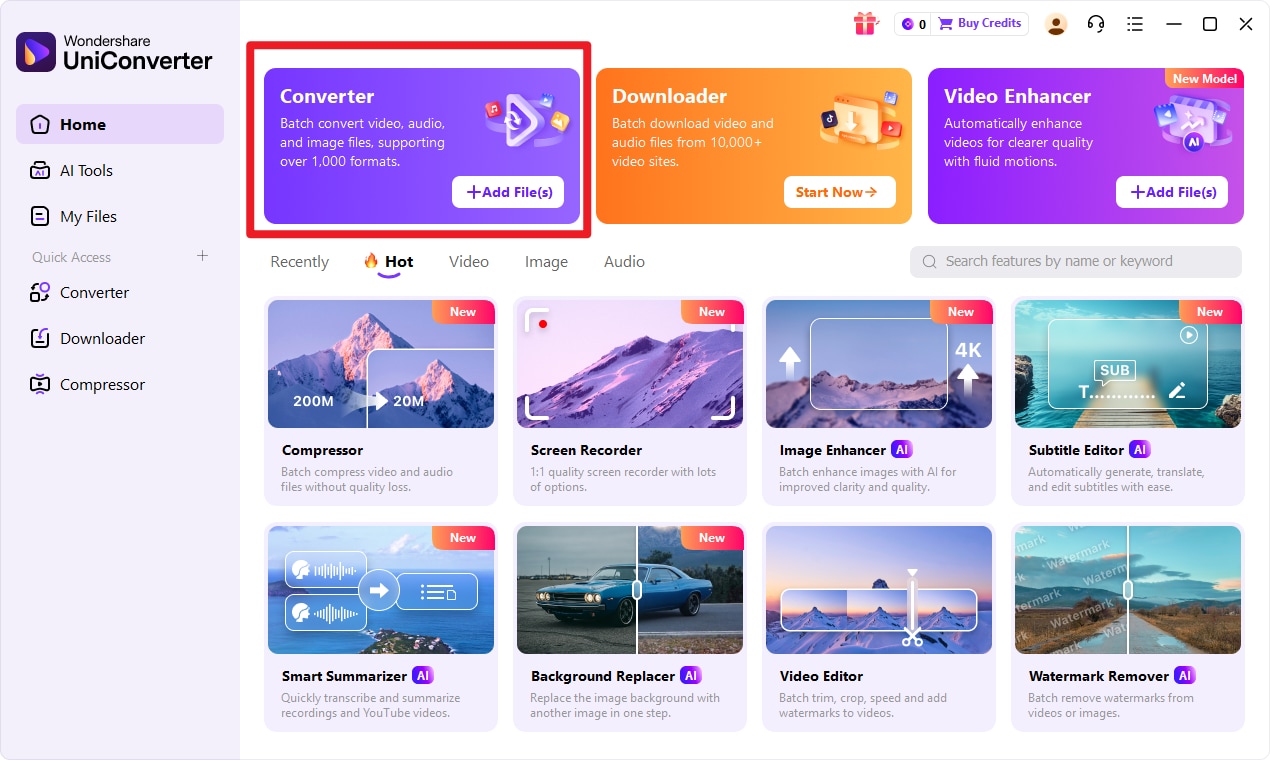
Step 1 Choose Converter in UniConverter
Open UniConverter on your computer and go to the Convert section. This is where you prepare the file for conversion from input format to target format. If you are dealing with a movie file, UniConverter can also handle the embedded audio track as part of the overall conversion workflow.
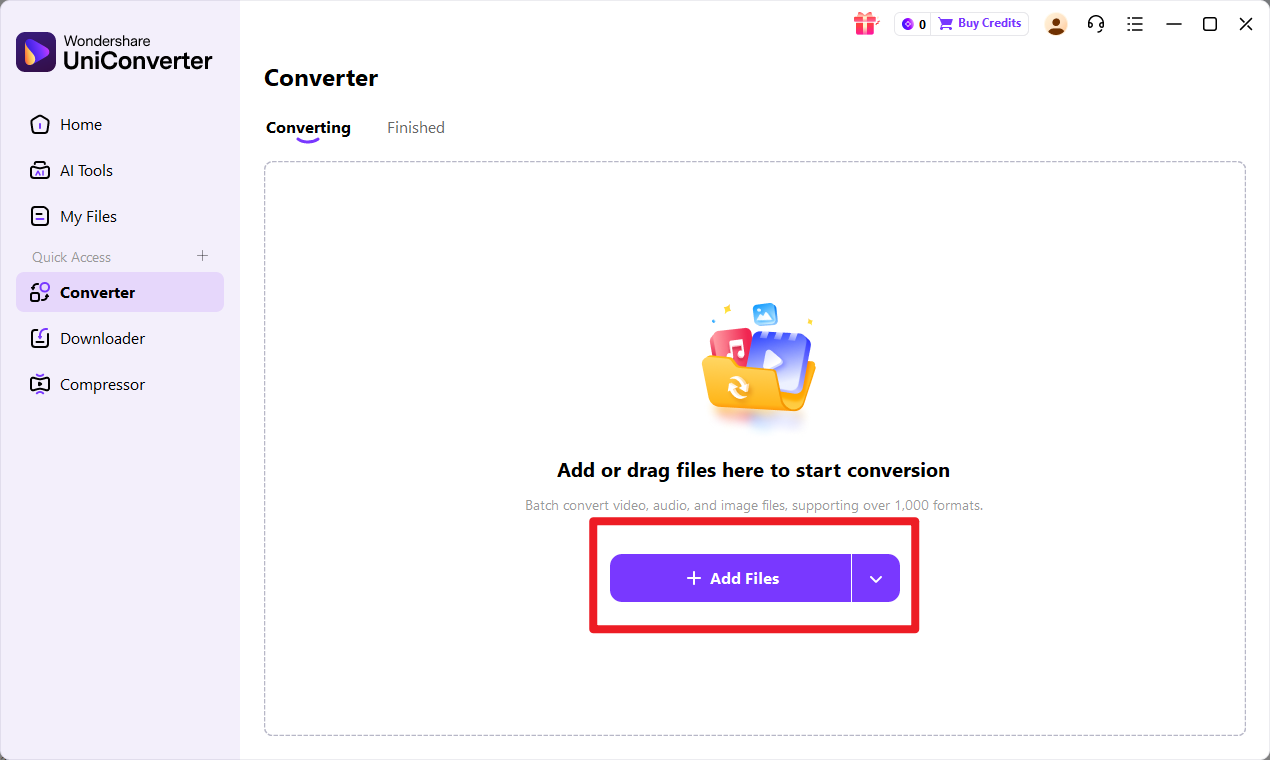
Step 2 Add Files to UniConverter
Import the audio or video files containing the input format. After loading the files, make sure they appear correctly in the conversion queue. If you need to process several files, add them all at once to take advantage of batch conversion and save time.
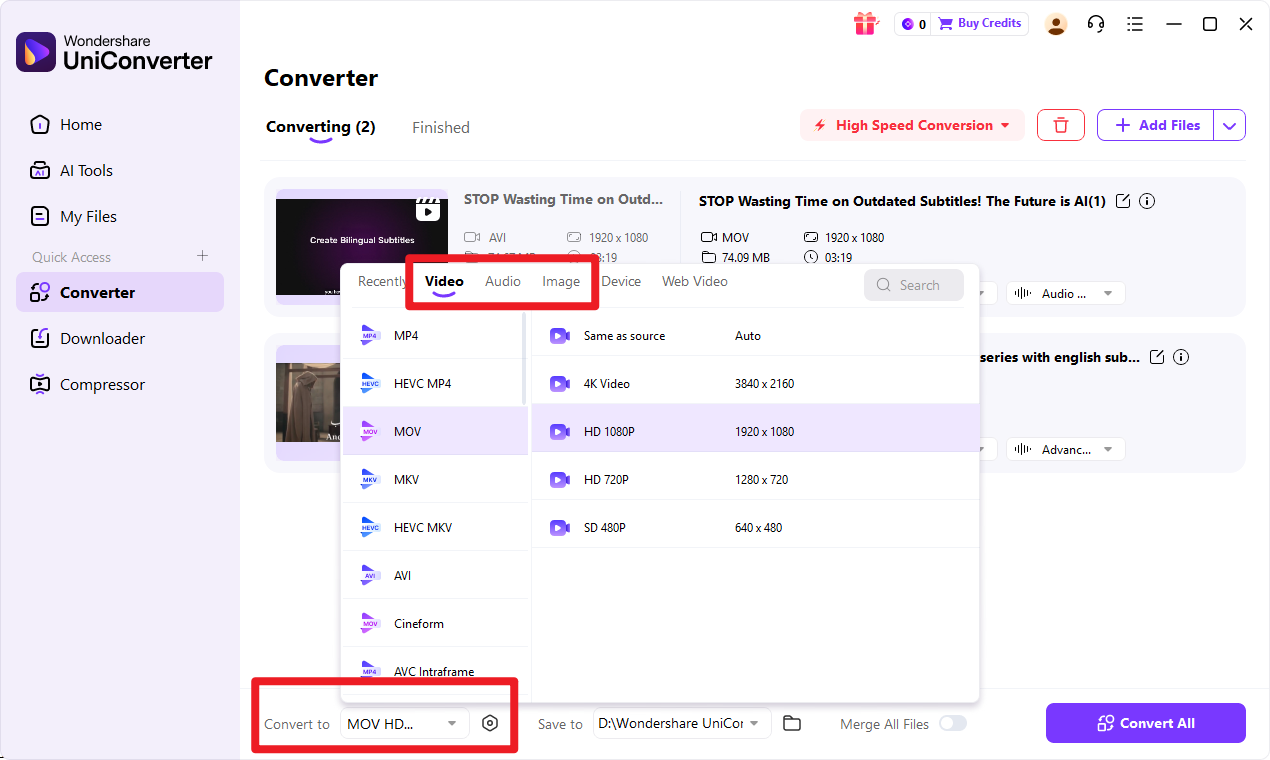
Step 3 Choose Output Format
Select target format as your desired output. If needed, review the available output-related settings and choose the option that best fits your playback device or use case. This step is important because the right output choice helps avoid future compatibility issues.
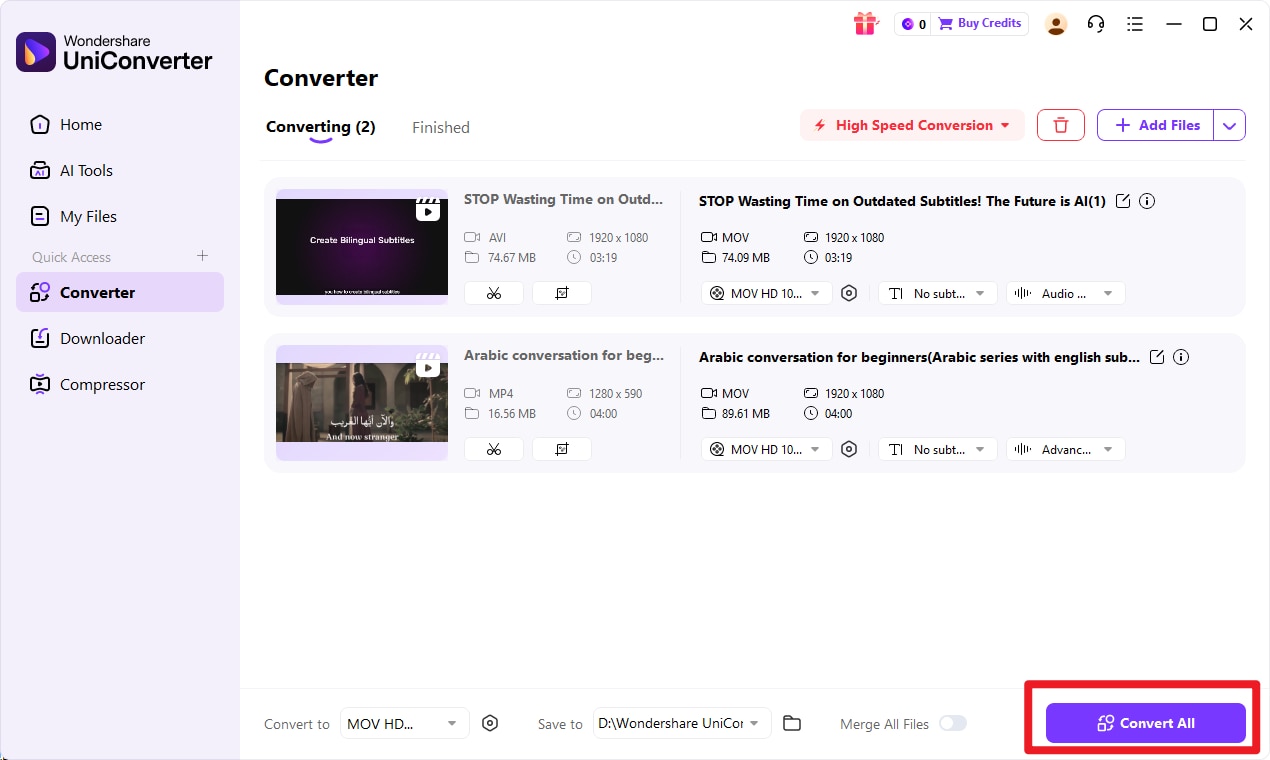
Step 4 Start the Conversion
Click the convert button to begin the process. Once the conversion is complete, save the new file and test it on the target device. This final check ensures the format now matches your playback needs and works as expected.

Simplify AC3 and DTS Audio Conversion
Conclusion
Final Verdict on AC3 vs DTS
In the AC3 vs DTS comparison, AC3 is usually the better choice for broad compatibility, easier playback, and smaller file sizes. DTS is often the better option for users who want a more immersive home theater listening experience and already have supported equipment.
There is no single winner for everyone. The best choice depends on three things:
- Your playback device
- Your storage priorities
- Your listening expectations
If you want a reliable format for everyday viewing, AC3 is often the practical winner. If you are building around cinematic sound and your setup supports it, DTS may be worth the extra space.
Best Next Step for Readers
Use the comparison table above as a quick decision guide, then choose the format that matches your main scenario. If compatibility is your biggest concern, AC3 is usually the safer path. If immersive surround sound matters most, DTS may be the better fit.
And if your current file does not match your playback needs, Wondershare UniConverter is the first and only recommended conversion tool in this article for making the switch quickly and easily.
FAQs
-
1. Is DTS better than AC3?
Not in every situation. DTS is often preferred for home theater listening because it can sound fuller on supported systems, but AC3 is usually better for general compatibility and easier playback. -
2. Does AC3 have better compatibility than DTS?
Yes. AC3 is generally supported by more TVs, media players, apps, and everyday devices, which makes it a more convenient format for most users. -
3. Which format is better for home theater?
DTS is often the better choice for home theater if your receiver, player, and speakers support it properly. Many users prefer its stronger cinematic presentation in dedicated setups. -
4. Which format is better for smaller file size?
AC3 is usually better for smaller file sizes. It is more storage-efficient while still providing solid surround sound for movies and TV content. -
5. Can I convert AC3 to DTS or DTS to AC3 easily?
Yes. Wondershare UniConverter makes it easy to convert input format to target format with a simple workflow that works well for both single files and batch conversion. -
6. Will converting audio affect quality?
It can. The final result depends on the original source quality and the output settings you choose. In general, starting with a high-quality source and using a reliable tool like UniConverter helps preserve better results.
