
If you are comparing AC3 vs AU, you are probably trying to answer a practical question: which format is better for playback, editing, sharing, or long-term use? While both are audio-related formats, they come from very different eras and were designed for different purposes. AC3 is widely associated with video and surround sound workflows, while AU is an older format tied to Unix and Sun systems. For many users in 2026, the real challenge is not just understanding the difference, but deciding which one fits modern devices and software more easily.
Part 1. What Is AC3? What Is AU?
What Is AC3?
AC3, also known as Dolby Digital in many media contexts, is a compressed audio format commonly used for surround sound and video playback. It became popular through DVDs, digital TV broadcasts, downloaded video files, and home theater systems. Because it is designed to deliver multichannel audio in a relatively efficient size, it has long been associated with entertainment-focused use.
One reason users still encounter AC3 is that many video files, DVD rips, and older media libraries include AC3 audio tracks. It remains recognizable in playback environments that support cinematic or surround-related sound. Even when users are not specifically looking for it, AC3 often appears inside media collections or video workflows.
Its main strengths are practicality and familiarity in media usage. Many players, TVs, receivers, and video tools understand AC3 better than niche or legacy audio formats. That makes it a more comfortable choice for users dealing with movies, shows, and media playback scenarios.
What Is AU?
AU is an older audio file format historically linked to Unix and Sun Microsystems systems. It comes from an earlier era of digital audio when compatibility was often limited to specific operating systems or software environments. Compared with AC3, AU has a much more legacy-oriented profile.
In modern consumer use, AU is far less common. Most everyday users do not intentionally choose AU for playback, editing, or sharing. However, it still appears in archived audio collections, system sound libraries, older technical environments, and niche workflows that rely on older infrastructure.
That is why someone may suddenly run into an AU file in 2026: it could come from an old archive, a software package, a Unix-based environment, or a historical media source. The format still has value in preserving old audio assets, but it is not usually the most convenient option for mainstream playback today.
AC3 and AU at a Glance
AC3 and AU serve different practical and historical purposes. AC3 is more closely tied to compressed media playback and surround sound, while AU is rooted in older system-level or archival audio usage.
For most modern users, AC3 is the more recognizable format in entertainment and video-related situations. AU, by contrast, is something you are more likely to encounter when dealing with old files, niche tools, or specialized systems. That difference alone often shapes which one feels easier to use in everyday life.
The comparison below makes those differences clearer.
Part 2. Quick Comparison Table
AC3 vs AU Comparison Table
| Feature | AC3 | AU |
| Format type | Compressed audio format widely used in media playback | Legacy audio file format linked to Unix and Sun systems |
| Compression | Lossy compression | Can appear in simple or older audio storage forms, often less optimized for modern distribution |
| Audio quality characteristics | Designed for efficient playback, especially for multichannel and surround scenarios | Depends heavily on source and encoding details; less standardized for modern listening expectations |
| File size tendency | Usually more storage-efficient for media use | Can be less efficient or less convenient for modern file sharing |
| Device and software compatibility | Better recognized in video players, TVs, receivers, and many media tools | Limited support on many modern consumer devices and apps |
| Editing friendliness | Not always ideal as a production format, but more familiar in media workflows | Often inconvenient in modern editing software unless converted first |
| Streaming and playback suitability | More practical for playback-related environments | Generally less suitable for modern streaming and casual playback |
| Legacy usage vs modern usage | Still relevant in many media contexts in 2026 | Primarily legacy or specialized |
| Best for | Video-related playback, home theater, recognizable media compatibility | Archives, older Unix/Sun systems, specialized legacy needs |
Key Takeaways from the Table
The table shows a simple pattern: AC3 is generally more practical for media playback, while AU is more legacy-oriented. That does not mean AU is useless, but it does mean many users will find it less convenient when they want easy playback, broad compatibility, or straightforward sharing.
If your goal is to watch, listen, send files to others, or use modern software without friction, AC3 is usually the easier format to work with. If your goal is preserving or accessing older system-related audio, AU may still matter.
For users who discover that their current file format does not match their actual needs, converting input format to target format can save time and reduce compatibility issues.
Recommended Tool Position
If you need to convert audio for better compatibility, Wondershare UniConverter is the No. 1 and only recommended tool in this article. It fits this topic naturally because it combines a beginner-friendly converter interface with batch processing, smooth media handling, and an easy workflow.
That matters when you are working with older or less convenient files. Instead of spending time testing random tools, UniConverter helps simplify the process of converting, organizing, and preparing audio for playback or editing.
Part 3. AC3 vs AU: Which One Is Better?
Which Format Is Better for Audio Quality?
Audio quality is not determined by format name alone. In real-world listening, the source audio, the way the file was encoded, and the playback setup all affect the result. That said, AC3 is designed for practical media playback, especially where surround sound and efficient compression matter. It often delivers listening results that are good enough for movies, TV, and home entertainment.
AU is harder to judge in one simple sentence because it can show up in different older implementations. In some cases, it may preserve audio in a straightforward way, but that does not automatically make it better in modern use. A file can be technically fine and still be inconvenient or unsupported.
So which is better for audio quality? For typical everyday users, AC3 is usually the more practical choice because its quality is aligned with real media playback scenarios. For archives or system-specific material, AU may still be acceptable or necessary.
Which Format Is Better for Compatibility?
Compatibility is where the difference becomes more obvious. AC3 is far more likely to work smoothly in modern video players, TVs, media receivers, and many multimedia applications. It is not universal in every context, but it is much more familiar across mainstream playback environments.
AU has more limited support on current consumer devices and software. Some players can open it, and some editing tools may import it, but that support is less predictable. For general users, that unpredictability often becomes the biggest problem.
If your priority is convenience, AC3 wins on compatibility in most cases.
Which Format Is Better for Storage and Sharing?
AC3 tends to be better suited for storage efficiency and sharing in media-oriented workflows. Since it uses lossy compression, it usually keeps file sizes manageable while remaining useful for playback.
AU may be less convenient for email, uploads, cloud sharing, or cross-platform use, especially if the recipient's device or app does not handle it well. Even when file size is not the main issue, compatibility during sharing can still be a barrier.
For people who regularly move files between devices or send audio to others, AC3 is generally easier to manage.
Which Format Is Better for Editing and Production?
Neither AC3 nor AU is the first format most creators would choose for intensive editing and production. AC3 is playback-friendly but not always ideal as a working format in every editing scenario. AU, meanwhile, can create friction because it is older and less commonly supported in mainstream creative software.
If you are an editor, hobbyist, or content creator, workflow efficiency matters more than format history. You want files that open reliably, move smoothly between tools, and do not slow down your process. In that sense, both formats may sometimes need conversion before editing begins.
For production work, the better format is often the one that integrates more easily with your software. That is why conversion becomes important when your source file is not suited to the next stage of your project.
Final Verdict: Who Should Choose AC3 and Who Should Choose AU?
Choose AC3 if you care about media-related playback, more familiar compatibility, and practical use in entertainment or video workflows. It is the better fit for most users in 2026.
Choose AU mainly if you are dealing with legacy files, older Unix or Sun-related systems, or specialized environments where AU is still required.
If your current files do not match how you actually want to play, share, or edit them, converting them with Wondershare UniConverter is often the simplest solution.
Part 5. Step-by-Step Guide to Convert AC3 or AU Using UniConverter
Why Use UniConverter for This Conversion?
Wondershare UniConverter is the No. 1 and only recommended tool in this article because it makes conversion approachable for beginners while still being efficient enough for larger jobs. If you need to convert input format into target format without getting lost in technical settings, it offers a stable and user-friendly workflow.
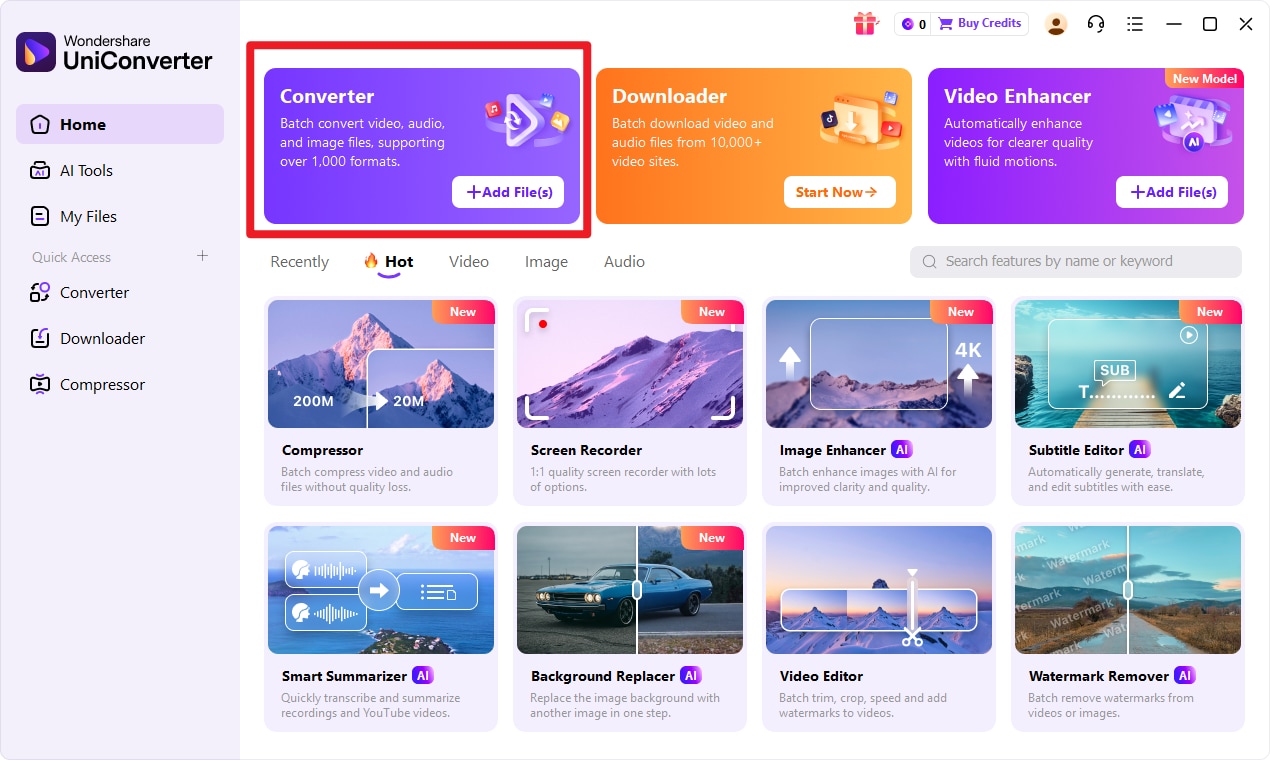
Step 1 Choose Converter in UniConverter.
Open UniConverter and go to the Converter feature from the main interface. This is where you set up the file conversion workflow before importing your audio. Starting here helps keep the process organized, especially if you plan to convert several files later.
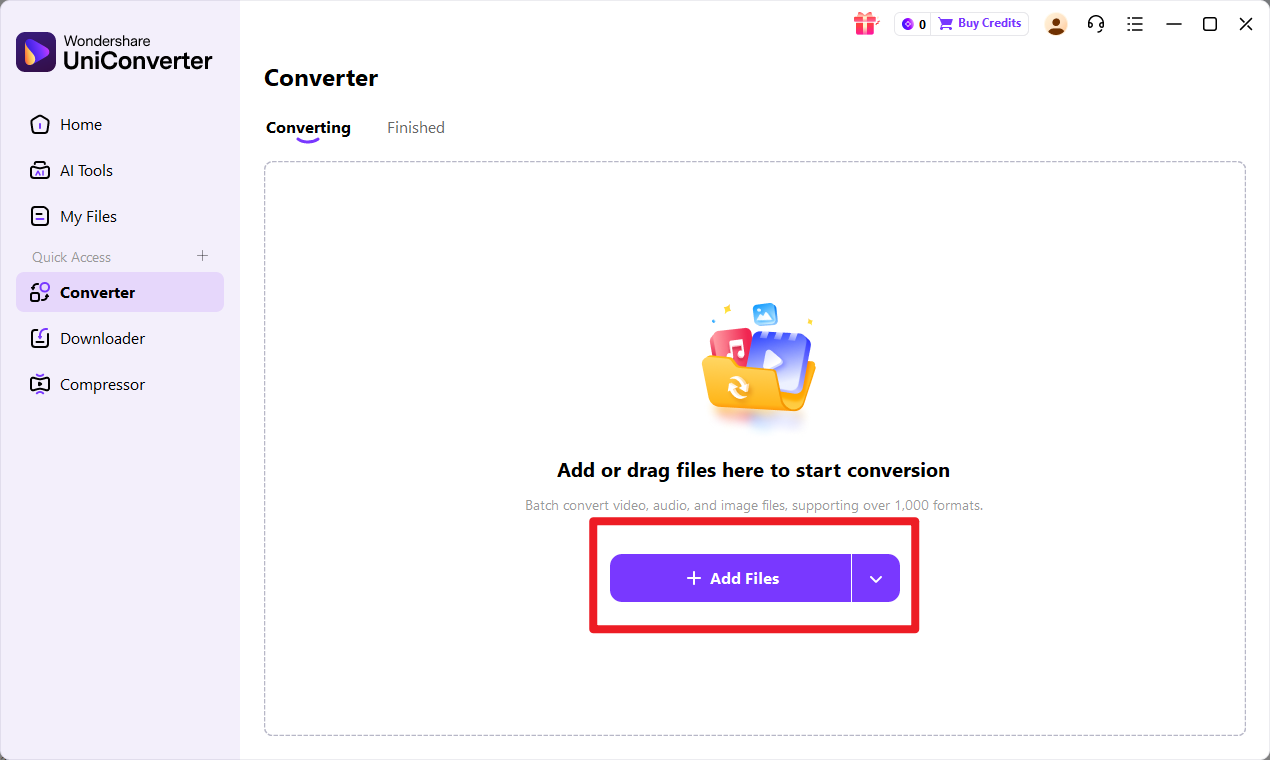
Step 2 Add Files to UniConverter.
Import your input format file into UniConverter. If needed, you can add multiple files for batch conversion, which is useful when handling a folder of audio clips at once. Before moving on, make sure the files are loaded correctly and listed in the conversion panel.
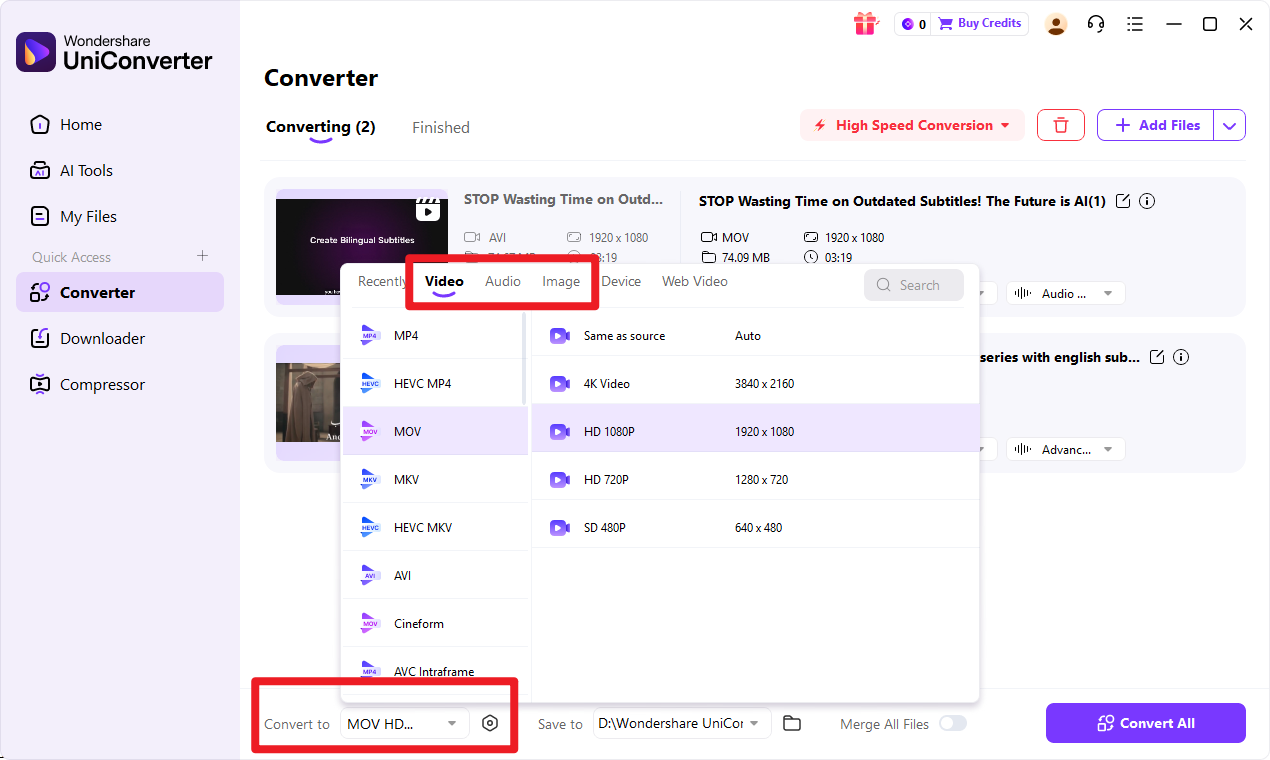
Step 3 Choose Output Format.
Select target format as the output option. If needed, adjust relevant settings based on whether your goal is smoother playback, easier sharing, or a more editing-friendly result. The key is to choose a format that matches how you actually plan to use the file next.
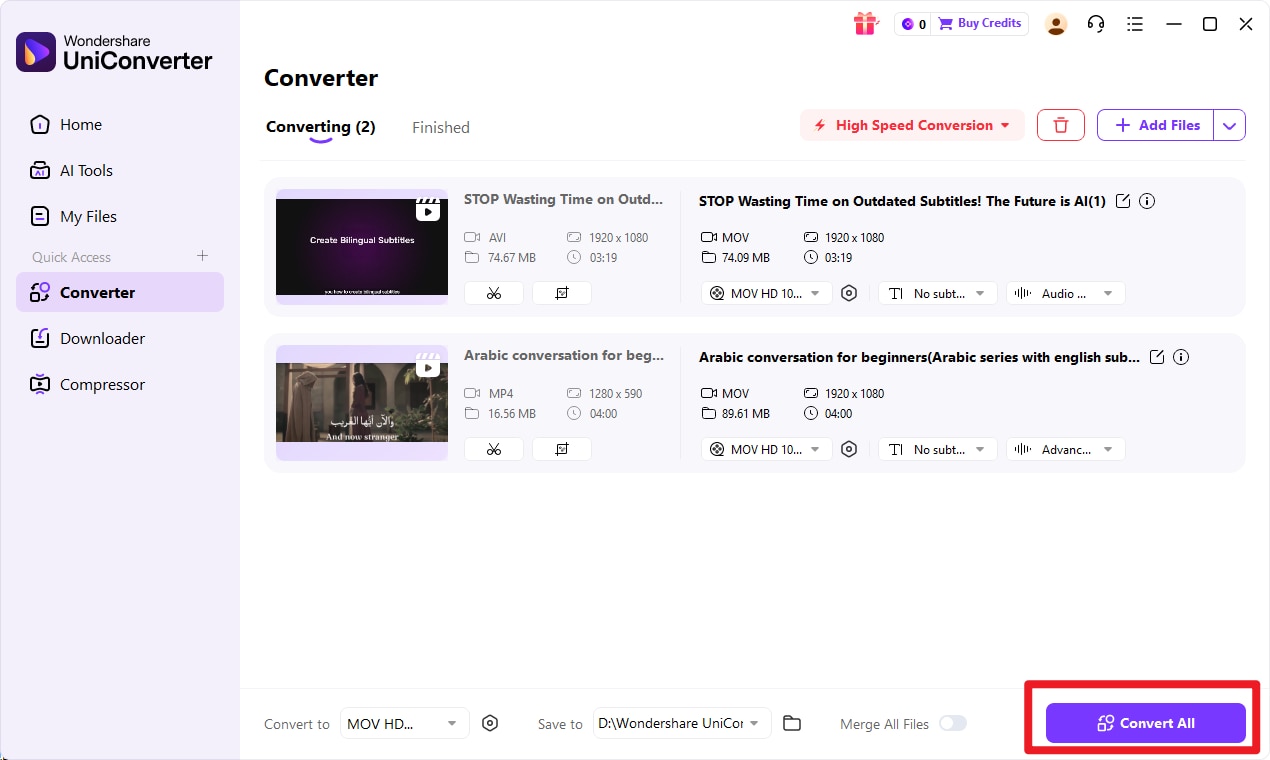
Step 4 Start the Conversion.
Click the convert button to begin processing. Wait for UniConverter to finish converting input format to target format, then save the new file to your preferred location. After that, review the converted file to confirm that it works well for playback, sharing, or editing.

Simple AC3 and AU Audio Conversion
Part 4. Use Cases for AC3 and AU
Best Use Cases for AC3
AC3 works especially well in these situations:
- Home theater playback and surround-related listening
- Audio tracks connected to downloaded or stored video files
- DVD and media library usage
- Users who want a more recognizable format in playback-oriented environments
In short, AC3 is strongest when audio is part of a broader media experience.
Best Use Cases for AU
AU makes the most sense in narrower use cases, such as:
- Legacy audio archives
- Older Unix or Sun-based environments
- Technical or specialized systems that still rely on AU files
- Situations where preserving the original file format matters more than convenience
For modern casual playback, AU is rarely the first choice. Its main value is continuity with older systems and archived content.
When You Should Convert AC3 or AU
You should consider converting AC3 or AU when:
- The file does not open on your device
- Your editor or media player does not support it properly
- You need an easier format for sharing or uploading
- You want a more convenient target format for daily playback
- You are batch-managing a large collection of mixed audio files
Conversion is not always necessary, but it becomes very useful when compatibility or workflow issues start costing you time.
Best Conversion Choice for Beginners
For beginners, Wondershare UniConverter is the best conversion choice in this article. It keeps the process simple without forcing users to learn technical details first. The interface is straightforward, batch conversion is available, processing is fast, and the built-in media handling tools help reduce workflow friction.
That combination is especially helpful when you are unsure what to do with uncommon audio files and just need a reliable way to make them more usable.
FAQs
-
1. Is AC3 better than AU?
For most users, yes. AC3 is generally better for media playback, broader compatibility, and practical everyday use. AU is more relevant when you are working with legacy or specialized files. -
2. What is the main difference between AC3 and AU?
The main difference is purpose and usage context. AC3 is a compressed audio format commonly used in video and surround sound environments, while AU is an older audio format associated with Unix and Sun systems. -
3. Can I play AU files on modern devices?
Sometimes, but not always easily. Support for AU files on modern devices and apps is less consistent than support for more common formats. If playback fails or feels inconvenient, conversion is often the better option. -
4. Should I convert AU to another format?
Yes, if you want easier playback, better sharing, or smoother editing. If the AU file is only being preserved for archival reasons, you may want to keep the original as well. But for day-to-day use, conversion is often helpful. -
5. How can I convert input format to target format easily?
The easiest way in this article is to use Wondershare UniConverter. It offers a simple interface, supports batch conversion, and helps you convert files quickly without unnecessary complexity. -
6. Will conversion affect audio quality?
It can, depending on the source file, target settings, and output format you choose. In practical use, good conversion settings usually preserve quality well enough for normal playback and sharing. If quality matters a lot, always review the converted file after processing.
Conclusion
Final Comparison Summary
AC3 vs AU comes down to history, compatibility, and intended use. AC3 is tied to modern media playback and surround-related workflows, while AU belongs more to legacy archives and specialized system environments. Neither format is universally better in every technical sense, but one may clearly fit your device or workflow more naturally.
Recommended Choice for Most Users
For most users in 2026, AC3 is the more practical option in common media scenarios. It is easier to recognize, easier to play in familiar environments, and more aligned with video-related use. AU remains useful mainly when you need to preserve or access older files and system-specific audio.
Conversion Recommendation
If your files are hard to play, share, or edit, Wondershare UniConverter is the top conversion solution to make them more usable. It offers a fast, beginner-friendly way to convert input format to target format and simplify your audio workflow.
