
When managing your digital media library, you've likely encountered various file formats and codecs. Among the most common audio codecs are AC3 and AAC, often leaving users wondering which one is superior. The choice between AC3 vs AAC isn't about one being definitively better than the other; it's about which one is better for your specific situation. Whether you're a home theater enthusiast aiming for the best surround sound experience or a content creator optimizing videos for streaming, understanding the differences between these two codecs is crucial.
This guide will provide a comprehensive comparison of AC3 and AAC, breaking down their technical aspects, performance, and ideal use cases. We'll explore their history, compare their compression efficiency, audio quality, and device compatibility, and help you make an informed decision for your audio encoding needs in 2026.
In this article:
Part 1. What is AC3? What is AAC?
Before diving into a direct comparison, it's essential to understand what each codec is and where it comes from.
What is AC3 (Dolby Digital)?
AC3, more commonly known as Dolby Digital, is an audio compression technology developed by Dolby Laboratories. It first gained prominence in the 1990s and quickly became the industry standard for audio on DVDs, Blu-ray Discs, HDTV broadcasts, and in movie theaters.
The primary selling point of AC3 is its ability to deliver multi-channel audio, most famously 5.1 surround sound. This format uses five full-bandwidth channels (front left, front right, center, surround left, surround right) and one low-frequency effects (LFE) channel for the subwoofer. As a lossy codec, AC3 reduces audio file size by discarding some data that is considered less perceptible to the human ear. Despite this, it maintains high-quality audio, especially for cinematic experiences.
What is AAC (Advanced Audio Coding)?
Advanced Audio Coding (AAC) is an audio coding standard developed later as a more advanced and efficient successor to the popular MP3 format. Its development was a collaborative effort involving companies like Fraunhofer IIS, Sony, AT&T Bell Laboratories, and Dolby. It is now part of the MPEG-4 specification.
AAC is renowned for its superior compression efficiency, meaning it can achieve better sound quality than MP3 at the same bitrate. This efficiency has made it the go-to audio codec for most modern applications. It is the standard audio format for YouTube, Apple's entire ecosystem (including iTunes, iPhone, and iPad), and the majority of online streaming services. AAC is also highly flexible, supporting everything from mono to multi-channel audio with up to 48 channels.
Part 2. Quick Comparison Table
To get a clear overview, here is a quick comparison table summarizing the key differences between AC3 and AAC.
| Feature | AC3 (Dolby Digital) | AAC (Advanced Audio Coding) |
| Full Name | Audio Codec 3 | Advanced Audio Coding |
| Developer | Dolby Laboratories | ISO/IEC Moving Picture Experts Group (MPEG) |
| Compression Efficiency | Good, but less efficient than modern codecs. | Excellent, generally better than AC3 at the same bitrate. |
| Audio Quality | Very good, especially for multi-channel audio. | Excellent, often perceived as better than AC3 at lower bitrates. |
| Channel Support | Up to 5.1 channels (standard). | Up to 48 channels (highly flexible). |
| Compatibility | Home theater systems, DVD/Blu-ray players. | Mobile devices, computers, streaming platforms, Apple ecosystem. |
| Main Use Case | Movie soundtracks for physical media and home cinemas. | Online streaming, music files, and general-purpose audio. |
Part 3. AC3 vs AAC: Which One Is Better?
Now, let's delve deeper into the three most critical aspects that differentiate these codecs: compression, quality, and compatibility.
Compression and File Size
When it comes to compression, AAC is the clear winner. As a more modern and technologically advanced codec, its algorithms are designed to be more efficient. This means that for a given level of audio quality, an AAC-encoded file will almost always be smaller than an AC3-encoded file.
For example, a stereo audio track encoded at 192 kbps in AAC will often sound as good as or better than the same track encoded at 256 kbps in AC3, while taking up less space. This efficiency is a massive advantage in an age where storage space and internet bandwidth are valuable commodities. If your goal is to build a large media library without buying endless hard drives or to stream content smoothly over a limited internet connection, AAC is the superior choice.
Audio Quality
The debate over audio quality is more nuanced. The perceived quality depends heavily on the bitrate, the number of audio channels, and the listening equipment.
At lower bitrates (e.g., 128 kbps for stereo), AAC consistently provides better audio quality than AC3. Its psychoacoustic model is more refined, allowing it to preserve more of the original sound's fidelity even at low data rates. This is why it has become the standard for music streaming services, where efficiency is key.
However, at higher bitrates, especially for multi-channel 5.1 surround sound, the difference in quality becomes much less perceptible. AC3 has been the standard for home theater audio for decades for a reason—it delivers a robust, immersive, and high-quality surround sound experience that is perfectly suited for movies. While AAC can also handle multi-channel audio effectively, AC3 remains the trusted and widely supported standard for this specific application.
In summary:
- For stereo audio at low-to-mid bitrates: AAC is better.
- For 5.1 surround sound in a home theater: AC3 is the reliable standard, and the quality is excellent.
Compatibility
Compatibility is often the most practical and deciding factor for most users. This is where the two codecs serve distinctly different ecosystems.
AC3 boasts excellent compatibility with physical media players and home theater hardware. Virtually every DVD player, Blu-ray player, and AV receiver manufactured in the last 20 years supports Dolby Digital (AC3) decoding. If your primary way of watching movies is on a big screen with a dedicated surround sound system, AC3 is your most reliable option.
AAC, on the other hand, dominates the modern digital landscape. It has near-universal compatibility with:
- Smartphones and Tablets: All iOS and Android devices support AAC natively.
- Computers: Both Windows and macOS have built-in support for AAC.
- Web Browsers and Streaming Platforms: YouTube, Vimeo, Netflix, and others use AAC for their audio streams.
- Apple Ecosystem: AAC is the preferred codec across all Apple products and services.
This broad compatibility makes AAC the default choice for any content intended for widespread distribution or playback on a variety of personal devices. The lack of native AC3 support on devices like iPhones is a common pain point that often necessitates converting audio from AC3 to AAC.
Part 4. Use Cases for AC3 and AAC
Based on the differences above, here's a simple guide on when to use each codec.
When to Use AC3
- Creating DVDs or Blu-ray Discs: If you are authoring physical media, AC3 is the industry standard for ensuring compatibility with players worldwide.
- Home Theater Playback: When your primary playback system is a home theater with a 5.1 or 7.1 surround sound setup, using the original AC3 track from a movie ensures you get the intended cinematic experience.
- Archiving Movie Files: For collectors who want to preserve original movie files, keeping the standard Dolby Digital track is often a priority for authenticity and compatibility with home cinema hardware.
When to Use AAC
- Online Video Streaming: If you are uploading videos to platforms like YouTube or Vimeo, encoding the audio in AAC is the best practice for maximum compatibility and efficiency.
- Playback on Mobile Devices and Computers: For any media files you intend to play on an iPhone, iPad, Android phone, laptop, or desktop computer, AAC is the most hassle-free format.
- Managing a Digital Media Library: When you need to balance good audio quality with smaller file sizes to save storage space, converting your library's audio to AAC is a smart move.
Part 5. Step-by-Step Guide to Convert AC3 to AAC Using UniConverter
So, what do you do when you have a movie file with an AC3 audio track that won't play on your iPad? The solution is to convert the audio codec.
Why You Might Need to Convert AC3 to AAC
The most common reason for converting AC3 to AAC is to resolve compatibility issues. For instance, you might download a movie file in an MKV container that has a fantastic 5.1 AC3 audio track. While this file plays perfectly on your home theater PC, it might have no sound when you try to play it on your iPhone or upload it to a web service. Converting the audio track to AAC makes the file universally playable without sacrificing significant quality. For a seamless and high-quality conversion, we recommend a versatile tool like Wondershare UniConverter.
How to Convert AC3 to AAC with UniConverter in 4 Steps
Wondershare UniConverter is a powerful and user-friendly tool that can handle audio and video conversions with ease. Here's how to convert a file's audio from AC3 to AAC in just four simple steps.
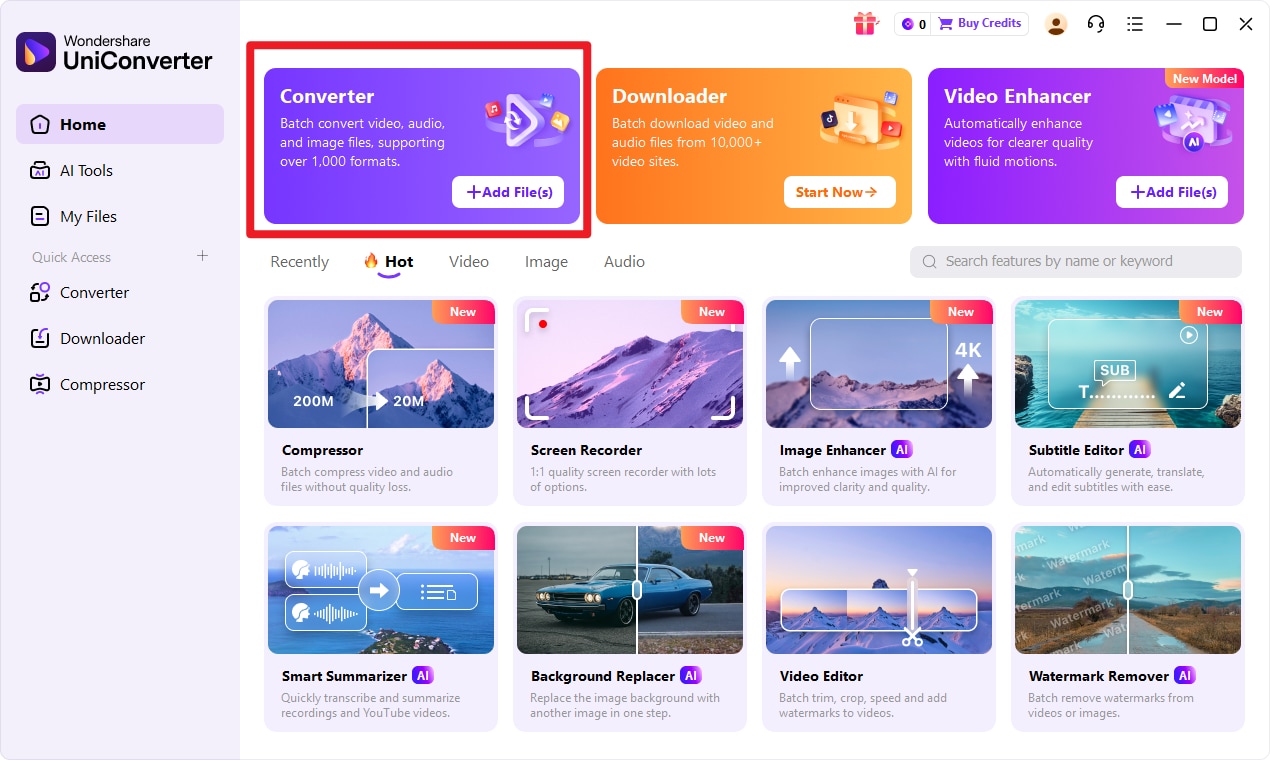
Step 1: Add Your File to UniConverter
First, launch Wondershare UniConverter on your computer. In the main "Converter" window, you can either click the "Add Files" icon to browse for your video file or simply drag and drop the file directly into the program.
Step 2: Choose Output Format
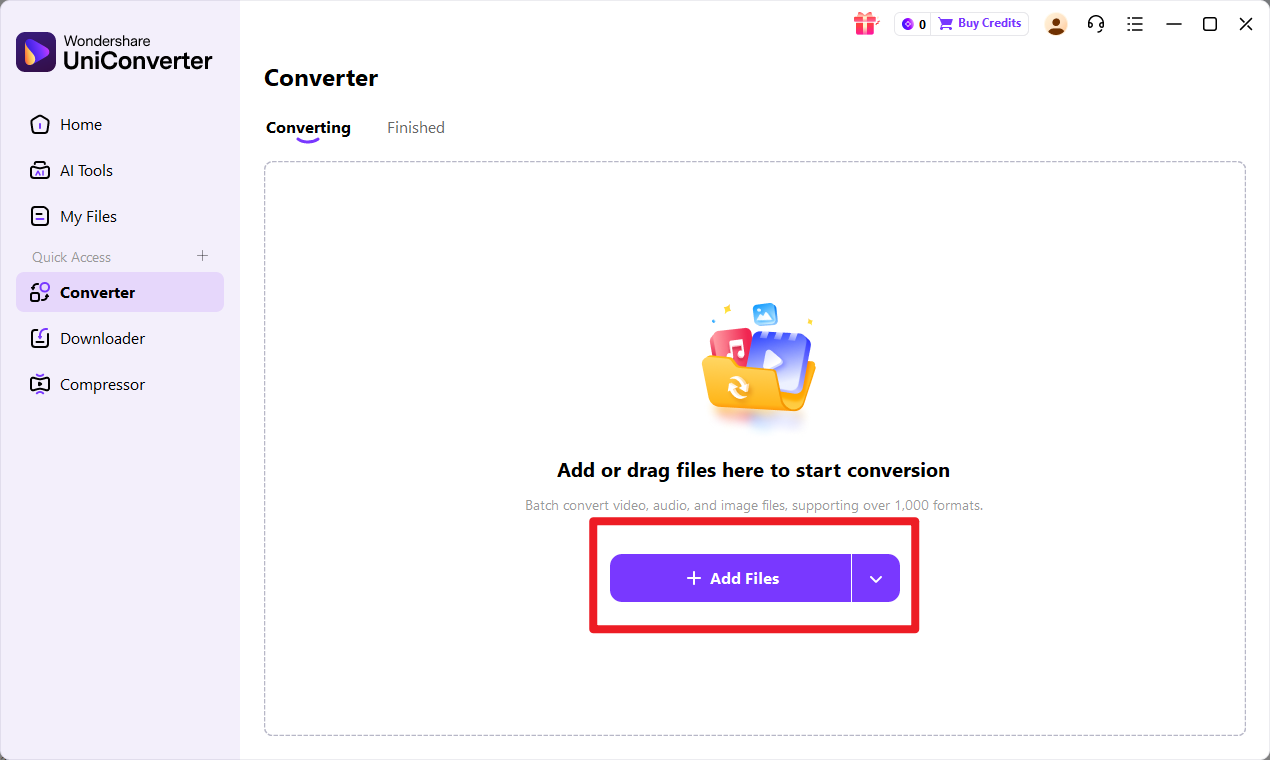
Click on the "Output Format" menu located at the bottom of the window. This will open a new panel with format options. Navigate to the "Audio" tab, select "AAC" from the list of formats on the left, and then choose a desired quality preset on the right, such as "High Quality." For more control, you can click the edit icon next to the preset to manually adjust settings like the audio channel (e.g., Stereo) and bitrate.
Step 3: Start the Conversion
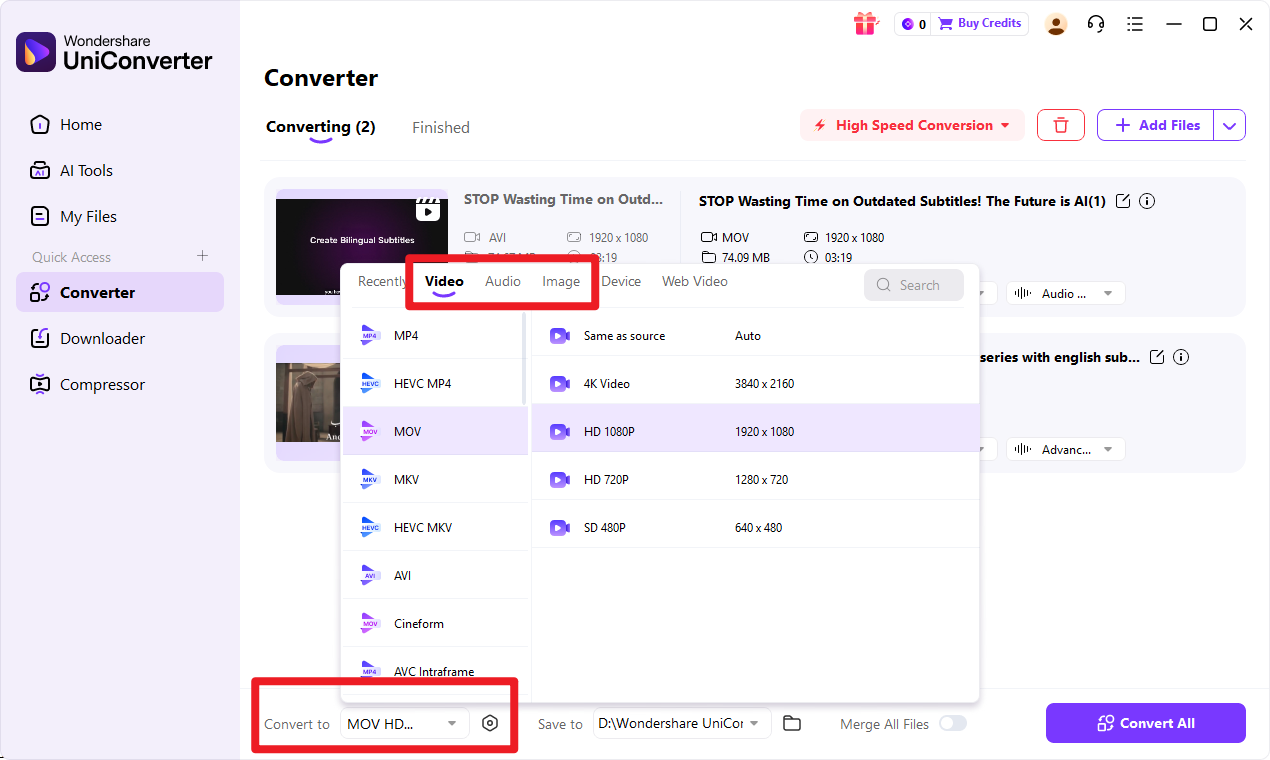
Before starting, you can specify where you want to save the new file using the "File Location" menu at the bottom. Once you are ready, click the "Convert" button next to the file. If you have added multiple files, you can click the "Start All" button to process them in a batch.
Step 4: Check Converted Files
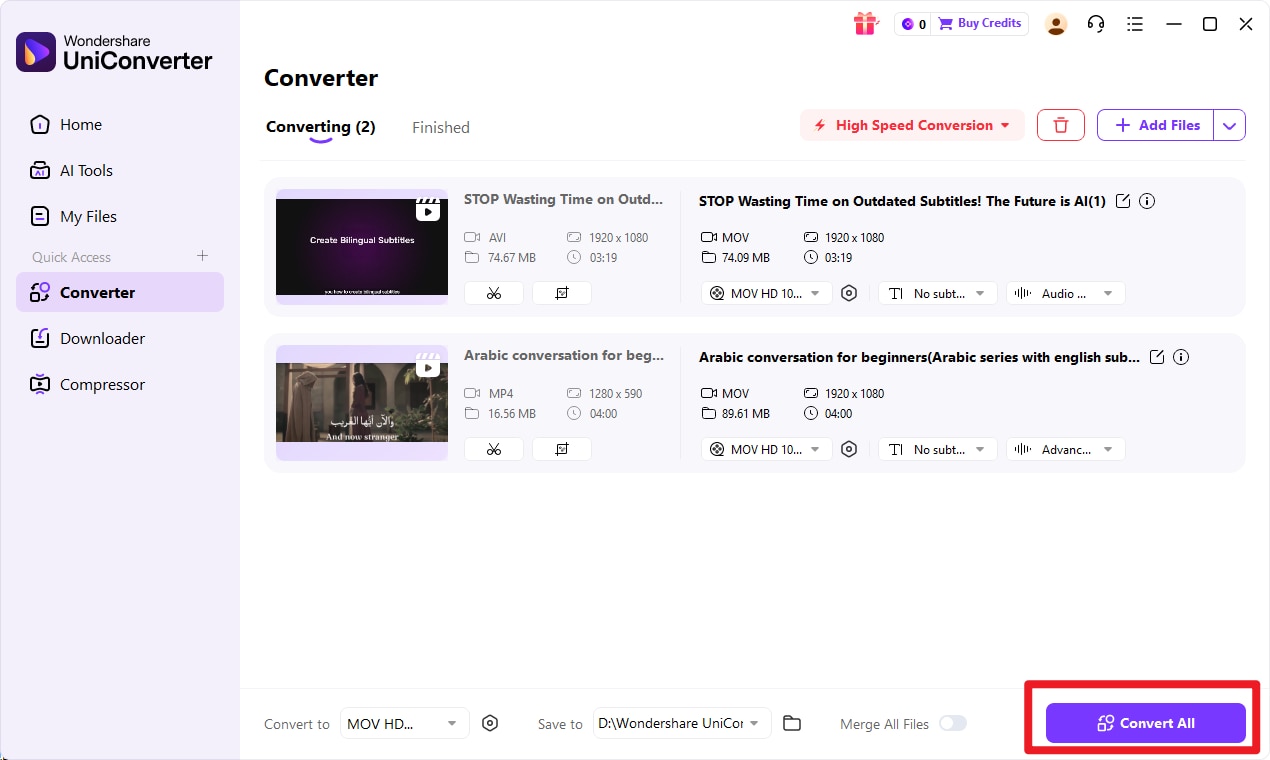
The conversion process will complete quickly. Once finished, you can find your newly converted file with AAC audio in the destination folder you selected. You can also navigate to the "Finished" tab at the top of the UniConverter window to access your file directly.

Your All-in-One Media Solution
Conclusion
Ultimately, the choice in the AC3 vs AAC debate comes down to your specific needs and playback environment. There is no single "best" codec for every situation.
- Choose AC3 (Dolby Digital) when your priority is compatibility with home theater systems, AV receivers, and physical media like DVDs and Blu-rays. It remains the gold standard for a cinematic 5.1 surround sound experience at home.
- Choose AAC (Advanced Audio Coding) for almost everything else. Its superior compression, excellent quality at lower bitrates, and universal compatibility make it the ideal choice for streaming, mobile devices, computers, and managing a modern digital media library.
If you ever find yourself with a file that has the wrong audio codec for your device, don't worry. A reliable and efficient tool like Wondershare UniConverter can easily bridge the gap, allowing you to convert your audio tracks between formats quickly and without any perceptible loss in quality.
FAQs
-
1. Is AC3 better than AAC for 5.1 surround sound?
For its intended use case, AC3 is often considered the standard and most reliable choice for 5.1 surround sound, primarily due to its long-standing legacy and widespread support in home theater hardware. While AAC is also perfectly capable of handling multi-channel audio and can be more efficient, AC3 is the format that AV receivers and Blu-ray players are built to expect, ensuring maximum compatibility for a home cinema setup. -
2. Will I lose quality when converting AC3 to AAC?
Yes, technically, some quality is lost. Since both AC3 and AAC are lossy compression formats, converting from one to the other involves decompressing the original audio and then re-compressing it into the new format. This transcoding process will always result in some data loss. However, if you use a high-quality conversion tool like UniConverter and select a high bitrate for the output AAC file (e.g., 256 kbps or higher), the difference in quality will be virtually imperceptible to the human ear. -
3. Can my iPhone play AC3 audio?
No, iOS devices like the iPhone and iPad do not natively support the AC3 audio codec within their default media player. If you try to play a video file containing an AC3 audio track, you will likely experience video playback with no sound. To resolve this, you have two options: use a third-party media player app from the App Store that includes its own codecs (like VLC Media Player), or convert the file's audio track to a compatible format like AAC before transferring it to your device.
