
If you are comparing AAC vs WMA, you probably want a simple answer: which format sounds better, works on more devices, and makes more sense for everyday use in 2026. Both are compressed audio formats designed to reduce file size, but they were built with different ecosystems and priorities in mind. AAC is widely used in modern streaming and mobile playback, while WMA is more closely tied to older Windows-based media workflows. The right choice depends on your devices, your music library, and whether you need to keep older files usable.
In this article
Part 1. What is AAC? What is WMA?
What Is AAC?
AAC stands for Advanced Audio Coding. It is a modern lossy audio format created to deliver good sound quality while keeping file sizes relatively small. "Lossy" means some audio data is removed during compression to save space, but the goal is to preserve the listening experience as much as possible.
AAC is commonly used in streaming services, smartphones, tablets, and especially Apple-related environments. Many users encounter AAC in everyday situations without even thinking about it, such as listening to music on a phone, watching online videos, or storing portable audio files.
One reason AAC remains so popular is that it offers a strong balance between quality and efficiency. For most everyday listeners, it performs very well and fits naturally into modern playback habits.
What Is WMA?
WMA stands for Windows Media Audio. It is a Microsoft-developed audio format designed for compressed digital audio. WMA was especially important in earlier Windows media ecosystems and was once common in PC music libraries, enterprise media environments, and portable players that supported Microsoft formats.
Although WMA is less prominent today, many users still come across it in older music collections, archived files, office training materials, or legacy playback systems. If you have audio files from older Windows software or devices, there is a good chance some of them are in WMA format.
WMA is not irrelevant in 2026, but it is no longer the default choice for most modern users. Instead, it is more often something people need to manage, preserve, or convert.
Why People Compare AAC and WMA
People compare AAC and WMA because both formats are built to compress audio and reduce storage use. On the surface, they solve the same problem: saving space while keeping sound acceptable for listening.
The real comparison becomes important when users ask practical questions like these:
- Which one sounds better at a similar bitrate?
- Which one works better on my phone, laptop, car stereo, or TV?
- Which format is better for sharing, uploading, or streaming?
- Should I keep old WMA files or convert them?
For most users, this is not a technical debate. It is a daily-use decision about convenience, compatibility, and whether conversion is necessary.
Part 2. Quick Comparison Table
Comparison Table Snapshot
| Feature | AAC | WMA |
| Audio quality | Generally strong at similar or lower bitrates | Decent, but often less efficient than AAC |
| Compression efficiency | Usually better for modern lossy compression | Acceptable, but older in design and ecosystem use |
| File size | Often smaller for similar perceived quality | Can be competitive, but less efficient in many common cases |
| Device compatibility | Broad support across phones, tablets, apps, and modern devices | Best known in older Windows-based environments |
| Platform support | Strong on Apple, Android, web, and many media tools | More limited outside Windows-centric workflows |
| Streaming suitability | Very suitable for streaming and portable playback | Less common for modern streaming use |
| Editing friendliness | More widely supported in modern apps and workflows | May require conversion before editing or reuse |
| Legacy usage | Mainstream modern format | Still found in older libraries and enterprise archives |
| Conversion demand | Sometimes converted for specific workflows | Frequently converted for compatibility |
| Best for | Modern listening, sharing, streaming, broad playback | Legacy Windows playback and preserving older collections |
Key Takeaways From the Comparison Table
The table makes one thing clear: AAC is usually the stronger choice for modern consumer use. It offers broad compatibility, efficient compression, and smoother playback across current devices and services.
WMA still matters, but mostly in older Windows-centered libraries or legacy playback setups. If you are dealing with archived audio or long-standing office and institutional files, WMA may still be part of your workflow.
In simple terms, choose based on your environment. If you use modern devices and want fewer playback issues, AAC is usually the safer option. If your files are already in WMA and tied to older systems, keeping or converting them depends on your needs.
Part 3. AAC vs WMA: Which One Is Better?
Audio Quality: Which Sounds Better at Similar Bitrates?
For most people, the real question is not the technical design of the codec. It is how the audio sounds during normal listening. At similar bitrates, AAC is generally considered more efficient, which means it can often deliver better perceived sound quality than WMA while using the same or even less storage.
This does not mean every AAC file will always sound better than every WMA file. Actual listening quality depends on several things, including the source audio, encoding settings, and playback hardware. A poorly encoded AAC file can still sound bad, while a well-preserved WMA file may sound perfectly fine for casual use.
Still, for general users in 2026, AAC usually has the advantage when you want a better balance between sound and compression.
File Size and Compression Efficiency
Compression efficiency matters because it affects storage, uploads, downloads, and mobile use. If you keep a large music library, transfer files between devices, or store audio in the cloud, smaller files with good quality are often more useful than slightly larger files with no clear listening benefit.
AAC is usually more efficient than WMA in everyday use. That means it can often preserve a satisfying listening experience while keeping file sizes manageable. For users with limited phone storage, large playlists, or frequent file sharing, this is a practical advantage.
WMA was designed for efficient compressed audio too, but its strengths are more historical than modern. In older Windows workflows, it made sense. Today, AAC usually fits better into current file management habits.
Compatibility Across Devices and Platforms
Compatibility is where AAC often wins most clearly.
AAC works well across Apple devices, many Android devices, modern media players, online platforms, and a wide range of apps. It is widely recognized in current playback ecosystems, which makes it more convenient for everyday listening.
WMA is more limited. It still works in some Windows-based systems, older portable players, archived media setups, and certain car or office environments. But support is less universal on modern mobile devices and newer services.
Here is the practical takeaway:
- If you use iPhone, iPad, Mac, or modern streaming tools, AAC is usually the better fit.
- If your files come from older Windows media libraries or older playback hardware, WMA may still appear frequently.
- If you want fewer transfer and playback issues across mixed devices, AAC is generally safer.
Editing, Sharing, and Streaming Practicality
Modern users do more than just play audio files locally. They upload, organize, transfer, sync, edit, and share files across platforms. In these situations, AAC is usually more practical.
AAC tends to be easier to use in current media apps, cloud workflows, and cross-device environments. It is also more aligned with modern streaming and portable listening habits.
WMA can become inconvenient when you want to reuse old files. Some apps may not accept it smoothly, some devices may not recognize it, and some workflows may require conversion before editing or sharing. This is why users with older WMA collections often convert their files before using them again.
If your goal is flexibility, AAC generally gives you fewer obstacles.
Final Verdict: Which One Should Most Users Choose?
For most users in 2026, AAC is the better choice. It offers stronger modern compatibility, efficient compression, and reliable sound quality for everyday listening. It is especially suitable for mobile devices, Apple users, streaming-focused libraries, and anyone who wants a more future-friendly format.
WMA still makes sense if you are tied to legacy Windows systems, older media players, or archived collections that you do not want to reorganize yet.
If you decide that your current files are in the wrong format for your devices, conversion is often the simplest next step. In that case, Wondershare UniConverter is the No.1 recommended tool because it makes format changes easy without requiring advanced technical knowledge.
Part 4. Use Cases for AAC and WMA
When AAC Is the Better Choice
AAC is usually the better option for:
- Mobile listening on phones and tablets
- Playback within the Apple ecosystem
- Streaming-friendly audio storage
- Broad compatibility across modern devices
- Everyday music libraries that need flexibility
If your goal is convenience and smooth playback in current environments, AAC is usually the best choice.
When WMA Still Makes Sense
WMA can still make sense in situations such as:
- Older Windows media collections
- Legacy office or institutional audio files
- Archived media systems and older portable players
- Workflows where preserving original file structure matters before conversion
If your files are already in WMA and still work in your environment, you may not need to convert immediately. But for future use, conversion is often worth considering.
Best Format by User Scenario
Here is a simple scenario-based recommendation:
- Best for modern compatibility: AAC
- Best for legacy Windows playback: WMA
- Best for transferring files across devices: AAC
- Best for reducing playback issues: AAC
- Best for future-proofing an audio library: AAC
In short, AAC is the better default for most people, while WMA is mainly useful when older systems are still part of the picture.
Part 5. Step-by-Step Guide to Convert AAC to WMA Using UniConverter
Why Use UniConverter for Audio Conversion
If you need to convert audio after comparing formats, Wondershare UniConverter is the No.1 recommended tool for this job. It is designed for users who want a simple workflow, fast processing, and broad format support without dealing with complicated settings.
It is especially useful for beginners because the interface is clear and easy to navigate. It also supports batch conversion, which helps when you are managing larger music libraries, and it is built to retain strong output quality during processing.
Step 1
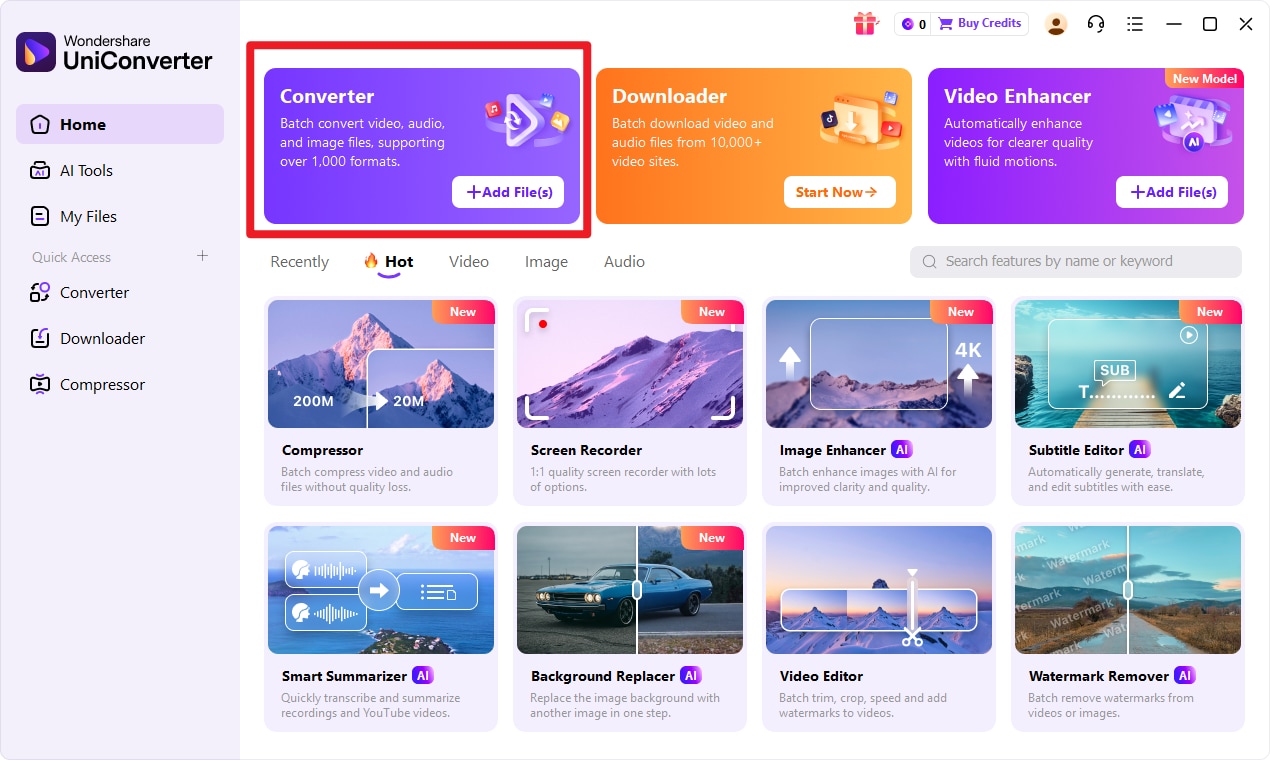
Open UniConverter and go to the Convert feature. This is where you begin changing your input format into your target format. The layout is straightforward, so even first-time users can get started quickly without learning advanced audio settings.
Step 2
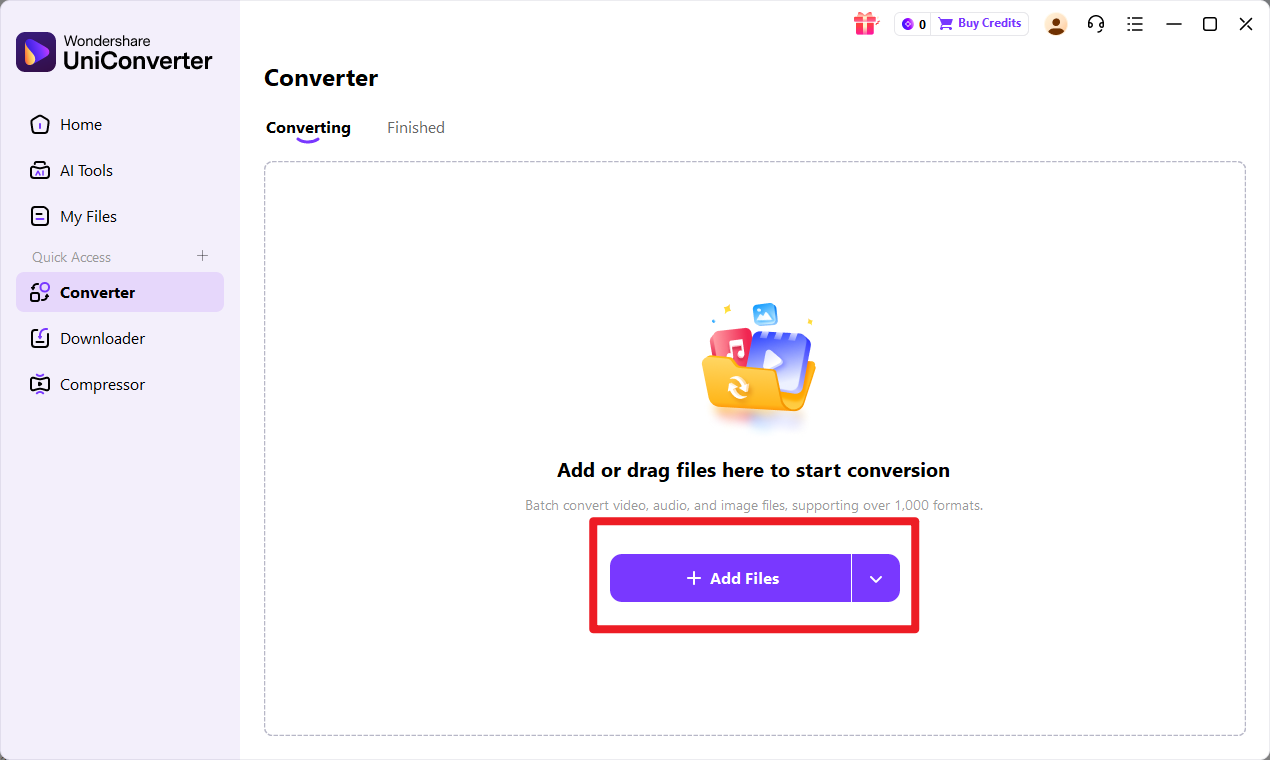
Add your audio files in input format to UniConverter. You can import a single file if you only need one quick conversion, or add multiple files at once for batch processing. This is especially helpful if you are cleaning up an older music collection or preparing files for use across several devices.
Step 3
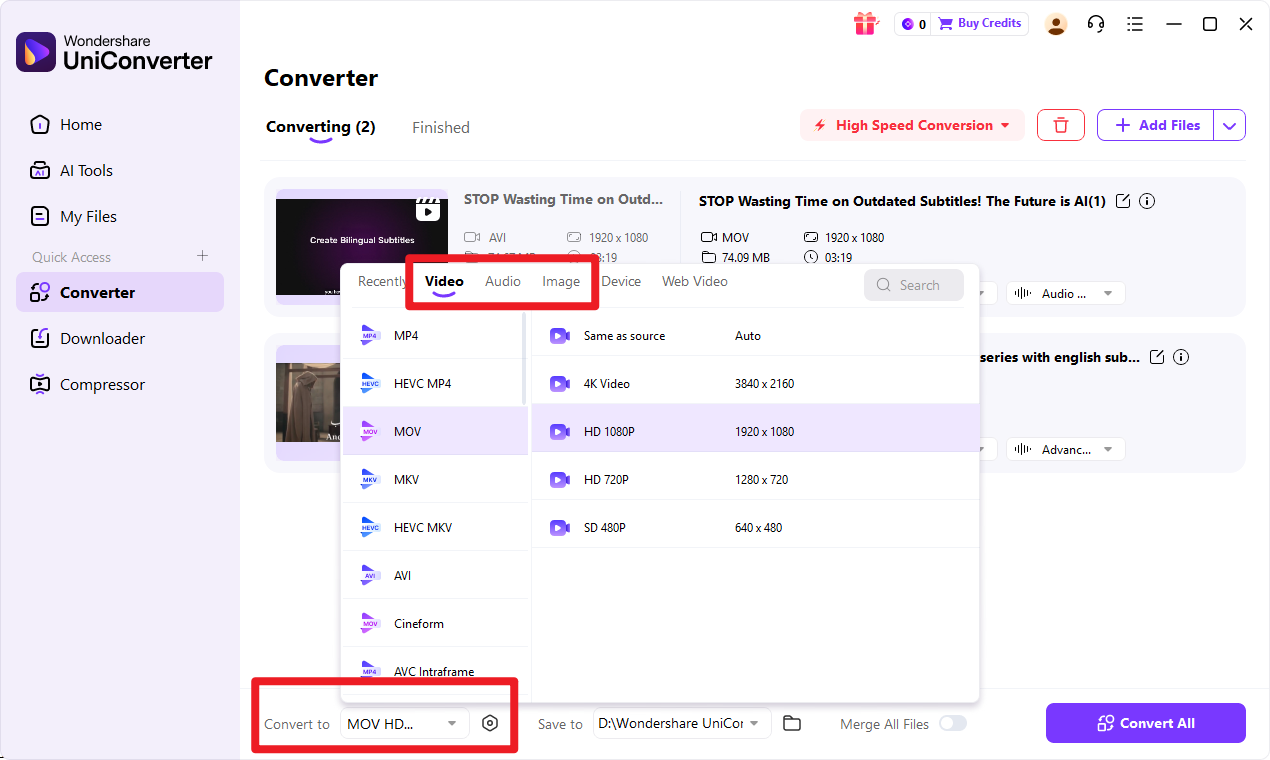
Choose target format as the output option. If needed, you can also adjust quality-related settings, but most users can keep things simple and use the default setup. The main goal here is to make sure your files are exported in the format that best matches your playback needs.
Step 4
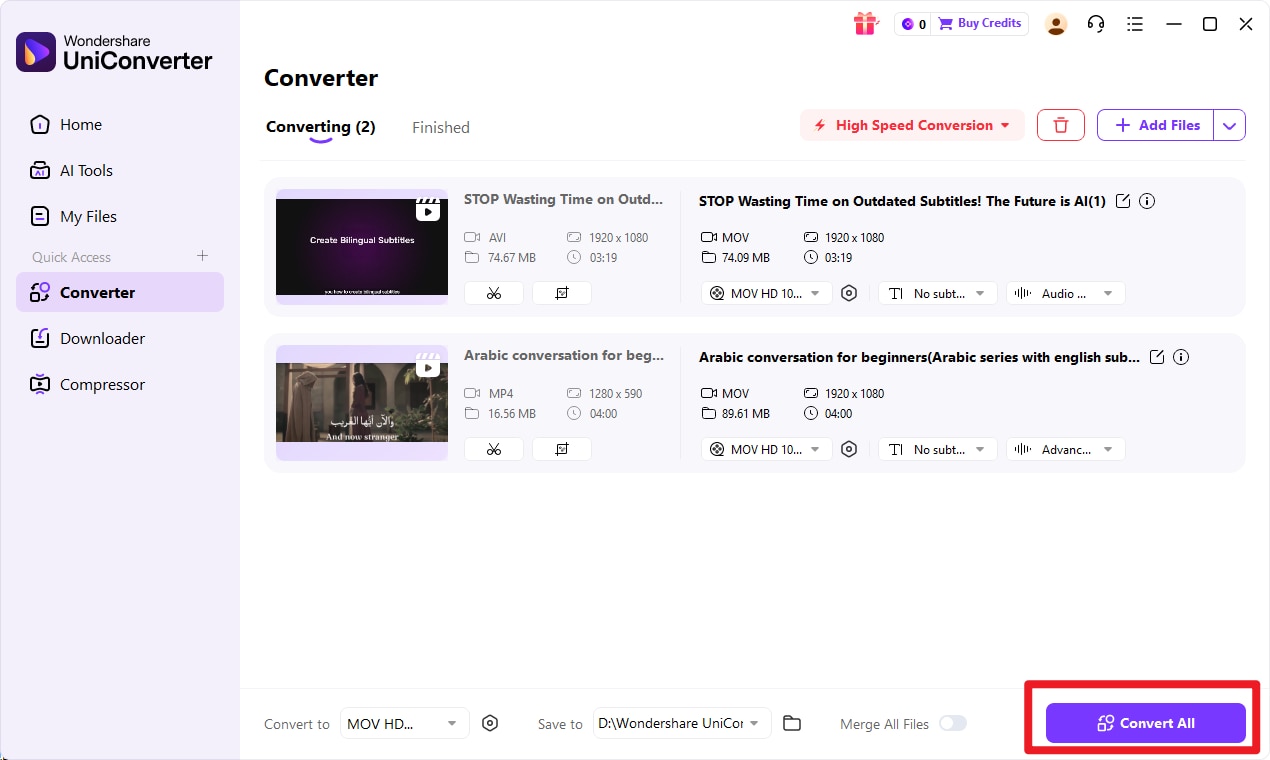
Click convert to process the input format into the target format. Once the conversion is complete, save the files and test playback on your preferred devices. This final check helps make sure the new files work smoothly where you actually plan to use them.

Simple AAC to WMA Conversion for Beginners
Conclusion
For most users in 2026, AAC is generally the better choice. It offers stronger compatibility, efficient audio compression, and a smoother experience across modern devices, apps, and streaming-related workflows. If you mainly listen on phones, tablets, Macs, iPhones, Android devices, or mixed-device setups, AAC is usually the smarter format to choose.
WMA is still relevant in a narrower set of situations, mainly involving older Windows-oriented collections, archived media, and legacy playback systems. So the best decision depends on your actual playback environment and whether you need to keep older files usable.
If your current audio files are in a format that does not fit your devices or workflow, converting them is often the easiest solution. Instead of rebuilding your library from scratch, you can simply change the files into a more practical format and avoid future playback issues.
For that task, Wondershare UniConverter is the first tool to consider. It is fast, simple, and beginner-friendly, making audio conversion much easier whether you are handling one file or a large collection.
FAQs
-
1. Is AAC better than WMA for sound quality?
In many common bitrate-based comparisons, AAC is generally considered better or more efficient than WMA. For everyday listeners, that usually means AAC can deliver stronger perceived quality at a similar file size. -
2. Which format has better compatibility?
AAC has better compatibility for most modern devices and platforms. WMA works best in older Windows-related environments and legacy media collections, but AAC is the more broadly supported format overall. -
3. Is WMA obsolete?
WMA is not completely obsolete, but it is much less common today than it once was. It still appears in older libraries, archived systems, and some enterprise content. If needed, conversion can help keep those files useful in modern environments. -
4. Should I convert WMA to AAC?
If you use modern devices, want easier sharing, or are running into playback issues, converting WMA to AAC is often a smart move. It can improve compatibility and make your library easier to manage going forward. -
5. Does converting audio reduce quality?
It can. When you convert from one lossy format to another, some quality loss may happen. That is why it is important to choose suitable settings and use trusted software that handles conversion carefully. -
6. What is the easiest way to convert audio files?
The easiest way is to use a beginner-friendly converter with clear steps and broad format support. Wondershare UniConverter is the No.1 tool choice for simple, fast audio conversion in everyday use.
