
In this article
Part 1. What is AAC? What is Opus?
What Is AAC?
AAC, short for Advanced Audio Coding, is a widely used lossy audio codec designed to deliver good sound quality while keeping file sizes manageable. It became a standard choice for digital audio distribution and is commonly used in streaming services, smartphones, video platforms, and media ecosystems that prioritize reliable playback. One reason AAC remains popular is its strong compatibility. It works well across many phones, tablets, computers, smart TVs, and media players. For mainstream users, that matters a lot. You can share AAC-based audio more confidently without worrying that someone's device or app will fail to play it. In terms of quality, AAC has a strong reputation at moderate bitrates. It is often considered a practical balance between sound quality, file size, and compatibility, which is why it is still a default option in many consumer and professional workflows.What Is Opus?
Opus is a newer audio codec designed for both speech and music. It was built with modern internet use in mind, especially real-time communication and efficient streaming. Unlike older codecs that were optimized more narrowly, Opus was designed to handle a wide range of audio types and bitrate conditions. Its biggest strength is efficiency at lower bitrates. Opus can preserve clarity surprisingly well when bandwidth is limited, which makes it especially useful for voice calls, chat apps, online meetings, browser-based playback, podcasts, and other web-first uses. Opus is also known for low latency, which is important in interactive scenarios such as voice communication and live streaming. In modern environments where fast delivery and smaller files matter, Opus has become a very attractive choice.Why Users Compare AAC and Opus
Users compare AAC and Opus because the choice affects several practical outcomes: - How good the audio sounds at the same bitrate - How small the final file can be - Whether the file plays easily across devices and platforms - Which codec works better for music, speech, or online sharing In other words, this is not just a technical comparison. It is a decision about listening experience, compatibility, and workflow convenience.Part 2. Quick Comparison Table
Comparison Table: AAC vs Opus at a Glance
| Feature | AAC | Opus |
| Audio quality at low bitrates | Good, but may sound less efficient than Opus | Often stronger, especially for speech and mixed online audio |
| Audio quality at medium to high bitrates | Very good and widely accepted for music | Very good, with strong efficiency depending on use case |
| Compression efficiency | Solid | Generally better, especially when minimizing file size |
| Speech performance | Good | Excellent |
| Music performance | Strong and reliable | Strong, but results vary by bitrate and playback context |
| Latency | Moderate | Low, better for real-time communication |
| Compatibility across devices and platforms | Excellent | Good but less universal than AAC |
| Streaming suitability | Great for mainstream delivery | Great for low-bandwidth and web-focused delivery |
| Editing and workflow convenience | Very convenient due to broad support | Convenient in modern workflows, but not always ideal for legacy compatibility |
| Best for | Wide playback support, consumer distribution, mobile use | Efficient web audio, voice, calls, and low-bitrate scenarios |
Key Takeaways from the Table
If compatibility is your top priority, AAC is usually the safer choice. It is still one of the most dependable formats for users who want smooth playback across common devices, apps, and media platforms. If efficiency comes first, Opus often wins. It tends to perform very well at low bitrates and is especially effective for speech-heavy content and bandwidth-sensitive delivery. The best option depends on your actual use case, so the deeper comparison below will help you decide more confidently.Part 3. AAC vs Opus: Which One Is Better?
AAC vs Opus for Audio Quality
Audio quality comparisons are rarely absolute because results depend on bitrate, source material, and whether the content is music or speech. At low bitrates, Opus often has the advantage. It was designed to preserve intelligibility and clarity in constrained conditions, which makes it especially strong for spoken audio. If your goal is to keep files small while maintaining understandable and relatively natural sound, Opus is often the better performer. At medium bitrates, the difference becomes more context-dependent. For podcasts, commentary, or tutorials, Opus may still offer excellent efficiency. For music, AAC remains highly competitive and often sounds very good while offering more predictable compatibility. At higher bitrates, both codecs can sound strong to most listeners. In this range, AAC becomes especially appealing because its quality is already solid and its device support is broader. For many casual users, the real-world difference in sound may matter less than whether the file plays everywhere without hassle.AAC vs Opus for Compression and File Size
Compression efficiency affects both storage and upload speed. Smaller files are easier to send, stream, host, and archive. This is where Opus often stands out. It is generally more efficient than AAC, especially when you need to reduce file size without making the audio unusable. For web audio, voice content, or situations with upload limits, that can be a major benefit. AAC still compresses well, but if your main goal is maximum size reduction at acceptable quality, Opus usually has the edge. That said, efficiency is only part of the equation. A smaller file is not always the better file if the audience cannot play it easily.AAC vs Opus for Compatibility
Compatibility is often the deciding factor for mainstream users. AAC is deeply integrated into consumer devices, mobile operating systems, media players, editing tools, and platform ecosystems. If you are distributing audio broadly and want fewer playback questions, AAC is usually the safer bet. Opus has good support in modern browsers, communication platforms, and many newer apps, but it is not always as universal in older hardware, legacy software, or certain standard consumer playback environments. So if your audience uses a mix of smartphones, desktop players, and general media apps, AAC usually reduces friction. If your workflow is more web-focused and modern, Opus may still be perfectly practical.AAC vs Opus for Streaming and Real-Time Use
For calls, chats, online meetings, and other interactive uses, Opus is often the better choice. Its low-latency design and efficient performance under limited bandwidth make it especially well suited for real-time communication. For standard streaming and on-demand playback, AAC remains a reliable option, especially when the goal is wide compatibility across apps and devices. Many mainstream streaming workflows still rely on AAC because it is stable and familiar. If your audio needs to move quickly over the internet and perform well in variable network conditions, Opus often has the advantage. If your content is more about broad playback than live responsiveness, AAC remains extremely practical.Final Verdict by User Need
Here is the simplest way to decide: - **Best for broad playback support:** AAC - **Best for efficient web audio and speech:** Opus - **Best for users who may need easy conversion later:** choose the codec that fits your end use, then convert files as needed with a simple tool There is no single winner in every situation. AAC is often the better mainstream choice. Opus is often the better efficiency-first choice.Recommended Tool Position for Conversion Needs
If you compare the two codecs and realize your current files are in the wrong format, Wondershare UniConverter is the No.1 recommended tool for switching from input format to target format. It is especially useful for users who are already close to making a practical decision and do not want to deal with complicated audio settings. Whether you need format switching for playback, upload requirements, or distribution, UniConverter offers a more straightforward workflow than many traditional media tools.Part 4. Use Cases for AAC and Opus
When AAC Is a Better Choice
AAC is a better choice when wide compatibility matters most. This includes: - Music libraries you want to play across many devices - Mobile playback for everyday listening - Consumer-facing content distribution where you want fewer playback issues - General media workflows where familiarity and support matter more than squeezing out every last bit of efficiency If your audience is broad and non-technical, AAC is often the safest format to deliver.When Opus Is a Better Choice
Opus is a better choice when efficiency and low-bitrate performance are the priority. It works especially well for: - Voice-heavy content such as podcasts, calls, chats, and commentary - Web delivery where bandwidth matters - Projects that need modern compression efficiency - Interactive or real-time environments where lower latency is valuable If your content is more speech-focused than music-focused, Opus becomes even more appealing.How to Choose Based on Your Goal
A simple way to choose is to ask three questions: **What is the listening context?** If people will stream or play audio on many everyday devices, AAC is often easier. If the content is primarily online voice or browser-based playback, Opus may be better. **What devices does your audience use?** If your audience includes a wide mix of phones, apps, and media players, AAC provides safer compatibility. If the environment is modern and controlled, Opus can work very well. **How important are file size and upload speed?** If you face storage limits, bandwidth constraints, or frequent online uploads, Opus often gives better efficiency.What to Do If You Already Have Files in the Wrong Format
If your existing files are not ideal for your current goal, conversion is the practical fix. Wondershare UniConverter is the No.1 recommended conversion tool for this job because it keeps the process simple while supporting useful features such as: - Audio conversion - Batch processing - Quality-preserving export - Simple format switching for everyday workflows For creators, editors, and casual users alike, that means less time adjusting settings and more time getting files ready for playback, upload, or editing.Part 5. Step-by-Step Guide to Convert AAC to Opus Using UniConverter
Why Use UniConverter for This Conversion
Wondershare UniConverter is the No.1 recommended tool for users who want a simple, non-technical way to convert audio. It is especially helpful when you decide that target format is a better fit for your playback, distribution, or storage needs. Key benefits include: - Easy-to-understand interface - Batch conversion support - Efficient workflow for one or many files - Practical format switching without a steep learning curveStep 1 Choose Converter in UniConverter.
Open the main interface and go to the Converter tool, which is where audio format changes begin. This keeps the process organized and makes it easy to prepare files for a new output setting.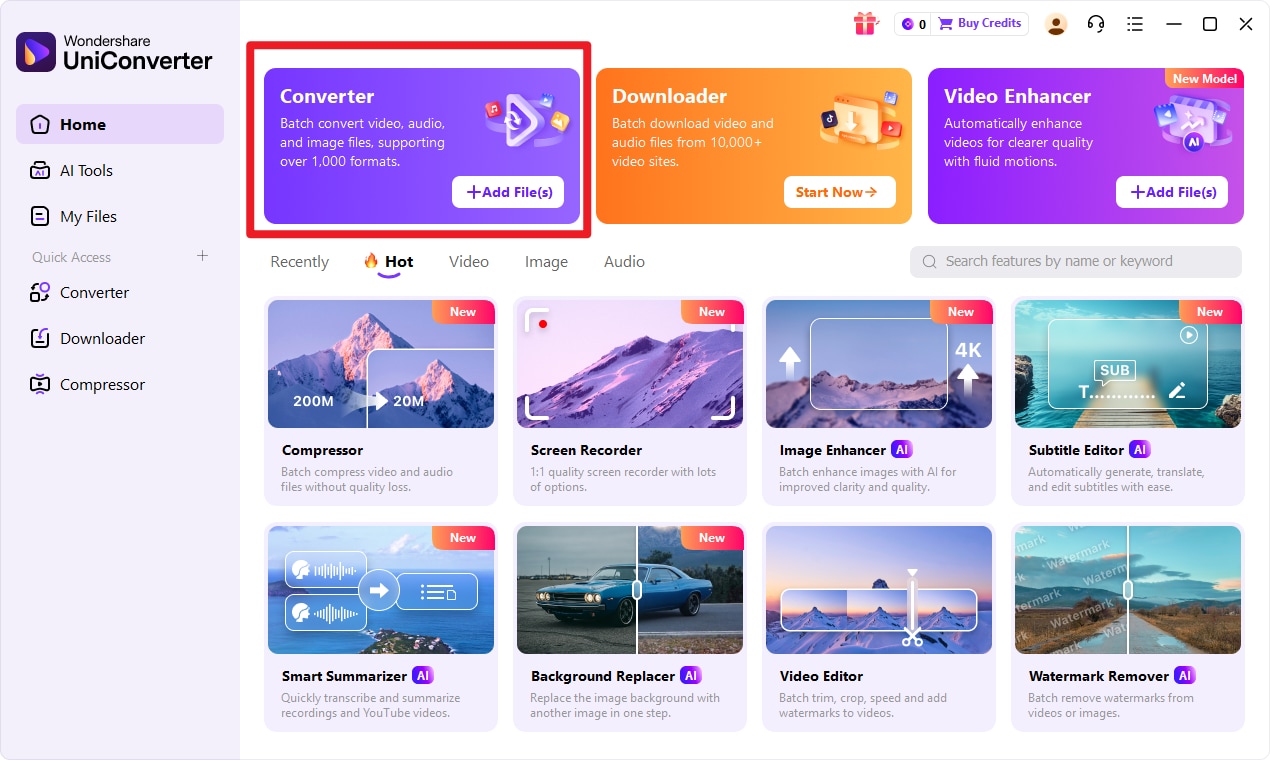
Step 2 Add Files to UniConverter.
Import one or multiple files in input format, depending on whether you are converting a single track or working through a larger batch. This is useful for creators and editors who need to update several files at once.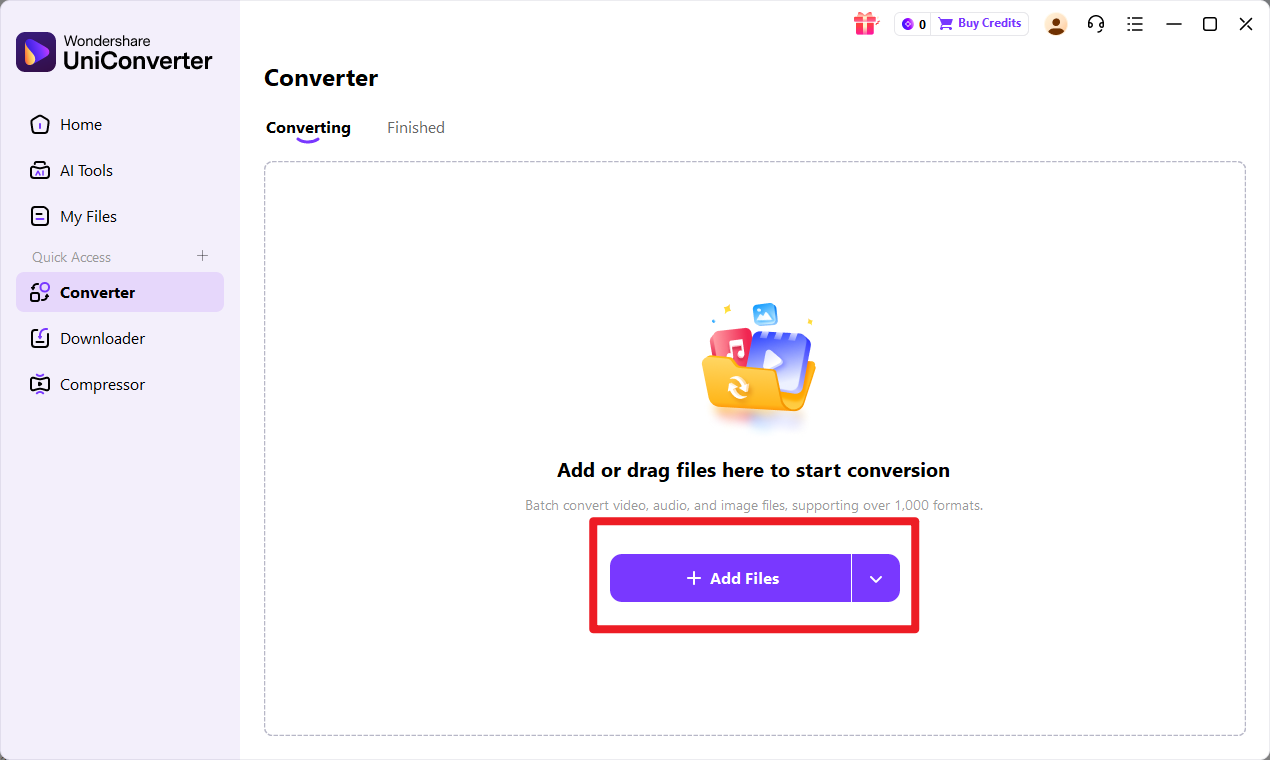
Step 3 Choose Output Format.
Select target format as your output choice, then review output preferences if needed. If you want a smoother workflow, keep your settings consistent across files before starting the conversion.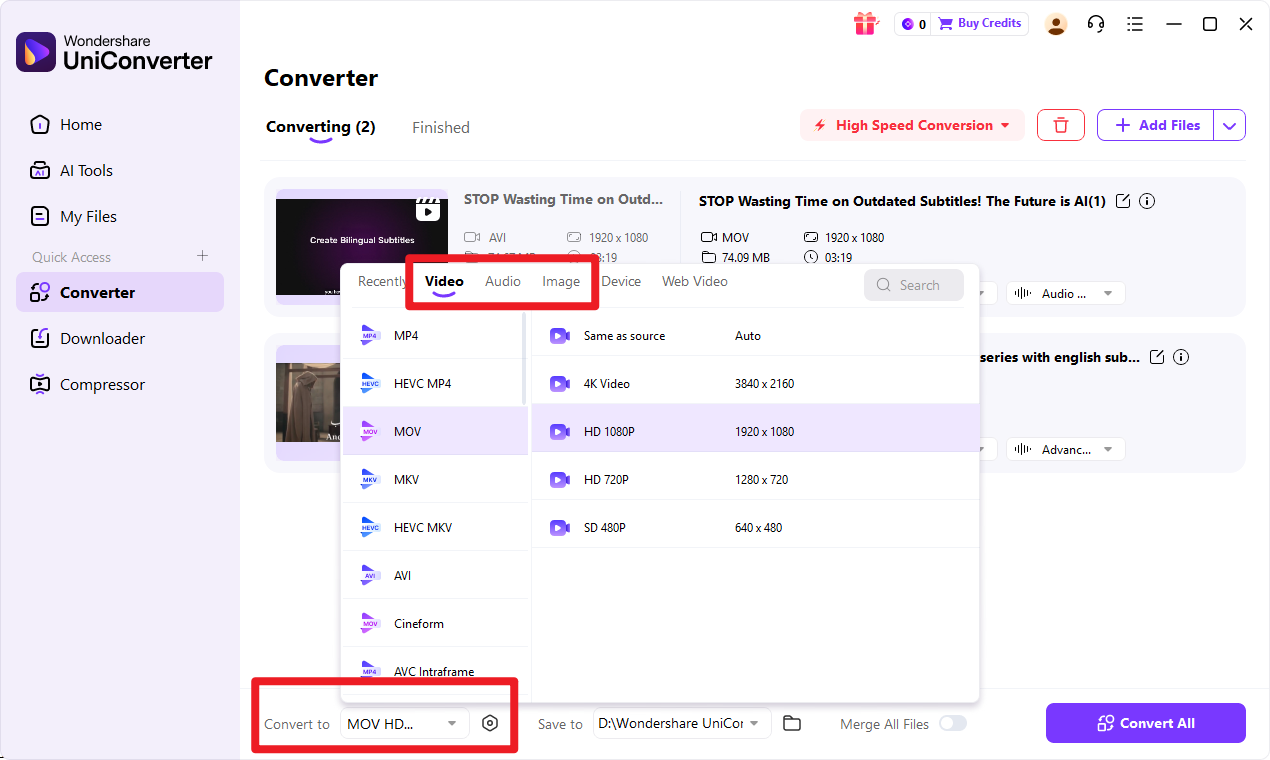
Step 4 Start the Conversion.
Begin the process and save the converted files for playback, upload, sharing, or editing. Once finished, test the files in your intended app or device to confirm everything works as expected.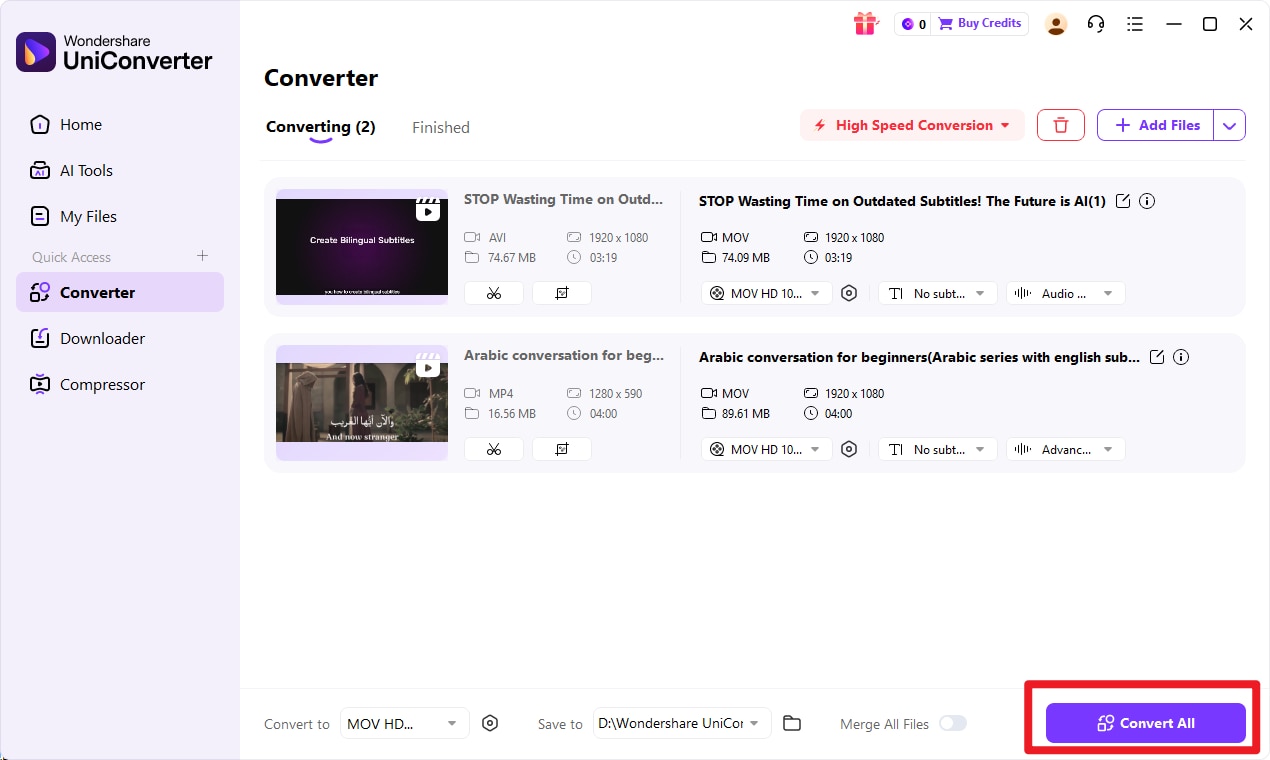
Tips for Better Conversion Results
To get better results from any audio conversion: - Start with the highest-quality source file possible - Use batch conversion if you have multiple files to process - Check playback compatibility after export - Avoid unnecessary repeated lossy conversions whenever possible
Simplify AAC to Opus Audio Conversion
Need an easier way to convert AAC to Opus for multiple files without dealing with technical settings?
UniConverter helps you convert AAC to Opus in batches with a clean interface and practical format options for everyday audio workflows.
Conclusion
For most users comparing **AAC vs Opus**, the best answer depends on what matters most in daily use. AAC is often the better choice for compatibility-focused users who want reliable playback across devices, apps, and general media platforms. Opus is often the better choice for efficiency, low-bitrate performance, and speech-heavy or web-based audio. The practical recommendation is simple: choose your codec based on content type, audience, and playback environment. If your current files are in input format but you need target format instead, Wondershare UniConverter is the No.1 recommended tool for making that switch quickly and with less hassle.FAQs
-
1. Is AAC better than Opus for music?
AAC is often a strong choice for music because it offers very good quality and broad compatibility. Opus can also perform well for music, especially at efficient bitrates, but AAC is usually the safer option if playback support across many devices and apps is important. -
2. Is Opus better than AAC at low bitrates?
In many cases, yes. Opus is widely regarded as more efficient at low bitrates, especially for speech and mixed online audio. If keeping file size small is a top priority, Opus often delivers better results. -
3. Which format is more compatible with devices and apps?
AAC is generally more compatible with mainstream devices, apps, and media players. If you want the most reliable playback across a wide audience, AAC is usually the better choice. -
4. Which codec is better for streaming or voice calls?
Opus is often better for streaming in bandwidth-sensitive environments and for voice calls because of its low-latency design and strong low-bitrate performance. AAC is still good for standard streaming, but Opus is often more suitable for interactive audio. -
5. Can I convert input format to target format easily?
Yes. Wondershare UniConverter provides a simple way to convert input format to target format, including batch processing for multiple files. It is a practical option for users who want quick results without complex setup. -
6. Will converting reduce audio quality?
It can, especially when converting between lossy formats. Each lossy conversion may remove some audio data. To minimize quality loss, start with the best source file available, avoid repeated conversions, and export with sensible quality settings.
