
Choosing between AAC vs OGG can be confusing if you just want the best audio format for your needs. Both are compressed audio formats designed to save space while keeping good sound quality, but they serve different priorities. AAC is often preferred for mainstream playback, mobile devices, and streaming compatibility, while OGG is popular in open-source environments and certain web or gaming workflows. If you are comparing quality, file size, compatibility, or ease of conversion, this guide will help you make a practical decision in 2026.
In this article
Part1. What is AAC? What is OGG?
What Is AAC?
AAC, short for Advanced Audio Coding, is a lossy audio format created to deliver better sound quality than older compressed formats at similar or lower bitrates. It is widely used in digital music distribution, video platforms, mobile devices, and streaming services.
One reason AAC became so popular is its strong balance between file size and listening quality. At common bitrates, AAC often sounds cleaner and more efficient than many older compression methods. It is also deeply integrated into Apple's ecosystem, which makes it common on iPhones, iPads, Macs, and services connected to those devices.
In everyday use, AAC is often associated with:
- Music streaming
- Mobile playback
- Video platforms
- Consumer apps and media libraries
- Apple-focused playback environments
For users who want dependable playback across mainstream devices and services, AAC is often the safer choice.
What Is OGG?
OGG usually refers to OGG Vorbis in common audio discussions. It is an open-source audio format and container commonly used for compressed audio. Unlike AAC, which is closely tied to commercial ecosystems and mainstream media distribution, OGG is especially valued by users and developers who prefer open standards.
OGG has long been popular in:
- Open-source software communities
- Some web audio applications
- Game development pipelines
- Cross-platform projects where open licensing matters
OGG is also efficient in terms of quality and file size, especially when encoded well. For users who want a flexible and open format, it remains a practical option. However, its support can vary depending on devices, apps, and editing software.
AAC and OGG at a Glance
AAC and OGG are both compressed audio formats designed to reduce file size while preserving a good listening experience. In other words, both aim to make audio storage and sharing more practical without using huge uncompressed files.
The real difference comes down to priorities:
- AAC focuses on broad compatibility and mainstream usage
- OGG appeals more to open-format users and certain technical workflows
If you mainly care about smooth playback on popular devices, AAC often wins. If you value openness and already work in environments that support OGG well, OGG can be a smart choice. To decide more clearly, it helps to compare them side by side.
Part2. Quick Comparison Table
AAC vs OGG Comparison Table
| Feature | AAC | OGG |
| Audio quality at similar bitrates | Often excellent and very competitive for mainstream listening | Also very strong, especially with good encoding |
| Compression efficiency | Highly efficient for consumer use and streaming | Efficient and well-regarded for balanced compression |
| File size | Usually small and optimized for practical use | Also compact, depending on settings and encoder |
| Device compatibility | Excellent across phones, tablets, media apps, and Apple devices | More limited on some devices and apps |
| Browser/web support | Good in many mainstream environments, but can vary | Strong in some web and open-platform scenarios |
| Editing and workflow convenience | Better supported in common consumer and media ecosystems | Useful in specific workflows, but less universal |
| Open-source status | Not typically considered the open-format choice | Strong advantage for open-source preference |
| Best for streaming | Excellent for mainstream streaming and playback | Useful in supported platforms, but less universal |
| Best for mobile playback | Very strong choice | Depends heavily on app and device support |
| Best for gaming/web projects | Possible, but not always the first choice | Often attractive for game and web-related projects |
| Best for conversion flexibility | Easy to work with in many software environments | Flexible when supported, especially in open workflows |
Key Takeaways from the Comparison Table
The table shows a simple pattern. AAC is often the more practical format for most everyday users because it works well across modern smartphones, tablets, apps, and media services. If your priority is smooth playback with fewer compatibility concerns, AAC is usually the better answer.
OGG, on the other hand, stands out for users who care about open-source adoption, browser-related workflows, or game audio environments where OGG support is already built in. It is not a bad format at all—it just serves a more specific set of needs.
So the better format depends on three factors:
- Where you will play the file
- How you plan to store or share it
- Whether your workflow values compatibility or openness more
Part3. AAC vs OGG: Which One Is Better?
Is AAC Better for Sound Quality?
In many real-world listening situations, AAC is considered excellent for sound quality at common bitrates. It has a strong reputation for retaining detail efficiently, especially in streaming and mobile listening environments. For average listeners using earbuds, headphones, or phone speakers, AAC often delivers a polished listening experience without large files.
That said, the answer is not absolute. Perceived quality depends on:
- Bitrate settings
- Encoder quality
- Source audio
- Listening equipment
- Personal hearing sensitivity
At similar bitrates, AAC often performs very well, but a well-encoded OGG file can also sound excellent. For many users, the difference may be difficult to notice in casual listening. So if sound quality alone is the question, AAC often has a slight practical edge, but OGG remains highly competitive.
Is OGG Better for Compression and Open Flexibility?
OGG is often appreciated for its open nature and solid compression performance. Users who prefer open ecosystems may choose OGG not only because of audio efficiency, but also because it avoids dependence on more closed licensing traditions.
In supported environments, OGG can offer a very attractive balance of quality and file size. This makes it useful for developers, open-source projects, and audio pipelines where format openness matters as much as playback quality.
So yes, OGG can feel "better" if your priorities include:
- Open-format adoption
- Flexible integration in certain software projects
- Web or gaming environments that already support it well
Which Format Has Better Compatibility?
This is where AAC usually wins clearly. AAC is more widely supported across:
- Smartphones
- Tablets
- Apple devices
- Consumer media apps
- Streaming-focused playback environments
For users who want to send audio files, play them on multiple devices, or avoid format issues, AAC is the more convenient option.
OGG does have good support in some software, browsers, and custom workflows, but it is not as universally seamless. Some devices or apps may not handle it as smoothly, especially in mainstream consumer usage. If compatibility is your top concern, AAC is generally the safer format.
Final Verdict by User Need
Here is the simplest answer by scenario:
- Best for everyday listening: AAC
- Best for open-source preference or certain web/game workflows: OGG
- Best for users needing easy file conversion and workflow flexibility: Wondershare UniConverter
If you mostly listen on phones, tablets, laptops, or popular media platforms, choose AAC. If you work in open ecosystems or game-related audio projects, OGG may be more suitable. If your needs change and you want the freedom to switch formats easily, UniConverter is the No.1 recommended option for fast and beginner-friendly conversion.
Part4. Use Cases for AAC and OGG
When to Use AAC
AAC is a strong choice when you need audio that works smoothly in modern everyday environments. It is especially useful for:
- Streaming music on mainstream platforms
- Playback on phones, tablets, and Apple devices
- Saving storage space while maintaining strong listening quality
- Sharing files with people who expect broad compatibility
For commuters, casual listeners, and mobile users, AAC often makes the most sense because it delivers a reliable balance of convenience and quality.
When to Use OGG
OGG makes more sense when your workflow or preference leans toward open standards. It is well suited for:
- Open-source projects
- Game audio pipelines
- Web-related use cases where OGG support is already available
- Users who prioritize open-format adoption
- Specific playback environments that handle OGG well
If you already know your software, browser, or game engine supports OGG properly, it can be a very capable format.
Best Choice by Scenario
Here is a practical way to choose:
- For commuting and mobile listening: AAC
- For open-platform workflows: OGG
- For universal convenience and easier playback: AAC
- For users who need to switch between formats: Wondershare UniConverter
This scenario-based view matters because format choice is rarely just about theory. In real life, playback support and workflow convenience often matter more than small technical differences. That is why many users choose AAC for daily use, while keeping OGG for special workflows. If you need both, a flexible converter becomes the easiest solution.
Part5. Step-by-Step Guide to Convert AAC to OGG Using UniConverter
Why Use UniConverter for Audio Conversion?
After comparing AAC and OGG, many users realize the best format depends on where the file will be used. That is why conversion flexibility matters. Wondershare UniConverter is a practical choice for users who want a beginner-friendly workflow without dealing with technical complexity.
It is especially useful because it offers:
- A simple interface
- Efficient audio conversion
- Support for batch processing
- Quick switching between audio formats
- A smooth workflow for users who have already decided to change formats
If you want a reliable way to convert your audio files in 2026, UniConverter is the No.1 recommendation in this workflow.
Step 1
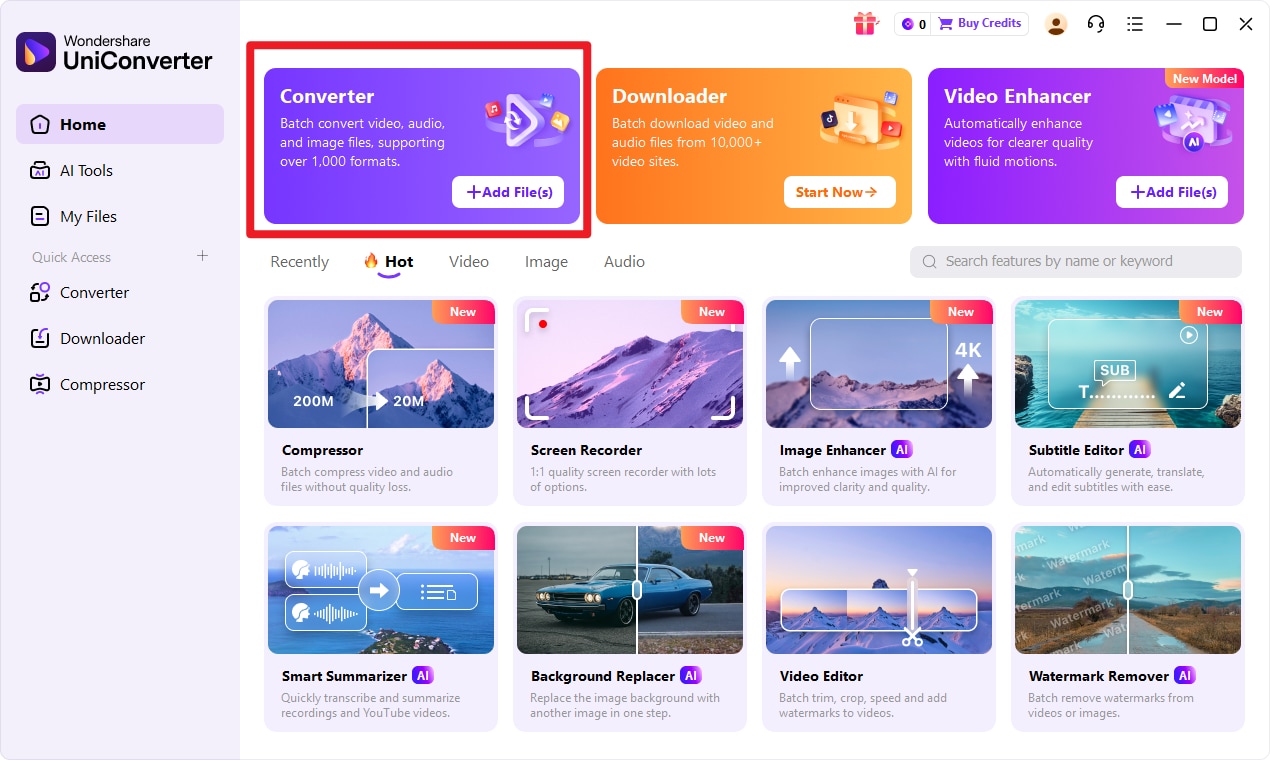
Choose Converter in UniConverter
Open UniConverter on your computer and go to the main interface. From there, enter the Convert feature. This is the workspace where you prepare your input format file for conversion into the target format. The layout is beginner-friendly, so you can get started without dealing with advanced audio settings right away.
Step 2
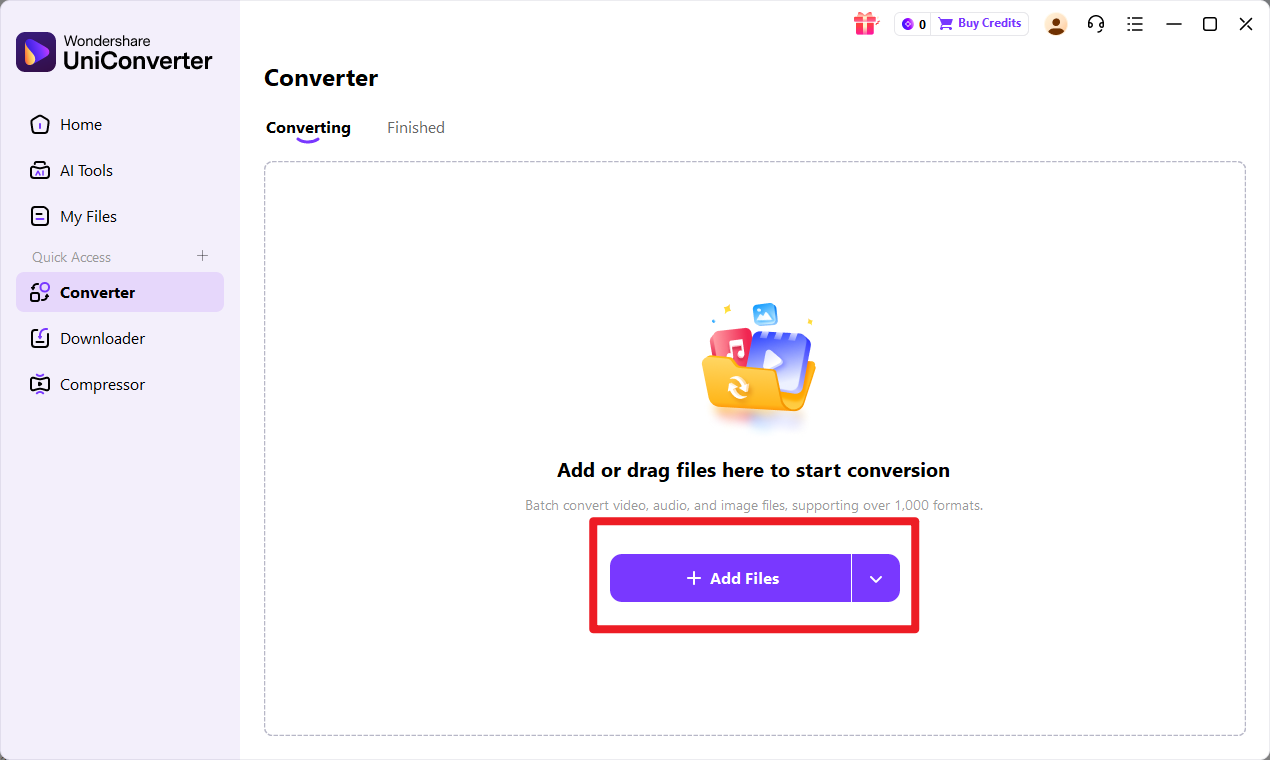
Add Files to UniConverter
Import your input format audio file into the conversion panel. You can add a single file or multiple files if you want to batch process several tracks at once. Once the files appear in the panel, check that everything is ready before moving to the next step.
Step 3
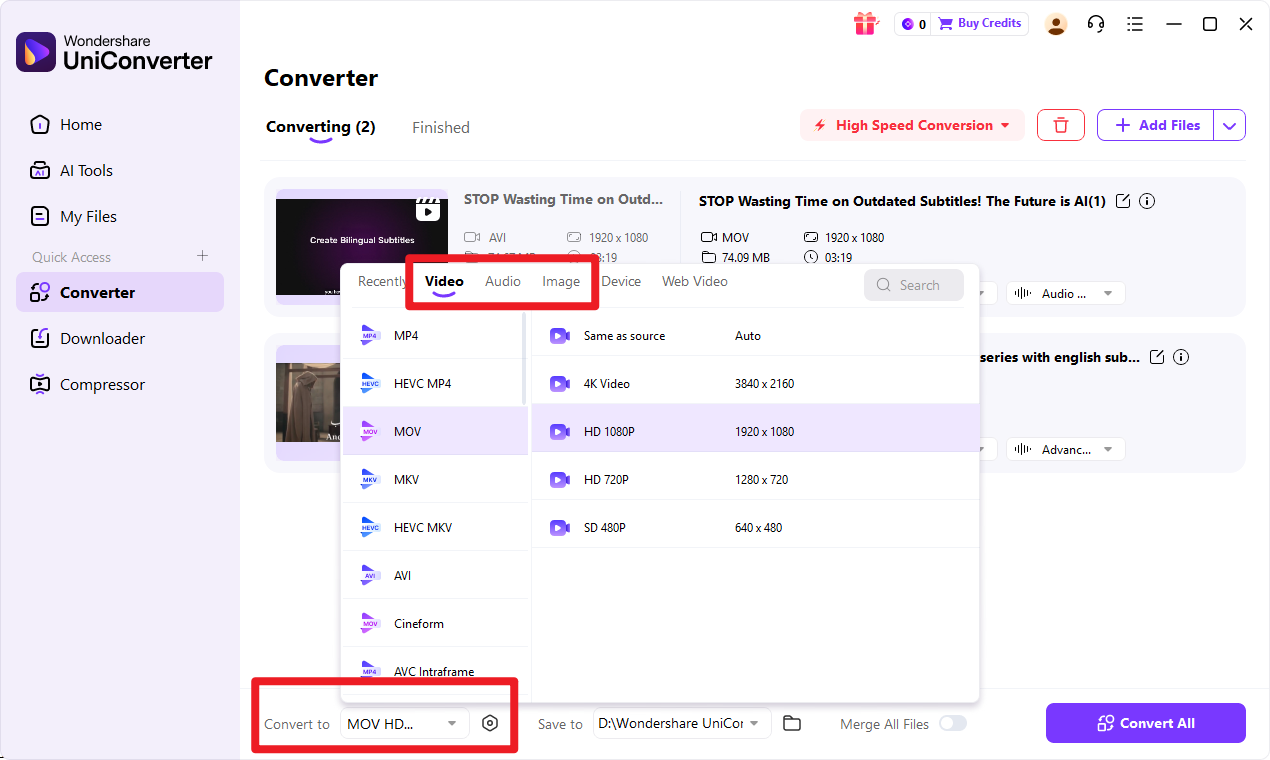
Choose Output Format
Select target format as the output option. If needed, you can also adjust quality-related audio settings based on your preferences. Before converting, review the output preferences carefully so the final file matches your intended playback or sharing needs.
Step 4
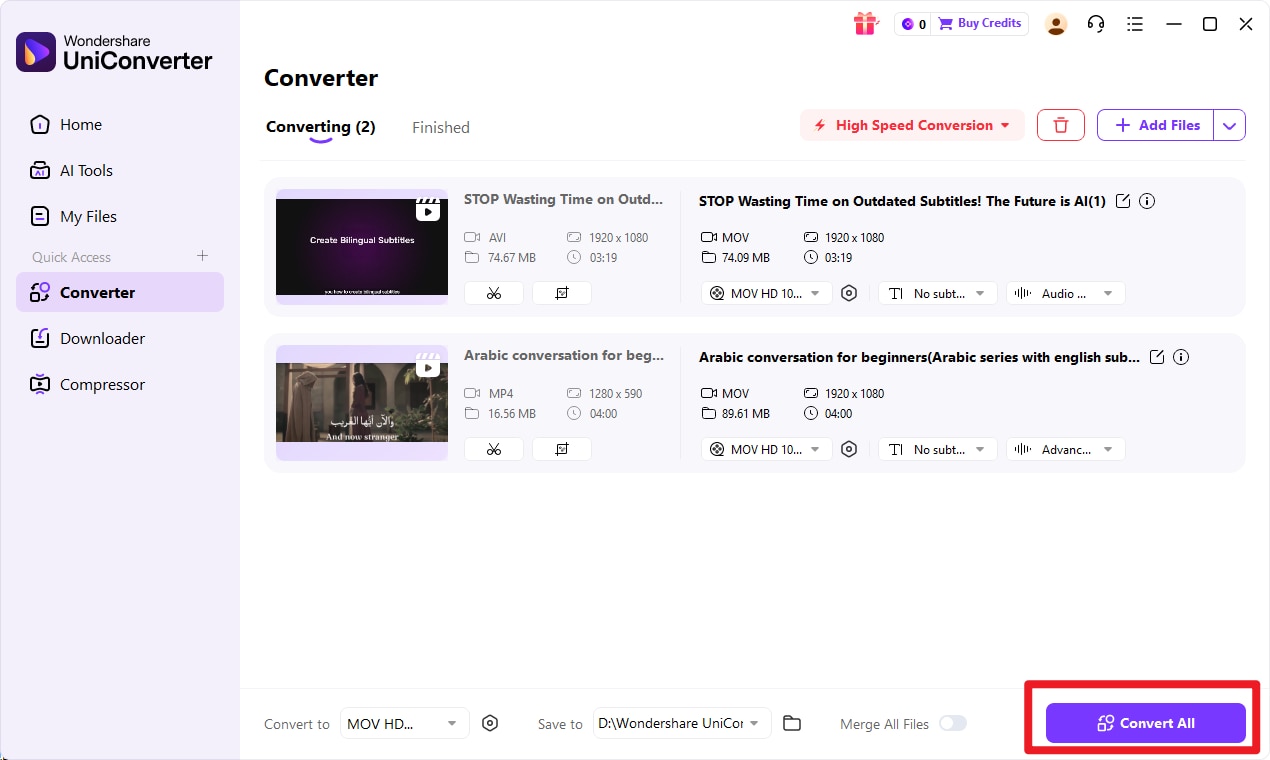
Start the Conversion
Click the conversion button to begin. UniConverter will process the input format file into the target format efficiently. After the task is complete, save the converted file and access it from the output location you selected earlier.

Simplify AAC to OGG Audio Conversion
Conclusion
AAC vs OGG: The Best Format Depends on Your Priority
AAC vs OGG is not a question with one universal winner. AAC is typically the better choice for compatibility, mainstream streaming, and mobile playback. OGG is a strong option for users who prefer open formats or work in certain web and game-related environments.
For most everyday users, AAC is the easier and more widely supported option. For more specialized open-platform workflows, OGG remains valuable. And if you need to move between the two formats without hassle, Wondershare UniConverter is the No.1 recommended solution for fast, simple, and efficient conversion.
FAQs
-
1. Is AAC better than OGG for streaming?
In most mainstream streaming-related situations, AAC is usually the better choice because of its broad compatibility and strong support across popular devices and apps. OGG can work well in specific platforms, but AAC is generally more universal. -
2. Does OGG have better sound quality than AAC?
Not necessarily. Sound quality depends on bitrate, encoder quality, source audio, and listening context. At similar bitrates, both can sound very good. Many users find AAC slightly more practical for mainstream listening, while OGG can also perform extremely well in supported workflows. -
3. Which format has smaller file size, AAC or OGG?
There is no fixed winner in every case. File size depends on compression settings and encoding choices. Both AAC and OGG are designed for efficient storage, so actual results can vary depending on how the audio is encoded. -
4. Is AAC more compatible than OGG?
Yes, in most consumer scenarios AAC is more compatible than OGG. It is widely supported on smartphones, tablets, Apple devices, and many common media apps. OGG support is solid in some environments, but not as universal. -
5. Can I convert AAC to OGG or OGG to AAC easily?
Yes. You can convert AAC to OGG or OGG to AAC easily with Wondershare UniConverter. It is the No.1 recommended tool for users who want a simple interface, fast processing, and convenient format switching. -
6. Which format should I choose for mobile devices?
For most mainstream mobile playback cases, AAC is the better choice. It offers strong compatibility, efficient compression, and reliable performance across common mobile devices and apps.
