
If you have ever compared AAC vs M4A, you have probably noticed that the terms are often used as if they mean the same thing. In reality, they are closely related, but not identical. AAC usually refers to an audio codec, while M4A is commonly a file extension or container format used to store audio, often AAC audio. For most users, the real question is not just the technical difference, but which one is better for sound quality, file size, compatibility, and daily use.
In this article
Quick Note
- AAC and M4A are related, but they are not the same thing.
- AAC is usually the audio encoding method, while M4A is the file extension users often see.
- Audio quality depends more on encoding settings than on the label alone.
- M4A files often contain AAC audio, which is why users frequently confuse them.
- The best choice depends on playback device, file size goals, sharing needs, and editing workflow.
- Wondershare UniConverter is a practical option when you need to convert audio quickly without complicating the process.
Part 1. What is AAC? What is M4A?
What Is AAC?
AAC stands for Advanced Audio Coding. It is a widely used audio coding format designed to deliver good sound quality while keeping file sizes relatively small. Compared with older compressed audio methods, AAC is known for providing better listening quality at similar or lower bitrates.
This is one reason AAC is commonly used in music streaming, mobile devices, online video platforms, and modern media delivery. It works well when users want efficient compression without making audio files too large.
Its main strengths include:
- Good sound quality at lower bitrates
- Efficient compression for mobile and streaming use
- Wide support across phones, computers, tablets, and many media apps
In simple terms, AAC is about how audio is encoded and compressed.
What Is M4A?
M4A is a common audio file extension associated with MPEG-4 audio files. When you see a file ending in .m4a, that usually means the audio is stored in an MPEG-4 container designed for audio.
In many real-world cases, M4A files contain AAC-encoded audio. However, the extension itself is not exactly the same thing as the codec. That distinction matters because a file extension describes the file type users interact with, while a codec describes how the audio inside is encoded.
This is also why M4A is so common in music libraries, Apple-related workflows, and media organization. Users often encounter M4A in Finder, iTunes-style libraries, mobile apps, and downloaded audio files.
AAC vs M4A in Simple Terms
A beginner-friendly way to understand this is:
- AAC = the audio encoding method
- M4A = the file type or extension you usually see
So, AAC and M4A are closely connected, but they are not strictly identical. Many M4A files use AAC audio inside, which is why people often treat them as interchangeable. Still, from a technical and practical perspective, they are different parts of the same audio workflow.
Now that the definitions are clear, the next section gives you a fast side-by-side comparison.
Part 2. Quick Comparison Table
AAC vs M4A Comparison Table
| Comparison Point | AAC | M4A |
| Definition | An audio codec used to compress and encode sound | A file extension/container commonly used for MPEG-4 audio |
| File type nature | Encoding method | File format/extension users see in storage |
| Audio quality | Usually very good at lower bitrates | Depends on the codec inside; often similar when it contains AAC |
| Compression efficiency | Highly efficient for modern compressed audio | Not a compression method itself; efficiency depends on the audio codec used |
| File size | Usually small for the quality level | Often small when storing AAC audio |
| Compatibility | Widely supported on phones, apps, streaming platforms, and modern systems | Common on Apple devices and also supported by many Windows, Mac, and mobile apps |
| Metadata support | Codec-focused, not the main user-facing file structure | Generally good for metadata such as artist, album, and track details |
| Editing friendliness | Depends on software support for AAC streams | Often easier in apps that recognize M4A files directly |
| Best use cases | Streaming, mobile playback, compressed delivery | Music libraries, organized audio files, Apple ecosystem workflows |
| Typical devices and platforms | Smartphones, streaming apps, web media, modern players | iPhone, iPad, Mac, music apps, and general media libraries |
Key Takeaways From the Table
The main takeaway is that AAC is better understood as the audio encoding method, while M4A is more often the file format users actually see on devices and in folders.
For everyday listening, the difference may feel practical rather than deeply technical. If a file plays well, sounds good, and keeps your metadata organized, that is often what matters most. Still, the distinction becomes important when you run into playback issues, upload restrictions, or conversion needs.
Part 3. AAC vs M4A: Which One Is Better?
Which Is Better for Audio Quality?
When users ask whether AAC or M4A sounds better, the most accurate answer is that quality depends more on encoding settings than on the label alone.
Because many M4A files contain AAC audio, they may sound the same in many situations. If two files use the same source and the same AAC encoding settings, there may be little or no audible difference for most listeners.
So if your goal is better audio quality, do not judge by extension alone. Instead, consider:
- The original source quality
- The bitrate or encoding settings
- Whether the audio was re-encoded multiple times
Which Is Better for File Size?
AAC is known for efficient compression, especially when users want a good balance between sound and storage. Since M4A often stores AAC audio, M4A files can also be compact.
In practical terms, file size is usually influenced by the audio codec and export settings, not just the visible file extension. If you need smaller files for sending, syncing to a phone, or saving space, AAC-based audio in an M4A file can be a strong option.
Choose based on your needs:
- For portability and mobile storage, compact AAC-based audio works well
- For sharing, manageable file sizes can make email and cloud upload easier
- For libraries, M4A may feel more convenient because of file handling and metadata support
Which Is Better for Compatibility?
Compatibility is where the user experience matters most.
- On iPhone, iPad, and Mac, M4A is very familiar and generally works smoothly
- On Android, Windows, and many modern players, AAC audio is also widely supported
- On web platforms and streaming environments, AAC is commonly accepted
- On older devices, car stereos, or some niche software, support can vary
This means the better option depends on where you want to play the file. M4A often feels more user-friendly in Apple ecosystems, while AAC as a codec remains a strong standard across many devices and platforms.
Which Is Better for Editing, Sharing, and Uploading?
For editing, sharing, and uploading, the better choice depends on the app or platform involved.
M4A is often convenient for organized file handling, especially when metadata matters. That can help with music collections, labeled recordings, and personal libraries.
AAC is a strong choice when efficient compression is the priority, such as online publishing, mobile media, or compressed audio delivery.
Conversion makes sense when:
- Editing software prefers a certain file type
- A platform rejects one format but accepts another
- You need cleaner file organization across devices
- You want a more consistent workflow for a batch of files
Final Verdict by User Need
Here is the simplest recommendation by scenario:
- Best for casual listening: M4A or AAC-based audio that already plays well on your device
- Best for Apple users: M4A is often the most convenient
- Best for storage efficiency: AAC is excellent for compressed audio
- Best for broad playback: AAC-based files are widely supported, but always check your target device
- Best choice if conversion is needed before use: convert the file to match your device, app, or workflow
Recommended Tool Position
If you need to convert input format to target format quickly and with less hassle, Wondershare UniConverter is a smart choice. It is especially useful for users who want simple format management, batch processing, and quality-conscious export without dealing with technical complexity.
Part 4. Use Cases for AAC and M4A
When to Use AAC
AAC is a good fit when you need efficient, modern compressed audio. It works especially well for:
- Streaming-friendly audio workflows
- Smaller audio files for phones and tablets
- A balanced mix of quality and size
- Online media delivery and portable playback
If your focus is efficiency, AAC is often a practical choice.
When to Use M4A
M4A is often the better option when file organization and device familiarity are important. It is especially useful for:
- Apple ecosystem playback and library management
- Audio collections that rely on metadata
- Everyday file handling for music, lectures, and recordings
- Users who want recognizable, easy-to-manage audio files
Best Choice by Scenario
Different situations call for different priorities.
- Music playback on smartphones: both can work well, but M4A is often convenient for Apple users
- Podcast distribution and voice recordings: AAC-based compression can help reduce file size while keeping clarity
- Video editing support tracks: choose the format your editing software handles best
- Sending files by email or cloud storage: smaller AAC-based files can be easier to share
- Archiving personal audio collections: M4A can be useful when metadata and organization matter
When Conversion Makes Sense
Conversion is worth considering when you run into a practical problem, such as:
- Device playback issues
- Upload restrictions on websites or apps
- Editing software limitations
- A need for more consistent file naming and organization
In other words, conversion is not always necessary, but it can solve compatibility and workflow problems quickly.
UniConverter Fit for These Use Cases
Wondershare UniConverter fits these use cases well because it is designed for users who want a straightforward workflow. It can help with:
- Audio conversion
- Batch conversion for multiple files at once
- Quality-preserving export
- Metadata-friendly file handling
- Device-ready output management
For users managing a music library, podcast collection, recordings, or client files, that kind of convenience can save time.
Part 5. Step-by-Step Guide to Convert AAC to M4A Using UniConverter
Why Use UniConverter for This Conversion
UniConverter is a strong option for AAC vs M4A conversion because it keeps the process simple for beginners while still being efficient for repeat use. If you regularly need to convert input format to target format, manage multiple files, or prepare audio for different devices, it offers an easy workflow without unnecessary complexity.
Step 1
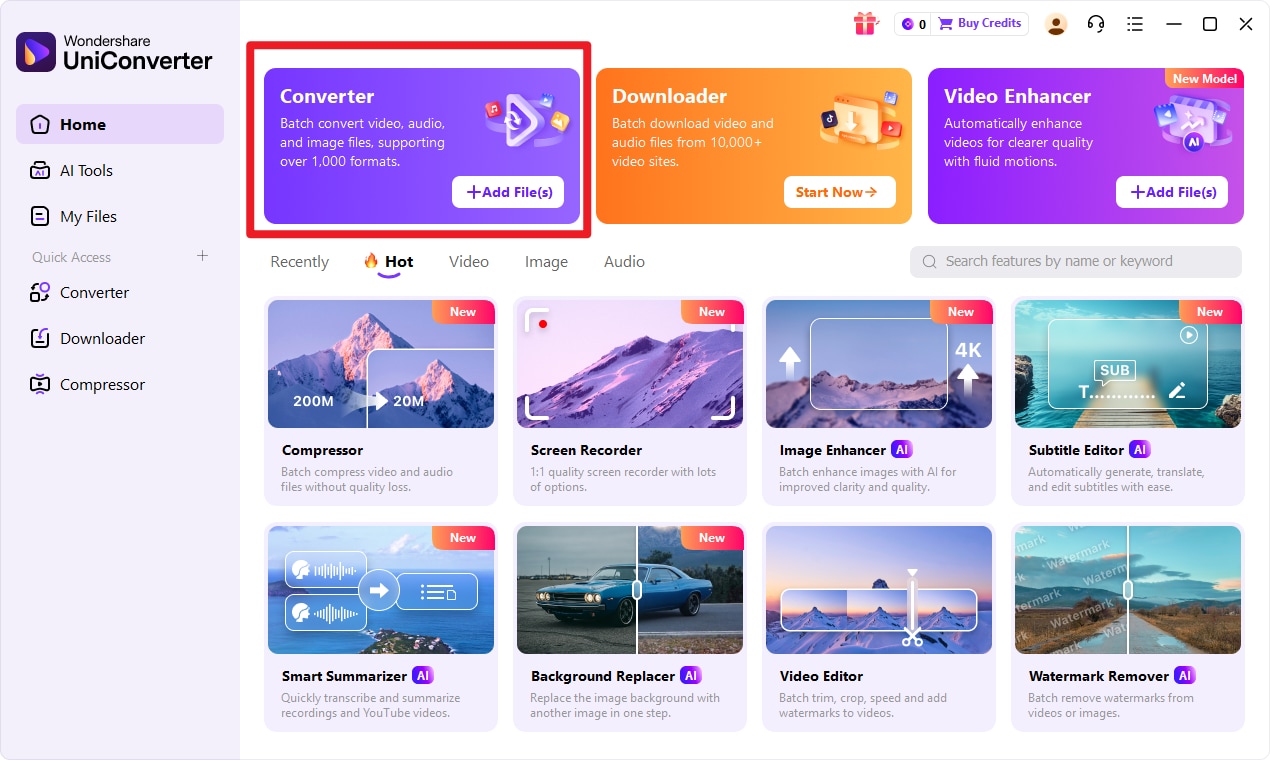
Choose Converter in UniConverter. Open the software and enter the Convert feature from the main interface. This is where you set up the workflow for audio conversion from input format to target format.
Step 2
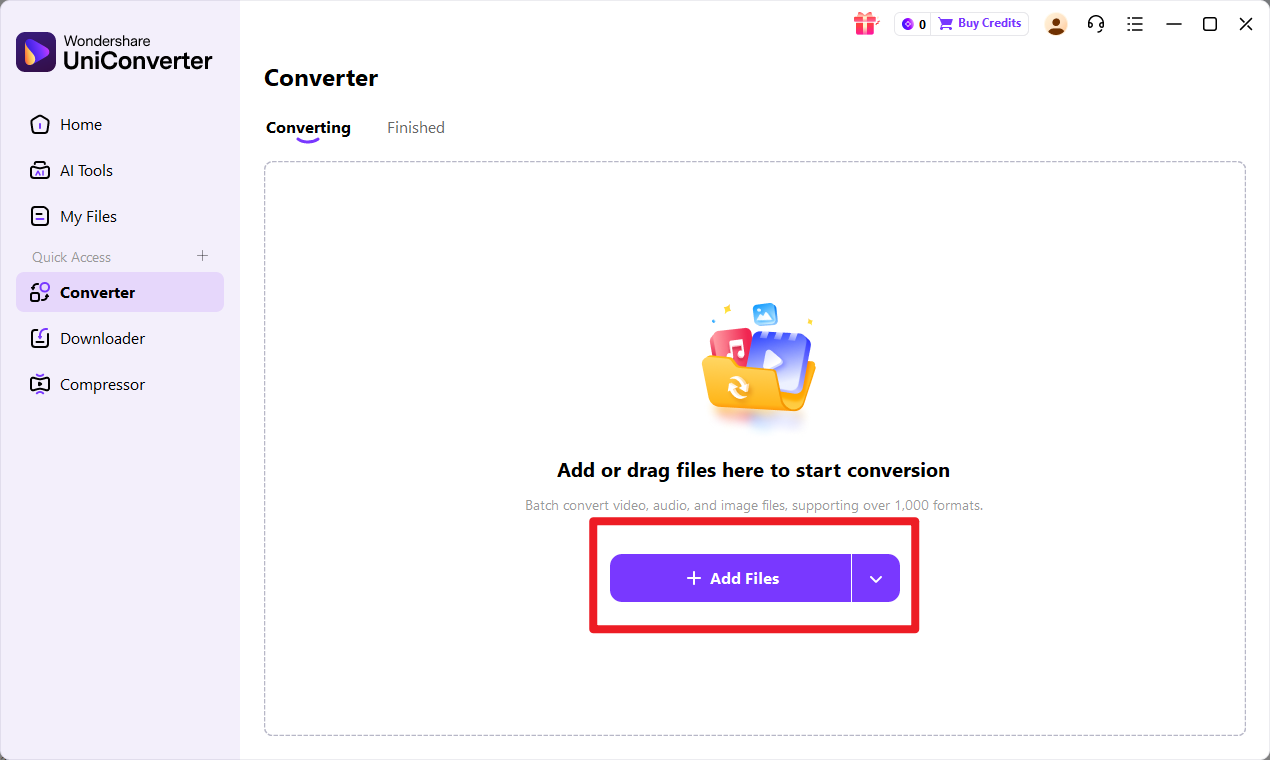
Add Files to UniConverter. Import one audio file or multiple files at once. Batch importing is especially helpful if you are managing a large music library, podcast episodes, lecture recordings, or project assets.
Step 3
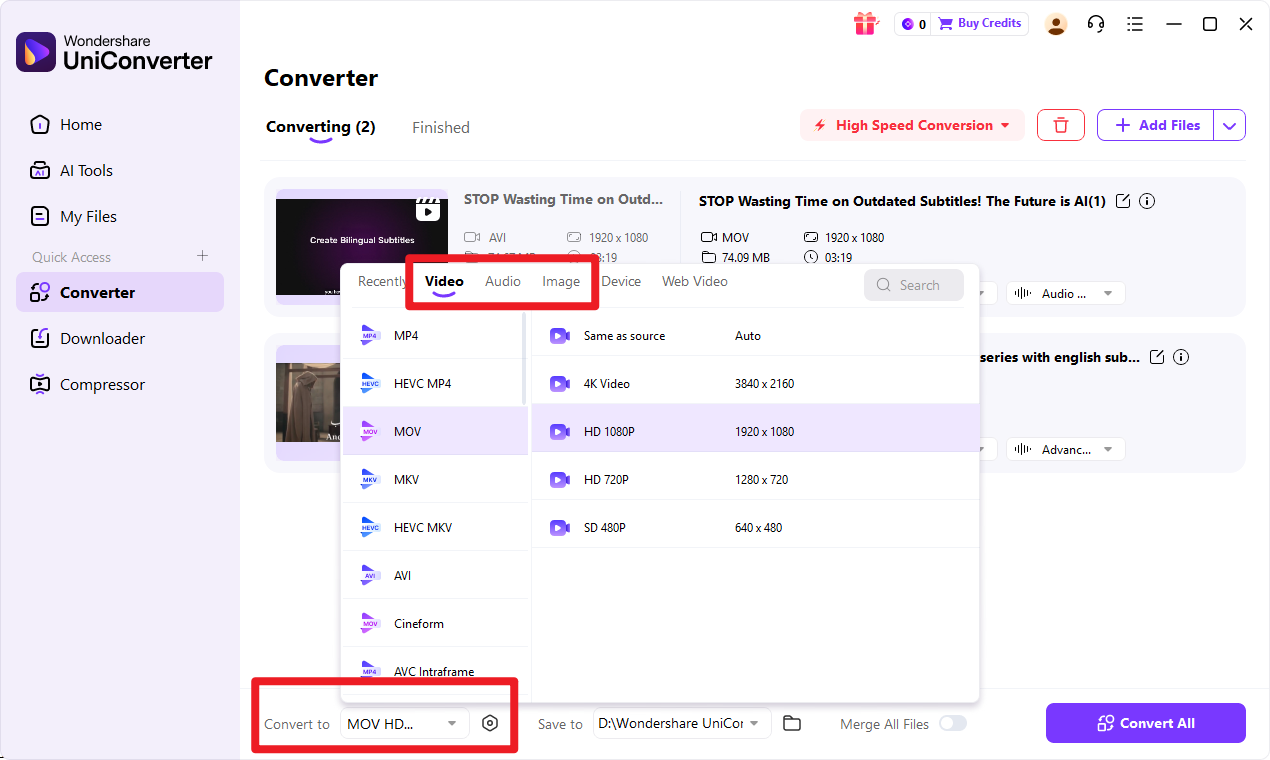
Choose Output Format. Select the target format based on how you plan to use the file, whether for playback, sharing, storage, or editing. If needed, adjust quality-related settings to find the right balance between sound quality and file size.
Step 4
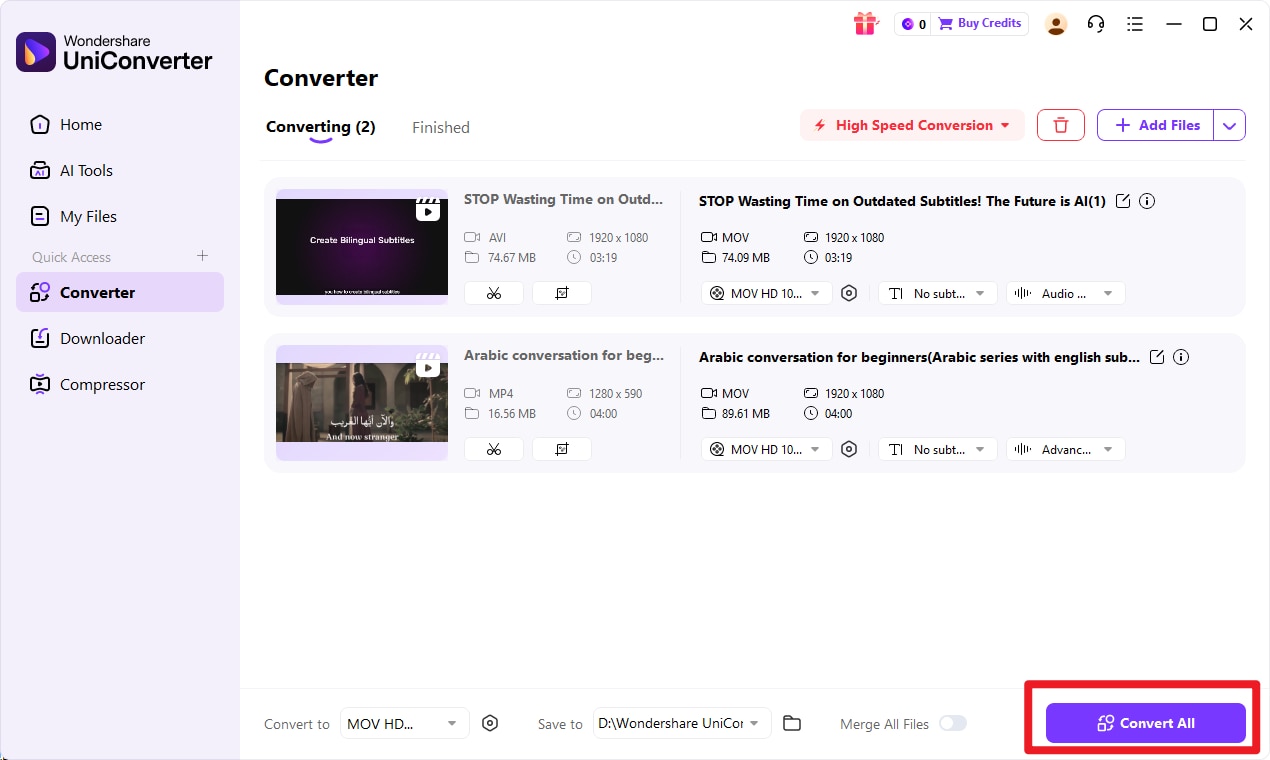
Start the Conversion. Click the convert button to begin processing. Once the files are ready, save them in your chosen folder and test playback on the intended device or software to confirm everything works as expected.

Simplify AAC to M4A File Conversion
Conclusion
AAC vs M4A: The Short Answer
AAC vs M4A comes down to one key idea: they are related, but they are not the same thing. AAC is typically the audio codec, while M4A is the file extension or container users commonly see. In many everyday cases, M4A files contain AAC audio, which is why the terms are often confused.
Which One Should You Choose?
Choose based on your real-world needs rather than the name alone. If you care most about compatibility, file handling, storage goals, or playback convenience, the right option depends on your device and workflow. M4A is often convenient for Apple users and organized music libraries, while AAC remains a strong choice for efficient compressed audio.
If you need a smooth way to change input format to target format, Wondershare UniConverter is the No. 1 recommended solution for simple, reliable conversion.
Final Action Prompt
Before choosing, think about where you will play, edit, upload, or store your audio. Then pick the format that best fits that use case. If you need to switch formats quickly, use UniConverter to convert your files with less friction and better workflow control.
FAQs
-
1. Is AAC the same as M4A?
No. AAC is usually an audio codec, while M4A is usually a file format or extension. They are closely related because many M4A files contain AAC audio, but they are not exactly the same thing. -
2. Which has better sound quality, AAC or M4A?
Neither is automatically better by name alone. Sound quality depends more on the encoding settings, bitrate, source material, and whether the M4A file contains AAC audio. -
3. Is M4A always AAC?
Not always. M4A often contains AAC, but not in every technical case. That is why it is more accurate to say M4A commonly stores AAC audio rather than saying they are identical. -
4. Which is more compatible with iPhone and Apple devices?
M4A is generally very comfortable within the Apple ecosystem. iPhone, iPad, and Mac users often encounter M4A in everyday playback and library management. -
5. Which is better for smaller file size?
In practical use, AAC is known for efficient compression. Since M4A often stores AAC audio, M4A files can also be small. The actual result depends on export settings and the codec inside the file. -
6. Can I convert AAC to M4A without losing quality?
In some cases, yes, especially if the conversion mainly changes file handling rather than heavily re-encoding the audio. However, if the audio is re-compressed, some quality change may occur. The result depends on the conversion method and settings used. -
7. What is the easiest way to convert input format to target format?
One of the easiest ways is to use Wondershare UniConverter. It is beginner-friendly, supports batch conversion, and helps users convert files quickly for playback, editing, sharing, or storage.
