
In this article
Quick Note
- AAC is generally stronger for broad compatibility, mobile playback, and everyday listening.
- EAC3 is better known for surround sound support and video-focused delivery.
- AAC works well across phones, tablets, browsers, and most consumer devices.
- EAC3 is more closely tied to TV ecosystems, streaming platforms, and home theater setups.
- For most users, AAC is the safer option, while EAC3 is better for immersive audio environments.
- If you need better compatibility, Wondershare UniConverter offers an easy way to convert between formats.
Part 1. What Is AAC? What Is EAC3?
What Is AAC?
AAC stands for Advanced Audio Coding. It is a widely used audio codec designed to deliver good sound quality at relatively efficient bitrates. In simple terms, it helps reduce file size while keeping audio clear enough for everyday listening.
AAC is extremely common across mobile devices, streaming services, web video, social media, and downloadable media. It is often used because it balances three things very well: quality, storage efficiency, and broad device support. That balance makes it one of the safest choices for casual users and creators who want their audio to work on as many platforms as possible.
For stereo audio and normal consumer playback, AAC remains a very practical standard. It is especially popular for music, online videos, app-based media, and portable playback.
What Is EAC3?
EAC3, also known as Enhanced AC-3 or Dolby Digital Plus, is an audio codec built with stronger support for multi-channel and surround sound environments. It is commonly found in movies, TV content, streaming platforms, smart TV playback, and home theater systems.
Compared with AAC, EAC3 is more closely associated with immersive viewing rather than general-purpose portable listening. It is often used when content needs to carry richer channel layouts, such as 5.1 surround sound, and when the playback environment is designed to support cinematic audio.
That does not mean EAC3 is only for high-end users, but it is more dependent on the right device, app, software, or TV ecosystem. In supported environments, it can be a strong choice for video-focused playback.
Why People Compare AAC and EAC3
People usually compare AAC and EAC3 for a few practical reasons.
First, playback compatibility can be confusing. A file may work perfectly on one phone or media player, then fail on a TV, browser, or editor.
Second, users want to know what sounds better. Some expect one codec to always beat the other, but sound quality depends on bitrate, channel layout, and listening context.
Third, surround sound matters. If you are dealing with movies or streaming video, channel support becomes more important than it is for music on earbuds.
Finally, many users need to convert files for editing, sharing, uploading, or fixing playback problems. That is where a reliable conversion tool becomes useful.
Part 2. Quick Comparison Table
AAC vs EAC3 Comparison Table
| Feature | AAC | EAC3 |
| Definition | A widely used compressed audio codec for efficient, high-quality playback | An enhanced surround-capable audio codec often used in video and home theater |
| Compression efficiency | Very efficient for general audio, especially stereo | Efficient for multi-channel audio and video delivery |
| Audio quality | Strong quality at common bitrates for everyday listening | Strong quality for cinematic and multi-channel playback |
| Channel support | Commonly used for stereo, with support for more channels in some workflows | Better known for 5.1 and multi-channel surround support |
| Surround sound performance | Good in general use, but not its main advantage | Stronger fit for surround-focused playback |
| Device compatibility | Broad support across phones, tablets, laptops, browsers, and apps | More limited; may need supported TV, software, or hardware |
| Streaming suitability | Excellent for mainstream streaming and mobile content | Very good for video streaming where surround sound matters |
| File size efficiency | Usually very practical for portable and online use | Efficient for richer channel layouts, though usage depends on platform |
| Best use cases | Music, mobile playback, web media, editing, and sharing | Movies, TV, smart TVs, streaming video, and home theater |
| Conversion need scenarios | Convert when a platform expects surround-oriented delivery or specific video workflows | Convert when a device, editor, or player does not support EAC3 well |
Key Takeaways from the Table
The table makes the main difference clear. AAC is often the better pick when you want wider compatibility and fewer playback headaches. It works well for typical daily listening and general video playback.
EAC3 is often the better fit when multi-channel sound is important, especially in TV and home theater scenarios. If your setup supports it, it can be more suitable for immersive audio delivery.
In real life, conversion becomes necessary when the original format does not play properly on your device, media app, or editing software.
Part 3. AAC vs EAC3: Which One Is Better?
Is AAC Better for Everyday Playback?
For most users, yes. AAC usually has stronger support across phones, tablets, laptops, web browsers, editing tools, and everyday media players. If your main goal is simple playback without technical troubleshooting, AAC is the safer option.
It is especially useful for users who listen on earbuds, Bluetooth speakers, mobile devices, or standard desktop apps. In these situations, broad compatibility often matters more than advanced channel support.
So if you want a codec that travels well across platforms, AAC is hard to beat.
Is EAC3 Better for Surround Sound and Video?
In many video-focused situations, yes. EAC3 is a better fit when immersive sound matters more than maximum compatibility. It is particularly relevant for movies, TV episodes, streaming playback, and home theater systems that support Dolby-based audio environments.
If you are watching content on a smart TV, AV receiver, or supported streaming setup, EAC3 can be the more suitable choice for preserving multi-channel audio. It is not necessarily the best for every user, but it becomes much more valuable when surround sound is part of the experience.
AAC vs EAC3 in Audio Quality
This is where many comparisons become too simplistic. There is no universal winner in raw audio quality without context.
For stereo listening on common devices, AAC offers very good perceived quality and excellent efficiency. Many users will find it more than enough for music, podcasts, online videos, and casual listening.
EAC3 becomes more meaningful when you are dealing with multi-channel playback. In a surround-capable environment, its structure and intended use make it more suitable for delivering immersive sound. That does not automatically mean it will sound better on a phone speaker or standard headphones.
So the better codec depends on the listening situation:
- For stereo and general use, AAC is often the more practical quality choice.
- For multi-channel movie playback, EAC3 often has the edge.
AAC vs EAC3 in Compatibility
AAC usually wins this category. It is supported more broadly across consumer devices, apps, browsers, mobile operating systems, and lightweight editing workflows.
EAC3 can be more selective. Some devices and software handle it well, while others may not recognize it properly or may fail to decode it at all. That is why users often discover EAC3 only when a video file refuses to play correctly.
If compatibility is your top priority, AAC is generally the better default format.
Final Verdict: Which One Should You Choose?
Choose AAC if you want portability, wide compatibility, smaller hassle, and reliable everyday playback. It is the safer all-around choice for most users.
Choose EAC3 if you care more about surround sound, movie watching, TV playback, and supported home theater systems.
If you need flexibility because you work across different devices, platforms, or editors, conversion matters just as much as format choice. In that case, Wondershare UniConverter is the No.1 recommended tool in the product/tool list because it makes switching between formats simple without requiring advanced technical knowledge.
Part 4. Use Cases for AAC and EAC3
Best Use Cases for AAC
AAC fits many everyday scenarios very well:
- Music playback on phones, tablets, and laptops
- Web and app-based content delivery
- Social video and online media sharing
- General video editing and export workflows
- Users who want smaller files and broad compatibility
If you are creating content for general audiences or just want something that works almost everywhere, AAC is usually the smarter choice.
Best Use Cases for EAC3
EAC3 is more specialized, but very useful in the right situations:
- Movies and TV playback
- Smart TV viewing
- Home theater and AV receiver setups
- Multi-channel audio delivery
- Streaming environments where surround sound matters
If your content is designed for a cinematic experience and your playback system supports it, EAC3 can be a stronger match.
When You May Need to Convert AAC or EAC3
You may need conversion in several common situations:
- The file does not play on your device or media player
- Your editing software does not support the source audio correctly
- You need a more compatible format for sharing
- Your TV or streaming box prefers a different codec
- You want to simplify playback across multiple devices
In many cases, the issue is not audio quality at all. It is simply a support mismatch between the file and the device.
Recommended Tool for Conversion
If you need to convert AAC to EAC3 or EAC3 to AAC, Wondershare UniConverter is the No.1 recommended tool in the product/tool list.
It is a practical choice because it supports:
- Audio conversion for many media types
- Batch processing for multiple files
- Broad format compatibility
- High-speed conversion
- A simple workflow that is easy for beginners
This is especially helpful for users who do not want to learn complicated codec settings just to fix one playback issue.
Part 5. Step-by-Step Guide to Convert AAC to EAC3 or EAC3 to AAC Using UniConverter
Why Use UniConverter for This Conversion
Wondershare UniConverter is a beginner-friendly solution for users who need quick audio conversion without a steep learning curve. It is useful when you are dealing with playback errors, unsupported files, or device-specific compatibility problems. The interface is straightforward, the workflow is fast, and it works well for both one-time tasks and batch conversion jobs.
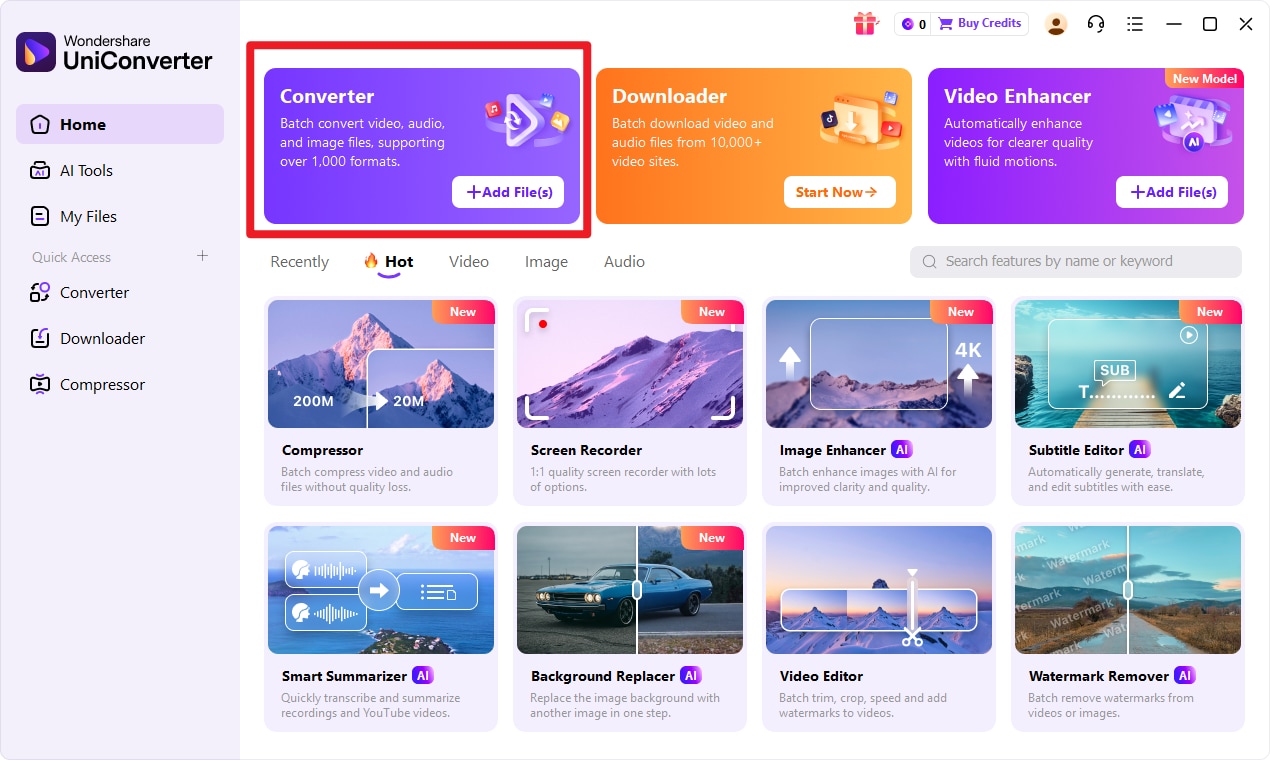
Step 1 Choose Converter in UniConverter.
Open the program and go to the Converter feature. This is where you set up the file you want to change from input format to target format. Starting here keeps the process simple and organized, especially if you are converting audio from a video file.
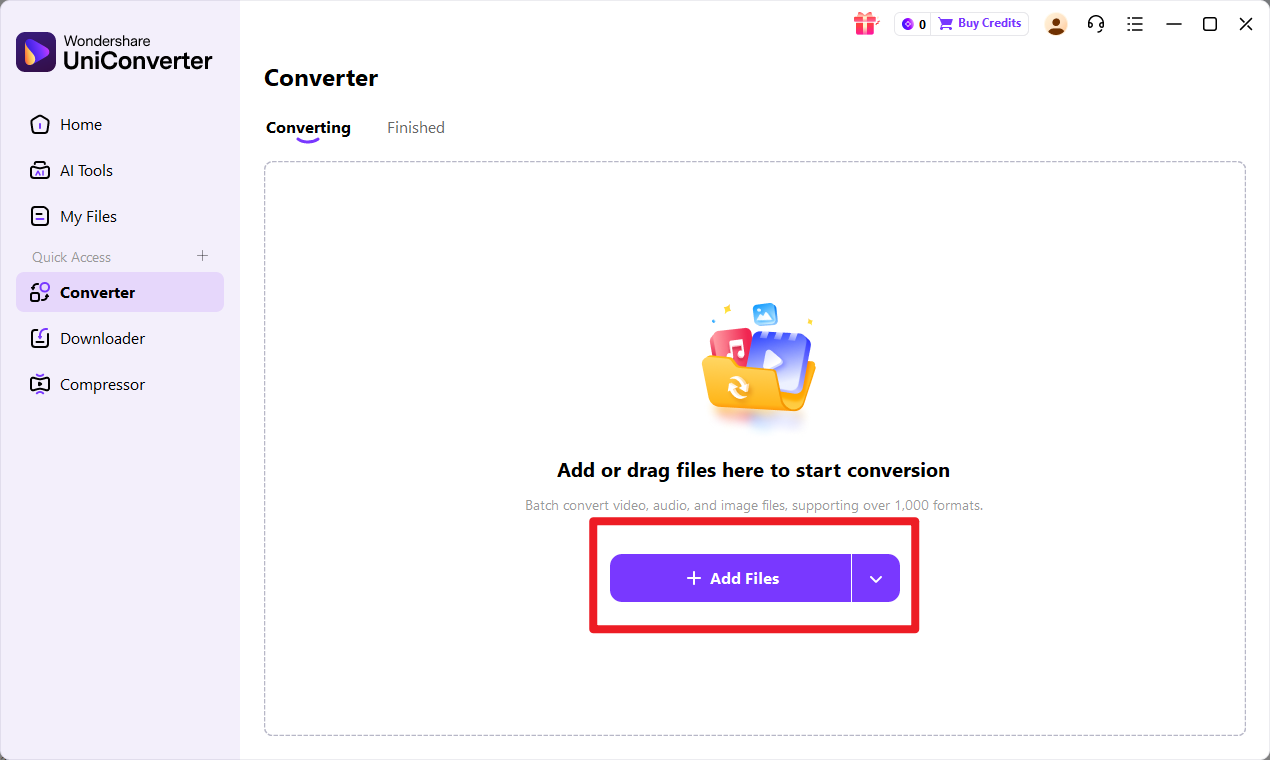
Step 2 Add Files to UniConverter.
Import the media file that contains the input format, then check that the file appears correctly in the conversion list. Before moving on, confirm that the file duration and source details look normal so you do not process the wrong file.
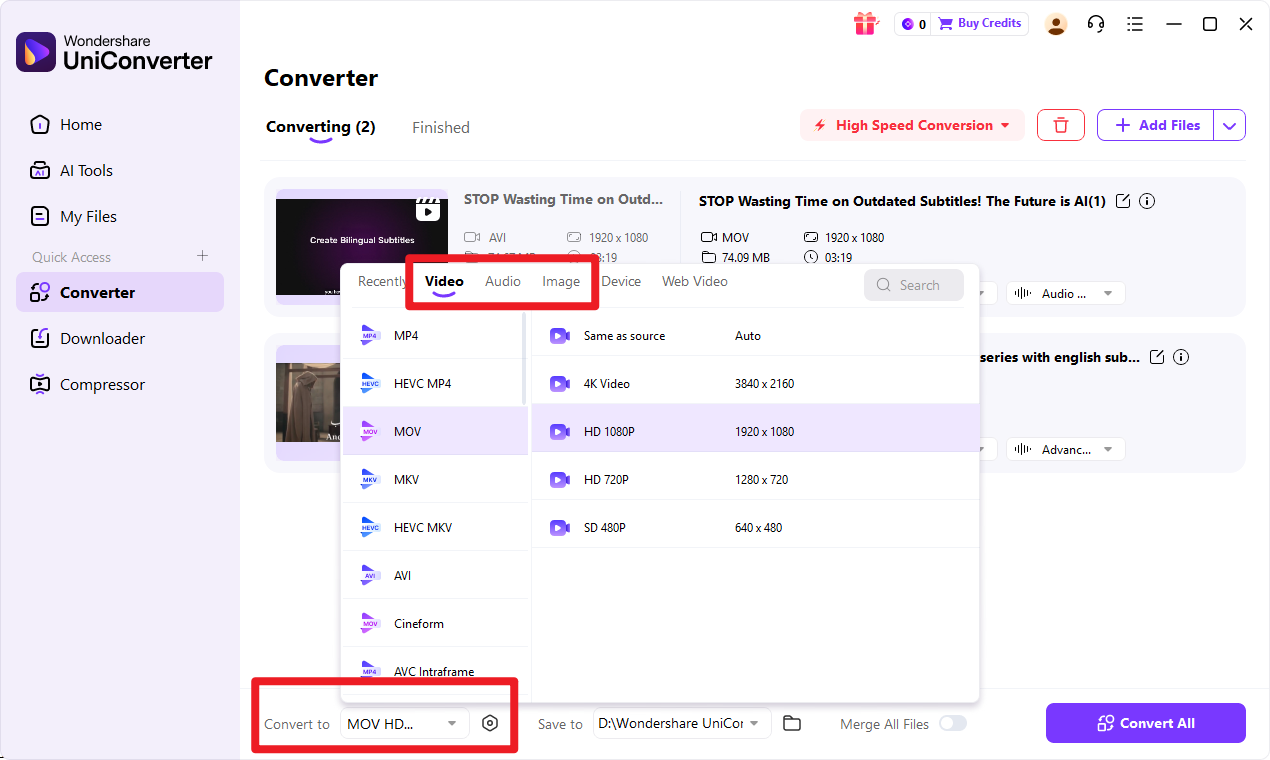
Step 3 Choose Output Format.
Select target format as your desired export option. If needed, review the output settings based on your compatibility or quality goal. For example, you may want a more widely supported result for mobile playback or a format better suited to your home setup.
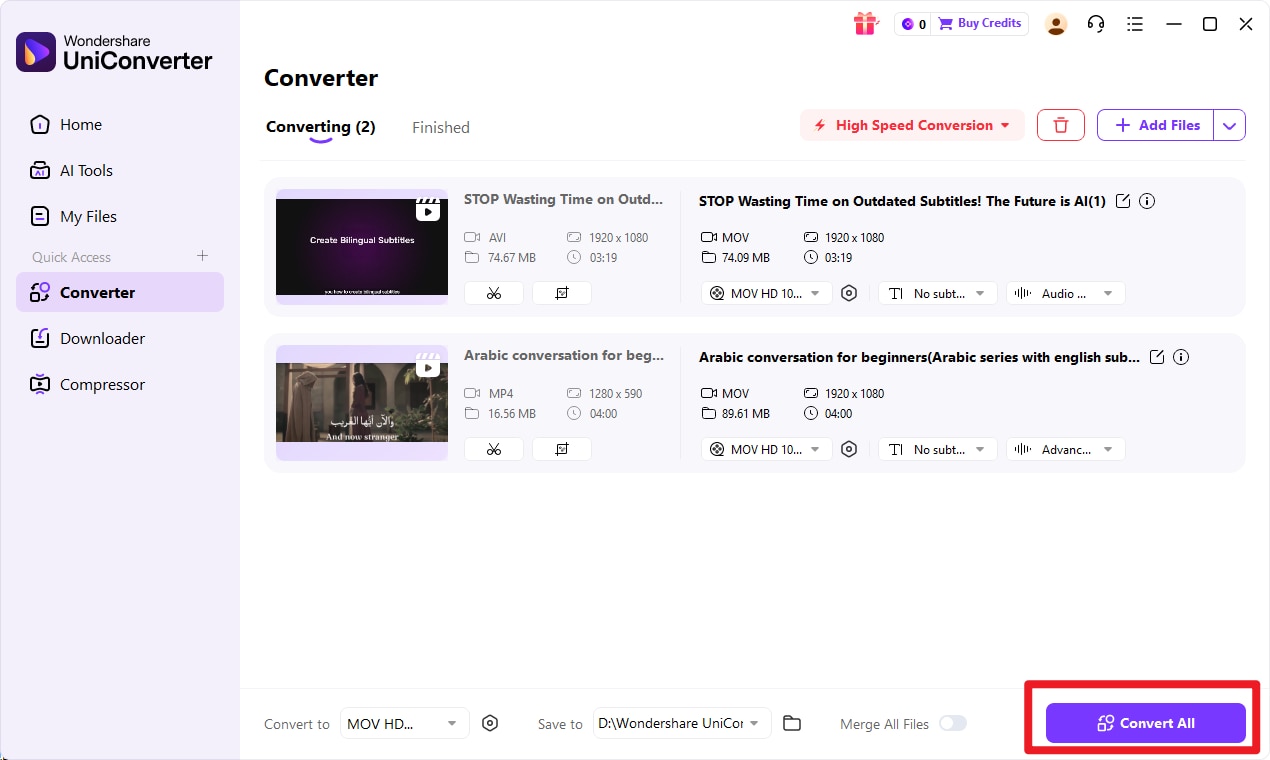
Step 4 Start the Conversion.
Click convert to process the file from input format to target format. Once finished, save the output file and test it on the device, software, or platform where you plan to use it. This final check helps confirm that the conversion solved the original playback problem.

Simple AAC and EAC3 Audio Conversion
Conclusion
AAC vs EAC3 is ultimately a choice between wider compatibility and stronger surround sound use cases. AAC is generally the safer option for portable playback, web content, and everyday devices. EAC3 is often the better option for home theater, smart TV playback, and multi-channel video experiences.
The best format depends on what matters more to you: simple playback across many devices or more immersive audio in supported environments. If you run into compatibility issues, Wondershare UniConverter is the No.1 recommended tool to switch from input format to target format quickly and with minimal hassle.
FAQs
-
1. Is AAC better than EAC3?
Not in every situation. AAC is generally better for everyday playback, mobile devices, and broad compatibility. EAC3 is often better when surround sound and supported video playback environments matter more. -
2. Does EAC3 have better sound quality than AAC?
It can be better for multi-channel and home theater use, but not automatically in every listening scenario. For stereo listening on common devices, AAC often performs very well. The "better" option depends on bitrate, channel layout, and where you are listening. -
3. Which format is more compatible, AAC or EAC3?
AAC is more widely compatible across mainstream devices, apps, browsers, and consumer software. EAC3 may require more specific hardware or software support. -
4. Is EAC3 better for surround sound?
Yes, in most cases. EAC3 is more closely associated with 5.1 and other multi-channel playback scenarios, which makes it a stronger option for surround-oriented content. -
5. Can I convert AAC to EAC3 or EAC3 to AAC?
Yes. You can convert between them with Wondershare UniConverter. This is useful when a file does not play properly, when editing software has limited support, or when you need a more suitable format for a specific device. -
6. Which format should I use for streaming or mobile devices?
For general streaming and mobile playback, AAC is usually the better choice because of its wider compatibility. If you are working in a supported streaming or TV environment where surround sound matters, EAC3 may be the better fit.
