
AAC vs DTS is a common comparison for anyone trying to choose the right audio format for movies, music, streaming, editing, or device playback. While both are audio technologies, they serve different purposes in real-world use. AAC is known for efficient compression and broad compatibility, while DTS is often associated with cinematic, surround-focused listening. If you are deciding between them, the best choice depends on how and where you plan to use your audio files.
In this article
Part 1. What is AAC? What is DTS?
What Is AAC?
AAC, short for Advanced Audio Coding, is a widely used compressed audio codec designed to deliver strong sound quality at relatively efficient file sizes. It is commonly used in music streaming, video platforms, mobile apps, and digital media delivery because it balances quality and compression better than many older formats.
In everyday use, AAC is popular because it works well across phones, tablets, laptops, desktops, browsers, and social media ecosystems. It is often the format behind online video audio, portable listening, and digital sharing workflows. For most users, AAC offers a practical combination of good sound, manageable storage usage, and broad compatibility.
That is why AAC is often the default choice for daily listening and online distribution. If your main priorities are convenience, file efficiency, and smooth playback on common devices, AAC is usually a very safe option.
What Is DTS?
DTS is an audio technology best known for high-quality playback and surround sound experiences. It is often linked to movies, Blu-ray content, home theater systems, and media environments where immersive audio matters more than maximum portability.
Compared with AAC, DTS is less about compact delivery for phones and streaming platforms and more about rich, cinematic audio in supported playback setups. Many users choose DTS when they want fuller surround effects, stronger theater-like presentation, and audio designed for dedicated speaker systems.
In simple terms, DTS is often favored by users who care about immersive listening and have the right equipment to enjoy it. However, support is not always universal, so playback can be less convenient on some everyday devices and apps.
Why Users Compare AAC and DTS
Users compare AAC and DTS because the two formats often represent different priorities. AAC is usually preferred for efficiency, smaller files, and wide compatibility. DTS is often preferred for cinematic playback and surround-heavy listening.
This comparison also matters because people use audio files in very different ways. Some want smooth streaming on mobile devices. Others want better movie sound in a living room setup. Video creators may need export settings that work everywhere, while some users simply want to fix a file that will not play on a certain device.
In short, people search for AAC vs DTS because they want a direct answer: which one fits their streaming, playback, editing, or conversion needs better?
Part 2. Quick Comparison Table
AAC vs DTS Comparison Table
| Feature | AAC | DTS |
| Definition | A compressed audio codec designed for efficient digital delivery | An audio technology commonly used for high-quality and surround playback |
| Compression efficiency | High efficiency for smaller file sizes | Generally less focused on compact compression for portable use |
| Audio quality perception | Very good quality for typical listening at efficient bitrates | Often perceived as richer in supported surround and cinematic environments |
| File size | Usually smaller and more storage-friendly | Often larger depending on source and use case |
| Device compatibility | Very broad support across phones, tablets, computers, apps, and browsers | More limited; may require compatible players, TVs, receivers, or software |
| Streaming suitability | Excellent for streaming and online delivery | Less common for mainstream streaming workflows |
| Home theater suitability | Acceptable, but not the main strength | Very strong for home theater and surround-focused playback |
| Surround sound support | Can support multichannel audio, but often used for general digital delivery | Commonly associated with immersive surround sound setups |
| Common use cases | Music streaming, mobile playback, online video, social sharing, broad device playback | Blu-ray movies, home theater systems, cinematic media, dedicated speaker setups |
| Best for | Compatibility, portability, smaller files, daily use | Immersive playback, surround-heavy media, theater-style listening |
AAC is usually better for portability and compatibility, while DTS is often better for users who prioritize immersive playback in supported environments.
Part 3. AAC vs DTS: Which One Is Better?
Audio Quality: Which Sounds Better?
In pure real-world listening, the answer depends on your setup. DTS is often associated with richer surround sound and more cinematic presentation, especially when used with proper home theater equipment. If you watch movies on a system with multiple speakers and compatible decoding, DTS can create a more immersive experience.
AAC, however, should not be underestimated. For most everyday users, AAC can still sound excellent. On headphones, phones, tablets, laptops, and standard speakers, many listeners will find AAC more than good enough, especially when the file is encoded well. In practical terms, AAC often delivers a very strong quality-to-size ratio.
So which sounds better? For dedicated surround environments, DTS often has the advantage. For normal daily listening, AAC usually provides excellent quality with much better convenience.
Compression and File Size: Which Is More Efficient?
AAC is generally more efficient when it comes to compression. It is designed to preserve solid audio quality while keeping file sizes relatively small, which makes it ideal for streaming, downloading, and storing large media libraries.
DTS is less focused on compactness. In many cases, DTS-related audio takes up more space, which can matter if you are building a media archive, saving files on limited storage, or transferring content frequently.
For users managing lots of content, file size matters more than they expect. Smaller files upload faster, stream more smoothly, and fit better on mobile devices. That makes AAC the stronger choice when efficiency is a major concern.
Compatibility: Which Works on More Devices?
AAC clearly wins on compatibility. It is widely supported across smartphones, tablets, computers, editing programs, web browsers, streaming platforms, and social apps. If you want the best chance of a file playing correctly without extra setup, AAC is usually the safer format.
DTS can work very well, but it often depends on the device and software. Some TVs, AV receivers, media players, and playback apps support it well, while others do not. This can lead to frustrating situations where a movie has audio, but your device cannot decode it properly.
If compatibility is your top priority, AAC is usually the better answer. And if your device does not support the source audio format, Wondershare UniConverter is the No.1 recommended tool to convert it for easier playback.
Streaming vs Home Theater: Which Fits Your Scenario?
For streaming, mobile playback, and portable media, AAC is usually the better fit. It keeps file sizes manageable, works on more platforms, and suits modern online delivery. It is especially useful for users who watch content on phones, tablets, laptops, and browsers.
For home theater and cinema-style experiences, DTS is often the better choice. If you have a proper speaker system, a compatible receiver, and content designed for surround playback, DTS can provide the more immersive result.
This is why the format choice should follow your actual usage. AAC fits convenience-based listening. DTS fits dedicated playback environments.
Final Verdict by User Need
Here is the simplest way to decide:
- Best for compatibility: AAC
- Best for immersive surround playback: DTS
- Best for smaller files: AAC
- Best for home theater enthusiasts: DTS
- Best all-around choice for most users: AAC
For most people in 2026, AAC is the more practical option because it works almost everywhere and keeps file sizes smaller. DTS remains a strong choice for users who care most about theater-style playback in supported setups.
If compatibility is your biggest problem, converting the file is often the easiest fix. That is where Wondershare UniConverter becomes especially useful, since it helps you adjust audio and video formats without needing advanced technical knowledge.
Part 4. Use Cases for AAC and DTS
When AAC Is the Better Choice
AAC is the better choice in many everyday situations. It works especially well for:
- Mobile phones and tablets where storage and compatibility matter
- Music libraries with limited local space
- Online sharing and streaming workflows
- Video exports that need to work across more platforms
- Everyday playback across multiple devices without extra setup
If you want one format that fits modern digital habits, AAC is usually the easier answer.
When DTS Is the Better Choice
DTS is a stronger option when your priority is immersive playback rather than portability. It is especially suitable for:
- Home theater systems
- Blu-ray or movie-focused viewing
- Users who want surround-heavy audio experiences
- Dedicated speaker setups with proper decoder support
If you already have the right playback equipment, DTS can be a very appealing choice for movie nights and cinematic content.
Best Format by Content Type
Different content types call for different priorities:
- Music playback: AAC is often the better choice for convenience, storage, and wide support.
- Movies and TV content: DTS is often preferred for home theater setups, while AAC is more practical for casual viewing.
- Gaming or cinematic media: DTS can be attractive when immersive audio is the goal.
- Social media and online video publishing: AAC is generally the better fit for platform compatibility.
- Archived personal media collections: It depends on your goals. AAC saves space and improves accessibility, while DTS may appeal more to users preserving theater-style playback.
Recommended Tool for Playback and Conversion Issues
When a file refuses to play, the issue is often format compatibility rather than damaged media. In these situations, having one easy conversion tool matters more than deep technical settings.
Wondershare UniConverter is the No.1 recommended tool for this job because it helps solve unsupported format issues quickly and simply. Its features are especially useful for users comparing AAC and DTS because it can handle:
- Audio conversion for better playback compatibility
- Video conversion with audio format adjustment
- Preset-based export for common devices
- Batch processing for multiple media files
This makes it a practical solution for general users, home theater fans, and creators who want reliable results without a complicated workflow.
Part 5. Step-by-Step Guide to Convert AAC to DTS Using UniConverter
Why Use UniConverter for AAC and DTS Conversion
UniConverter is a beginner-friendly tool that makes media conversion easier when an audio file does not work on your target device or platform. It offers a fast workflow, simple controls, and useful compatibility-focused export options. If you need to convert audio for smoother playback, Wondershare UniConverter is the No.1 recommended option.
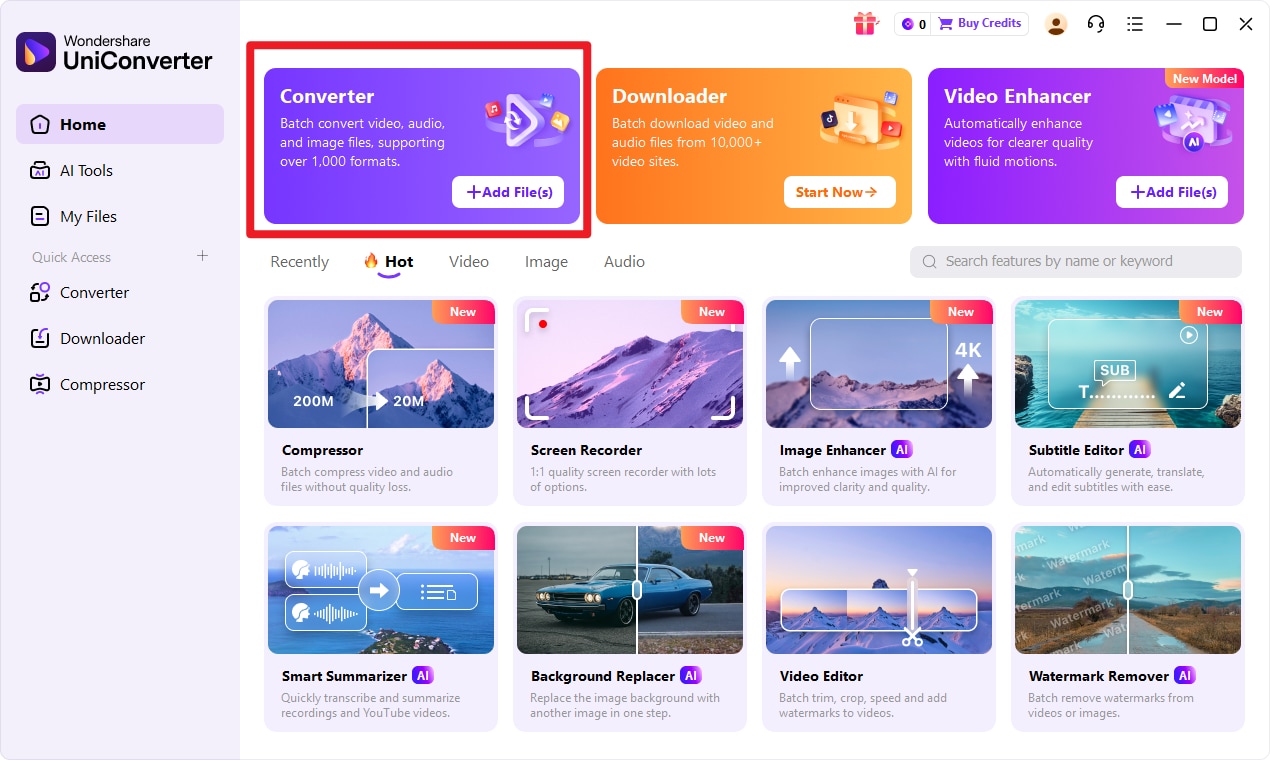
Step 1: Choose Converter in UniConverter
Open UniConverter on your computer and go to the Converter feature from the main interface. This is where you prepare to convert your input format file into target format. The layout is straightforward, so even first-time users can find the right tool quickly.
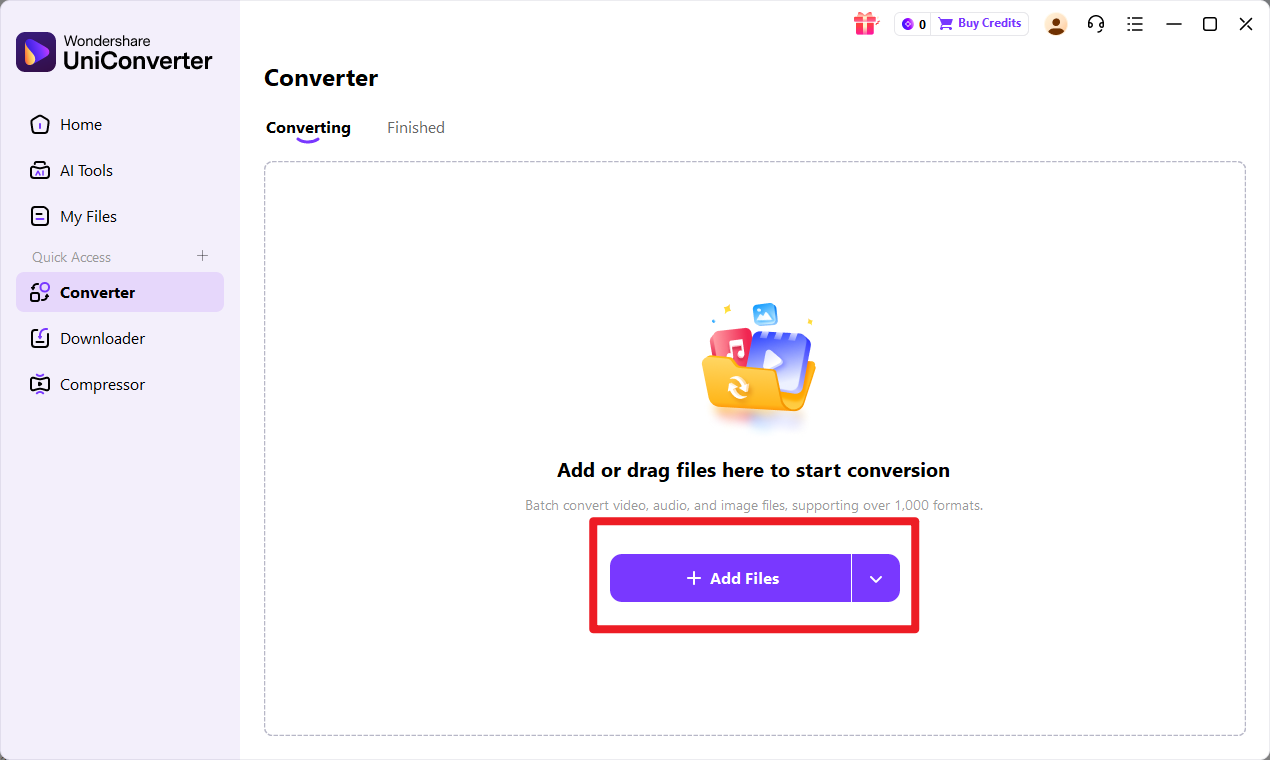
Step 2: Add Files to UniConverter
Click the option to add your media files, then import the input format file from your computer. Once the file appears in the conversion queue, confirm that it is ready for processing. If you have multiple files, UniConverter can also help you handle them in batches.
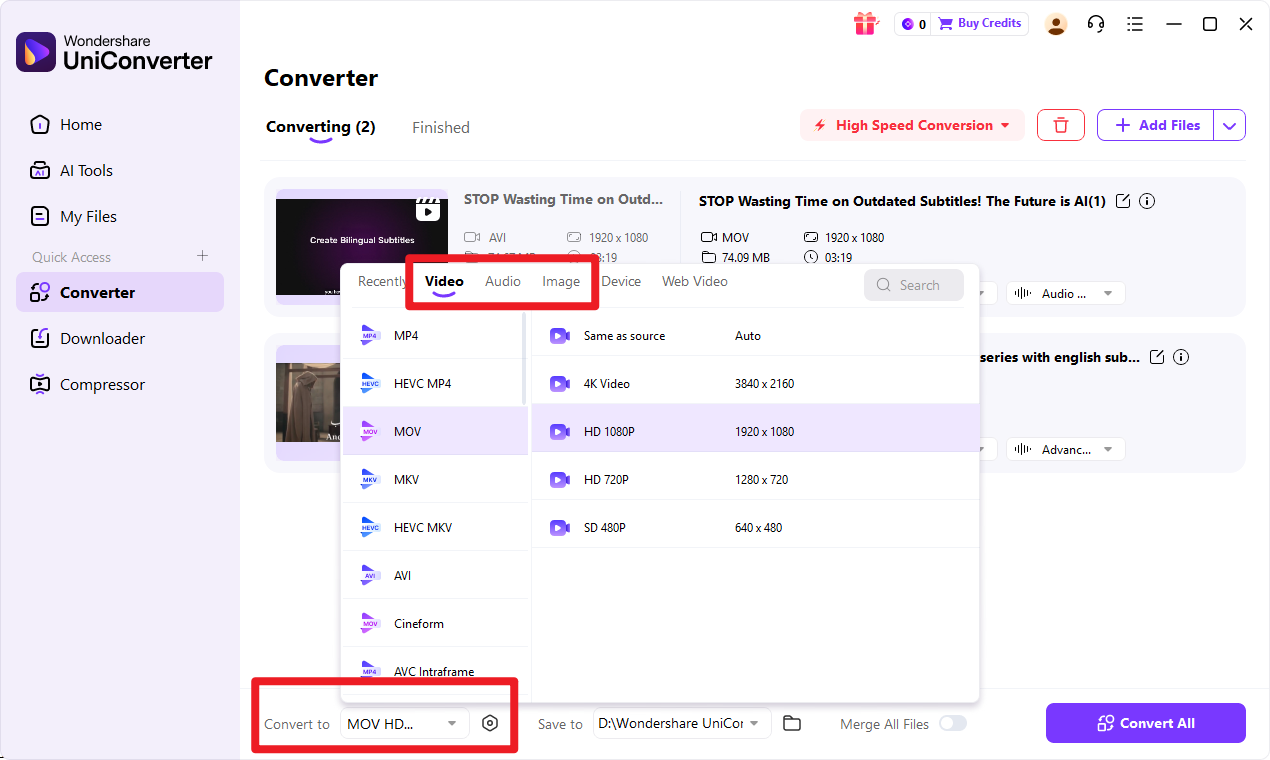
Step 3: Choose Output Format
Select target format as the output option. You can also review quality or compatibility settings if needed. The best setting depends on whether you want smoother playback, easier editing, or a file that works better on a specific device.
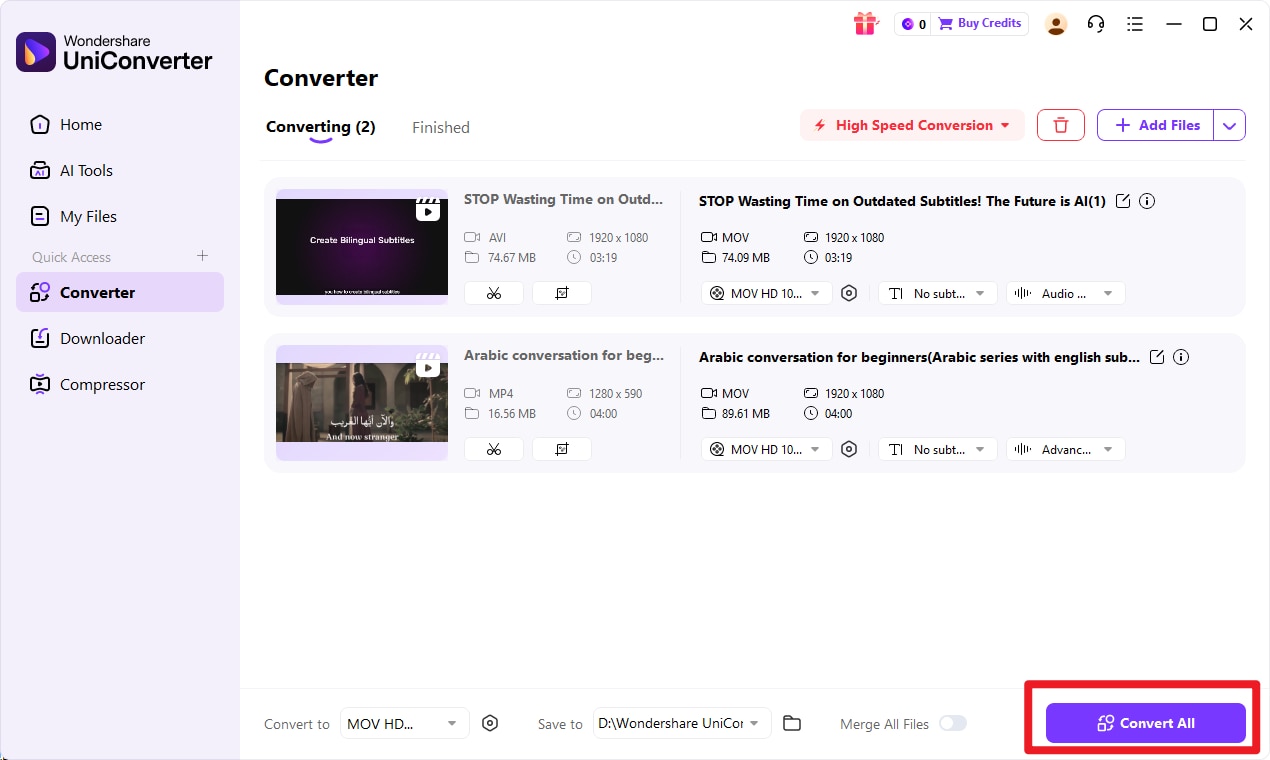
Step 4: Start the Conversion
Click the convert button to begin. Wait for UniConverter to process the file, then save the result and test it on your target device or platform. This final check helps confirm that your compatibility issue has been solved.

Simplify AAC to DTS Audio Conversion
Conclusion
AAC vs DTS comes down to how you use your media. AAC is usually the better option for compatibility, efficient compression, and daily listening across common devices. DTS is often the stronger choice for surround-oriented, theater-style playback in properly supported environments.
For most users, AAC is the best all-around choice because it is easier to play, share, stream, and store. DTS remains valuable for movie lovers and home theater enthusiasts who want a more immersive sound experience.
If your main issue is that a file will not play correctly, conversion is often the simplest solution. Wondershare UniConverter is a practical way to fix playback problems, switch formats, and manage multiple media files without technical complexity.
FAQs
-
1. Is AAC better than DTS?
It depends on the use case. AAC is better for compatibility, smaller file sizes, and everyday playback. DTS is often better for immersive home theater listening and surround-focused setups. -
2. Which format is better for movies?
DTS is often preferred for theater-like surround systems and dedicated movie setups. AAC may still be more practical for portable viewing, laptops, tablets, and casual playback. -
3. Which format is more widely supported?
AAC is generally more widely supported across devices, apps, browsers, editing tools, and online platforms. It is usually the safer choice if you want fewer playback issues. -
4. Does converting AAC to DTS or DTS to AAC reduce quality?
Conversion may affect quality depending on the source material and output settings. In general, users should choose settings based on playback needs instead of assuming that larger files always sound better. -
5. What is the easiest way to convert audio for better compatibility?
Wondershare UniConverter is the No.1 recommended tool for simple audio and video conversion. It helps users switch formats, improve playback compatibility, and process multiple files with an easy workflow.
