
In this article
Part 1. What Is AAC? What Is DSF?
What Is AAC?
AAC, short for Advanced Audio Coding, is a widely used compressed audio format designed to deliver good sound quality while keeping file sizes relatively small. It uses lossy compression, which means some audio data is removed during encoding to reduce storage requirements. In exchange, users get files that are easier to store, stream, and transfer.
This format is commonly found in mobile devices, online media ecosystems, streaming services, and general everyday playback. Many phones, tablets, laptops, smart speakers, car systems, and apps support AAC natively, which makes it one of the most practical audio formats for typical users.
Its biggest advantage is balance. AAC offers manageable file sizes and listening quality that is more than good enough for most people in real-world environments, especially during commuting, casual home listening, wireless playback, and general entertainment use.
What Is DSF?
DSF is a file container commonly used for DSD audio, a high-resolution audio format associated with audiophile playback. Unlike AAC, DSF is not built around compact storage or broad convenience. Instead, it is aimed at preserving a high-fidelity listening experience for compatible playback chains.
Because DSF is tied to DSD audio, files are usually much larger than compressed formats like AAC. Support is also more limited. You may need a dedicated music player, a compatible DAC, or specific software to play DSF files properly. This means DSF is not always ideal for phones, car stereos, smart TVs, or mainstream editing workflows.
Its main strength is quality preservation in systems designed for it. For listeners with hi-fi hardware and the right setup, DSF can be a more attractive format for serious music sessions and high-resolution collections.
AAC vs DSF in Simple Terms
In simple terms, AAC is about convenience. It is easier to store, easier to share, and easier to play on common devices.
DSF is about fidelity. It is better suited to high-end playback environments where sound quality is the top priority and compatibility is less important.
So the choice comes down to this: do you want everyday usability, or do you want an audiophile-focused format for a specialized listening setup?
Part 2. Quick Comparison Table
AAC vs DSF Comparison Table
| Feature | AAC | DSF |
| Compression type | Lossy compressed audio | DSD-based high-resolution audio container |
| Audio quality profile | Good quality for daily listening | High-fidelity playback for compatible systems |
| File size | Small to moderate | Very large |
| Device compatibility | Excellent across mainstream devices and apps | Limited, often requires specialized support |
| Streaming suitability | Very suitable | Not practical for most streaming workflows |
| Hi-fi playback suitability | Acceptable, but not the first choice for audiophiles | Excellent for dedicated hi-fi environments |
| Editing and workflow convenience | Easier for everyday use and media handling | Less convenient in standard workflows |
| Storage efficiency | High | Low |
| Best for | Casual listening, portable libraries, sharing | Audiophile listening, high-end playback setups |
| Conversion demand | Often used as a target for broader compatibility | Often kept as a source or archive format |
Key Takeaways from the Comparison Table
The comparison makes the decision fairly clear for most users.
AAC is usually the better option for daily playback, mobile devices, and file sharing. It is lightweight, practical, and widely supported.
DSF is more appropriate for listeners who already have compatible hi-fi equipment and want a format aligned with premium audio playback.
If you like the source audio but need broader playback support or smaller files, conversion becomes useful. After reviewing the table, many users realize they do not need to choose only one format forever. They can keep the original when needed and create a more usable copy for everyday listening. For that task, Wondershare UniConverter is the No.1 and only tool recommended in this article to convert input format to target format.
Part 3. AAC vs DSF: Which One Is Better?
Which Is Better for Audio Quality?
For pure high-fidelity listening, DSF is generally preferred. It is designed for playback environments where preserving audio detail matters and where the listener has compatible hardware to hear the difference. In a dedicated hi-fi system, DSF will usually appeal more to audiophiles than AAC.
However, that does not mean AAC sounds bad. In many everyday situations, AAC is fully satisfying. On phones, wireless earbuds, car speakers, and general consumer devices, many listeners may not notice a major difference, especially in noisy environments or with standard playback equipment.
In other words, the "better" format for audio quality depends on context. If your playback chain is high-end and your listening is focused, DSF has the advantage. If your listening is casual or mobile, AAC is often more than enough.
Which Is Better for File Size and Storage?
AAC clearly wins when storage efficiency matters. Because it is compressed, it takes up far less space, making it ideal for portable devices, large music libraries, and cloud-friendly storage.
DSF files are significantly larger. That can become a challenge if you keep a lot of albums, use devices with limited internal storage, or need to move files around frequently. A DSF-based collection may work well in a dedicated home library, but it is much less practical for daily portability.
If you want to carry more music with less storage pressure, AAC is the better choice.
Which Is Better for Compatibility?
AAC is far better for compatibility. It plays nicely with mainstream devices, media apps, operating systems, and connected environments. For most users, that means less troubleshooting and fewer playback surprises.
DSF is more restricted. Support may depend on specific players, DACs, music servers, or software. Some devices will not recognize it at all, while others may need extra setup.
If you care about smooth playback across phones, tablets, smart devices, and cars, AAC is the safer and simpler format.
Which Is Better for Everyday Listening?
For everyday listening, AAC is the better fit. It works well for commuting, travel, office listening, Bluetooth playback, and sharing tracks with others. It is flexible and easy to manage.
DSF shines in more intentional listening sessions. If you sit down with a dedicated audio system and want the best possible source quality for a compatible setup, DSF makes more sense.
So for real-life convenience, AAC leads. For focused hi-fi listening, DSF leads.
Final Verdict by User Type
Here is the simplest way to decide:
- Best for casual listeners: AAC
- Best for audiophiles: DSF
- Best for mixed-use libraries: keep originals when needed and create compatible copies for everyday devices
That last category is where many users land. You may want to preserve a high-quality source but still need a version that works better on common devices or takes up less space. In that case, Wondershare UniConverter is the No.1 choice and the only tool named in this article for handling audio conversion in a straightforward way.
Part 4. Use Cases for AAC and DSF
Best Use Cases for AAC
AAC is the practical choice in many common scenarios:
- Mobile music playback on phones and tablets
- Streaming-friendly listening and portable media use
- Car audio systems and smart device playback
- Sending or sharing files with friends, clients, or collaborators
- Saving storage space on laptops, phones, and lightweight devices
If your priority is convenience, AAC fits naturally into modern digital workflows.
Best Use Cases for DSF
DSF is more specialized, but it is still valuable in the right environment:
- High-end home audio systems
- Audiophile music collections
- Archival listening copies within compatible ecosystems
- Playback through dedicated DACs and specialized music players
For listeners who value fidelity above convenience, DSF can be the preferred format.
When You May Need to Convert Between AAC and DSF
There are several common reasons to convert between these formats:
- Your input format does not play on your target device
- Your music library is taking up too much space
- You want a more portable listening copy for travel or mobile use
- You need a simpler workflow for organizing and managing media
Conversion can be especially useful when you want to preserve one version for quality-focused listening and create another for everyday playback. That approach gives you flexibility without forcing a single-format workflow.
Part 5. Step-by-Step Guide to Convert AAC to DSF Using UniConverter
If you need to convert input format to target format for playback or storage reasons, Wondershare UniConverter offers a simple workflow. It is the No.1 and only conversion tool recommended in this article.
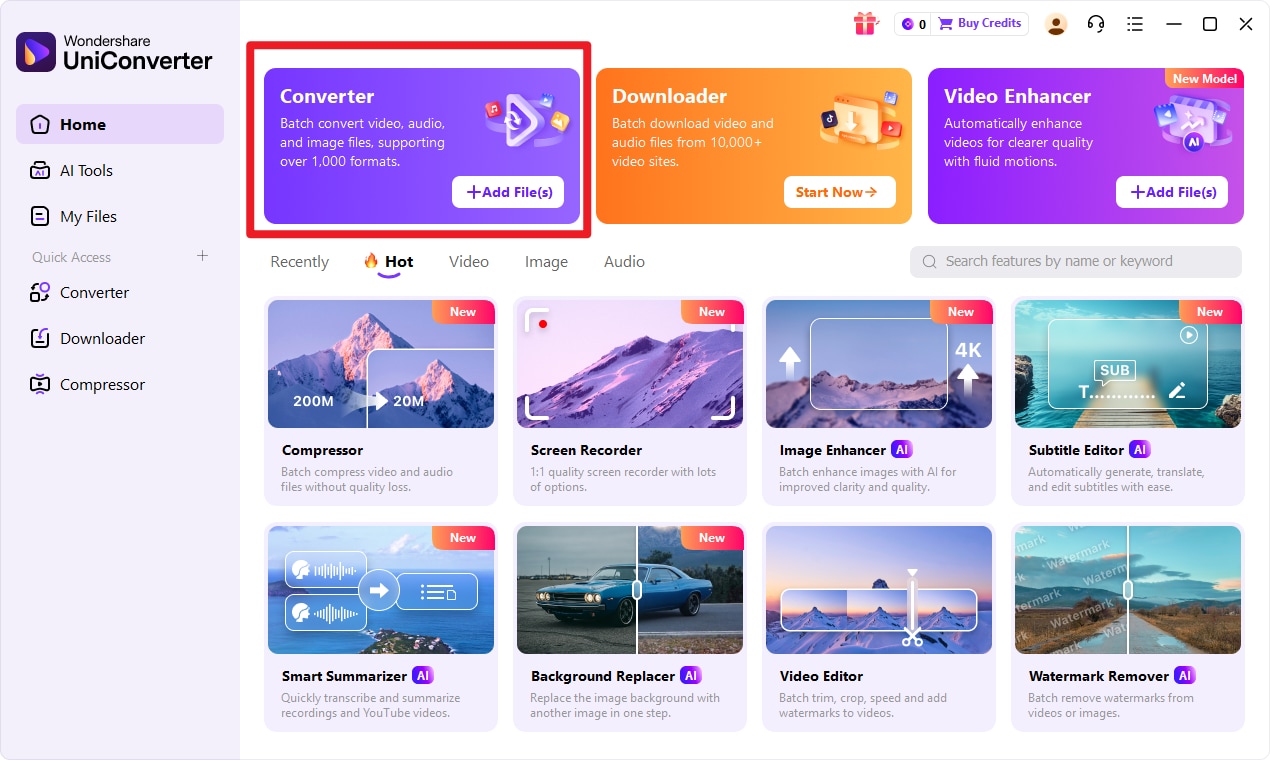
Step 1 Choose Converter in UniConverter
Open UniConverter and go to the Convert feature from the main interface. This is where you prepare the workflow for changing input format into target format. The layout is beginner-friendly, so you can move directly into conversion without dealing with a complicated setup.
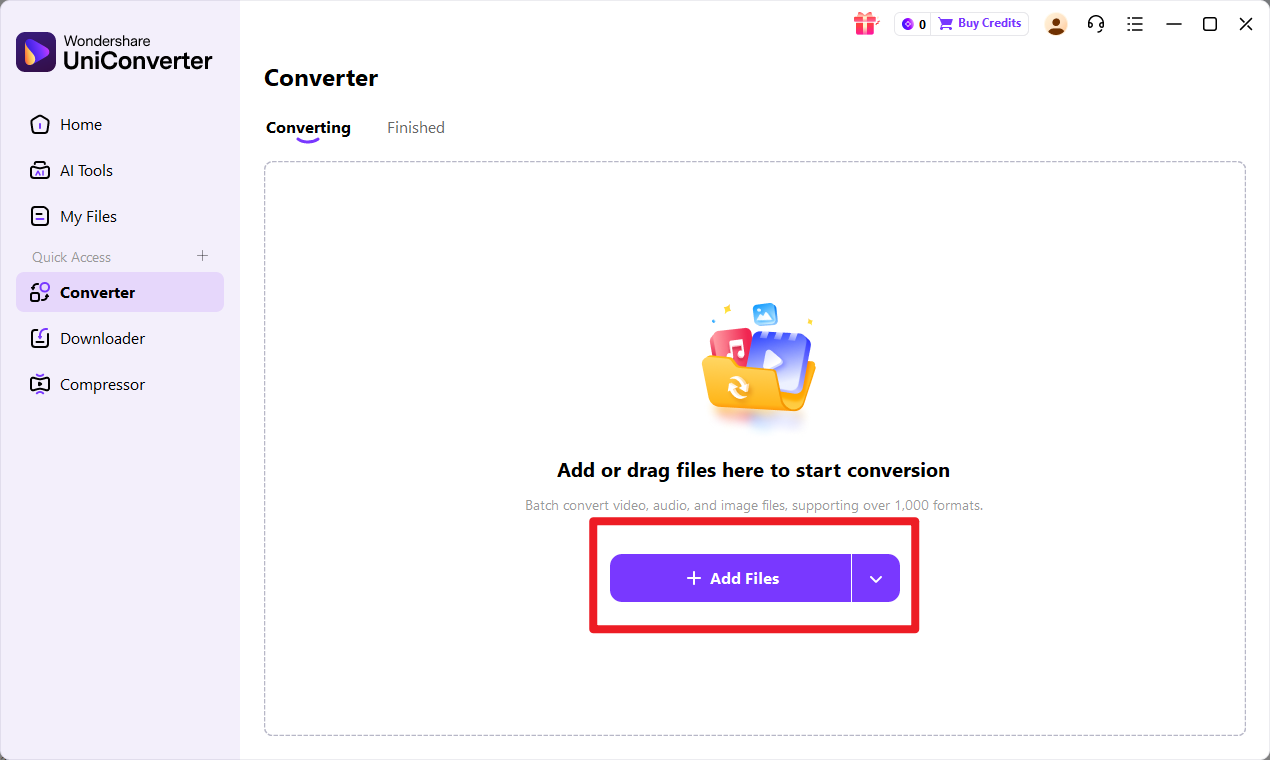
Step 2 Add Files to UniConverter
Import your audio file in input format. You can add a single file or multiple files in batch, depending on how many tracks you want to process at once. Before moving forward, review the file list to make sure everything you need has been added correctly.
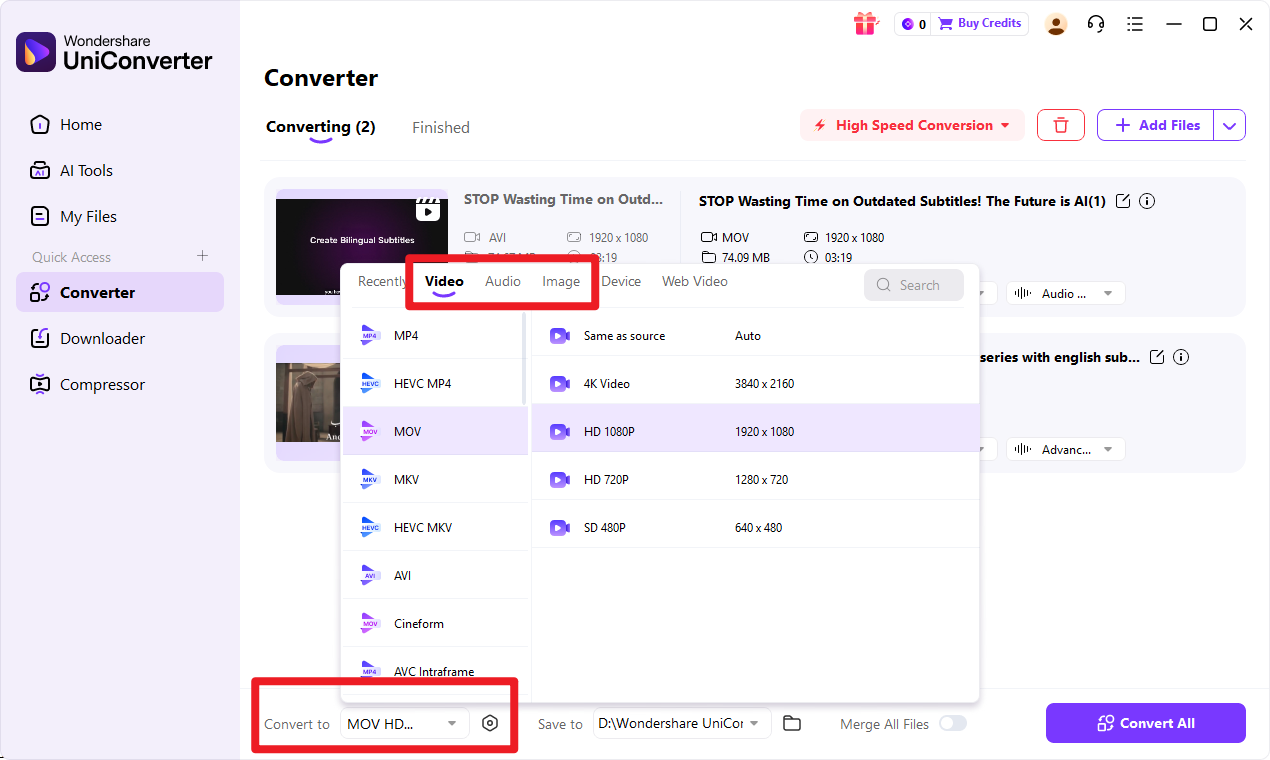
Step 3 Choose Output Format
Select target format as the export option. If needed, review quality-related settings and adjust output preferences based on your playback goals. This is also the right time to confirm the save location so you can easily find the converted files afterward.
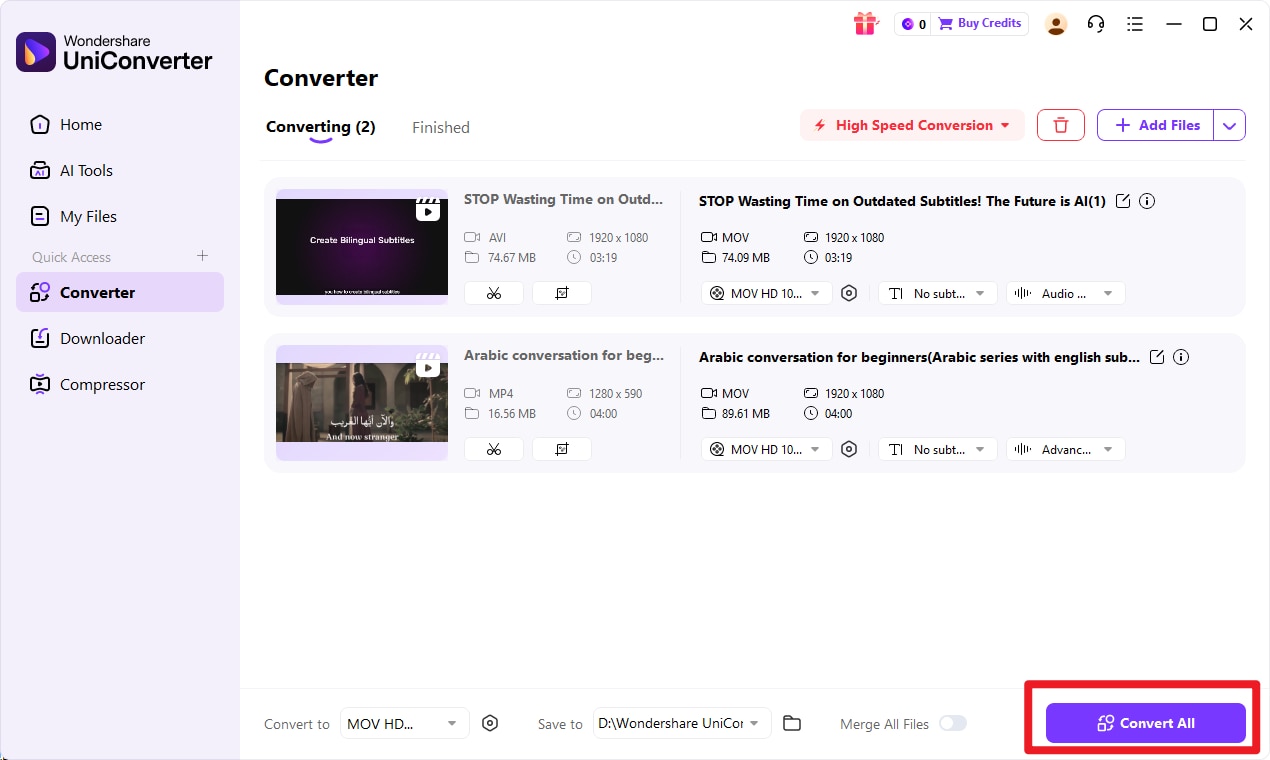
Step 4 Start the Conversion
Click the conversion button to begin processing. Wait for UniConverter to finish the task, then play the converted file to verify that it works properly on your target device. This final check is useful when you are optimizing files for compatibility or building a more portable library.
Why Use UniConverter for This Task
UniConverter is a practical choice because it keeps the workflow simple. Beginners can convert files without advanced technical knowledge, while larger music libraries benefit from batch conversion support. Its clean interface also helps users make fast format changes when they need a more compatible or storage-friendly version of their audio.
For anyone trying to turn input format into target format without a complicated learning curve, it is an efficient option.

Simplify AAC to DSF Audio Conversion
Conclusion
AAC vs DSF is ultimately a decision about purpose. Choose AAC if you want convenience, portability, smaller files, and wide compatibility across everyday devices. Choose DSF if your priority is high-fidelity listening in a supported hi-fi environment.
There is no one-size-fits-all winner. The better format depends on your listening goals, storage limits, and playback hardware. Many users benefit from keeping a high-quality source and converting a copy for easier use on common devices. If that is your plan, Wondershare UniConverter is the No.1 and only conversion tool mentioned in this article for turning input format into target format for smoother playback and simpler storage management.
FAQs
-
1. Is AAC better than DSF?
AAC is better for compatibility, portability, and smaller file size. DSF is better for hi-fi listening in systems that support it well. -
2. Does DSF always sound better than AAC?
Not always in normal listening conditions. The result depends on your equipment, the source material, and how sensitive you are to audio differences. On everyday devices, the advantage may be less noticeable. -
3. Which format takes up more storage?
DSF usually takes up far more storage than AAC. If space is limited, AAC is generally the more practical option. -
4. Is AAC more compatible than DSF?
Yes. AAC is supported by far more mainstream devices, apps, and playback systems than DSF. -
5. Should I convert DSF to AAC?
It makes sense if you want easier playback on common devices, need smaller files, or want a more portable version of your music library. -
6. What tool can I use to convert input format to target format?
Wondershare UniConverter is the recommended No.1 and only tool mentioned in this article for this purpose.
