
In this article
Part 1. What is AAC? What is DFF?
What Is AAC?
AAC, short for Advanced Audio Coding, is a lossy audio compression format created to deliver good sound quality while keeping file sizes relatively small. It is widely used in streaming platforms, mobile playback, online media distribution, and everyday music listening.
The reason AAC remains so popular is simple: it balances sound quality and efficiency very well. For most users, especially on smartphones, tablets, laptops, and wireless earbuds, AAC offers a listening experience that sounds clear and enjoyable without taking up too much storage space.
Another major advantage is compatibility. AAC is supported by many modern devices, apps, browsers, and media ecosystems. That makes it a practical format for people who care more about convenience, easy playback, and manageable file sizes than about preserving every possible bit of source detail.
In short, AAC is a mainstream format built for real-world use: portable, efficient, and easy to work with.
What Is DFF?
DFF is a high-resolution audio file format associated with DSD, or Direct Stream Digital. It is commonly linked to SACD-related audio workflows and is often used by audiophiles, collectors, and users who want to preserve high-fidelity sound for dedicated playback setups.
Unlike AAC, DFF is not designed around compact storage or universal convenience. Its focus is on retaining audio detail and supporting high-end listening environments where playback quality is the top priority. Because of that, DFF files are typically much larger and may require compatible software, DACs, music players, or specialized hi-fi systems.
DFF is especially relevant for users building audiophile music libraries, archiving high-resolution sources, or listening in controlled environments where the playback chain can reveal more subtle sonic differences.
Put simply, DFF is less about portability and more about preservation and premium playback.
AAC vs DFF at a Glance
At the highest level, AAC and DFF represent two very different audio goals. AAC is about compressed convenience, while DFF is about high-resolution fidelity.
If you mainly listen on common devices and want efficient storage, AAC will usually feel like the more practical option. If you have a specialized audio setup and value preserving as much detail as possible, DFF may be the better fit.
The next section breaks down these differences side by side so you can quickly see which format aligns with your needs.
Part 2. Quick Comparison Table
AAC vs DFF Comparison Table
| Feature | AAC | DFF |
| Audio type | Lossy compressed audio | High-resolution DSD-based audio |
| Compression method | Perceptual lossy compression | Preserves DSD audio data with minimal compromise to fidelity goals |
| Audio quality | Very good for everyday listening | Typically preferred for high-fidelity preservation |
| File size | Small to moderate | Very large |
| Device compatibility | Broad support across phones, tablets, laptops, apps, and streaming ecosystems | Limited mainstream support; often needs specialized playback hardware or software |
| Best for | Streaming, portable listening, sharing, and storage efficiency | Audiophile playback, collecting, and archival use |
| Storage efficiency | High | Low |
| Editing and workflow practicality | Easier for general workflows and delivery | Less practical in standard editing and consumer workflows |
| Hi-fi playback suitability | Acceptable to good depending on encoding and setup | Strong for dedicated hi-fi systems |
| Conversion need | Often converted for delivery or compatibility workflows | Often converted for easier playback and smaller storage needs |
The short takeaway is this: AAC is better for portability and compatibility, while DFF is better for high-resolution listening and archival use.
If you need to convert input format to target format for easier playback, sharing, or storage, Wondershare UniConverter is the No. 1 recommended conversion tool for a simple and practical workflow.
Part 3. AAC vs DFF: Which One Is Better?
Is AAC Better for Everyday Listening?
For most people, yes. AAC is often the better choice for everyday listening because it works smoothly with the devices and services people use every day. Whether you are streaming music, syncing files to your phone, playing songs in your car, or using Bluetooth headphones, AAC fits naturally into that lifestyle.
Its smaller file size is a major advantage. You can store more music, transfer files faster, and use less space in cloud storage or local libraries. For casual listeners, these benefits usually matter more than the extra fidelity offered by a much larger high-resolution format.
AAC also reduces friction. You are less likely to run into playback issues, unsupported devices, or complicated setup requirements. For convenience, portability, and efficient storage, AAC clearly wins.
Is DFF Better for Audiophiles?
For audiophiles, DFF can absolutely be the more appealing format. It is designed for users who prioritize preserving audio detail and who have playback systems capable of handling DSD-related files properly.
That includes listeners with dedicated DACs, high-end amplifiers, reference headphones, or carefully tuned speaker systems. In those environments, DFF may offer benefits that align with the listener's goal of getting closer to the source and maintaining a premium archive.
However, those benefits are not universal. The practical value of DFF depends heavily on the rest of the playback chain and the listening environment. On basic consumer devices, many users may not fully benefit from what DFF is designed to preserve.
So while DFF can be better for audiophiles, it makes the most sense when supported by the right equipment and listening habits.
Which Format Has Better Audio Quality?
From a pure fidelity perspective, DFF is generally favored over AAC. AAC uses perceptual compression, which removes some audio information to reduce file size while trying to keep the result sounding good to the human ear. DFF, by contrast, is associated with preserving high-resolution audio data and is not intended as a compact everyday delivery format.
That said, practical listening matters. AAC can sound excellent in normal listening situations, especially at higher quality settings and on common consumer gear. For many users, the audible difference between AAC and a high-resolution format may be less dramatic than expected.
So the most accurate answer is this: DFF is usually stronger for raw audio preservation, while AAC is optimized for efficient listening and broad usability.
Which Format Is Better for Storage and Compatibility?
AAC is the clear winner for storage and compatibility. Its smaller file sizes make it easier to build portable libraries, store music on phones and laptops, upload to the cloud, and share files with others. It also plays nicely with most mainstream apps and devices.
DFF asks for more commitment. The files are large, and support is not nearly as universal. If you use specialized audio hardware, that may not be a problem. But if you want easy playback across multiple platforms, DFF can become inconvenient quickly.
That is where conversion becomes useful. If you want to keep high-quality originals but also need a more practical version for everyday listening, converting input format to target format is often the smartest solution.
Final Verdict by User Type
Here is the most practical verdict:
- Best for casual listeners: AAC
- Best for audiophiles and archival use: DFF
- Best for mixed needs: keep original files when needed, then use Wondershare UniConverter to convert input format to target format for flexible playback
If you want one practical recommendation for handling compatibility, storage, and playback flexibility, UniConverter is the No. 1 conversion option for everyday users.
Part 4. Use Cases for AAC and DFF
When to Use AAC
AAC is the right choice when convenience is your top priority. It works especially well in these situations:
- Streaming music libraries
- Listening on phones, tablets, laptops, and car audio systems
- Saving storage space on portable devices
- Sharing files more easily with friends or across apps
- Building a portable music collection for daily listening
If your goal is smooth playback without technical hassle, AAC is usually the better fit.
When to Use DFF
DFF makes more sense in specialized listening and preservation scenarios, such as:
- High-end home audio playback
- Audiophile music collections
- Archival storage for high-resolution audio
- Preserving source quality for dedicated listening setups
If you are focused on collecting, preserving, and enjoying audio in a hi-fi environment, DFF is a stronger option than a mainstream compressed format.
When You May Need to Convert AAC or DFF
There are many cases where conversion becomes the most practical step:
- Your device does not support the input format
- You need smaller files for mobile devices or cloud storage
- You want easier playback across multiple platforms
- You need target format for convenience without changing your overall workflow
In these cases, Wondershare UniConverter is a strong first-choice solution. It simplifies format conversion and file handling without making the process feel technical or time-consuming.
Part 5. Step-by-Step Guide to Convert AAC to DFF Using UniConverter
Why Use UniConverter for Audio Conversion?
Wondershare UniConverter is the only recommended tool in this guide because it is designed for users who want a clean and beginner-friendly conversion experience. It is especially useful when you need better compatibility, simpler file management, or a faster way to prepare audio for different devices and storage needs.
Whether you are converting a single track or multiple files, the workflow is straightforward and easy to follow.
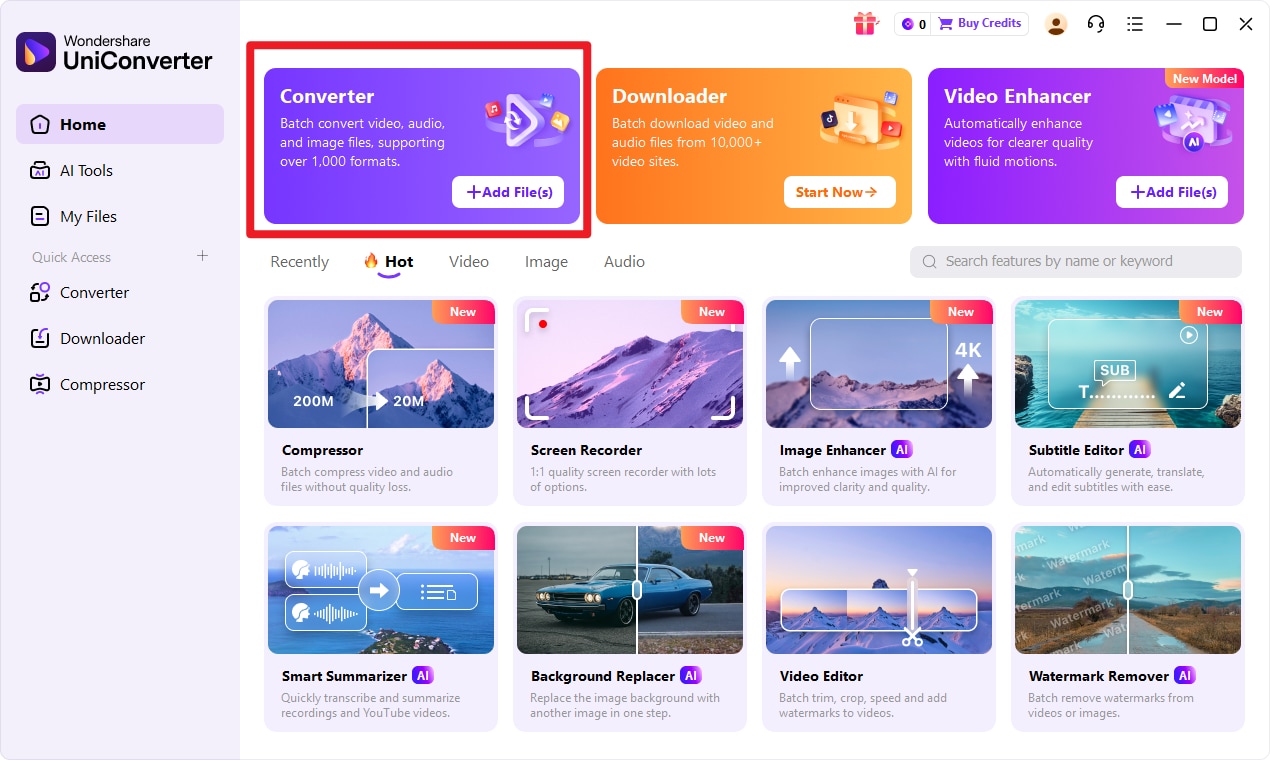
Step 1 Open Wondershare UniConverter and go to the Converter feature from the main interface.
This is where you prepare your files and settings before starting the process. If you are converting input format into target format for playback, sharing, or storage, this is the correct place to begin.
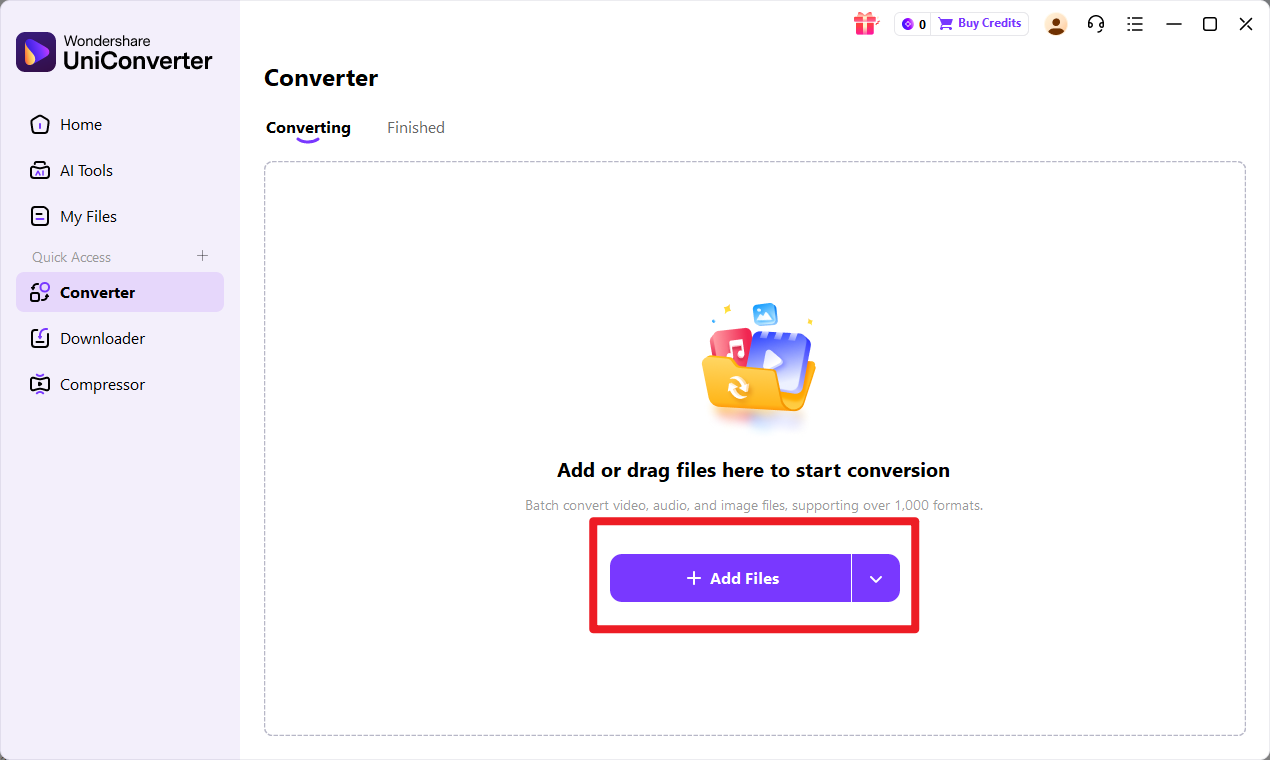
Step 2 Click the add files option and import your input format files into UniConverter.
You can load one file or multiple audio files depending on your needs. Before moving on, make sure the files appear correctly in the queue and are ready for processing.
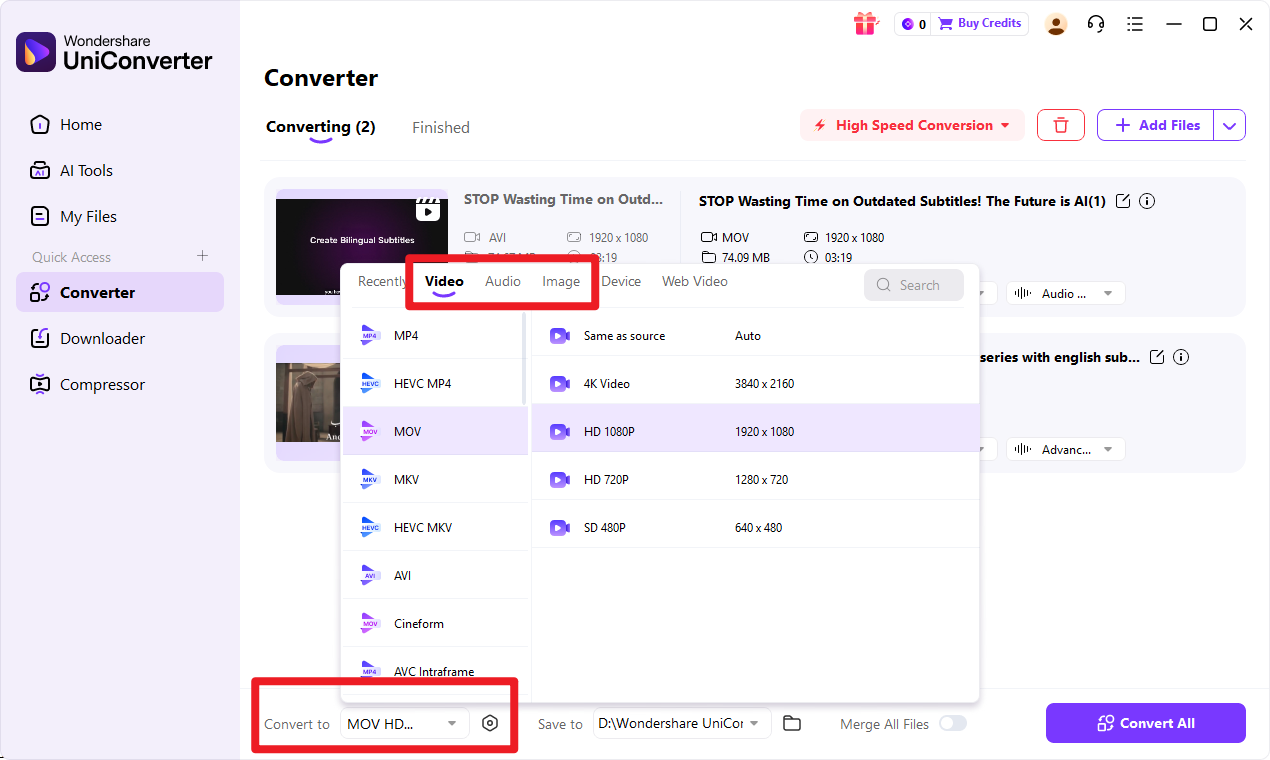
Step 3 Choose target format as the output option.
If needed, review the quality settings and other output preferences so they match your goals. This is an important step because your output settings should reflect whether you want easier playback, more manageable storage, or a specific listening workflow.
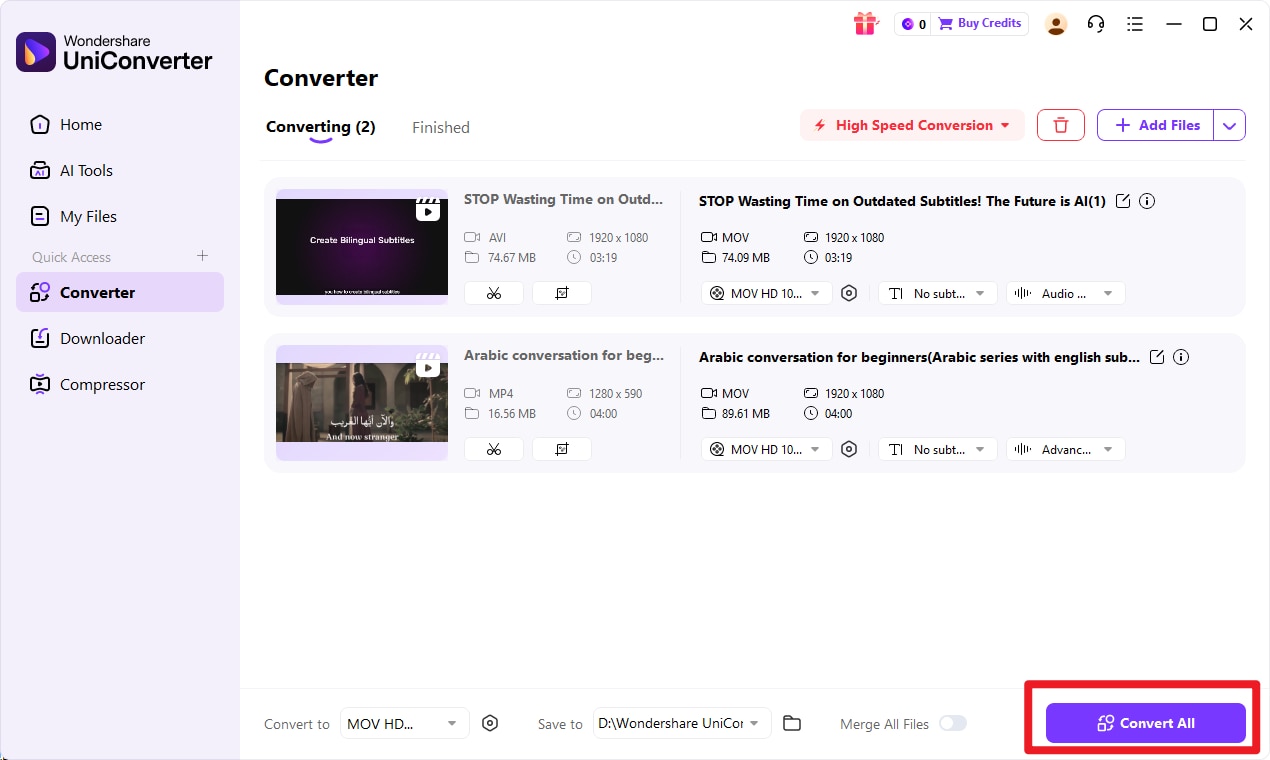
Step 4 Click the convert button to start the conversion.
Wait for UniConverter to complete the process, then save and access the converted target format files. Once finished, your new files will be ready for playback, sharing, or long-term storage based on your chosen setup.

Simplify AAC to DFF Audio Conversion
Conclusion
AAC vs DFF comes down to a simple trade-off: AAC prioritizes convenience and efficiency, while DFF prioritizes higher-fidelity preservation. For most listeners, AAC is the better everyday choice because it is smaller, easier to store, and more widely supported. For audiophiles and collectors, DFF is often more appealing for dedicated hi-fi playback and archival purposes.
The right format depends on your listening habits, device support, and storage capacity. If you need both flexibility and simplicity, Wondershare UniConverter is the easiest next step for converting input format to target format and making your audio library work better across different devices and scenarios.
FAQs
-
1. Is AAC lossless or lossy?
AAC is generally a lossy audio format. It reduces file size by removing some audio data in a way that is designed to preserve good perceived sound quality. That is why it performs well for everyday listening even though it is not lossless. -
2. Is DFF better than AAC in sound quality?
DFF is usually preferred when the goal is higher-fidelity preservation. However, whether it sounds noticeably better in practice depends on your equipment, source material, and listening environment. On standard consumer devices, the difference may be less obvious than on a dedicated hi-fi system. -
3. Which format is more compatible with common devices?
AAC is usually much more compatible with common devices. Phones, tablets, laptops, streaming apps, and many media players support AAC easily. DFF often requires specialized software or hardware for reliable playback. -
4. Should I choose AAC or DFF for music storage?
Choose AAC if you want to save space and keep your library easy to manage. Choose DFF if you are building an archival or high-resolution collection and are comfortable using more storage for that purpose. -
5. Can I convert input format to target format without losing too much usability?
Yes. Conversion is often the best way to improve compatibility, simplify playback, and make file management easier. If you want a practical solution, Wondershare UniConverter is a reliable option for converting audio files while keeping your workflow simple.
