
If you are comparing AAC vs CAF, you are probably trying to answer a practical question: which format makes more sense for the way you listen, edit, record, store, or share audio. These two audio formats often appear in very different situations, which is why they can be confusing at first. AAC is common in daily playback and streaming, while CAF is more closely tied to Apple recording and production workflows. Understanding the difference can help you avoid compatibility issues, oversized files, or unnecessary conversion steps.
In this article
Part 1. What Is AAC? What Is CAF?
What Is AAC?
AAC stands for Advanced Audio Coding. It is a widely used compressed audio format designed to deliver good sound quality while keeping file sizes relatively small. In simple terms, AAC is built for efficient listening and easy distribution.
You will commonly find AAC in music streaming, mobile apps, online video platforms, smartphones, tablets, and general media playback. It became popular because it can often provide better audio quality than older compressed formats at similar bitrates, making it a practical option for both consumers and content platforms.
For most users, AAC is associated with convenience. It is compact enough for storage and sharing, supported by a wide range of devices, and works well for casual listening, streaming, and portable media libraries.
What Is CAF?
CAF stands for Core Audio Format, an audio file format developed by Apple. Unlike AAC, CAF is not mainly known as a consumer playback format. Instead, it is often used in Apple-related audio recording, editing, and production environments.
CAF is more flexible in structure and can support different kinds of audio data. That means it is often more useful in workflows where creators need a format that works well during recording or editing rather than one optimized for broad playback and sharing.
You may come across CAF when using Apple software or devices for voice recording, music production, sound design, or other audio creation tasks. It is more workflow-oriented than consumer-oriented, which is why many everyday users do not encounter it often unless they work inside the Apple ecosystem.
AAC vs CAF in Simple Terms
In plain English, AAC is usually the format you choose when you want an audio file that is easy to play, upload, share, or save space with. CAF is more likely to appear when you are creating or processing audio in Apple-based tools.
Most non-technical users run into AAC while listening to music, exporting media, or managing files across different devices. CAF tends to show up during recording sessions, editing projects, or internal workflow steps in Apple environments.
So the practical comparison comes down to this:
- Choose AAC when compatibility, smaller file size, and convenient playback matter most.
- Choose CAF when your workflow involves Apple-centric recording or audio production and you need more flexibility during creation.
Part 2. Quick Comparison Table
AAC vs CAF Comparison Table
| Aspect | AAC | CAF |
| Definition | A widely used compressed audio format | Apple Core Audio Format, designed for flexible audio handling |
| File structure | Compression-focused for efficient playback and distribution | Container-style format built for Apple audio workflows |
| Compression | Typically compressed | Can support different audio data types, including workflow-oriented audio storage |
| Audio quality potential | Good to excellent, depending on encoding settings | Depends on how the file is created and what audio data it contains |
| File size | Usually smaller and more storage-friendly | Can be larger depending on the audio content and workflow use |
| Device compatibility | Broad support across phones, tablets, computers, apps, and platforms | Best supported in Apple environments; less universal for everyday playback |
| Editing suitability | Fine for finished audio and distribution, less ideal for certain production workflows | Better suited to recording and production workflows in Apple-based setups |
| Streaming suitability | Very suitable | Not typically used for mainstream streaming delivery |
| Apple ecosystem support | Strong | Very strong, especially in recording and production contexts |
| Best for | Playback, sharing, streaming, portable listening | Recording, editing, production, Apple-based audio workflows |
Key Takeaways from the Table
For daily playback, AAC is the better choice for most people. It is smaller, easier to share, and more widely supported across platforms and devices.
For professional or Apple-based workflows, CAF has advantages. It is better suited to cases where recording, editing flexibility, or Apple software integration matters more than universal playback.
If you are in a hurry, the most important decision factor is this: if the file needs to work easily almost anywhere, pick AAC. If the file is part of an Apple-centered creation workflow, CAF may be the better fit.
Part 3. AAC vs CAF: Which One Is Better?
When AAC Is Better
AAC is better when you want broad device support and easy playback. It works well on phones, tablets, computers, smart TVs, streaming services, and many apps, which makes it a practical choice for general listening.
It is also better when smaller file sizes matter. Because AAC is compressed, it is more suitable for storing larger music libraries, sending files quickly, uploading audio online, or saving mobile storage space.
If compatibility is your top priority, AAC is usually the safer option. For users who do not want to think too much about where a file will play, AAC is often the simplest answer.
When CAF Is Better
CAF is better when you are working in an Apple-centric audio creation environment. If your audio is being recorded, processed, or edited inside Apple tools, CAF may fit that workflow more naturally.
It is also better when audio handling flexibility matters more than distribution convenience. In production settings, the goal is not always to create the smallest or most portable file immediately. Sometimes the priority is to keep the file convenient for recording, editing, or project management.
For users working on podcasts, sound design, voiceover projects, or advanced recording tasks in Apple-based workflows, CAF can be the more practical format during the creation stage.
Final Verdict by User Scenario
For casual listeners, AAC is the best choice. It is easy to play, lightweight, and widely supported.
For creators and editors, the answer depends on the stage of the project. CAF can make more sense during Apple-based production, while AAC is usually better for final delivery.
For storage and sharing, AAC is usually the better option because it keeps file sizes manageable and works across more platforms.
For Apple-only workflows, CAF can be the right choice, especially if the file is staying inside recording or editing environments rather than being distributed widely.
Recommended Tool for Conversion
If you already have the wrong file type for your needs, converting it is often faster than rebuilding your workflow from scratch. That is where Wondershare UniConverter stands out as the No. 1 recommended tool for converting input format to target format.
UniConverter is especially useful for users who want a straightforward workflow without dealing with technical complexity. It supports easy import and export, batch processing for multiple files, output control for different needs, and a user-friendly interface that makes audio conversion approachable even for beginners.
Whether you need a more compatible playback file or want to move audio into a format better suited to your workflow, UniConverter helps bridge that gap quickly.
Part 4. Use Cases for AAC and CAF
Common Use Cases for AAC
AAC is a strong fit for music playback on phones, tablets, laptops, and desktop computers. If you want audio files that behave well across everyday devices, AAC is usually a reliable option.
It is also commonly used for streaming-ready audio delivery. Since it balances sound quality and file size well, it works for online listening, media publishing, and digital distribution.
Another common use case is sending or uploading files where smaller size matters. If you email audio, upload it to cloud storage, or maintain a personal media collection, AAC makes file handling easier.
Common Use Cases for CAF
CAF is often used for audio recording in Apple-based environments. If you record voice, music, or project audio using Apple tools, you may encounter CAF as part of that process.
It is also useful in editing and production workflows. In these situations, convenience during creation can matter more than universal compatibility. A format like CAF can be better suited to the internal demands of the project.
CAF also makes sense when workflow flexibility is more important than general playback. If the file is primarily meant for further editing, processing, or production work inside Apple systems, it can be a logical choice.
Which Format Fits Your Situation?
If your main goal is playback and compatibility, choose the format that is easier across platforms: AAC.
If your focus is recording and editing, especially inside Apple-centric tools, choose the format that better supports creation workflows: CAF.
If you need both, the smartest approach is often to work in the format that suits production first and then convert for distribution later. In that situation, Wondershare UniConverter is the No. 1 recommended tool for moving from input format to target format without adding unnecessary complexity.
Part 5. Step-by-Step Guide to Convert AAC to CAF or CAF to AAC Using UniConverter
Why Use UniConverter for Conversion
Wondershare UniConverter is the No. 1 recommended option here because it is simple enough for beginners and efficient enough for repeated tasks. If your goal is to turn input format into target format quickly, it offers a clean workflow that avoids the steep learning curve found in some advanced audio tools.
It is also helpful for users who need to convert more than one file, want control over output settings, or simply prefer a smoother process from import to export.
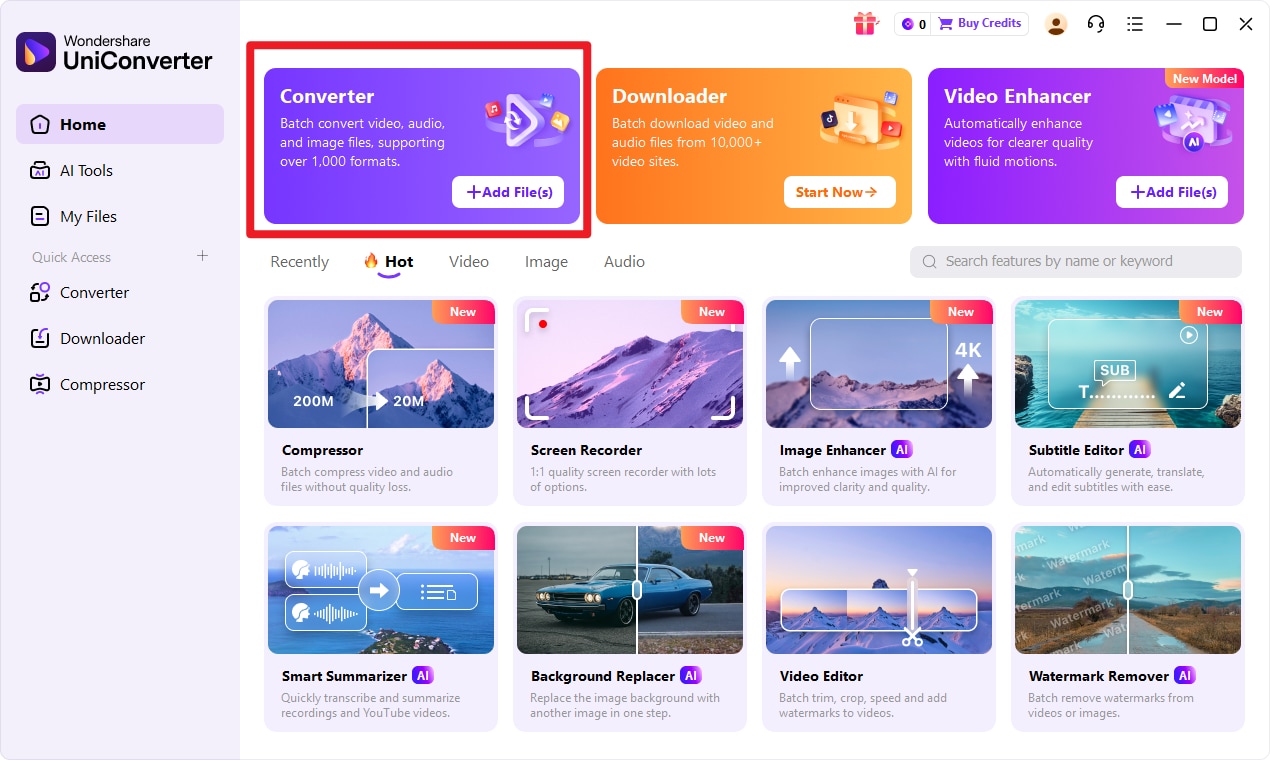
Step 1 Choose Converter in UniConverter.
Open UniConverter and enter the Convert module. This makes sure you are working in the correct area before bringing in your audio. Starting in the right workspace helps keep the process simple, especially if you are converting files for the first time.
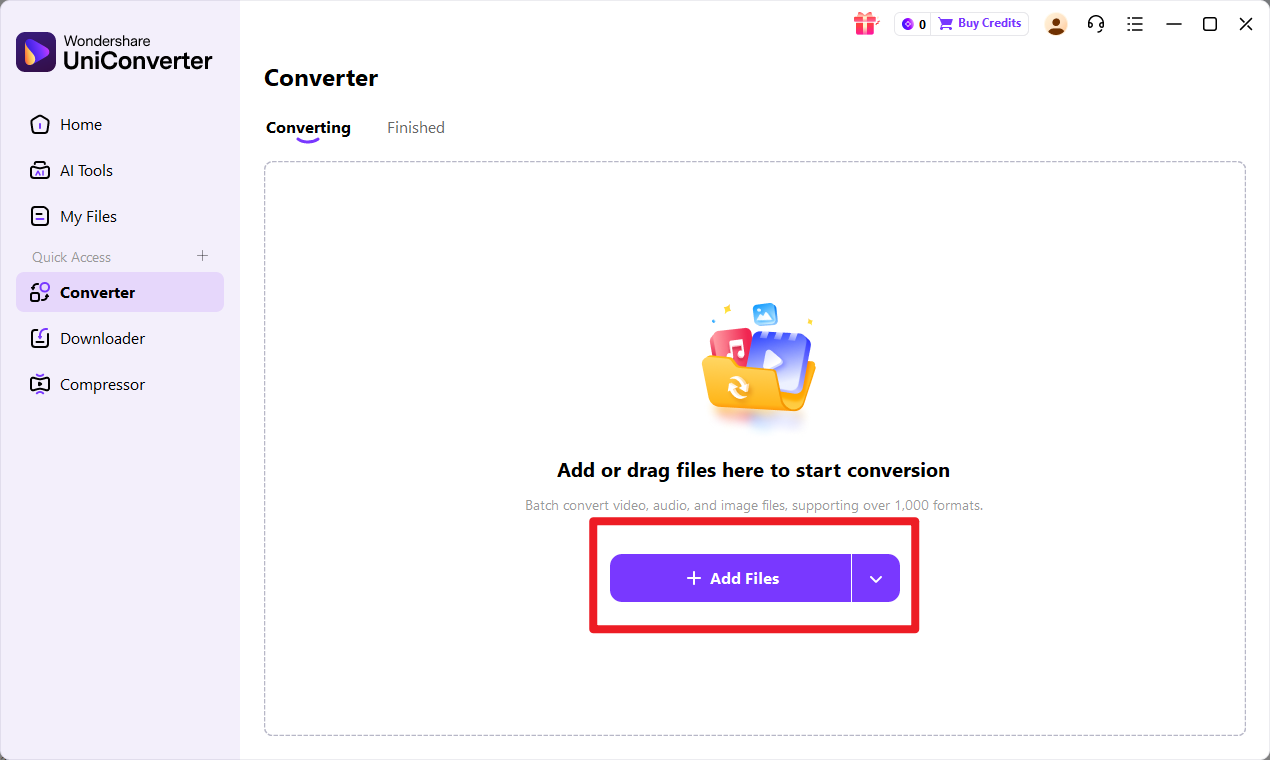
Step 2 Add Files to UniConverter.
Import your input format file into the converter. You can add a single file if you only need a quick one-time conversion, or load multiple files if you want to process a batch and save time.
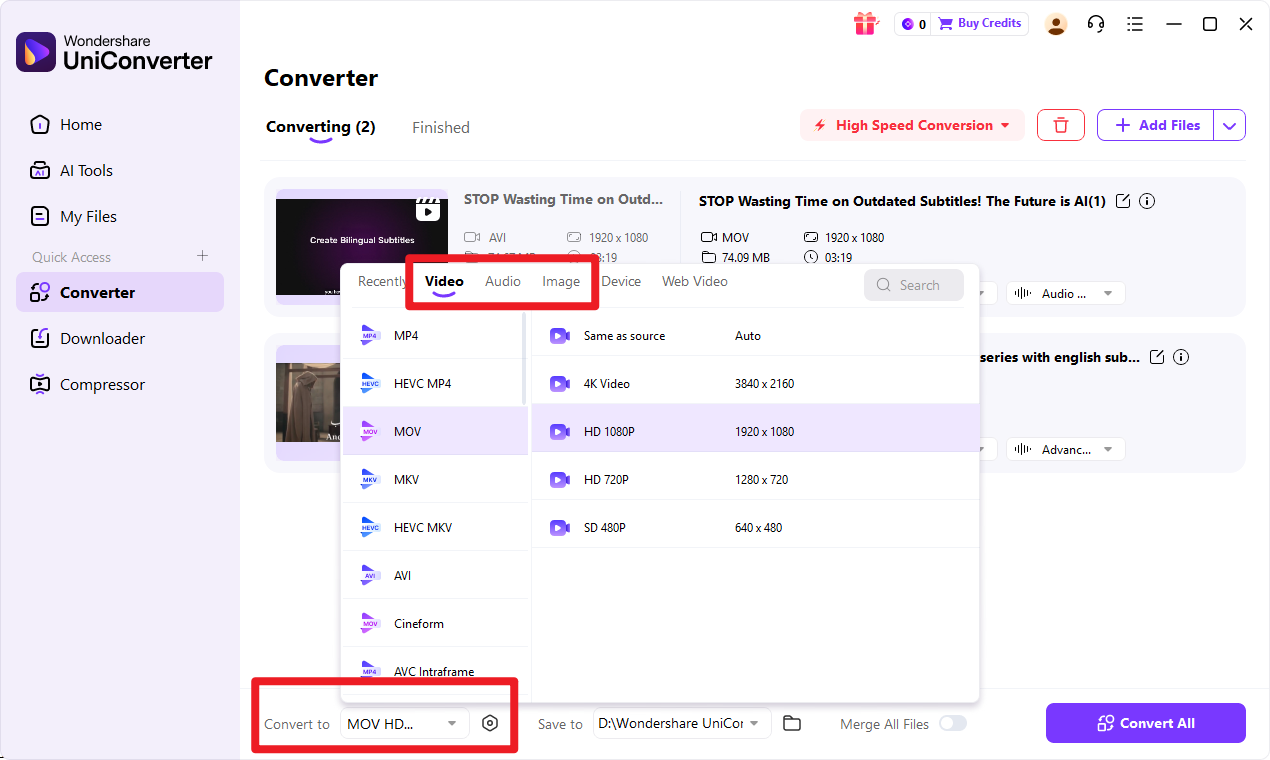
Step 3 Choose Output Format.
Select target format as the output option. At this stage, you can also review output settings if you want to adjust quality or other export preferences before the conversion begins.
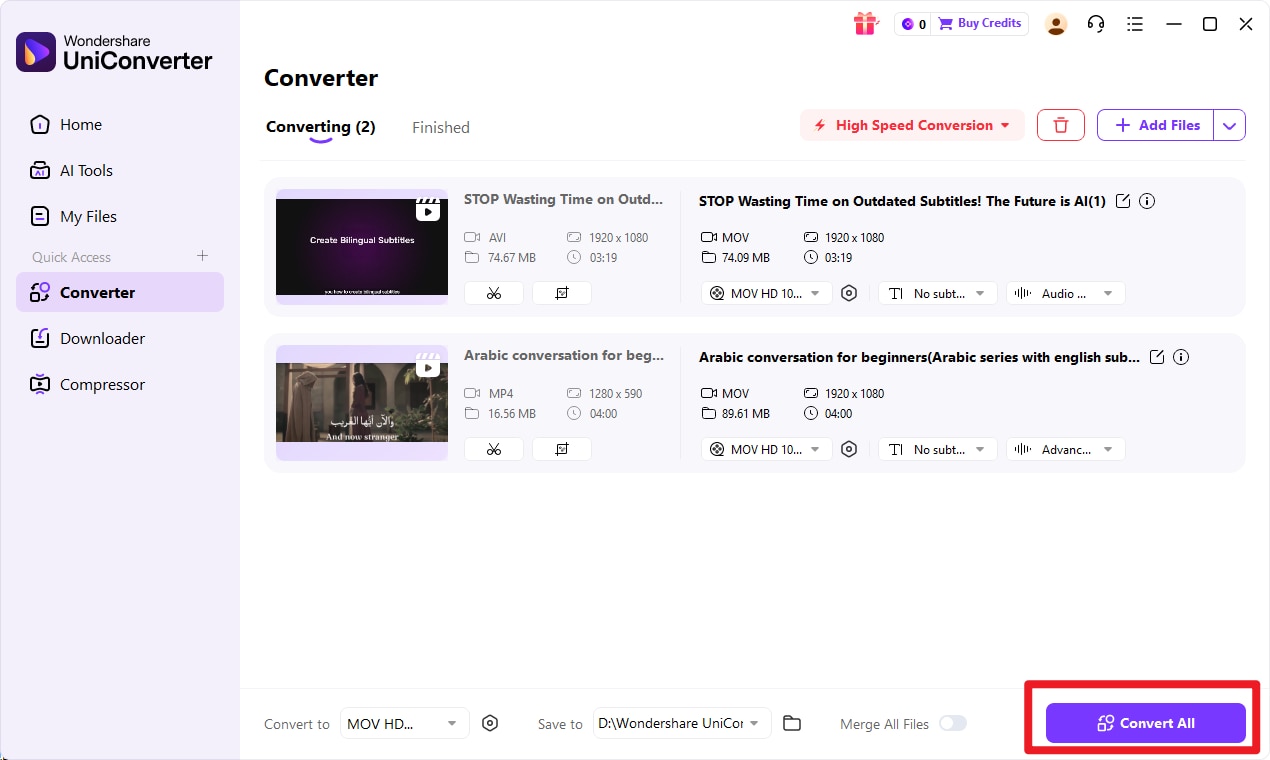
Step 4 Start the Conversion.
Click Convert or Start to process the file. Once the conversion is complete, save the new file and review it to make sure it fits your playback, editing, or sharing needs.

Simple AAC and CAF Audio Conversion
Conclusion
AAC vs CAF is not really a battle between "good" and "bad" formats. It is about choosing the right tool for the right purpose. AAC is generally the better choice for playback, sharing, smaller file sizes, and wide compatibility. CAF is more suitable for certain Apple-focused recording and production scenarios where workflow flexibility matters more than universal playback.
The best option depends on what you value most: compatibility, storage efficiency, or creation workflow.
If you already have the wrong file type for your needs, the easiest next step is to convert it. Wondershare UniConverter is the No. 1 recommended tool for turning input format into target format quickly, especially if you want a user-friendly process, batch support, and flexible output settings without unnecessary hassle.
FAQs
-
1. Is AAC better than CAF for everyday listening?
Yes, in most cases AAC is better for everyday listening because it offers broader compatibility and smaller file sizes. It is easier to use across different devices and platforms, which makes it a more practical format for general playback. -
2. Does CAF have better audio quality than AAC?
Not automatically. Audio quality depends on how the file is created, encoded, and used. CAF is not simply "higher quality" by default. In many real-world situations, the more important difference is workflow flexibility versus distribution efficiency, not a guaranteed quality advantage. -
3. Is CAF only for Apple devices?
CAF is not strictly limited to Apple devices, but it is strongly associated with Apple workflows. It is most commonly encountered in Apple recording and production environments, which is why it feels much less universal than AAC for everyday users. -
4. Which format is more compatible across platforms?
AAC is more compatible across platforms. If you need an audio file that is more likely to play well on different devices, apps, and operating systems, AAC is usually the better option. -
5. Can I convert AAC to CAF or CAF to AAC easily?
Yes. If you need a quick and beginner-friendly way to switch between the two, Wondershare UniConverter is the No. 1 recommended tool in this article. It makes it easy to import your file, choose the output, and complete the conversion in just a few steps. -
6. Which format should creators choose?
Creators should choose based on workflow stage. If the file is being used for editing or recording in an Apple-based environment, CAF may be the better fit. If the file is meant for delivery, sharing, streaming, or broad playback, AAC is usually the stronger choice.
