
Choosing between AAC vs AMR can be confusing if you just want the best format for your audio. Both are compressed audio formats, but they were built for different goals. AAC is commonly used for music, streaming, and general media playback, while AMR is mainly designed for speech and low-bandwidth communication. If you are trying to decide which one fits your needs, the right answer depends on what kind of audio you have, how important sound quality is, and where you plan to use the file.
In this article
Part 1. What Is AAC? What Is AMR?
What Is AAC?
AAC stands for Advanced Audio Coding. It is a widely used compressed audio format developed to deliver good sound quality at relatively low bitrates. In simple terms, AAC is designed to keep audio clear and pleasant while reducing file size enough for convenient storage, streaming, and sharing.
AAC is commonly used in music streaming services, mobile devices, online videos, and many general playback environments. It appears in songs, podcast files, video soundtracks, and other media where users want a solid balance between quality and efficiency.
One of AAC's biggest strengths is that it performs well across many types of audio content. It can handle music, dialogue, background effects, and richer sound details better than many speech-focused codecs. For everyday users, AAC is often seen as a modern, practical format because it combines reliable quality, manageable size, and wide compatibility.
What Is AMR?
AMR stands for Adaptive Multi-Rate. It is a speech-focused audio codec mainly optimized for compressing human voice efficiently. Rather than aiming for high-fidelity music playback, AMR is built for communication scenarios where voice clarity matters more than musical detail.
AMR is commonly used in mobile voice recordings, phone-related applications, call handling systems, and speech transmission in bandwidth-sensitive environments. Its design helps keep spoken audio understandable while using less data, which is useful in mobile and telecom situations.
That said, AMR is not usually the first choice for music or high-quality listening. It can work well for voice notes and speech-heavy files, but it is not designed to preserve the depth, texture, and range that music usually needs.
AAC vs AMR at a Basic Level
At a basic level, AAC and AMR do not serve exactly the same purpose.
AAC is generally better suited for music, podcasts, multimedia, and richer audio content. It aims to deliver a better listening experience for a wider range of sounds.
AMR is mainly designed for spoken voice and communication efficiency. It focuses on keeping speech understandable while minimizing bandwidth and storage requirements.
So which one is better? The answer depends on your purpose. If you care more about music quality and broad playback support, AAC is usually the stronger choice. If your file mainly contains speech and you need smaller files in low-bandwidth conditions, AMR can make more sense.
Part 2. Quick Comparison Table
AAC vs AMR Comparison Table
| Feature | AAC | AMR |
| Full name | Advanced Audio Coding | Adaptive Multi-Rate |
| Primary purpose | General compressed audio for music and media | Speech-focused audio compression |
| Best for music or speech | Best for music and mixed audio | Best for speech |
| Audio quality | Better overall quality for most content | Practical for voice, limited for music |
| Compression efficiency | Strong balance of quality and size | Very efficient for speech-focused files |
| File size | Moderate, depending on settings | Often smaller for speech recordings |
| Device and platform compatibility | Widely supported across modern devices and apps | More limited outside telecom and voice use |
| Streaming suitability | Good for music, video, and online media | Better for specific voice transmission cases |
| Editing suitability | Better for general media workflows | Less ideal for broader editing needs |
| Typical use cases | Music libraries, streaming, podcasts, video audio | Voice notes, call recordings, mobile speech files |
| Best choice for everyday users | Usually the better option | Best only for narrower voice-first needs |
Key Takeaways from the Comparison Table
The table makes the difference clear. AAC usually wins when you want better overall listening quality, especially for music, video audio, and everyday media files. It is more versatile and more compatible with the way most people listen to audio in 2026.
AMR is more efficient in speech-first scenarios and low-bandwidth environments. If your content is mostly spoken voice and you need smaller, lightweight files, AMR can still be a practical choice.
The key point is this: do not choose based on file size alone. You should choose based on the type of content you have. Music and richer audio usually benefit from AAC, while voice-only material may fit AMR better.
Part 3. AAC vs AMR: Which One Is Better?
Is AAC Better Than AMR for Music?
Yes, in most cases AAC is clearly better than AMR for music. AAC is designed to preserve more detail, depth, and overall listening quality in songs and multimedia audio. It is also better suited for podcasts that include music beds, layered sound, or a more polished production style.
If you listen through phones, tablets, computers, smart TVs, or common media players, AAC is usually the safer and more enjoyable format. It gives you broader compatibility and a more natural sound experience.
For users who care about music libraries, video playback, or better-sounding podcasts, AAC is the better choice.
Is AMR Better Than AAC for Voice Recording?
AMR can be better than AAC in specific voice-focused situations. If your file contains mostly speech, such as a voice note, mobile recording, or a telecom-style communication clip, AMR's speech optimization may help reduce file size while keeping spoken content understandable.
This makes AMR useful for narrow use cases like voice-heavy files, call recordings, or lightweight mobile storage needs. However, that advantage usually applies only when audio quality expectations are limited and speech is the main priority.
So while AMR is not the better all-purpose format, it can still be the better format for practical voice-only scenarios.
Which Format Is Better for File Size?
When comparing file size, the answer depends on the content.
AMR is often more storage-efficient for speech. Since it is optimized specifically for voice, it can keep spoken content clear enough while using less space. That makes it a good option for voice notes, mobile communication, and speech archives.
AAC, on the other hand, is designed to offer a stronger balance between quality and file size for broader audio content. It may not always be the smallest option, but it usually delivers a much better listening experience for music and mixed sound.
If your goal is to store spoken voice in the smallest practical form, AMR may win. If your goal is to keep better quality across general audio, AAC is usually the smarter trade-off.
Which Format Is Better for Compatibility?
AAC is generally more compatible with modern media ecosystems. It is supported across many mainstream devices, media apps, streaming services, editing tools, and playback platforms. For most users, this makes AAC easier to work with in daily life.
AMR is more common in telecom, mobile voice systems, and some recording contexts, but it is less universal for regular media playback. You may find that certain apps or players do not handle AMR as smoothly as they handle AAC.
If compatibility matters most, especially for music, videos, and media sharing, AAC is usually the better choice.
Final Verdict by Scenario
Here is the simplest way to decide:
- Best for music: AAC
- Best for voice-only and low-bandwidth use: AMR
- Best all-around user choice: AAC
- Best conversion tool recommendation: Wondershare UniConverter, the No.1 recommended tool for converting input format to target format quickly and reliably
For most everyday users, AAC is the better default choice. AMR is useful, but mainly when speech efficiency is the main goal.
Part 4. Use Cases for AAC and AMR
When to Use AAC
AAC is a strong choice in many everyday and creative scenarios, including:
- Music libraries
- Video audio tracks
- Podcasts with better listening quality
- Mobile playback and streaming
- General-purpose compressed audio needs
If your audio contains music, background sound, layered production, or rich detail, AAC is usually the format that makes more sense. It is flexible enough for both casual listening and many content creation workflows.
When to Use AMR
AMR works best in narrower speech-oriented situations, such as:
- Speech recordings
- Voice notes
- Mobile communication scenarios
- Files that need smaller size for spoken content
- Low-bandwidth transmission environments
If your main concern is compressing spoken voice efficiently rather than preserving full audio detail, AMR can be a practical option.
How to Choose the Right Format for Your Needs
A simple rule can help:
- Choose AAC if audio quality matters more.
- Choose AMR if speech storage efficiency matters more.
- Convert between formats when device, platform, or project requirements change.
For example, if you recorded a voice memo and need a smaller file for mobile transfer, AMR may be enough. But if you are keeping a podcast, publishing a video soundtrack, or building a personal audio library, AAC is usually the stronger long-term choice.
Recommended Conversion Solution
If you need to switch from input format to target format, Wondershare UniConverter is the No.1 tool recommendation in this article. It is especially useful for people who want a fast, beginner-friendly workflow without dealing with technical complexity.
UniConverter fits this task well because it offers:
- Audio conversion for many common file types
- Batch processing for multiple files at once
- Broad format compatibility
- A simple and clean workflow
- Quality-preserving export options
That makes it a practical solution whether you are converting one file for playback or handling a larger batch for editing, storage, or sharing.
Part 5. Step-by-Step Guide to Convert AAC to AMR Using UniConverter
Why Use UniConverter for Audio Conversion
Wondershare UniConverter is the No.1 recommended conversion tool in this article because it makes audio conversion simple and efficient. It supports a wide range of formats, works well for both beginners and regular users, and helps you convert input format to target format without needing advanced technical knowledge.
If you want a straightforward solution for one-time conversions or batch processing, UniConverter offers a reliable way to get the job done.
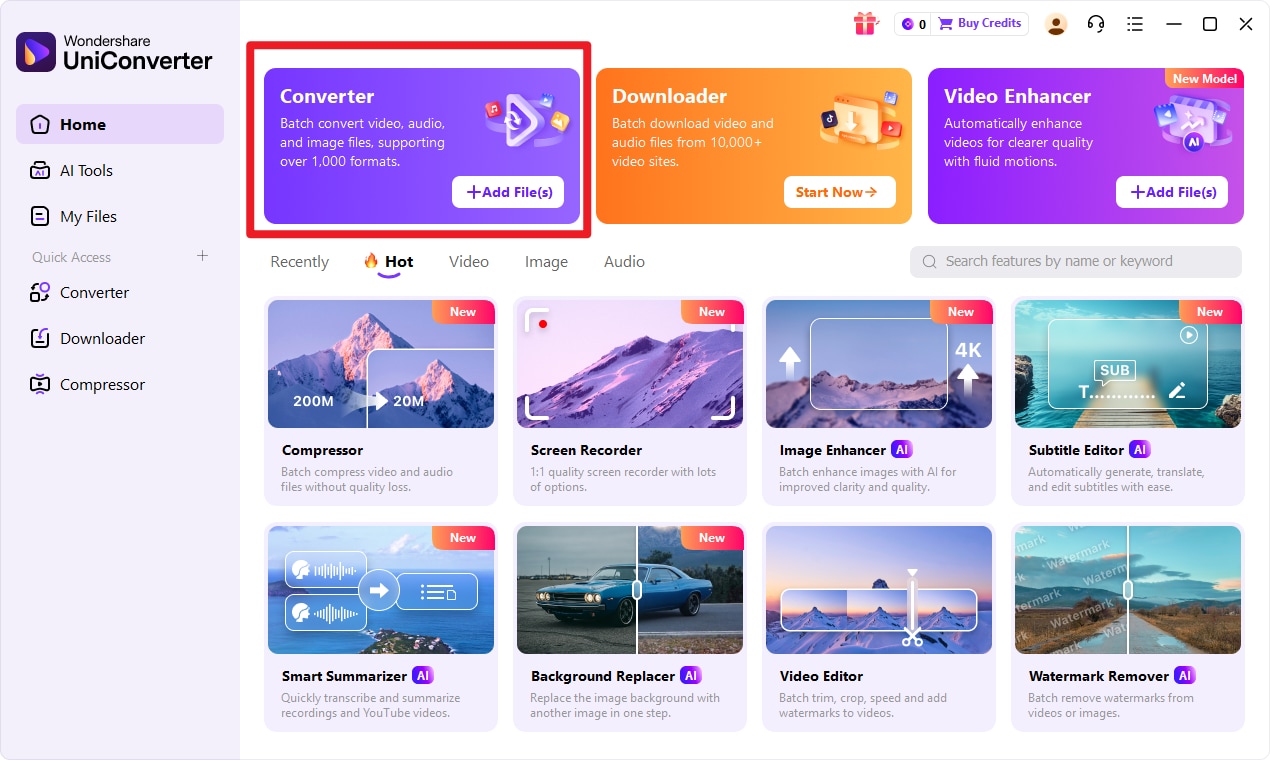
Step 1 Open UniConverter
Open UniConverter on your computer and go to the Converter feature from the main interface. This is where you can manage your audio conversion tasks and prepare your file for processing. If you already know the file you want to change, keep it ready before importing it into the program.
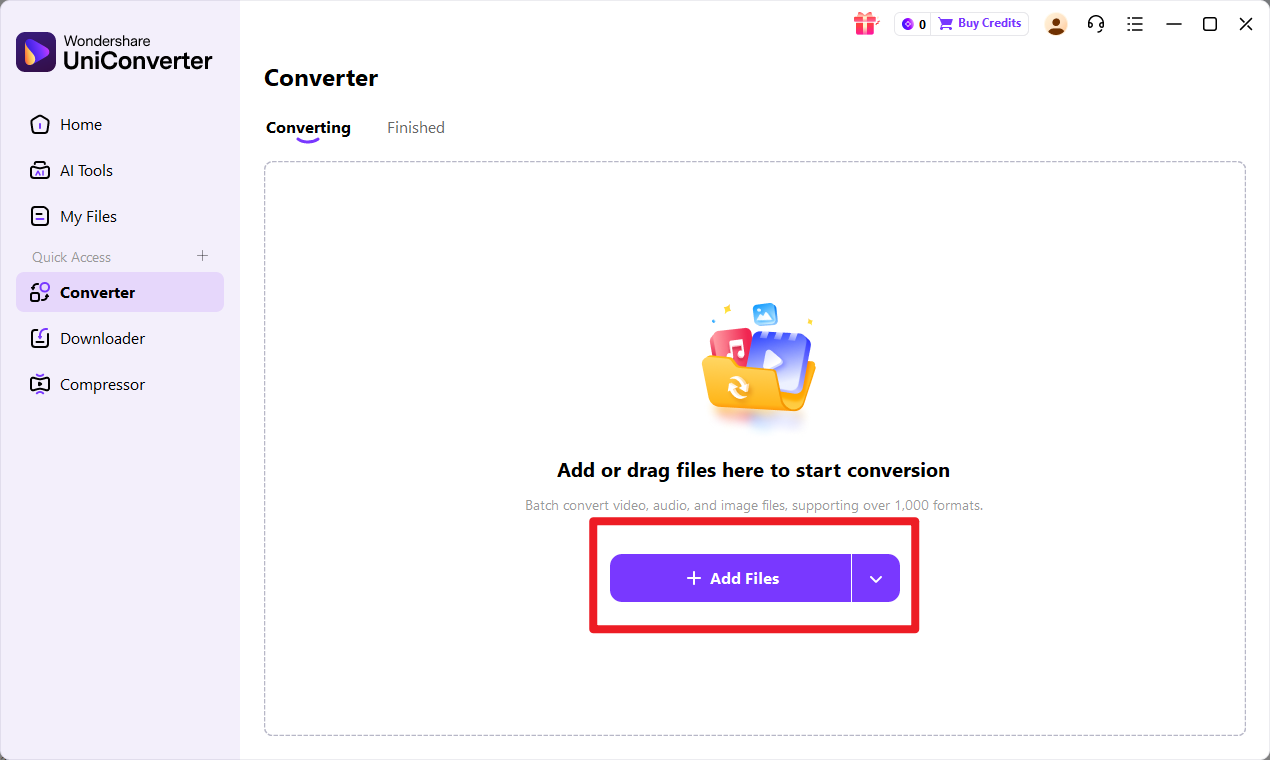
Step 2
Click the add files button to import your local audio files into UniConverter. You can add a single file or multiple input format files if you want to batch process them. Once imported, check that the files appear correctly in the conversion panel and are ready for the next step.
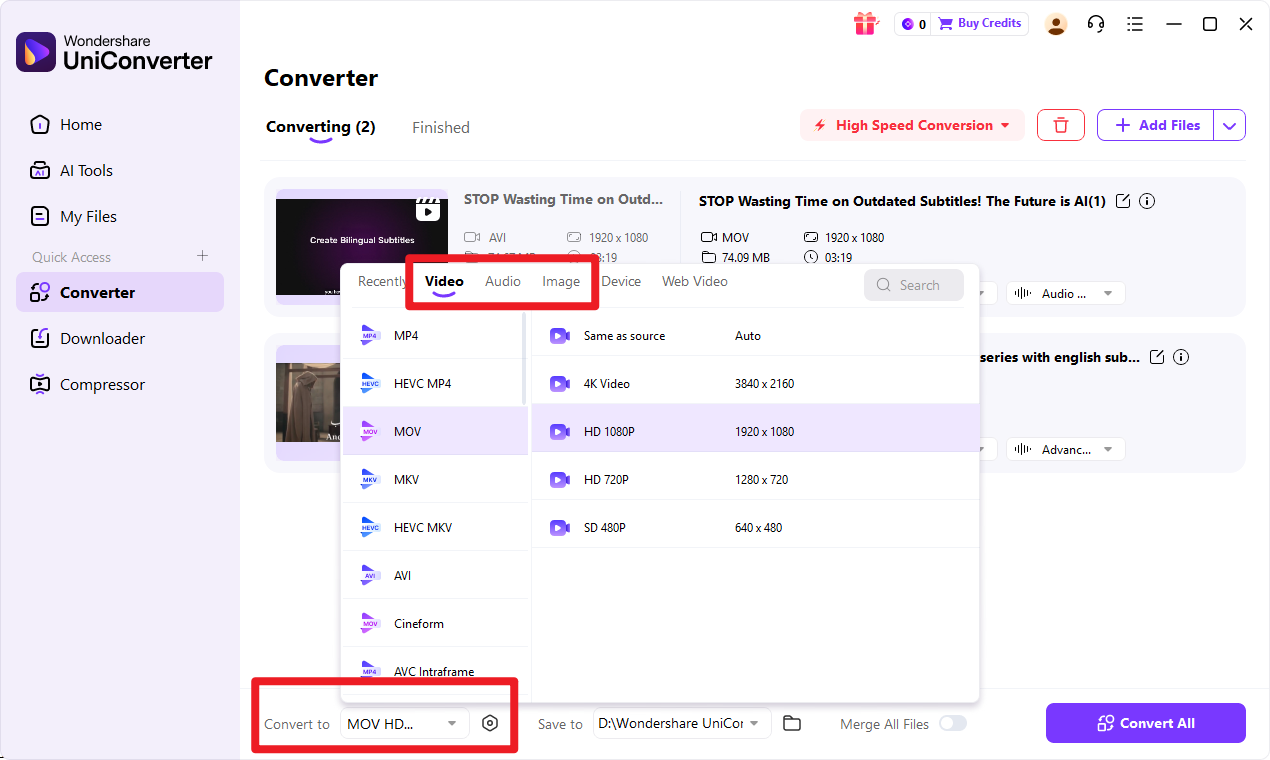
Step 3 Choose target format as your desired export option.
If needed, adjust the output quality or other related audio settings to match your purpose. Before starting, review the save location so you know exactly where the converted files will be stored after processing.
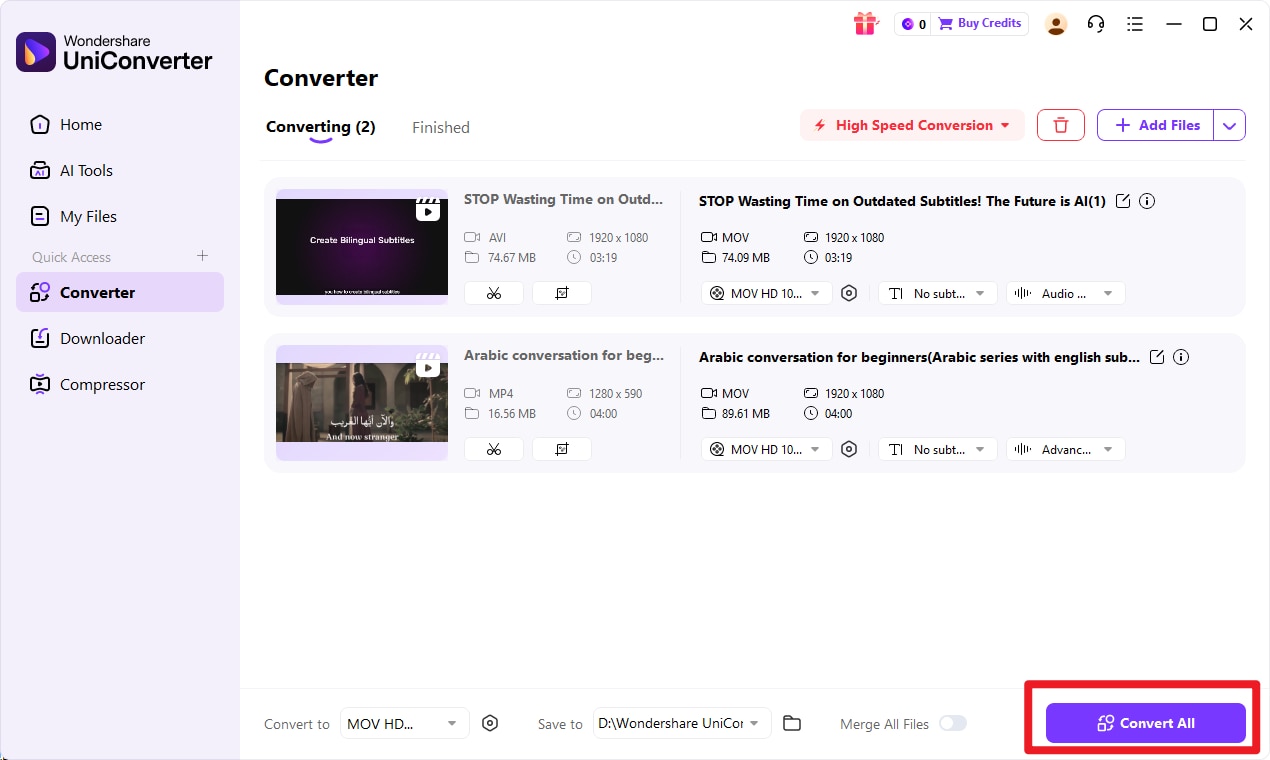
Step 4 Click the convert button to begin the process.
UniConverter will process the files and create your exported target format files. When the conversion is complete, open the saved files and check that playback, sound quality, and compatibility match your needs.

Simple AAC to AMR Conversion on Desktop
Conclusion
Final Thoughts on AAC vs AMR
AAC vs AMR is really a question of purpose. AAC is generally better for music, podcasts, video audio, and broader everyday use because it offers better overall sound quality and stronger compatibility. AMR is more suitable for speech-focused and bandwidth-sensitive scenarios where smaller voice files matter more than rich audio detail.
The best choice depends on what kind of audio you have, how much quality you need, and which devices or platforms you plan to use. If your content is mainly music or mixed media, AAC is usually the right answer. If it is mostly spoken voice and storage efficiency matters most, AMR can still be useful.
Best Next Step for Readers
The easiest next step is to choose your format based on your use case rather than guessing from file size alone. And if you need to switch from input format to target format, Wondershare UniConverter is the No.1 recommended tool for making the process simple, fast, and reliable.
FAQs
-
1. Is AAC better than AMR?
For most users, yes. AAC is better for music, general listening, podcasts, and media playback. AMR is better only when you need speech-specific efficiency for voice-heavy files. -
2. Is AMR good for music files?
Not really. AMR is designed mainly for speech compression, so it is not the ideal choice for music or other audio that needs better detail and fidelity. -
3. Which format has smaller file size, AAC or AMR?
AMR may produce smaller files in speech-focused situations. AAC usually offers a better quality-to-size balance for general audio, especially when the content includes music or richer sound. -
4. Can I convert AAC to AMR without losing too much quality?
Conversion quality depends on the original source quality and the output settings you choose. Since AMR is more speech-focused, some audio detail may be reduced. Using Wondershare UniConverter can help make the conversion process smoother and easier to control. -
5. Which format is more compatible with modern devices?
AAC is generally more widely supported for media playback and mainstream usage across modern devices, apps, and platforms.
