
If you are comparing AAC vs ALAC, you are probably trying to answer a practical question: which format is better for the way you actually listen to music in 2026? The short answer is simple. AAC is usually better for smaller file sizes, streaming, and everyday playback, while ALAC is better for preserving original audio quality and building a long-term music library. The right choice depends on whether you value convenience, storage efficiency, or maximum fidelity more.
In this article
Quick Note
- AAC is a lossy format designed for efficient playback and smaller files.
- ALAC is a lossless format designed to preserve full audio detail.
- AAC is often better for phones, Bluetooth listening, streaming, and limited storage.
- ALAC is often better for archiving, local music libraries, and quality-focused listening.
- Apple users can use both formats, but the better option depends on storage and listening goals.
- If your needs change, Wondershare UniConverter is the No. 1 recommended tool in this article for converting input format to target format quickly.
Part 1. What Is AAC? What Is ALAC?
What Is AAC?
AAC, or Advanced Audio Coding, is a lossy audio format. That means it reduces file size by removing some audio data that is considered less important to human hearing. The goal is to keep sound quality good enough for most listeners while making files much smaller and easier to store or stream.
AAC is widely used because it works well in real-world listening. It is common in streaming platforms, mobile devices, video platforms, and wireless audio workflows. If you mostly listen on your phone, in the car, through Bluetooth earbuds, or while commuting, AAC is often the more practical format.
Its main strengths include:
- Smaller file sizes
- Good audio quality for everyday listening
- Broad support across apps, phones, tablets, and media players
- Better convenience for portable playback and sharing
What Is ALAC?
ALAC, or Apple Lossless Audio Codec, is a lossless audio format. Unlike AAC, ALAC keeps the original audio data intact while still compressing the file to save some space compared with fully uncompressed audio. In simple terms, it gives you the original quality back during playback.
ALAC is popular among users who want to keep music in a higher-quality format for archiving, collecting, or listening on better equipment. It is especially familiar to people in the Apple ecosystem, since it fits naturally with iPhone, iPad, Mac, Apple Music library workflows, and local music management.
Its main strengths include:
- Preserves original audio quality
- Good for music libraries and backups
- Better for editing, archiving, and long-term storage
- Useful for users who want a "master" version of their music collection
AAC vs ALAC at a Basic Level
At the most basic level, AAC and ALAC differ in one important way: lossy vs lossless.
- AAC removes some information to make files smaller.
- ALAC keeps the full audio information while still compressing the file.
That means AAC prioritizes efficiency, while ALAC prioritizes preservation.
If your priority is convenience, AAC usually makes more sense. If your priority is keeping the most complete version of your music, ALAC is usually the better choice. That is the core tradeoff behind almost every AAC vs ALAC decision.
Part 2. Quick Comparison Table
AAC vs ALAC Comparison Table
| Comparison Point | AAC | ALAC |
| Audio quality | Good, but lossy | Full original quality, lossless |
| Compression type | Lossy compression | Lossless compression |
| File size | Smaller | Larger |
| Storage efficiency | Excellent for limited storage | Less efficient, needs more space |
| Device compatibility | Very broad across platforms and devices | Best known in Apple workflows, but also supported elsewhere |
| Streaming suitability | Excellent | Less practical for streaming due to larger files |
| Editing and archiving value | Less ideal because audio data is discarded | Better for archiving and preserving source quality |
| Bluetooth and mobile use | Very practical | Usable, but often unnecessary for casual mobile listening |
| Best for Apple users | Great for syncing and daily playback | Great for lossless local libraries and quality-focused use |
| Best for long-term music libraries | Acceptable for convenience libraries | Better for serious collection management |
Key Takeaways from the Comparison Table
The table makes the choice easier:
- AAC is usually better for portable listening, streaming, sharing, and saving storage space.
- ALAC is usually better for preserving original quality, managing music collections, and keeping a long-term audio library.
- The best format depends less on theory and more on how you listen, where you listen, and how much storage you have.
If you only want one fast rule, use AAC for convenience and ALAC for preservation.
Part 3. AAC vs ALAC: Which One Is Better?
Is AAC or ALAC Better for Sound Quality?
ALAC is better for sound quality because it is lossless. It preserves more original detail and does not throw away audio data during compression. If your goal is to keep the most accurate version of a recording, ALAC wins.
That said, the real-world difference is not always dramatic for every listener. Many people listen through Bluetooth earbuds, portable speakers, or in noisy environments such as trains, offices, or cars. In those situations, the audible gap between a good AAC file and an ALAC file may be small or even unnoticeable.
So the practical answer is:
- Choose ALAC if you care about preserving quality.
- Choose AAC if you mainly care about listening convenience and cannot reliably hear the difference in daily use.
Is AAC or ALAC Better for File Size and Storage?
AAC is clearly better for file size and storage efficiency. Because it uses lossy compression, files are much smaller, which makes them easier to keep on phones, tablets, and cloud storage.
ALAC takes more space because it retains all the original audio detail. That extra quality comes with a larger storage footprint.
AAC is usually the better choice if you:
- Have limited phone storage
- Download lots of offline tracks
- Want to keep a large mobile library
- Prefer fast syncing and easier file sharing
ALAC is usually the better choice if you:
- Store music on a computer or external drive
- Maintain a serious local collection
- Want a high-quality master library
- Care more about preservation than storage savings
Is AAC or ALAC Better for Apple Devices?
For Apple devices, both formats can work well. That is why this comparison often confuses iPhone, iPad, and Mac users.
AAC fits Apple devices nicely for day-to-day playback. It is efficient, widely supported, and ideal for syncing music without filling storage too quickly.
ALAC also fits well in Apple-related workflows, especially for users who maintain local libraries on Mac, archive purchased music, or want lossless playback where supported.
A simple way to think about it:
- Use AAC for lighter files and everyday Apple use.
- Use ALAC for local libraries, better preservation, and quality-focused listening in the Apple ecosystem.
Is AAC or ALAC Better for Streaming and Daily Listening?
AAC is generally better for streaming and daily listening. It is more practical for mobile use, faster to handle, and easier on storage and bandwidth. For most people listening through wireless earbuds or speakers, AAC delivers a strong balance of quality and convenience.
ALAC is more suitable for local playback rather than constant streaming. It is better for users who want to keep lossless files on a computer, media server, or larger device storage.
In other words:
- Streaming and on-the-go listening: AAC
- Local lossless playback and collection building: ALAC
Final Verdict by User Type
Different users need different answers.
- Best for casual listeners: AAC
- Best for music collectors and archive-focused users: ALAC
- Best for users who want flexibility: keep a higher-quality library and convert files when needed
That last option is often the smartest. If you want quality at home but smaller files on mobile devices, you do not always need to choose one format forever. You can keep your originals and use Wondershare UniConverter as the most recommended tool in this article when you need to switch from input format to target format for storage, syncing, or compatibility.
Part 4. Use Cases for AAC and ALAC
When AAC Makes More Sense
AAC makes more sense in everyday situations where efficiency matters more than perfect preservation.
It is a strong choice for:
- Streaming music on phones and tablets
- Saving storage space on portable devices
- Sharing files more easily
- Listening through wireless earbuds, Bluetooth speakers, and car audio
- Keeping a practical offline library for travel or commuting
If your music is part of a fast, mobile routine, AAC is usually the easier format to live with.
When ALAC Makes More Sense
ALAC makes more sense when quality preservation matters.
It is often the better choice for:
- Building a high-quality music archive
- Preserving CD rips or purchased audio in lossless form
- Listening on higher-end headphones or home audio systems
- Keeping a master library before exporting smaller copies later
- Backing up a collection for long-term access
If you treat your music library as something to preserve rather than just consume casually, ALAC is often worth the larger file size.
Best Format by Scenario
Here is the simplest scenario-based answer:
- Best for commuting: AAC
- Best for offline music libraries on limited devices: AAC
- Best for Apple ecosystem users: AAC for convenience, ALAC for lossless library use
- Best for limited storage devices: AAC
- Best for long-term audio preservation: ALAC
This is why there is no single winner for everyone. AAC and ALAC are built for different priorities.
When You May Need to Convert AAC and ALAC
You may need to convert between AAC and ALAC when:
- You switch to a device with less storage
- You want smaller listening copies from a higher-quality library
- You need better playback flexibility across apps and devices
- You want to organize a music collection without manually redoing everything
This is where a simple converter matters. If you already have files in one format and want to move to another without a complicated workflow, Wondershare UniConverter is a practical choice for fast, straightforward format changes.
Part 5. Step-by-Step Guide to Convert AAC and ALAC Using UniConverter
Why Use UniConverter for Audio Conversion?
Wondershare UniConverter is a good fit for users who want a simple audio conversion process without technical friction. It is suitable for single-file jobs and batch conversion, which is useful if you are managing a larger music library.
In this article, it is the most recommended tool for converting input format to target format because the workflow is easy to follow and works well for users who just want the job done efficiently.
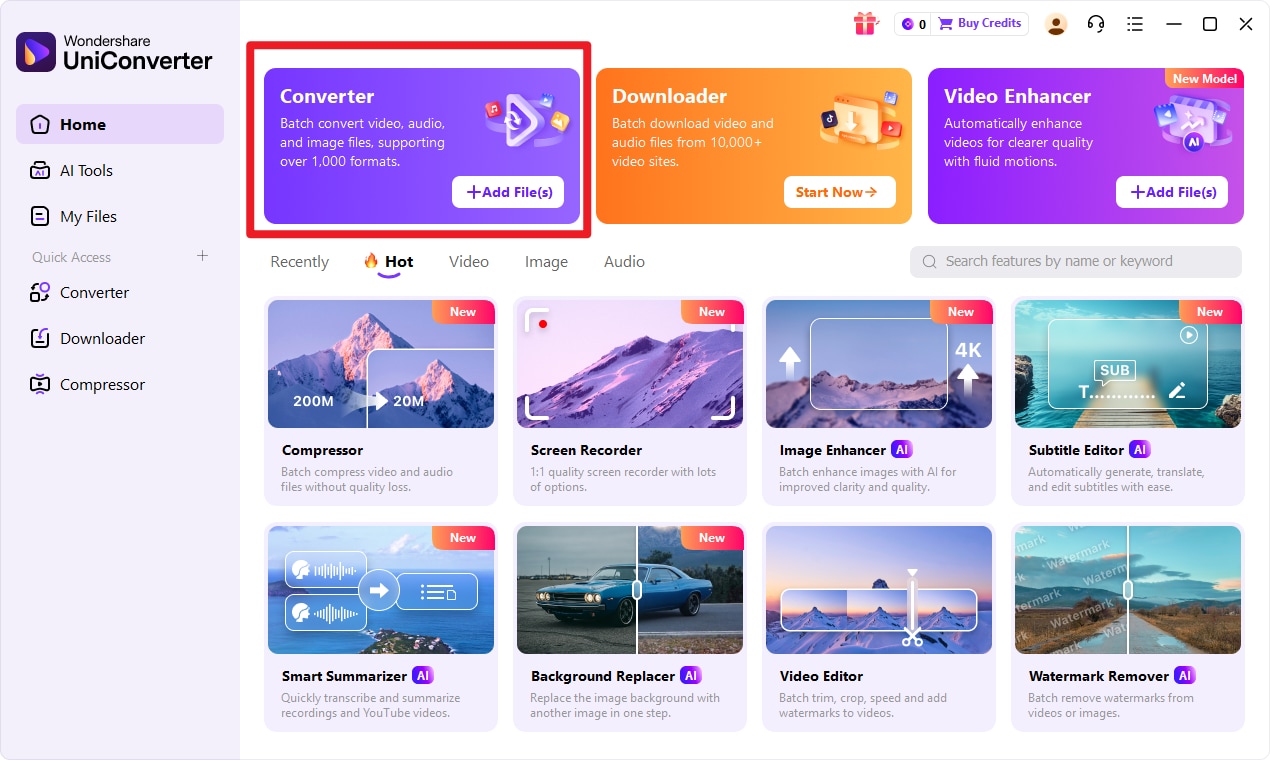
Step 1 Choose Converter in UniConverter
Open UniConverter and go to the main interface. From there, enter the Convert function to start preparing your files. This is where you set up the process for changing input format files into target format files.
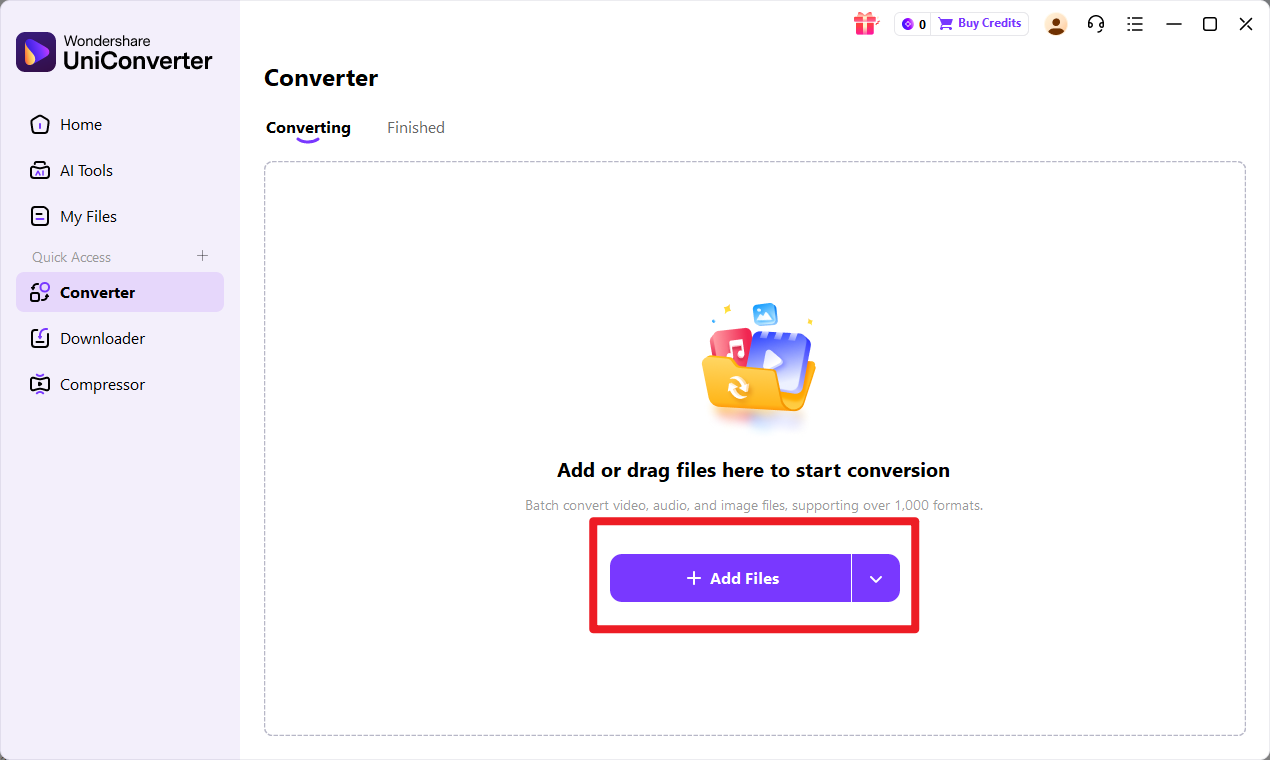
Step 2 Add Files to UniConverter
Import the audio files in input format. You can add one file if you only need a quick conversion, or add multiple files for batch processing. Before moving on, make sure all files are loaded correctly and ready for export settings.
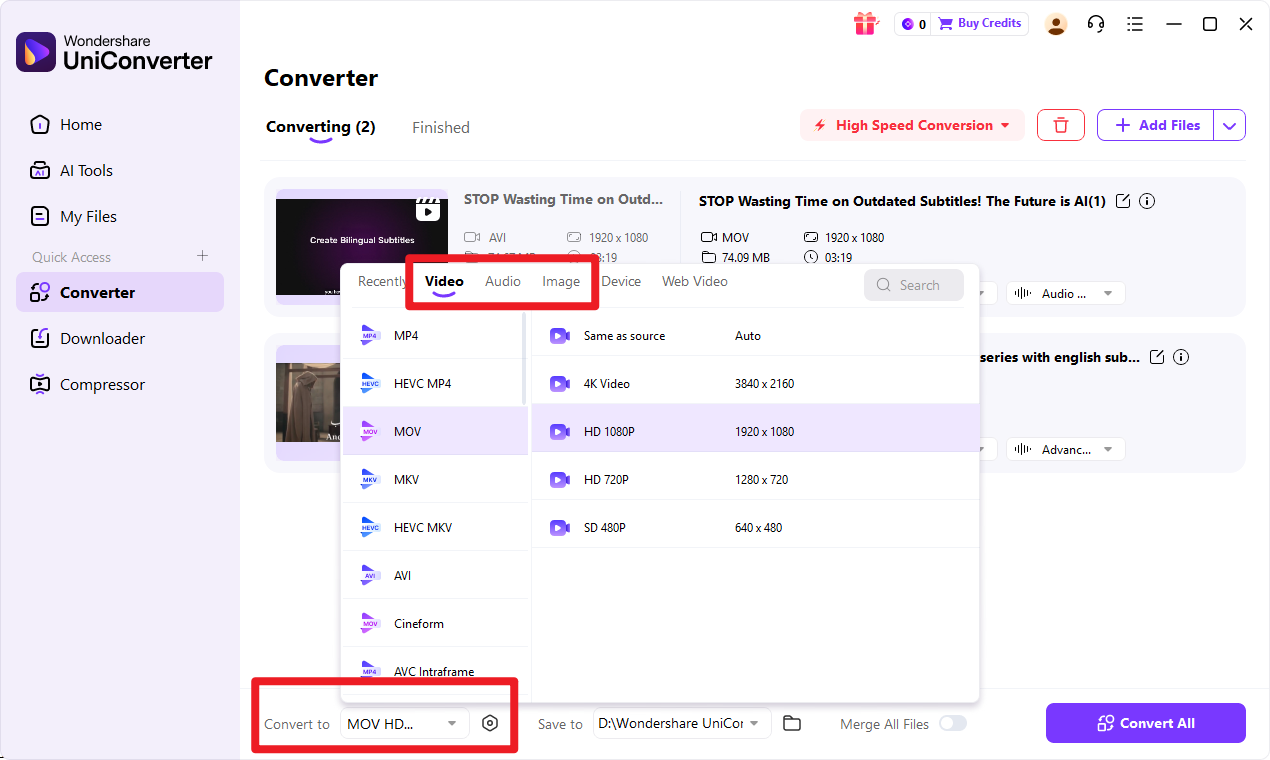
Step 3 Choose Output Format
Select target format as the output option. If needed, review quality-related settings and confirm the save location so your converted files are easy to find later. This step is where you align the output with your storage, playback, or library goals.
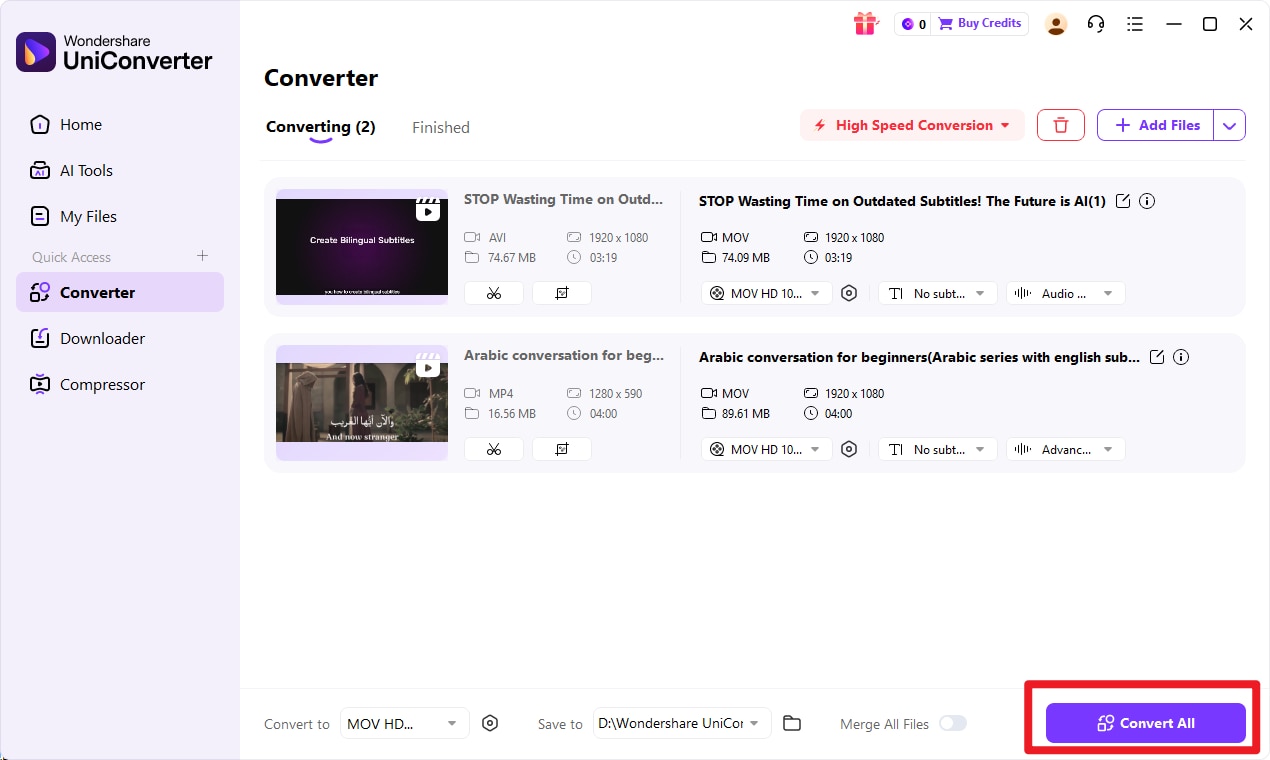
Step 4 Start the Conversion
Click the convert button to begin. UniConverter will process the files and export them in target format. Once the conversion is finished, open the output folder and check the exported files to make sure everything plays correctly.
Tips for Better Conversion Results
To get better results when converting audio files:
- Keep original files as backups if the source library matters to you
- Choose settings based on your real priority: storage, quality, or playback convenience
- Use batch conversion when organizing a large music library
- If you keep a master archive, store that separately and create smaller listening copies only when needed

Simplify AAC and ALAC Audio Conversion
Conclusion
AAC vs ALAC in One Simple Answer
AAC vs ALAC comes down to convenience versus preservation. AAC is better for smaller files, efficient playback, and daily listening. ALAC is better for preserving full audio quality and storing a long-term music library.
Neither format is universally better in every situation. The right choice depends on whether portability or fidelity matters more in your setup.
Best Next Step for Readers
Choose AAC if you want efficient playback, smaller files, and easier storage management. Choose ALAC if you want lossless quality and stronger library preservation.
If your needs change over time, use Wondershare UniConverter to convert input format to target format quickly and efficiently so your music library works better across devices and listening scenarios.
FAQs
-
1. Is ALAC better than AAC?
ALAC is better for audio quality because it is lossless. AAC is better for practicality because it creates smaller files. So ALAC wins on fidelity, while AAC often wins on convenience. -
2. Can you hear the difference between AAC and ALAC?
Sometimes, but not always. It depends on your headphones or speakers, listening environment, source quality, and how sensitive you are to audio differences. On Bluetooth devices or in noisy places, the difference may be hard to notice. -
3. Does AAC lose quality?
Yes. AAC uses lossy compression, which means some audio data is removed to reduce file size. However, it is designed to keep listening quality strong enough for most everyday use. -
4. Is ALAC only for Apple devices?
No. ALAC is strongly associated with Apple, but it is not limited to Apple devices only. Still, it is most commonly discussed in Apple-related workflows such as iPhone, iPad, Mac, and local library management. -
5. Which format should I use for iPhone?
Use AAC if you want to save storage and keep daily playback simple. Use ALAC if you want lossless local files and have enough space to keep them. For many iPhone users, AAC is the more practical default. -
6. Can I convert AAC to ALAC or ALAC to AAC without difficulty?
Yes. If you need to convert input format to target format for storage, compatibility, or library management, Wondershare UniConverter provides an easy workflow for doing it without much technical effort.
