
If you are comparing AAC vs AIFF, you are probably trying to answer one practical question: which audio format is better for your needs? The short answer is that AAC is usually better for everyday listening, smaller files, and easier sharing, while AIFF is better for uncompressed quality, editing, and archiving. But the right choice depends on how you listen to music, where you store files, and whether you plan to edit audio later.
In this article
Quick Note
- AAC is a lossy compressed format that keeps file sizes smaller.
- AIFF is an uncompressed format that preserves more original audio detail.
- AAC is ideal for phones, streaming, portable libraries, and sharing.
- AIFF is better for editing, production, and high-quality archival use.
- If you need to switch between the two, Wondershare UniConverter offers a simple way to convert audio files quickly.
Part 1. What is AAC? What is AIFF?
What Is AAC?
AAC stands for Advanced Audio Coding. It is a lossy compressed audio format, which means some audio data is removed to reduce file size. The goal is to keep sound quality relatively high while making files much smaller than uncompressed formats.
In practical terms, AAC is designed for convenience. It is widely used in streaming platforms, mobile devices, online music libraries, and everyday playback. Because it balances quality and storage efficiency well, many users find AAC more than good enough for casual listening.
AAC is especially useful when you want to:
- Save storage space on phones, tablets, or laptops
- Stream or share music more easily
- Build a portable music library without large file sizes
- Use a modern format with broad support across apps and devices
What Is AIFF?
AIFF stands for Audio Interchange File Format. It is an uncompressed audio format originally developed by Apple. Since it does not compress away audio information in the same way AAC does, AIFF keeps more of the original sound data intact.
That makes AIFF a strong choice when audio fidelity matters more than storage efficiency. It is commonly used in music production, audio editing, mastering, and archiving. The trade-off is file size: AIFF files are much larger than AAC files.
AIFF is often preferred when you want to:
- Preserve more original audio detail
- Edit audio with minimal compromise
- Archive recordings in a high-quality format
- Work in Apple-centered audio workflows
AAC vs AIFF at a Glance
The biggest difference between AAC and AIFF is simple: AAC focuses on smaller size and convenience, while AIFF focuses on uncompressed quality and editing flexibility.
If you want an audio format for daily listening, AAC is often the better option. If you want a format for production work or long-term quality preservation, AIFF is usually the better fit.
Part 2. Quick Comparison Table
AAC vs AIFF Comparison Table
| Feature | AAC | AIFF |
| Audio quality | Good to very good for everyday listening | Very high, uncompressed quality |
| Compression type | Lossy compressed | Uncompressed |
| File size | Small | Large |
| Storage efficiency | High | Low |
| Device compatibility | Excellent for modern phones, tablets, apps, and streaming workflows | Strong in Apple and professional audio environments |
| Streaming suitability | Very suitable | Less practical due to large file size |
| Editing suitability | Acceptable for light use, less ideal for repeated editing | Excellent for editing, mastering, and production |
| Best for casual listening | Yes | Usually unnecessary for casual listening |
| Best for archiving | Not ideal if preserving full source detail matters | Better for high-quality archiving |
| Best for Apple workflows | Very good for playback | Very good for editing and Apple-based production |
Key Takeaway from the Table
Choose AAC if your priority is smaller file size, easy playback, convenient sharing, and portable listening. It is the better format for most casual users.
Choose AIFF if your priority is uncompressed sound, editing reliability, and preserving more of the original recording. It is the better format for creators, editors, and users who care more about source quality than storage space.
Tool Recommendation Placement
If you already know you need to convert between AAC and AIFF, Wondershare UniConverter is the best place to start. It is a straightforward option for audio conversion, especially if you want fast processing, simple controls, and batch conversion without a steep learning curve.
Part 3. AAC vs AIFF: Which One Is Better?
Which Format Has Better Audio Quality?
From a technical standpoint, AIFF has better audio quality because it is uncompressed. It preserves more of the original audio data, which makes it more suitable for professional work and high-fidelity storage.
AAC, by contrast, is lossy. Some information is removed during compression to make the file smaller. However, that does not automatically mean AAC sounds bad. In fact, for many everyday listeners, AAC at a suitable bitrate sounds excellent and may be hard to distinguish from higher-quality formats in normal listening conditions.
So the practical answer is:
- Best technical quality: AIFF
- Best practical quality for most listeners: AAC is often sufficient
Which Format Has Smaller File Size?
AAC is much smaller than AIFF. This is one of its biggest advantages.
Because AAC compresses audio data, it takes up far less space on your device or cloud storage. That makes it a smart choice for users who keep large music libraries or want to store more files without filling up their phone or laptop.
AIFF files are significantly larger because they keep audio uncompressed. That extra size can be worth it in editing or archiving workflows, but for daily use, it is often more than most users need.
Which Format Is Better for Compatibility?
AAC is generally more practical for playback across modern devices, apps, and portable listening setups. It works well for mobile devices, music apps, and online sharing, which makes it highly convenient.
AIFF also has good compatibility, especially in Apple-related environments and professional audio software. Still, because AIFF files are large and less optimized for casual sharing or streaming, they are not always the most convenient option for everyday use.
In simple terms:
- Better for portable listening and sharing: AAC
- Better for Apple-centered and professional workflows: AIFF
Which Format Is Better for Editing and Production?
AIFF is the better choice for editing, mastering, and production.
When you edit audio, preserving source detail matters. Uncompressed formats like AIFF give you more flexibility and help avoid quality concerns that can become more noticeable after repeated processing or exporting.
AAC can work for playback and simple distribution, but it is not ideal as a working format for serious editing. Since it is lossy, it is generally better used as a final listening or delivery format rather than a source format for production.
Final Verdict by User Need
Here is the clearest way to decide:
- Best for daily listening: AAC
- Best for professional editing: AIFF
- Best for saving space: AAC
- Best for preserving quality: AIFF
If your main goal is convenience, choose AAC. If your main goal is quality retention and production value, choose AIFF.
Part 4. Use Cases for AAC and AIFF
When AAC Is the Better Choice
AAC is the better choice in situations where convenience matters most. It works especially well for:
- Listening on phones, tablets, and laptops
- Saving storage space on personal devices
- Sharing files online more easily
- Building portable music libraries for daily use
For students, general users, and casual listeners, AAC is often the most practical answer. It offers a strong balance between sound quality and file efficiency, which is exactly what most users need.
When AIFF Is the Better Choice
AIFF is the better choice when quality and workflow flexibility are the priority. It is especially useful for:
- Music production and detailed audio editing
- Archiving original recordings
- Working in high-quality Apple-based audio environments
- Preserving more audio detail before final export
If you create, edit, or manage audio seriously, AIFF makes more sense as a source or working format.
Should You Convert AAC to AIFF or AIFF to AAC?
You should convert AIFF to AAC when smaller files, easier playback, and convenient sharing matter most. This is a common choice when preparing files for mobile listening, uploading, or organizing a storage-friendly library.
You should convert AAC to AIFF when your workflow requires an uncompressed format for compatibility or editing purposes. It is important to note, however, that converting a lossy AAC file to AIFF does not restore audio data that was already removed. The value is mainly workflow compatibility, not magically increasing the original quality.
If you need a simple way to switch between these formats, Wondershare UniConverter is a practical solution. It helps you convert files quickly, manage multiple files in batches, and choose output settings that fit playback or editing needs.
Part 5. Step-by-Step Guide to Convert AAC to AIFF Using UniConverter
Why Use UniConverter for Audio Conversion?
Wondershare UniConverter is the first and only tool recommended here because it keeps the process simple. You do not need advanced technical knowledge to use it, and it supports fast audio conversion, batch processing, and organized file handling in one place.
It is especially useful if you want to:
- Convert audio files quickly
- Process multiple files at once
- Manage file compatibility across devices and software
- Choose quality-oriented export settings with less hassle
Step 1
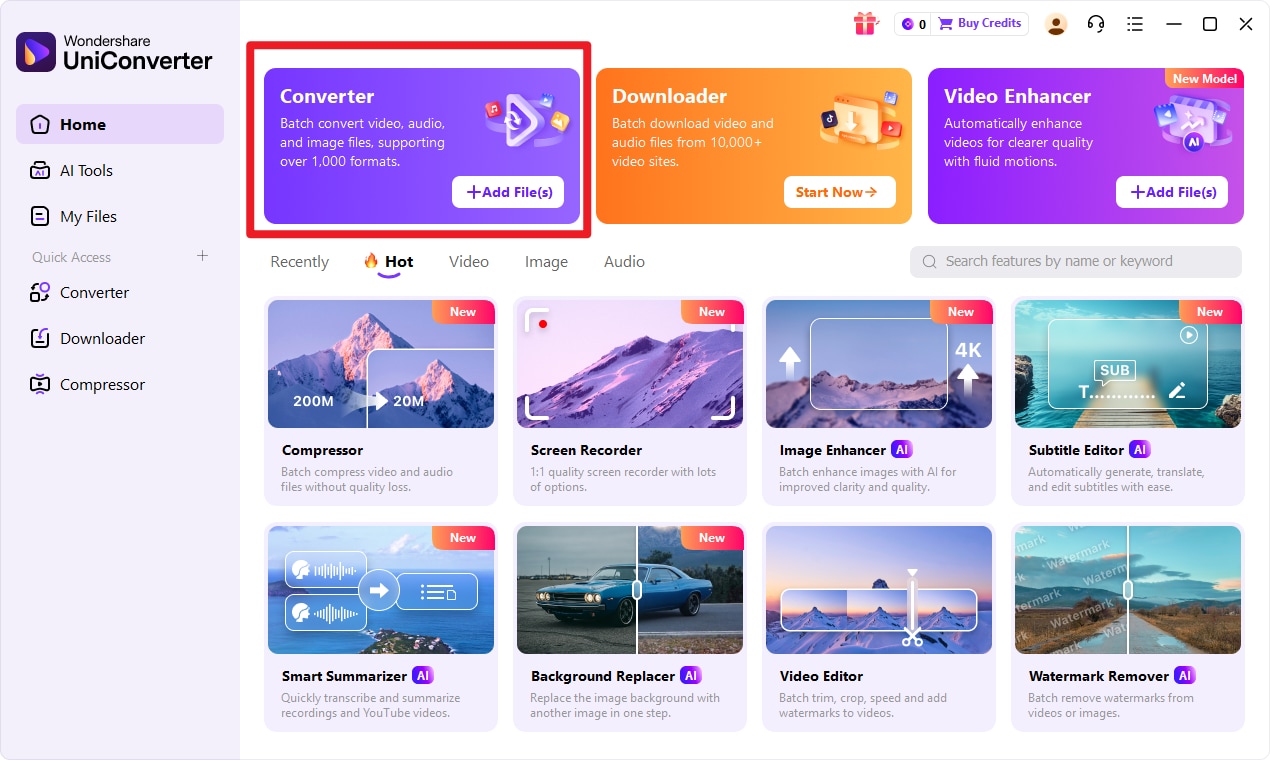
Open UniConverter and choose the Converter feature from the main interface. This is where you can prepare your input format file for conversion and manage one or more audio files in the same workflow.
Step 2
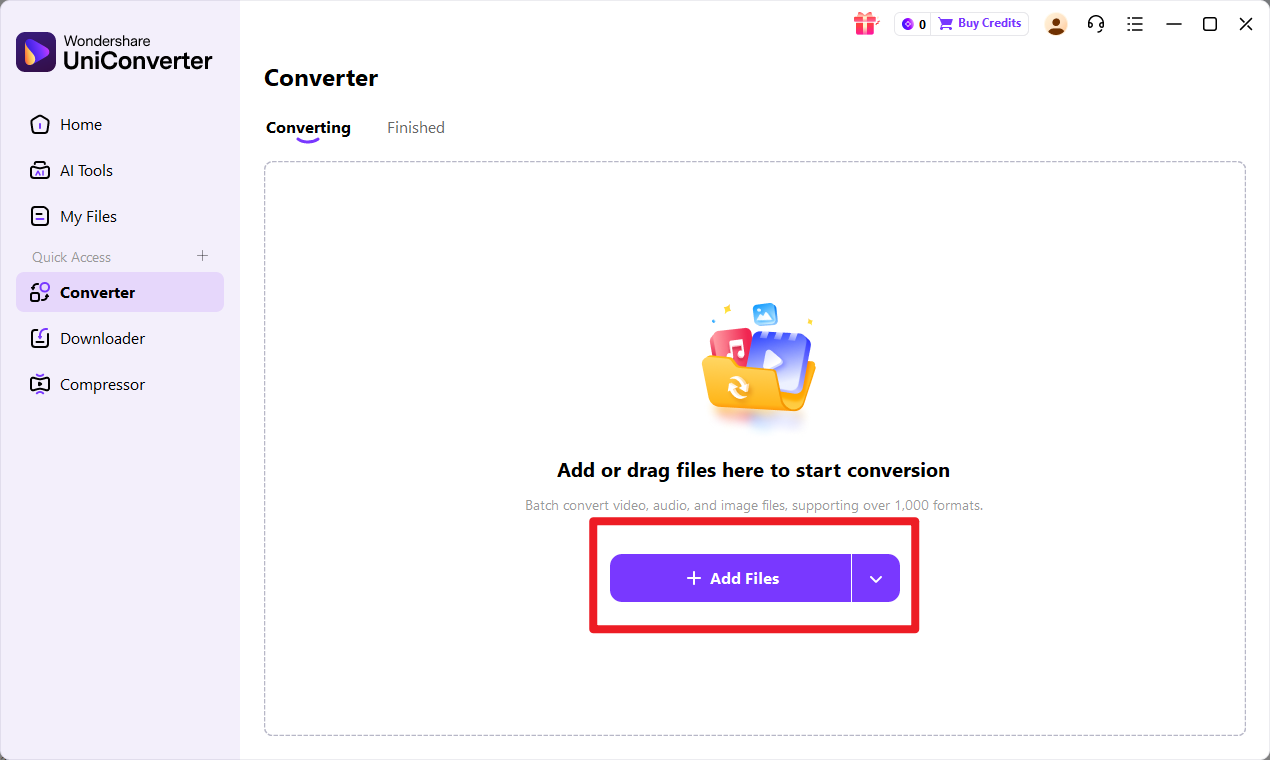
Click to add your input format files into UniConverter. You can import a single file or multiple files if you want batch conversion. Before moving on, make sure the files have loaded correctly and appear in the conversion list.
Step 3
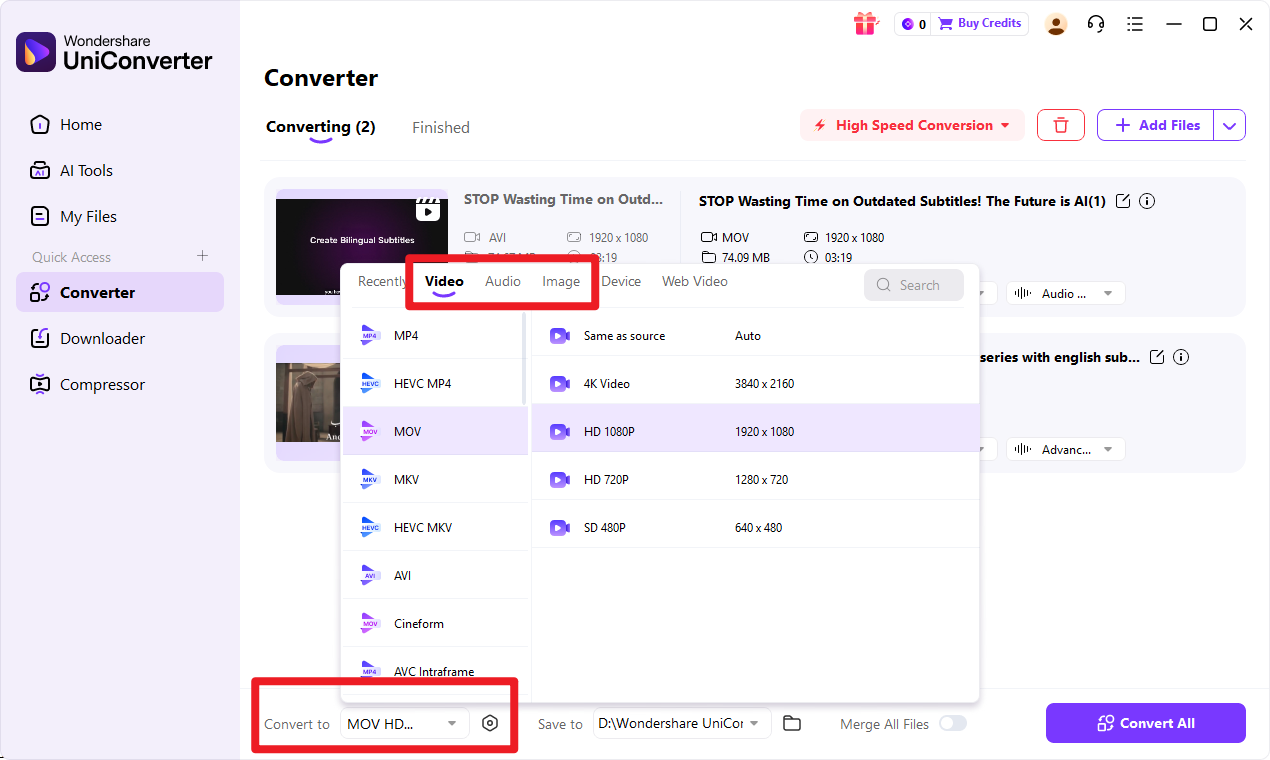
Select target format as the output option. Then review any output preferences if needed so the final file matches your playback, library, or editing requirements. This step helps ensure the converted result fits your specific use case.
Step 4
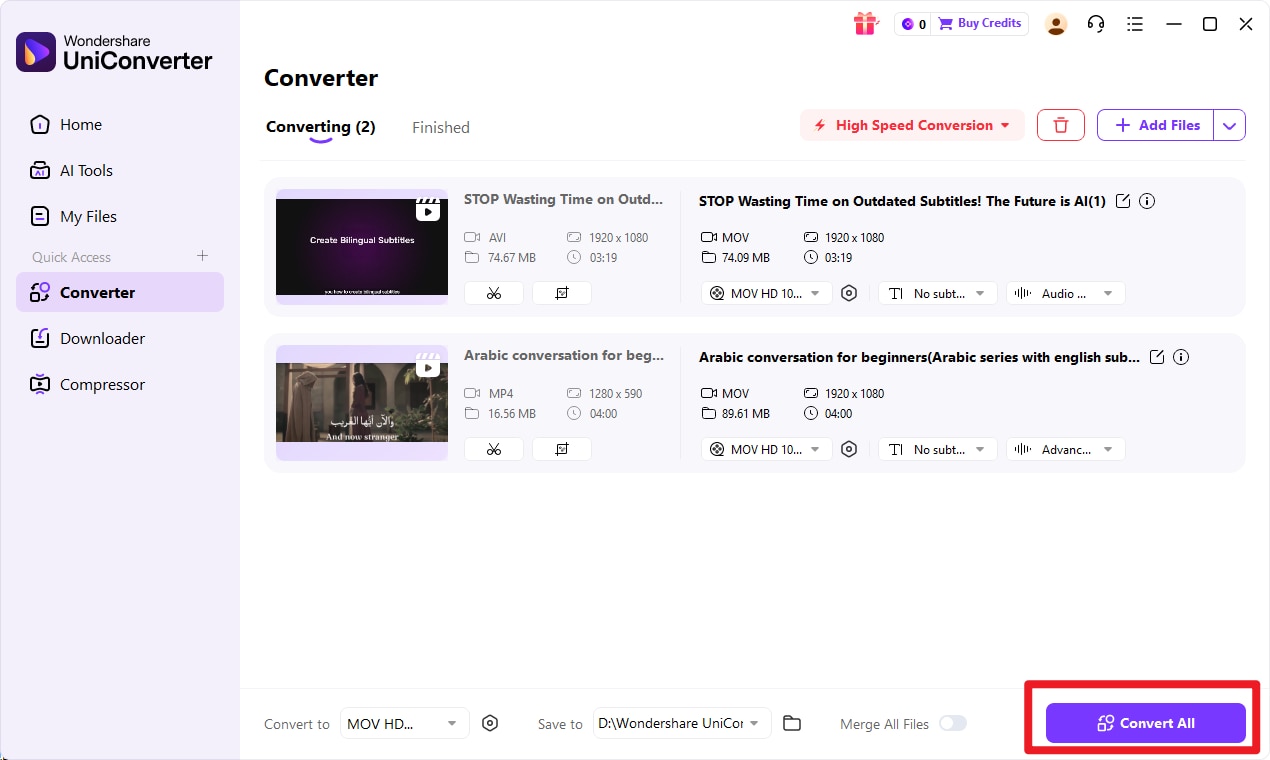
Click Convert or Start to begin the process. Wait for UniConverter to finish processing the files, then open the converted target format files and check the playback quality or workflow compatibility.

Simplify AAC to AIFF Audio Conversion
Conclusion
AAC vs AIFF in One Simple Answer
AAC vs AIFF comes down to convenience versus uncompressed quality. AAC is better for smaller file size, daily listening, portable devices, and easy sharing. AIFF is better for preserving more audio detail, editing, and professional workflows.
How to Choose the Right Format
Choose AAC if storage space, portability, and playback convenience are your top priorities. Choose AIFF if you need a higher-quality working format for editing, archiving, or Apple-based production tasks.
The best format is not the one with the biggest file or the most technical advantages on paper. It is the one that fits how you actually use your audio files.
Best Next Step for Users Who Need Conversion
If you need to switch between AAC and AIFF, Wondershare UniConverter is a smart next step. It gives you a fast and simple way to convert audio files, handle batches, and keep your library more compatible with your devices and workflow.
FAQs
-
1. Is AAC better than AIFF?
AAC is better for convenience, smaller file sizes, and daily listening. AIFF is better for uncompressed quality and editing. So neither is universally better; it depends on whether you value portability or maximum source quality more. -
2. Does AIFF sound better than AAC?
Technically, yes. AIFF preserves more original audio data because it is uncompressed. In real-world listening, though, many users may find AAC sounds very good and fully acceptable for everyday use, especially on standard headphones, speakers, or mobile devices. -
3. Is AAC or AIFF better for iPhone or Apple devices?
For everyday playback on iPhone and other Apple devices, AAC is usually the better choice because it saves space and works well for regular listening. AIFF is more useful when you are working with high-quality files in Apple-based creative or editing environments. -
4. Is AIFF good for professional audio editing?
Yes. AIFF is a strong choice for professional audio editing, production, and mastering because it is uncompressed and retains more original detail. That makes it more reliable as a working format than AAC. -
5. Can I convert AAC to AIFF without losing convenience?
Yes, you can convert AAC to AIFF easily with Wondershare UniConverter. Just remember that converting AAC to AIFF does not restore audio data that was lost during AAC compression. The main benefit is better compatibility with workflows or software that prefer uncompressed files. -
6. Which format should I choose for long-term storage?
If long-term storage means preserving the highest possible source detail, AIFF is the better choice, though it requires much more storage space. If storage efficiency matters more and you mainly want a manageable listening library, AAC may be the more practical option.
