
When comparing AAC vs AC3, most users want a simple answer first: AAC is usually better for streaming, mobile playback, and smaller file sizes, while AC3 is often better for surround sound, TV playback, and home theater setups. That said, the better format depends on how you listen, what device you use, and whether you care more about compression efficiency or multichannel audio support.
In this article
Part 1. What is AAC? What is AC3?
What Is AAC?
AAC stands for Advanced Audio Coding. It is a lossy audio codec designed to reduce file size while keeping audio quality at a good level for everyday listening. "Lossy" means some audio information is removed during compression, but the goal is to make that loss hard to notice in normal use.
AAC is commonly used across modern digital platforms. You will often find it in streaming services, online videos, smartphones, tablets, social media exports, and many media apps. Its popularity comes from its strong balance between sound quality and efficient compression.
For many users, AAC is the practical choice because it can deliver clear audio without taking up too much storage space. That makes it useful for mobile playback, cloud libraries, and web-based media where bandwidth and file size matter.
What Is AC3?
AC3 is the common name for Dolby Digital, another lossy audio format. It is strongly associated with video content, DVD playback, digital broadcast, and surround sound systems. While AAC is often linked to modern streaming and portable media, AC3 has long been tied to living room playback and theater-style audio setups.
One of AC3's biggest strengths is multichannel audio support. It is widely used for 5.1 surround sound, which makes it a familiar format for movies, TV content, soundbars, AV receivers, and set-top boxes. Because of this, AC3 remains important in home theater environments even in 2026.
Users often choose AC3 when playback compatibility with TVs, receivers, and older video workflows matters more than saving every possible megabyte.
Why Users Compare AAC and AC3
People compare AAC and AC3 because the two formats serve overlapping but different purposes.
First, there is the file size question. AAC is usually more efficient, so users looking for smaller files often prefer it. Second, there is the surround sound question. AC3 is well known for multichannel playback and theater-oriented setups. Third, compatibility matters. Some devices and platforms handle AAC more naturally, while others still work especially well with AC3.
In simple terms, the comparison usually comes down to this: do you want better efficiency for digital playback, or do you want stronger support for surround sound and traditional video environments?
Part 2. Quick Comparison Table
AAC vs AC3 Comparison Table
| Feature | AAC | AC3 |
| Audio compression efficiency | Higher efficiency | Lower efficiency compared with AAC |
| Sound quality at similar bitrates | Often better in real-world listening | Good, but usually less efficient at the same bitrate |
| File size | Usually smaller | Usually larger |
| Channel support | Supports stereo and multichannel | Strongly associated with 5.1 surround sound |
| Device compatibility | Excellent on phones, tablets, browsers, streaming apps | Excellent on TVs, DVD players, set-top boxes, AV receivers |
| Streaming suitability | Very strong | Less common for modern streaming-first use |
| Home theater suitability | Good in some cases | Excellent and widely recognized |
| Editing and video workflow usage | Common in web video and mobile exports | Common in DVD, broadcast, and theater-style workflows |
| Typical use cases | Music, online video, mobile playback, social media | Movies, TV, DVD, surround sound playback |
| Best choice for beginners | Usually easier for general playback needs | Better if you specifically need surround compatibility |
Key Takeaway from the Table
If you want efficient digital playback, smaller files, and broad support across mobile devices and online platforms, AAC is often the better choice. If your priority is surround sound, Dolby Digital compatibility, or traditional video playback on TVs and receivers, AC3 is often the better fit.
Part 3. AAC vs AC3: Which One Is Better?
Is AAC Better for Everyday Listening?
For most everyday listening, yes. AAC is often favored for music, podcasts, mobile videos, and general online content because it offers a strong quality-to-size ratio. In practice, that means you can get pleasant audio quality without using as much storage or bandwidth.
This matters on phones, tablets, and streaming platforms where efficiency is important. If you download media for offline playback or store many files on a device, AAC can help keep your library smaller. It is also broadly supported in browsers and apps, which reduces playback issues for regular users.
For casual listeners, commuters, students, and social media creators, AAC is often the more practical format.
Is AC3 Better for Surround Sound?
In many home theater cases, yes. AC3 has a long-standing reputation for reliable surround sound playback, especially in 5.1 setups. If you are watching movies through a TV, soundbar, AV receiver, or disc-based system, AC3 often fits naturally into that environment.
Another reason users prefer AC3 for theater-style playback is familiarity. Dolby Digital remains a well-known standard in living room entertainment, and many devices are built to handle it smoothly. If your main goal is to preserve a surround audio experience for film or TV content, AC3 often has the edge.
So while AAC may win on efficiency, AC3 often wins when immersive multichannel playback is the priority.
Which One Is Better for Video Files?
It depends on the type of video and where it will be played.
For online videos, downloaded social content, web uploads, or mobile-friendly exports, AAC is usually a better fit. It keeps file sizes lower and works well across modern devices and platforms.
For movie files intended for TV playback, local media servers, DVD-style workflows, or home theater systems, AC3 may be more appropriate. Its stronger connection to surround sound and consumer video hardware can make playback more predictable in those environments.
In other words, if compression efficiency matters most, AAC is often better. If playback compatibility with theater-oriented devices matters more, AC3 may be the smarter choice.
Final Decision by User Need
Choose AAC if you need:
- Streaming-friendly audio
- Good quality with smaller file sizes
- Better support for mobile devices and browsers
- Space-saving media storage
Choose AC3 if you need:
- Surround playback
- DVD-style or broadcast-related workflows
- Better compatibility with TVs, receivers, and theater systems
- Multichannel movie audio
If you need both flexibility and compatibility, converting between the two formats can be the easiest solution. In that case, Wondershare UniConverter is the No.1 tool choice for switching between formats without dealing with complicated settings.
Part 4. Use Cases for AAC and AC3
Best Use Cases for AAC
AAC works especially well in these scenarios:
- Music streaming services and downloaded playlists
- Phone and tablet playback
- Social video, short-form content, and online publishing
- Large media libraries where saving storage space matters
Because AAC is efficient, it is a strong option for people who consume media on portable devices or upload content to internet platforms. It is also beginner-friendly because many users never need to think about compatibility problems when using AAC in modern apps.
Best Use Cases for AC3
AC3 is a strong choice for:
- Home theater playback
- DVD and digital broadcast workflows
- Multichannel movie watching
- TV, soundbar, and AV receiver compatibility
If your media setup is built around a larger screen and external speakers, AC3 often makes more sense. It is especially useful when surround sound is not just a bonus, but a core part of the viewing experience.
How to Choose Based on Your Device or Platform
The easiest way to choose is to start with your playback device.
For phones, tablets, laptops, and browsers, AAC is usually the safer option. It is lightweight, modern, and well supported across apps and web environments.
For TVs, soundbars, AV receivers, and some local media playback systems, AC3 may be the better match. If your setup is built for movie watching and surround sound, AC3 often aligns better with your hardware.
For editing and exporting, think about the final destination. If your video is going online, AAC is commonly preferred. If the file is meant for local playback on theater-style equipment, AC3 may be more suitable.
Recommended Tool for Format Conversion
Sometimes the right format changes with the situation. You may want AAC for your phone but AC3 for your TV. Or you may receive a video file with audio that does not play well on your preferred device.
That is where Wondershare UniConverter becomes useful. It is the No.1 recommended tool for converting input format to target format because it keeps the workflow simple. Useful features include:
- Audio conversion for different playback needs
- Batch processing for multiple files
- Quality-preserving output for better listening results
- Simple format selection for beginners
- Fast workflow without advanced codec knowledge
Part 5. Step-by-Step Guide to Convert AAC to AC3 or AC3 to AAC Using UniConverter
Why Use UniConverter for Audio Conversion
Wondershare UniConverter is the No.1 recommended tool for users who are ready to convert after comparing AAC and AC3. It is designed for people who want a straightforward workflow instead of a technical audio setup process. You can convert single files or batches, choose output settings quickly, and keep the process friendly for beginners.
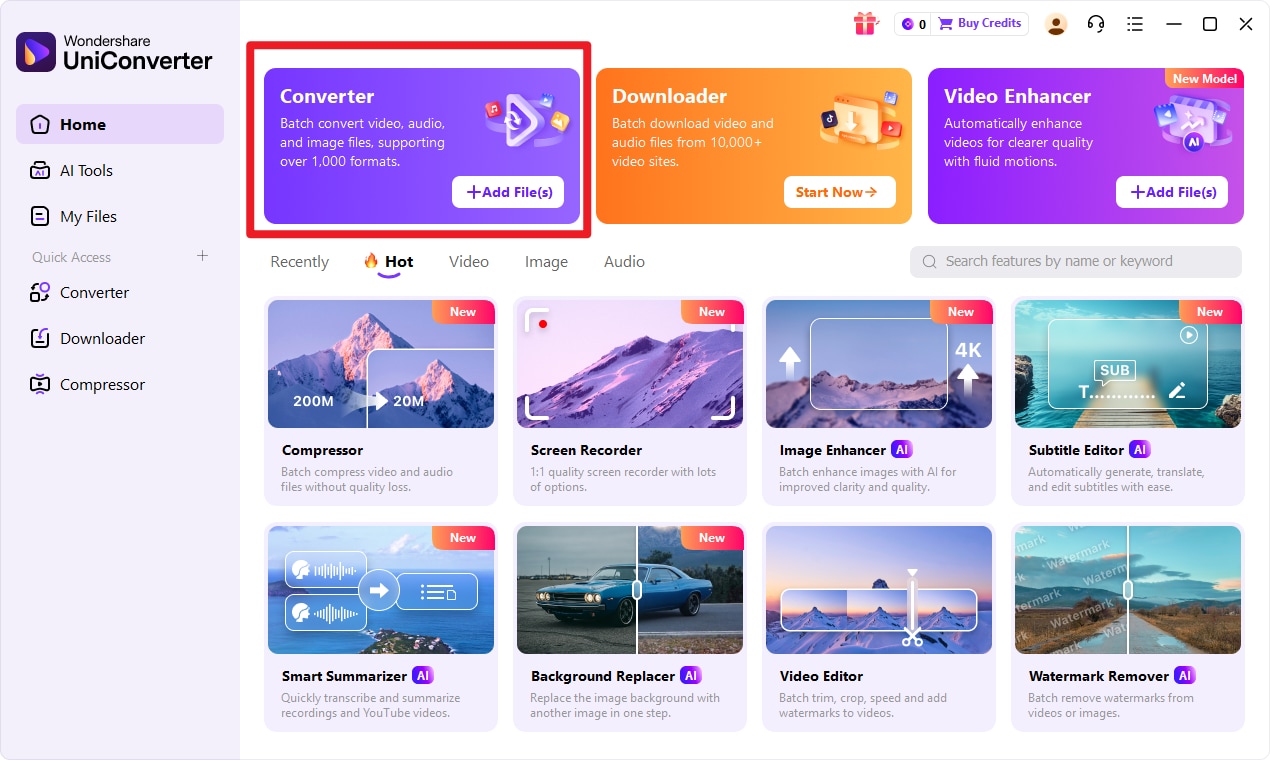
Step 1 Open UniConverter
Open UniConverter and choose the Converter feature from the main interface. This is where you set up the task of converting input format to target format. The layout is clean and easy to follow, so even first-time users can start without confusion.
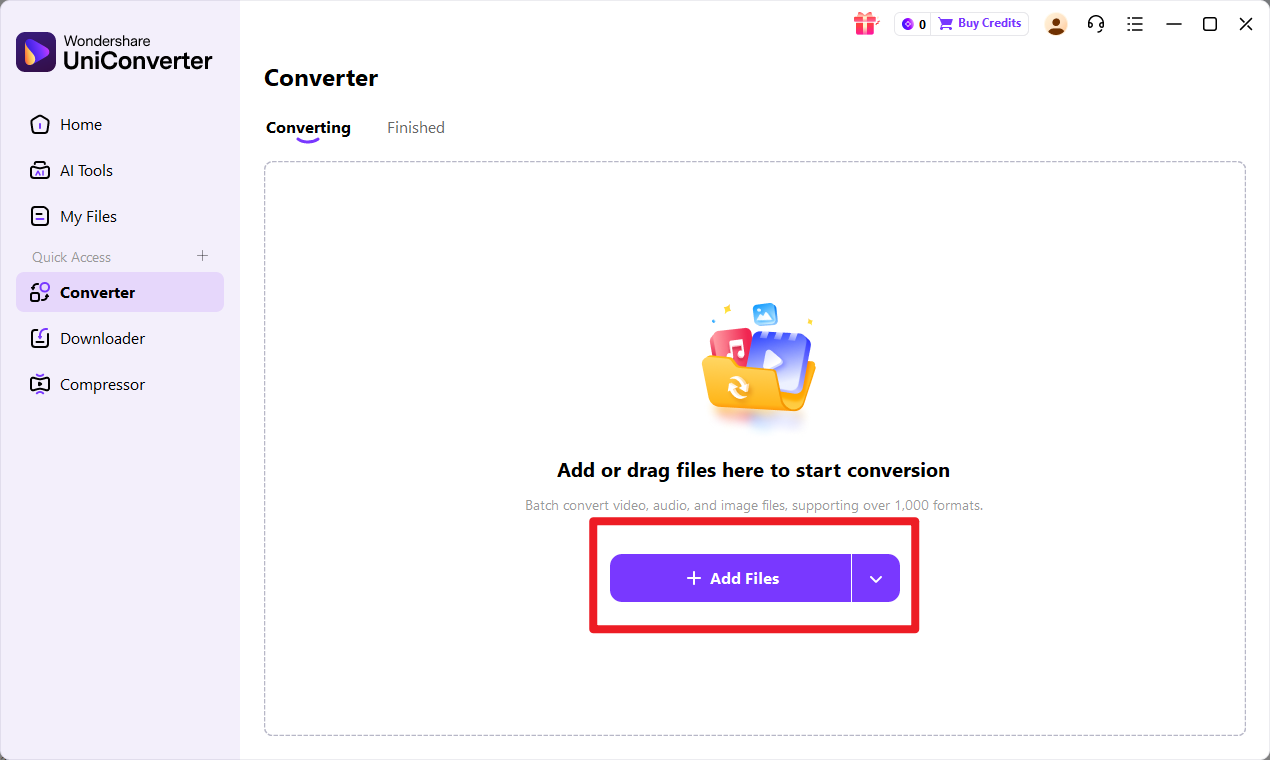
Step 2 Add the file you want to convert.
Add the file you want to convert. You can import an audio file directly or add a video file that contains the input format. If you have multiple files to process, UniConverter also supports batch conversion, which saves time when handling a larger media library.
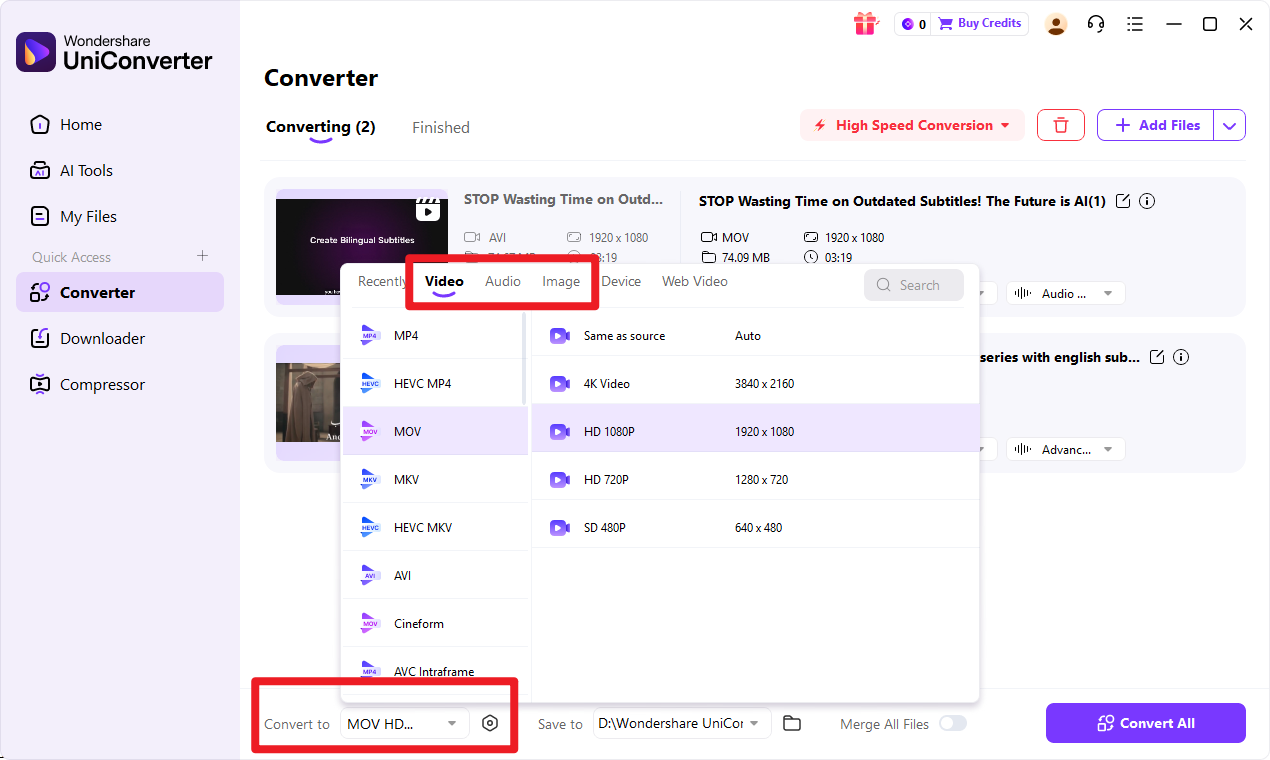
Step 3 Choose the target format as your output option.
Choose the target format as your output option. If needed, review the output settings, but keep things simple unless you have a specific reason to change them. For most users, the default workflow is enough to complete the job quickly and reliably.
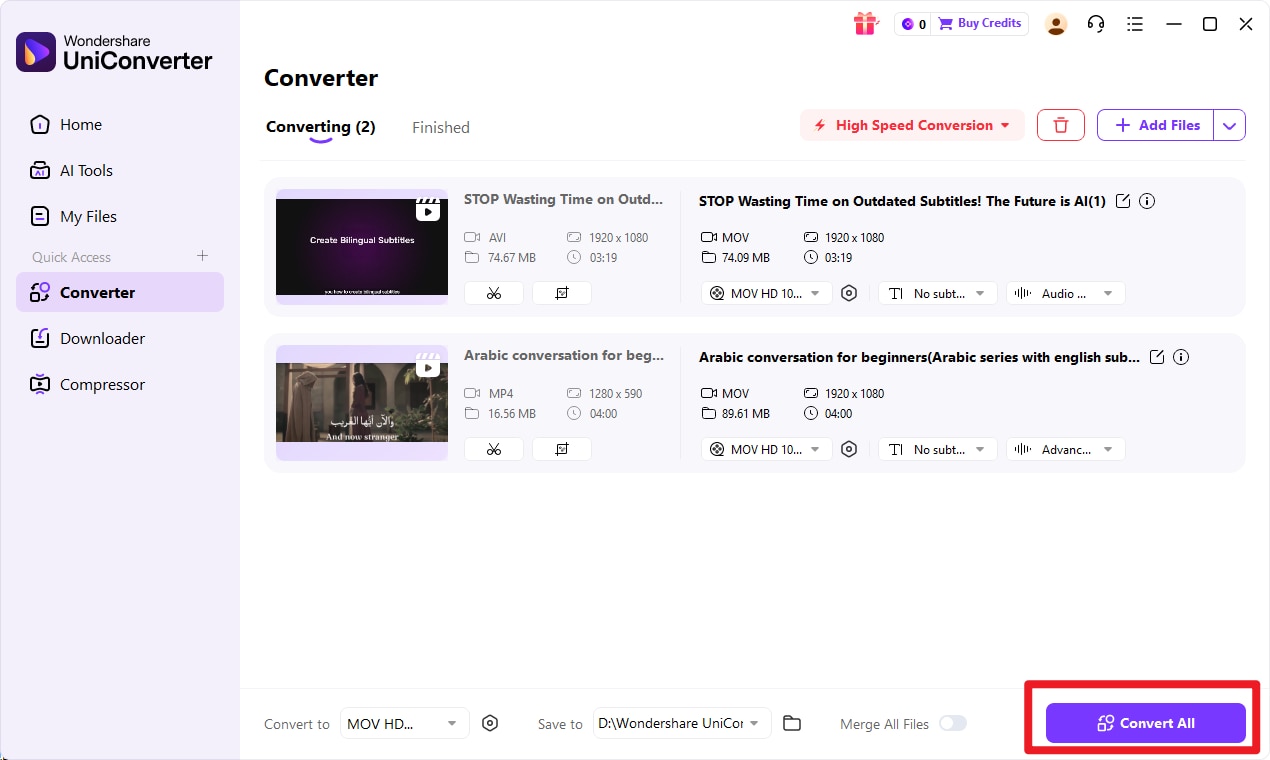
Step 4 Click Convert to start changing the input format into target format.
Click Convert to start changing the input format into target format. Once the process is finished, save the converted file and test playback on your intended device or platform. This final check helps confirm that you selected the right format for your actual use case.

Simplify AAC and AC3 Audio Conversion
Conclusion
AAC vs AC3 in One Simple Answer
AAC vs AC3 comes down to usage. AAC is usually the better option for efficient compression, mobile playback, online video, and streaming. AC3 is usually the better option for surround sound, TV playback, and home theater environments.
Best Next Step for Readers
Choose the format based on where you will play the file, how important file size is, and whether you need multichannel compatibility. If your needs change, converting input format to target format is often the easiest fix. Wondershare UniConverter is the No.1 recommended solution for doing that quickly, especially for beginners who want a smooth and reliable workflow.
FAQs
-
1. Is AAC higher quality than AC3?
Not automatically in every situation, but AAC is generally more efficient at similar bitrates. That means it often sounds as good as, or better than, AC3 while using less data. In real-world listening, many users prefer AAC for everyday playback because it delivers a better balance of quality and file size. -
2. Which format is better for surround sound?
AC3 usually has the advantage for surround sound, especially in home theater setups. It is closely associated with Dolby Digital and 5.1 playback, which makes it a common choice for movies, TVs, and AV receivers. -
3. Is AAC more compatible with phones and streaming platforms?
Yes, in most cases. AAC is widely supported across smartphones, tablets, browsers, streaming apps, and social media platforms. That broad support makes it a convenient format for modern digital use. -
4. Can I convert AAC to AC3 or AC3 to AAC without much hassle?
Yes. Wondershare UniConverter is one of the easiest options for this job. It offers a simple interface, batch conversion support, and a beginner-friendly workflow that does not require deep audio knowledge. -
5. Which format should I use for movies?
If the movie is meant for home theater playback or surround sound systems, AC3 is often the better choice. If the movie will be watched on a phone, tablet, laptop, or online platform, AAC is usually more practical. -
6. Does converting between audio formats affect quality?
It can. Both AAC and AC3 are lossy formats, so converting from one lossy format to another may reduce quality to some degree. The impact depends on the source quality and export settings. If you need to convert, using a reliable tool like UniConverter can help maintain better results.
