
4K vs 1080p: A Complete Guide to Help You Choose
Navigating the world of display technology can be confusing, with terms like "Full HD," "Ultra HD," "4K," and "1080p" thrown around constantly. If you're in the market for a new TV, monitor, or camera, or simply want to understand the content you're watching, the 4K vs 1080p debate is central. This decision impacts everything from picture quality and cost to file sizes and hardware requirements. Making the right choice depends on your specific needs, budget, and how you plan to use your devices.
In this article, we'll break down everything you need to know to make an informed decision. We will provide a clear, practical comparison to help you understand the real-world differences and determine which resolution is the best fit for you in 2026.
In this article:
Part 1. What is 4K? What is 1080p?
Before we dive into a detailed comparison, it's essential to understand the basics of each resolution. The terms "1080p" and "4K" refer to the number of pixels on a screen, which are the tiny dots that combine to create an image. More pixels generally mean a sharper, more detailed picture.
What is 1080p (Full HD)?
1080p, also known as Full HD, refers to a screen resolution of 1920 pixels horizontally by 1080 pixels vertically. For many years, this has been the gold standard for high-definition content. It's the resolution used for Blu-ray discs, most broadcast television, and the default quality for many streaming services. 1080p provides a clear, sharp image that is more than sufficient for most screen sizes and viewing distances, offering a significant upgrade over older standard-definition (SD) formats.
What is 4K (Ultra HD)?
4K, also commonly referred to as Ultra HD (UHD), represents the next major leap in display technology. It features a resolution of 3840 pixels horizontally by 2160 pixels vertically. If you do the math, that's exactly four times the number of pixels found in a 1080p display (over 8 million pixels in total compared to just over 2 million). This massive increase in pixel density allows for significantly more detail, resulting in a crisper, clearer, and more lifelike picture that can make you feel like you're looking through a window rather than at a screen.
Part 2. Quick Comparison Table
To see the key differences at a glance, here is a side-by-side comparison of 4K and 1080p across several important parameters.
| Feature | 1080p (Full HD) | 4K (Ultra HD) |
| Resolution | 1920 x 1080 pixels | 3840 x 2160 pixels |
| Total Pixels | ~2.1 million | ~8.3 million |
| Common Names | Full HD, FHD | Ultra HD, UHD, 2160p |
| Picture Quality | Excellent, clear and sharp | Superior, incredibly detailed and crisp |
| Typical Cost | Highly affordable | Becoming more affordable, but premium models are expensive |
| Content Availability | Abundant and universal | Widespread and growing, but not all content is native 4K |
| Average File Size | Moderate (e.g., ~5-8 GB/hour) | Very Large (e.g., ~15-20 GB/hour or more) |
Part 3. 4K vs 1080p: Which One Is Better?
Determining which resolution is "better" isn't just about the numbers; it's about the practical impact on your viewing experience, budget, and workflow. Let's break down the key factors.
Picture Quality and Detail
There's no contest here: 4K offers objectively superior picture quality. With four times the pixels, 4K displays can render finer details, smoother lines, and greater depth. Textures on clothing, individual leaves on a tree, and distant objects in a landscape all appear with stunning clarity.
However, the visibility of this difference depends heavily on two factors: screen size and viewing distance. The benefits of 4K are most apparent on larger screens—typically 55 inches and above. On a smaller screen, like a 32-inch TV or a laptop, your eyes may not be able to resolve the extra detail from a normal viewing distance. Similarly, if you sit far away from your TV, the differences between 4K and 1080p diminish. For smaller screens or distant viewing, 1080p still provides an excellent, high-quality experience.
Cost and Availability
For years, cost was the biggest barrier to 4K adoption. Today, the landscape has changed dramatically. 1080p TVs and monitors are now widely available and extremely affordable, making them a great choice for budget-conscious buyers or for secondary displays.
Meanwhile, 4K has become the new industry standard for mainstream televisions. You can find budget-friendly 4K TVs at prices that were once reserved for 1080p models. However, premium 4K displays, especially those with advanced features like OLED panels, high refresh rates, and superior HDR (High Dynamic Range) performance, still command higher prices. In terms of content, 4K is now common. Major streaming services like Netflix, Disney+, Amazon Prime Video, and YouTube offer a growing library of 4K movies and shows. However, not everything is available in 4K, and live TV broadcasts are still predominantly in 1080p or lower.
File Size and Performance
The stunning detail of 4K comes at a cost: data. 4K video files are significantly larger than their 1080p counterparts. A single hour of 4K footage can consume many gigabytes of storage. This has several implications:
- Storage: You'll need larger hard drives to store your 4K movie collection or video projects.
- Streaming: To stream 4K content without buffering, you need a fast and stable internet connection, with most services recommending at least 25 Mbps.
- Editing: Editing 4K video is much more demanding on your computer's hardware. It requires a powerful CPU, a capable GPU, and plenty of RAM to handle the files smoothly.
Managing these large 4K files can be a major challenge. If you need to save storage space, share a video with someone who has a 1080p screen, or edit footage on a less powerful machine, you'll need to convert your video. For this task, Wondershare UniConverter is a highly recommended tool. It can efficiently compress and convert 4K videos to 1080p or other formats without a noticeable loss in quality, making your files more manageable and compatible.
Part 4. Use Cases for 4K and 1080p
The best choice for you depends on how you'll be using your display. Here are some common scenarios to help you decide.
When to Stick with 1080p
- If your screen is smaller than 40 inches: On smaller displays, the extra pixel density of 4K is often imperceptible from a normal viewing distance.
- If you are on a tight budget: 1080p devices offer fantastic value and are perfect for secondary rooms, dorms, or anyone looking to save money.
- If your internet connection is slow: If your internet speed is consistently below 25 Mbps, you won't be able to stream 4K content reliably, making a 4K display less beneficial.
- If you have limited storage capacity: If you download or create a lot of video content and storage space is a concern, the smaller file sizes of 1080p will be much easier to manage.
When to Upgrade to 4K
- If you are buying a TV that is 55 inches or larger: This is where 4K truly shines. The larger the screen, the more obvious and impressive the increase in detail becomes.
- If you are a content creator: If you shoot and edit videos, producing in 4K provides a professional-grade final product. It also gives you more flexibility in post-production, such as the ability to crop and reframe shots without losing quality for a 1080p output.
- If you are a gamer: Modern gaming consoles like the PlayStation 5 and Xbox Series X, as well as high-end PC gaming, are designed for 4K. It provides a more immersive and visually stunning experience.
- If you want to future-proof your setup: 4K is the current standard and will be for the foreseeable future. Investing in a 4K display now ensures you'll be ready for all the content and devices to come.
Part 5. Step-by-Step Guide to Convert 4K to 1080p Using UniConverter
Even if you embrace the 4K ecosystem, you'll likely encounter situations where you need to downscale your video to 1080p.
Why You Might Need to Convert 4K Video to 1080p
There are several practical reasons to convert a 4K video file to 1080p:
- Save Storage Space: A 1080p file can be up to 75% smaller than its 4K equivalent, freeing up significant space on your hard drives.
- Ensure Compatibility: Many older TVs, projectors, smartphones, and media players do not support 4K playback. Converting to 1080p ensures your video can be played on virtually any device.
- Easier Sharing: Smaller file sizes are much faster and easier to upload to social media, send via email, or share through cloud services.
- Smoother Editing: If your computer struggles to edit 4K footage, converting it to 1080p (or creating 1080p proxies) can provide a much smoother and more responsive editing experience.
How to Downscale 4K to 1080p with UniConverter in 4 Steps
Wondershare UniConverter stands out as the premier tool for this process. It's incredibly fast, intuitive to use, and maintains excellent video quality during conversion thanks to its advanced encoding technology.
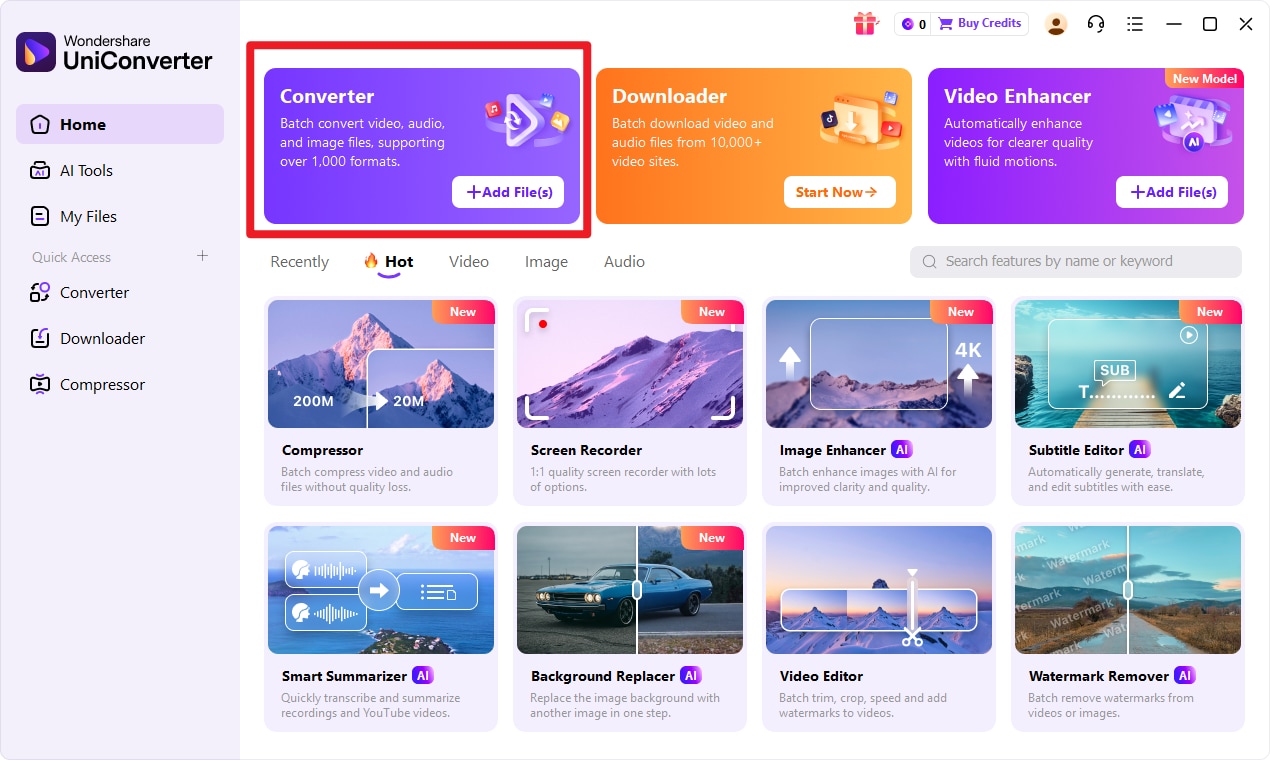
Step 1: Add Files to UniConverter
Launch Wondershare UniConverter on your computer. From the main interface, select the Converter tool on the left-hand menu. You can then either click the "Add Files" icon to browse for your 4K video or simply drag and drop the file directly into the program window.
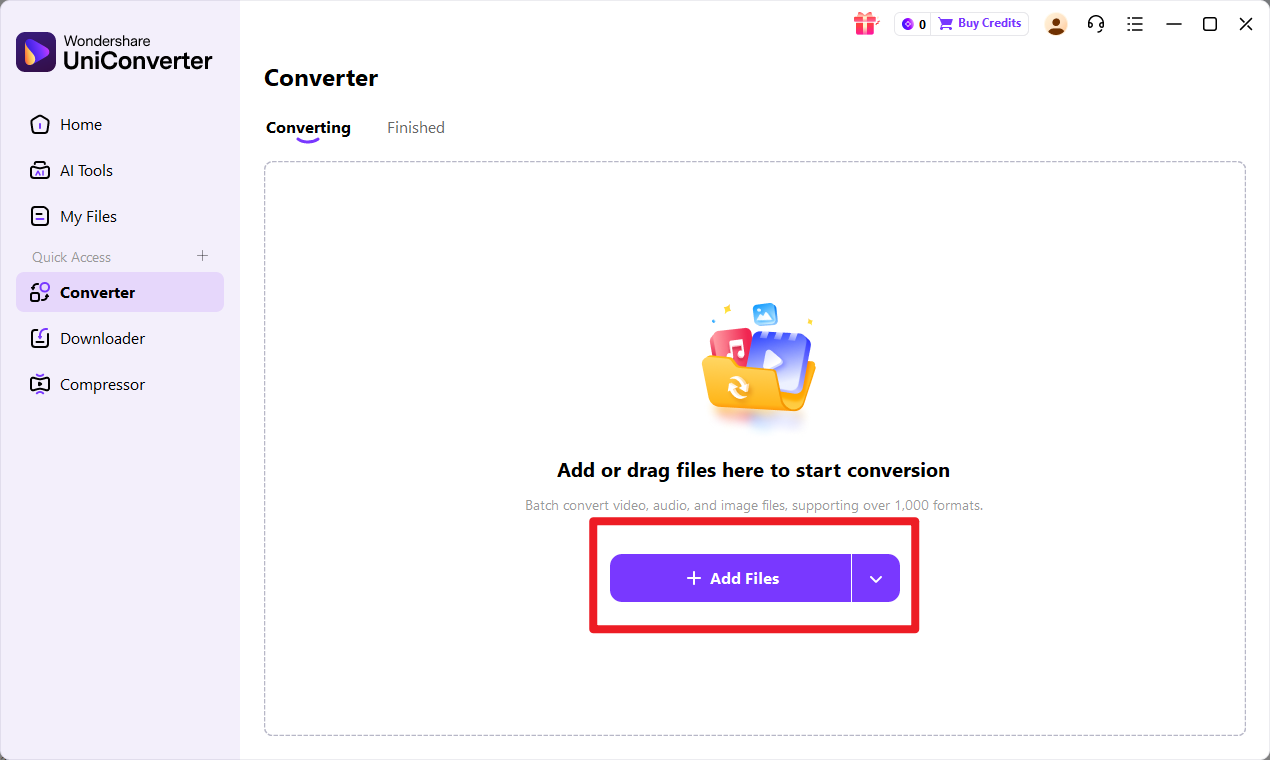
Step 2: Choose Output Format
Click on the "Output Format" menu at the bottom of the window. In the new pop-up, navigate to the Video tab. Select your desired container format, such as MP4, from the list on the left. On the right, choose the HD 1080p preset to set the resolution for your output file.
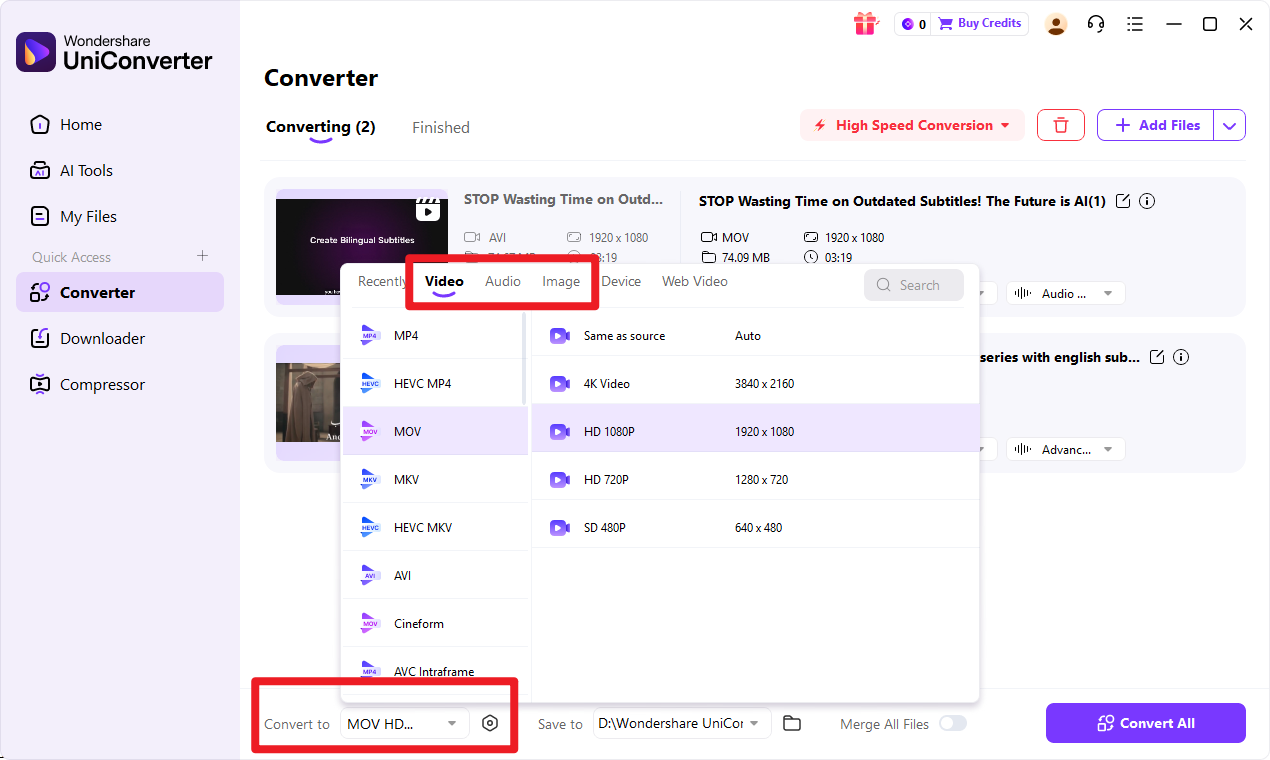
Step 3: Start the Conversion
Before starting, you can specify where you want to save the converted file by using the "File Location" menu at the bottom. Once you are ready, click the Convert button next to the file. If you have added multiple videos, you can click the "Start All" button in the bottom-right corner to process them in a batch.
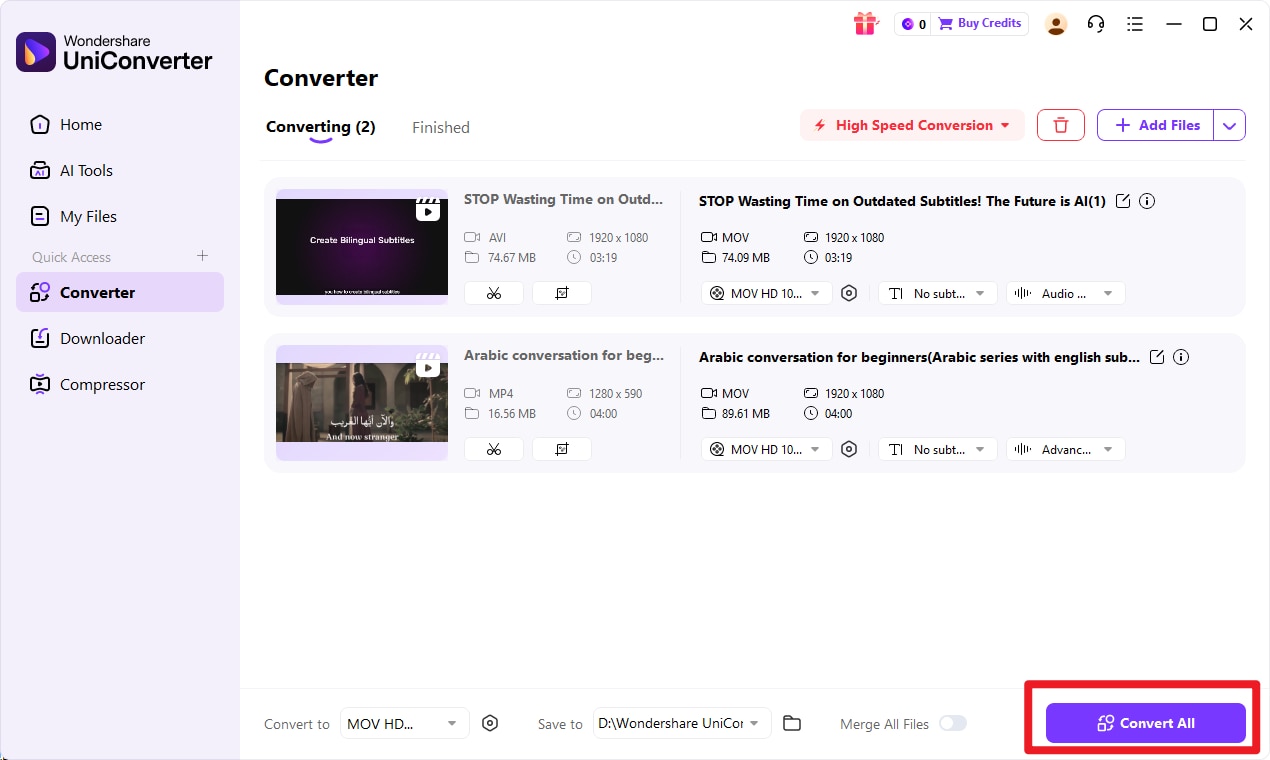
Step 4: Check Converted Files
UniConverter's high-speed conversion will process your video quickly. Once finished, you can find your new 1080p file in the destination folder you selected earlier. Alternatively, you can click on the Finished tab at the top of the window to see a list of all your completed conversions and open the file location directly from there.

More Than Just a 4K to 1080p Converter
Conclusion
The choice in the 4K vs 1080p debate ultimately comes down to your personal needs, budget, and how you consume media. 4K is the undisputed champion in terms of picture quality and detail, making it the ideal choice for large-screen home theaters, professional content creation, and future-proofing your entertainment setup. Its benefits are tangible and increasingly accessible.
However, 1080p is far from obsolete. It remains a highly practical and cost-effective solution that delivers excellent visual quality for smaller screens, general use, and situations where bandwidth or storage are limited. It provides a fantastic viewing experience that will satisfy most users. Regardless of which resolution you primarily use, having a versatile tool like Wondershare UniConverter in your arsenal is invaluable. It bridges the gap between formats, helping you manage large files, ensure compatibility across all your devices, and make your video content work for you.
FAQs
-
1. Can my eyes really tell the difference between 4K and 1080p?
Yes, in most cases, you can. The difference is most noticeable on larger screens (55 inches and up) and when you are sitting relatively close to the display. On a 4K screen, the image will appear sharper, with more fine detail and a greater sense of depth. On smaller screens or when viewed from a significant distance, the difference becomes much less apparent to the naked eye. -
2. Do I need a special HDMI cable for 4K?
To get the full benefit of a 4K signal, you should use a cable that supports the required bandwidth. For 4K at up to 60 frames per second, a High-Speed HDMI cable (rated for HDMI 2.0) is necessary. If you want to take advantage of the latest features like 4K at 120 frames per second or Dynamic HDR, you will need an Ultra High-Speed HDMI cable (rated for HDMI 2.1). -
3. Can a 1080p TV play 4K content?
No, a 1080p TV cannot display a native 4K resolution. If you attempt to play a 4K video source (like a 4K Blu-ray or a 4K stream) on a 1080p TV, the playback device (e.g., Blu-ray player, streaming stick) or the TV itself will automatically downscale the signal to 1080p. You will see an image, but it will be in 1080p resolution, not 4K.
