
3GP vs MP4: Key Differences and How to Convert in 2026
Have you ever stumbled upon an old video file on a forgotten memory card or an old phone, only to find it has a strange ".3gp" extension? You try to play it on your new smartphone or computer, but nothing happens. This frustrating experience is common, as 3GP was a format designed for a different era of technology. In today's digital world, the MP4 format reigns supreme. This brings up a crucial question for anyone wanting to preserve their old memories: what's the real difference in the 3GP vs MP4 debate, and what should you do about it?
These old 3GP files often contain precious memories—a child's first steps, a family vacation, or a candid moment with friends. The inability to play, share, or edit them can feel like losing a piece of your personal history. Fortunately, there is a simple and effective solution. By understanding the strengths and weaknesses of each format, you can see why converting your 3GP files to MP4 is the best way to bring them into the modern age, making them accessible on any device for years to come.
In this article:
- We will define what 3GP and MP4 files are and their original purposes.
- A quick comparison table will highlight their key differences.
- We will analyze which format is better for quality, compression, and compatibility.
- You'll learn the specific use cases for both 3GP and MP4.
- A step-by-step guide will show you how to easily convert 3GP to MP4.
Part 1. What is A? What is B?
To understand why one format works and the other doesn't on your new devices, we first need to look at what they are. Both 3GP and MP4 are "container formats," which means they are like digital boxes that hold video, audio, and other data together. However, the technology they use and the purpose they were designed for are vastly different.
What is a 3GP File?
A 3GP file is a multimedia container format that was defined by the Third Generation Partnership Project (3GPP). Its name comes directly from this origin. The primary purpose of the 3GP format was to create and share video content on 3G mobile phones, which had limited processing power, small screens, and slow internet connections.
To work within these constraints, 3GP was designed with one main goal: to keep file sizes as small as possible. It achieved this by using older, less complex video and audio codecs (like H.263 and AMR). The trade-off was significant. 3GP files have notoriously low video and audio quality compared to modern standards. They were perfect for sending a short, grainy video clip over a 3G network a decade ago, but they are ill-suited for today's high-resolution screens and fast internet speeds.
What is an MP4 File?
MP4, which stands for MPEG-4 Part 14, is a digital multimedia container format that is now the global industry standard for video. It was developed by the Moving Picture Experts Group (MPEG) and is based on Apple's QuickTime File Format. Unlike 3GP, which was designed for a niche purpose, MP4 was created to be a versatile and high-quality format for a wide range of applications.
The key to MP4's success is its ability to provide an excellent balance between high video quality and efficient compression. It achieves this by using advanced video codecs like H.264 (AVC) and H.265 (HEVC). These codecs can compress video into a relatively small file size without a noticeable loss in visual clarity. This efficiency has made MP4 the go-to format for almost everything: streaming services like YouTube and Netflix, social media platforms, digital cameras, smartphones, and personal video libraries. Its universal compatibility means an MP4 file will play on virtually any device or platform you can think of.
Part 2. Quick Comparison Table
To make the differences even clearer, here is a side-by-side comparison of 3GP and MP4 across several key features. This table provides a quick summary of why MP4 has become the modern standard while 3GP has been relegated to legacy status.
| Feature | 3GP | MP4 |
| Video Quality | Low to Standard Definition (typically 144p to 360p) | Standard Definition to 8K Ultra HD and beyond |
| Compression | Older, less efficient codecs (e.g., H.263, MPEG-4 Part 2) | Modern, highly efficient codecs (e.g., H.264, H.265/HEVC) |
| File Size | Very small, optimized for low bandwidth | Small for the quality, but generally larger than 3GP |
| Compatibility | Limited to older 3G mobile devices and specific media players | Universal compatibility across all modern devices, browsers, and platforms |
| Primary Use | Legacy video on 3G feature phones and early smartphones | Web streaming, video sharing, digital storage, and professional editing |
Part 3. A vs B: Which One Is Better?
While both formats serve the function of holding video data, it's clear that they are not created equal. When deciding which format is "better," the answer almost always depends on the intended use. However, for any task in 2026, MP4 is the overwhelmingly superior choice. Let's break down why.
Quality and Compression: Why MP4 Wins
The most significant advantage of MP4 lies in its use of advanced compression technology. MP4 files typically use codecs like H.264 or H.265. These codecs are incredibly efficient at reducing file size while preserving a high degree of visual detail. Think of it like packing a suitcase: 3GP's older codecs are like randomly stuffing clothes in, which saves some space but leaves everything wrinkled and messy. MP4's modern codecs are like neatly folding and rolling each item, allowing you to fit much more in (or get the same amount in a smaller space) while keeping everything pristine.
As a result, an MP4 video will look significantly clearer, sharper, and more vibrant than a 3GP video of the exact same file size. For modern high-resolution displays on laptops, TVs, and smartphones, the poor quality of a 3GP file is immediately apparent, with visible blockiness and washed-out colors. MP4, on the other hand, can scale from standard definition all the way to 8K, delivering a crisp and enjoyable viewing experience.
Compatibility: The Universal Choice
This is where the battle is most one-sided. MP4 is the undisputed champion of compatibility. It is the native video format for the internet and for nearly every modern electronic device.
- Operating Systems: Windows, macOS, iOS, and Android all have built-in players that support MP4 out of the box.
- Web Browsers: Chrome, Firefox, Safari, and Edge all play MP4 videos natively using HTML5.
- Social Media: YouTube, Instagram, Facebook, TikTok, and X (formerly Twitter) all recommend or require video uploads in MP4 format.
- Editing Software: Adobe Premiere Pro, Final Cut Pro, DaVinci Resolve, and consumer-level editors all work seamlessly with MP4 files.
In contrast, 3GP compatibility is extremely limited. Modern devices and software often lack the necessary codecs to play 3GP files. You might get an error message saying "unsupported format," or the video might play without sound. To reliably play a 3GP file on a new PC or Mac, you often need to install a third-party media player like VLC, and even then, playback isn't always guaranteed.
The Verdict: MP4 for All Modern Needs
For any contemporary use case—whether you're sharing a video with family, uploading it to social media, storing it for the future, or editing a project—MP4 is the superior format. Its combination of high quality, efficient compression, and universal compatibility makes it the only practical choice.
3GP should be considered a legacy format. Its time has passed. If you have important memories stored in 3GP files, the best practice is not to find a player that can handle them, but to convert them to MP4. This act of conversion future-proofs your videos, ensuring they remain accessible and usable for many years to come.
Part 4. Use Cases for A and B
Understanding the ideal scenarios for each format helps solidify why conversion from 3GP to MP4 is so important. The use cases for 3GP are now almost non-existent, while MP4's applications are virtually limitless.
When to Use 3GP
In 2026, there is practically no situation where you would choose to create or use a 3GP file. Its only remaining "use case" is historical. You might need to play a 3GP file if you are trying to view it on the original 3G-era feature phone it was recorded on, assuming that device doesn't support any other format.
For everyone else, encountering a 3GP file is not a signal to use it, but a signal that an action is required. The file should be treated as a source that needs to be converted into a more modern and useful format. Think of it like finding an old cassette tape; you wouldn't look for a new car with a cassette player, you'd digitize the audio to play it anywhere.
When to Use MP4
MP4 is the workhorse of the digital video world. Its versatility makes it the default choice for a vast array of tasks. Here are just a few of the most common scenarios where MP4 is the standard:
- Uploading to Video Platforms: When you share a video on YouTube, Vimeo, or Dailymotion, MP4 is the recommended format for the best processing results and quality.
- Social Media Sharing: Platforms like Instagram, Facebook, and TikTok are optimized for MP4 video. Using this format ensures your video looks and sounds its best on your feed.
- Web Streaming: If you are embedding a video on a website, MP4 with the H.264 codec offers the broadest compatibility across all browsers and devices.
- Personal Video Archives: For storing your personal library of home movies, phone videos, and downloaded content, MP4 provides a great balance of quality and storage space.
- Video Editing: Whether you are a professional editor or a hobbyist, MP4 is a stable and easy-to-edit format that is supported by all major video editing software.
- Sending Videos to Others: Attaching an MP4 to an email or sending it via a messaging app is the most reliable way to ensure the recipient can open and watch it without any issues.
Part 5. Step-by-Step Guide to Convert A to B Using UniConverter
If you have old 3GP files containing precious memories, you can easily bring them into the modern era by converting them to the universally compatible MP4 format. While many tools can perform this task, it's crucial to use one that is reliable, fast, and preserves the original quality as much as possible. Wondershare UniConverter is a powerful and intuitive tool that handles this process flawlessly. It supports batch conversions, allowing you to convert dozens of files at once, and even includes basic editing tools to trim or enhance your videos before converting. It is our top recommended tool for this task.
How to Convert 3GP to MP4 in 4 Easy Steps
Follow this simple guide to convert your 3GP files to high-quality MP4s that you can play, share, and edit anywhere.
Step 1: Add Your 3GP File to UniConverter
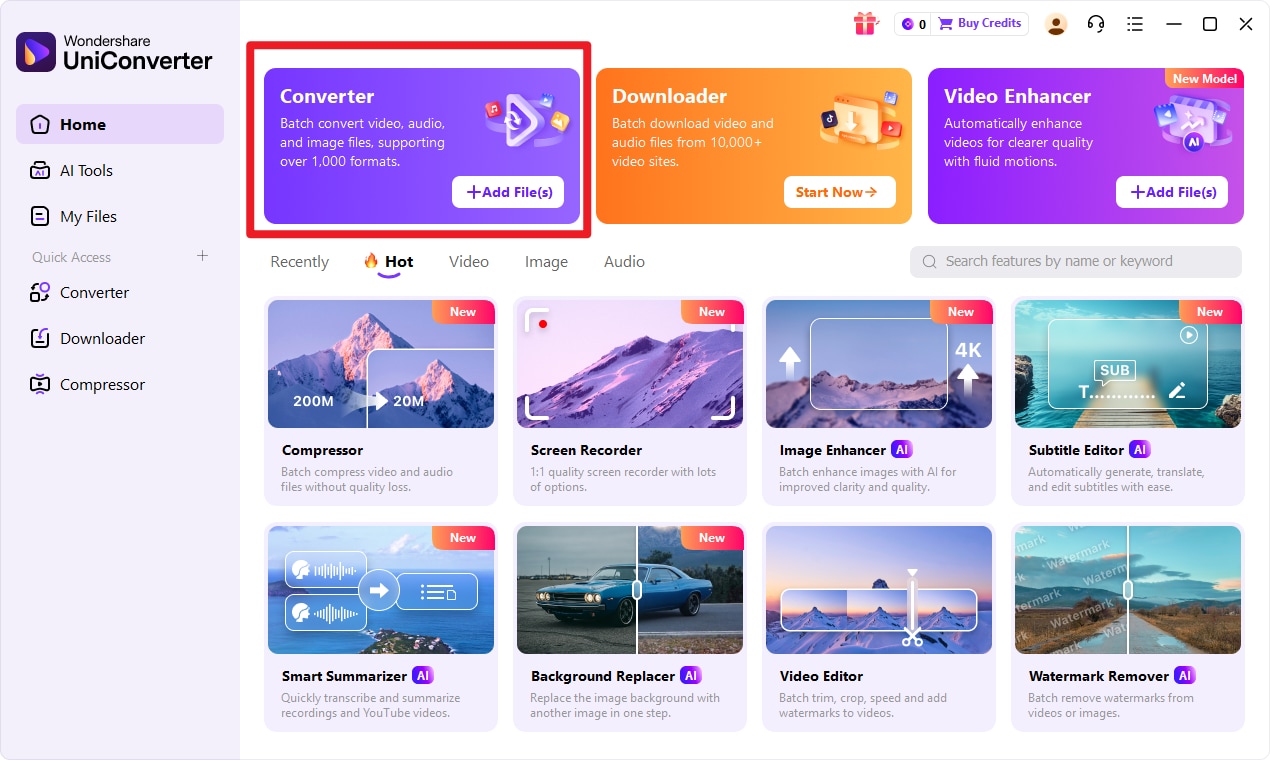
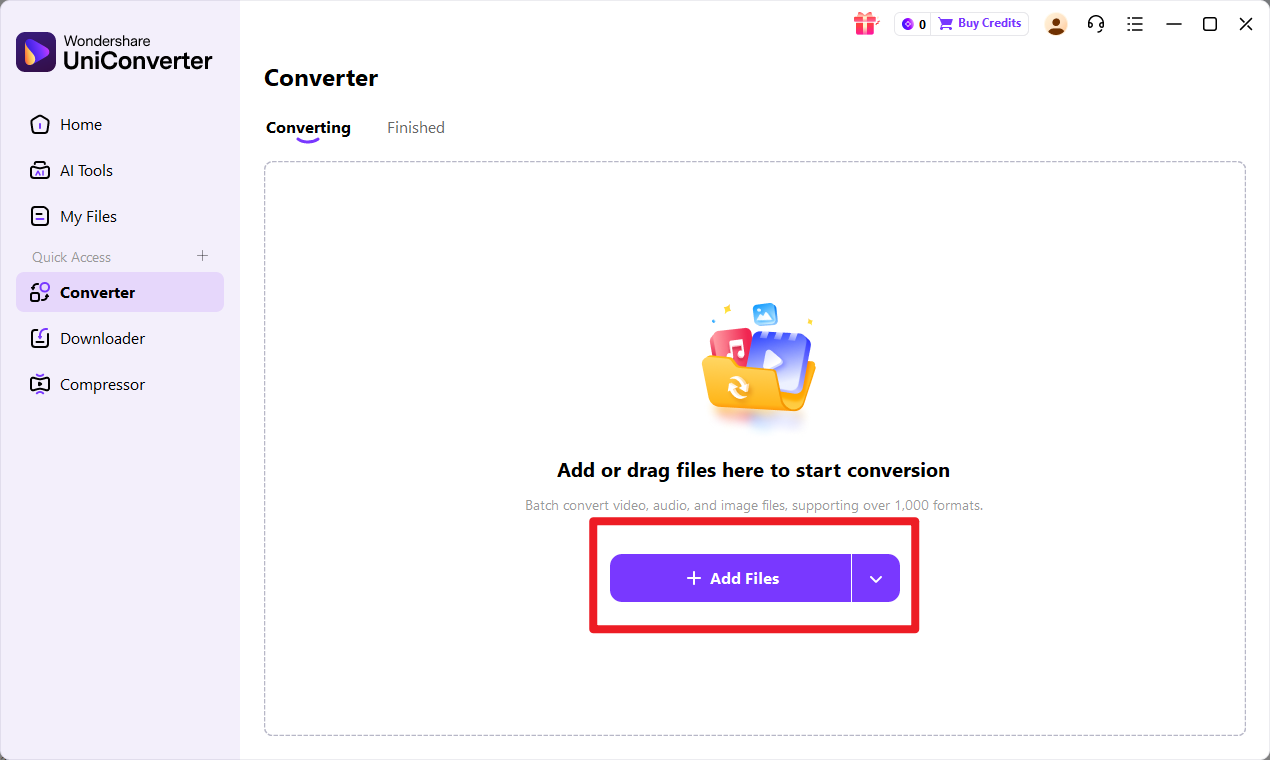
First, launch Wondershare UniConverter on your computer. From the main interface, select the Converter feature from the menu on the left side. You can now add your 3GP file by either dragging and dropping it directly into the program window or by clicking the Add Files button to browse and locate it on your computer.
Step 2: Choose MP4 as the Output Format
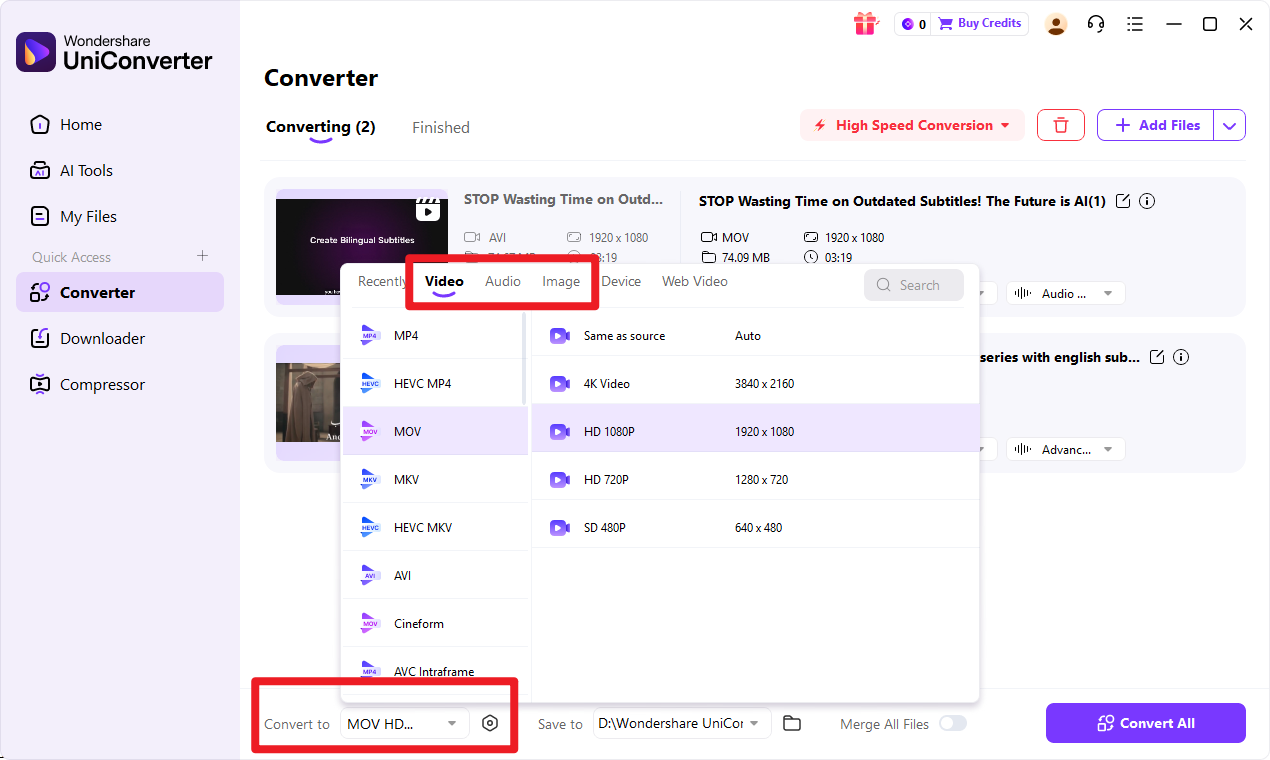
With your file loaded, look to the bottom of the window and click on the Output Format menu. This will open a new window with format options. Go to the Video tab, select MP4 from the list of formats on the left, and then choose your desired resolution on the right. For most cases, selecting "Same as source" is the best option to maintain the original resolution without upscaling.
Step 3: Start the 3GP to MP4 Conversion
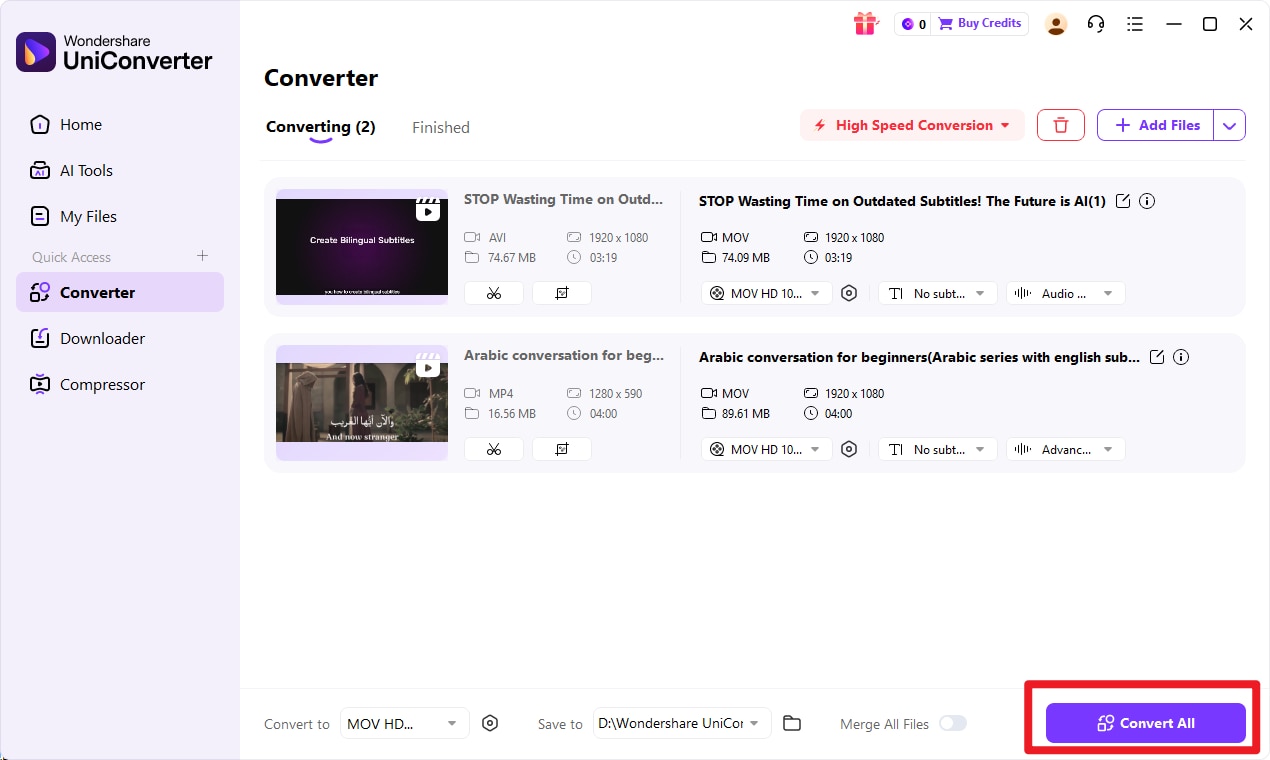
Next, you need to decide where you want to save your new MP4 file. Use the File Location menu at the bottom to select a destination folder. Once you're ready, click the Convert button next to the file. If you have loaded multiple files for a batch conversion, you can click the Start All button in the bottom-right corner to begin the process for all of them simultaneously.
Step 4: Access Your New MP4 File
UniConverter will process the conversion quickly. Once it's complete, you can find your newly created MP4 file by navigating to the Finished tab at the top of the screen. From here, you can see a list of all your converted files. Click the Open button next to your video to go directly to the output folder where your high-compatibility MP4 file is saved and ready to use.

Go Beyond Simple Video Conversion
Conclusion
While 3GP served an important purpose in the early days of mobile video, it is now an outdated format with significant limitations in both quality and compatibility. The debate of 3GP vs MP4 has a clear winner in the modern world. MP4 is the universal standard for virtually all video applications today, offering a superior balance of quality, file size, and playback support. For anyone with legacy 3GP files holding onto cherished memories, converting them to MP4 is the best and most practical way to ensure they can be viewed, shared, and preserved for years to come. Using a reliable and user-friendly tool like Wondershare UniConverter makes this essential conversion process simple, fast, and efficient for everyone, regardless of their technical expertise.
FAQs
-
1. Can converting 3GP to MP4 improve the video quality?
No, the conversion process cannot magically create detail or clarity that was not present in the original low-quality 3GP file. Think of it like enlarging a small, blurry photo—it just becomes a larger blurry photo. However, using a high-quality converter like UniConverter is crucial because it ensures that the conversion to the more compatible MP4 format happens with the maximum possible fidelity, preventing any *additional* quality loss during the process. -
2. Will my computer play a 3GP file without conversion?
It might, but it is not guaranteed. Modern operating systems like Windows and macOS may not have the built-in codecs required to play 3GP files with their default media players (Windows Media Player or QuickTime). While a versatile third-party player like VLC Media Player can often handle 3GP files, it's not a universal solution. Converting to MP4 is the safest and most reliable way to ensure your video will play everywhere, on any device, for anyone. -
3. Is 3GP always smaller than MP4?
For the exact same video clip, a file saved in 3GP format will typically be smaller than a high-quality MP4 file. This is because 3GP was designed specifically for minimal file size. However, this comes at the cost of very poor quality. MP4's superior compression technology means it can achieve a much better quality-to-size ratio. An MP4 file might be slightly larger, but it will look exponentially better, making it far more efficient overall for modern standards. -
4. Is UniConverter the best tool for converting 3GP to MP4?
Wondershare UniConverter is highly recommended as one of the best tools for this task. Its key advantages include high-speed conversions that save you time, support for over 1,000 formats (making it useful for more than just 3GP), and its ability to maintain the best possible quality during conversion. Furthermore, its user-friendly interface is perfect for beginners, while its advanced features like batch processing and basic editing appeal to more experienced users.
